
What if the most straightforward part of your construction project could also be the most stressful? When it comes to construction waste disposal, many DIYers and contractors underestimate the challenges of local regulations and bulky debris removal. You know the importance of handling waste properly, but navigating the rules in New York, Illinois, or Massachusetts can feel overwhelming. In this article, you'll learn effective methods for safe and compliant construction waste disposal. We'll break down the steps you need to take, ensuring you avoid legal fines while keeping your project on track. Get ready for clear, actionable strategies that will help you dispose of your construction waste efficiently and cost-effectively.
Key Takeaways
- Understand the local regulations in New York, Illinois, and Massachusetts to ensure compliance and avoid legal issues.
- Learn how to assess your construction waste and select the right dumpster size for efficient disposal.
- Discover the benefits of recycling construction materials like metal and wood, promoting sustainability and cost savings.
- Explore cost-effective solutions for construction waste disposal, including dumpster rentals versus direct disposal options.
- Stay informed about future trends in construction waste disposal, including innovative recycling technologies and sustainable practices.
Understanding Local Regulations for Construction Waste Disposal
To effectively manage construction waste disposal, it's vital to understand the local regulations that govern waste management in your area. Each location has distinct laws and guidelines to ensure waste is disposed of safely and responsibly. This section delves into the regulations in Chicago, Paterson, and Ann Arbor, highlighting the importance of compliance to avoid fines and legal issues.
City-Specific Regulations
Compliance with local regulations is non-negotiable. Let's look at the specifics:
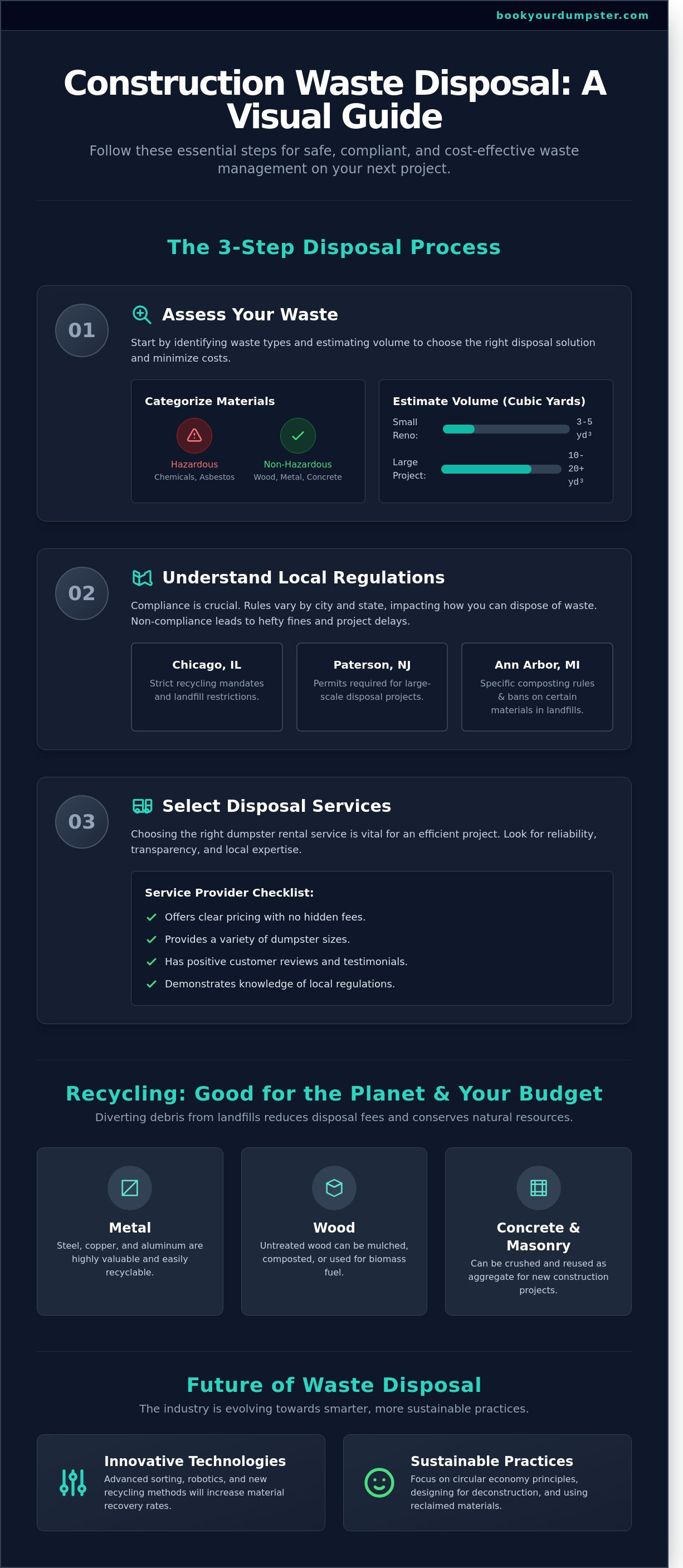
- Chicago: Chicago has implemented strict recycling mandates that require construction projects to recycle a significant portion of their waste. The city also imposes landfill restrictions, limiting what can be dumped in landfills to encourage recycling and reuse.
- Paterson: In Paterson, large-scale disposal often requires permits. If your project exceeds certain thresholds, obtaining the appropriate permits is crucial to avoid penalties.
- Ann Arbor: Ann Arbor has specific composting requirements and bans on certain materials, such as food waste and recyclable items, from being disposed of in landfills. Understanding these requirements can save you from non-compliance fines.
Environmental Impact and Compliance
Proper disposal of construction waste benefits the environment significantly. When materials are recycled or reused, it reduces landfill overflow and conserves natural resources. Additionally, compliance with local regulations serves as a business advantage. Companies that adhere to these laws not only avoid fines but also enhance their reputation by demonstrating environmental responsibility.
Common penalties for non-compliance can include hefty fines, project delays, and even legal action. To avoid these issues, stay informed about the regulations that apply to your project. Establish a protocol for waste management that aligns with local laws, ensuring all team members are aware and trained on compliance requirements. If your project involves a multilingual team and requires the translation of complex disposal guidelines or safety manuals, Translators USA can provide the expert linguistic support needed to ensure everyone understands the protocols.
For a comprehensive understanding of efficient waste management practices, Book Your Dumpster USA offers a range of resources and services tailored to your needs. With knowledge and preparation, you can handle construction waste disposal effectively and responsibly.
Ready to dive deeper? Read more on our guide to construction debris removal.
Step-by-Step Guide to Safe Construction Waste Disposal
Effective construction waste disposal starts with a structured approach. Follow these steps to ensure you manage your waste safely and efficiently.
Assessing Your Waste
Begin by identifying the types of waste generated from your project. Categorize waste as either hazardous or non-hazardous. Hazardous materials may include chemicals, asbestos, or lead-based paint, which require special handling and disposal methods; in these cases, using industrial-grade drums or IBC totes from Container Authority can ensure safe containment. Non-hazardous waste typically consists of materials like wood, metal, and concrete.
Next, estimate the volume of waste you'll produce. Use standard measurements-such as cubic yards-to help determine the right dumpster size for your project. For example, a small renovation might generate about 3-5 cubic yards, while a larger construction site could produce 10-20 cubic yards or more. Consider methods to minimize waste generation, such as reusing materials or opting for more sustainable options.
Selecting Disposal Services
When selecting a dumpster service, reliability is key. Look for companies that offer clear pricing with no hidden fees. Check online reviews and testimonials to gauge customer satisfaction. Local services in areas like New York, Illinois, and Massachusetts often have better knowledge of regional regulations and disposal options, making them a smart choice for construction waste disposal.
- Ensure the provider has a variety of dumpster sizes available.
- Confirm they follow local waste management regulations.
- Look for quick and flexible delivery options.
For a seamless experience, book your dumpster easily online. This ensures you have the right container at your disposal when you need it.
Following these steps will simplify your construction waste disposal process. With careful assessment and selection of disposal services, you can manage your project’s waste responsibly and efficiently.
Recycling and Reusing Construction Waste
Recycling construction waste is not just environmentally responsible; it also offers significant cost savings and promotes sustainability in the industry. By diverting debris from landfills, businesses can reduce disposal fees while contributing to a circular economy, where materials are reused rather than discarded. Understanding what can be recycled and how to do it effectively is essential for efficient construction waste disposal.
Common Recyclable Materials
Identifying recyclable materials is crucial for successful waste management. Here are some common items you can recycle:
- Metal: Metals like steel, copper, and aluminum are valuable and can be sold as scrap. Sorting metals before disposal not only helps in recycling but can also generate revenue.
- Concrete: Concrete can be crushed and reused in various applications, such as base material for new pavements or as aggregate in new concrete mixes. This method not only conserves resources but also minimizes landfill use.
- Wood: Salvaging wood from construction sites allows for repurposing into furniture, flooring, or even mulch. This practice reduces waste and can lead to unique design opportunities.
Finding Local Recycling Centers
To effectively recycle construction waste, you need to know where to take your materials. Start by consulting local directories for recycling facilities in your area. Many cities offer online resources that list centers and their accepted materials.
Contact these centers directly to obtain their material acceptance lists. This ensures you’re aware of what can be recycled and minimizes the risk of contamination in your loads. Effective communication with your local recycling facility can streamline your construction waste disposal process.
For those considering the logistics of waste management, it's a good idea to book your dumpster for a hassle-free experience. Discover how easy it is to manage your construction debris while promoting sustainability.
By integrating recycling into your construction waste disposal strategy, you not only help the environment but also potentially offset disposal costs. Embrace these practices to enhance your project’s sustainability and efficiency.
Cost-Effective Waste Management Solutions
Managing construction waste disposal efficiently is crucial for staying on budget and maximizing project success. Understanding your options, comparing costs, and implementing effective strategies can lead to significant savings. Below, we explore two primary methods: dumpster rental and direct disposal, along with budgeting tips that keep your project on track.
Dumpster Rental: Pros and Cons
Choosing dumpster rental is often the most convenient option for construction waste disposal. It offers flexibility and ease of use. You can select the size that best fits your project, whether it’s a small renovation or a large construction job. However, the initial cost can be a concern.
- Convenience vs. Initial Cost: While renting a dumpster may require an upfront payment, the convenience of having a container on-site can save valuable time during cleanup.
- Scalability: With various sizes available, you can scale your rental based on project needs, ensuring you only pay for what you require.
- Long-Term Savings: Efficient waste handling through a dumpster rental can lead to reduced labor costs and better time management.
Budgeting Tips for Waste Disposal
When planning your budget, allocate funds specifically for waste management. This often-overlooked aspect can prevent unexpected expenses down the line. Here are some effective budgeting strategies:
- Allocate Funds: Ensure waste disposal costs are included in your overall project budget to avoid surprises.
- Negotiate Rates: Don't hesitate to negotiate rates with local disposal providers. Many companies are willing to offer discounts for bulk services or long-term contracts.
By implementing the “Reduce, Reuse, Recycle” approach, you can also minimize waste and save money. For example, recycling materials like metal, wood, and concrete can lower disposal fees significantly.
Utilizing local services can result in better rates. Local companies often have lower transportation costs and may offer competitive pricing compared to national chains. Always look for reputable local providers who can offer the best value for your construction waste disposal needs.
Ready to take the next step? Learn more about our affordable dumpster services and streamline your waste management today.
Future Trends in Construction Waste Disposal
The construction industry is evolving rapidly, particularly in the area of construction waste disposal. Innovations in recycling technology, shifts in sustainable building practices, and changes in legislation are driving this transformation. As consumer expectations shift towards more sustainable methods, the landscape of waste management is set to change dramatically.
Technology and Sustainability
Advancements in waste sorting and processing technologies are significantly improving the efficiency of construction waste disposal. For example, automated sorting systems can separate materials like wood, metals, and plastics with high precision, reducing the volume of waste sent to landfills. In addition, the use of green building materials is on the rise. According to the U.S. Green Building Council, the use of sustainable materials in construction can reduce waste output by up to 50%.
Technology also enhances waste management efficiency. For instance, mobile apps allow contractors to track waste disposal in real-time, ensuring that materials are recycled or repurposed appropriately. These innovations not only streamline operations but also help companies meet their sustainability goals.
Legislative and Market Trends
Future regulations in waste management are likely to become even more stringent. The U.S. Environmental Protection Agency (EPA) has suggested that new policies may mandate higher recycling rates for construction waste, aiming for a national average of 70% by 2025. This potential legislation will require construction companies to adapt quickly or face penalties.
Consumer demand for sustainable practices is also rising. A recent survey revealed that 75% of consumers prefer businesses that prioritize eco-friendly initiatives. This trend is pushing construction companies to adopt greener practices, including responsible waste disposal methods.
Stay updated with Book Your Dumpster news for the latest insights into construction waste disposal trends and regulations.
Get Ready for Hassle-Free Construction Waste Disposal
Efficient construction waste disposal is crucial, especially in New York, Illinois, and Massachusetts. Understanding local regulations ensures compliance and safety. Implementing a step-by-step waste disposal plan will streamline your project while recycling and reusing materials can significantly reduce your environmental impact. Cost-effective solutions are available, making it easier than ever to manage waste sustainably.
Don't let construction waste slow you down. Book your dumpster today with no hidden fees! Enjoy our on-time delivery guarantee and take the first step toward a cleaner, more organized project. Embrace the future of waste management and make your construction project stress-free.
Frequently Asked Questions
What types of construction waste can be recycled?
Many types of construction waste can be recycled, including concrete, wood, metal, and drywall. For instance, concrete can be crushed and reused as aggregate in new construction, while metal can be melted down for reuse. In fact, the U.S. Environmental Protection Agency reports that about 90% of concrete waste is recycled, making it one of the most commonly recycled materials in the construction industry.
How do I find local construction waste disposal services?
To find local construction waste disposal services, start by searching online directories or using search engines with keywords like "construction waste disposal near me." You can also check local government websites for approved waste management contractors. Additionally, services like Book Your Dumpster offer easy online booking and can connect you with reliable disposal options in your area.
Are there penalties for improper construction waste disposal?
Yes, there are penalties for improper construction waste disposal. Violating local waste management regulations can result in fines ranging from $500 to $50,000, depending on the severity of the violation. Local authorities often enforce strict guidelines to ensure responsible disposal, so it's crucial to adhere to these regulations to avoid financial repercussions.
What is the most cost-effective way to dispose of construction debris?
The most cost-effective way to dispose of construction debris is to rent a dumpster tailored to your project size. Renting a dumpster allows you to manage waste on your schedule and reduces disposal costs compared to hiring a full-service junk removal company. For small to medium projects, a roll-off dumpster can save you both time and money, providing a straightforward solution for construction waste disposal.
How does recycling construction waste help the environment?
Recycling construction waste significantly reduces landfill waste and conserves natural resources. For example, recycled concrete can reduce the need for new gravel, while recycling wood can lead to less deforestation. According to the EPA, recycling construction and demolition debris can divert up to 75% of waste from landfills, lowering greenhouse gas emissions and promoting sustainable building practices.
Can I rent a dumpster for a small renovation project?
Yes, you can rent a dumpster for a small renovation project. Many dumpster rental services, including Book Your Dumpster, offer various sizes to accommodate projects of all scales, from single-room renovations to larger home improvements. Choose a smaller dumpster to fit your needs and ensure efficient construction waste disposal without unnecessary costs.


