
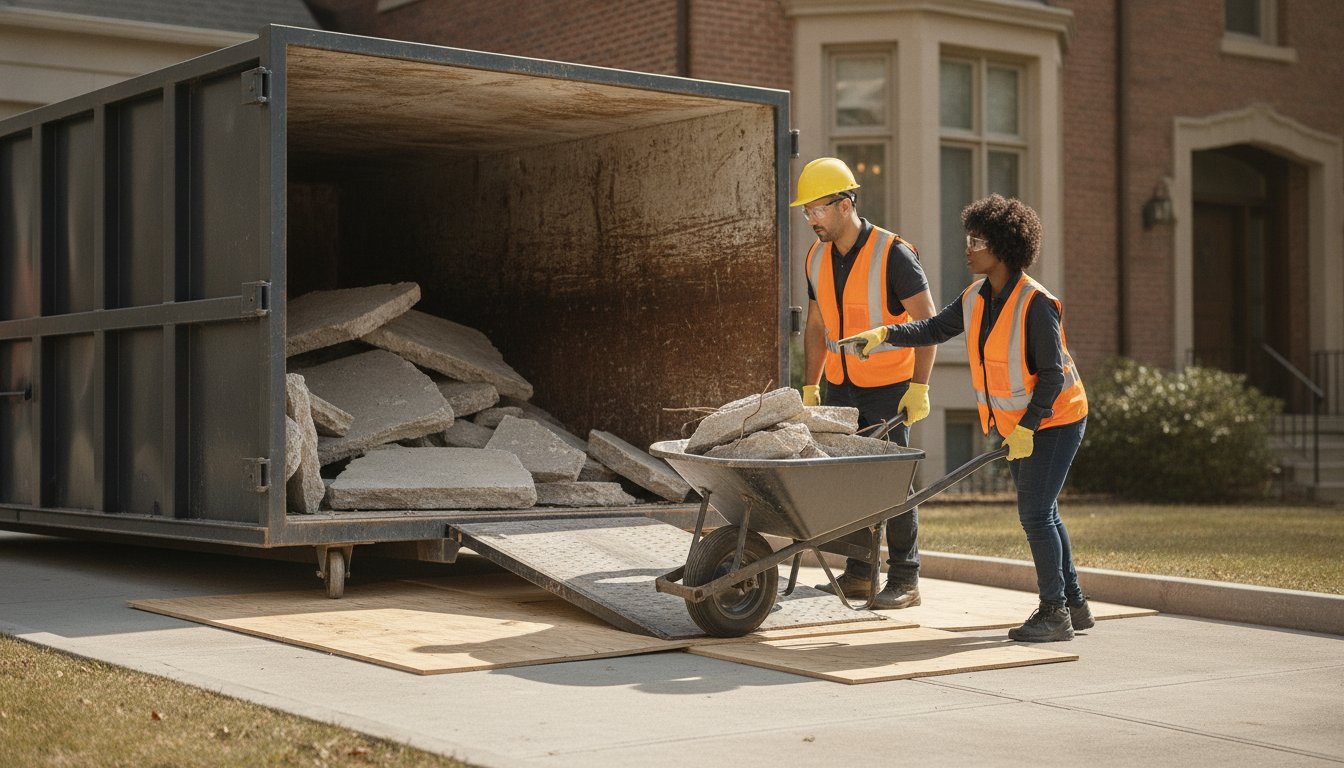
Loading a dumpster with concrete is a game of weight, not volume, and getting it wrong is an expensive mistake. You likely want to maximize every inch of space you paid for, but dense materials like brick, dirt, and asphalt require a different strategy. It is stressful to worry about hidden overage fees or the physical strain of moving tons of debris, especially when you are unsure how to load heavy materials in a dumpster correctly. We understand that you need a reliable process that removes the logistical stress from your residential or commercial project.
You can manage this labor-intensive task like a professional. This guide explains the techniques you need to load heavy debris safely while protecting your driveway and your budget. You will learn the professional "Half-Full" rule and the "Walk-In" strategy to keep your project moving forward without delays. We cover specific methods for distributing weight and selecting the right container size to ensure a damage-free, efficient haul. Follow these steps to eliminate overage fees and finish your project with total confidence.
Key Takeaways
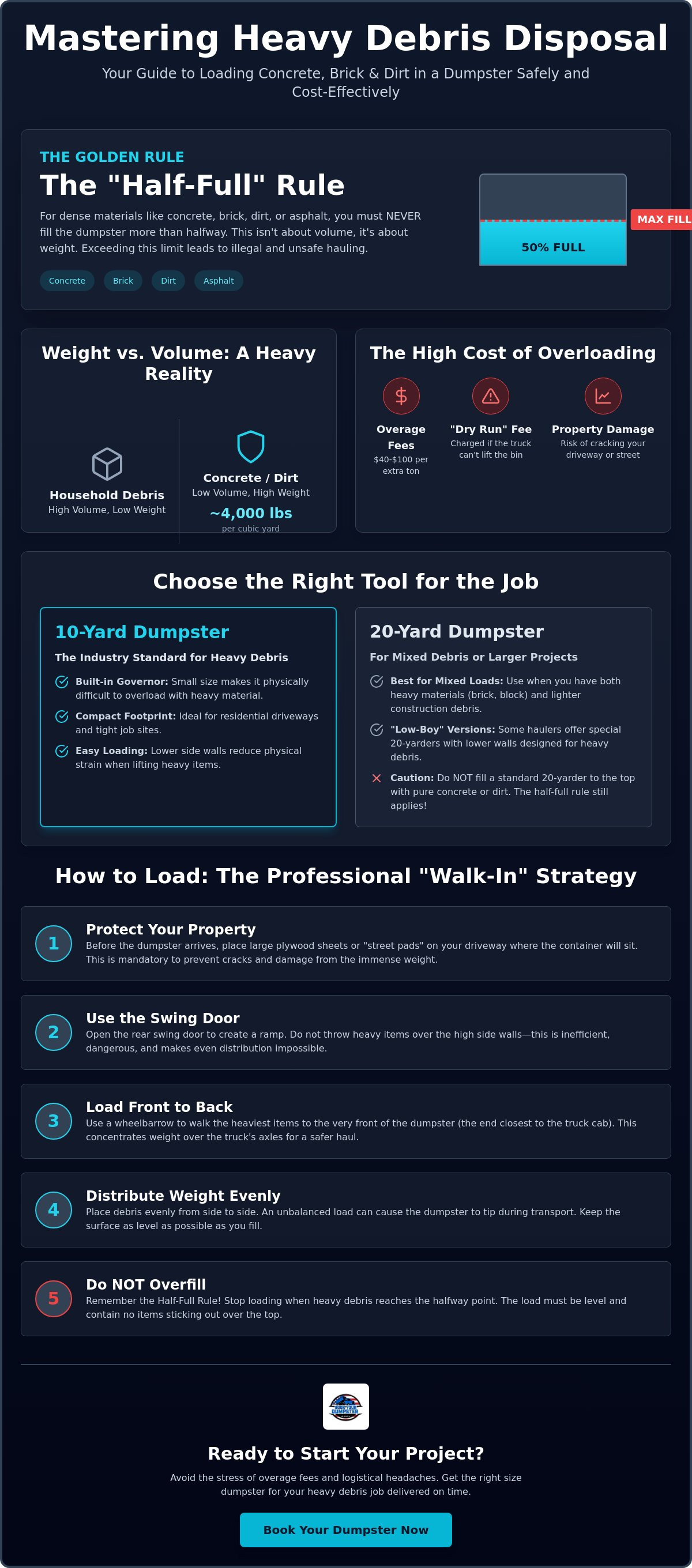
- Apply the "Half-Full" rule for dense debris to prevent illegal hauling and avoid costly overage fees.
- Learn how to load heavy materials in a dumpster by using the rear swing door for direct walk-in access and even weight distribution.
- Select the 10-yard dumpster as the industry standard for concrete and dirt to ensure you stay within legal hauling limits.
- Protect your property from structural damage by using mandatory plywood or street pads under heavy bins.
- Stay compliant with regional road weight regulations in New York, New Jersey, and Illinois to guarantee a seamless pickup process.
Understanding Weight Limits and the "Half-Full" Rule
Heavy materials like concrete, brick, and dirt operate under a different set of rules than standard household debris. While a sofa or old mattress takes up significant volume, they are relatively light. In contrast, heavy materials are incredibly dense. A single cubic yard of concrete weighs about 4,000 pounds. If you fill a large container to the brim with these materials, the total weight will exceed what a standard roll-off truck can legally or physically lift. Understanding dumpster weight limits is the first step in planning your project. You must focus on tonnage rather than just the available space inside the bin.
Why Heavy Debris is Regulated Differently
Roll-off trucks are subject to strict Department of Transportation regulations regarding road weight. Exceeding these limits creates a liability for the hauler and a safety hazard for other drivers. Beyond legalities, the hydraulic system on the truck has a maximum lifting capacity. If the load is too heavy, the hoist cannot pull the container onto the truck bed. This puts extreme stress on the equipment and can lead to mechanical failure. Knowing how to load heavy materials in a dumpster ensures your project stays compliant and your debris actually gets picked up.
The Consequences of Overloading
Overloading leads to immediate logistical headaches and extra costs. If a driver arrives and determines the bin is too heavy to haul safely, they will leave it on-site. This results in a "dry run" fee, and you'll be responsible for unloading the excess material before they return. Additionally, excessive weight increases the risk of your driveway cracking or the street surface sinking under the pressure. The maximum fill line for heavy materials like concrete, dirt, or brick is exactly 50% of the dumpster's height.
Overage fees are the primary reason project budgets spiral out of control. Most rentals include a specific weight allowance in the base price. Every ton over that limit triggers an additional charge, often ranging from $40 to $100 per ton depending on local disposal rates. As you learn how to load heavy materials in a dumpster, remember that a few extra inches of dirt can equal several hundred dollars in fees. Keep your load level and low to protect your project budget and ensure a safe haul.
Choosing the Best Dumpster Size for Heavy Materials
Selecting the right container size is the most effective way to control your project costs. Many people assume a larger bin offers better value, but for heavy debris, the opposite is true. Dense materials like concrete, asphalt, and dirt will reach the legal hauling weight limit long before they reach the top of a 30 or 40-yard dumpster. Using a container that is too large for these materials is a common mistake that leads to massive overage fees. If you want to know how to load heavy materials in a dumpster without breaking the bank, start by picking the right tool for the job.
Loading these materials requires physical endurance. Low sidewalls are a functional necessity. They allow you to lift heavy blocks or shovel dirt over the side without straining your back or shoulders. This accessibility is why specialized containers are preferred for construction and demolition (C&D) projects. Referencing the EPA guide to C&D materials helps you understand the importance of separating these heavy items for proper recycling and management. Proper sorting ensures your project remains environmentally responsible and operationally efficient.
The 10-Yard Advantage for Concrete and Dirt
The 10 Yard Dumpster is the industry standard for a reason. It acts as a built-in volume governor. Because the container is smaller, it is physically difficult to exceed the weight capacity of the hauling truck. This protects you from accidental overloading. These bins also have a compact footprint. This makes them ideal for tight residential driveways or narrow streets in cities like Queens or Boston. You can place the bin closer to your work area, reducing the distance you need to travel with a heavy wheelbarrow. For more detail on this specific size, read our 10 Yard Dumpster Rental Guide.
When to Use a 20-Yard Dumpster
A 20 Yard Dumpster is appropriate for mixed loads or larger quantities of brick and block. Some haulers offer "low-boy" 20-yard containers designed specifically for heavy debris. These have lower walls than a standard 20-yard bin to facilitate easier manual loading. Use this size if your project involves a mix of heavy materials and lighter construction debris. If you are uncertain which size fits your specific project needs, you can check availability and size options to ensure you stay within safe hauling limits. Matching your material type to the container size prevents weight-limit surprises on pickup day.
Step-by-Step: How to Load Concrete, Brick, and Dirt
Loading heavy materials requires a systematic approach to ensure safety and efficiency. Unlike household junk, you cannot simply throw these items in and hope for the best. Understanding the mechanics of how to load heavy materials in a dumpster prevents physical injury and property damage. Follow these five steps to manage your debris like a professional.
- Step 1: Open the rear swing door. Every roll-off container features a heavy-duty door at the back. Unlatch it and swing it wide before you start. This provides direct walk-in access, which is essential for dense debris.
- Step 2: Spread the first layer evenly. Don't dump everything in one corner. Cover the entire floor of the bin with a consistent layer of material. This creates a stable foundation for the rest of the load.
- Step 3: Build the load levelly. As you add more concrete or dirt, keep the surface flat. Stop loading once you reach the 50% height mark to stay within legal weight limits.
- Step 4: Avoid mounding. Do not create a "mountain" in the center. A peaked load is unstable and will likely shift or spill when the truck tilts to lift the container.
- Step 5: Secure the door. Once you reach the limit, sweep the door track clear of rocks or dirt. Close the door and ensure the safety latch is fully engaged before scheduling your haul-away.
The Walk-In Loading Method
Use a wheelbarrow and a temporary ramp made of sturdy planks to move materials directly into the container. Tossing heavy rocks or concrete chunks over the high sidewalls is dangerous. It risks damaging the dumpster's finish or your property if a piece bounces. Walking the material in allows you to place items precisely. This technique helps you eliminate large air pockets and maximize the available space. It's the most efficient way to learn how to load heavy materials in a dumpster without wasting effort.
Distributing Weight for a Balanced Load
Balance is critical for a safe haul. The heaviest items should be centered over the floor of the bin, which eventually sits over the truck's rear axles. If the weight is concentrated at the front or on one side, the container might tip or slide during the winch-up process. An uneven load is the leading cause of failed pickups. Professional drivers will refuse to haul a bin that looks unstable or lopsided. Proper weight distribution protects the truck's hydraulic system and ensures your project stays on schedule.
Safety Measures and Local Regulations
Loading the bin is only half the battle. You must also account for the physical impact on your property and the legal requirements for transport. When learning how to load heavy materials in a dumpster, property protection is a critical safety step. A 10-yard bin filled with concrete can weigh over 10 tons. This concentrated pressure can easily crack standard residential driveways or leave deep ruts in soft soil. You have to prepare the site before the container arrives to avoid costly repairs later.
Driveway and Surface Protection
Protect your investment by placing plywood or 2x4 planks under the dumpster's rollers. These "street pads" distribute the weight across a larger surface area, reducing the risk of structural damage. Identify soft ground or aging asphalt before the truck arrives. In hilly areas like San Francisco or on the narrow, historic streets of Massachusetts, placement is even more delicate. Ensure the ground is level and stable enough to support the massive tonnage of inert materials. Failure to provide a solid foundation can result in the container sinking, making it impossible for the driver to winch it back onto the truck. This creates a logistical nightmare that stops your project in its tracks.
Compliance and Legal Hauling
State DOT regulations in New York, New Jersey, and Illinois are particularly strict regarding road weight limits. If your load exceeds the legal limit for the vehicle's axle configuration, the driver will refuse the haul. You must also keep all debris below the top rail. This allows the automatic tarping system to cover the load securely, preventing falling hazards on the highway. For a deeper look at managing construction waste, read our Construction Debris Removal Guide. Staying compliant keeps your project moving and protects you from municipal fines.
Permit requirements vary by city. If you plan to place a heavy bin on a public street, expect permit fees ranging from $25 to $100 depending on your location. Additionally, keep your load pure. Mixing hazardous waste like chemicals, paint, or batteries with heavy inert materials is strictly prohibited. Prohibited item surcharges can range from $25 to $75 per item. To avoid these logistical headaches and ensure a safe, compliant project, schedule your 10-yard dumpster rental today and follow our professional loading protocols. Our team helps you navigate local regulations so you can focus on the work itself.
Streamlining Your Heavy Debris Pickup
Once you've finished the heavy lifting, the final step is ensuring a smooth transition from your site to the disposal facility. A successful pickup depends on your attention to detail during the final stages of the project. If you followed the previous steps on how to load heavy materials in a dumpster, your container should be balanced, level, and ready for transport. Professional roll-off dumpster rental provides the heavy-duty equipment necessary to move tons of debris safely, but the driver needs your cooperation to complete the task without incident. A failed pickup doesn't just delay your project; it often results in additional dry run fees that eat into your budget.
Pre-Pickup Checklist
Use this final checklist to guarantee your haul-away happens on schedule. Drivers operate on tight windows and need to move quickly. If they encounter obstacles or unsafe loads, they will move to the next customer. Clear communication and preparation are your best tools for a stress-free experience.
- Check the rear door. Ensure the swing door is shut tight. The safety pin must be fully engaged to prevent the door from opening during the tilt-and-lift process. Rocks or dirt caught in the track are common culprits for a door that won't lock.
- Verify debris levels. Walk around the bin. No concrete or dirt should protrude above the top rail. If you see mounding, flatten it out. This is a legal requirement for road safety and tarping.
- Clear the path. The truck requires significant space to maneuver. Move any vehicles, equipment, or materials that might block the driver’s access to the bin. This includes clearing low-hanging branches or wires if possible.
- Inspect the ground. Ensure the plywood or street pads are still positioned correctly under the rollers. The weight of the load often causes the bin to settle, so verify that the protection hasn't shifted.
Online Booking Made Simple
Book Your Dumpster USA removes the logistical stress from your renovation or cleanup. Our platform allows you to select the right size for concrete or dirt in seconds. You don't have to guess which container fits your project weight limits. We provide transparent pricing that helps you avoid the hidden fee trap common in the waste management industry. By focusing on pricing integrity and punctuality, we act as a reliable partner for your most labor-intensive projects. Our digital system tracks your order from the moment you click to the final haul-away.
The digital-first nature of our business means you can schedule everything from your smartphone. There's no need for long phone calls or confusing jargon. You get straightforward honesty and a high-functioning tool to handle your waste. Book your dumpster today to experience a modern approach to heavy debris removal. We move you from a state of clutter to a state of resolution with minimal effort. Following these professional techniques for how to load heavy materials in a dumpster ensures your project ends as smoothly as it began. Let us handle the haul so you can focus on the next phase of your build.
Master Your Next Heavy Haul
Managing a demolition project requires professional precision and the right equipment. You now have the technical knowledge for how to load heavy materials in a dumpster without incurring overage fees or damaging your property. Stick to the "Half-Full" rule for dense debris and use the walk-in method to distribute weight evenly across the floor of the bin. These simple steps protect your budget and ensure a safe, legal haul on pickup day.
We provide reliable 10, 20, 30, and 40-yard options to handle any volume of concrete, brick, or dirt. Our service area covers New York, New Jersey, Illinois, and Massachusetts with transparent pricing and no hidden surprises. We act as your dependable partner to remove logistical stress from your job site. Book your heavy-duty dumpster rental online now to secure punctual, professional service. You've got the plan; now get the right tool to finish the job correctly.
Frequently Asked Questions
Can I fill my dumpster to the top with concrete or dirt?
No, you must never fill a container to the top with dense materials like concrete or dirt. These items are significantly heavier than standard household junk. A bin filled to the brim with dirt will exceed the legal hauling limit for the truck. Follow the "Half-Full" rule to ensure a safe pickup. This keeps the total tonnage within the truck’s hydraulic lifting capacity and prevents safety hazards on the road.
How much weight can a 10-yard dumpster hold?
A 10-yard dumpster typically holds between 2 and 3 tons of material depending on your specific rental agreement. While the container has the volume for more, heavy debris reaches this weight limit quickly. Shoveling dirt or loading concrete until the bin is half-full usually meets the maximum allowable tonnage. Always check your weight allowance before you begin to avoid expensive overage charges after the haul.
What happens if my dumpster is too heavy for the truck to pick up?
The driver will refuse the pickup if the container exceeds the truck's lifting capacity or legal road limits. This results in a "dry run" fee charged to your account. You will then be responsible for manually removing the excess material until the load is safe to transport. To avoid this delay, keep your heavy materials level and stop loading at the 50% height mark as previously instructed.
Do I need to break up large concrete slabs before loading them?
Yes, you should break large concrete slabs into smaller pieces before loading. Large, awkward slabs create significant air pockets that waste valuable space. Smaller chunks allow for a denser, more stable load that stays level during transport. This also makes it easier to use the walk-in method through the rear door. Proper preparation reduces physical strain and ensures you maximize the bin's weight capacity efficiently.
Can I mix heavy materials like brick with regular household trash?
Avoid mixing heavy inert materials like brick or concrete with regular household trash. Most disposal facilities require these materials to be separated for recycling purposes. Mixing them often leads to higher mixed load rates or the refusal of the bin at the landfill. Keep your heavy debris pure to ensure the lowest disposal costs. Check with our team if you have questions about specific mixed-material projects.
How do I prevent the dumpster from damaging my driveway during a heavy load?
Place plywood or 2x4 planks directly under the dumpster's rollers to protect your driveway. This is a mandatory step when you are learning how to load heavy materials in a dumpster safely. The wood distributes the massive pressure of the load across a wider surface area. This prevents the heavy bin from sinking into asphalt or cracking concrete. Always identify the most stable, level ground for placement before the truck arrives.
What is the best way to load a wheelbarrow into a dumpster?
Open the rear swing door and use a reinforced ramp to walk the wheelbarrow directly into the bin. This is the most efficient way to learn how to load heavy materials in a dumpster without wasting effort. Start at the front of the container and work your way toward the back. Spread the material in even layers to maintain a balanced load. This method maximizes your efficiency and protects your back from unnecessary physical strain.
Are there specific items I cannot put in with my heavy construction debris?
You cannot include hazardous waste, liquids, tires, or electronics with your construction debris. Items like wet paint, chemicals, and batteries require specialized disposal and are strictly prohibited in roll-off containers. Mixing these with concrete or dirt results in significant environmental surcharges. Always keep your load limited to inert materials to stay compliant. If you are unsure about a specific item, ask before you toss it in the bin.


