
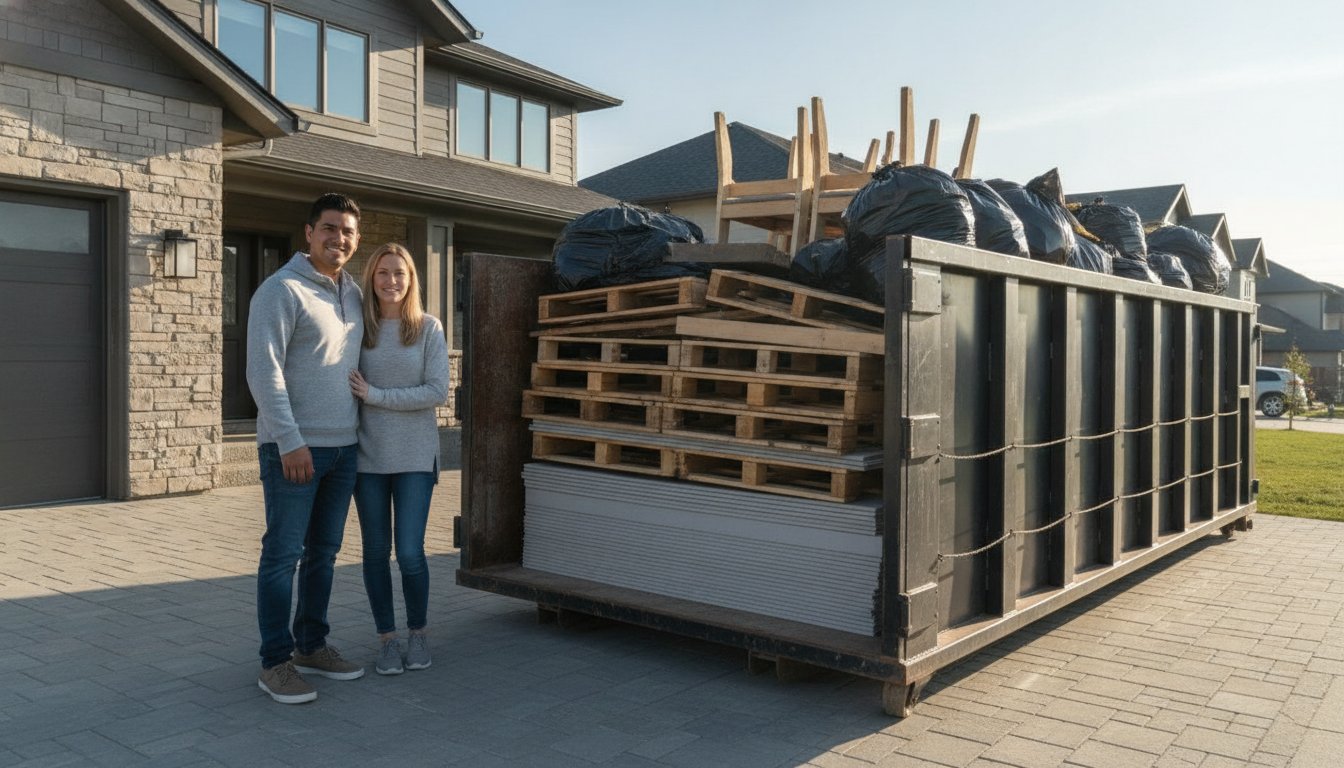
Most people treat a dumpster like a standard trash can; however, loading one correctly is actually a high-stakes game of Tetris where trapped air is your most expensive enemy. You likely fear that your 20 yard dumpster will overflow before the project finishes, forcing you to order a second unit or face steep overage fees. Mastering the art of maximizing space in a rental dumpster is the only way to ensure your cleanup stays on schedule and under budget.
We understand the anxiety of "paying for air" when bulky items create useless gaps in your bin. This guide provides the professional strategies you need to pack every cubic foot with precision. You will learn how to build a structural foundation, collapse hollow items to reclaim volume, and navigate the critical balance between weight limits and total capacity. Follow these steps to complete your 2026 project with a perfectly packed dumpster and zero logistical stress.
Key Takeaways
- Sort your debris into density and shape categories before delivery to prevent disorganized loading and wasted volume.
- Master the professional layering system by placing flat, heavy materials on the floor, a critical step for maximizing space in a rental dumpster.
- Identify and eliminate "air pocket" enemies by breaking down hollow furniture and bulky objects using standard demolition tools.
- Follow the legal "tarpability" rule by keeping all debris below the fill line to avoid safety violations and expensive overage fees.
- Determine if sizing up to a 30 or 40 yard dumpster is more cost-effective than the logistical headache of managing two smaller units.
The Pre-Loading Strategy: Planning Your Dumpster Tetris
Efficiency starts before the truck arrives. Never load directly from a scattered pile of debris. Doing so leads to disorganized voids and wasted capacity. Instead, establish a staging area approximately ten feet from where the truck will drop the container. Divide this zone into sections for wood, metal, and general household junk. This layout prevents you from burying a flat item you'll need later under a pile of heavy debris. Roll-off dumpsters are designed for high-capacity disposal, but their rectangular shape requires a systematic approach to fill every corner.
Distinguish between weight and volume limits during your planning phase. A 10 yard dumpster filled with concrete will exceed weight limits long before it's physically full. In New Jersey, for example, a 10-yard unit typically has a limit of 1.5 to 2 tons. Conversely, a 40 yard dumpster filled with light brush might hit the fill line while staying well under the tonnage cap. Categorize your debris into "heavy" and "bulky" groups to balance the load and avoid overage fees. Mastering this balance is the first step toward maximizing space in a rental dumpster.
Sorting by Material Type
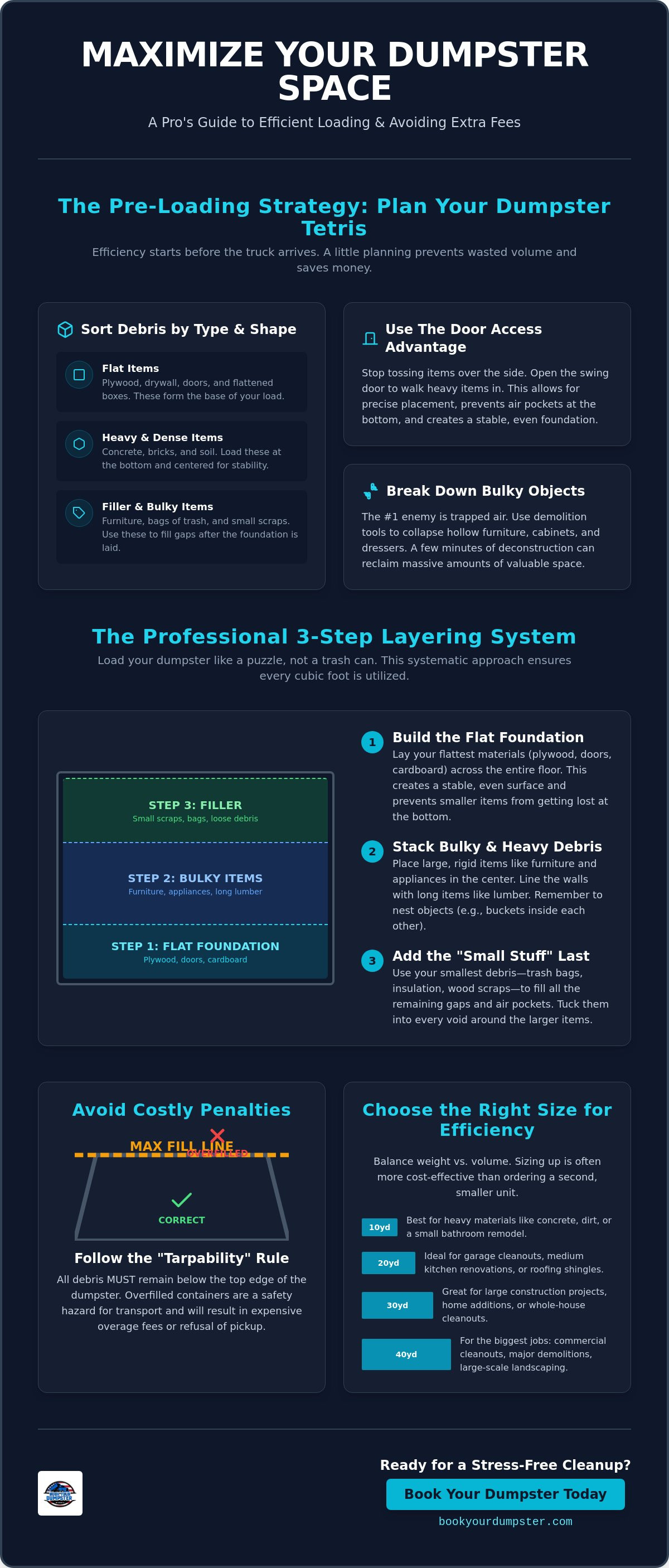
Organization is the secret to maximizing space in a rental dumpster. Group your materials into three distinct categories before the delivery driver arrives:
- Flat Items: Drywall, plywood, doors, and old tabletops. These serve as your floor and wall liners.
- Heavy Masonry: Bricks, concrete, and soil. Keep these separate to ensure they're loaded at the bottom and centered to maintain truck stability.
- Filler Debris: Small scraps, insulation, and bags of trash. Use these to plug the gaps created by larger, irregular items.
Sorting by shape ensures you aren't trying to fit a square peg in a round hole while the clock is ticking on your 14-day rental period. It transforms a chaotic pile into a manageable inventory.
The Door Access Advantage
Stop tossing items over the side walls. It's inefficient and increases the risk of "air pockets" at the bottom of the bin. Every professional-grade roll-off container features a heavy-duty swing door. Open it. This allows you to walk debris directly into the back of the unit. Start your first layer at the far end and work your way toward the door. This method eliminates the "mountain effect" where debris piles up in the center, leaving the corners empty and unusable.
Maintain safety while inside the container. Wear puncture-resistant boots and eye protection. Watch for protruding nails or jagged metal. As you build your base layer, ensure it's level. A flat foundation makes the rest of the project easier and prevents items from shifting. If you're ready to start your project, you can book your dumpster online to secure your delivery date and start your cleanup with the right equipment.
The Professional Layering System for Maximum Volume
Loading a dumpster requires a systematic approach. Tossing items in blindly creates "honeycombs" or large air pockets that waste the volume you paid for. Follow this three-step layering process to ensure you're maximizing space in a rental dumpster. This method treats the container like a vertical puzzle, where the order of operations determines your total capacity. Keep your load level as you work to maintain even weight distribution across the truck's axles.
Step 1: The Flat Foundation
Start with your flattest materials. Lay down old doors, plywood sheets, or flattened cardboard boxes across the entire floor of the container. This creates a uniform surface that makes stacking subsequent layers much easier. Don't leave any part of the metal floor visible if you have flat debris available. A flat foundation ensures that the load weight remains distributed and prevents debris from shifting dangerously during transport. Covering the floor first allows you to walk heavier items into the back without tripping over irregular rubble.
Step 2: Stacking Bulky Debris
Once the floor is covered, move on to your large, rigid items. This "mid-fill" stage is where most volume is lost if handled incorrectly. Place heavy furniture like dressers, cabinets, or appliances in the center of the bin. Position long items, such as 2x4 lumber or PVC pipes, lengthwise along the side walls. This keeps the center of gravity stable and prevents long boards from sticking out at awkward angles. Look for opportunities to "nest" items. Place smaller buckets inside larger ones or stack chairs into one another. If you're tackling a large renovation, choosing a 30 yard dumpster provides the depth needed for these bulky objects without exceeding the fill line.
Step 3: The Small Stuff
Save your smallest debris for the final 20% of the project. This includes household trash bags, loose insulation, or small wood scraps. These items act as "filler" for the irregular gaps left between furniture and appliances. Don't let these gaps stay empty; they're essentially "paying for air." Push these small items into the crevices using a shovel or broom handle. Compacting these small items into the "honeycomb" gaps is essential for maximizing space in a rental dumpster. By filling these voids, you can often fit several more bags of trash than a disorganized load would allow.
Monitor the level of your load throughout the process. An uneven load can cause the truck to tilt during pickup, which may lead to a failed haul and additional fees. Use a rake or shovel to pull high spots into low spots. Aim for a flat, uniform top layer that sits safely below the container's rim. This discipline prevents the need for a second rental and keeps your project on budget.
Breaking Down and Compacting Bulky Objects
Hollow spaces are the primary reason projects exceed their budget. Every cubic foot of "trapped air" inside a cabinet or a box is volume you've paid for but aren't using. To succeed at maximizing space in a rental dumpster, you must adopt a "demolition first" mindset. Don't simply place a chair in the bin; reduce it to its smallest possible components. This approach ensures you fit the maximum amount of debris into a single haul, avoiding the $40 to $200 per ton overweight fees often triggered by inefficient packing and multiple rentals.
Equip yourself with the right tools before you start loading. A standard toolkit for space optimization includes a sledgehammer, a reciprocating saw, and a heavy-duty crowbar. Use the sledgehammer to crush hollow furniture and masonry. Use the saw to cut long lumber or PVC pipes that would otherwise create awkward angles. The crowbar is essential for prying apart joined wood or removing trim. These tools are the difference between a messy, overflowing container and a professional, compact load.
Furniture and Appliance Breakdown
Furniture is notoriously inefficient. A standard wooden dresser occupies nearly 15 cubic feet of space, but when reduced to flat boards, it takes up less than three. Remove legs from tables and chairs to enable flat stacking. Use your crowbar to dismantle bed frames and shelving units into individual planks. If you're working on a smaller residential cleanup, consult our 10 yard dumpster rental guide for tips on managing furniture in tighter containers. Flatten every cardboard box and plastic container to a zero-volume state. If an item cannot be flattened, fill its interior with smaller debris like insulation or wood scraps to eliminate the void.
Construction Debris Compaction
Construction materials require specific techniques to prevent "honeycombing." Drywall is a prime candidate for compaction. Instead of tossing large, irregular sheets, break them into smaller chunks. These chunks are perfect for filling the corner gaps and crevices created by larger items. Cut long lumber into 4-foot sections. This length is manageable and fits perfectly across the width of most roll-off containers, preventing boards from "bridging" and creating empty space underneath.
Compress light, high-volume materials like fiberglass insulation or ceiling tiles. These items are mostly air and can be squashed significantly under the weight of heavier debris. Place these materials in the middle of your load and stack heavier wood or drywall on top of them. This natural compaction is a passive but effective way of maximizing space in a rental dumpster. By the time you reach the fill line, your load should be a dense, solid mass of material with no visible gaps.
Safety Limits and Avoiding Costly Overfill Penalties
Efficiency has a legal and safety ceiling. While maximizing space in a rental dumpster is your goal, you must respect the "water level" rule. This means no debris can extend above the top rim of the container. Hauling companies are legally required to secure a tarp over the load before transport. If items protrude past the edges, the driver cannot safely cover the bin. This results in a "dry run" fee where the driver leaves the dumpster on-site, and you are charged for the failed pickup attempt. Stop loading immediately once the debris reaches the fill line marked on the interior walls.
Prohibited items also impact your loading strategy. In New Jersey and New York, environmental regulations are strict as of June 2026. Do not include hazardous waste, tires, batteries, or electronics. New Jersey's Electronic Waste Management Act specifically forbids placing TVs, computers, or monitors in roll-off containers. Including these items can trigger significant fines and force you to unload the dumpster to remove the contraband. Keep your load clean to ensure a smooth, penalty-free removal process.
The Danger of the Overfill
An overfilled dumpster is a projectile hazard. During highway transport, loose debris can shift and fly out, causing accidents or property damage. Drivers prioritize safety and will refuse any load that isn't "tarpable." If you realize you have gone too high, you must redistribute the load. Move smaller items into the gaps between larger ones or break down bulky furniture further to lower the overall profile. Never use heavy machinery to "pack down" a load that is already over the rim; this can damage the container and lead to additional repair charges.
Weight Capacity Constraints
Volume is only half of the equation. Weight limits are equally critical, especially for construction projects involving masonry or dirt. In New Jersey, standard weight limits for 2026 typically range from 1.5 to 2 tons for a 10 yard dumpster and 3.5 to 4 tons for a 30 yard dumpster. Exceeding these limits often results in overweight fees ranging from $40 to $200 per extra ton. If you are handling heavy materials, consult our construction debris removal guide to learn how to manage tonnage effectively. Remember that a small container filled with concrete often weighs more than a large container filled with household junk.
Avoid the stress of mid-project delays by choosing the right equipment from the start. If you are unsure about your total waste volume or weight requirements, book your dumpster through our digital platform to see available sizes and weight capacities for your specific location. Maintaining a safe, level load protects your budget and ensures your project finishes on schedule.
Choosing the Right Size for Efficiency in NY, NJ, and Beyond
Selecting the wrong container size is the most common mistake in waste management. If you underestimate your debris, you'll face the logistical nightmare of ordering a second unit. This effectively doubles your delivery fees and project timeline. Sizing up from the start is a strategic move for maximizing space in a rental dumpster. It provides the breathing room needed to load bulky items without the constant fear of hitting the fill line too early. A larger container often costs less than the combined price of two smaller rentals.
Dumpster Size Comparison
- 10 Yard Dumpster: Ideal for small garage cleanouts or heavy, dense materials like concrete, dirt, or brick. In New Jersey, these typically carry a 1.5 to 2 ton weight limit as of June 2026.
- 20 Yard Dumpster: The industry standard for medium sized projects, such as kitchen renovations or flooring replacements. It balances volume with a manageable footprint for most residential driveways.
- 30 Yard Dumpster: Essential for major home additions or estate cleanouts. These units are deeper, allowing for the nesting and layering techniques discussed in previous sections.
- 40 Yard Dumpster: Reserved for commercial sites or total building demolitions. This size offers the maximum volume for light, bulky debris that takes up significant cubic footage.
Local Service Area Tips
Your geographic location dictates your loading constraints. In urban centers like Queens or San Francisco, narrow streets and limited parking make placement a precision task. In New York City, the carting company must obtain a Street Opening Permit from the Department of Transportation to place a container on a public street. These permits are typically valid for up to five days. Always verify local permit requirements with your municipal public works department before scheduling delivery to avoid fines or immediate removal orders.
Climate also plays a role in your project's weight management. For those working through Illinois winters, snow and ice can accumulate inside an open container. This adds significant water weight that doesn't reflect the actual debris you've loaded. Use a heavy duty tarp to cover the dumpster during precipitation. This simple step prevents you from paying overweight fees for frozen rain. It's a pragmatic way of maximizing space in a rental dumpster while keeping the load light and dry.
Streamline your project by using a provider that understands these regional nuances. Book Your Dumpster USA simplifies the selection process through a direct, digital platform. You can view available sizes and secure your rental in minutes. Don't let logistical stress stall your cleanup. Choose your size, schedule your drop off, and apply the Tetris strategies from this guide to finish your project with professional efficiency.
Master Your Cleanup with Professional Loading Techniques
Efficient waste management is the backbone of any successful renovation or cleanout. By prioritizing a flat foundation and dismantling hollow furniture into boards, you ensure every cubic foot of your container is used effectively. Remember to monitor both your volume and weight limits to avoid safety risks and financial penalties. Mastering the art of maximizing space in a rental dumpster allows you to complete your project using a single unit, keeping your site organized and your budget intact.
We provide the tools you need to handle debris with confidence. Whether you're navigating narrow streets in San Francisco or managing a site in New Jersey, our streamlined online booking system connects you with the right equipment. We offer 10, 20, 30, and 40-yard sizes to accommodate any project scale across NY, NJ, IL, MA, and San Francisco.
Ready to start your project? Book your perfectly sized dumpster online today with Book Your Dumpster USA!
Take control of your project today. With the right strategy and a reliable partner, your cleanup will be fast, safe, and cost-effective.
Frequently Asked Questions
Can I fill my dumpster to the very top of the rim?
No, you cannot fill the container past the top rim. You must stop loading at the "fill line" or "water level" clearly marked on the interior walls. Drivers are legally required to tarp the load for highway safety before transport. If debris protrudes above the rim, the driver will refuse pickup. This results in a dry run fee and forces you to manually remove the excess material before the next pickup attempt.
What happens if my dumpster is too heavy even if it is not full?
You will be charged overweight fees ranging from $40 to $200 per extra ton if you exceed the weight limit. These fees apply even if the bin is only half full. Heavy materials like concrete, dirt, or brick can reach the tonnage cap at only 25% of the total volume. Always monitor your weight and distribute heavy materials evenly to avoid these automatic and costly penalties during your project.
Is it better to break down boxes or use them to hold smaller trash?
Always break down boxes to a flat state to save volume. Using them as containers creates massive air pockets that hinder maximizing space in a rental dumpster. Flattened cardboard takes up negligible volume, whereas an intact box wastes valuable cubic footage you paid for. Use loose debris to fill natural gaps between larger items instead of relying on boxes to hold your trash, which only creates more wasted space.
How do I maximize space if I am disposing of large appliances?
Fill the hollow interiors of the appliances with smaller, non-prohibited debris to reclaim lost volume. If you are loading a dryer, dishwasher, or stove, pack the inside with insulation, small wood scraps, or household bags. This strategy effectively turns a bulky object into a storage unit. It ensures you aren't paying to haul empty air to the landfill while your project continues, effectively doubling the efficiency of that specific area.
Do I need to worry about weight distribution for my driveway safety?
Yes, keep the weight centered and level to prevent driveway damage and failed pickups. An uneven load puts excessive pressure on one side of the container, which can crack asphalt or pavers when the truck lifts it. Distribute heavy materials like bricks or soil evenly across the floor. This maintains stability, protects your property, and ensures the truck can safely hoist the load without damaging the roll-off mechanism or your driveway.
What items are strictly prohibited from being loaded into a rental dumpster?
Hazardous materials, electronics, tires, and batteries are strictly prohibited from all rental containers. In New Jersey, the Electronic Waste Management Act specifically bans TVs, computers, and monitors from dumpsters. Loading these items will result in significant fines and the requirement to remove them before the container is hauled. Always check with your local municipality for specific e-waste and chemical disposal rules to avoid project delays and legal penalties.
How can I prevent my neighbors from throwing their trash in my dumpster?
Secure your dumpster with a heavy duty tarp or a plywood cover and bungee cords to prevent unauthorized use. This creates a physical and psychological barrier that discourages neighbors from using your private rental for their own trash. Most people are less likely to tamper with a secured unit than an open one. This simple precaution also protects you from being held liable for any prohibited items or overage fees they might cause.
Should I use a tarp to cover my dumpster overnight?
Yes, covering your dumpster prevents water weight from increasing your tonnage and causing overage fees. Rain and snow can add hundreds of pounds to your load, potentially pushing you over the weight limit. A tarp also helps with maximizing space in a rental dumpster by keeping the materials compressed and dry. It is a simple, effective way to maintain control over your project costs and prevent debris from blowing out.


