
Did you know the United States generates over 600 million tons of construction and demolition debris every year? That is more than double the amount of standard household trash. As you tear out old cabinets or rip up flooring, it's easy to feel overwhelmed by the sheer volume of waste. You want a beautiful home, but you don't want to contribute to the 37% of global CO2 emissions caused by the building and construction sector. Understanding the environmental impact of my renovation debris is the first step toward a cleaner, more responsible project.
We agree that managing piles of mixed materials is a logistical headache. You shouldn't have to guess which items are recyclable or worry about violating local disposal regulations. This 2026 guide promises to turn that confusion into a concrete plan for waste reduction. You will learn the lifecycle of your debris, discover actionable steps to minimize landfill contributions, and find out how to select a waste partner that values efficiency. Let's move your project from a state of clutter to a state of resolution.
Key Takeaways
- Recognize how residential projects contribute to the 600 million tons of annual construction and demolition waste.
- Evaluate the environmental impact of my renovation debris by identifying materials like drywall that produce harmful gases in landfills.
- Shift from standard demolition to deconstruction to salvage high-value materials and cut your project's carbon footprint.
- Master source separation techniques on-site to comply with stricter 2026 waste diversion mandates and local regulations.
- Use professional dumpster solutions to organize your job site and reduce the logistical stress of sustainable debris management.
Defining the Environmental Footprint of Renovation Debris
Most homeowners view a kitchen gut or a bathroom remodel as a path to a better lifestyle. However, these projects generate a massive volume of waste that the average trash service cannot handle. Residential renovation debris consists of Construction and Demolition (C&D) materials. This category includes everything from lumber and drywall to masonry and old plumbing fixtures. According to 2026 EPA data, the United States generates over 600 million tons of C&D debris annually, which is more than double the amount of standard municipal solid waste. Understanding the environmental impact of my renovation debris starts with recognizing that your project is part of a global material management crisis.
There is a critical distinction between "clean" debris and contaminated waste. Clean debris, such as untreated wood or unpainted masonry, is highly recyclable. Contaminated waste includes materials treated with lead-based paint, asbestos, or chemical sealants. In 2026, sustainability standards like LEED v5 have tightened. These regulations now require more precise waste diversion plans for residential projects. If you want to minimize your footprint, you must separate these streams at the source. Mixing hazardous materials with recyclable ones ruins the entire load, forcing it directly into a landfill.
Managing this process requires the right tools. Visit bookyourdumpster.com to select a container that fits your project scale. Professional waste partners ensure your Demolition waste reaches the correct facility rather than becoming a permanent environmental burden.
The Lifecycle of a Teardown
Every piece of debris has a history. The lifecycle begins with raw material extraction, moves through energy-intensive manufacturing, and ends at a disposal site. Transporting heavy materials like concrete or old roofing shingles consumes significant fuel and increases local emissions. In 2026, embodied energy represents the cumulative energy consumed by a material through its entire lifespan, from initial resource extraction and manufacturing to its eventual transport and disposal. Reducing waste doesn't just save landfill space; it honors the massive energy already invested in those materials.
Why 'Out of Sight' Shouldn't Mean 'Out of Mind'
It's easy to toss a broken tile into a bin and forget it exists. This psychological barrier leads to inefficient disposal habits. In regions like NY and NJ, landfill capacity is shrinking rapidly, making regional land use a primary concern. Non-biodegradable materials like certain plastics and treated wood can sit in the ground for centuries. When you ignore the environmental impact of my renovation debris, you contribute to a legacy of waste that future generations must manage. Take control of your site. Sort your materials. Choose disposal methods that prioritize recovery over burial.
The Direct Impact of Construction and Demolition (C&D) Waste
Landfills aren't just holes in the ground. They are active chemical reactors that process everything you discard. When you ignore the environmental impact of my renovation debris, you ignore the physical reality of landfill saturation. Many regional waste sites across the United States are reaching their maximum capacity. This shortage forces waste management companies to transport debris hundreds of miles to rural facilities. This long-distance hauling significantly increases the carbon footprint of your project due to heavy truck emissions. Research into the Impacts of Construction and Demolition Waste shows that C&D materials can make up nearly 40% of the total solid waste stream, creating a massive burden on local infrastructure.
The damage goes beyond simple space. Organic debris, like old framing lumber or paper-faced drywall, decomposes anaerobically in landfills. This process releases methane, a greenhouse gas significantly more potent than carbon dioxide. Additionally, improperly handled materials can leak toxins. Rainwater filters through the waste, picking up heavy metals or chemical residues from old paints and adhesives. This "leachate" poses a direct threat to local soil and groundwater quality. Expanding these dump sites also requires clearing natural land, which leads to permanent habitat destruction for local wildlife.
Landfill Overload in Urban Corridors
High-density areas like Queens and San Francisco face unique logistical challenges. With no local room to expand, waste must travel further, compounding the environmental cost. States are fighting back with strict regulations. Massachusetts and Illinois have implemented landfill bans on specific materials like asphalt shingles and gypsum wallboard to force better recycling habits. Before you start your tear-out, schedule a dumpster rental to ensure your materials are handled according to these modern standards.
Resource Depletion and the Lost Value of Debris
Every ton of wood or metal sent to a landfill represents a failure in resource management. Throwing away these materials necessitates more mining and timber harvesting to create "virgin" replacements. This cycle depletes natural resources and consumes vast amounts of energy. The circular economy aims to treat your debris as a resource rather than refuse. Salvaging architectural elements or recycling scrap metal keeps materials in use and reduces the overall the environmental impact of my renovation debris. Plan your project with recovery in mind to save both the planet and the economy.
Material Matters: Common Debris and Its Ecological Cost
Not all waste is created equal. Some materials sit inert in a landfill for centuries, while others actively degrade the surrounding environment. Identifying the specific materials in your project is the only way to accurately measure the environmental impact of my renovation debris. Concrete, brick, and masonry are the heavy hitters of the waste stream. They account for a massive percentage of debris weight but are also among the easiest materials to crush and reuse as road base. For a deeper dive into how these categories are classified, consult the EPA guide to managing C&D materials.
Other materials pose more complex risks. Asphalt shingles are petroleum-based and can take hundreds of years to break down. Treated lumber, especially from projects built before 2004, often contains heavy metals like arsenic or copper that can leach into the soil. Even modern plastics used in piping and siding represent a loss of high-value resources if they aren't captured and recycled. Your disposal strategy must account for these differences to prevent long-term ecological damage.
The Gypsum Problem
Drywall, or gypsum, is a surprising environmental hazard. When drywall gets wet in the anaerobic environment of a landfill, it produces hydrogen sulfide gas. This gas is toxic and carries a distinct rotten egg odor. In 2026, many states in the Northeast have officially banned drywall from standard landfills to curb these emissions. To stay compliant, you must keep your drywall scraps dry and separate from other debris. This allows facilities to process the gypsum into new wallboard or soil amendments. Order a 10 yard dumpster specifically for clean drywall to ensure it stays out of the local waste stream.
Metals: The Low-Hanging Fruit of Sustainability
Recycling metals is a massive win for the planet. Producing steel or aluminum from scrap consumes up to 95% less energy than mining virgin ore. During a bathroom or kitchen gut, look for copper piping and brass fixtures. These are high-value materials that should never be buried. Never place heavy metals at the bottom of a mixed dumpster where they might be crushed or hidden. Keep them accessible so they can be easily sorted at the recovery facility. Managing the environmental impact of my renovation debris becomes much simpler when you treat scrap metal as a financial and ecological asset rather than trash.
5 Ways to Reduce Your Renovation's Environmental Impact
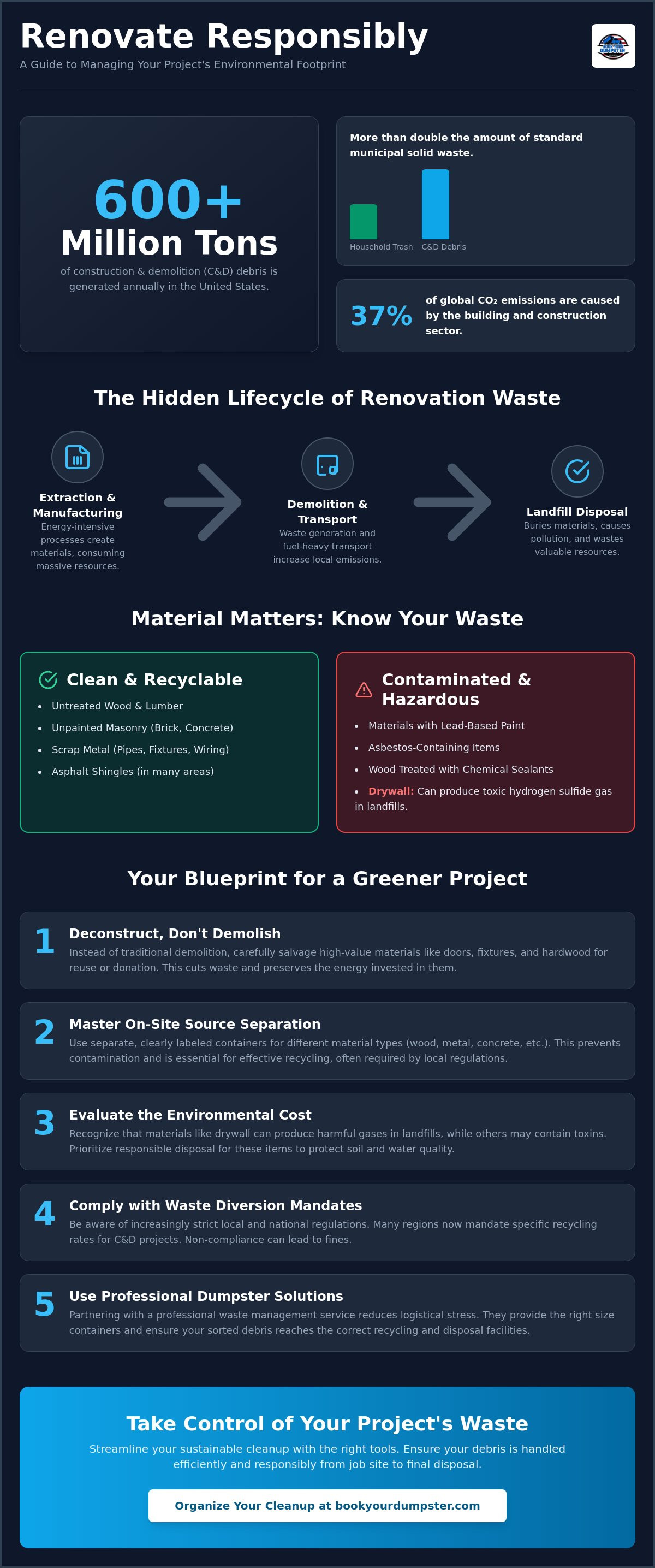
Understanding the problem is only the first step. You must now implement a strategy to mitigate the environmental impact of my renovation debris. Effective waste management requires a shift from a "trash it all" mindset to a recovery-focused approach. By planning for disposal before the first wall comes down, you reduce logistical stress and ensure your materials don't end up as permanent landfill fixtures. Follow these five strategies to streamline your project and protect local resources.
- Prioritize Deconstruction: Carefully dismantle structures to preserve lumber, cabinets, and fixtures for reuse.
- Implement Source Separation: Keep drywall, wood, and metal in separate piles to maximize recycling rates.
- Donate Usable Items: Reach out to local charity programs for old sinks, appliances, and cabinetry.
- Right-Size Your Equipment: Choose the largest appropriate container to minimize transport emissions from multiple trips.
- Verify Your Hauler: Select a partner that provides clear documentation on where your debris is processed.
Deconstruction vs. Demolition
Demolition is fast but destructive. Deconstruction is a deliberate process that treats your house as a bank of resources. By using pry bars and screw guns instead of sledgehammers, you can salvage a high percentage of materials for future use. This practice is a major environmental win, as salvaged materials are valued at 200% toward diversion calculations under 2026 LEED v5 standards. For a deep dive into professional techniques, read our Ultimate Guide to Construction Debris Removal.
Optimizing Logistics with Right-Sized Dumpsters
Logistics play a massive role in the environmental impact of my renovation debris. Every time a truck travels to your site, it consumes fuel and generates local emissions. Staging your project efficiently means choosing the right container from the start. A single 30 yard dumpster is significantly more eco-friendly than three separate trips for 10-yard units. However, for targeted cleanouts of heavy materials like concrete or clean drywall, consult our 10 Yard Dumpster Rental Guide. Proper sizing prevents overflow and eliminates the need for emergency pickups. Schedule your right-sized dumpster today to ensure your project remains efficient and responsible.
Sustainable Waste Logistics: How Professional Dumpster Services Help
A roll-off dumpster is a high-functioning tool for ecological management. It centralizes your waste stream into a single, manageable point. This prevents the logistical nightmare of multiple small truckloads that increase local traffic and fuel consumption. By using a single 20 yard or 30 yard container, you consolidate your project's footprint. This efficiency is a direct way to mitigate the environmental impact of my renovation debris. Consolidating waste into one trip reduces total carbon emissions compared to making several runs to a local facility yourself.
Professional services like Book Your Dumpster USA provide the infrastructure needed for this transition. We remove the logistical stress of waste diversion. Our systems ensure your debris doesn't just disappear; it reaches the correct processing facility. This changes your project from a messy cleanup into a responsible, professional renovation. You gain control over the mess while we handle the heavy lifting and regulatory compliance. It's a pragmatic solution for a modern home project.
Direct Booking for Indirect Benefits
Digital efficiency saves more than just time. Online booking systems reduce paper waste and administrative overhead. They create a transparent schedule that ensures dumpsters don't sit idle on your property. Idle containers often attract illegal dumping, which complicates your recycling efforts and increases the environmental impact of my renovation debris. Our drivers use professional placement techniques. This protects your landscaping and prevents soil compaction, preserving the local ecosystem on your property while keeping your site organized.
Your Partner in Responsible Disposal
Compliance is mandatory. In 2026, regulations in NY, NJ, and IL are stricter than ever regarding material diversion. Tipping fees for mixed debris in the Northeast can reach $80.67 per ton. Using a professional service ensures you meet these legal requirements without the headache of researching every local ordinance. We offer 10, 20, 30, and 40 yard dumpsters to match any project scale. This capacity is essential for both commercial contractors and residential DIYers who need to move large volumes of material quickly and safely.
Ready to manage your project responsibly? Book your roll-off dumpster today. Choose the size that fits your site and let us handle the logistics. We provide the reliability you need to finish your renovation with a clean conscience and a clean site.
Take Control of Your Project's Ecological Legacy
A successful renovation shouldn't leave a permanent scar on the environment. You've learned that source separation and deconstruction are your best tools for minimizing landfill contributions. By identifying high-value recyclables like metals and separating hazardous drywall, you turn a messy tear-out into a responsible recovery project. Managing the environmental impact of my renovation debris doesn't have to be complicated when you have a reliable partner to handle the heavy lifting. Efficient logistics and right-sized equipment are the final pieces of your sustainability plan.
We provide 10, 20, 30, and 40 yard dumpsters to ensure your project remains efficient and organized. Our transparent logistics serve homeowners and contractors across New York, New Jersey, Illinois, and Massachusetts. Use our streamlined online booking system to save time and remove the administrative stress from your cleanup. Secure your eco-efficient dumpster rental at BookYourDumpster.com. You have the knowledge to build a better home and a better planet. Start your next project with a clear plan and a commitment to a cleaner community.
Frequently Asked Questions
What is the most environmentally harmful type of renovation waste?
Lead-based paint and asbestos are the most hazardous, but treated wood from pre-2004 projects is a significant silent threat in the US. This material often contains arsenic or copper that leaches into the soil if buried in a standard landfill. Identifying these toxins early is vital to reducing the environmental impact of my renovation debris and protecting local groundwater from long-term chemical contamination.
Can I recycle drywall from my home renovation?
Yes, but you must keep it clean and dry to meet 2026 recovery standards. In San Francisco and parts of Massachusetts, drywall is frequently banned from standard disposal sites to prevent the release of hydrogen sulfide gas. By using a dedicated container for gypsum scraps, you ensure the material is repurposed into new wallboard or agricultural soil amendments rather than becoming a toxic atmospheric burden.
How does a dumpster rental help the environment compared to hauling it myself?
Renting a dumpster drastically reduces the total number of vehicle trips required for your project. A single 30 yard dumpster can hold the equivalent of 12 to 14 pickup truck loads, which means fewer carbon emissions and less traffic congestion in dense areas like Queens. Professional haulers also have established routes to certified facilities that maximize material recovery through high-speed mechanical sorting.
Are there specific regulations for renovation debris in New York or New Jersey?
Both states have strict mandates requiring homeowners and contractors to track their waste diversion rates. In New Jersey, local ordinances often require you to prove that at least 50% of your project debris was diverted from landfills before a permit is closed. Using a professional waste partner ensures you receive the accurate weight tickets and documentation needed to satisfy these 2026 state-level environmental requirements.
What happens to my debris after the dumpster is picked up?
Your load is taken to a specialized C&D processing hub where it undergoes intense sorting. Under 2026 LEED v5 rules, these facilities are often third-party certified to ensure they exceed the default 35% diversion rate for commingled waste. This process is the most effective way to lower the environmental impact of my renovation debris by extracting wood, metal, and masonry for immediate industrial reuse.
Is it better to donate old appliances or recycle them?
Donation is always the best first step for any functional appliance or fixture. It preserves the "embodied carbon" already spent during the manufacturing and shipping of the item. If the unit is broken beyond repair, professional recycling is the next best choice. This allows for the recovery of steel and copper, which consumes significantly less energy than extracting virgin ores from the earth.
How can I reduce the amount of waste my renovation produces?
Perform a thorough material audit before you start the tear-out. Identify high-value elements like hardwood flooring or solid doors that can be salvaged through careful deconstruction instead of aggressive demolition. By separating these items on-site, you reduce the volume of mixed trash and increase the efficiency of the recycling process at local facilities in Illinois and New York.
Does the size of the dumpster I rent affect my carbon footprint?
Yes, selecting the right size prevents the need for multiple truck deployments. In high-density urban corridors like San Francisco, an undersized dumpster leads to overflow and illegal dumping, which complicates local waste management. Choosing one 40 yard unit instead of two 20 yard pickups cuts your project's transport-related emissions in half and ensures your site stays organized and compliant with local litter laws.


