
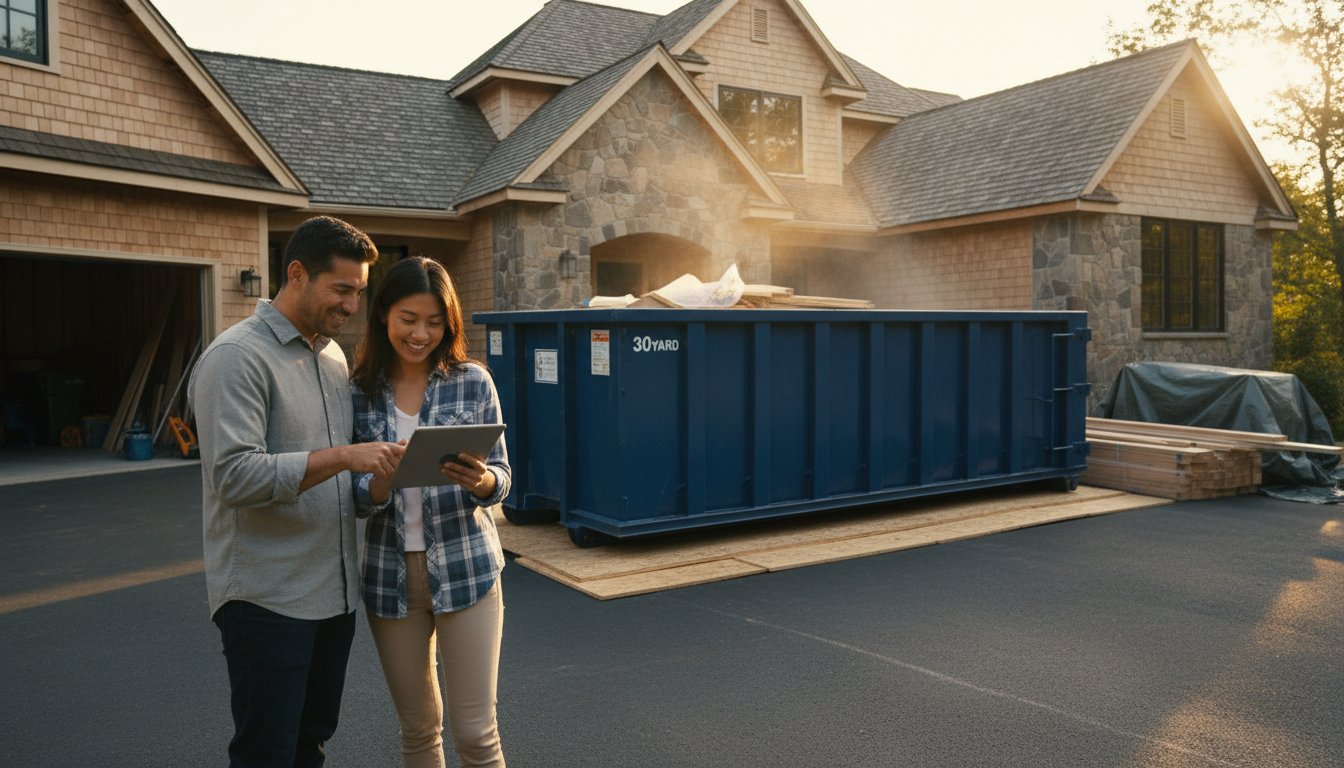
Choosing the wrong container size can turn a $649 project into a $1,000 headache before the first tile is even laid. You've likely felt the anxiety of watching a debris pile grow, wondering if it'll exceed weight limits or if a heavy steel bin will crack your concrete driveway. It's frustrating to deal with the logistical mess of a major project when you just want the job done. We understand that you need reliability and transparency, not a surprise bill for overage fees that can reach $200 per ton. Selecting a 30 yard dumpster for home renovation is often the smartest ROI for large-scale demolition, but only if you manage the logistics correctly.
This guide will help you determine if this specific size fits your project's footprint and volume. You'll learn how to bypass the common pitfalls of city permits and property damage while keeping your budget intact. We'll break down the 9-pickup-truck capacity of this 22-foot container, explain how to secure a local permit for as little as $10, and show you how to Book Your Dumpster USA online with total pricing clarity. Stop guessing and start cleaning up your job site with a professional, no-nonsense approach to waste management.
Key Takeaways
- Learn why 30 cubic yards is the professional standard for 3+ room guts and managing bulky cabinetry.
- Determine if a 30 yard dumpster for home renovation offers the best ROI for your specific debris type.
- Master the 60-foot approach and 25-foot overhead clearance requirements to ensure a safe, seamless delivery.
- Protect your property using plywood or street pads to prevent asphalt cracking and costly driveway repairs.
- Book Your Dumpster online in under five minutes to secure transparent, flat-rate pricing with no hidden surcharges.
Why the 30 Yard Dumpster is the Workhorse of Home Renovations
Efficiency is the foundation of a successful job site. A 30 yard dumpster for home renovation is the central tool for managing large volumes of debris without constant interruptions. It provides exactly 30 cubic yards of waste capacity. To understand What a 30-Yard Dumpster Is, you must look at its role in major demolition. While a 20-yard bin often hits its limit before the job is half finished, the 30-yard model handles bulky items like subflooring and drywall without constant overflow. In 2026, trends like open-concept living and basement conversions generate massive waste streams that smaller bins simply can't accommodate. Choosing the right size initially prevents the expense of a second swap-out fee. Visit Book Your Dumpster USA to check availability and secure your project schedule.
The 30 Yard Advantage for Residential Projects
This container balances a manageable footprint with high volume. It fits into standard suburban driveways while providing the depth needed for lightweight, high-volume materials like insulation or old cabinetry. Contractors prefer the 30-yard size for multi-week timelines. It stays on the job site longer and requires fewer pickups; this keeps your workflow consistent. This reliability is essential when coordinating multiple trades or managing strict project deadlines. It removes the stress of waste management so you can focus on the build.
Comparing 30 Yards to 20 and 40 Yard Options
A 20-yard bin is often a liability for major renovations. It frequently leads to overage charges when debris peaks above the walls. Conversely, a 40-yard bin is usually too large for residential streets and often requires expensive municipal permits. Selecting a 30 yard dumpster for home renovation offers the best ROI per cubic yard. It gives you the capacity of a commercial bin with the accessibility of a residential tool. This size prevents the logistical stress of managing multiple smaller bins or navigating the tight clearances of urban streets. Choose the size that matches your demolition plan to ensure a hassle-free cleanup.
Dimensions and Capacity: What Fits in 30 Cubic Yards?
A 30 yard dumpster for home renovation provides a massive footprint for your debris, which is essential for busy New York job sites. The standard dimensions are 22 feet long, 8 feet wide, and 6 feet high. This size is equivalent to approximately 9 standard pickup truck loads. While the volume is generous, you must respect the weight limit. Most 30-yard containers have a threshold of 3 to 5 tons, or 6,000 to 10,000 pounds. Exceeding this limit triggers overage fees that typically range from $40 to $100 per ton.
Understanding the physical limits helps you plan your demolition. When you are handling renovation debris responsibly, you quickly realize that volume and weight are two different battles. Heavy materials like plaster or tile add weight faster than they fill space. Conversely, items like insulation fill the bin quickly but weigh very little. Balancing these materials is key to a successful rental experience. When selecting a 30 yard dumpster for home renovation, you must account for the density of your specific materials.
Common Renovation Materials by Volume
Drywall and plaster are the most common debris types. A 30-yard bin can hold several hundred sheets of drywall, but the weight of plaster can quickly push you toward the 5-ton limit. For flooring, you can comfortably fit about 2,500 to 3,000 square feet of carpeting or hardwood. Large appliances like refrigerators and stoves fit easily. However, they create "dead air" if not surrounded by smaller debris. Pack loose items around these bulky units to fill every gap.
Pro Tips for Efficient Loading
Maximize your rental by following the "Heavy Bottom" rule. Place heavy masonry, tile, or concrete at the very base of the bin. This keeps the center of gravity low for the truck and prevents lighter items from getting crushed at the bottom where they are hard to reach. Break down all cabinets and furniture. A whole cabinet is mostly empty air. Smash them into flat panels to double your usable space.
Always maintain a level load. The debris should never peak above the 6-foot side walls. Drivers cannot legally transport a dumpster if the material is spilling over the top. This leads to "over-the-top" fees or a refused pickup, which stalls your project. If you find your pile growing faster than expected, check current availability to schedule a swap before the bin is completely full.
Is a 30 Yard Dumpster Right for Your Specific Renovation?
Determining if a 30 yard dumpster for home renovation fits your specific project requires a room-by-room audit of your waste. For a whole-home gut involving three or more rooms, 30 yards is your minimum requirement. Smaller bins fail when you start pulling out lath and plaster or heavy subflooring from multiple areas. This size also handles exterior updates like siding replacement for a 2,500-square-foot home or the demolition of a large 400-square-foot wooden deck. Following EPA guidelines on construction debris ensures you manage these materials with minimal environmental impact while maintaining a safe job site.
Basement and attic overhauls often involve decades of accumulated household junk. While this debris is usually lighter than masonry, it's incredibly bulky. Old sofas, broken shelving, and stacks of cardboard boxes fill a 20-yard bin in hours. The extra height of the 30-yard walls allows you to stack these items effectively. It provides the breathing room needed to keep your workspace organized and free of tripping hazards.
Scenario 1: The Major Kitchen Remodel
Kitchen renovations are deceptively high-volume. You aren't just tossing out a few cabinets; you're removing islands, floor-to-ceiling pantry units, and heavy appliances. A 30-yard container is significantly safer than a 20-yard option because it prevents "mountain peaking" where debris spills over the sides. Granite or quartz countertops are extremely heavy. A single slab can weigh several hundred pounds. Spread this weight across the bottom of the bin to stay within your 5-ton limit and keep the load stable for transport.
Scenario 2: Multi-Room Flooring Replacement
Replacing flooring across 2,000 square feet of living space creates a significant logistical challenge. Hardwood and tile are dense and add up quickly. Ceramic tile can weigh up to 4 pounds per square foot. A 2,000-square-foot project could result in 8,000 pounds of waste from the tile alone. This doesn't include the padding, tack strips, or the thin-set mortar. For more specialized waste tips, read our guide on construction debris removal. Choosing a 30 yard dumpster for home renovation ensures you have the weight capacity and volume to handle the entire floor in one go.

Logistics: Driveway Prep and Local Permit Requirements
Logistics determine whether your rental is a success or an expensive "dry run" fee. A 30 yard dumpster for home renovation requires more than just a 22-foot slab of concrete. You must account for the delivery truck's footprint. Standard roll-off trucks need at least 60 feet of straight-line approach to drop the container safely. Additionally, verify that you have 25 feet of vertical clearance. Low-hanging power lines or tree branches will prevent the hoist from lifting. If the driver arrives and can't drop the bin due to space constraints, you'll face a wasted trip fee that stalls your project.
Protect your property before the truck arrives. A fully loaded 30-yard bin can weigh over 10 tons. This pressure easily cracks residential asphalt or leaves ruts in soft ground. Lay down two 4x8 sheets of 3/4-inch plywood where the wheels will rest. These "street pads" distribute the weight and act as a buffer between the steel and your driveway. It's a simple step that prevents thousands of dollars in property damage.
Preparing Your Property for Delivery
Move all vehicles from the driveway and the street directly across from your property. The truck needs a wide swing radius to back in. Trim any branches that hang lower than 25 feet. Use orange cones or bright tape to mark exactly where you want the bin placed. This ensures the driver doesn't block your garage or a neighbor's access. Keep pets and children inside during the delivery window to avoid accidents during the hoist operation. Clear the path and stay ready for the arrival.
Navigating Local Regulations
Local regulations vary wildly by zip code. In Chicago, placing a dumpster on the street requires a "Right of Way" permit. These often involve seasonal parking restrictions or snow removal rules. In New Jersey or Massachusetts, Homeowners Associations (HOAs) frequently have strict rules about dumpster visibility and duration. You might need a permit even for driveway placement if the bin is visible from the street. For a deeper dive into these regional specifics, read our guide on dumpster rental in New York and Illinois.
NYC residents face the toughest logistics. In Queens or Brooklyn, sidewalk clearances are strictly enforced. You cannot block pedestrian paths without a specific DOT permit. Check your local city portal for current 2026 fee schedules, which can range from $10 to over $100 depending on the duration. Once you've secured your spot and verified your clearance, schedule your delivery to lock in your project start date.
Booking Your 30 Yard Dumpster with Book Your Dumpster USA
Logistical stress shouldn't be part of your project plan. We built our service to remove the headaches of waste management through a simple, direct promise. When you choose a 30 yard dumpster for home renovation from us, you get transparent pricing without hidden surcharges. Most homeowners fear the final invoice. We eliminate that anxiety by providing up-front tonnage limits and clear terms. You'll know exactly what you're paying before the first piece of debris hits the bin. Our team handles the heavy lifting of logistics so you can focus on the renovation itself.
Speed is essential in construction. Our instant online scheduling system allows you to secure your 30-yard bin in under five minutes. There's no need to wait for a callback or navigate a complex phone menu. Choose your delivery date, provide your location, and finalize your booking. We respect your project timeline with reliable delivery and pickup across New Jersey, New York, and surrounding regions. Whether you need the container for seven days or a full month, our flexible rental periods adapt to your project's pace.
Why Our 30 Yard Rental Stands Out
We don't use distant call centers. You'll speak with local logistics experts who understand the specific challenges of your neighborhood. This direct communication ensures your delivery instructions are followed precisely. We also prioritize eco-friendly disposal. Your waste isn't just dumped; we route debris through local transfer stations to maximize sorting and recycling. This commitment to responsible management helps reduce the environmental footprint of your home renovation. You get a professional partner who values integrity as much as efficiency.
How to Start Your Renovation Rental Today
Ready to clear your job site? Follow these three steps to get your project moving:
- Step 1: Enter your zip code on bookyourdumpster.com to view local availability.
- Step 2: Select the 30-yard option and choose your preferred delivery date.
- Step 3: Clear your driveway or designated drop-off spot and get to work.
A successful 30 yard dumpster for home renovation starts with a reliable partner. Don't let waste pile up and create a safety hazard on your property. Our flat-rate pricing model includes delivery, pickup, and a set weight limit. This structure provides the predictability you need for accurate budgeting. Secure your container now and experience the difference of a professional, digital-first rental service. Your renovation is complicated enough. Your dumpster rental shouldn't be.
Clear the Path for Your 2026 Renovation
Your project deserves a waste management partner that respects your budget and your timeline. By now, you understand that a 30 yard dumpster for home renovation provides the necessary volume for a 3-room gut while fitting within a standard residential footprint. You've learned how to protect your driveway with plywood and navigate the permit requirements in cities like Chicago or New York. These logistical steps ensure your site stays clean and your project remains on schedule.
Book Your Dumpster USA offers a modern, digital-first solution for homeowners in NJ, NY, IL, and MA. We guarantee on-time delivery and provide transparent, flat-rate pricing so you never face a hidden surcharge. Our online booking platform takes less than five minutes to complete; this gives you immediate control over your project's debris. Don't let a growing pile of waste stall your progress or create a safety hazard on your property.
Take the first step toward a clutter-free job site. Book your 30 yard dumpster for your home renovation now. We're ready to help you transform your space with efficiency and total pricing clarity. Your new home is just a few loads away.
Frequently Asked Questions
How much does a 30 yard dumpster rental cost for a home renovation?
A 30 yard dumpster for home renovation from Book Your Dumpster USA costs $649.00. This flat rate includes delivery, pickup, and a set weight allowance. National averages for this size range from $400 to $450, though high-demand areas can see prices up to $718. Always confirm your total price before booking to avoid hidden surcharges.
Is a 30 yard dumpster too big for a standard driveway?
No, a 30-yard container fits on most standard residential driveways because it is typically 22 feet long and 8 feet wide. You must ensure you have 60 feet of straight approach for the truck and 25 feet of vertical clearance. Use 4x8 sheets of plywood to protect your asphalt from the heavy steel wheels during the rental period.
What items are not allowed in a 30 yard renovation dumpster?
Do not put hazardous materials, tires, wet paint, or flammable liquids into the bin. Most transfer stations also prohibit batteries, asbestos, and certain appliances containing freon. If you mix these items with your renovation debris, the landfill will reject the load. This results in immediate handling fees and requires you to remove the prohibited items manually.
Do I need a permit for a 30 yard dumpster in Queens or Chicago?
You need a permit if the dumpster sits on public property like a street or sidewalk. In Chicago, this is known as a "Right of Way" permit. Permit fees generally range from $10 to $100 depending on the city and duration. You do not need a permit if the container stays entirely on your private property or driveway.
How much weight can a 30 yard dumpster hold before extra fees apply?
Standard weight limits for a 30-yard bin are between 3 and 5 tons, or 6,000 to 10,000 pounds. Heavy materials like tile, plaster, and concrete add up quickly. If you exceed the limit, overage fees typically cost between $40 and $100 per ton. Monitor your volume and distribute heavy items across the bottom to stay within your weight allowance.
Can I put a 30 yard dumpster on the street if my driveway is too small?
Yes, street placement is possible if you secure the required local permits first. A 30 yard dumpster for home renovation requires 22 feet of street space plus room for the delivery truck to maneuver. Check your local 2026 parking regulations to ensure you aren't blocking fire hydrants or snow routes. Failure to secure a permit before delivery will result in city fines and a refused drop-off.
How long can I keep the 30 yard dumpster at my home?
Standard rental periods usually last between 7 and 10 days. If your project takes longer, you can extend the rental for a daily fee, which typically ranges from $40 to $100. Schedule your pickup as soon as you finish loading to keep your job site clear. Most companies require at least 24 hours of notice to arrange the final haul.
What happens if I overfill the 30 yard dumpster?
Drivers will refuse to pick up the container if the debris is piled above the 6-foot side walls. It is illegal to transport an overfilled dumpster because falling debris creates a road hazard. You will be charged a dry run fee and must level the load yourself before the driver returns. Keep all materials flush with the top edge of the bin to ensure a successful pickup.


