
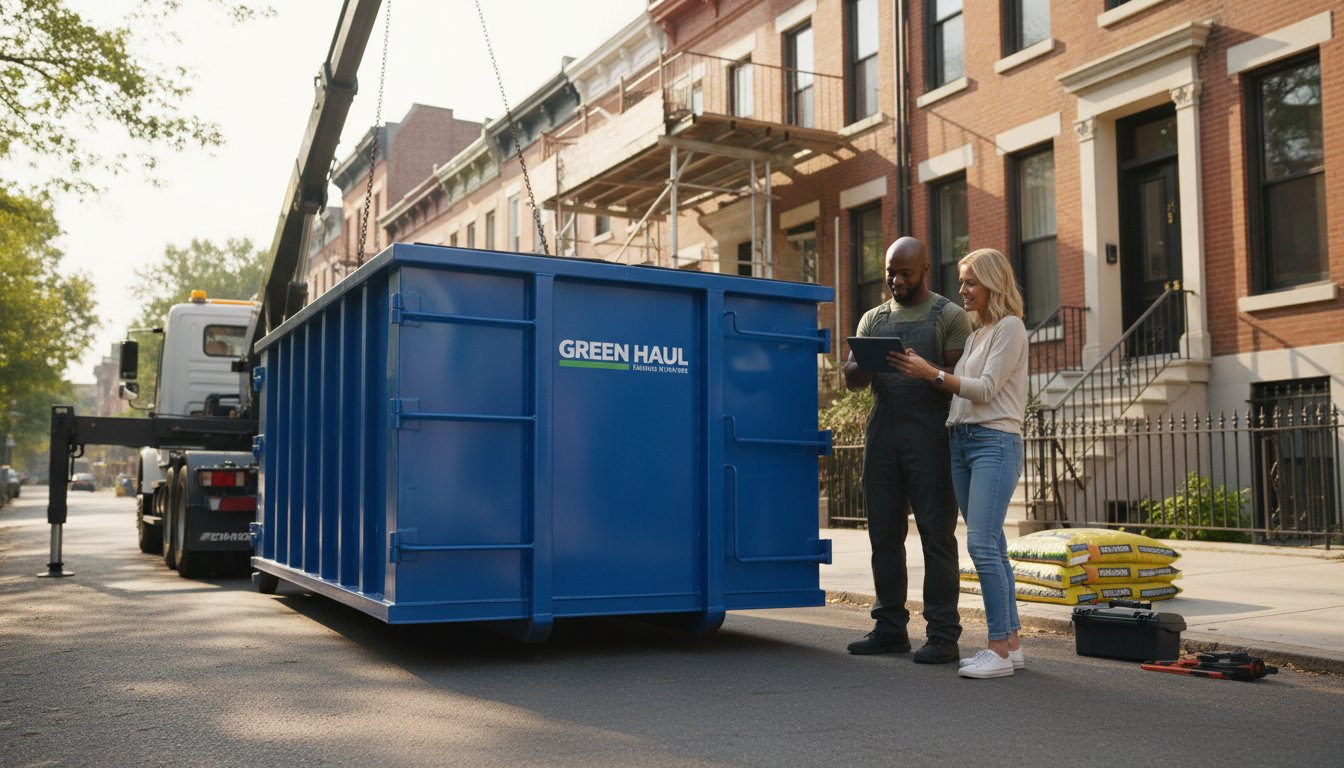
According to the New York City Department of Buildings, failing to secure a proper permit for a container on a public street can result in immediate stop-work orders and municipal fines starting at $500. It's a steep price to pay for a simple logistical oversight. You shouldn't have to spend your project hours deciphering complex city codes or worrying about a heavy roll-off container cracking your driveway. Managing a renovation is difficult enough. You deserve a dumpster rental process that's predictable, professional, and entirely transparent.
We understand that reliability is your top priority. You want a clean site and a container that arrives exactly when promised. This 2026 guide provides the expert logistics you need to navigate permit requirements across New York, Illinois, and Massachusetts. We'll show you how to choose the right cubic yardage and secure flat-rate pricing without hidden overage charges. From the narrow streets of Boston to the busy blocks of Manhattan, learn how to Book Your Dumpster with complete confidence. Follow these steps to ensure your next delivery and pickup happen right on time.
Key Takeaways
- Identify why a roll-off container provides more efficiency and project control than traditional junk removal services.
- Select the ideal container size for your specific debris by visualizing cubic yards across four standard options.
- Navigate local permit requirements and placement regulations for public and private property in NY, IL, and MA.
- Secure a transparent dumpster rental by identifying hidden industry fees and comparing flat-rate versus variable pricing models.
- Streamline your waste management with our instant online booking system and essential site preparation steps.
Understanding Dumpster Rental: Why a Roll-Off Container is Your Best Project Partner
A Roll-off (dumpster) is a heavy-duty, rectangular waste container designed for temporary use on residential and commercial sites. Specialized trucks deliver these bins and roll them into place using a hydraulic hoist system. Unlike standard junk removal services where you pay for a crew to haul items away in one visit, a dumpster rental provides a steady, on-site solution for ongoing waste. This setup is crucial for projects in high-density areas across New York, Illinois, and Massachusetts where local logistics require precise timing and placement.
Efficiency is the primary driver for choosing a rental over other disposal methods. You don't have to wait for a crew to arrive or pay for labor by the hour. You gain a centralized waste hub that keeps your job site or driveway clear of hazards. Safety improves significantly when debris isn't scattered across a lawn or sidewalk. In 2026, managing waste through a single point of contact simplifies the entire project timeline. Data from 2025 indicates that over 90% of home renovation projects generate more waste than standard curbside pickup can handle, making a dedicated container the only practical choice.
Choosing a local partner is vital for success. Logistics in Chicago differ from Boston or Manhattan. You need a team that understands local permit requirements and narrow street access. Visit Book Your Dumpster to see how we handle these regional challenges with precision and transparency.
The Mechanics of a Roll-Off Dumpster
Roll-off containers feature heavy-duty steel wheels that allow for exact positioning on your property. Most units include a swing-open rear door. This feature lets you walk heavy items directly into the bin instead of lifting them over high walls. This design differentiates temporary project rentals from permanent commercial bins, which often have fixed lids and require front-loading trucks. These containers typically range from 10 to 40 cubic yards to accommodate everything from a small bathroom remodel to a full-scale demolition.
Who Needs a Dumpster Rental in 2026?
Homeowners tackling basement cleanouts or landscape overhauls find these containers indispensable for maintaining a clean workspace. For professionals, construction debris removal requires a reliable partner to keep the site compliant with 2026 safety codes. Commercial entities also utilize these services during office renovations or retail upgrades to handle high volumes of packaging and old fixtures. Whether you're a DIYer in Illinois or a contractor in Massachusetts, having a dedicated bin ensures your project stays on schedule without waste-related delays.
Choosing the Right Size: From 10 to 40-Yard Dumpster Rental Options
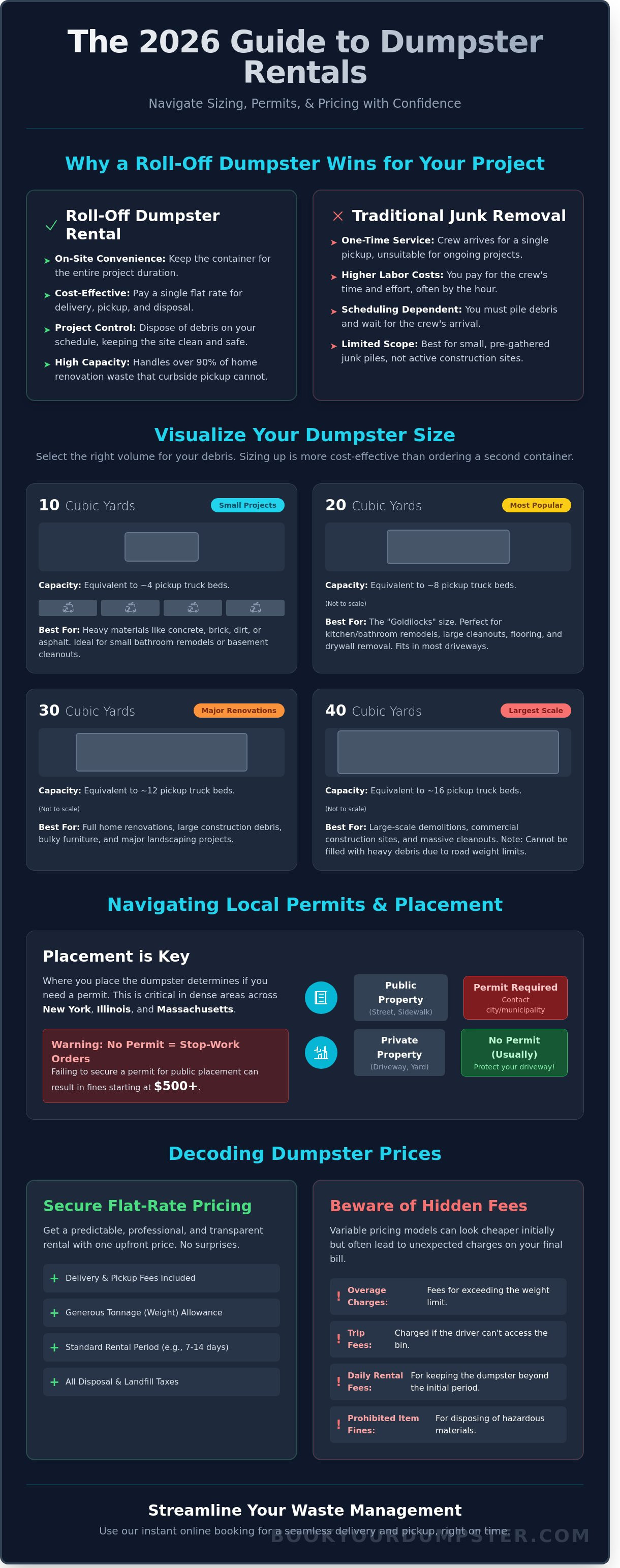
Visualize a cubic yard as a block measuring 3 feet long, 3 feet wide, and 3 feet high. It's roughly the size of a standard kitchen stove. When you book a dumpster rental, you're selecting the total volume of these blocks your container can hold. Book Your Dumpster USA offers four primary sizes: 10, 20, 30, and 40 yards. Choosing the correct size isn't just about space; it's about weight. Every container has a specific weight capacity. If you exceed this limit, you'll face overage fees based on the extra tonnage recorded at the scale.
Don't try to save money by squeezing too much into a small unit. If the debris goes over the "fill line," the driver cannot legally transport the load. Sizing up is almost always more cost-effective than ordering a second unit later. A single 20-yard rental costs significantly less than two 10-yard rentals because you avoid paying for a second delivery and pickup fee. Evaluate your pile of debris and always round up to the next available size to keep your project on track.
The 10 and 20-Yard Dumpsters: Perfect for Residential Use
A 10 yard dumpster rental is the specialized choice for heavy, dense materials. Because of weight restrictions on the road, you can't fill a 40-yard bin with concrete. Use the 10-yarder for dirt, brick, or asphalt removals. For general home projects, the 20-yard unit is our "Goldilocks" size. It's the most versatile option for kitchen and bathroom remodels. It fits perfectly in most driveways and easily holds old flooring, drywall, and small furniture. When loading, remember to follow New York solid waste regulations to ensure you aren't mixing prohibited materials into your residential waste stream.
The 30 and 40-Yard Dumpsters: Heavy-Duty Solutions
Large-scale cleanouts and construction sites require massive capacity. The 30-yard dumpster is the standard for whole-home decluttering or major roofing projects. It provides enough height for bulky items like couches and appliances. For industrial projects and commercial construction, the 40-yard unit is the industry workhorse. "A 40-yard dumpster can hold the equivalent of 12 to 15 pickup truck loads of waste." This massive volume ensures your crew spends more time working and less time waiting for a swap-out. If you're managing a site in Illinois or Massachusetts, schedule your delivery in advance to ensure these high-demand large units are available for your start date.
Precision in sizing saves both time and money. While a 10-yard bin is great for a small garage cleanout, the 40-yard bin is the only way to handle a full building interior demolition. Always check the weight limits associated with your dumpster rental before you begin loading. Heavy materials like shingles or wet carpeting can add up faster than you expect, so distribute the weight evenly to ensure a safe and successful pickup.
Navigating Local Regulations: Permits and Placement in NY, IL, and MA
The biggest question for every dumpster rental customer is where the container will actually sit. You have two choices: private property or the public right-of-way. If you place the bin on your own driveway or a private job site, you generally don't need a permit. However, moving that container to the street or a sidewalk changes the rules immediately. Local ordinances in dense hubs like Chicago, Boston, and NYC are strict. Failure to follow them results in fines that often exceed the cost of the rental itself.
Protect your property before the truck arrives. A 20-yard container can weigh over 4,000 pounds empty; once full, it can crush asphalt or crack concrete. Lay down two-by-fours or sheets of heavy plywood where the rollers will land. This simple step prevents thousands of dollars in driveway repair costs. It also ensures the weight is distributed evenly across the surface.
Permit Requirements in New York and Massachusetts
In New York City, the Department of Transportation (DOT) regulates all street placements. If the dumpster sits on a public road in any of the five boroughs, a permit is mandatory. Most professional haulers in NYC handle this paperwork for you, but always verify this during your initial call. In Massachusetts, requirements vary by municipality. Cities like Boston require a Street Occupancy permit for any container placed on a public way. You must also account for Massachusetts solid waste regulations which dictate how certain materials are handled at transfer stations. Some MA towns also require a separate sign-off from the local fire department to ensure hydrant access remains clear during your project.
Chicago and Illinois Specific Logistics
Chicago operates under a Public Way Use permit system. If your dumpster rental blocks an alley or occupies a metered parking spot, you need city approval. Illinois also enforces specific recycling mandates. The state requires that at least 50 percent of construction and demolition debris from large projects be diverted from landfills. This means your waste must go to a certified processing facility. Always ask your provider for a weight ticket if your local building department requires proof of compliance.
Winter logistics are critical in the Midwest and Northeast. Heavy snow and ice can prevent a roll-off truck from safely dropping or picking up a container. Follow these steps for a successful winter delivery:
- Clear a 15-foot wide path of snow leading to the drop zone.
- Salt the placement area to prevent the dumpster from freezing to the ground.
- Ensure there are no low-hanging, ice-covered branches blocking the truck lift mechanism.
Plan your project timeline with these local rules in mind to avoid delays. When you are ready to start, Book your dumpster online to secure your delivery date and keep your project on schedule.
Decoding Dumpster Rental Prices: Pulls, Tonnage, and Transparency
Pricing for a dumpster rental shouldn't feel like a guessing game. Many companies add fuel surcharges or environmental fees at the final invoice, which can increase the total cost by 12% to 15%. In 2026, the industry has shifted toward two primary models: Flat Rate and Variable pricing. Flat Rate covers delivery, pickup, and a set weight limit in one price. Variable pricing starts with a lower base fee but adds costs based on the exact tonnage you discard. You need to know which one fits your project to avoid budget creep. If you're cleaning out a house with light debris, Flat Rate is often safer. For heavy construction, Variable pricing might save you money if you manage the weight carefully.
Understanding Weight Limits and Overages
Tonnage refers to the weight of your debris measured in tons. Landfills charge tipping fees based on this weight, and companies pass these costs to you. Concrete, brick, and dirt are high-density materials that reach weight limits quickly. A 10-yard bin filled with concrete can easily exceed 10 tons, far surpassing standard residential limits. Overage fees are the per-ton cost added when a container exceeds its pre-purchased weight limit. Always estimate your debris weight before booking to ensure you select the correct capacity.
What Influences Local Rental Costs?
Distance from the transfer station significantly impacts your total. If your site is more than 25 miles from the facility, expect higher fuel and transport fees. Seasonal demand also plays a role. Rates often peak by 20% during April and June because inventory is limited. For a deeper look at the logistics of container types and how they move, read our guide on roll off dumpster rental. Understanding these local factors helps you time your project for the best possible rate.
Use this checklist to compare quotes from different providers:
- Does the price include delivery and pickup fees?
- How many tons of debris are included in the base rate?
- What is the exact daily rate for keeping the bin past the rental period?
- Are there separate lines for fuel or environmental surcharges?
- Is there a clear policy for "prohibited items" that trigger extra fines?
Transparency is the foundation of a successful project. Demand a clear breakdown of every cost component before you provide credit card information. This approach eliminates surprises and keeps your project on budget.
How to Book Your Dumpster: A Seamless Waste Management Experience
Securing a dumpster rental shouldn't be the hardest part of your project. At BookYourDumpster.com, we've stripped away the complexity. Our platform provides a direct route to waste removal, ensuring you spend less time on logistics and more time on the job at hand. We prioritize reliability, transparency, and professional execution in every delivery across New York, Illinois, and Massachusetts. By modernizing the process, we eliminate the traditional phone tag and opaque pricing structures that often slow down construction and renovation timelines.
The 3-Step Online Booking Process
Our digital interface is built for speed. You can finalize your order in under five minutes using any device. Follow these three steps to secure your container:
- Step 1: Choose your size. Use our capacity guide to match a container to your debris volume. We offer options ranging from small residential cleanouts to large-scale construction hauls, ensuring you don't pay for space you won't use.
- Step 2: Enter your location. Input your zip code in NY, IL, or MA. You'll receive instant, transparent pricing based on your specific service area with no hidden environmental fees or fuel surcharges.
- Step 3: Schedule and pay. Select your delivery date and complete your transaction through our secure online payment portal. You'll receive an immediate confirmation with your delivery details.
Preparing Your Site for Delivery
Success starts with a clear drop zone. Our drivers need specific clearances to place your roll-off safely and avoid property damage. Ensure your designated area has at least 60 feet of linear space for the truck to maneuver during the drop. You also need 23 feet of vertical clearance to account for the lift mechanism as the dumpster slides off the rails. Clear all vehicles from the driveway and check for low-hanging branches or power lines that might obstruct the hoist.
Site preparation is especially critical for high-traffic areas or tight urban lots. If you're managing a job site with ongoing needs, consider our commercial dumpster service to streamline long-term waste management. This ensures your project stays compliant and clutter-free from start to finish without constant re-scheduling.
No-Hassle Pickup and Reliable Service
We handle the exit as efficiently as the entry. Once your project concludes, you don't need to wait around for a confirmation call. Our "No-Hassle" pickup process means we arrive on the scheduled date, secure the load, and haul it away without requiring you to be present. This commitment to on-time delivery and professional service is why 94 percent of our customers report a stress-free experience. Selecting a professional dumpster rental provider means choosing a partner that respects your schedule. We move your waste so you can move on to your next task. It's that simple.
Simplify Your Waste Management Strategy
Managing a renovation or clean-out project requires precision and the right equipment. You've learned how to select between 10 and 40-yard containers to match your specific debris volume. You also understand the importance of local permit compliance in New York, Illinois, and Massachusetts to avoid project delays. Since 2018, our family-owned business has focused on removing the logistical stress of waste removal with a straightforward, professional approach. We prioritize your schedule with on-time delivery across three states and maintain integrity through transparent flat-rate pricing. There's no need to deal with the headaches of hidden fees or unreliable haulers when you have a dependable partner ready to help. Your dumpster rental should be the easiest part of your job. Take control of your site today and experience a seamless waste management process from start to finish. Book your dumpster online in seconds and get back to the work that matters. We're ready to get your project moving.
Frequently Asked Questions
Do I need a permit for a dumpster rental in Chicago or New York City?
You need a permit if the container sits on a public street or sidewalk. In Chicago, the Department of Transportation (CDOT) manages these permits, while the NYCDOT oversees them in New York City. Private property placements like your driveway usually don't require paperwork. Check local municipal codes to avoid 100 percent of potential fines from city inspectors.
What items are prohibited from being thrown in a rental dumpster?
Keep hazardous waste out of your roll-off container. This includes wet paint, motor oil, propane tanks, and lithium-ion batteries. Federal EPA guidelines classify these as environmental hazards. Disposing of them in a standard dumpster rental results in immediate rejection at the landfill and extra handling fees. Always consult our prohibited items list before you start loading your debris.
How much weight can a 20-yard dumpster actually hold?
A standard 20-yard dumpster typically holds between 4,000 and 6,000 pounds of debris. This weight limit covers approximately 110 to 130 heavy-duty trash bags. If you're loading heavy materials like concrete or dirt, you'll reach this limit long before the bin is physically full. Use our weight calculator to choose the right capacity for your specific renovation project.
Can I move the dumpster once it has been delivered to my property?
Never attempt to move a dumpster once our driver sets it down. These containers weigh several tons when empty and can cause severe damage to your property or the equipment if shifted improperly. Moving the unit also risks damaging the hydraulic systems on the truck during pickup. If the initial placement isn't working, call us to schedule a professional relocation service.
What happens if I fill the dumpster past the top edge?
Stop loading once debris reaches the top rail of the container. Department of Transportation safety regulations require all loads to be tarped and secured for transport. If items stick out over the top, our drivers cannot legally pick up the load. You'll need to remove the excess material and may face a dry run fee for the failed pickup attempt.
Is it cheaper to rent a dumpster or hire a junk removal service?
Choose a dumpster rental for multi-day projects like home renovations or estate cleanouts. Junk removal services charge for labor and space, which often costs 20 to 40 percent more for the same volume of waste. Renting a bin gives you a dedicated workspace and the freedom to work at your own pace. Book your container online to manage your timeline efficiently.
How long is the typical rental period for a residential dumpster?
Standard residential rental periods last between 7 and 10 days. This timeframe provides enough cushion for a weekend garage cleanout or a full kitchen demolition. If you finish your project early, call us for an accelerated pickup. We offer flexible extensions if your project timeline grows beyond the initial week, ensuring you never feel rushed during your cleanup process.
Will a roll-off dumpster damage my asphalt or concrete driveway?
Protect your driveway by placing three or four large plywood boards under the dumpster's contact points. While our roll-off containers feature wheels to minimize friction, the sheer weight of a full load can stress aged asphalt or thin concrete. Using protective barriers prevents 95 percent of surface scratches or indentations. Tell our driver where you want the boards placed during delivery.


