If you believe a long-term contract is the only way to handle your business waste, you might be overpaying by as much as 22% on every invoice. Most facility managers accept high costs as a standard part of doing business, but paying for empty space in a half-filled bin is a direct drain on your bottom line. You need a commercial dumpster service that works without the headache of hidden fees or rigid terms that don't fit your actual output. Book your dumpster based on data, not guesswork.
You already know that an inefficient waste strategy can disrupt your daily operations and clutter your job site. It's time to stop overpaying for logistical errors. This article provides the clarity you need to choose between permanent front-load services and temporary roll-off rentals. You'll learn the critical differences in cost structures and how to avoid the three most common contract traps that inflate your annual spending.
We've outlined a direct framework to estimate your cubic yardage with 95% accuracy and identified a reliable national provider that guarantees on-time delivery. Read on to streamline your waste strategy, eliminate logistical stress, and secure a service that respects your budget.
Key Takeaways
- Distinguish between recurring front-load pickups and project-based roll-offs to align waste removal with your specific business logistics.
- Compare monthly fee structures against per-haul pricing to secure the most cost-effective commercial dumpster service for your operational budget.
- Apply the "Project vs. Operation" rule to accurately categorize your waste volume and select the right container for your industry.
- Identify optimal placement zones for heavy equipment to ensure national safety standards are met during every delivery and pickup.
- Learn how a national logistics partner simplifies debris removal through transparent pricing and an efficient online booking system.
Understanding Commercial Dumpster Service: The Two Main Categories
Commercial waste management is a specialized logistics field that keeps your business running. It involves more than just a bin behind a building. Effective waste management requires a strategy tailored to your specific volume and debris type. Many owners mistakenly believe that a commercial dumpster service only means a permanent, long-term contract. This confusion often leads to businesses paying for capacity they don't use or facing fines for improper disposal. In reality, the industry splits into two distinct paths based on your timeline and the weight of your waste.
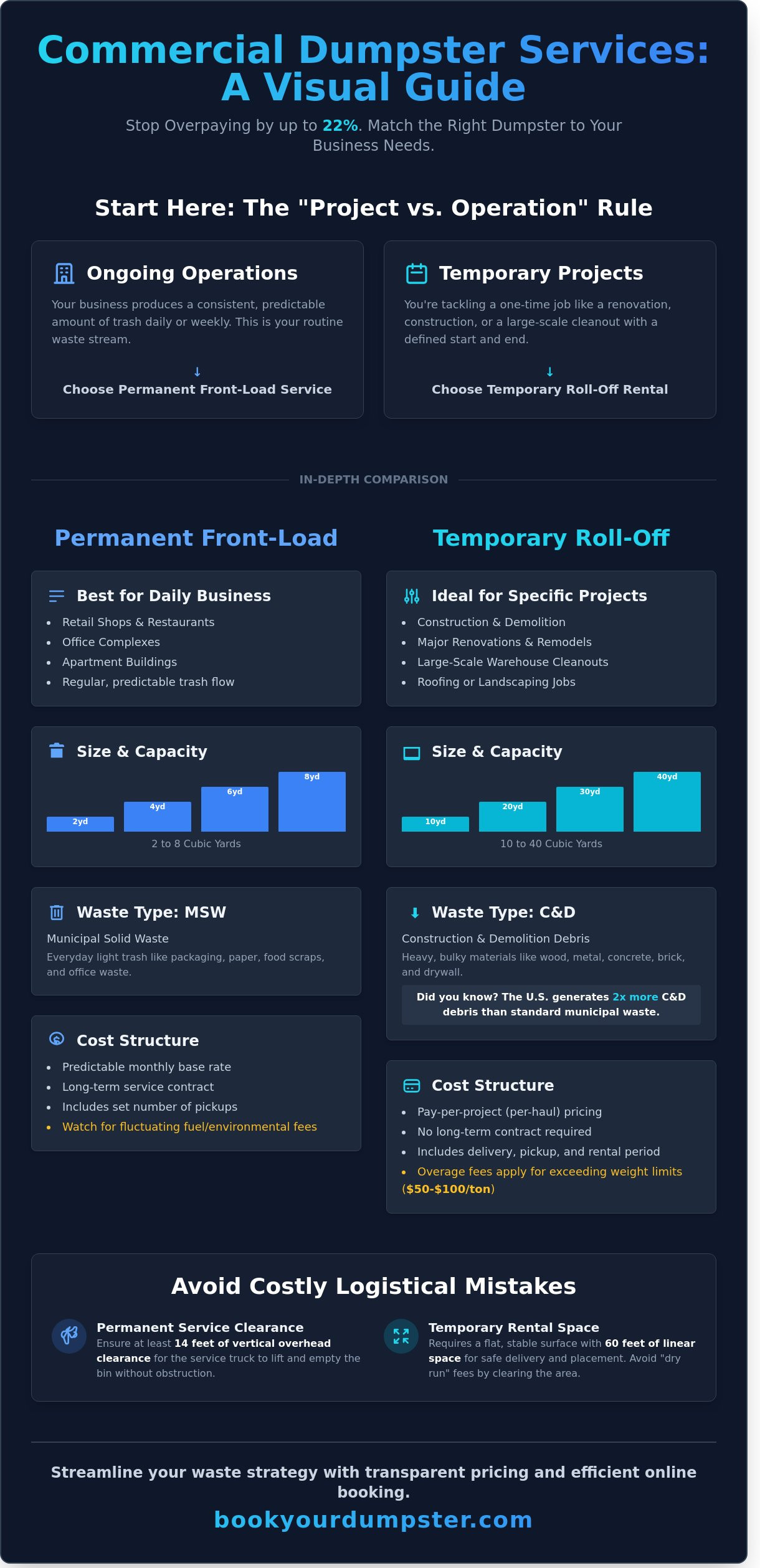
To choose the right tool for the job, you must distinguish between recurring municipal-style pickups and project-specific removal. These two categories handle different materials. Municipal Solid Waste (MSW) consists of everyday business trash like packaging, paper, and food waste. Construction and Demolition (C&D) debris includes heavy materials like brick, wood, and metal. The EPA reported that the U.S. generated 600 million tons of C&D debris in 2018, which is more than double the amount of standard municipal waste. Understanding this distinction saves you money and prevents logistical delays at your facility.
Permanent Front-Load Services
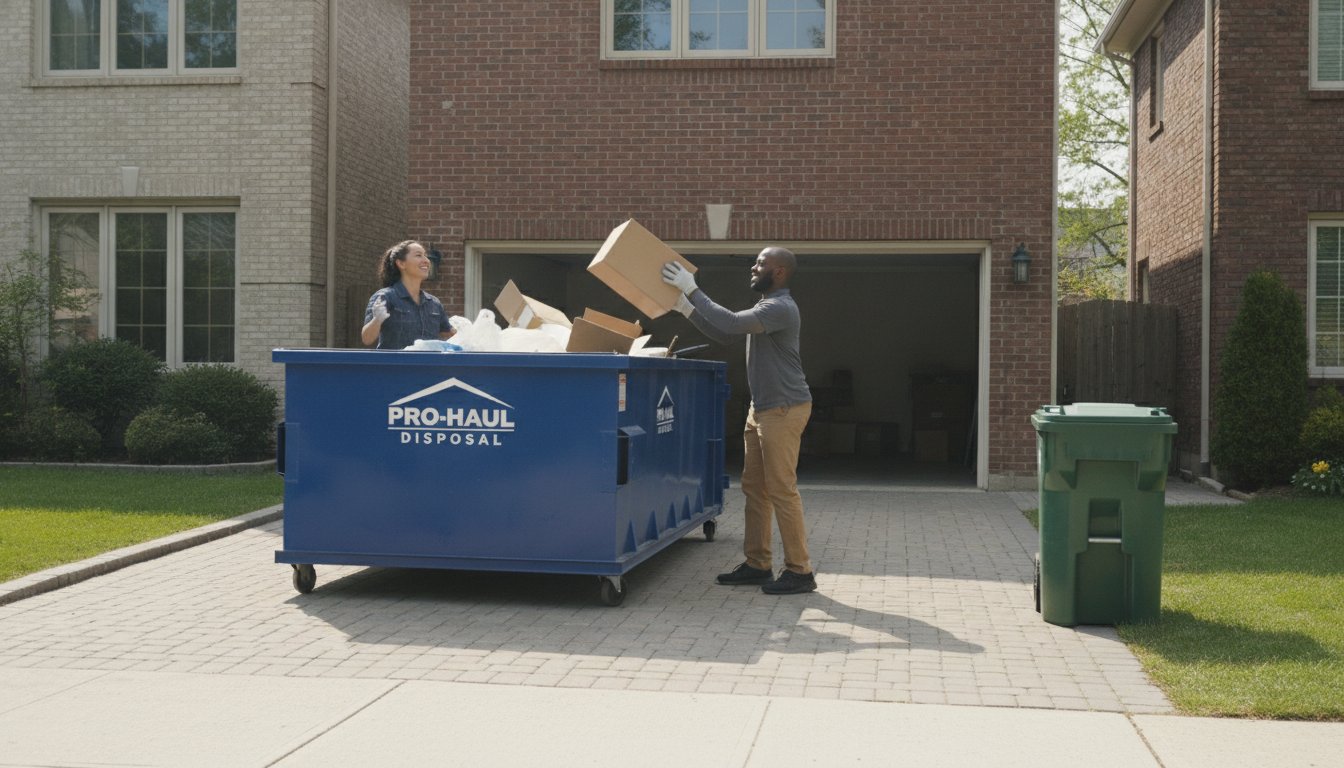
Permanent services support your daily operations. These containers stay on your property indefinitely. They are designed for consistent, predictable waste streams. Choose from standard sizes like 2, 4, 6, or 8 cubic yards based on your weekly output. These services operate on a contract basis. You schedule weekly or bi-weekly pickups to maintain a clean workspace. It's a reliable solution for retail shops, restaurants, and office complexes that produce a steady flow of light trash. Stick to these for your routine "blue bin" needs.
Temporary Roll-Off Rentals
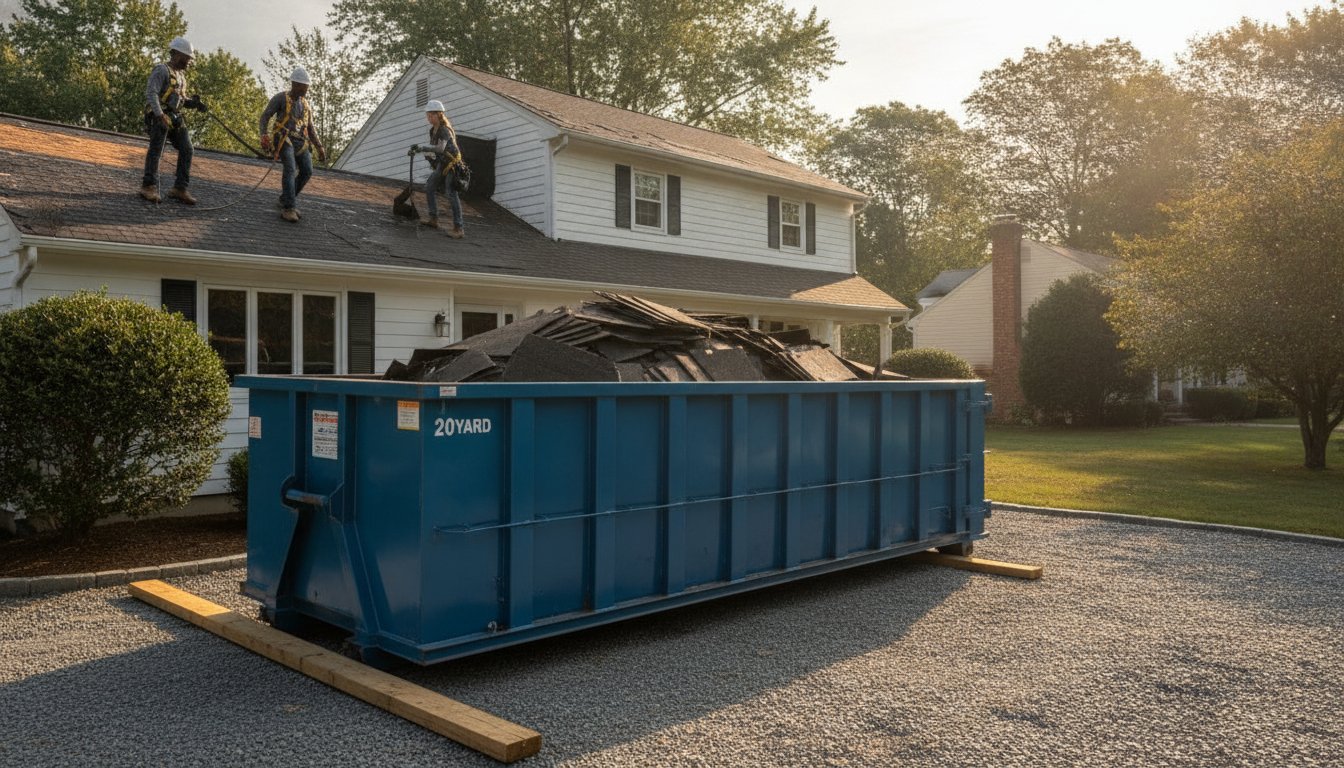
Temporary rentals are project-driven. Book these when you have a renovation, a warehouse cleanout, or a construction job. These containers are much larger, with capacities of 10, 20, 30, or 40 cubic yards. Unlike permanent bins, these are delivered on-demand and removed as soon as your project ends. You don't sign a multi-year contract; you pay for the specific timeframe you need. This flexibility is essential for a commercial dumpster service used during a roof replacement or a 5-ton basement gutting. Book your dumpster today to keep your project on schedule and your site clear of hazards.
Front-Load vs. Roll-Off Dumpsters: Which Service Do You Need?
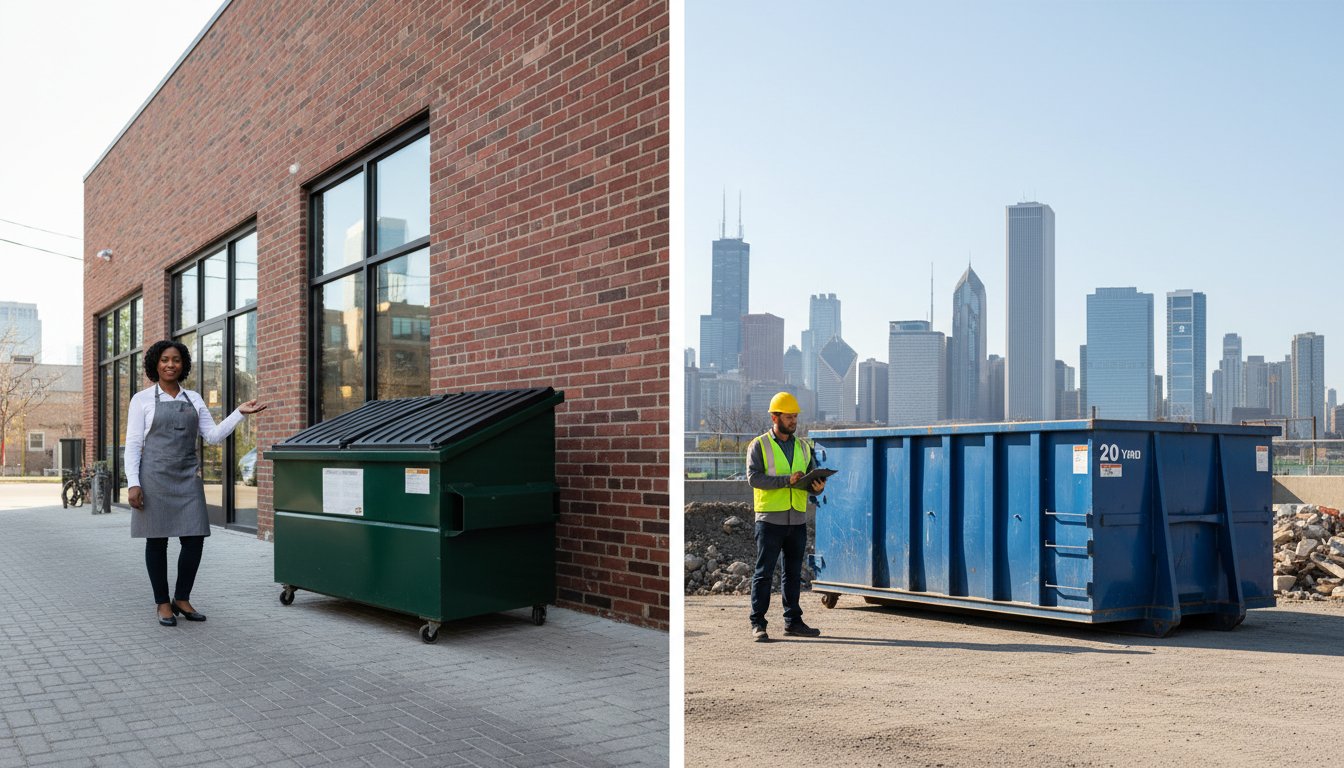
Choosing the right commercial dumpster service starts with a clear understanding of your waste stream. Front-load containers serve businesses with consistent, daily trash production like restaurants, retail shops, or apartment complexes. These bins typically range from 2 to 8 cubic yards and stay on-site permanently. Roll-off dumpsters handle heavy, bulky debris from construction projects or large-scale cleanouts. These open-top containers range from 10 to 40 yards and are hauled away once they're full. If your business generates 500 pounds of standard refuse weekly, a front-load bin is your best bet. If you're gutting a 5,000-square-foot office space, you need a roll-off.
Site requirements differ significantly between these two options. Front-load bins usually require a permanent concrete enclosure for aesthetic reasons and to prevent unauthorized access. You must ensure the service truck has at least 14 feet of overhead clearance to lift the bin. Roll-off dumpsters don't need enclosures but require significant ground space. A standard delivery truck needs 60 feet of linear space to safely drop a 20-yard container. Assessing your physical layout helps you avoid "dry run" fees where a driver cannot complete a delivery due to obstructions.
Cost Comparison and Budgeting
Permanent service billing is predictable. You pay a base monthly rate that covers a set number of pickups. Most providers also include environmental fees and fuel surcharges that fluctuate based on market rates. Roll-off pricing is project-based and includes delivery, a specific rental period, and a final haul fee. Tonnage limit is the maximum weight allowed before overage charges apply. If you exceed this limit, expect to pay between $50 and $100 for every additional ton. Staying compliant with State agency waste management guidelines ensures you avoid local fines while managing these operational costs.
Volume and Capacity Requirements
Visualizing size prevents service interruptions. A 2-yard front-load bin holds about 12 to 15 large trash bags. In contrast, a 20-yard roll-off holds the equivalent of 6 to 8 pickup truck beds full of debris. Small bins often fail during commercial office cleanouts because items like desks and filing cabinets consume 100% of the available space instantly. Retailers should also account for seasonal shifts. Many businesses see a 30% spike in waste volume during the Q4 holiday season. Plan for these peak periods to avoid overflow. If you're unsure about your specific needs, calculate your volume requirements before finalizing your service agreement.
Evaluating Your Commercial Waste Volume and Project Type
Selecting the right commercial dumpster service starts with the "Project vs. Operation" rule. Operations involve daily business activities like retail sales or office work that generate consistent, predictable waste. Projects are finite events, such as a 2,000-square-foot office renovation or a seasonal warehouse purge. If your waste has an expiration date, book a temporary roll-off. If it’s a daily byproduct, secure a permanent contract.
Estimating your cubic yardage doesn't require a math degree. Use the pickup truck metric: one cubic yard is roughly one-fourth of a standard 8-foot truck bed. A 10-yard dumpster holds about 50 to 60 large trash bags, while a 40-yard container manages up to 12,000 pounds of debris. Before you book, identify materials that haulers won't touch. Prohibited items generally include:
- Hazardous chemicals and wet paint
- Asbestos-containing materials
- Industrial batteries and electronics
- Tires and appliances containing Freon
Waste Management for Retail and Offices
Retail operations typically see 65% of their waste stream comprised of cardboard and packaging. While a permanent 4-yard bin handles daily trash, it fails during a 1,500-square-foot tenant cleanout. Don't risk overflow fines from your property manager. Switch to a temporary 10-yard bin for lease transitions. It provides the necessary capacity for old furniture and bulk displays without the long-term cost of a permanent upgrade. This keeps your loading dock clear and your transition on schedule.
Construction and Large-Scale Renovations
Commercial build-outs demand heavy-duty solutions. For a 5,000-square-foot retail renovation, a 30-yard or 40-yard roll-off is the industry standard. These containers handle high-density materials like steel studs, drywall, and heavy flooring. High-velocity sites often generate enough debris to fill a container every 48 to 72 hours. Coordinate multiple hauls in advance to ensure a fresh bin arrives the moment the full one is pulled. This prevents site bottlenecks and keeps your subcontractors moving. When you need a reliable commercial dumpster service for these demanding environments, prioritize haulers who guarantee 24-hour turnaround times for swaps.
Choose your size based on the heaviest material you'll toss. Concrete and brick require specialized "low-boy" containers to stay within DOT weight limits. Overloading a standard bin leads to failed pickups and dry-run fees. Book your dumpster based on your heaviest projected load to avoid these logistical headaches.
Key Logistics for a Successful Commercial Dumpster Rental
Precision dictates the success of your waste management plan. A standard commercial dumpster service delivery involves high-pressure machinery and significant weight. You must manage the timeline with military accuracy. Most providers require at least a 24-hour lead time for delivery and haul-away requests. Once the container arrives, monitor your fill level daily. Overfilled bins create safety hazards and trigger dry-run fees if the driver cannot safely secure the load. Schedule your pickup when the bin reaches 75% capacity to avoid project delays.
National safety standards, specifically ANSI Z245.30, govern how containers must be marked and placed. Ensure the area is well-lit and free of pedestrian traffic. Weight distribution is a major factor for commercial properties. A loaded 30-yard dumpster often exceeds 10 tons in total weight. To protect commercial asphalt, place 2x6 wood planks under the rollers. This simple step prevents the steel wheels from sinking into the surface during high-temperature months when asphalt is more pliable.
Site Preparation and Access
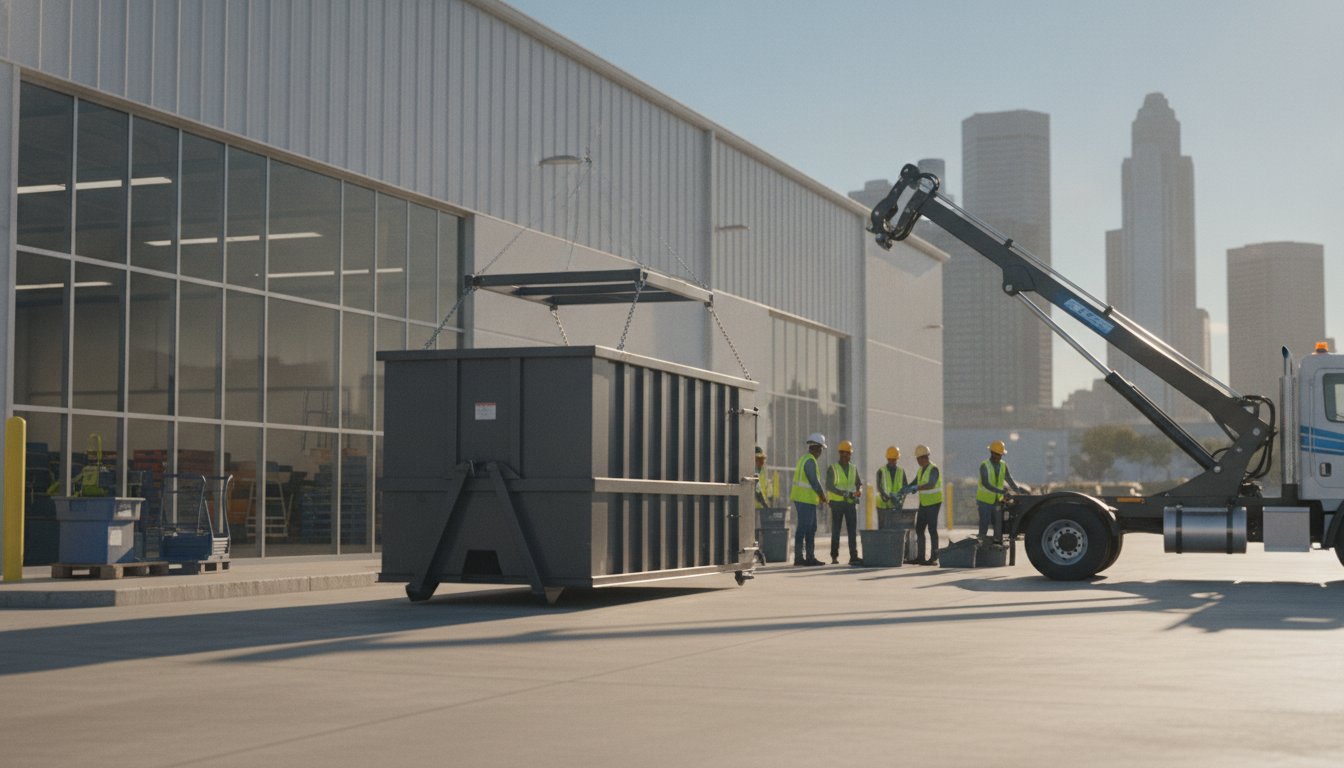
Your delivery truck needs significant room to maneuver. Provide at least 60 feet of straight-line approach and 23 feet of vertical space to accommodate the lift. Clearance is the unobstructed space required for the roll-off hoist to operate safely. Place the container on a level, hard-packed surface like concrete or compacted gravel. Avoid soft soil or areas near underground utility lines. A 20,000-pound truck can easily collapse a weak sub-base or damage irrigation systems.
Prohibited Items and Regulatory Compliance
Safety isn't optional on a commercial job site. OSHA standard 1926.252 requires waste to be removed at frequent intervals to prevent fire hazards and tripping risks. Don't mix hazardous materials with general debris. Items like lead-acid batteries, mercury-containing thermostats, and industrial solvents require specialized disposal paths. Statistics show that 15% of all commercial rental delays stem from prohibited items found during pickup. Keep electronics and chemicals out of the bin to avoid EPA fines and environmental surcharges. Following these rules keeps your project on schedule and your site compliant.
Streamline Your Business Debris Removal with Book Your Dumpster
Managing waste across multiple job sites often results in a fragmented paper trail and inconsistent service quality. A national logistics partner consolidates these moving parts into a single point of contact. This centralization eliminates the 15 to 20 hours a month that facility managers typically spend coordinating with various local haulers. Book Your Dumpster provides a reliable commercial dumpster service that ensures your waste removal remains uniform and efficient, whether you manage one warehouse or 50 retail locations across the country.
Transparency is the foundation of our operations. The waste industry is notorious for "fuel surcharges" and "environmental fees" that can inflate a final bill by 25% or more without warning. We provide flat-rate pricing upfront so you can budget with precision. Scalability is equally simple. You can choose from 10, 20, 30, or 40-yard containers to match the specific volume of your project. A 10-yard bin is ideal for minor office renovations, while a 40-yard roll-off comfortably handles 5-ton industrial loads or large-scale construction debris.
The Book Your Dumpster Advantage
Efficiency is a requirement for modern business. Our digital-first approach allows you to bypass the traditional "call for a quote" gatekeeping. You choose your size, select your delivery date, and complete your payment in one session. This direct booking model saves our clients an average of 45 minutes per order compared to traditional phone-based brokerage. Our experts understand that a delayed delivery can stall a $100,000 renovation project. We focus on on-time drops and pragmatic support to keep your timeline intact.
Ready to Clear the Clutter?
Before you finalize your order, verify that your drop-off site has at least 60 feet of linear space for the truck and no low-hanging utility lines. Once you've cleared the path, you can secure your container in under five minutes. Don't let debris pile up and create safety hazards for your staff or customers. Take control of your site logistics right now. Book your commercial roll-off dumpster now and experience a commercial dumpster service built for speed, honesty, and reliability.
Streamline Your Waste Management Strategy Today
Selecting the right equipment for your project site ensures your operations stay on schedule and under budget. Whether you need permanent front-load bins for daily waste or temporary roll-off containers for a 30-day construction job, matching your volume to the correct size is essential. We provide a full range of sizes from 10 to 40 cubic yards to handle any debris your business generates. Don't let an unreliable commercial dumpster service slow down your progress with missed pickups or confusing contracts.
Our national logistics network guarantees consistent, professional service regardless of your location. We've simplified the process with transparent pricing that includes zero hidden fees, giving you total cost certainty from day one. You get a pragmatic partner that removes the headache of waste removal so you can focus on your core business. It's the most efficient way to manage your site's cleanliness with total confidence. Book your dumpster today with our easy online system and experience a faster way to clear your site.
Frequently Asked Questions
What is the difference between commercial and residential dumpster services?
Commercial services provide permanent waste solutions using 2 to 8 cubic yard front-load bins, while residential services focus on temporary roll-off containers for one-time projects. Businesses typically sign service agreements for weekly or bi-weekly pickups that continue indefinitely. In contrast, residential rentals last for 7 to 14 days. Commercial bins stay on-site at your business, whereas residential bins are hauled away once the project ends.
How much does a commercial dumpster service typically cost?
A permanent commercial dumpster service typically costs between $100 and $250 per month, depending on your bin size and pickup frequency. Temporary roll-off rentals for business projects generally range from $350 to $800 per haul. These rates include the delivery fee, a specific weight allowance like 2 tons, and final disposal. Book Your Dumpster provides transparent pricing so you don't face the 20% surcharges common in the industry.
What size dumpster do I need for a commercial office cleanout?
A 20 cubic yard roll-off dumpster is the standard choice for an office cleanout involving 2,500 square feet of workspace. This size holds approximately 120 large trash bags or 10 pickup truck loads of old furniture and files. If you're clearing out a 5,000 square foot floor, choose a 30 cubic yard container instead. Always estimate 10% more space than you think you need to prevent overfilling the bin.
Can I put construction debris in a regular commercial front-load dumpster?
No, you can't put heavy construction debris like concrete, brick, or roofing shingles into a standard front-load commercial bin. These materials exceed the 1,000 pound lift limit of front-load garbage trucks and can damage the hydraulic systems. Use a 10 or 20 cubic yard roll-off dumpster specifically designated for C&D waste. Most local municipalities mandate that 50% of construction waste be diverted to recycling facilities rather than local landfills.
How long can I keep a roll-off dumpster at my business location?
Standard rental periods for commercial roll-off dumpsters last 7 to 14 days, though you can extend this for a daily fee of $10 to $25. If your project finishes early, call for a pickup and we'll remove the bin within 24 hours. For long-term construction projects, schedule a switch-out where a full bin is replaced with an empty one. This keeps your site clear and your project moving forward without interruption.
What happens if my commercial dumpster exceeds the weight limit?
Exceeding the weight limit results in an overage fee, which typically ranges from $65 to $100 per additional ton. If the bin is too heavy for the truck to safely lift, the driver won't pick it up, resulting in a dry run fee of $150 or more. Monitor your debris levels carefully. Avoid loading heavy materials like dirt or sod more than halfway up the container walls to stay within safety limits.
Do I need a permit for a commercial dumpster on my business property?
You don't need a permit if the dumpster sits entirely on your private property, such as a parking lot or loading dock. However, placing a container on a public sidewalk or street requires a Right-of-Way permit from your city's public works department, costing $50 to $150. Ensure the placement area has 22 feet of vertical clearance and 60 feet of linear space. This allows the delivery truck to operate safely.
How quickly can a commercial roll-off dumpster be delivered?
Most commercial dumpster service requests are fulfilled within 24 to 48 hours of booking. If you place your order before 10:00 AM, we can often provide same-day delivery depending on local inventory levels. Use our online booking tool to secure your drop-off date instantly. On-time delivery is our priority, ensuring your project starts on schedule. Book your dumpster today to lock in your delivery window and clear your waste.