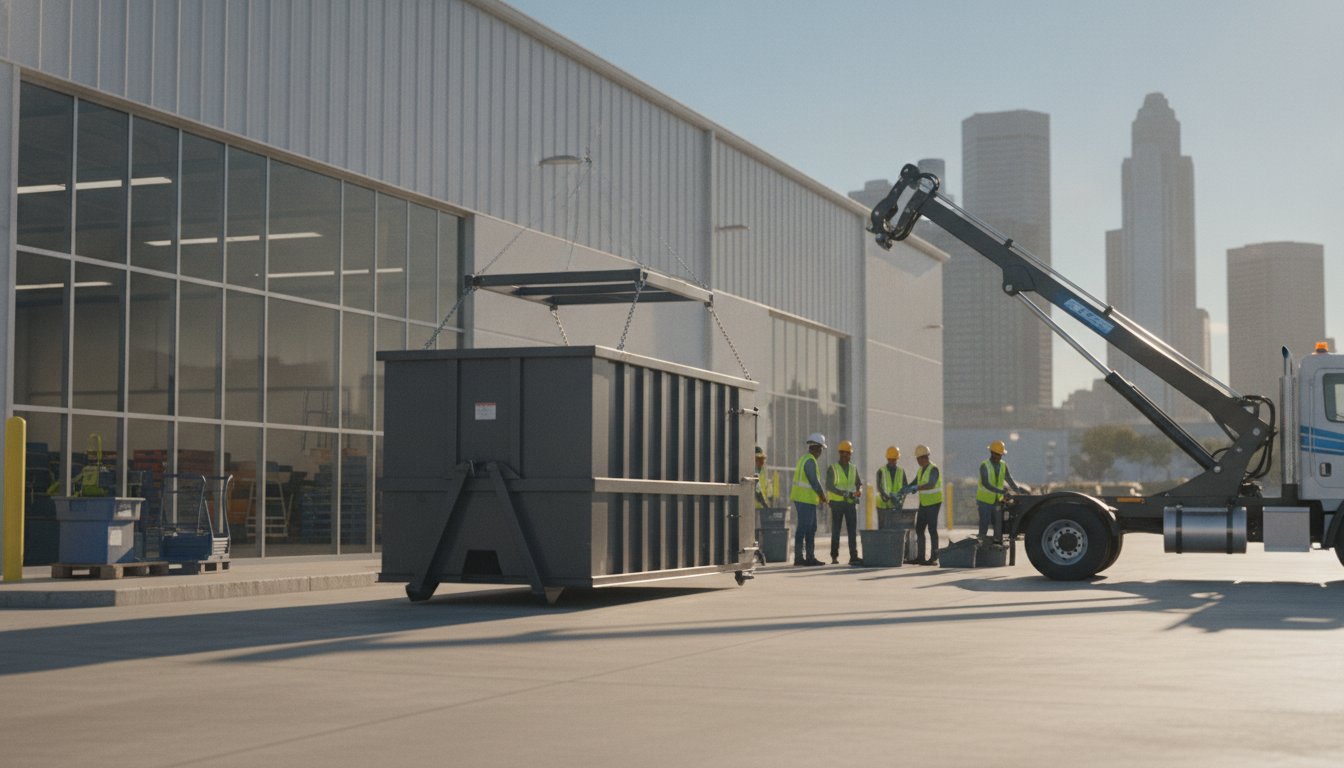
An unmanaged pile of industrial debris isn't just a mess; it's a bottleneck that's actively draining your project's profitability. You already know that unreliable delivery schedules and hidden environmental surcharges are more than just nuisances. They're logistical failures that stall production and inflate budgets. When you're coordinating a high-stakes warehouse cleanout dumpster rental, you can't afford to guess on sizing or overlook complex local permitting in cities like New York or San Francisco. You need a system that works as hard as your crew does.
This 2026 guide helps you master the logistics of industrial waste with expert guidance on sizing, compliance, and streamlined workflows. We promise to provide the clarity you need to avoid disposal violations in New Jersey or the expanded organics mandates in Massachusetts. We'll preview the essential steps to secure transparent pricing and fast online booking while navigating the new NYC Commercial Waste Zones. Stop treating waste management as an afterthought. Use this guide to turn your disposal process into a high-functioning tool for operational success.
Key Takeaways
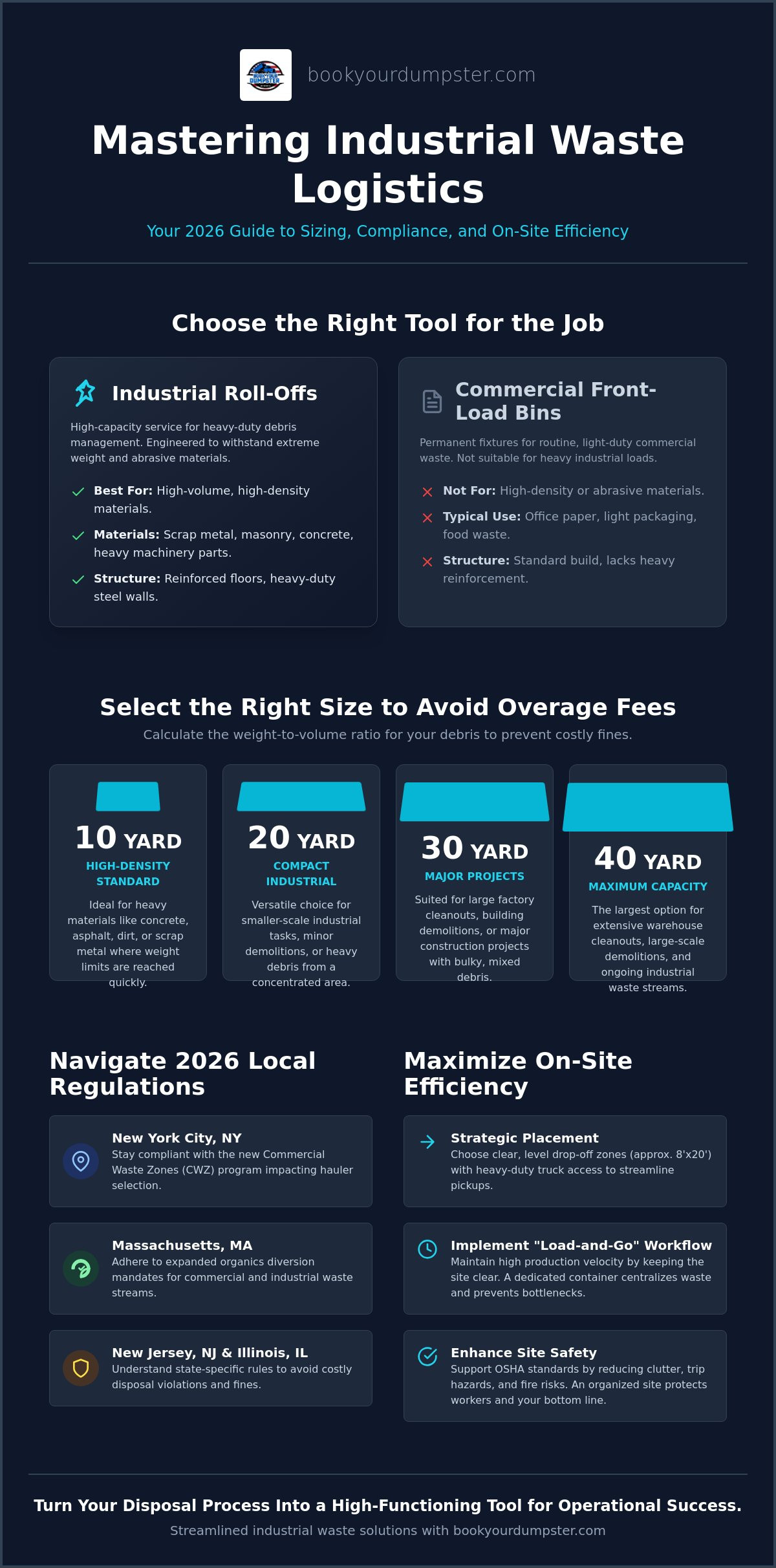
- Distinguish between high-capacity roll-off services and permanent front-load bins to match your site's specific waste volume.
- Calculate the weight-to-volume ratio for 10, 20, 30, and 40-yard containers to prevent costly industrial overage fees.
- Streamline your warehouse cleanout dumpster rental by choosing strategic placement points that ensure heavy-duty truck access.
- Stay compliant with 2026 local regulations, including NYC Commercial Waste Zones and state-specific organics diversion mandates.
- Implement a Load-and-Go workflow to keep your industrial site clear and maintain high production velocity.
What is Industrial Dumpster Rental? Defining High-Capacity Waste Solutions
Industrial dumpster rental is a high-capacity roll-off service engineered specifically for heavy-duty debris management. Unlike standard residential or light commercial services, these containers are built to withstand the extreme weight and abrasive nature of industrial materials. Whether you're managing a factory decommissioning or a large-scale demolition, you need a waste solution that won't buckle under pressure. This is where understanding What is a Roll-Off Dumpster? becomes essential. These units are delivered by specialized trucks and rolled off a hydraulic bed directly onto your designated site, providing immediate access for bulk disposal.
For facility managers, a warehouse cleanout dumpster rental provides the necessary volume to clear out years of accumulated inventory, metal racking, and bulky equipment. You aren't just renting a box; you're securing a logistical asset that keeps your production floor moving. Using the right industrial container ensures that your project stays on schedule and avoids the hazards of piled debris. It's a pragmatic choice for any operation that generates high-density waste that exceeds the limits of standard trash collection.
Industrial vs. Commercial Dumpsters: Key Differences
Don't confuse industrial roll-offs with standard commercial front-load bins. Commercial bins are permanent fixtures used for routine waste like office paper or light packaging. They lack the structural integrity required for heavy industrial loads. Industrial-grade steel containers are designed for high-density output. They easily handle scrap metal, masonry, and heavy machinery parts that would damage or crush a standard commercial bin. Select an industrial rental when your project generates high-volume debris. These containers feature reinforced floors and heavy-duty walls. This structural strength allows you to maximize the weight-to-volume ratio of every load without risking equipment failure or safety violations.
The Role of Waste Management in Industrial Safety
Safety is a non-negotiable priority on any industrial site. Proper debris containment is a primary defense against site accidents and fire hazards. Loose materials on a warehouse floor create trip hazards and obstruct forklift paths. By using a dedicated warehouse cleanout dumpster rental, you centralize waste and keep walkways clear. This practice directly supports OSHA site safety standards by reducing clutter and improving overall site visibility. Maintain a strict schedule for container swaps to prevent site overflow. Overflowing bins create dangerous bottlenecks and slow down your crew. For more foundational safety tips and a deeper dive into container logistics, review our guide on roll off dumpster rental. Keeping your site organized protects your workers and your bottom line.
Selecting the Right Size: From 10 to 40 Yard Industrial Containers
Choosing the wrong container size for an industrial project does more than just clutter your site. It creates significant financial risk. If you underestimate the weight of your debris, you face "dig out" orders or heavy overweight fines. Conversely, overestimating volume wastes valuable budget on empty space. For a successful warehouse cleanout dumpster rental, you must evaluate the density of your materials before booking. Industrial waste often involves high-density scrap metal, masonry, or heavy equipment parts that quickly exceed the legal hauling limits of standard trucks. Following OSHA regulations for waste disposal ensures your site remains compliant while you manage these heavy loads.
The physical footprint of these containers is also a critical factor. Most industrial roll-offs require a clear, level space approximately 8 feet wide and 20 feet long, with additional vertical clearance for the truck's hydraulic lift. Always ensure your drop-off zone can support the weight of a fully loaded container without damaging the asphalt or concrete beneath it. If you're unsure which unit fits your specific debris profile, you can check available inventory to match a container to your site's dimensions.
10 and 20 Yard Dumpsters for Compact Industrial Tasks
The 10-yard dumpster is the industry standard for high-density materials. Use this size for concrete, brick, or heavy soil disposal. Because these materials weigh roughly 2,000 to 3,000 pounds per cubic yard, a larger container would be impossible to haul safely. For factory floor renovations or mid-sized cleanouts involving racking and light machinery, the 20-yard container offers a better balance of volume and weight capacity. It provides double the space of a 10-yarder while maintaining a manageable footprint for tight loading docks. Review our 10 yard dumpster rental guide for more technical specifications on heavy-material loading.
30 and 40 Yard Containers for Large-Scale Operations
The 30-yard dumpster serves as the workhorse for major construction and demolition projects. It's ideal for disposing of bulky items like drywall, wood, and large-scale packaging waste. If you're managing full industrial plant closures, the 40-yard dumpster is the necessary choice. These units handle massive volumes of bulky, irregular waste such as large machinery housings or decommissioned HVAC components. To estimate volume for irregular parts, calculate the maximum length, width, and height of the objects to determine the "box" they would occupy. This prevents you from overfilling the container and ensures the driver can safely tarp the load for transport.
Navigating Local Industrial Regulations in NY, NJ, IL, and MA
Regulatory compliance is the backbone of a successful warehouse cleanout dumpster rental. Local laws dictate where you can place a container and what you can put in it. Ignoring these rules leads to immediate fines and forced work stops. Consult the EPA's industrial waste management guide to establish a baseline for your facility's waste stream. Professional management requires staying ahead of these shifting mandates to keep your site operational.
Permitting and Street Placement Rules
In New York City, the Commercial Waste Zone (CWZ) program is now a critical factor for facility managers. Businesses in zones like Brooklyn South or Queens Northeast must have signed service agreements with authorized CWZ carters by February 28, 2026. If your project requires placing a container on a public street, you must secure a Street Activity permit first. In Illinois, right-of-way permits are mandatory for any container placed on public property. Failing to display these permits leads to heavy municipal penalties and the potential removal of your container. For a detailed breakdown of regional requirements, read our guide on New York, Illinois, and Massachusetts.
Prohibited Industrial Materials and Environmental Safety
Modern industrial waste management requires strict material segregation. In Massachusetts, you cannot dispose of organic waste in a standard dumpster if your facility generates more than 0.5 tons per week. New Jersey enforces similar bans for generators of 52 tons or more annually. Electronic waste, including monitors and servers, is banned from landfills in both NJ and MA. In Illinois, a 2026 battery recycling mandate requires specific handling for portable and medium-format batteries. You must use licensed electronics recycling vendors and maintain documentation for these items.
Use this checklist for environmental compliance during your warehouse cleanout dumpster rental:
- Identify "covered electronic devices" for separate recycling.
- Source-separate organics if you meet state-specific ton thresholds.
- Maintain a written manifest for all industrial waste streams.
- Verify that your service provider is authorized for your specific waste zone.
Contamination fees are avoidable. Ensure your crew knows that mixing chemicals, batteries, or hazardous liquids with standard debris triggers massive surcharges. Clear labeling on the site prevents these errors and keeps your project on budget. By following these local mandates, you protect your company from legal liability and ensure a streamlined disposal process.
Maximizing Efficiency on Industrial Sites: Placement and Scheduling
Efficiency in waste management begins long before the first item is tossed into a bin. For a high-velocity warehouse cleanout dumpster rental, your site layout determines your labor costs. Poor placement forces your crew to travel further, increasing manual handling time and fatigue. Position your containers as close to the primary debris exit as possible. This minimizes the distance for forklifts and manual loaders, keeping your project moving at peak speed. If you're working on a tight timeline, consider a Load-and-Go strategy where the container is filled and removed within a single shift to keep loading docks clear.
Site preparation is essential to prevent property damage. A fully loaded industrial container, especially a 40-yard unit, can exert immense pressure on your facility's surfaces. This weight easily cracks asphalt or leaves ruts in soft ground. Place heavy plywood or specialized pads under the container's rollers to distribute the load evenly. Ensure the ground is level. An uneven surface makes it difficult for the truck to safely re-engage the container during pick-up, leading to unnecessary delays and potential safety risks.
Optimizing Site Logistics for Roll-Off Trucks
Roll-off trucks require significant clearance to operate safely. Most industrial delivery vehicles need at least 60 feet of straight-line approach and 23 feet of vertical clearance to raise the hydraulic bed. Check for low-hanging power lines, tree branches, or building overhangs before scheduling your drop-off. A heavy industrial load also demands a wide turning radius. If your loading dock or alleyway is tight, clear all employee vehicles and equipment from the path to ensure the driver can maneuver without multiple resets. This direct access is the key to maintaining a punctual schedule.
Managing Multi-Container Industrial Projects
Large-scale operations often benefit from staging different container sizes for specific waste streams. Use a 10-yard bin for heavy scrap metal and a 40-yard unit for bulky packaging and general debris. This separation simplifies recycling and helps you avoid contamination fees. Coordinate your swap-outs to ensure zero downtime on your production lines. Schedule a "switch" where a full container is removed and an empty one is dropped in the same visit. This prevents bottlenecks during a warehouse cleanout dumpster rental. For a detailed framework on phase-based disposal, consult our construction debris removal guide.
Keep your facility moving without the stress of waste overflows. Book your industrial dumpster rental online for reliable, professional service that respects your schedule.
Streamlined Industrial Waste Solutions with Book Your Dumpster USA
Managing an industrial site requires precision and control. You've already seen how sizing, local compliance, and site placement affect your bottom line. Book Your Dumpster USA provides the high-functioning tool you need to execute these tasks without friction. We've modernized a traditional sector by replacing opaque pricing and slow phone calls with a transparent, digital-first platform. Whether you're coordinating a multi-state operation or a local warehouse cleanout dumpster rental, our system removes the logistical guesswork. We treat waste management as a professional utility, not just a service.
We understand the urgency of industrial work. Production lines don't stop, and neither should your waste removal. Our network spans critical industrial hubs, including New York, New Jersey, Illinois, Massachusetts, and San Francisco. This regional expertise ensures that your rental complies with the specific local mandates discussed earlier, from NYC’s waste zones to MA’s organics bans. We handle the logistical heavy lifting so you can focus on your facility's core operations. It's a pragmatic approach designed for managers who value reliability over fluff.
Why Modern Industrial Projects Choose Digital Booking
Traditional dumpster rental often involves a frustrating cycle of phone tag and "estimated" quotes. Busy facility managers don't have time for these delays. Our online booking system provides immediate clarity on availability and pricing. This 24/7 access supports the around-the-clock nature of modern industrial work. You can secure their industrial container online in minutes, even outside of standard business hours. This speed allows you to respond instantly to unexpected debris surges or project changes without waiting for a call back the next morning.
The Book Your Dumpster USA Reliability Promise
Our service is built on a foundation of straightforward honesty. We offer a complete range of industrial-grade containers, including 10, 20, 30, and 40-yard units. Every rental comes with a promise of punctuality. We know that a late delivery can stall an entire crew and inflate your labor costs. We also eliminate the stress of hidden fees. You get transparent pricing with no unexpected industrial surcharges or environmental "add-ons" that weren't disclosed upfront. This focus on pricing integrity acts as a verbal handshake between us and your business.
When you choose us, you're choosing a dependable partner that understands the specific demands of a warehouse cleanout dumpster rental. We treat waste management as a logistical tool designed to improve your site's efficiency. Don't let debris become a bottleneck for your production. Book your dumpster today and keep your project on schedule with a service that respects your time and your budget.
Execute Your Waste Management Strategy with Precision
Waste management is a critical operational tool, not an afterthought. You now have the framework to select the correct 10 to 40 yard container and avoid the overweight penalties that drain project budgets. Staying ahead of local compliance in hubs like New York, Illinois, and Massachusetts is non-negotiable for 2026. Strategic placement and scheduling are the final steps to ensuring your production lines never stall. Whether you're coordinating a multi-state facility closure or a single warehouse cleanout dumpster rental, precision matters.
Book Your Dumpster USA provides the digital convenience and pricing transparency required for modern industrial projects. We offer expert service across NY, NJ, IL, MA, and SF with a focus on punctuality and reliability. Stop letting debris create bottlenecks on your site. Use our platform to secure the high-capacity containers you need without the stress of hidden fees. Book Your Industrial Dumpster Online Now and experience a streamlined disposal process that respects your timeline. Take control of your site logistics today.
Frequently Asked Questions
What is the largest industrial dumpster size available for rental?
The 40-yard dumpster is the largest high-capacity container available for industrial use. It measures approximately 22 feet long and 8 feet wide, providing 40 cubic yards of volume. This size is specifically designed for bulky, low-density waste generated during large-scale operations. It's the standard choice for full industrial plant closures where you need to dispose of significant amounts of packaging, light debris, and irregular warehouse items.
Can I put heavy industrial machinery or scrap metal in a roll-off dumpster?
Yes, you can dispose of heavy machinery and scrap metal, provided you don't exceed the legal weight limit of the hauling truck. Industrial-grade containers feature reinforced steel walls built for these abrasive materials. For a successful warehouse cleanout dumpster rental, calculate the estimated weight of your metal debris beforehand. Distribute the weight evenly across the container floor to ensure a safe and balanced pick-up by the hydraulic lift system.
How long can an industrial dumpster stay on my job site in New Jersey or New York?
The duration of your rental depends on your specific service agreement and any local municipal permits. Standard rental periods typically range from 7 to 14 days, though extensions are available for long-term projects. In New York City and New Jersey, be aware that street placement permits have strict expiration dates. Always track your permit status to avoid fines. Schedule your pick-up as soon as the project finishes to keep your site clear.
Do I need a special permit for an industrial dumpster in San Francisco?
You need a Public Works permit if you place the container on a public street or sidewalk in San Francisco. If the dumpster sits entirely on private property, such as a warehouse loading dock or fenced lot, a permit is generally not required. Check current local right-of-way regulations before scheduling your delivery. Securing these approvals in advance prevents project delays and ensures the delivery truck has legal access to your designated drop-off point.
What happens if my industrial dumpster exceeds the weight limit?
If your load exceeds the legal hauling limit, the driver cannot safely transport the container. You'll likely face overage fees or be required to "dig out" the excess material until the weight is within legal bounds. This causes significant downtime and additional labor costs. Avoid this by matching your debris type to the correct container size. Use smaller units for high-density materials like concrete to ensure the truck can safely lift the load.
Are there specific dumpsters for concrete and heavy masonry disposal?
Yes, the 10-yard dumpster is the preferred choice for heavy masonry, brick, and concrete disposal. Because these materials are extremely dense, a larger container would become too heavy to lift once filled. Using a dedicated 10-yard unit ensures you stay within weight limits while maintaining a compact footprint on your site. This is a pragmatic way to manage high-density waste without triggering equipment failure or safety violations during transport.
How quickly can an industrial dumpster be delivered to a site in Chicago?
Delivery speed depends on current inventory, but most industrial rentals in Chicago can be scheduled for the next business day. Use our online booking system to check real-time availability for your specific zone. Prompt scheduling is essential for maintaining production velocity. For high-priority projects, secure your container at least 24 to 48 hours in advance. This ensures the delivery truck can navigate local traffic and site access requirements on your timeline.
What industrial materials are strictly prohibited in standard roll-off containers?
Strictly prohibited materials include hazardous waste, chemicals, flammable liquids, and certain electronics. In 2026, states like Massachusetts and New Jersey have expanded bans on organic waste and specific battery types. Placing these items in a standard warehouse cleanout dumpster rental triggers contamination fees and legal penalties. Always review the prohibited items list for your specific region. Use licensed recycling vendors for restricted e-waste or chemical streams to ensure total environmental compliance.