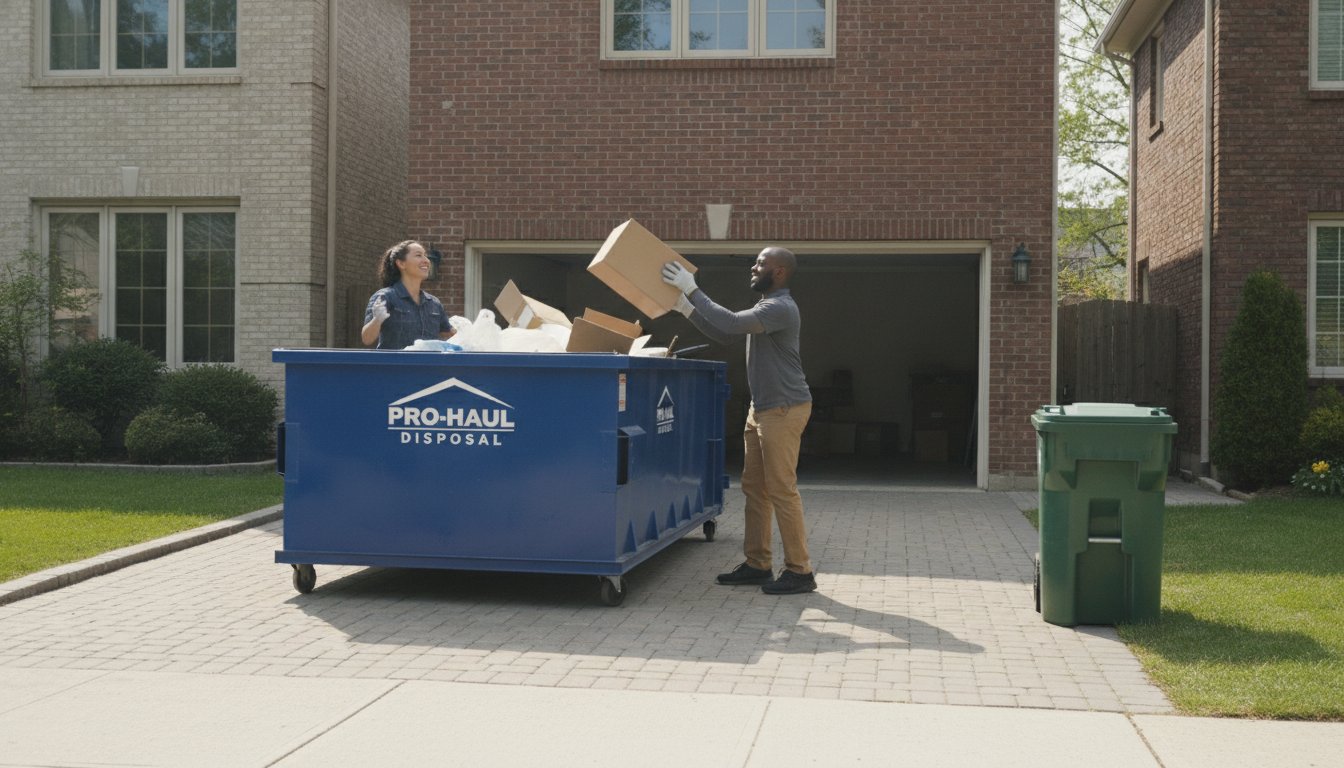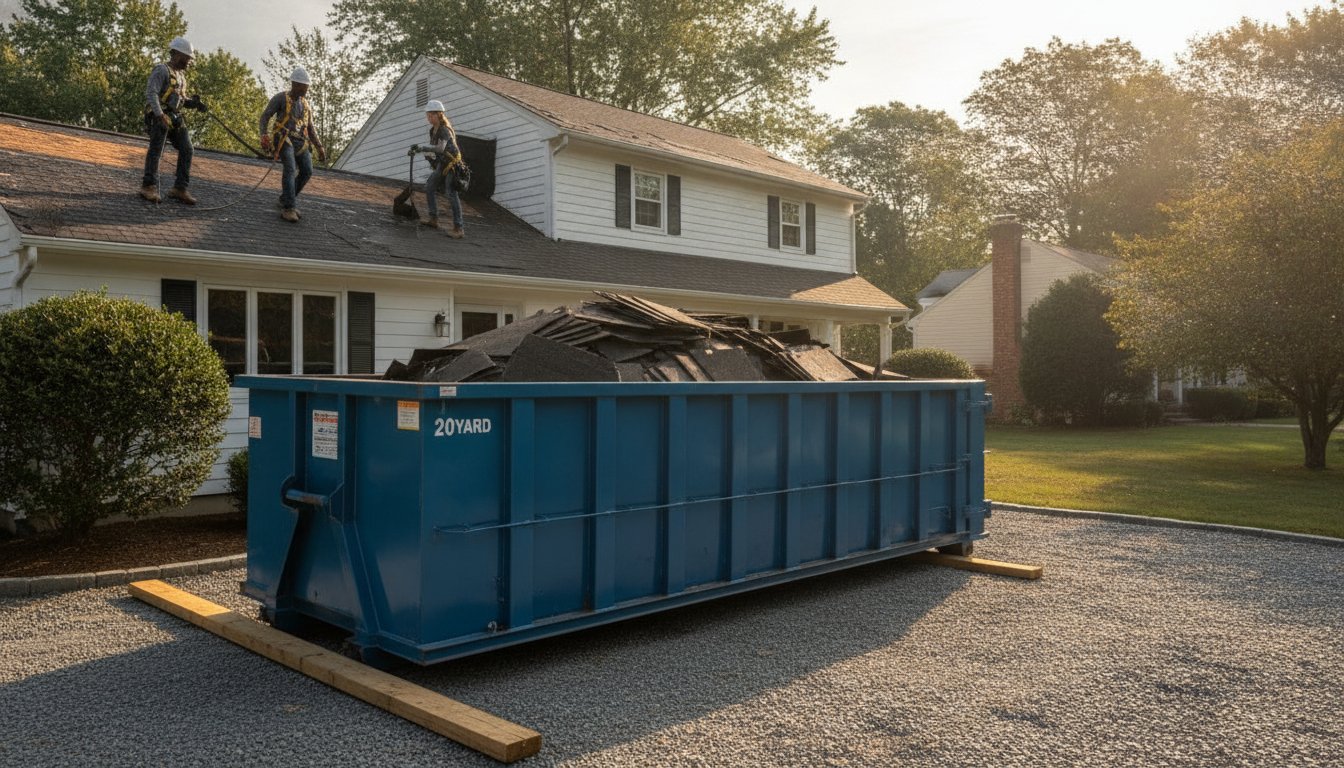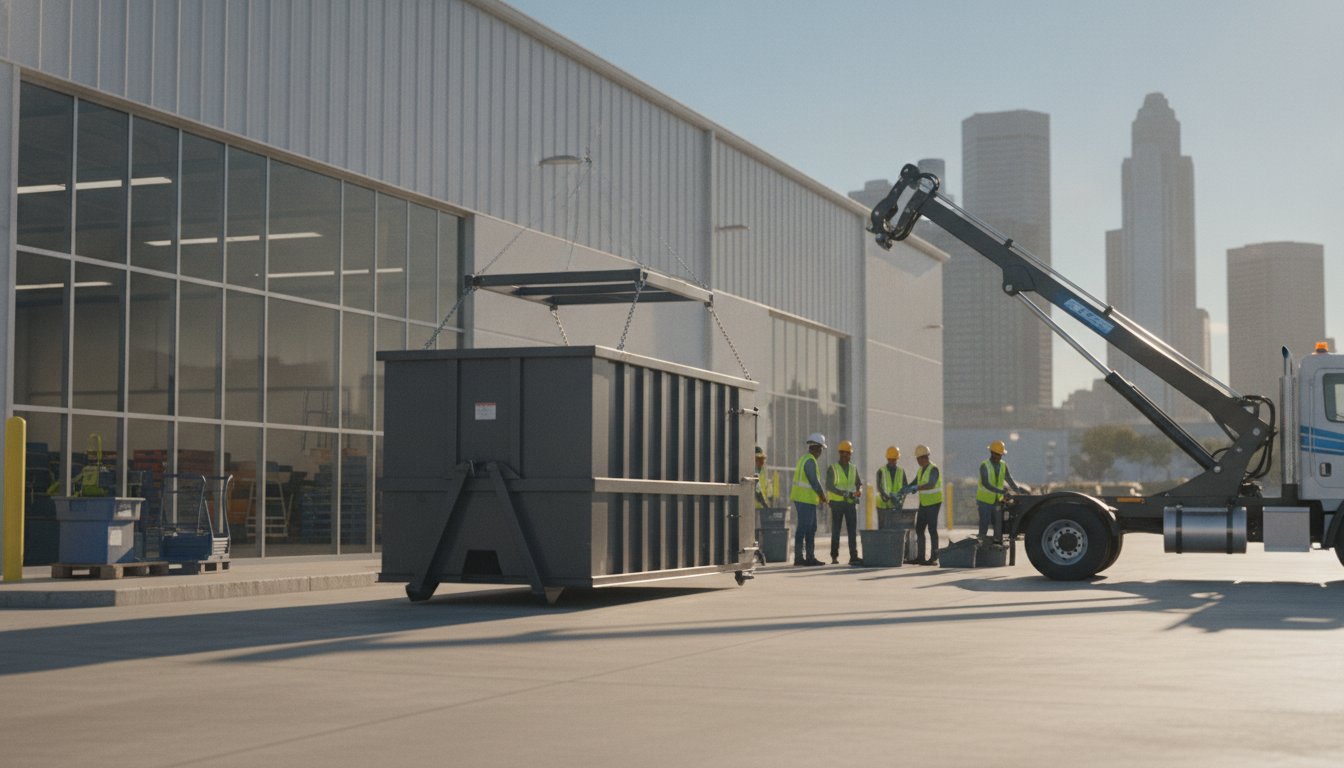

Did you know the national average landfill tipping fee recently surged by 10% to $62.28 per ton? This spike makes it harder than ever to keep your project on budget without a clear strategy. You're likely tired of unpredictable overage fees or the irritation of paying for "air space" in a dumpster that's far too large. If you want to know how to reduce construction debris removal costs in 2026, you must treat waste management as a logistics puzzle rather than an afterthought.
It's frustrating when neighbors treat your rented container as a free local dump, adding weight and cost to your bottom line. We understand the stress of managing a messy site while trying to maintain pricing integrity. This guide promises to arm you with professional strategies to slash waste expenses through smart sizing and improved site logistics. We'll also detail how to leverage federal tax deductions for material diversion instead of just throwing money away.
Expect a direct look at preventing illegal dumping and optimizing your container selection for maximum efficiency. We'll preview the specific IRS forms required for salvaged material donations and the regional tipping fee trends you need to watch. Follow these steps to move from a state of clutter to a state of resolution with minimal friction.
Key Takeaways
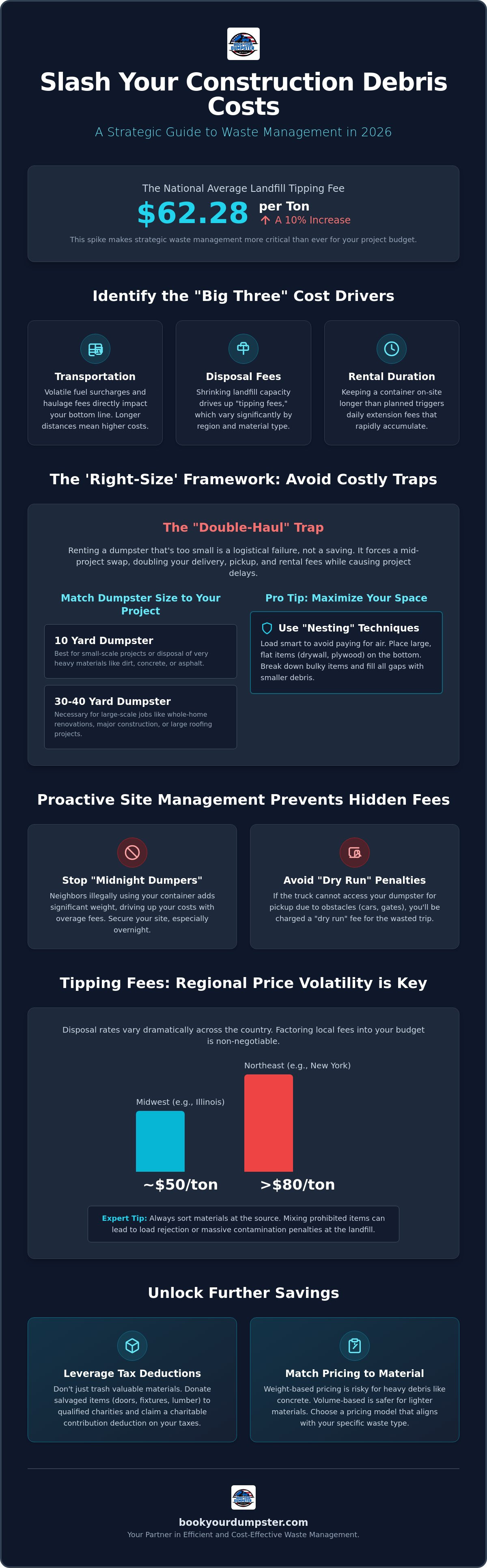
- Identify the "Big Three" cost drivers, including fuel surcharges and regional landfill fee hikes, to build a more accurate project budget.
- Use the "Right-Size" framework to avoid the "Double-Haul" trap and ensure you don't pay for empty space.
- Understand how to reduce construction debris removal costs by leveraging specific charitable contribution deductions for salvaged materials.
- Implement site security measures to stop "Midnight Dumpers" from filling your container and driving up weight-based overage fees.
- Prevent "dry run" penalties by managing site access and logistics before your scheduled pickup.
Understanding the Primary Drivers of Construction Debris Removal Costs
Construction projects in 2026 operate in a volatile pricing environment. You cannot control your budget if you don't understand the underlying mechanics of waste logistics. The first step in learning how to reduce construction debris removal costs is identifying the "Big Three" expenses: transportation, disposal, and rental duration. Transportation costs now include 2026 fuel surcharges that fluctuate based on regional energy markets. Disposal fees, commonly known as tipping fees, continue to rise as landfill capacity shrinks. Finally, rental duration is a silent profit killer. Keeping a container on-site longer than your initial agreement triggers daily extensions that accumulate quickly.
Don't ignore the hidden cost of labor. You might think saving money by ordering a smaller container is a win for the bottom line. However, if your crew spends three hours breaking down lumber and metal studs just to fit them into a 10 Yard Dumpster, you've lost that "saving" in man-hours. Sometimes, paying for a 20 Yard Dumpster or 30 Yard Dumpster is the more pragmatic choice. It keeps your team focused on skilled labor rather than trash Tetris.
Weight limits are the primary cause of budget creep in modern contracting. Heavy materials like masonry, stone, and roofing shingles can easily exceed standard ton allowances. Understanding Construction Debris composition is vital for accurately estimating these loads before you book. If you underestimate the density of your waste, you will face expensive overage fees on your final invoice.
Tipping Fees and Regional Price Volatility
Tipping fees represent the gate rate charged by landfills to accept waste. These rates vary significantly across the country due to local availability and state taxes. In New York, tipping fees are among the highest in the nation, often exceeding $80 per ton. Compare this to the Midwest, where fees in states like Illinois stay closer to $50 per ton. Local environmental regulations in 2026 have also tightened rules on "contaminated" loads. If you mix hazardous materials or prohibited items with standard debris, landfills will reject the load or charge a massive penalty. Always sort your materials at the source to protect your profit margins.
Volume vs. Weight: Which Pricing Model Saves You More?
Selecting the wrong pricing model can double your disposal costs. Weight-based pricing is risky for heavy projects involving concrete or dirt because a single cubic yard of concrete weighs roughly 4,000 pounds. For these heavy-haul projects, look for specialized debris solutions. Volume-based pricing is generally safer for lighter materials like drywall, insulation, and wood scraps. Density-adjusted pricing ensures the cost reflects both the physical space occupied and the logistical effort required to haul the specific weight of your debris. Match your pricing model to your primary waste material to avoid surprise charges at the scale.
Strategic Dumpster Sizing: The 'Right-Size' Framework
The fastest way to blow your budget is falling into the "Double-Haul" trap. This happens when you rent a container that's too small for the job, forcing a mid-project swap. You end up paying for two deliveries, two pickups, and double the rental fees. If you want to know how to reduce construction debris removal costs, you must get the math right before the truck arrives. Undersizing isn't a saving; it's a logistical failure that pauses your crew's progress while they wait for a fresh bin.
Calculate your debris volume with precision. A standard bathroom gut usually fits into a 10 Yard Dumpster. However, a whole-home renovation or a large roofing project requires the capacity of a 30 or 40 Yard Dumpster. Following EPA guidelines on C&D materials regarding source reduction can help you stay within a single container's limits. Use "nesting" techniques to maximize every cubic yard. Place large, flat items like drywall or plywood on the bottom. Break down bulky cabinets and fill the small gaps with loose debris. This strategy ensures you aren't paying to haul air.
When a 10-Yard Dumpster is the Most Cost-Effective Choice
Choose a 10-yarder for projects involving dense, heavy materials. These containers are ideal for dirt, sand, asphalt, or concrete removal because larger bins would exceed legal road weight limits when filled with these materials. Before you load, read our 10 Yard Dumpster Rental: The Complete Buying Guide for 2026 to understand specific weight capacity limitations. Overloading a small bin with heavy debris leads to immediate safety risks and expensive dry-run fees if the driver cannot lift the load.
Scaling Up: 20 to 40-Yard Dumpsters for Major Construction
Large-scale commercial waste management demands the volume of 30 and 40-yard bins. These sizes offer the best price-per-yard efficiency for light but bulky debris like lumber, siding, and insulation. For a deeper look at managing high-volume sites, consult The Ultimate Guide to Construction Debris Removal in 2026. Using a single large bin instead of several small ones reduces the number of trips, which directly lowers your total fuel surcharges and transportation costs. If you are unsure which size fits your job, check available inventory to compare dimensions and capacities before booking.
Maximizing ROI Through Tax Deductions and Recycling Credits
Financial efficiency in waste management extends beyond the job site and into your tax filings. While many contractors overlook it, the primary federal benefit for material diversion is the charitable contribution deduction. If you salvage fixtures, cabinets, or doors for a qualified 501(c)(3) organization, you can deduct the fair market value of those items. For deductions exceeding $500, you must file IRS Form 8283. If you're managing a large-scale project with donations over $5,000, you'll need a qualified appraisal to secure the benefit. This strategy is a critical component of how to reduce construction debris removal costs because it turns a disposal expense into a tax asset.
IRS Section 179 provides another avenue for savings. This code allows businesses to deduct the full purchase price of qualifying equipment or certain contracted services in the year they are put into service. Consult your CPA to determine if your long-term waste management contracts or specific on-site processing equipment qualify for this immediate deduction. Proper documentation is your best defense. Keep detailed records of every dump and every donation receipt to ensure your project remains compliant and profitable.
Identify high-value debris before it hits the bin. Scrap metal, clean lumber, and corrugated cardboard often have market value at local recovery centers. By following EPA guidelines on sustainable materials management, you can implement a source reduction plan that keeps these materials out of the landfill. This reduces the total weight of your dumpster, which is vital given that the national average tipping fee hit $62.28 per ton in 2024. In the Northeast, those fees average even higher at $80.67 per ton, making weight reduction a top priority.
State-Specific Incentives in NY, MA, and IL
New York contractors must navigate strict waste diversion mandates that require specific percentages of debris to be recycled. In Massachusetts, the Department of Environmental Protection enforces "Waste Bans" on materials like asphalt pavement, brick, and concrete. Compliance avoids heavy fines and keeps your project in good standing with local regulators. Look for local recovery centers that offer rebates for sorted materials to offset your hauling fees. Staying informed on these regional variances prevents unexpected penalties from eating your project margins.
The 'Source Separation' Strategy for Contractors
Sorting debris on-site requires more labor but pays off in lower disposal rates. Using multiple smaller dumpsters, such as a 10 Yard Dumpster for heavy masonry and a 20 Yard Dumpster for general debris, prevents mixed-load surcharges. Clean loads of concrete can be 50% cheaper to dump than mixed debris because they require less processing at the facility. This simple separation strategy is a pragmatic way to protect your margins while streamlining your site logistics.
Proactive Site Management to Prevent Hidden Fees
Managing the physical site is just as important as choosing the right container size. If you want to know how to reduce construction debris removal costs, you must eliminate the "hidden" penalties that occur after the dumpster is delivered. The most common budget killer is the "Midnight Dumper" problem. Neighbors or passersby often see an open construction bin as an invitation to dispose of their own bulky waste. This doesn't just add weight; it introduces prohibited items that trigger massive surcharges on your final bill.
Permit management is another critical area where contractors lose money. In densely populated areas like Queens or San Francisco, placing a container on the street requires a specific right-of-way permit. Failing to secure this documentation before the truck arrives leads to two expensive outcomes: a "dry run" fee because the driver cannot legally drop the bin, and potential city citations that can cost hundreds of dollars per day. Always verify local parking and placement regulations 48 hours before your scheduled delivery.
Watch out for prohibited items. Landfills and transfer stations have strict rules against hazardous materials, electronics, and specific bulky goods. Tossing a single mattress or a spare tire into a mixed debris load can trigger a penalty fee ranging from $50 to $150 per item. These costs are entirely avoidable if you communicate clearly with your crew and secure the site during off-hours. Protecting your bin from unauthorized use is a pragmatic step toward maintaining your project's pricing integrity.
Securing the Job Site and Dumpster
Safety regulations require every load to be "Level Full," meaning no debris can protrude above the top rim of the container. Drivers will refuse to haul overfilled bins to avoid road hazards, resulting in a dry run fee and the labor cost of having your crew level the load. Use heavy-duty tarps and locking cables during the night to deter illegal dumping and keep your materials dry. For more on optimizing your site, read our guide on Roll Off Dumpster Rental: The Complete Guide to Efficient Waste Management.
Logistics and Punctuality
Scheduling "Just-in-Time" pickups prevents your project from incurring daily rental extension fees. Don't let a full bin sit idle on your property for three extra days while you wait to call for a haul-away. Additionally, prepare the drop-off area with plywood buffers to prevent the heavy steel rollers from damaging asphalt or pavers. You can find more regional pricing and logistics tips in our Dumpster Rental Prices in New York, Illinois, and Massachusetts: 2026 Guide. To ensure your project stays on track without logistical friction, schedule your next delivery online for instant confirmation and transparent pricing.
Streamline Your Project with Book Your Dumpster USA
Efficiency is the core of any profitable construction project. Managing a job site is hard enough; figuring out how to reduce construction debris removal costs shouldn't be the most difficult part of your day. Book Your Dumpster USA removes the logistical friction by providing a digital-first platform designed for modern contractors. Skip the long sales calls and the "waiting for a quote" game. Our online portal provides instant pricing and real-time inventory checks so you can secure your equipment and get back to work.
Pricing integrity is our primary promise. Many haulers lure customers with low base rates only to add fuel surcharges, environmental fees, and administrative costs to the final invoice. We reject those opaque communication structures. The price you see during the booking process is grounded in utility and transparency. This straightforward honesty acts as a verbal handshake, ensuring you can budget your project with total confidence. Whether you're operating in New York, New Jersey, Massachusetts, or Illinois, our local expertise ensures your waste management remains compliant with regional regulations.
We provide the right size for every project scope. If you're handling a heavy masonry tear-out, select our 10 Yard Dumpster. For larger commercial sites or whole-home renovations, choose from our 20 Yard Dumpster, 30 Yard Dumpster, or 40 Yard Dumpster options. Having the full spectrum of sizes available today means you never have to settle for "air space" or risk the "Double-Haul" trap discussed earlier in this guide.
Why Contractors Trust Our Roll-Off Services
Reliability is the foundation of our partnership with the trade. We understand that a delayed delivery or a missed pickup can stall an entire crew, driving up your labor costs. Our scheduling system is built for punctuality, keeping your site clear and your project on track. We provide professional-grade containers that reflect well on your job site, maintaining the image of competence and control you've worked hard to build. Our team provides clear communication on weight limits and disposal rules up front, helping you avoid the surprise fees that often plague the industry.
Get Started in Minutes
Take control of your site logistics right now. Use our streamlined online portal to select your container size, choose your delivery date, and finalize your order in minutes. Our customer support team understands the specific pressures of NY and NJ job sites, from tight street access in Queens to strict disposal mandates in Jersey City. We modernized a traditional industrial sector to respect your time and urgency. Don't let waste management become a source of stress. Book Your Dumpster Online Now and experience the efficiency of a high-functioning tool designed for your success.
Take Control of Your Project Logistics
You now have a technical roadmap for 2026 waste management. By mastering the "Right-Size" framework and leveraging federal tax deductions for salvaged materials, you've already identified the most effective strategies for how to reduce construction debris removal costs. Don't let your margins vanish into unpredictable overage fees or unauthorized dumping from neighbors. Secure your site, document your material diversion meticulously, and choose a partner that values pricing integrity as much as you do. Every cubic yard saved is profit protected.
Book Your Dumpster USA provides the professional-grade 10-40 yard containers you need across NY, NJ, IL, MA, and SF. We modernized the rental process with streamlined online booking and transparent, pragmatic pricing that respects your time. Forget the hidden fluff and endless sales calls that slow down your crew. Secure Your Construction Dumpster Today to keep your job site moving with total precision and control. You've already done the hard work of planning; now it's time to execute with a reliable partner who understands the stakes of your project.
Frequently Asked Questions
What is the cheapest way to dispose of construction debris?
Source separation is the most effective method for lowering your disposal expenses. By separating clean concrete, scrap metal, and untreated wood from general trash, you can often drop these materials at recovery centers for significantly lower rates than mixed debris. This strategy reduces the total weight sent to landfills, which is critical since the national average tipping fee hit $62.28 per ton in 2024.
Can I get a tax deduction for recycling my construction waste in 2026?
You can secure a noncash charitable contribution deduction by donating salvaged materials to a qualified 501(c)(3) organization. This is a professional strategy for anyone looking at how to reduce construction debris removal costs through material diversion. If your donated items like cabinets or fixtures are valued over $500, you must file IRS Form 8283 with your tax return to claim the benefit.
How much does a 10-yard dumpster typically hold?
A 10 Yard Dumpster holds 10 cubic yards of material, which is roughly equivalent to three or four standard pickup truck beds. This size is specifically designed for small bathroom renovations or heavy, dense debris like dirt, sand, and concrete. Don't use this size for bulky items like furniture or long lumber, as you'll quickly run out of volume before hitting the weight limit.
What happens if I go over the weight limit on my dumpster rental?
Exceeding the weight limit triggers overage fees that typically range from $40 to $100 per ton. These fees are added to your final invoice based on the official weight recorded at the landfill scale. To avoid these surprise costs, estimate the density of your debris accurately and choose a container size that matches the weight of your specific materials.
Do I need a permit to put a dumpster on the street in Queens or Boston?
Yes, most major cities require a right-of-way or street permit if the container is not placed on private property. In Queens, you must coordinate with the New York City Department of Transportation, while Boston requires a permit from the Public Works Department. Secure these documents at least 48 hours before your scheduled delivery to prevent "dry run" fees or city citations.
What items are strictly prohibited in construction dumpsters?
Prohibited items include hazardous waste like asbestos, wet paint, solvents, and chemicals. Many local landfills also ban tires, mattresses, and electronics from standard debris loads. Disposing of hazardous materials incorrectly can result in specialized handling fees that average between $150 and $300 per incident. Always check your local regulations before loading the bin.
How can I prevent other people from putting trash in my rented dumpster?
Cover your container with a heavy-duty tarp and secure it with locking cables during off-hours. This simple physical barrier deters "Midnight Dumpers" from adding weight or prohibited items to your bin. Maintaining a well-lit job site also discourages unauthorized use, protecting you from unexpected overage fees and logistical delays.
Is it cheaper to hire a junk removal service or rent a dumpster?
Dumpster rental is almost always the more cost-effective choice for construction projects where your crew handles the loading. Junk removal services charge for both labor and volume, which makes them expensive for heavy debris and long-term projects. Renting a 20 or 30 Yard Dumpster allows you to manage waste at your own pace while maintaining total control over your project budget.