

Last Tuesday, a homeowner in Chicago paid $250 in unexpected city fines because their container lacked a valid public way permit. It's a common story in urban centers where local regulations turn a simple cleanup into a legal headache. You likely feel that managing waste should be straightforward, not a gamble with hidden overage charges or confusing municipal codes. Finding competitive dumpster rental prices shouldn't require a law degree or hours of research. We agree that transparency is the only way to do business.
Master the complexities of waste management with this 2026 guide. You'll learn how to secure the best rates for your project in New York, Illinois, and Massachusetts while avoiding the common pitfalls that inflate your bill. We provide a clear roadmap to help you build a transparent budget, avoid legal fines for improper placement, and select the smallest size that actually fits your debris. Stop worrying about logistical stress and start your project with confidence. This guide breaks down exactly how pricing works in your specific region so you can book with certainty.
Key Takeaways
- Compare flat-rate versus variable pricing models to determine which structure offers the most predictability for your 2026 budget.
- Identify how size, weight, and debris type interact to set dumpster rental prices across the Northeast and Midwest markets.
- Evaluate cost-per-cubic-yard value to select the ideal container size for your specific residential or construction project.
- Prevent costly overage fees and fines by mastering the list of prohibited items and weight restrictions before your scheduled delivery.
- Book your dumpster using a transparent, digital-first system that provides instant quotes and eliminates hidden logistical stress.
Understanding Dumpster Rental Prices in the 2026 Market
Managing a renovation or site cleanup in 2026 requires a clear grasp of shifting logistics costs. Expenses in the Northeast and Midwest have evolved significantly over the last two years. Fuel volatility and updated landfill regulations now dictate how haulers calculate dumpster rental prices. You must know exactly what you are paying for before the truck arrives at your driveway or job site. Transparency is the only way to avoid hidden fuel surcharges that some companies add to the final invoice.
Effective waste management depends on a "no-surprises" approach. When you Book Your Dumpster, you should expect a clear breakdown of every cost component. This includes the haul rate, the duration of the rental, and the specific disposal limits set by the municipality. Tipping fees, which are the costs charged by landfills to drop off waste, vary wildly between states. For example, a ton of debris in Massachusetts costs significantly more to process than the same ton in rural Illinois due to state-mandated environmental levies.
Flat-Rate vs. Variable Pricing Models
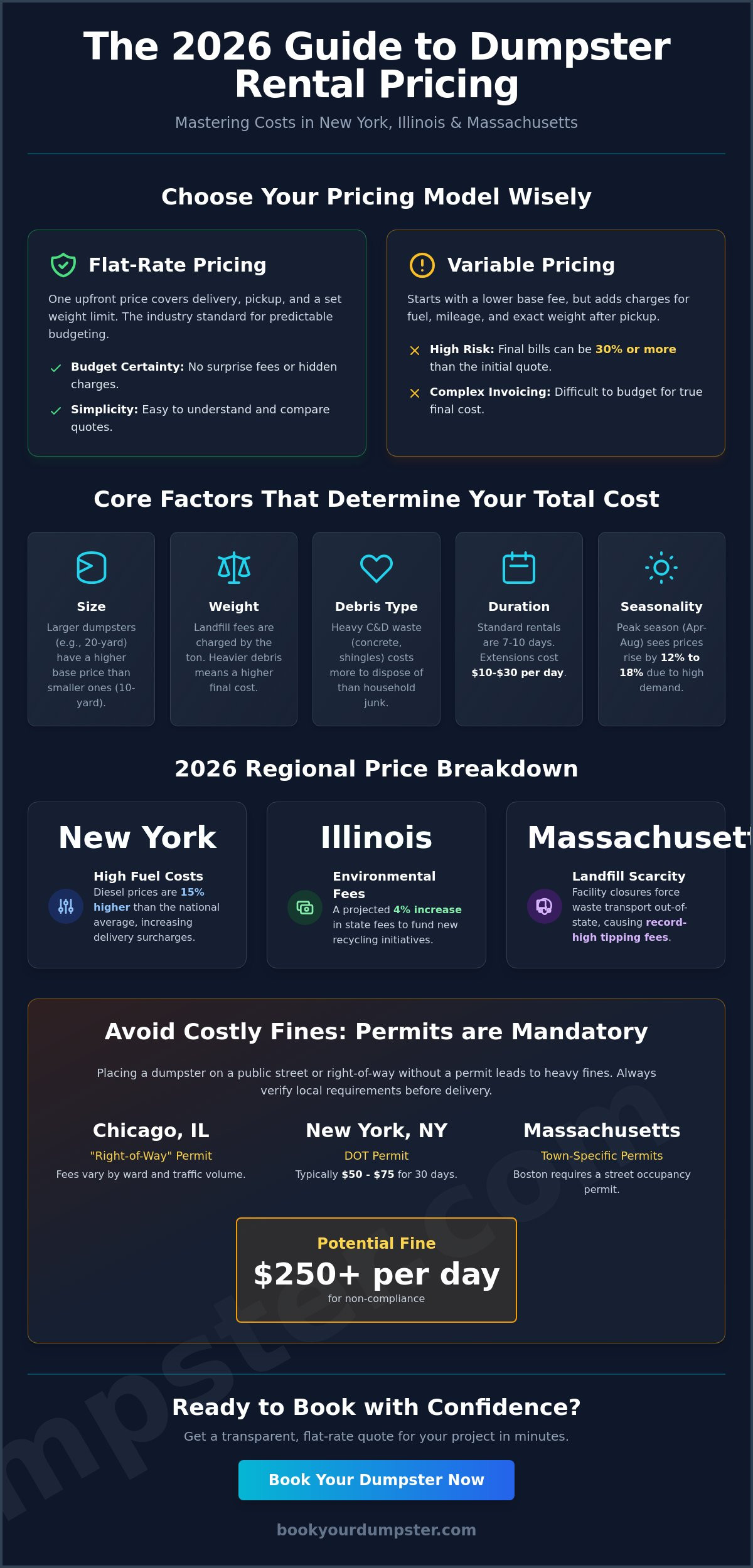
Most haulers offer two ways to pay. A flat-rate quote covers delivery, pickup, and a predetermined weight limit in one upfront price. This model protects you from surprise costs at the scale. Variable pricing starts with a lower base fee but adds charges for fuel, mileage, and specific disposal weights after the job is done. Residential users often face higher risks with variable models. Final bills in these cases can exceed initial quotes by 30 percent or more. Understanding the Core Factors That Determine Your Total Rental Cost ensures you don't get stuck with unexpected overage fees. A Flat-Rate Rental is the industry standard for predictable budgeting.
Regional Economic Factors in NY, IL, and MA
Geography dictates your final price. In New York, 2026 diesel prices remain 15 percent higher than the national average. This directly increases delivery surcharges for routes in the five boroughs and Long Island. Massachusetts presents a different challenge. The state closed two major landfill facilities in late 2025, forcing haulers to transport waste across state lines to New Hampshire or New York. This lack of local capacity has pushed Massachusetts tipping fees to record highs for the 2026 season.
Illinois projects a 4 percent increase in state environmental fees for 2026 to fund new regional recycling initiatives. These local mandates mean a 20-yard container in Chicago has a different cost structure than one in Boston or Albany. Always confirm if your quote includes these state-specific taxes. Reliable providers keep these costs transparent so you can focus on your project instead of the paperwork.
Core Factors That Determine Your Total Rental Cost
Understanding dumpster rental prices requires a look at three primary variables: size, weight, and duration. A 20-yard container costs more than a 10-yard container because it occupies more space on the truck and requires more fuel to transport. Most standard contracts include a 7 to 10 day rental period. If your project runs over, expect daily extension fees ranging from $10 to $30 depending on your specific market and the time of year.
The type of debris you toss also dictates the final invoice. Construction and Demolition (C&D) waste, like concrete, brick, or roofing shingles, often carries higher disposal fees than standard household junk. Landfills charge by the ton, and heavy materials reach weight limits quickly. Logistics play a role too. If your job site sits more than 20 miles from a dispatch hub, fuel surcharges often apply to cover the extra travel time. Demand also fluctuates. During the seasonal surge between April and August, availability tightens and prices often rise by 12% to 18% due to the high volume of home renovations and cleanouts.
Permit Costs and Local Regulations
Placement matters as much as the bin itself. In New York City, the Department of Transportation (DOT) requires a permit for any dumpster placed on a public street. These permits typically cost between $50 and $75 for a 30-day period. Chicago requires a "Right-of-Way" permit for street placement, with daily or weekly fees that vary based on the specific ward and traffic volume. In Massachusetts, regulations are town-specific. Boston requires a street occupancy permit, while smaller municipalities might only require a simple notification to the local police or DPW. Always check your local permit requirements before your scheduled delivery date to avoid municipal fines that can exceed $250 per day.
Weight Limits and Overage Charges
Every rental comes with a pre-set tonnage limit. For a standard 20-yard bin, this limit usually sits between 2 and 4 tons. If you exceed this capacity, you'll face overage charges. In 2026, industry data suggests overage rates will average between $95 and $135 per ton across the Northeast and Midwest. To avoid these costs, estimate your weight before booking. A general rule of thumb is that one cubic yard of mixed household debris weighs about 250 pounds. One cubic yard of heavy debris like dirt or concrete can weigh up to 2,000 pounds. Choose a weight limit that matches your heaviest materials to keep your dumpster rental prices predictable and within budget.
Comparing Dumpster Sizes: Finding the Best Value for Your Project
Selecting the right container volume is the fastest way to control your project budget. While dumpster rental prices are influenced by your specific zip code, the mathematical value lies in the volume-to-price ratio. Larger bins generally offer a lower cost per cubic yard of waste removed. However, overestimating your needs leads to paying for empty air. Underestimating leads to costly dry run fees or the requirement for a second rental. Match your debris volume to the container size to keep your project efficient.
The 10-Yard Dumpster: Small Scale, High Efficiency
This unit is the standard entry point for residential work. It's the ideal choice for a 50-square-foot bathroom demolition, a small basement cleanout, or removing roughly 1,500 square feet of roof shingles. In dense urban areas like Boston, the 10-yarder is the most requested size. Its compact footprint fits into tight driveways and narrow city streets where larger haulers cannot maneuver. Review our 10-yard dumpster rental guide to see if this capacity fits your specific debris type.
The 20-yard dumpster is often called the Goldilocks size. It handles medium-sized renovations, such as a 200-square-foot kitchen remodel or a full garage cleanout. It offers double the capacity of a 10-yard unit but rarely costs double the price. This makes it the highest value choice for most homeowners in New York and Illinois who are balancing dumpster rental prices against significant waste volume. Book your dumpster in this size if you aren't sure if a 10-yarder will hold everything.
Large Scale Solutions: 30 and 40-Yard Containers
Commercial construction sites and major estate clear-outs require heavy-duty volume. The price jump to these larger containers reflects the higher disposal fees and specialized hauling equipment required. Weight limits for 40-yard units often reach 10,000 to 12,000 pounds. This accommodates massive amounts of timber, drywall, or bulky furniture from commercial gut renovations.
Logistics are critical for these units. In Illinois suburbs, ensure you have at least 60 feet of straight-line clearance for a 40-yard delivery. These bins are typically 22 feet long. The truck needs significant room to drop the container safely without hitting overhead wires or damaging your property. Choose your size based on your available space and total debris weight to avoid overage charges.
- 10-Yard: Best for heavy materials like dirt or concrete.
- 20-Yard: Best for deck removals and floor replacements.
- 30-Yard: Best for home additions and large hoarding situations.
- 40-Yard: Best for commercial roofing and new construction.
Schedule your delivery once you've cleared the drop-off zone. Proper planning ensures you get the most out of every cubic yard you pay for.
Avoiding Overage Fees and Common Pricing Pitfalls
Unexpected charges can inflate your total dumpster rental prices by 20% to 50% if you don't plan ahead. Most of these costs are entirely avoidable with basic preparation. Transparency is our priority, and understanding how these fees work keeps your project budget on track.
Prohibited items are the fastest way to trigger massive fines. Dumping hazardous materials like wet paint, lithium batteries, or industrial chemicals violates environmental laws and safety protocols. Landfills monitor loads strictly and pass penalties down to the user. In 2024, several regional facilities in the Northeast increased hazardous waste surcharges by 15% to cover rising processing costs. Check your local prohibited items list before you start loading to avoid these penalties.
Dry run fees occur when a driver cannot complete a delivery or pickup as scheduled. If a parked car blocks the driveway or a low-hanging wire prevents the hoist from operating, you'll pay for the driver's time and fuel. Use this checklist to prepare your site before the truck arrives:
- Clear a 60-foot straight path for the truck to maneuver.
- Ensure 23 feet of vertical clearance for the container hoist.
- Move all personal vehicles away from the designated drop zone.
- Unlock any gates or security access points.
Managing Weight and Debris Type
Weight limits are strict and non-negotiable. Mixing heavy masonry like concrete or dirt with standard household trash creates a "mixed load." These loads are difficult for facilities to sort and often result in higher disposal rates at the scale. "Separating heavy masonry from light debris can save hundreds in tipping fees." Certain items like mattresses, tires, and appliances containing Freon carry individual surcharges. These fees typically range from $30 to $100 per item based on 2024 municipal disposal rates in New York and Massachusetts.
Rental Duration and Extension Fees
Most rental contracts include a standard period of 7 to 10 days. If your renovation hits a snag and you keep the container longer, you'll face daily extension rates. These costs add up fast and can ruin your project's bottom line. Don't wait until the last minute to call for a haul-away. Schedule your pickup 24 hours before you're finished to ensure the driver arrives exactly when you're ready. This proactive approach prevents automatic extensions and keeps your dumpster rental prices predictable.
Ready to clear your site without the hidden costs? Book your dumpster today for transparent, flat-rate pricing.
Book Your Dumpster: Transparent Local Service in NY, IL, and MA
Book Your Dumpster USA delivers a professional experience that respects your schedule and your budget. We prioritize reliability over marketing fluff. Our team manages the logistics so you can focus on the physical work. You won't find vague estimates or surprise surcharges here. Our "No Hidden Fees" policy is a firm commitment to transparency. Every quote includes the essentials like delivery, pickup, and disposal weight. This ensures you know the final cost before the container even arrives at your site.
The online booking system provides instant clarity. You don't need to wait for a callback or navigate a complex phone tree. Enter your project details and receive an immediate quote tailored to your specific location. This modern approach simplifies waste management for residential cleanouts and commercial construction projects alike. It's about removing the logistical stress that often accompanies large-scale debris removal.
Why Local Expertise Matters
Local knowledge is a necessity in states like New York, Illinois, and Massachusetts. Each region has specific requirements for street permits and equipment placement. A hauler who understands the gridlock of Manhattan or the narrow alleys of Boston ensures your container arrives on time. Our drivers are familiar with high-traffic zones and local ordinances in cities like Chicago and Springfield. This expertise prevents costly delays and legal headaches. You should check local pricing in NY, IL, and MA to see how regional factors influence your total and plan accordingly.
Schedule Your Delivery Today
Don't let debris stall your progress. Our fleet includes various sizes to match the scale of any project. Whether you're clearing out a basement or managing a multi-story renovation, we have the right capacity available. Choose from our standard inventory:
- 10-Yard Dumpsters: Ideal for heavy materials like concrete or small garage cleanouts.
- 20-Yard Dumpsters: The standard choice for kitchen remodels and flooring removal.
- 30-Yard Dumpsters: Built for large residential renovations or estate clearing.
- 40-Yard Dumpsters: Maximum capacity for major construction and commercial demolition.
When comparing dumpster rental prices, look for providers that offer a flat-rate structure. This protects your budget from unexpected fuel surcharges or environmental fees. Choose your size and complete your reservation in minutes. Book Your Dumpster Now to secure your delivery date and regain control of your workspace. We handle the haul so you can finish the job.
Secure Your 2026 Project Schedule
Managing your project budget starts with understanding how location and debris type impact dumpster rental prices. The 2026 market requires a proactive approach to waste management. This is especially true in high-demand states like New York, Illinois, and Massachusetts. According to the EPA's 2023 report on sustainable materials management, construction and demolition debris makes up a significant portion of the national waste stream, making efficient disposal critical for any job site. You've learned how to select the right cubic yardage and avoid common pitfalls like overage fees. Now it's time to act. We handle the logistics so you focus on the work. Our system provides a no hidden fees guarantee and ensures on-time delivery across our service areas. Don't let waste pile up or stall your progress. It's easy to get started today with our instant online booking system. Experience a streamlined process that respects your schedule and your budget.
Book your dumpster online now for transparent pricing
Your project deserves a reliable partner who keeps things moving forward and helps you finish strong.
Frequently Asked Questions
How much does it typically cost to rent a 10-yard dumpster in 2026?
In 2026, national averages for a 10-yard container typically range from $300 to $550 according to industry waste reports. Your final cost depends on your specific location and the type of debris you are tossing. Check current dumpster rental prices on our booking page to get an exact quote for your zip code. We provide transparent pricing with no hidden fees to keep your project on budget.
Do I need a permit for a dumpster if it is on my own driveway in Chicago?
You don't need a permit from the City of Chicago if the dumpster sits entirely on your private driveway. The Chicago Department of Transportation only requires a Public Right of Way Permit if the container occupies a street, alley, or sidewalk. Always measure your space before you Book Your Dumpster to ensure the truck can safely drop the unit without blocking public access.
What happens if I go over the weight limit on my rental?
Exceeding the weight limit results in an overage fee, which is billed per ton based on local landfill rates. These fees typically range from $65 to $100 per additional ton depending on regional disposal costs. We provide clear weight limits for every size to help you avoid these extra charges. Keep your heavy materials like concrete or dirt separate to stay within your designated limit.
Are there items that I cannot put in a dumpster in New York?
New York state law prohibits disposing of hazardous waste, tires, batteries, and electronics in standard roll-off containers. The New York Department of Environmental Conservation requires specialized handling for paints, oils, and asbestos to prevent environmental contamination. Review our prohibited items list before you schedule your delivery. Loading these items can result in immediate fines or the driver refusing to pick up the load.
Can I get a dumpster delivered on the same day in Massachusetts?
Same day delivery is available in most Massachusetts service areas if you place your order before 10:00 AM. We prioritize speed and efficiency to keep your renovation moving without delays. If local inventory is low, we guarantee next day delivery to ensure your project stays on schedule. Contact our team early to secure your container and experience our on-time delivery promise.
Is the price of the dumpster rental all-inclusive?
Our pricing includes the delivery, pickup, a specific rental period, and a set weight limit. This transparent structure ensures you don't deal with hidden fees at the end of your project. While the base rate covers standard service, extra costs only apply if you exceed weight limits or keep the container longer than planned. We use clear dumpster rental prices to help you manage your project budget effectively.
How much space do I need for a 40-yard dumpster delivery?
You need a clear path at least 60 feet long and 12 feet wide to accommodate a 40-yard dumpster and the delivery truck. The container itself measures 22 feet long, but the truck requires room to maneuver and tilt the hoist. Ensure there are no low-hanging wires or tree branches below 22 feet of vertical clearance. Clear all vehicles from the drop zone before your scheduled delivery.
Can I extend my rental period if my project takes longer than expected?
You can extend your rental period by calling our office at least 24 hours before your scheduled pickup. Extensions typically cost between $15 and $30 per additional day depending on the current demand in your city. This flexibility allows you to finish your clean-up without unnecessary pressure. Just let us know your new timeline. We will adjust your schedule to fit your specific project needs.


