

What if filling your container to the top rail actually doubles your final bill? It's a common trap because while a 30-yard dumpster offers 810 cubic feet of space, the 30 yard dumpster weight limit is the number that truly dictates your total cost. Most people believe that if it fits, it ships. However, density matters more than volume. You don't want to discover that 9 to 12 pickup truck loads of heavy debris triggered hundreds of dollars in surprise surcharges on your final invoice.
We understand the stress of hidden fees and confusing local road regulations. This guide ensures you stay within the typical 2 to 4 ton threshold to avoid the $75 to $120 per ton overage fees common in May 2026. You'll learn how to calculate material density for construction waste and choose the right disposal strategy for a safe, legal transport. Book your dumpster with confidence by mastering these technical limits before the truck arrives at your job site.
Key Takeaways
- Distinguish between cubic volume and tonnage to ensure your project stays within legal hauling capacities and road-safe limits.
- Identify high-density materials like flooring and drywall that can push you over the 30 yard dumpster weight limit even if the container looks half-empty.
- Avoid DOT safety violations and hazardous "overfill" situations by learning the specific height restrictions for roll-off debris.
- Master the visual "Fill Line" technique to accurately estimate your debris weight and manage your load before the final bill arrives.
- Book your dumpster with a provider that offers transparent pricing and a direct, no-nonsense approach to handling heavy debris removal.
Understanding the 30 Yard Dumpster Weight Limit
The 30-yard dumpster is a massive container designed for significant projects. It measures 22 to 23 feet long, 8 feet wide, and 6 feet tall. This size provides 810 cubic feet of space, making it the workhorse for mid-to-large construction and cleanout jobs. However, space is not the only factor you must consider. The 30 yard dumpster weight limit determines how much material you can actually load before facing extra charges. While the container can hold a lot of volume, the Roll-off dumpsters used to transport these units have a strict mechanical limit. Most trucks cannot safely lift or transport more than 10 tons (20,000 pounds) without risking equipment failure or violating DOT safety standards.
Volume vs. Tonnage: Why Size is Deceiving
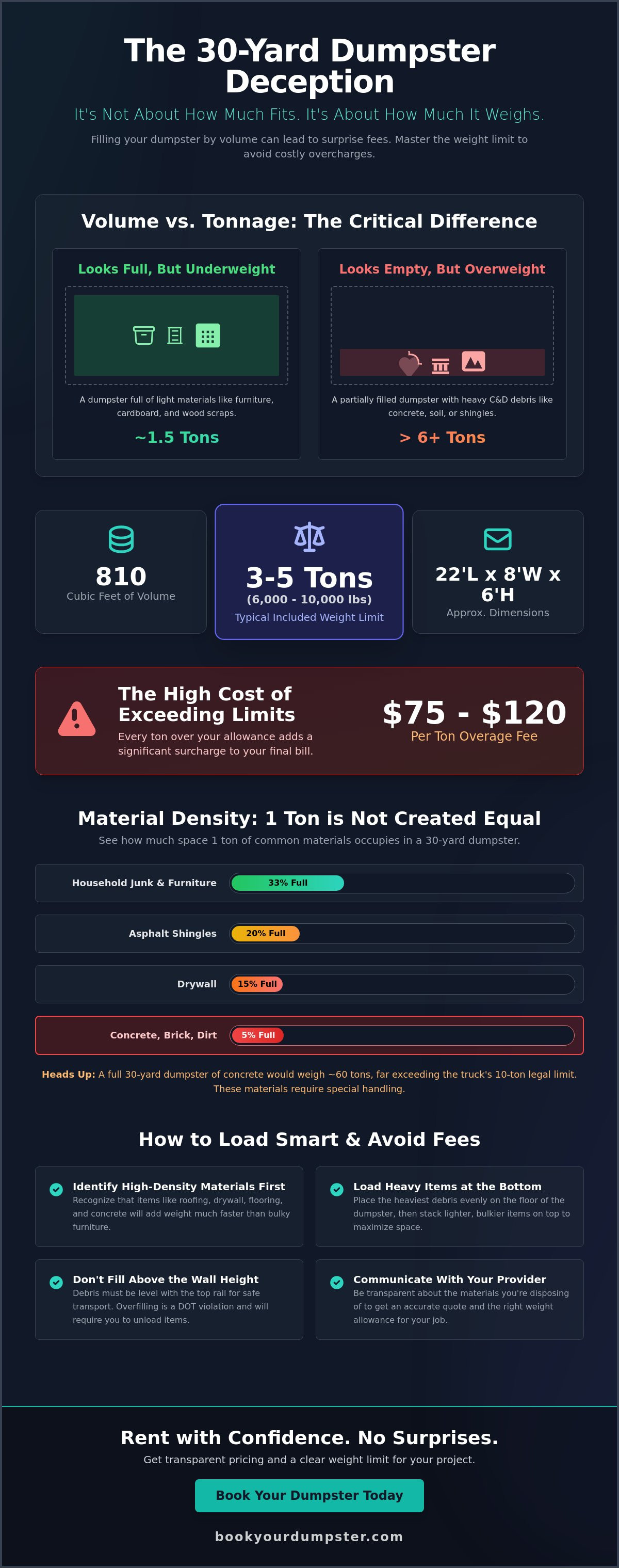
Don't let the physical size of the container fool you. Volume measures space, while tonnage measures mass. A 30-yard dumpster filled with old couches and wooden chairs might only weigh 1.5 tons. Conversely, the same dumpster filled only halfway with wet soil or concrete can easily exceed 6 tons. One ton equals exactly 2,000 pounds. Understanding this baseline helps you estimate your load accurately. This unit is the primary choice for roofing replacements, large basement cleanouts, and residential remodeling because it balances high volume with manageable weight capacities.
Standard Weight Allowances for 2026
Most rental agreements in 2026 include a specific weight allowance rather than a flat "fill as much as you want" policy. For a 30-yard unit, this allowance typically ranges from 3 to 5 tons. This is the amount of debris included in your initial price. If your load exceeds this limit, you'll pay pro-rated overage fees for every additional pound. These fees are not arbitrary. They reflect the increased disposal costs charged by landfills and the extra fuel required for heavy transport. Local regulations and landfill tip fees vary by city, so the 30 yard dumpster weight limit in one region might differ slightly from another. Book your dumpster today to get a clear, transparent quote that outlines your specific tonnage allowance and avoids the stress of hidden costs.
Material Density: How Much Does Your Debris Actually Weigh?
Density is the silent factor that breaks budgets. While your container has plenty of physical room, the 30 yard dumpster weight limit is easily triggered by heavy materials before the bin is even half full. Understanding dumpster weight capacities helps you categorize your waste accurately. Different materials occupy the same space but exert vastly different pressures on the scale. For example, 30 cubic yards of loose household trash weighs significantly less than 30 cubic yards of sheetrock or roofing debris. It's vital to identify your primary waste stream before you start loading.
Household Junk and Furniture Weights
Residential cleanouts are generally safe from overage fees if you're disposing of standard furniture and boxes. A typical 3-bedroom home cleanout usually results in 3 to 4 tons of total weight. Heavy individual items like mattresses (50 to 100 pounds), old refrigerators (200 to 300 pounds), and upright pianos (400 to 800 pounds) add up quickly. To stay under your weight allowance, place heavy appliances at the bottom and stack lighter furniture on top. This strategy maximizes your 810 cubic feet of volume without creating a dense, overweight floor layer. If you're clearing out a multi-story estate, choose your size carefully to ensure you have the capacity needed for heavy oak furniture and appliances.
Construction and Demolition (C&D) Debris
Construction projects require much tighter weight management. A reliable industry stat is that 1,000 square feet of three-tab asphalt shingles weighs approximately 1 ton. If you're stripping a 3,000-square-foot roof, you've already consumed 3 tons of your 30 yard dumpster weight limit before adding any plywood or flashing. Drywall is another weight trap; a standard 4x8 sheet of half-inch drywall weighs about 50 pounds. Because of these density issues, 30-yard containers are rarely used for pure concrete, brick, or dirt. These materials weigh roughly 2 tons per cubic yard, meaning a full 30-yard dumpster would weigh 60 tons, far exceeding the truck's 10-ton lifting capacity. Consult the ultimate guide to construction debris removal to learn the specific rules for handling these heavy-duty materials.
The "Heavy Debris" rule exists for safety and legal compliance. Most haulers require "clean loading" for materials like concrete or brick, often mandating smaller 10-yard or 20-yard bins to prevent the truck from becoming immobilized. If you mix heavy masonry with light trash in a 30-yard bin, you risk a failed pickup or massive surcharges. Always communicate the specific type of debris you're hauling during the booking process to avoid logistical headaches at the end of your project.
The Risks and Costs of Exceeding Weight Limits
Ignoring the 30 yard dumpster weight limit leads to more than just a higher bill. It creates a domino effect of logistical failures and legal liabilities. When a container is too heavy, the roll-off truck might physically struggle to hoist the rails. This puts immense strain on hydraulic systems and cable winches. If the driver determines the load is unsafe to haul, you will face a "dry run" fee. This charge covers the fuel and time spent traveling to your site for a pickup that could not be completed. You must then remove enough debris to meet safety standards before scheduling a second pickup attempt.
DOT Safety and Road Regulations
Every roll-off truck has a Gross Vehicle Weight Rating (GVWR) assigned by the manufacturer. This number represents the maximum safe operating weight, including the truck, the dumpster, and the debris. In major metropolitan areas like New York and Chicago, local law enforcement and Department of Transportation (DOT) officers frequently use portable scales to weigh trucks on narrow city streets. An overweight dumpster is a major legal liability. If a driver is caught hauling a load that exceeds axle weight limits, the fines can reach thousands of dollars. These regulations are even stricter in 2026 to prevent road damage and ensure braking systems function correctly in heavy traffic. Overloading your dumpster doesn't just risk your budget; it risks the safety of everyone on the road.
Landfill Tipping Fees and Overage Costs
Landfills do not charge by the container; they charge by the ton. This is known as a tipping fee. When the truck arrives at the disposal site, it passes over a scale house. The facility records the Gross Weight (the total weight of the truck and its load). After the debris is dumped, the truck is weighed again to find the Tare Weight (the weight of the empty vehicle). The difference between these two numbers is the exact tonnage of your waste. If this number exceeds the 30 yard dumpster weight limit specified in your contract, the landfill's extra costs are passed directly to you.
- Check your agreement: Most contracts in 2026 list a specific price per ton for overages.
- Mind the rim: Never stack debris above the top rail. This "overfill" hazard can lead to falling debris during transport, which is another major DOT violation.
- Plan for density: If you are working on a commercial site with heavy demolition waste, book your dumpster with a higher weight allowance from the start.
Transparency is the only way to avoid these headaches. Understanding the scale house process helps you realize that weight isn't a guess; it's a documented fact. Always aim to stay 10% under your limit to account for rain-soaked debris or unexpected heavy items. This buffer ensures a smooth pickup and a predictable final invoice.
How to Estimate and Manage Your Dumpster Weight
Managing your load requires a strategic approach. You must distinguish between the "Fill Line" and the "Weight Line." The fill line is the physical rim of the container. The weight line is an invisible threshold determined by the density of your debris. For light trash, you can fill the bin to the top. For construction debris, you may need to stop at the halfway mark to stay under the 30 yard dumpster weight limit. A helpful rule of thumb is to compare the volume to a standard pickup truck. A 30-yard unit typically holds between 12 and 14 pickup truck loads. If your materials are heavy, like shingles or flooring, expect to hit your tonnage limit much faster than your volume limit.
The Weather Factor: Rain and Snow
Environmental conditions in 2026 can drastically alter your final bill. Porous materials such as untreated wood, old carpeting, and drywall act like massive sponges. If a heavy storm hits your job site, these items soak up water and gain significant mass. A single afternoon of heavy rain can easily add 500 pounds or more to a large 30-yard load. Prevent this by using a heavy-duty tarp to cover the opening when the dumpster is not in use. This simple step keeps your debris dry and ensures you don't pay for "water weight" at the landfill scale house. Liquids of any kind are prohibited, as they leak during transport and add unnecessary tonnage.
Visual Indicators of an Overweight Load
Pay attention to how the container sits on your driveway or job site. If you notice the tires on the roll-off truck bulging significantly during the initial lift attempt, the load is likely too heavy. Another red flag is the sound of the truck's hydraulic system straining or "whining" more than usual. To prevent an imbalanced and dangerous haul, always place your heaviest items at the bottom and keep the weight centered. Avoid concentrating all heavy debris at one end of the bin. This prevents the truck from tipping or losing traction during the loading process. For more detailed advice on loading strategies, check out our roll off dumpster rental guides. If you are ready to start your project with a reliable partner, schedule your delivery today and experience our transparent, no-nonsense service.
Hazardous materials like paint, oil, and batteries are strictly forbidden. These items are not only heavy but also pose environmental risks that trigger massive fines. Stick to approved debris and distribute it evenly across the floor of the container. This careful management protects your budget from overage fees and ensures the truck can safely navigate local roads without incident. By monitoring the volume and the type of material simultaneously, you maintain total control over the logistics of your cleanup.
Renting a 30 Yard Dumpster with Book Your Dumpster USA
Book Your Dumpster USA removes the logistical stress from your project through a straightforward, no-nonsense experience. We prioritize your time and your budget. Our pricing model is fundamentally transparent. You won't find hidden surcharges or vague weight allowances that lead to surprise costs on your final invoice. By mastering the 30 yard dumpster weight limit before your project begins, you can budget with total accuracy for your renovation or site cleanup. We act as a dependable partner, ensuring the container you order is perfectly suited for the debris you're hauling. Our goal is to move you from a state of clutter to a state of resolution with minimal friction.
Local Service, Professional Reliability
Our operational footprint covers key regions including New Jersey, Massachusetts, and the San Francisco area. We understand the specific urban challenges of major hubs like Queens and Chicago. Narrow streets, tight alleys, and local weight restrictions require a team with grounded, local expertise. We don't just drop a box on your property. We provide professional guidance to help you choose the right size from our inventory of 10, 20, 30, and 40-yard units. If your debris is exceptionally dense, we may suggest a specific loading strategy to keep you within legal transport limits. Our on-time delivery promise is a core brand value. We know that a delayed dumpster means a delayed project, so we ensure our trucks arrive exactly when scheduled.
Book Your Dumpster Today
Efficiency is the core of our digital-first business model. Use our instant online pricing tool to see your options in seconds. You can select your container, schedule your delivery date, and complete your booking without making a single phone call. This system is designed for the modern DIYer and the busy professional alike. For contractors managing multiple job sites, we offer recurring commercial waste pickup accounts to streamline your waste management across different locations. This high-functioning tool gives you total control over your project's logistics. Don't let waste management become a headache. Trust a partner that values honesty and straightforward communication. Book your 30 yard dumpster now and experience a service that has modernized the traditional waste industry through digital convenience and reliability.
Whether you're tackling a residential basement cleanout or a large-scale commercial demolition, staying under the 30 yard dumpster weight limit is the key to a hassle-free experience. Our team is ready to assist you in calculating your tonnage needs and selecting the best disposal plan. Choose your size, schedule your delivery, and let us handle the heavy lifting. We have the equipment and the expertise to keep your site clean and your project moving forward without delay.
Take Control of Your Cleanup Today
Mastering the 30 yard dumpster weight limit is the most effective way to protect your project budget from surprise overage fees. Remember that density matters more than volume. Whether you're clearing out a 3,000-square-foot roof or managing a multi-story estate cleanout, proactive loading prevents DOT violations and expensive dry run fees. Always use a tarp to shield porous materials from rain; water weight can add 500 pounds to your total tonnage in a single afternoon.
Book Your Dumpster USA provides the high-functioning tools you need for a successful project. We offer transparent pricing with no hidden fees across NY, NJ, IL, MA, and SF. Our modern online booking system handles both residential cleanups and commercial construction needs with professional speed. Rent your 30-yard dumpster with transparent weight limits today and move your site from a state of clutter to a state of resolution. We have the logistics under control so you can focus on the work that matters. Your next project starts with a reliable partner and a clear plan.
Frequently Asked Questions
How many tons can a 30-yard dumpster hold?
A standard 30-yard dumpster typically includes a weight allowance between 2 and 4 tons. While the container itself is large, the 30 yard dumpster weight limit is set by your rental agreement to cover specific disposal costs. Exceeding this tonnage results in additional fees at the landfill. Always check your specific contract to confirm how many thousands of pounds are included in your flat rate.
What happens if I go over the weight limit on my dumpster?
You will be charged a pro-rated overage fee for every ton exceeding your initial allowance. If the load is so heavy that it exceeds the truck's lifting capacity or legal road limits, the driver will refuse the pickup. This results in a dry run fee and requires you to remove material before the truck returns. Accurate estimation prevents these logistical delays and extra costs.
Can I put concrete or dirt in a 30-yard dumpster?
You should not put pure concrete, brick, or dirt in a 30-yard dumpster. These heavy materials weigh approximately 2,000 pounds per cubic yard. Filling a 30-yard bin even halfway with concrete would exceed the 10-ton mechanical limit of the roll-off truck. Use a 10-yard or 20-yard container specifically designated for "clean" heavy debris instead to ensure a safe haul.
Is there a "fill line" for weight in a roll-off container?
There is no physical weight line painted on the container, but you must monitor the debris density. For heavy items like shingles or flooring, stop filling when the bin is roughly half-full to stay within your 30 yard dumpster weight limit. Only light household trash should ever reach the top rail. Use the type of material as your primary guide for when to stop loading.
How much are typical dumpster overage fees in 2026?
Typical overage fees in 2026 range from $75 to $120 per ton for any weight beyond your included limit. Landfills calculate these costs at the scale house based on the exact tonnage of your waste. These fees are standardized across many regions to reflect rising disposal and fuel costs. Reviewing your rental agreement ensures you know the exact pro-rated cost per pound for your specific location.
Does rain affect the weight of my dumpster rental?
Rain significantly increases the weight of your load if you are disposing of porous materials like wood, drywall, or carpet. These items absorb water, which can add 500 pounds or more to your total tonnage during a storm. Use a heavy-duty tarp to cover the dumpster opening during inclement weather. This simple step keeps your debris dry and prevents you from paying for water weight.
How many pickup truck loads fit in a 30-yard dumpster?
A 30-yard dumpster holds the equivalent of 9 to 12 standard pickup truck loads. This estimation assumes a standard 8-foot truck bed filled to the top of the cab. This comparison helps you visualize the massive volume of the 810 cubic feet available. While the volume is high, always remember that the weight of those 12 loads must still fall within your tonnage allowance.
What is the maximum weight a roll-off truck can pick up?
Most roll-off trucks have a maximum mechanical lifting capacity of 10 tons, or 20,000 pounds. This limit includes the weight of the steel container itself and the debris inside. Even if your rental agreement allows for 4 tons, the physical truck cannot safely transport a 15-ton load. Staying well below this mechanical ceiling ensures the driver can safely hoist the rails and navigate local roads.


