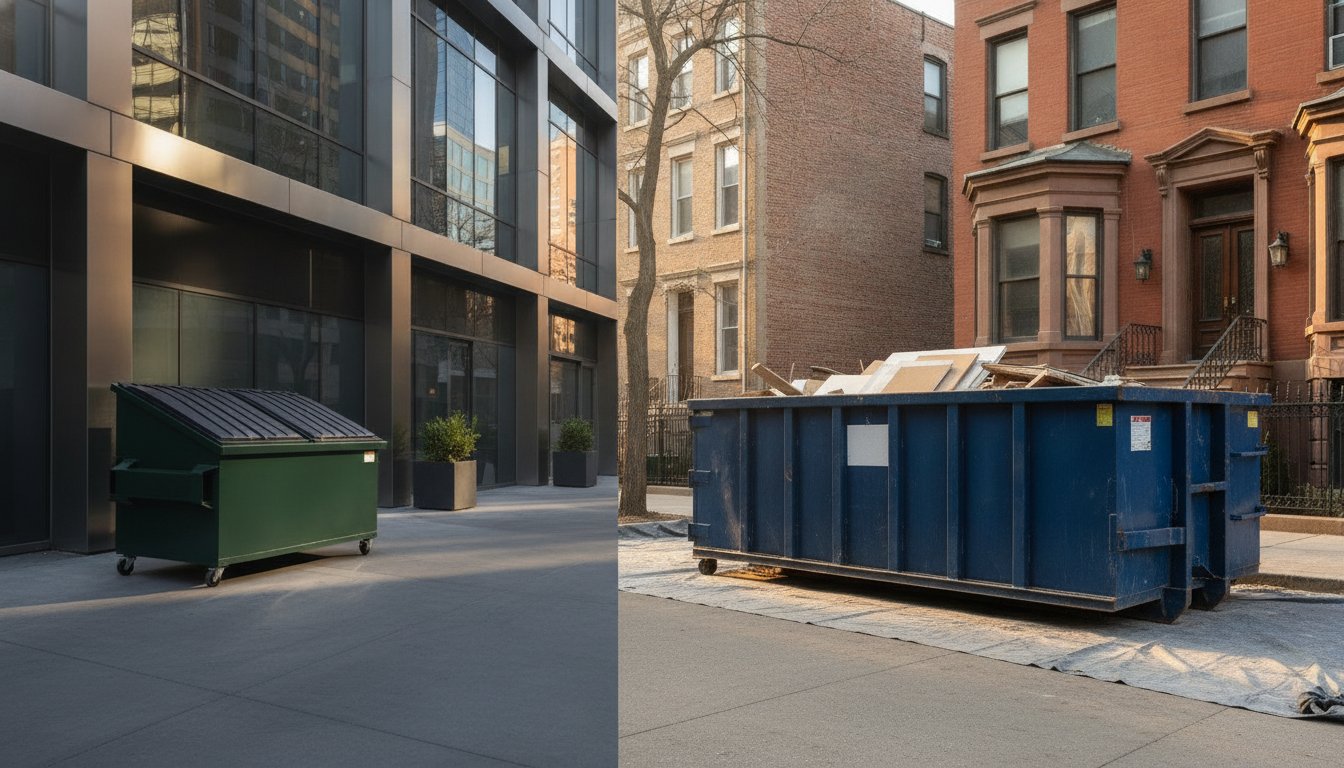
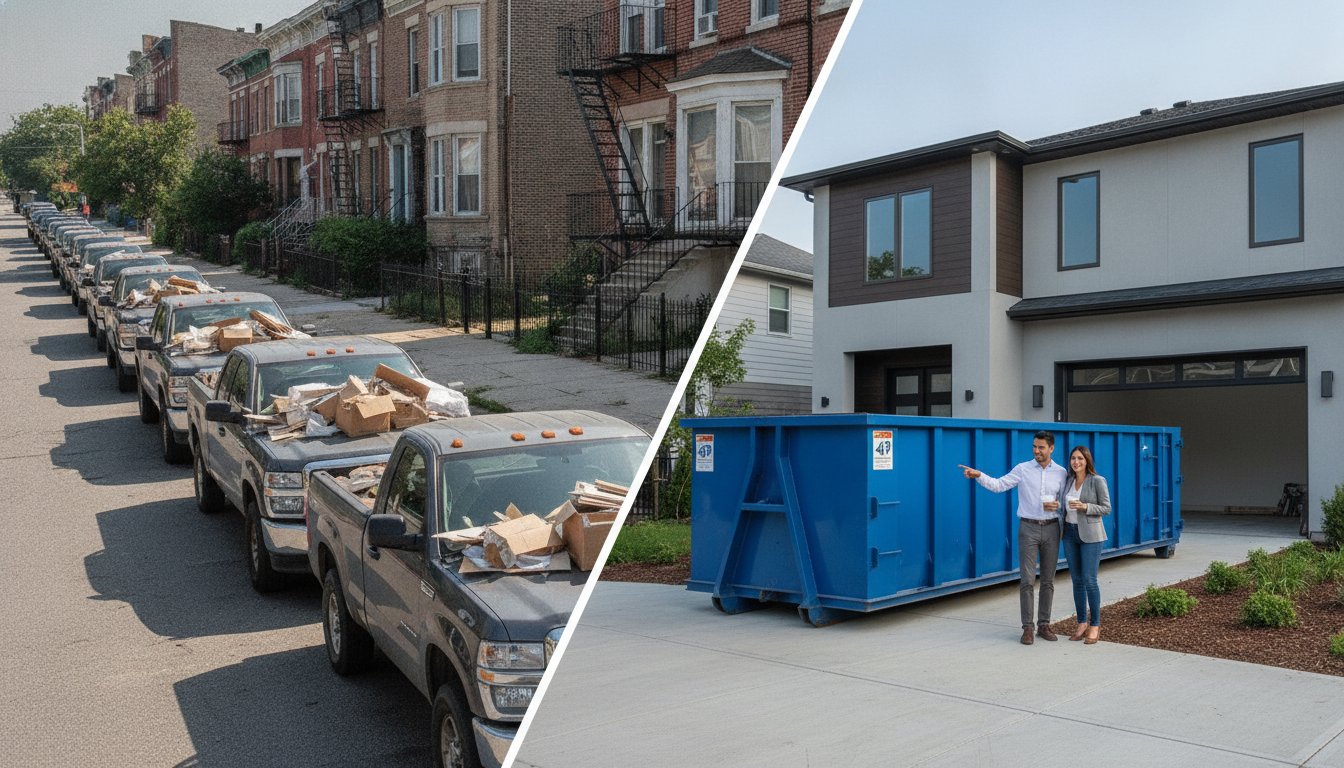
Thinking you'll save money by using your own vehicle for a major renovation is often the most expensive mistake you can make. While one trip to the local landfill seems manageable, the math changes quickly when you realize a 40 yard dumpster equivalent in pickup truck loads is roughly 12 full trips. For a 2026 half-ton pickup with a 2,260 pound payload capacity, you aren't just looking at a few hours of work. You're looking at an entire weekend lost to traffic, rising landfill tipping fees, and physical exhaustion from manual unloading.
You want to get the debris off your property without wasting your valuable time or damaging your personal vehicle. It's frustrating to watch your project stall because you're stuck in a landfill line for the third time in one day. This guide reveals exactly how many trips a 40-yard dumpster replaces and why it's the most efficient choice for large-scale projects. We'll break down the 2026 payload math and the logistics of moving 12,000 pounds of waste. Use this data to justify your rental and reclaim over 24 hours of labor today.
Key Takeaways
- Understand the capacity math where a 40 yard dumpster equivalent in pickup truck loads translates to roughly 12 full trips for a standard 8-foot bed.
- Reclaim over 24 hours of project time by removing the logistical burden of driving, landfill wait times, and manual unloading.
- Compare the 5 to 6 ton weight capacity of a roll-off container against the limited payload of 2026 pickup models to prevent vehicle damage.
- Learn why professional contractors prioritize 40-yard units for high-volume debris like multi-room renovations and commercial siding projects.
- Streamline your waste management strategy by using digital booking tools to schedule a single delivery instead of managing a dozen dump runs.
Understanding 40-Yard Dumpster Capacity and Dimensions
Measure your job site before you commit to a rental. A 40-yard dumpster is the largest standard container available for residential and commercial projects. It holds exactly 40 cubic yards of waste material. Standard dimensions for these units are 22 feet long, 8 feet wide, and 8 feet tall. Visualize the interior of a small one-car garage; that is the volume you are working with. Roll-off dumpsters of this scale handle massive debris, with weight limits typically ranging from 6 to 8 tons. This capacity ensures you can move 12,000 to 16,000 pounds of material in a single haul. It's a professional-grade tool designed for high-velocity waste removal on demanding job sites.
The Math of a Cubic Yard
A cubic yard is a block measuring 3 feet on all sides. When you rent this unit, you are essentially buying the space for 40 of these blocks. This massive volume is why the 40 yard dumpster equivalent in pickup truck loads is a game-changer for project efficiency. Most users find that loose debris like furniture or roofing shingles fills the volume quickly. However, heavy materials like concrete or dirt might hit the weight limit before the bin is physically full. Always distinguish between compacted and loose debris. Compacted waste allows you to fit more material, but it increases the risk of weight overage fees. Don't underestimate how quickly 40 cubic yards fills up during a full-scale demolition. You need to manage your loading strategy to maximize every inch of the container.
Space Requirements for Delivery
Preparation prevents delivery delays. You need a clear path for a heavy-duty truck to drop a 22-foot container. In high-density metros like Queens or Boston, overhead clearance is your biggest hurdle. The bin itself is 8 feet tall, but the truck needs significantly more vertical space to tilt the bed and roll the container off. Aim for at least 22 feet of vertical clearance. Avoid low-hanging power lines and tree branches. Select a flat, stable area for placement. A 40-yard load sitting on soft soil or thin asphalt can cause permanent damage. If you are placing the unit on a driveway, use protective plywood to distribute the weight and protect the surface. Check local permit requirements for street placement to avoid fines. Secure your unit through our streamlined portal at Book Your Dumpster USA to lock in your 2026 project dates. Our system ensures you get the right equipment exactly when you need it.
Calculating the 40-Yard Dumpster Equivalent in Pickup Truck Loads
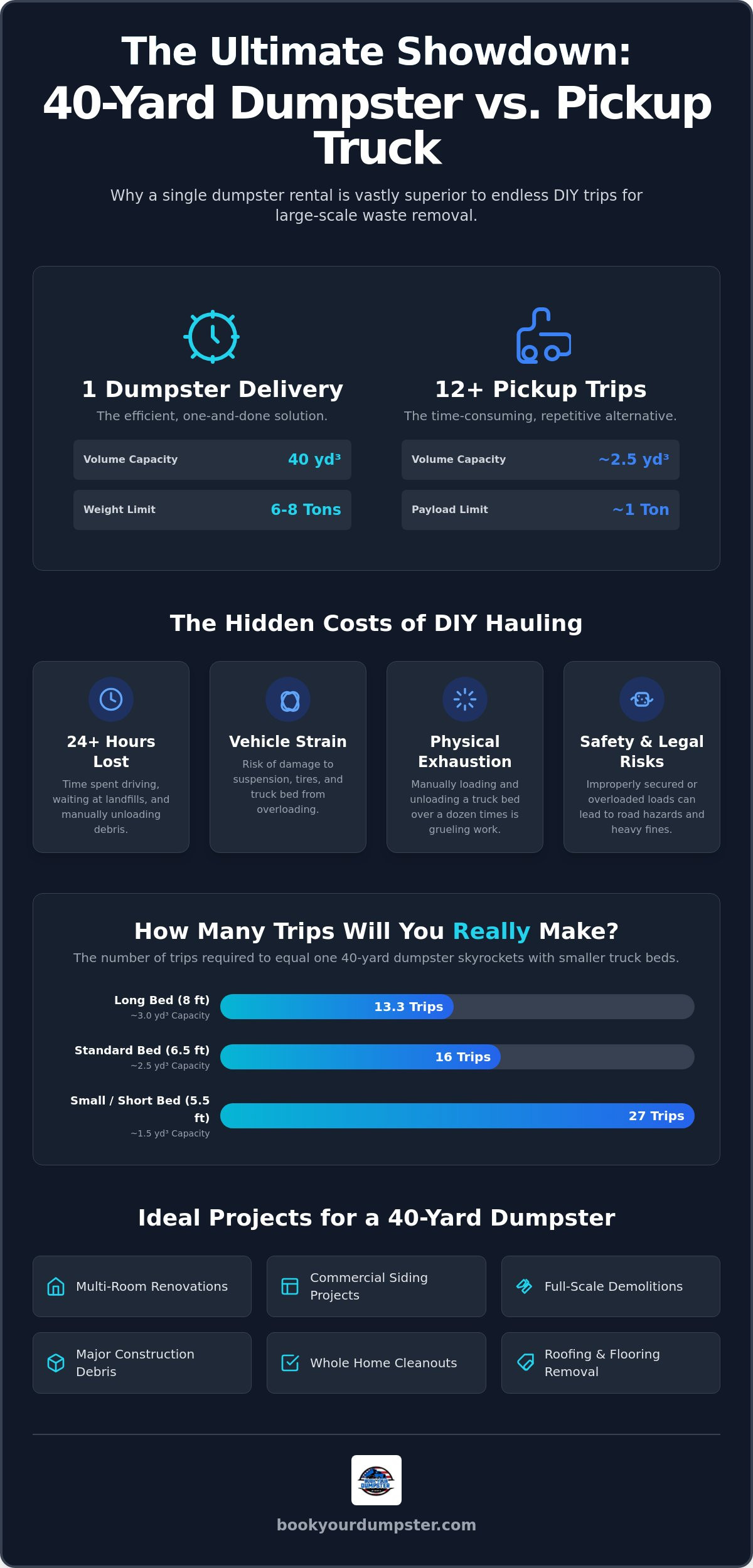
Do not rely on a single, generic number for your logistics planning. The standard industry estimate of 12 trips is based on a full-size truck with an 8-foot bed packed perfectly to the rails. Most residential pickups feature 6.5-foot beds, which significantly increases your workload. When you analyze the 40 yard dumpster equivalent in pickup truck loads, you must account for the specific volume of your vehicle and the density of your waste. A 40-yard dumpster provides the volume of 12 to 16 pickup truck loads, depending on bed length and packing density. If you are using a short-bed truck, that number can climb even higher.
Filling a truck bed level with the rails only gets you so far. Loose debris like broken drywall or old cabinetry creates air pockets that waste space. According to the EPA's volume-to-weight conversion factors, different materials occupy space differently. For example, municipal solid waste has a different density than construction and demolition debris. This means 40 yards of mixed household junk might be bulkier but lighter than the same volume of roofing shingles. This discrepancy often pushes the actual trip count from the theoretical 12 up to 14 or 16 for standard trucks.
Truck Bed Size Comparison Table
Use the following breakdown to estimate your total trips based on your specific vehicle type. These calculations assume you are filling the bed level with the side rails for safe transport.
| Truck Bed Type | Cubic Yard Capacity | Trips to Equal 40 Yards |
|---|---|---|
| Small / Short Bed (5.5 ft) | 1.5 cy | 27 Trips |
| Standard Bed (6.5 ft) | 2.5 cy | 16 Trips |
| Long Bed (8 ft) | 3.0 cy | 13.3 Trips |
Safety is a non-negotiable factor in your calculation. Heaping loads above the bed rails might save a single trip, but it creates severe road hazards and risks heavy fines. Secure every load with a heavy-duty tarp and tie-downs. If you want to avoid the risk of vehicle damage and the frustration of sixteen dump runs, you can view 40-yard availability online and schedule a single delivery instead.
Trash Bag Equivalency
If you aren't using a truck, think in terms of contractor bags. A standard 33-gallon contractor bag is the benchmark for manual residential cleanups. You can expect to fit between 230 and 250 of these bags into a single 40-yard unit. This massive capacity is why the 40 yard dumpster equivalent in pickup truck loads is the preferred metric for professional contractors. They know that managing 250 bags or 16 truck trips manually is a recipe for project delays and increased labor costs.
The Logistics Gap: Why 12 Truck Loads Aren’t Just 12 Trips
Calculate the true cost of your time before you load the first truck. While the 40 yard dumpster equivalent in pickup truck loads is mathematically 12 to 16 trips, those trips represent a massive logistics gap. Each cycle involves loading debris, driving to the landfill, waiting in a weigh-in queue, and manual unloading. The average DIY cycle takes two hours. If you choose the truck method, you're committing to at least 24 hours of grueling physical labor. This isn't just a weekend project; it's three full workdays lost to trash management. You'll spend more time in traffic than on your actual renovation.
Fuel costs and landfill tipping fees add up quickly. A loaded 2026 pickup truck consumes significantly more fuel than an empty one. You also face individual tipping fees at the gate every single time you arrive. The national average landfill tipping fee hit $62.28 per ton in 2024, which was a 10% increase over the previous year. If you're working in the Northeast, those fees average $80.67 per ton. When you pay by the load as an individual, you lose the bulk pricing advantages that commercial haulers secure. Renting a single unit consolidates these costs into one transparent transaction.
Urban Hauling Challenges (NY, Chicago, San Francisco)
Navigate the streets of Queens or Boston with a 2,200-pound payload and you'll quickly see the problem. Heavy traffic in New Jersey or Illinois turns a simple dump run into a multi-hour ordeal. Landfills often have limited hours for residential drop-offs and long queues that prioritize commercial accounts. You also face the risk of debris falling out of your bed. Even with a tarp, loose materials can escape, resulting in steep traffic fines that instantly erase any perceived savings. Don't risk your license and your budget on a dozen high-stress trips through metro traffic.
Wear and Tear on Your Vehicle
Protect your vehicle from the hidden costs of demolition work. A 40-yard dumpster holds up to 16,000 pounds of waste. Hauling that weight over 12 or more trips puts extreme strain on your truck's suspension and transmission. 2026 model year pickups are advanced machines, but they aren't designed for the constant abuse of heavy construction debris. You risk bed damage, deep scratches, and interior messes that are difficult to clean. When you compare the Total Cost of Ownership (TCO), the price of a rental is often lower than the repair bills for a damaged truck. Skip the mechanical stress and manage your project through Book Your Dumpster USA for a professional, no-nonsense solution. Understanding the 40 yard dumpster equivalent in pickup truck loads means recognizing that your vehicle's longevity is worth more than the cost of a rental.
Best Use Cases for a 40-Yard Roll-Off Container
Select the right tool for your project scale to avoid the high costs of mid-project swaps. A 40-yard container is the professional standard for high-volume debris. When you consider that a 40 yard dumpster equivalent in pickup truck loads is nearly 16 trips for a standard vehicle, it becomes clear that this unit is essential for large-scale operations. It handles massive quantities of bulky, light, or mixed materials that would otherwise overwhelm smaller bins or personal trucks. Common applications include commercial roof replacements, multi-room home additions, and industrial warehouse cleanouts. It is also the primary choice for disaster debris removal and community cleanup events where speed and volume are the top priorities.
Contractor and Construction Projects
Efficiency is the difference between profit and loss on a job site. For new home builds and major structural renovations, the 40-yard unit is the industry benchmark. It provides the necessary depth to manage wood pallets, long sections of drywall, and large amounts of insulation without constant pickups. Managing these materials in smaller bins leads to overflow and safety hazards. For a deep dive into professional waste management, read The Ultimate Guide to Construction Debris Removal in 2026. Using a single large unit keeps your site organized and your crew focused on building rather than hauling.
Residential Cleanouts
Determine your actual volume before you settle for a smaller container. While a 40-yard unit is overkill for a single-room refresh, it is essential for estate liquidations and whole-home cleanouts. Bulky furniture, old appliances, and rolled carpeting consume volume quickly. If you are clearing out a multi-story home or a large basement, you'll find that the 40 yard dumpster equivalent in pickup truck loads saves you from spending an entire week at the landfill. For smaller DIY tasks like a bathroom remodel, you might prefer the 10 Yard Dumpster Rental: The Complete Buying Guide for 2026. However, for massive flips or hoarding situations, anything smaller than a 40-yard unit often results in a second rental fee.
Don't stall your project by underestimating your debris. Secure your high-capacity unit now and book your 40-yard dumpster online to ensure your project stays on schedule.
Book Your 40-Yard Dumpster Rental Today
Stop wasting your weekends at the local landfill. As established in this guide, the 40 yard dumpster equivalent in pickup truck loads is at least 12 full trips in a long-bed truck; often it climbs to 16 for standard beds. That represents over 24 hours of lost labor, excessive fuel consumption, and unnecessary wear on your vehicle. Let us handle the complex logistics instead. Our streamlined online booking system allows you to select your size, date, and location in minutes. We provide transparent pricing with no hidden fees for our customers in high-demand metros across NY, IL, and MA. Your project deserves a professional waste management partner that understands the urgency of construction deadlines.
How to Prepare for Your Delivery
Successful delivery starts with a clear path. Ensure there is at least 60 feet of straight-line clearance for our roll-off trucks to maneuver safely. Our experienced drivers are experts at professional placement, but they need room to work. If you're working in dense urban areas like Chicago or San Francisco, you must obtain necessary street permits before the scheduled drop-off date. Public placement permits in 2026 vary by city; some weekly fees start around $65. Confirm your weight limits early to keep your budget on track. A standard 40-yard unit typically includes 5 to 6 tons of debris. Clear away low-hanging branches and move all personal vehicles before our driver arrives to ensure a seamless experience.
Ready to Clean Up?
Take control of your job site today. Our digital booking tool is available 24/7, allowing you to schedule service on your own terms without waiting for a callback. Whether you're a residential homeowner tackling an estate liquidation or a professional contractor managing a commercial build, we deliver reliability. Our drivers focus on precision placement to protect your driveway or job site from unnecessary damage. We serve both residential and commercial clients with a commitment to punctuality and pricing integrity. Don't let debris stall your progress or clutter your workspace. Visit our homepage at Book Your Dumpster USA to secure your container and experience a no-nonsense, technologically savvy approach to waste removal.
Reclaim Your Project Timeline with Efficient Waste Management
Managing large-scale debris requires a strategic approach to save both time and money. You now understand that the 40 yard dumpster equivalent in pickup truck loads represents between 12 and 16 grueling trips to the landfill. Choosing a single high-capacity container removes the physical exhaustion of manual unloading and protects your vehicle's suspension from massive weight strain. This decision secures your project timeline and keeps your job site organized and safe throughout the demolition process.
We provide professional roll-off services across NY, NJ, IL, MA, and San Francisco with total pricing transparency. Our streamlined 3-step online booking tool is available 24/7 to fit your busy schedule. Skip the logistics of a dozen dump runs and trust our reliable delivery and pickup process to handle the heavy lifting for you. Rent your 40-yard dumpster online now to clear your property and finish your renovation with total confidence.
Frequently Asked Questions
How many pickup truck loads equal a 40-yard dumpster?
A 40 yard dumpster equivalent in pickup truck loads is approximately 12 to 16 full trips. This range depends on whether you use a standard 6.5-foot bed or a long 8-foot bed. While a long bed holds about 3 cubic yards, most residential trucks hold only 2.5 cubic yards. Factor in loose debris and air pockets, and you will likely face the higher end of that trip estimate.
What are the dimensions of a 40-yard roll-off dumpster?
Standard dimensions for a 40-yard unit are 22 feet long, 8 feet wide, and 8 feet tall. These measurements provide a total volume of 40 cubic yards. Ensure you have at least 60 feet of straight-line clearance on your property for the delivery truck to drop the container. The 8-foot height also requires significant vertical clearance to avoid power lines and tree branches during the drop-off.
Can I put heavy materials like concrete or dirt in a 40-yard dumpster?
Avoid filling a 40-yard dumpster with heavy materials like concrete, dirt, or brick. These items are extremely dense and will exceed the 5 to 6 ton weight limit long before the bin is physically full. Overweight containers are dangerous to transport and often result in heavy overage fees. Use a 10 or 20-yard dumpster for heavy masonry or soil projects to ensure safe hauling and predictable pricing.
Do I need a permit for a 40-yard dumpster in New York or Chicago?
Permits are required if you place the container on a public street or right-of-way in cities like New York or Chicago. If the unit sits entirely on your private property, such as a driveway or job site, a permit is typically unnecessary. Check your local municipal website for current 2026 regulations and fee structures. Failure to secure a permit for street placement can lead to immediate fines and project delays.
How much weight can a 40-yard dumpster hold?
A 40-yard dumpster usually carries a weight limit of 5 to 6 tons, which is 10,000 to 12,000 pounds. This capacity makes it the ideal choice for bulky but lighter materials like drywall, wood, and household junk. If your debris exceeds this limit, expect overage charges ranging from $40 to $100 per additional ton. Always estimate your material weight carefully before loading to avoid these extra costs at the landfill.
Is a 40-yard dumpster too big for a standard driveway?
Most residential driveways can accommodate a 22-foot long container, but it will consume the entire space. Measure your driveway to confirm you have enough length and width for the 8-foot wide unit. You must also consider the weight of the truck and the loaded bin. Use plywood boards under the wheels to protect your asphalt or concrete from cracking under the 16,000-pound maximum load of a full container.
What happens if I overfill my 40-yard dumpster?
Drivers cannot legally or safely transport a dumpster that is filled above the top rail. If your debris is heaping or hanging over the sides, you must remove the excess before pickup. Overfilling also risks exceeding the weight limit, which triggers overage fees. Keep your waste level with the top of the container to ensure a smooth, one-trip removal without additional labor or charges from the hauling team.
How long can I keep my 40-yard dumpster rental?
Standard rental periods typically last between 7 and 10 days. This duration provides ample time for major renovations or commercial cleanouts. If your project requires more time, you can often extend the rental for a daily flat fee. Use our online booking tool to select your specific drop-off and pickup dates. Scheduling your pickup early ensures the container is removed as soon as your work is complete to clear your site.