The lowest quote on a waste contract is rarely the actual price you pay at the end of the month. Many businesses and homeowners prioritize the sticker price, but the true front load vs roll off dumpster cost depends more on your disposal frequency and local regulations than the initial rental fee. If you're managing a job site in Boston or a retail space in Queens, choosing the wrong bin type often leads to paying for air in under-filled containers or facing steep fines for improper street placement.
It's frustrating to deal with opaque contracts and unexpected overage fees that complicate your logistics. This guide compares total costs and service structures to help you select the most cost-effective option for your specific project. Gain a clear understanding of the total cost of ownership and choose a bin size that matches your debris volume with absolute confidence. We break down the differences between permanent front-load pickups and temporary roll-off containers to ensure your waste strategy is both efficient and compliant.
Key Takeaways
- Distinguish between permanent commercial fixtures and temporary project bins to avoid long-term contract traps that don't fit your timeline.
- Identify how pickup frequency dictates monthly invoices for front-load services versus the flat-rate windows typical of roll-off rentals.
- Evaluate your 12-month waste volume to accurately calculate the front load vs roll off dumpster cost for your specific business or renovation.
- Select the correct container size, ranging from 10 to 40 yards, to eliminate the expense of under-filled bins and avoid weight overage penalties.
- Match your disposal strategy to your project type to ensure you aren't paying for excess capacity or unnecessary service stops.
The Fundamentals of Waste Container Costs in 2026
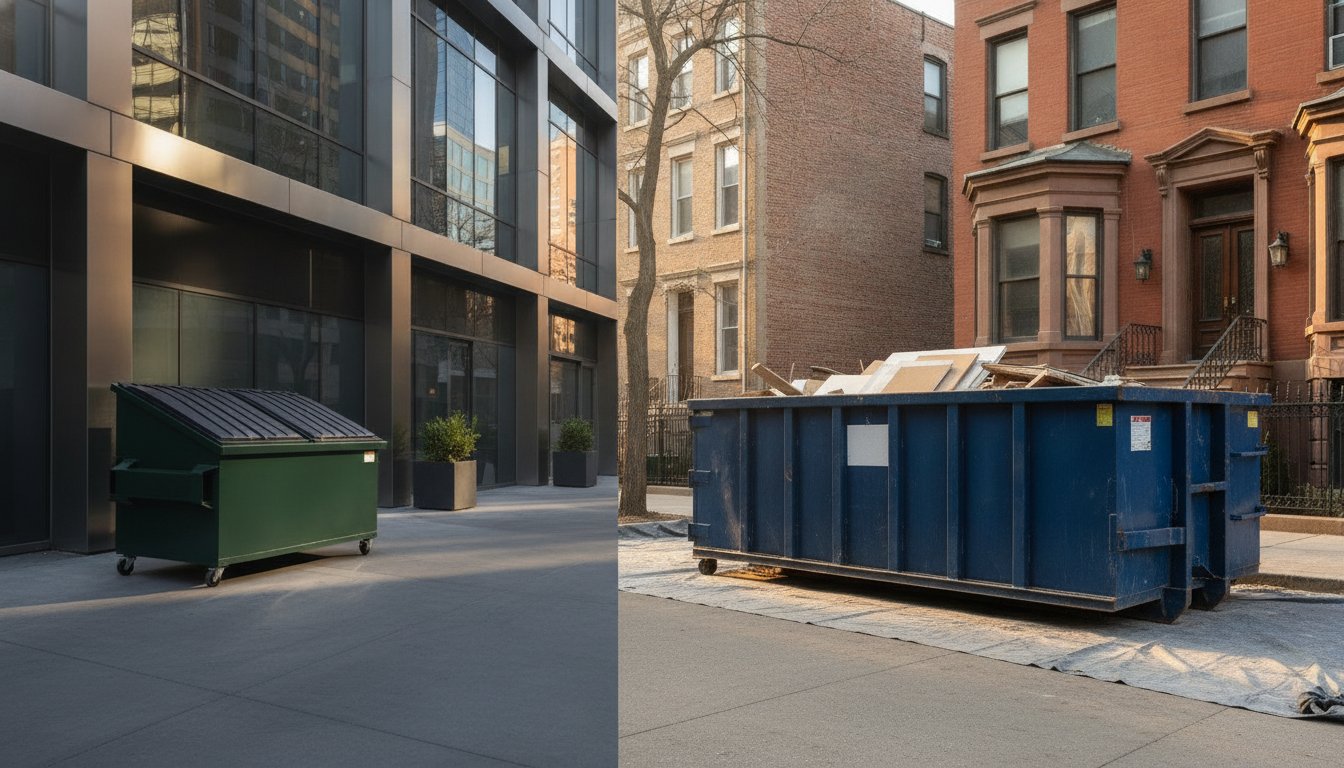
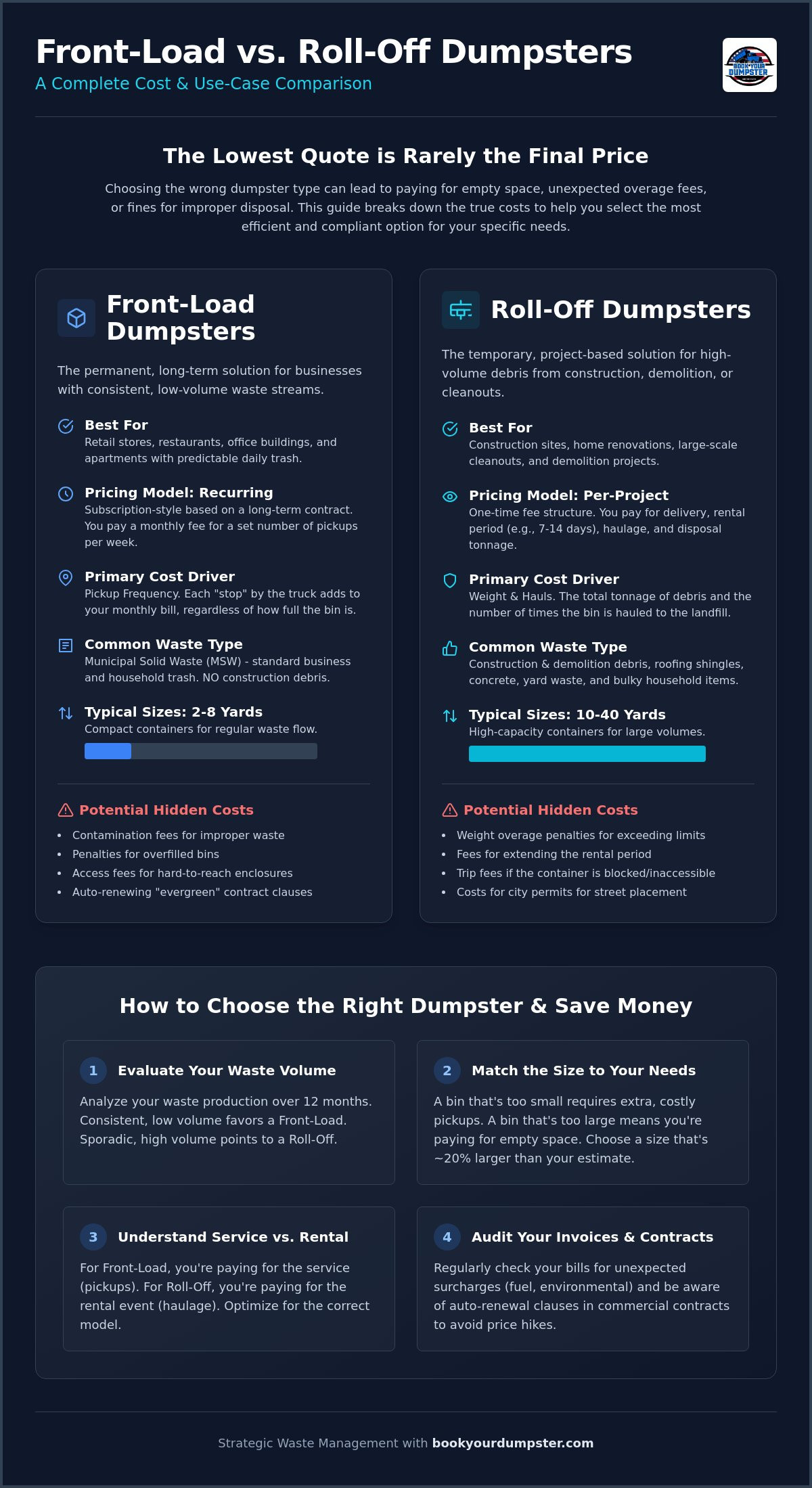
Understanding the baseline differences between waste containers is the first step in controlling your project budget. Front load dumpsters are permanent fixtures, usually found at commercial sites like retail stores or office buildings. You pay a recurring monthly fee for a set pickup schedule. In contrast, roll-off dumpsters are temporary, project-based containers designed for high-volume debris. They're dropped off, filled, and hauled away once the job is done. The front load vs roll off dumpster cost isn't just about the bin size; it's about the labor and logistics required to service them. Your location plays a major role in this baseline. High-regulation zones like San Francisco or Queens often have higher permit fees and disposal taxes than cities like Chicago, making it essential to understand your local fee structure before signing a contract.
Service Models: Permanent Contract vs. Temporary Rental
Commercial front-load services operate on a subscription-style billing model. You sign a contract for a specific number of "stops" per week. If the truck comes every Tuesday, you pay for that stop regardless of how full the bin is. This model is ideal for businesses with steady, low-volume waste like restaurants or small shops. Roll-off rentals use a per-haul model. You pay for the delivery, the rental period, and the final disposal. Key roll-off dumpster cost factors include the distance to the landfill and the specific tonnage of the debris. For residential cleanouts or one-time construction jobs, the temporary rental is almost always more efficient than a long-term contract because you only pay when the bin is actually being moved.
Capacity and Size Impact on Your Bottom Line
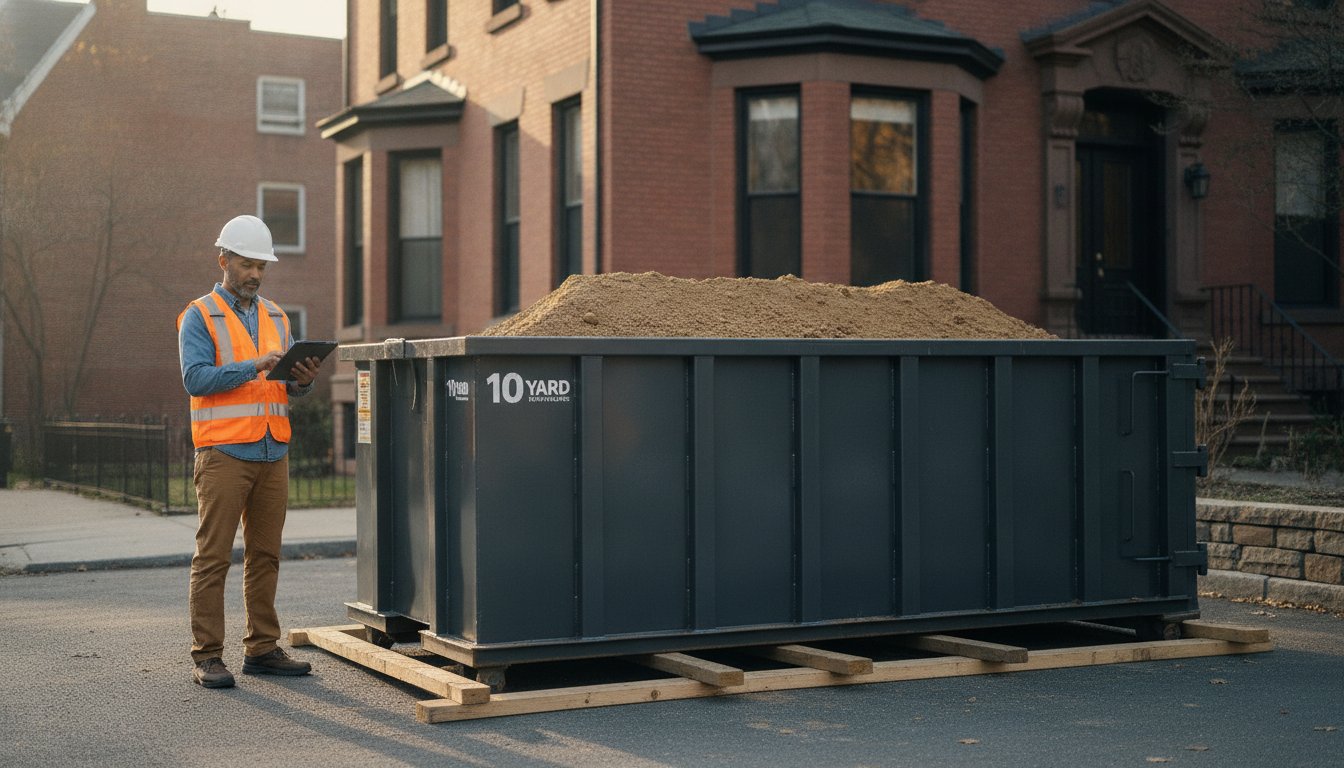
A standard 2-yard front load bin has a small footprint but requires frequent emptying. If your volume spikes, you'll need more pickups, which increases your monthly invoice. Roll-off containers offer massive capacity, ranging from 10 to 40 yards. For small-scale residential work, consult our 10 Yard Dumpster Buying Guide to see if a compact bin fits your debris volume. If you're managing a large demolition or a whole-home cleanout, the 30-yard or 40-yard options often provide the best price-per-cubic-yard. These larger bins minimize the number of hauls required, which is the most effective way to lower your front load vs roll off dumpster cost over the life of a project. Choosing a bin that's too small leads to multiple haul fees, while choosing one that's too large means you're paying for empty space.
Front Load Dumpster Pricing: The Long-Term Commercial Commitment
Front-load dumpster pricing operates on a recurring service model that differs significantly from the one-time haul fees of temporary rentals. When evaluating the front load vs roll off dumpster cost, you must separate the container rental from the service fee. The monthly rental for the bin itself is usually the smallest portion of your bill. The primary expense stems from pickup frequency. Each "stop" by the collection truck adds a specific labor and fuel cost to your invoice. If your business generates consistent waste, scheduling two pickups per week in a smaller 4-yard bin is often more expensive than one weekly pickup in an 8-yard bin. Optimize your schedule to match your actual waste production and avoid paying for half-empty stops.
Contamination fees represent a major hidden cost in commercial waste management. Front-load bins are designed for Municipal Solid Waste (MSW), which is the standard trash generated by businesses and households. Tossing construction debris, electronics, or hazardous chemicals into these lidded containers triggers immediate penalties. Review your contract for auto-renewal clauses. Many commercial agreements include "evergreen" terms that lock you into multi-year commitments with annual price escalations. Audit your invoices every quarter to ensure your service levels still align with your business needs.
Ancillary Fees in Commercial Waste Contracts
Modern waste contracts in 2026 often include a variety of surcharges that can inflate your monthly total. Environmental fees and fuel surcharges are standard industry adjustments that fluctuate based on regional energy costs. In high-density areas like Boston or San Francisco, expect to see access fees if your enclosure is difficult for a driver to reach. If a driver has to get out of the truck to unlock a gate or move a secondary bin, you'll see a line item for that extra labor. Avoid overfilled bin penalties by ensuring the lids can close completely. Drivers often take photos of overflowing bins, which results in an automatic surcharge on your next statement.
The ROI of Front Load Service for Small Businesses
Small businesses often struggle to decide between a permanent bin and periodic junk removal. For most retail or office environments, a front-load service provides a much higher return on investment by maintaining site hygiene and preventing pest infestations. The U.S. Environmental Protection Agency provides a comprehensive guide on Managing and Reducing Wastes to help businesses lower these recurring costs. Municipal Solid Waste (MSW) refers to the everyday items we use and then throw away, such as product packaging, grass clippings, furniture, clothing, bottles, food scraps, and newspapers. If you find your waste volume is too high for a standard bin, consider a front load commercial waste pickup plan that scales with your growth.
Roll Off Dumpster Costs: Project-Based Pricing for Heavy Debris
Roll-off dumpsters move the cost conversation from monthly subscriptions to project-specific hauls. When comparing the front load vs roll off dumpster cost, the most critical decision involves choosing between flat-rate and weight-based pricing. Flat-rate pricing is the most consumer-friendly model. It bundles delivery, pickup, a specific rental window, and a set weight allowance into one upfront price. Variable-rate pricing looks lower initially but adds disposal fees after the container is weighed at the landfill. This often leads to unpredictable final costs, especially with heavy materials like shingles or wet drywall. Standard rental periods typically span 7 to 14 days. If your project runs over, expect daily extension fees ranging from $10 to $50.
Weight Allowances and Tonnage Overages
Weight limits are not just suggestions; they are legal and logistical requirements. A 20-yard dumpster filled with concrete is significantly more expensive to transport and dump than the same container filled with household junk. This is due to the tipping fee, which is the price per ton charged by the landfill. According to the American Public Works Association's guide to solid waste equipment, the type of truck and container used must match the density of the waste for safety and efficiency. Tipping fees vary wildly by state. Disposal rates in Boston can reach $160 per ton, while in Chicago or parts of Illinois, they are often much lower.
Follow these standard weight caps to avoid overage penalties:
- 10 Yard Dumpster: 1-2 tons
- 20 Yard Dumpster: 2-3 tons
- 30 Yard Dumpster: 3-4 tons
- 40 Yard Dumpster: 4-5 tons
Estimate your debris volume carefully. One square of roofing shingles weighs approximately 250 pounds. Overloading a bin results in fees that can exceed $100 per ton over the limit. Avoid these surprises by matching your bin size to the specific density of your materials.
City Permits and Street Placement Costs
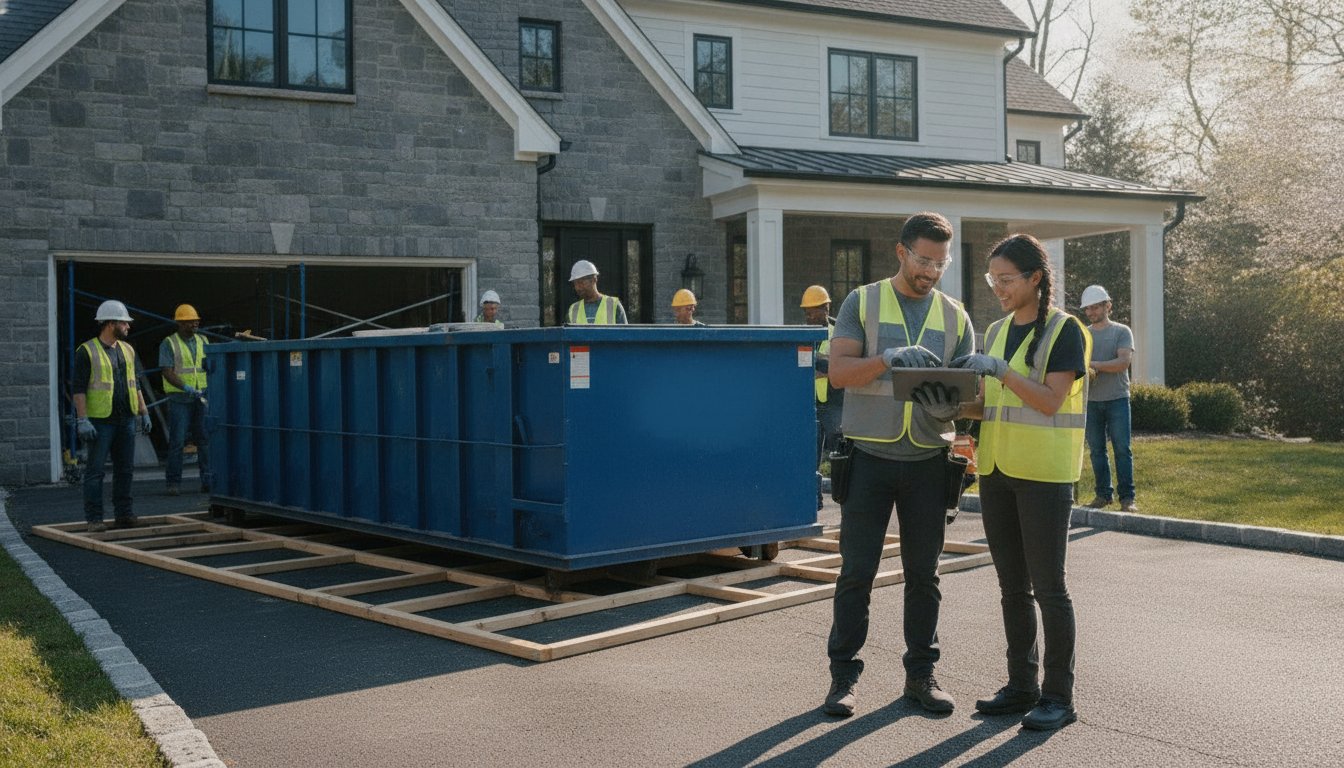
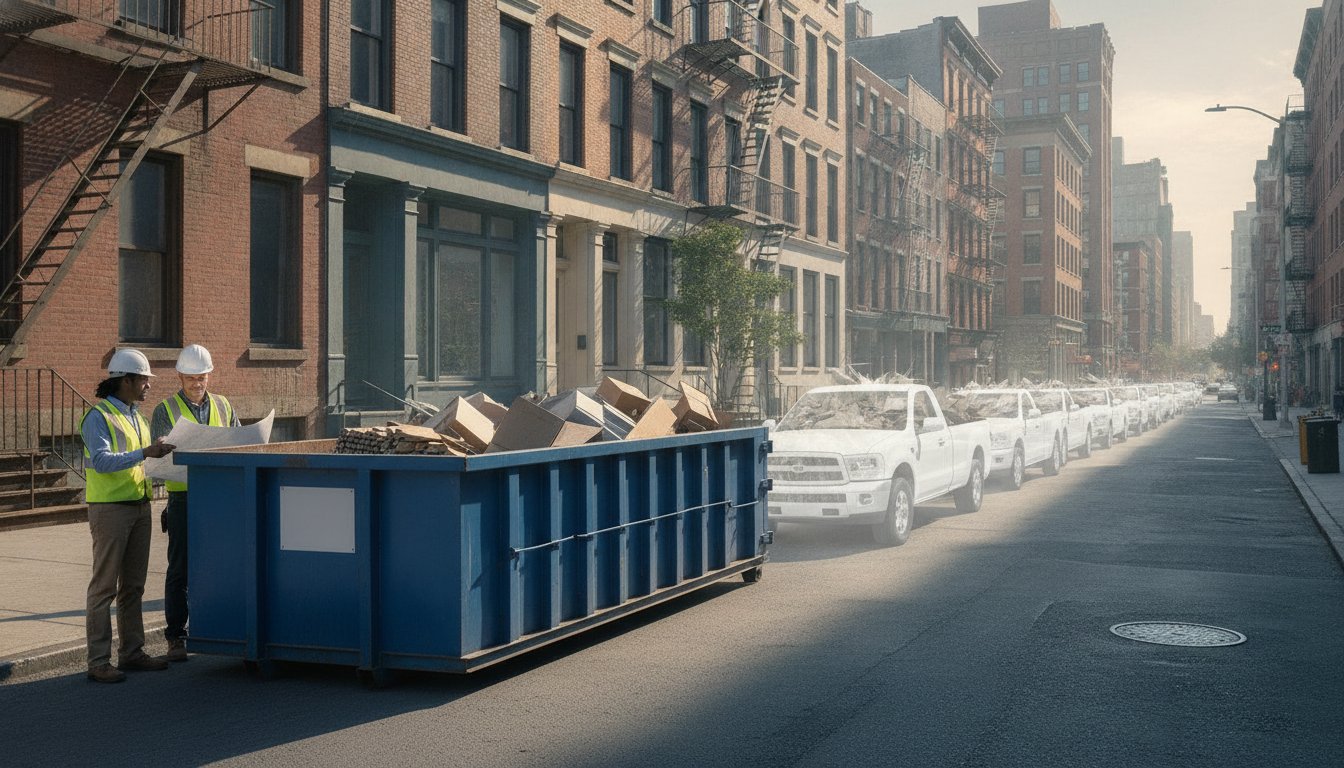
Logistics in high-traffic zones like Queens or San Francisco add another layer of expense. If you cannot fit the bin on your private property, you must secure a Right of Way or street permit. These permits range from $20 to $150 depending on the city. Always prioritize driveway placement to save on these administrative costs. It also reduces the risk of unauthorized dumping by neighbors. For a deep dive into regional regulations, consult our NYC and MA Dumpster Rental Guide before scheduling your delivery. Planning your placement ahead of time ensures you don't face regulatory fines or project delays.
Comparison Analysis: When Does Each Option Save You More?
The front load vs roll off dumpster cost intersection occurs exactly where disposal frequency meets total debris volume. Choosing the wrong model leads to "paying for air" in an oversized roll-off or suffering through daily pickup fees for a bin that's too small. To find the specific model that fits your budget, calculate your waste volume and book your bin online today.
Scenario A: The Retail Store. If you manage a small shop or restaurant, you produce a steady stream of lightweight trash. Front-load service wins here. A recurring monthly contract for a 4-yard bin picked up once a week provides a predictable, low-cost baseline for managing daily waste without the footprint of a construction-grade container.
Scenario B: The Home Renovation. A kitchen tear-out produces several tons of heavy debris in a single weekend. A 20-yard roll-off is the superior choice. Paying for a one-time haul and a 10-day rental is significantly cheaper than attempting to use a permanent commercial bin, which isn't designed for the weight of cabinets, flooring, and appliances.
Scenario C: The Industrial Warehouse. Large-scale operations often benefit from a hybrid approach. Use front-load bins for office MSW and breakroom waste to keep monthly costs stable. Simultaneously, keep a 40-yard roll-off on-site for broken pallets, packaging scrap, or manufacturing overruns. This prevents bulky items from triggering "overfilled bin" penalties on your primary commercial account.
The breakeven point typically arrives when your monthly waste volume exceeds 12 cubic yards. If you find yourself scheduling more than three front-load pickups per week, it's time to evaluate a bi-weekly roll-off haul. High-volume users can also lower front-load costs by utilizing compaction services, which crush waste to reduce the number of required "stops" on your invoice.
Cost Comparison Matrix (Front Load vs. Roll Off)
| Feature | Front Load Dumpster | Roll Off Dumpster |
|---|---|---|
| Average Monthly Cost | Stable Subscription | Variable Per-Haul |
| Typical Waste Types | Daily MSW, Cardboard | Construction, Bulky Debris |
| Loading Ease | Top-load (Higher labor) | Swinging Door (Lower labor) |
Loading methods significantly impact your labor costs. Lifting heavy bags over the side of a 6-yard front-load bin is slower and more physically demanding than walking debris through the swinging door of a 20-yard roll-off. Factor in the time your crew spends loading the bin when calculating your total project expenses.
Hidden Cost Drivers: Prohibited Items and Fines
Surprise surcharges can wreck your budget. Prohibited items like tires, electronics, and hazardous chemicals trigger immediate digital surcharges because they require specialized disposal. Another common expense is the "dry run" fee. This occurs when a truck arrives for a scheduled pickup but cannot access the container due to snow, parked cars, or locked gates. Choosing a no-nonsense logistics provider like Book Your Dumpster USA reduces these risks through transparent scheduling and clear placement instructions. Ensure your site is clear on collection day to avoid paying for a service call that results in no trash being moved.
Strategic Waste Management with Book Your Dumpster USA
Book Your Dumpster USA simplifies the logistical mess of waste disposal. Our digital-first platform removes the middleman, ensuring you don't pay unnecessary broker fees. When you analyze the front load vs roll off dumpster cost, transparency is your best defense against budget creep. We maintain pricing integrity across high-regulation markets like New York, New Jersey, Illinois, Massachusetts, and San Francisco. Punctuality is our core promise. For professional contractors, a delayed drop-off or pickup means wasted labor hours. We arrive on time so your crew stays productive and your project stays on schedule.
Tailored Solutions for Contractors and Homeowners
Urban density in Queens or Boston requires precision. A 10-yard dumpster fits into tight alleyways and small driveways where larger bins simply cannot go. This size is perfect for residential cleanouts or small bathroom remodels. For massive industrial projects, our 40-yard containers serve as the gold standard for high-volume debris removal. These bins handle the bulk of demolition waste, reducing the total number of hauls required. Read our Construction Debris Removal Guide to optimize your site logistics and minimize disposal expenses. Choosing the right size from the start is the most effective way to manage your total front load vs roll off dumpster cost.
Booking Your Resolution: From Clutter to Clean
Transitioning from a cluttered site to a clean resolution takes less than five minutes on our platform. We handle the complex logistics of hauling and disposal so you can focus on the actual work. Our system is designed for speed and clarity, moving you quickly from selection to scheduling.
- Select your service: Enter your zip code and choose between front-load commercial pickup or a temporary roll-off container.
- Choose your capacity: Pick from our 10, 20, 30, or 40-yard options based on your project's specific debris volume.
- Schedule and confirm: Pick your delivery date and complete the booking through our secure, streamlined checkout.
Eliminate the stress of waste management with a partner that values your time. We provide the tools you need to maintain a clean, compliant, and cost-effective job site. Secure your dumpster size today at Book Your Dumpster and experience a streamlined service built for professional efficiency.
Optimize Your Waste Strategy Today
Managing project logistics shouldn't be a source of stress. The most effective way to lower your front load vs roll off dumpster cost is to align your container size and pickup frequency with your actual debris production. Whether you're coordinating a multi-site construction project or a single residential cleanout, choosing the right partner ensures pricing integrity and operational reliability. We provide local expertise in high-regulation markets like New York, San Francisco, and Boston to help you avoid costly permit errors and regulatory fines.
Our streamlined system eliminates hidden broker fees and provides a direct connection to the equipment you need. We offer a full range of sizes from 10 to 40 yards to match any project volume. Trust a partner that prioritizes punctuality and transparent billing. Book your roll-off or front-load dumpster online now and move your project from a state of clutter to a state of resolution. You have the plan; we provide the tools to execute it efficiently.
Frequently Asked Questions
Is a front load or roll off dumpster cheaper for a one-month project?
A roll-off dumpster is usually the cheaper option for a one-month project. Front-load services are designed for permanent use and typically require long-term contracts with setup fees that make short-term rentals expensive. A roll-off bin provides a flat-rate price for the specific window you need. It's the most efficient choice for temporary disposal without the commitment of a recurring commercial waste agreement.
What are the typical hidden fees in a commercial front load contract?
Common hidden costs include environmental surcharges, fuel adjustments, and administrative fees that fluctuate monthly. You might also see enclosure fees if a driver has to unlock a gate or move a secondary bin to gain access. Be sure to check for auto-renewal clauses that lock you into annual price increases. Transparency is essential when managing the front load vs roll off dumpster cost over a multi-year contract.
How much does weight affect the cost of a roll off dumpster rental?
Weight is a primary driver of your total expense because landfills charge disposal fees by the ton. Every rental includes a specific weight allowance based on the bin size. If your debris exceeds this limit, you'll pay a pro-rated tipping fee for each additional ton. Heavy materials like concrete, brick, or roofing shingles will always cost more to dispose of than standard household junk or light construction waste.
Do I need a permit for a front load dumpster on my business property?
You typically don't need a city permit if the bin is placed on private property. Permits are generally reserved for containers placed on public "right of way" areas like streets or sidewalks. However, check your local zoning laws regarding enclosure requirements. Some municipalities in high-regulation zones like San Francisco or Queens have specific rules about how bins must be screened from public view to prevent illegal dumping.
Can I use a roll off dumpster for regular weekly business trash?
You can use a roll-off for weekly trash, but it's rarely the most cost-effective strategy. Roll-offs are built for heavy, bulky items and one-time hauls. Paying for a roll-off truck to visit every week is significantly more expensive than a standard front-load service. Use front-load bins for daily waste and reserve the roll-off for seasonal cleanouts or large-scale renovations to keep your total front load vs roll off dumpster cost low.
What happens to the price if I exceed the weight limit on my 20-yard dumpster?
Exceeding the weight limit triggers an overage fee for every ton over your initial allowance. These fees usually range from $50 to $100 per ton depending on local landfill rates. If the bin is dangerously overloaded, the driver may refuse the pickup entirely. This results in a "dry run" fee, and you'll have to remove the excess material yourself before the truck returns for a second attempt.
Are there regional price differences for dumpsters in New York vs. Chicago?
Yes, regional price gaps are significant and are driven by local landfill tipping fees and permit costs. New York City and Boston often have higher disposal rates due to limited landfill space and strict environmental taxes. Chicago and other Midwest markets generally offer lower baseline prices. Always verify the current permit fees for your specific city to avoid unexpected administrative charges on your final invoice.
How do I avoid 'dry run' fees when my dumpster is picked up?
Ensure the path to the dumpster is completely clear on the scheduled collection day. Move any vehicles, unlock gates, and clear snow or debris that might block the truck's access. The driver must also have enough overhead clearance to lift the bin safely without hitting wires or tree limbs. If the truck arrives and cannot complete the haul, you'll be charged for the driver's time and fuel.