A standard pile of excavated soil weighs significantly more than most people realize. If you treat a dirt removal dumpster service like a regular trash pickup, you'll likely face structural damage to your property or expensive weight penalties. You know that moving tons of earth is a logistical nightmare that can quickly get out of hand, especially when you're caught between "clean fill" definitions and strict local disposal regulations like New York’s Part 360 or New Jersey’s soil laws.
Master the logistics of heavy debris disposal with our expert guide to choosing the right dirt removal dumpster service for your project. We'll show you how to utilize specialized 10-yard containers to prevent driveway damage and how to secure transparent, fixed-rate pricing. Don't let logistical confusion stall your site prep. This guide provides the clear, actionable steps you need to move dirt efficiently, manage heavy loads with confidence, and keep your project on schedule.
Key Takeaways
- Identify why the 10-yard bin is the most efficient tool for a dirt removal dumpster service to avoid costly weight overages and equipment strain.
- Differentiate between "clean fill" and mixed debris to ensure your load meets strict disposal regulations and qualifies for fixed-rate pricing.
- Prevent driveway damage and safety violations by matching your specific debris weight to the correct roll-off container capacity.
- Prepare for urban delivery challenges by understanding street permit requirements and placement logistics in high-density metro areas.
- Simplify your project timeline with direct online booking that eliminates middle-man delays and hidden service fees.
What is a Dirt Removal Dumpster Service?
A specialized dirt removal dumpster service isn't a typical trash pickup. It's a precision tool for managing "inert waste." This category includes heavy, non-decomposable materials like soil, sand, and gravel. While you might use a standard bin for old furniture, dirt requires specialized equipment and specific disposal routes. Most general waste facilities aren't equipped to handle pure earth. Likewise, most standard roll-off containers aren't designed to carry the extreme weight of excavated soil without risking structural failure.
Standard dumpsters fail because they focus on volume rather than density. If you fill a 20 or 30-yard bin with dirt, the weight will easily exceed the legal limits of the transport truck. You'll likely see the hydraulic arms struggle or fail during the pickup attempt. This leads to costly delays and potential property damage. A dedicated dirt removal dumpster service ensures you use a 10-yard bin specifically designed for these heavy loads. This keeps your project compliant with DOT regulations and protects your job site from equipment failure.
Utilizing "Clean Fill" protocols is essential for cost management. Clean fill refers to uncontaminated soil or rock that can be repurposed for other construction projects. By keeping your dirt free of trash, wood, or metal, you lower disposal fees and reduce environmental impact. This service is the primary solution for several high-impact projects:
- Foundation Digging: Removing massive quantities of earth for new builds or home additions.
- Pool Excavations: Clearing space for in-ground installations where soil displacement is significant.
- Landscaping Grading: Reshaping terrain for better drainage or creating level ground for hardscaping.
The Physics of Soil: Why Weight Matters
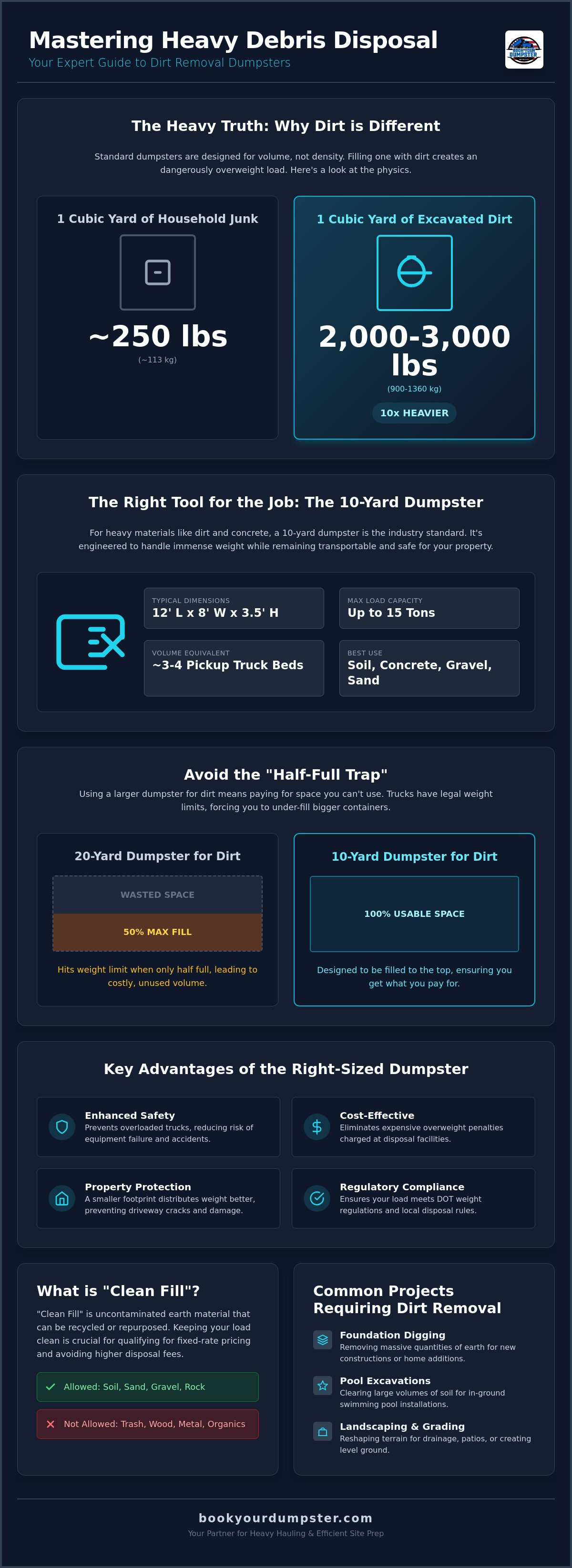
One cubic yard of dry dirt weighs approximately 2,000 to 3,000 pounds. Compare this to household junk, where a cubic yard might only weigh 250 pounds. Volume-based thinking is dangerous here. A full 10-yard dumpster can hold up to 15 tons of material. Roll-off dumpsters used for general waste often have much lower weight limits. Exceeding these limits doesn't just result in fees; it can physically prevent the truck from lifting the container off your property.
Commercial vs. Residential Dirt Removal
Residential projects require a focus on site preservation. You must ensure the container placement doesn't crush your driveway or disturb the neighborhood. Use a service that understands local street permit requirements for residential zones. Commercial projects demand high-volume coordination. When clearing a site, you need multiple 10-yard dumpsters cycled quickly to keep your heavy machinery moving. Efficiency is the priority for commercial site clearing, while protection is the goal for homeowners.
Why the 10-Yard Dumpster is the Best Choice for Dirt
Don't fall for the "bigger is better" myth. If you rent a 20-yard bin for soil, you'll likely hit the "Half-Full" trap. Dirt is so dense that filling a 20-yard container to the top creates a load that's physically impossible for most trucks to lift. Most haulers only allow you to fill larger bins halfway to stay within legal weight limits. This leaves you paying for empty space you can't use. A 10-yard dumpster is the industry standard for a reliable dirt removal dumpster service because it's designed to be filled to the rim while staying within the truck’s hydraulic capacity.
Safety is a non-negotiable factor. Overloading a truck leads to blown tires, snapped cables, or cracked axles. Beyond the truck, consider your property. A 10-yard bin distributes the massive weight of soil over a smaller, more manageable footprint. This reduces the risk of your driveway sinking or cracking under the pressure. Smaller containers are easier for drivers to maneuver into precise spots, ensuring the load stays on solid ground and away from soft landscaping.
Efficiency translates directly to your bottom line. Renting a 10-yard bin is almost always more cost-effective than paying overage fees on a larger container. If you miscalculate and overload a 20-yard bin, the scale house will charge you for every ton exceeding the limit. Following federal dirt disposal rules ensures you aren't just dumping waste but managing a heavy resource responsibly. If you aren't sure which size fits your specific excavation, view our container options to match your load to the right equipment.
Dimensions and Capacity of the 10-Yard Container
The typical 10-yard bin measures 12 feet long, 8 feet wide, and 3.5 feet high. Think of this as roughly three to four full-size pickup truck beds worth of material. Because the walls are lower, it's easier to load by hand or with a small skid-steer. You'll need about 60 feet of straight-line clearance for the truck to drop the bin and 23 feet of vertical space to avoid overhead wires or tree branches.
Avoiding "Over-Tonnage" Penalties
Scale houses weigh trucks upon entry and exit to determine the exact weight of your debris. For a dirt-specific 10-yard rental, the weight limit is typically capped at 10 tons to ensure safe transport. To avoid unexpected costs, keep your dirt as dry as possible. Soil acts like a sponge; a heavy rainstorm can add hundreds of pounds of "water weight" to your load. Cover the bin with a tarp if the forecast shows rain to keep your tonnage within the agreed limit.
Understanding "Clean Fill" and Dirt Disposal Rules
Disposal facilities categorize waste based on its environmental impact and how it behaves in a landfill. In a dirt removal dumpster service, your load typically falls under the "clean fill" category. This classification refers to uncontaminated soil, rock, stone, and gravel. These materials are considered inert, meaning they don't decompose or leach chemicals into the groundwater. Because clean fill can often be repurposed for other construction projects, it's cheaper to dump. However, maintaining this status requires strict adherence to the "No-Mix" rule.
The "No-Mix" rule is absolute. If you add even a small amount of household trash, treated lumber, or plastic to your soil, the entire container is reclassified as municipal solid waste. This mistake can double or triple your disposal costs instantly. You must also account for state-specific regulations. For instance, New Jersey’s "Dirty Dirt" Law requires strict licensing and testing for soil transport to prevent the spread of contaminants. Similarly, Massachusetts regulations under 310 CMR 15.255 require fill to be free of organic matter and deleterious substances. Don't gamble with your budget by trying to "hide" debris at the bottom of the bin. Inspectors at the scale house will find it when the load is dumped.
- Prohibited Items: Tree roots, large stumps, and sod are usually excluded from clean fill loads because they contain organic matter.
- Hazardous Materials: Never place soil containing oil stains, chemical odors, or lead paint chips into a standard roll-off.
- Regulatory Compliance: Check local pH testing requirements if you're working in Illinois, as CCDD facilities have specific certification standards.
Clean Dirt vs. Mixed Debris: The Price Gap
The financial difference between clean dirt and mixed debris is significant. Clean fill is often recycled into new construction materials, which keeps the tipping fees low. Mixed loads require manual or mechanical sorting at a transfer station. This extra labor is passed directly to you. Pay close attention to sod and grass. While they look like "nature," the organic content makes them unsuitable for clean fill sites. If your project involves more than just earth, consult our guide on Construction Debris Removal for mixed-material logistics.
Contamination Hazards to Watch For
Know the history of your excavation site before you book a bin. Residential soil can harbor hidden hazards like old heating oil tank leaks or pesticide runoff. If you notice a "rainbow" sheen on wet soil or a distinct chemical smell, stop digging immediately. Professional disposal sites use sensors and visual inspections to catch contaminated loads. If your soil is rejected, you'll be responsible for the high cost of hazardous waste remediation and transport. Stick to uncontaminated earth to keep your project moving and your costs predictable.
Local Logistics: Dirt Removal in NY, NJ, IL, MA, and SF
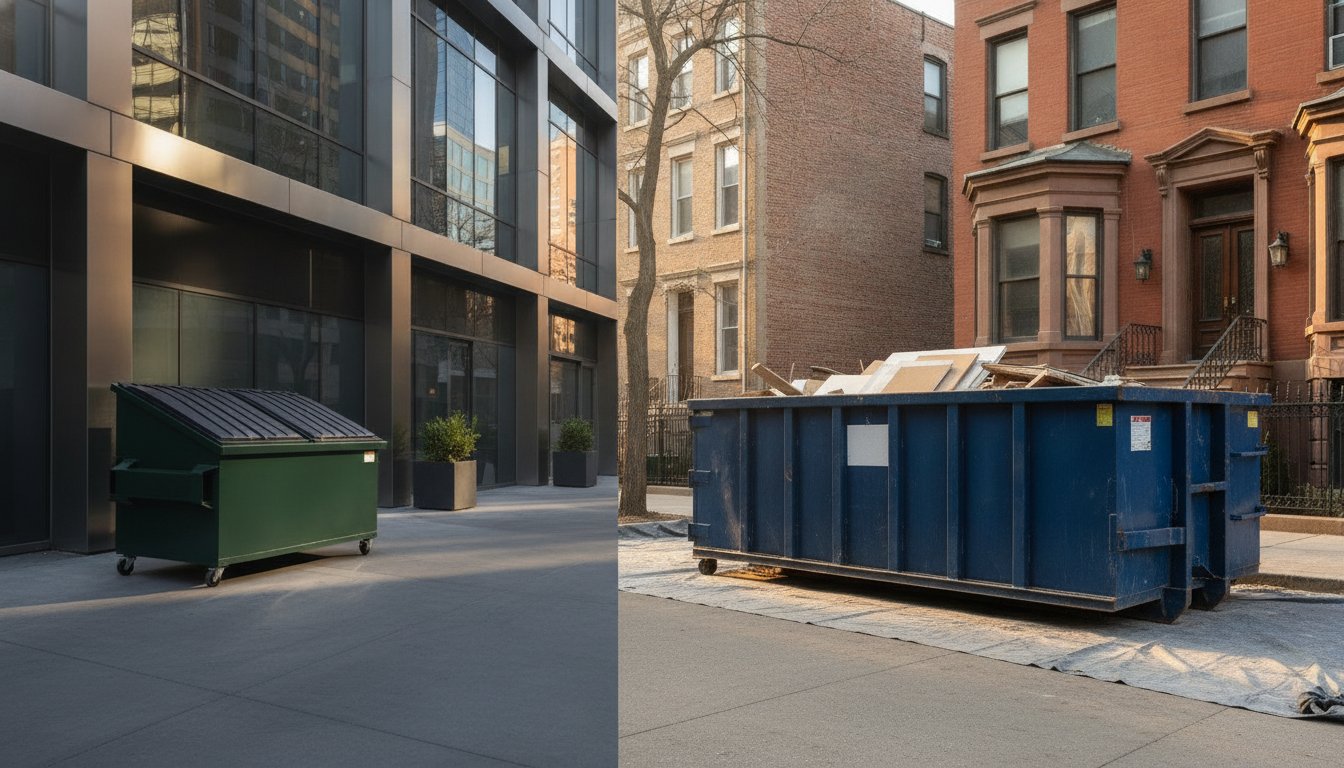
Urban dirt removal requires precision. In high-density markets like Queens or San Francisco, narrow residential streets and low-hanging power lines make container placement a technical challenge. A dirt removal dumpster service must account for these spatial limitations before the truck arrives. If you're working in the Bay Area, you must also comply with Article 22B, the Dust Control Ordinance, which requires specific site management for projects larger than half an acre. In Chicago or New York, bridge weight limits and overpass clearances dictate the routes heavy soil haulers can take. These logistical hurdles mean you cannot treat a soil haul like a standard junk pickup.
Seasonal shifts in Illinois and Massachusetts add another layer of complexity. During the spring thaw, soft ground can cause a 10-ton dumpster to sink into a driveway or unpaved site. Conversely, frozen ground in mid-winter makes excavation nearly impossible. Plan your project around these windows to avoid equipment delays or property damage. Always verify the weight capacity of your placement area before scheduling a drop-off.
Permits and Street Placement
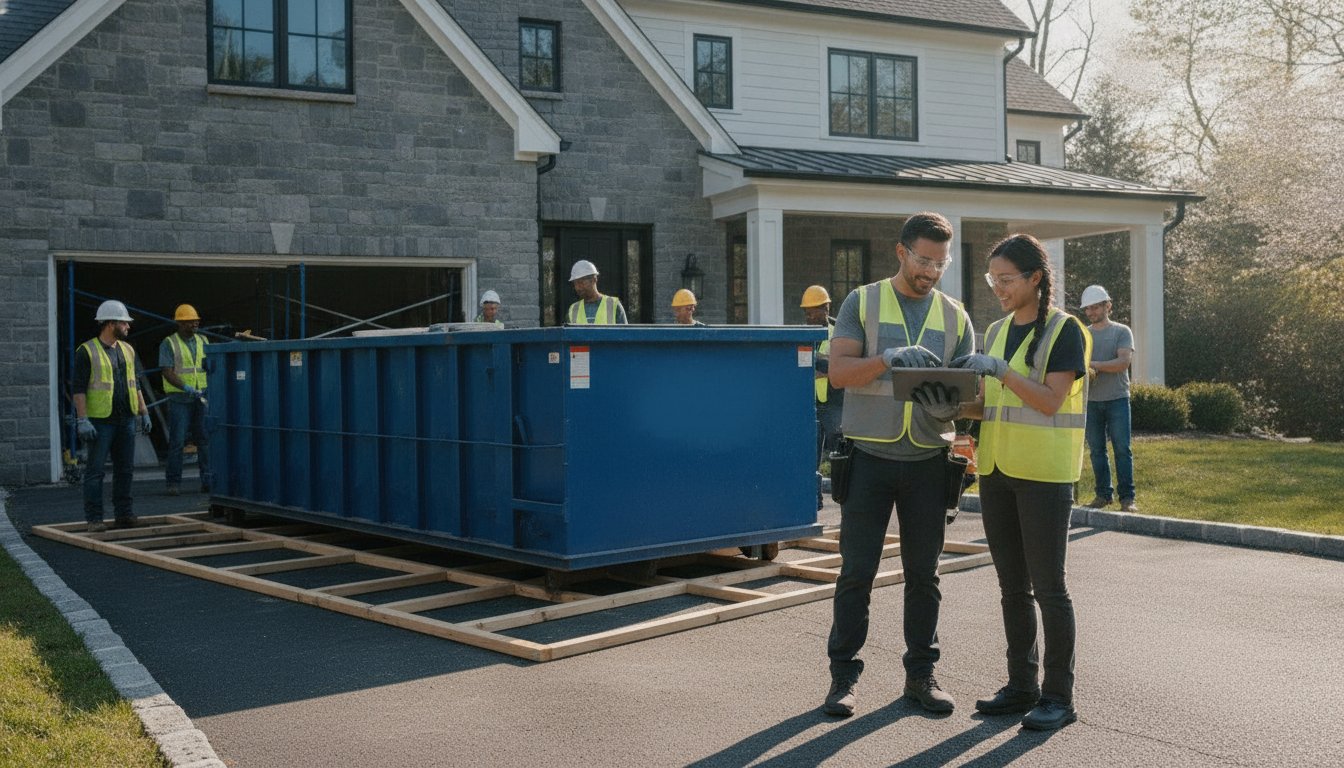
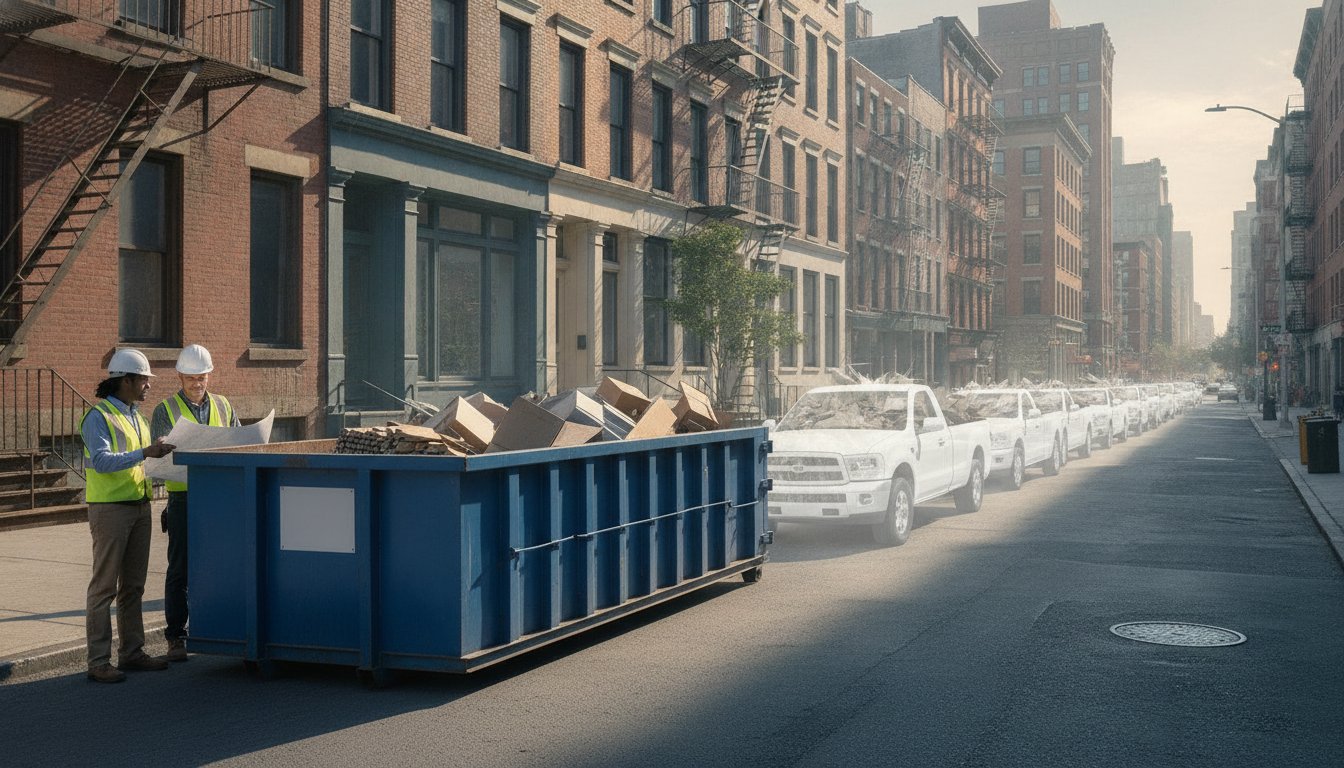
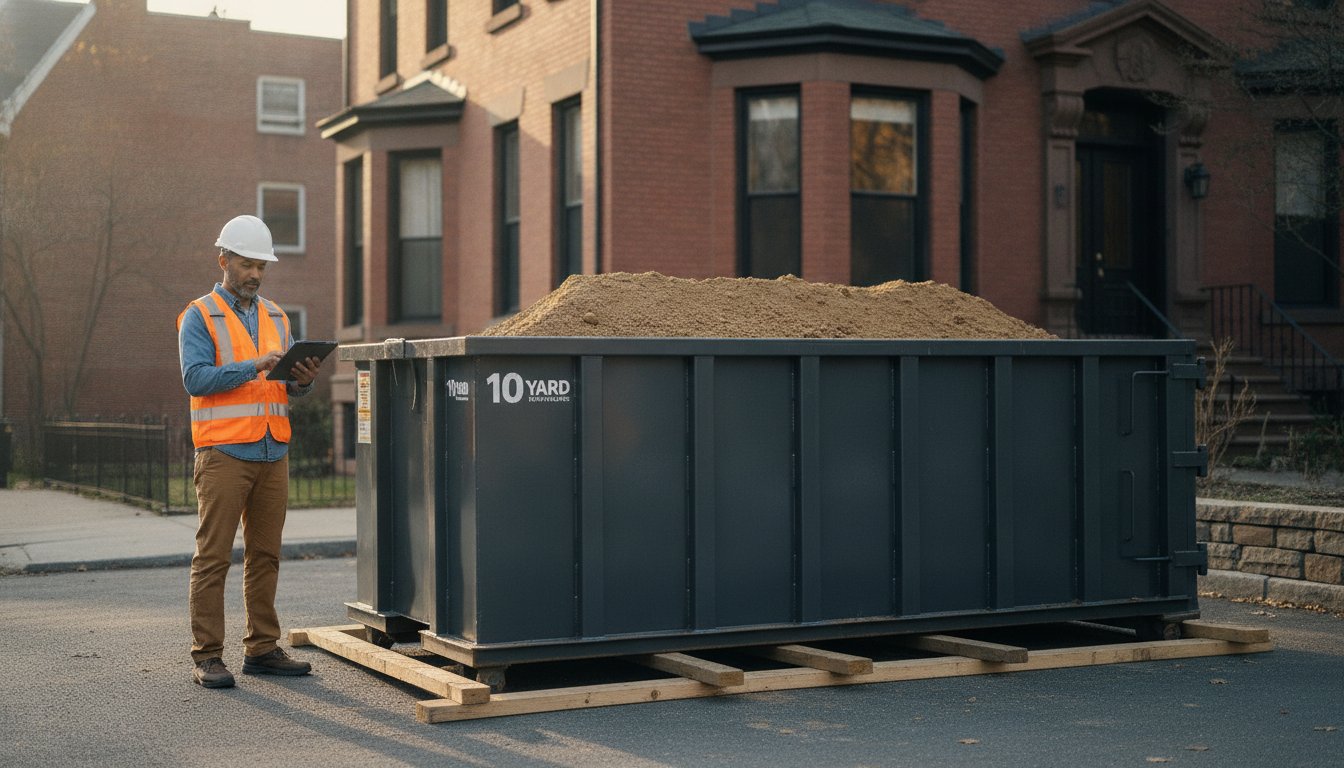
You must check if your municipality requires a "Right of Way" permit for street placement. In Chicago, the Department of Transportation (CDOT) manages these permits; failing to secure one results in heavy fines and immediate removal orders. If you're placing a bin on asphalt during a New Jersey summer, high heat makes the surface pliable. Lay down sheets of 3/4-inch plywood to distribute the weight and prevent the dumpster’s steel rollers from gouging the street. This simple step protects you from city damage claims and keeps your neighbors happy.
Scheduling for High-Volume Projects
Large excavations require a "Swap-Out" strategy. Don't let your crew stand idle while a full bin is in transit. Coordinate with your provider to have a fresh 10-yard container arrive exactly when the full one is pulled. In traffic-heavy metros like Chicago or New York, schedule your deliveries for early morning to beat the gridlock. This ensures your project stays on a tight timeline without unnecessary downtime. To get started, Book your local dumpster rental today and schedule your urban delivery with our streamlined online system.
Book Your Dumpster USA: Your Partner for Heavy Hauling
Choosing a dirt removal dumpster service shouldn't involve navigating a maze of brokers and hidden markups. At Book Your Dumpster USA, we operate a direct-to-consumer model that eliminates middle-man delays and inflated costs. We specialize in the logistics of heavy hauling. Our team maintains a dedicated inventory of 10-yard containers specifically for your dirt and concrete projects. We understand that your project timeline depends on our punctuality. We prioritize prompt delivery and pickup to ensure your excavation or grading work never stalls due to equipment issues. You get a reliable partner who understands the unique demands of heavy debris.
Our digital-first approach modernizes the waste management process for both residential and commercial users. Whether you're a homeowner tackling a DIY landscaping project or a contractor managing multiple site clearings, our platform reduces the logistical stress of waste disposal. You don't need to spend hours on the phone haggling over rates. Simply select your container, choose your dates, and let us handle the heavy lifting. We serve high-density markets like Queens, San Francisco, and New Jersey with the precision and control you expect from a professional partner.
Transparent Pricing Integrity
We emphasize up-front quotes for heavy loads because we respect your budget and your time. Many providers hide "fuel surcharges" or "environmental fees" in the fine print, but we believe in straightforward honesty. This transparency acts as our verbal handshake. Our online system provides an instant quote for your specific zip code, giving you the total cost before you finish the booking process. You won't face unexpected billing surprises after the bin is hauled away. This commitment to pricing integrity distinguishes us from the opaque communication structures often found elsewhere in the industry.
Next Steps: How to Book Your Dirt Dumpster
Follow these three steps to secure your container and keep your project moving. First, estimate your yardage by multiplying the length, width, and depth of your excavation area in feet, then divide that total by 27. This ensures you select the correct capacity for your dirt removal dumpster service. Second, visit bookyourdumpster.com and select the 10-yard option from our inventory. Third, clear the drop-off area of all vehicles or obstructions and prepare for delivery. Ensure the site is accessible for our roll-off trucks and that you have any necessary street permits ready. Book your container today and experience a streamlined, no-nonsense approach to heavy hauling.
Secure Your Project Site Today
Managing a heavy excavation project requires more than just moving earth. You now understand why the 10-yard bin is the only safe choice for density-heavy materials and how to navigate the strict clean fill regulations in your local metro. Avoiding the "half-full" trap and securing the right permits keeps your costs predictable and your property intact. A reliable dirt removal dumpster service removes the logistical friction from your construction or landscaping timeline.
With specialized 10-yard heavy-load bins and a presence in key markets like Queens, San Francisco, and New Jersey, Book Your Dumpster USA provides the equipment and pricing integrity you need. We eliminate middle-man markups and provide a streamlined digital platform for immediate scheduling. Take control of your site cleanup without the stress of hidden fees or equipment failure. Rent Your Dirt Removal Dumpster Online Now to secure your delivery date. Your driveway and your budget will thank you for making the professional choice.
Frequently Asked Questions
Can I put dirt in a regular 20 or 30-yard dumpster?
No, you shouldn't use larger bins for heavy soil. Standard 20 or 30-yard containers are designed for bulky, lighter waste. If you fill them with dirt, the weight quickly exceeds the truck’s hydraulic lifting capacity and legal road limits. Always choose a 10-yard bin for your dirt removal dumpster service to ensure safe and compliant hauling without equipment failure.
How much does a 10-yard dirt dumpster rental cost?
Pricing depends on your specific location, the rental duration, and local landfill fees. Metropolitan areas with higher disposal taxes or stricter environmental regulations often see higher rates than rural areas. Use our online booking tool to get an instant, transparent quote for your zip code. This ensures you see the total cost without hidden broker fees or unexpected fuel surcharges.
What is considered "clean fill" for dumpster disposal?
Clean fill refers to uncontaminated soil, rock, sand, and gravel. These materials are inert and don't leach chemicals, making them suitable for recycling into other construction projects. To maintain this status, the load must be free of trash, metal, wood, or hazardous materials. Check local regulations like New York’s Part 360 or Illinois’ CCDD standards for specific testing requirements in your area.
Will a dumpster full of dirt damage my driveway?
It can if you don't take proper precautions. A 10-yard bin filled with soil is extremely heavy and puts significant pressure on a small footprint. Protect your property by placing 3/4-inch plywood sheets under the dumpster’s rollers. This distributes the weight and prevents the steel wheels from gouging or cracking your asphalt or concrete driveway.
How much dirt can I actually put in a 10-yard dumpster?
You can fill a 10-yard dumpster to the top rim with soil. This typically equates to about 10 tons of material, which is roughly the same as 3 or 4 full-size pickup truck beds. Never fill the material above the top rail. Overfilled containers are unsafe for transport, and drivers will require you to remove the excess before they can legally haul the dirt removal dumpster service load.
Do I need a permit to put a dirt dumpster on the street in Queens?
Yes, New York City requires a permit for any dumpster placed on a public street or right-of-way. These permits ensure the bin doesn't interfere with traffic flow or pedestrian safety. Check with the NYC Department of Transportation or your local municipality to secure the necessary authorization before your scheduled delivery date to avoid fines.
Can I mix grass and sod with the dirt in the dumpster?
No, you must keep organic matter separate from your soil. Grass, sod, and large tree roots contaminate "clean fill" loads. Once mixed, the entire container is reclassified as mixed debris, which carries much higher disposal fees at the transfer station. Separate your landscaping waste from pure earth to keep your project budget predictable and avoid reclassification penalties.
What happens if the dumpster is too heavy for the truck to pick up?
The truck will be unable to lift the container, and you'll be charged a dry run fee. You must then manually remove the excess weight until the bin is within the legal lifting limit. This causes project delays and added labor costs. Stick to the 10-ton limit and the fill line to ensure a successful pickup on the first attempt.