Your waste contract shouldn't feel like a legal trap designed to drain your operating budget. Most business owners view waste management as a "set it and forget it" utility, only to be blindsided by hidden surcharges or missed collections that stall daily operations. Finding reliable commercial trash pickup shouldn't be the hardest part of your work week. You need a system that works as hard as you do, keeping your facility clean without requiring constant oversight.
It's easy to feel overwhelmed by shifting regulations, especially with New York City's new Commercial Waste Zones and Massachusetts' strict organics bans taking full effect in 2026. We've built this guide to help you master your business logistics by selecting, scheduling, and optimizing your service for maximum efficiency. You'll learn how to navigate local compliance in major metros like San Francisco and New York while securing predictable waste management costs. We'll examine everything from front-load container sizing to the digital-first tools that eliminate the guesswork of scheduling. Stop reacting to waste problems and start managing them with professional confidence.
Key Takeaways
- Differentiate between residential services and private commercial contracts to maintain operational compliance.
- Select the right hardware by comparing permanent front-load dumpsters with heavy-duty roll-off options ranging from 10 to 40 yards.
- Cut overhead by performing a waste audit to align your container volume with actual disposal needs.
- Navigate complex 2026 mandates like New York City's waste zones and San Francisco's recycling requirements without risking fines.
- Optimize your commercial trash pickup using digital-first scheduling tools that remove logistical friction and ensure pricing integrity.
Streamlining Your Business Waste: What is Commercial Trash Pickup?
Commercial trash pickup is a specialized logistics service designed to manage the non-hazardous solid waste generated by business activities in retail, office, and industrial environments. Unlike municipal services that handle household trash, commercial waste management requires private contracts tailored to specific operational volumes. For a retail store, this means managing cardboard and packaging. For an industrial facility, it involves high-capacity debris removal. In every sector, reliability is the core pillar of business logistics. If waste piles up, your operations stop.
Efficient waste removal directly impacts your property value and customer perception. A clean facility signals competence and control to your clients. Conversely, overflowing bins or delayed pickups create health hazards and drive away business. Treating your waste strategy as a high-functioning tool rather than a background utility ensures your brand remains professional and your site stays compliant with local 2026 mandates.
The Logistics of Reliability
Punctuality in Waste collection prevents operational bottlenecks that can derail a workday. When a truck misses a scheduled window, loading docks become inaccessible and safety risks increase. Use transparent communication with your provider to avoid these "messy" logistics. Commercial trash pickup is the systematic removal of business-generated waste through scheduled private contracts to maintain facility hygiene and operational flow. Demand a partner that prioritizes punctuality as a recurring promise of reliability.
Commercial vs. Residential: Key Differences
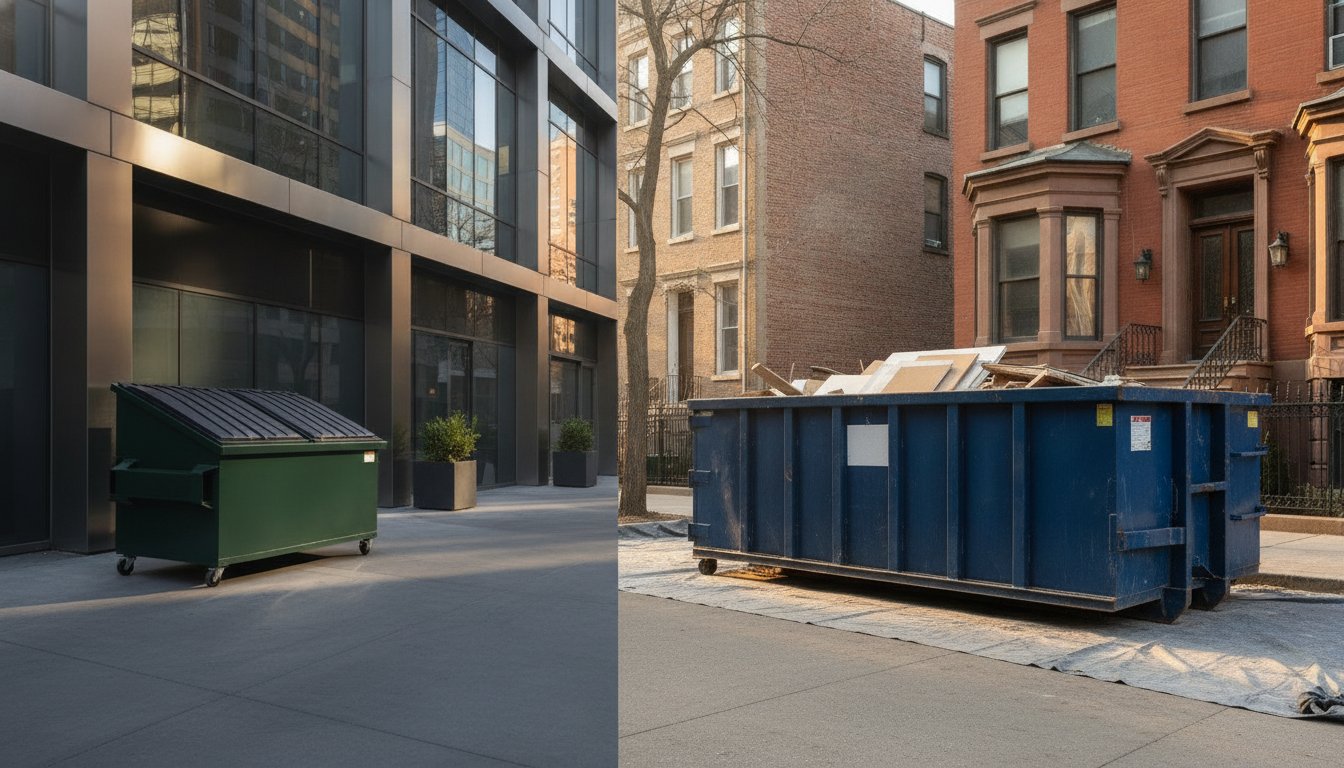
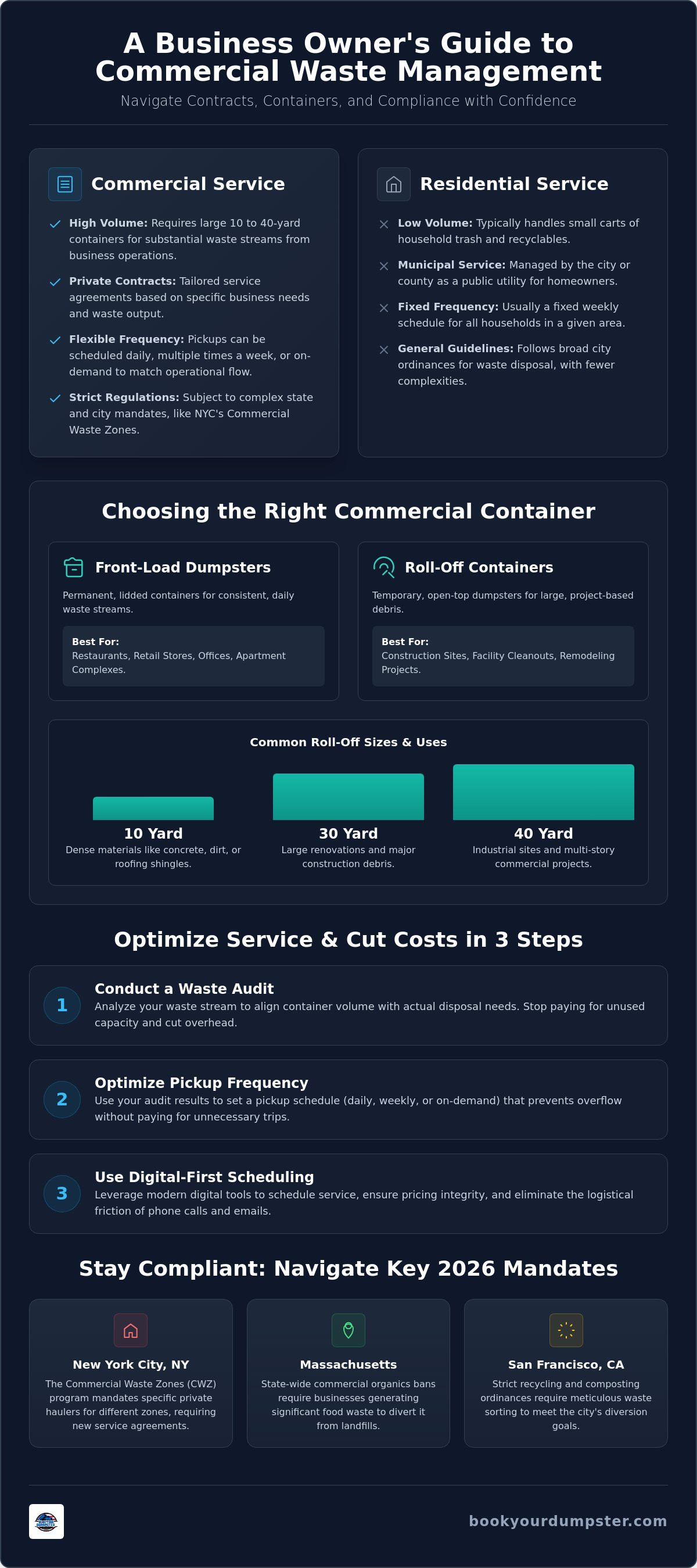
The primary differentiator between these services is volume and scale. Residential pickups typically handle small carts of household junk. Businesses require high-capacity containers, such as front-load bins for daily refuse or roll-off dumpsters for larger projects. Regulatory requirements also vary significantly. While household waste follows general city guidelines, business waste is subject to strict processing laws. For example, the 2026 New York City Commercial Waste Zones (CWZ) mandate requires specific service agreements that don't apply to residential homeowners.
- Volume: Businesses generate significantly more waste, requiring 10 to 40-yard containers.
- Processing: Commercial waste often requires specialized sorting to meet state-specific diversion goals.
- Frequency: Residential service is usually weekly; commercial pickup can be daily or on-demand based on your waste audit results.
Choose your service based on these logistical realities. If you manage a project in NJ, IL, or MA, use a digital-first system like Book Your Dumpster USA to secure the right container size and schedule without the friction of traditional phone-tag booking.
Front-Load vs. Roll-Off: Choosing the Right Commercial Container
Match your hardware to your waste stream to prevent operational friction. Permanent front-load dumpsters serve as the foundation for daily commercial trash pickup, handling the consistent refuse of restaurants, offices, and apartment complexes. If your needs shift toward a finite project, like a facility clean-out or a retail remodel, roll-off containers become the necessary tool. The EPA guide for commercial buildings provides a framework for identifying these waste streams and selecting appropriate containment strategies. Ignoring these distinctions leads to missed pickups or overweight fees that strain your budget.
The Versatility of Roll-Off Containers
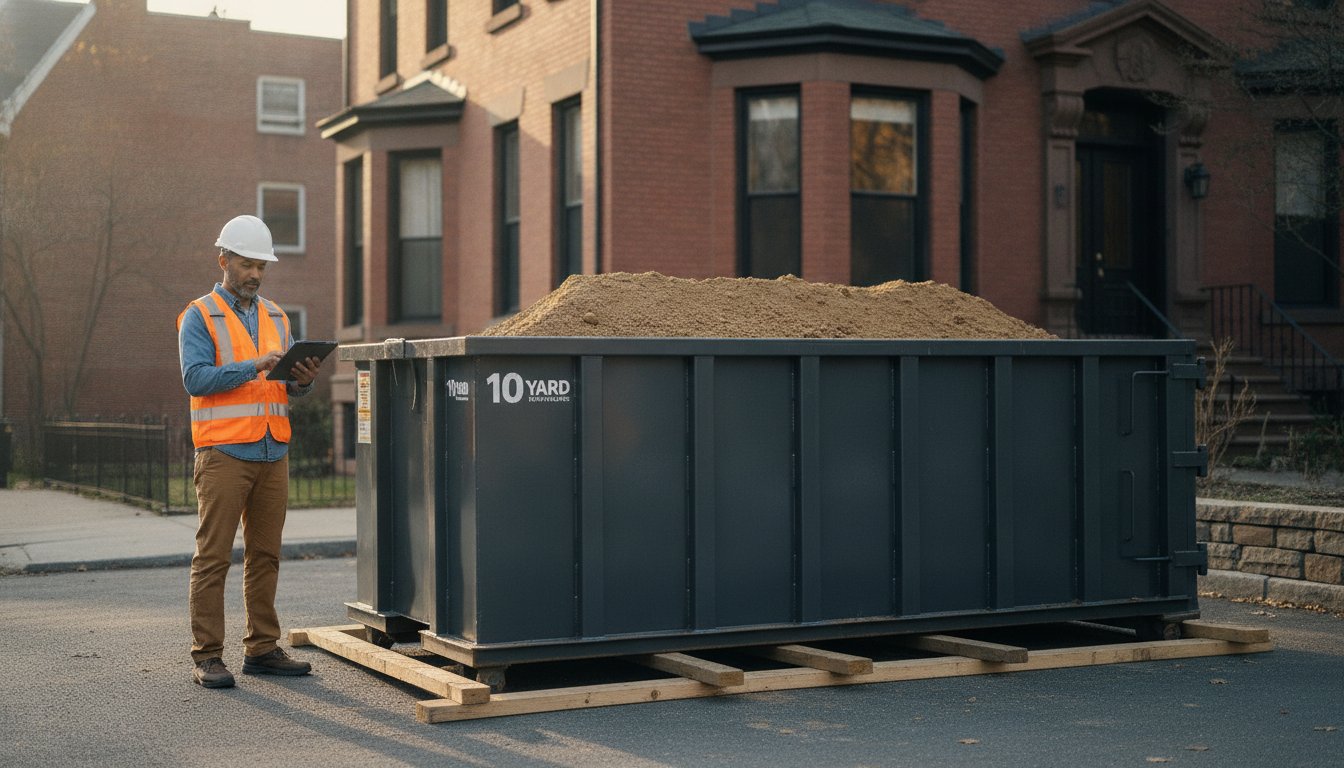
Select a roll-off dumpster when volume exceeds the capacity of standard bins. Use 10-yard containers for dense, heavy materials like concrete or roofing shingles during small-scale renovations. These smaller units fit into standard parking spaces without blocking traffic flow. For larger operations, the 30 and 40-yard giants are essential. They accommodate the massive debris loads found on industrial sites and multi-story construction projects. For a deeper dive into managing these larger streams, review The Ultimate Guide to Construction Debris Removal in 2026. Using the wrong size creates unnecessary logistical stress and inflates your project costs.
Permanent Front-Load Solutions
Standard front-load bins provide a fixed footprint for your facility's daily needs. In dense urban areas like New York or Queens, alleyway clearance is a critical logistical factor. Ensure your placement area has sufficient overhead room for the truck's lifting arms to operate safely. Security is another pragmatic concern. Opt for bins with reinforced lids and locking mechanisms to prevent unauthorized dumping. This prevents neighbors from filling your container, which can lead to unexpected weight overages and fines. Reliable commercial trash pickup depends on these small, manageable details.
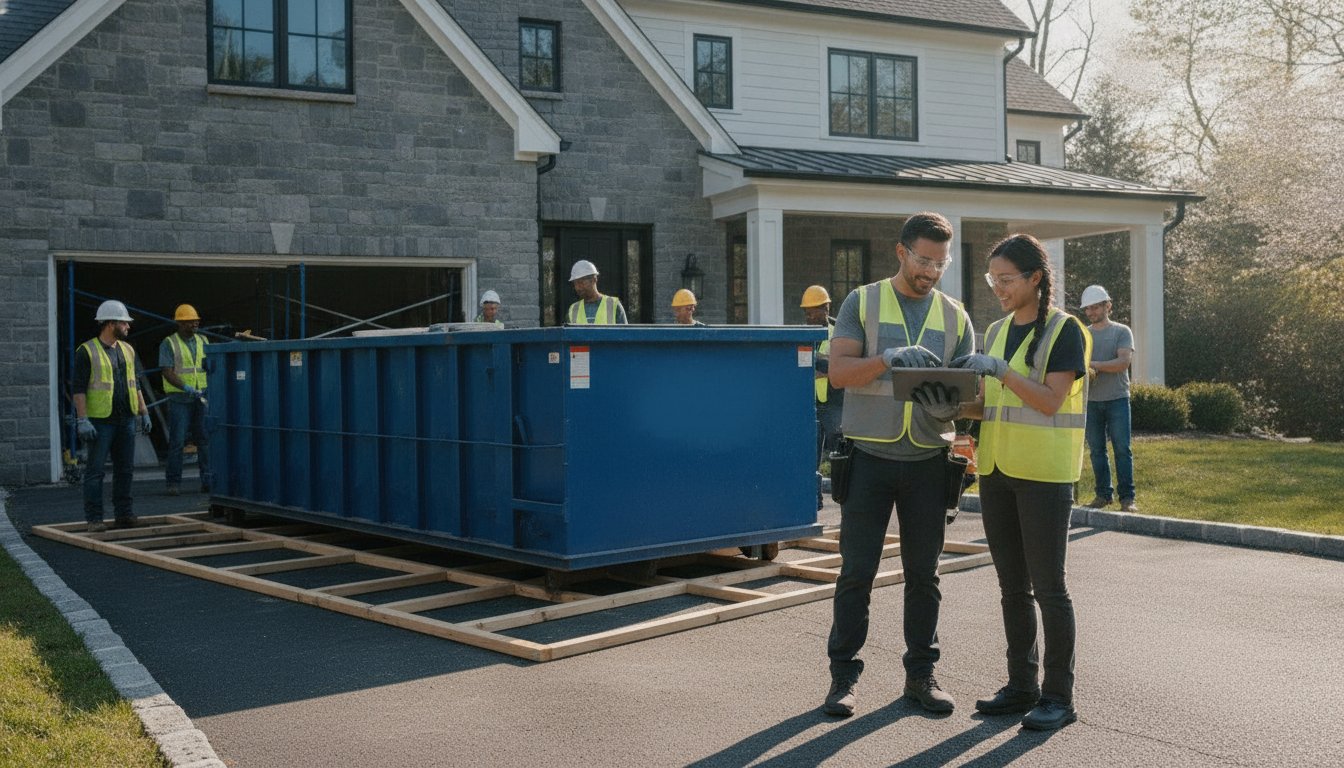
Plan your dumpster placement before the delivery truck arrives. Soft ground or uneven surfaces can cause containers to sink or tilt, creating safety hazards during the service process. Always verify weight limits for your specific container size. Overloading a 40-yard dumpster with heavy masonry can exceed legal hauling limits, resulting in failed service attempts and additional fees. Select your dumpster size online to ensure you have the right capacity for your specific waste type and location.
Optimizing Pickup Frequency and Managing Waste Costs
Control your operational overhead by treating commercial trash pickup as a logistical variable rather than a fixed cost. Most businesses pay for more capacity than they actually use. Conduct a waste audit by monitoring your bins for two weeks immediately before your scheduled collection. If your dumpsters are consistently only half-full, you're paying to transport air. Conversely, if you're regularly "topping off" containers, you risk overflow fees and property damage. Balance your container size with pickup frequency to find the most efficient cost-to-volume ratio for your specific facility.
Seasonal adjustments are vital for maintaining pricing integrity. Scaling service up during peak business periods prevents unsightly overflows and pest issues, while scaling down during slow months protects your budget. Be vigilant about contamination within your bins. Placing prohibited items or hazardous materials in a standard bin violates federal hazardous waste regulations and triggers expensive disposal surcharges. Manage your waste stream with the same precision you apply to your inventory and supply chain logistics.
The Math of Efficient Disposal
Calculate the ROI of your collection schedule to identify hidden waste in your operations. Moving from daily small pickups to bi-weekly large pickups often reduces recurring transportation surcharges and administrative fees. Identify "air space" by training staff on proper breakdown techniques for cardboard, crates, and other bulky items. Right-sizing your waste containment ensures you only pay for the volume you actually use, directly protecting your company's bottom line. Use historical data from your previous six months of invoices to spot volume trends and adjust your service level accordingly.
Avoiding Common Contract Pitfalls
Review your service agreement for ancillary fees that inflate your monthly bill without adding value. Fuel surcharges, environmental fees, and administrative costs can add 20% or more to your base rate if they aren't clearly defined in your initial contract. Demand transparent, flat-rate pricing to ensure your commercial trash pickup costs remain predictable throughout the year. For a detailed breakdown of regional costs and what to expect in your area, consult our Dumpster Rental Prices in New York, Illinois, and Massachusetts: 2026 Guide. Clear contracts act as a verbal handshake, protecting you from the opaque billing practices found elsewhere in the industry.
Stay proactive with your waste vendor. If you notice your bins are reaching capacity three days before your scheduled pickup, don't wait for the overflow. Request a temporary increase in frequency or a larger container size to maintain facility standards. This level of control removes logistical stress and keeps your operations moving without interruption.
Navigating Regulations in New York, Illinois, and Massachusetts
Compliance is a moving target in 2026. New York City businesses face a strict deadline under the Commercial Waste Zone (CWZ) program. If you operate in the Brooklyn South or Queens Northeast zones, you must sign a service agreement with an authorized carter between January 1 and February 28, 2026. Missing this window isn't just a logistical oversight; it's a regulatory violation that triggers immediate penalties. Your commercial trash pickup provider must be fully vetted for these specific zones to ensure your service remains uninterrupted and legal.
In Illinois, the regulatory landscape is shifting toward single-use material bans. As of January 1, 2026, hotels with fewer than 50 rooms are prohibited from providing single-use plastic toiletries. This follows a broader trend of waste reduction that requires businesses to audit their disposal streams more frequently. Under current laws, ignoring these granular changes can lead to surprising fines during routine inspections. Manage your facility with a focus on these local mandates to maintain pricing integrity and operational flow.
Local Mandates and Diversion Goals
New York's environmental rules now include an expanded polystyrene foam ban. Starting January 1, 2026, the statewide ban includes cold storage containers like coolers and ice chests. If your business relies on these for transport or storage, you need a compliant disposal plan. In Massachusetts, the commercial organics ban is among the strictest in the country. Any business generating more than 0.5 tons of food waste per week must divert those materials from the trash. San Francisco maintains similar "Zero Waste" initiatives, requiring rigorous on-site sorting to prevent landfill contamination.
Massachusetts has also intensified its focus on electronic waste. In 2026, you cannot dispose of computers, monitors, or servers in standard bins. You must obtain Certificates of Destruction for data-bearing devices to prove compliant handling. This level of documentation is now a standard requirement for industrial and office-based sectors.
Permits and Street Placement
Placing a dumpster on a public right-of-way requires specific city-level permits. In Chicago, you'll need a Street Opening permit if the container cannot fit on your private property. New York and Boston have similar requirements, often mandating specific dumpster lighting and reflective safety markings for overnight placement. These rules prevent traffic accidents and ensure emergency vehicle access. For a complete breakdown of what's required in your metro area, consult our Dumpster Rental in New York, Illinois, and Massachusetts: The 2026 Complete Guide.
Never treat "prohibited items" as a suggestion. Chemicals, industrial batteries, and hazardous liquids are barred from commercial trash pickup containers. Mixing these into your general waste stream creates massive liability and high-cost cleanup surcharges. Book your compliant dumpster rental online to ensure your project stays within the legal boundaries of your specific city and state.
Reliable Commercial Waste Solutions with Book Your Dumpster USA
Waste management shouldn't consume your workday. Book Your Dumpster USA removes the friction from commercial trash pickup by replacing outdated phone-tag systems with a streamlined, digital-first platform. Whether you're managing a retail renovation in Queens or a multi-site construction project in Chicago, you need a partner that understands the local regulatory pressure of 2026. We prioritize pricing integrity and punctuality because we know that a missed collection is more than an eyesore; it's a bottleneck that costs you money. Our system is built for speed, allowing you to focus on your operations while we handle the debris.
Our local expertise in New York, Illinois, and Massachusetts ensures your project stays on schedule. We've navigated the specific permitting requirements for street placement and the strict organics diversion mandates in Massachusetts so you don't have to. This grounded, no-nonsense approach builds immediate trust. We act as a high-functioning tool for your business, providing the reliability of a national provider with the specific insight of a local expert. When you use our service, you're getting more than a container; you're getting a verbal handshake that guarantees transparency and professional competence.
The Book Your Dumpster USA Advantage
Our online booking system allows you to select, schedule, and secure your container in minutes. We maintain a full fleet of 10, 20, 30, and 40-yard roll-off containers to handle any scale of waste. Homeowners use our 10-yard units for basement cleanouts, while large-scale contractors rely on our 40-yard giants for structural debris. This versatility makes us the primary choice for facility managers who demand speed and simplicity. We remove the logistical stress of renovation projects through transparent communication and a commitment to honest, flat-rate pricing. There's no fluff and no hidden surcharges; just reliable service that arrives on time.
Get Started with Your Commercial Pickup
Securing your waste solution is a straightforward process. First, identify your waste stream and volume needs using the audit techniques discussed in previous sections. Next, select your container size on our platform. Provide your delivery details and schedule your drop-off window. Our experts are available to provide direct, pragmatic advice if your project requires a custom waste plan. We understand the high-stakes nature of commercial timelines and work to ensure your facility remains clean and compliant. Stop wrestling with opaque contracts and unreliable schedules. Book your commercial dumpster online today and experience a service that respects your time and your budget.
Master Your Business Waste Logistics
Effective waste management in 2026 requires more than just a bin in the alley. It demands a proactive strategy that balances container size with pickup frequency to protect your bottom line. By conducting a waste audit and staying ahead of local mandates in cities like San Francisco or New York, you remove the risk of regulatory fines and operational bottlenecks. Your commercial trash pickup should be a high-functioning tool that works in the background, not a source of logistical stress.
Book Your Dumpster USA provides the inventory and expertise to streamline this process. We serve major metros across NY, NJ, IL, MA, and SF with a full range of 10-40 yard roll-off dumpsters and front-load solutions. Our digital-first platform ensures you get transparent, pragmatic pricing without the hidden fees common in traditional contracts. Take control of your facility's cleanliness and compliance today. It's time to stop wrestling with messy logistics and start focusing on your core operations.
Secure your commercial waste solution at BookYourDumpster.com and get back to growing your business.
Frequently Asked Questions
How much does commercial trash pickup cost for a small business?
Commercial trash pickup costs depend on your location, pickup frequency, and container volume. While small businesses typically pay based on a monthly service agreement, prices vary significantly across our service areas in NY, NJ, and IL. In New York City, the 2026 transition to waste zones may affect your agreement structure. Always review your contract for ancillary fees such as fuel surcharges to ensure pricing integrity and predictable monthly expenses.
What size dumpster is standard for a commercial office building?
Most commercial office buildings use a 4-yard or 6-yard front-load dumpster for daily refuse. These sizes accommodate standard paper waste and breakroom trash without occupying excessive space in the loading area. If your office is undergoing a major furniture purge or renovation in San Francisco or Queens, supplement this permanent service with a temporary 20-yard roll-off container to handle the increased volume safely and efficiently.
Can I rent a roll-off dumpster for a one-time commercial renovation?
Yes, you can rent a roll-off dumpster specifically for one-time commercial projects. We provide 10, 20, 30, and 40-yard containers designed for construction debris and facility cleanouts in Massachusetts and New Jersey. This is a separate service from your recurring commercial trash pickup. Use our digital-first booking system to select your size and schedule delivery for the exact duration of your renovation project to keep your site clear.
What items are prohibited in commercial trash containers?
Prohibited items include hazardous materials, industrial chemicals, electronics, and liquid waste. Federal regulations and local mandates, such as the Massachusetts e-waste ban, strictly forbid placing computers or monitors in standard bins. Always check for local 2026 updates, like the New York expansion of the polystyrene foam ban, to avoid contamination fees. Dispose of batteries and oils through specialized recycling channels instead of your general waste bin.
How often should a restaurant have its trash picked up?
Restaurants typically require commercial trash pickup at least three to five times per week to manage organic waste and prevent odors. High-volume kitchens in San Francisco or Boston may even require daily service. Because Massachusetts and San Francisco have strict 2026 organics diversion mandates, food-related businesses must also separate food scraps into dedicated containers to stay compliant with state laws and avoid heavy fines during routine health inspections.
Do I need a permit to put a commercial dumpster in a parking lot?
You generally don't need a permit to place a dumpster in a private parking lot that you own or lease. However, if the container must sit on a public street or sidewalk, cities like Chicago and New York require a Street Opening or right-of-way permit. Always verify local lighting and safety marking requirements for overnight placement in Queens or Manhattan to ensure your project remains compliant with municipal safety codes and avoids liability.
How does Book Your Dumpster USA handle recycling for commercial clients?
We help commercial clients meet strict 2026 recycling mandates through specialized container options and local expertise. In regions like San Francisco, where Zero Waste initiatives are standard, we ensure your waste stream is handled according to municipal sorting laws. Our focus is on removing logistical stress by providing the right hardware for your specific recycling needs, whether it's cardboard, metal, or organic material required by local diversion goals.
What is the difference between a front-load and a roll-off dumpster?
Front-load dumpsters are permanent fixtures used for recurring, scheduled service in retail or office settings. They are emptied by trucks with front-facing prongs. Roll-off dumpsters are larger, temporary containers ranging from 10 to 40 yards, used for high-volume projects like construction or cleanouts. Roll-offs are delivered and removed by specialized trucks and are ideal for heavy debris that exceeds the capacity and weight limits of standard front-load bins.