
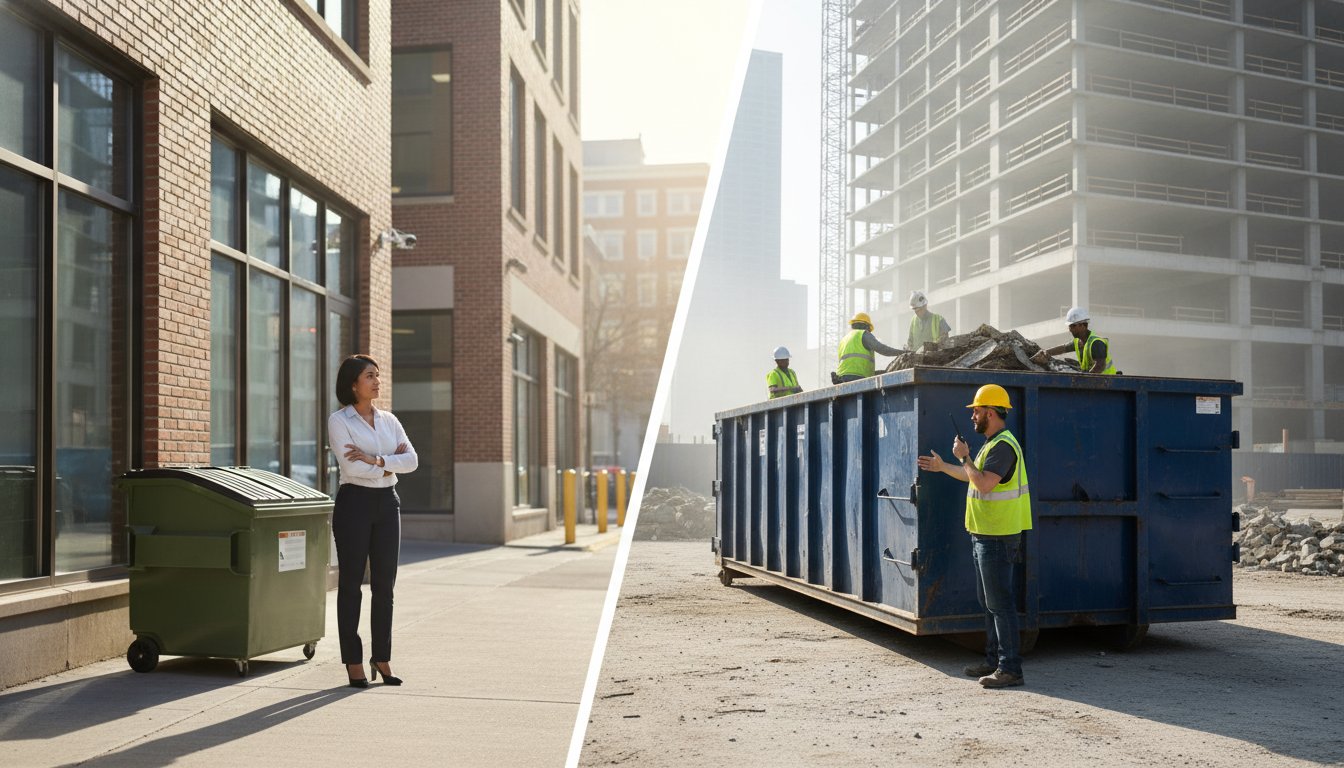
Choosing the largest container available might seem like the safest bet for your business, but the biggest bin is often the most expensive mistake you can make. Selecting between a commercial front load dumpster vs roll off requires a clear look at your daily waste volume and the physical layout of your site. You don't want to pay for empty space or find yourself stuck with a container that blocks your only delivery entrance. Whether you are running a retail shop or managing a construction site, the right choice keeps your operations moving and your costs predictable.
Stop overpaying for capacity you don't use and start managing your waste with professional precision. You need a reliable system that keeps your site clean without the stress of hidden fees or permit confusion. This guide compares both options to help you find the most cost-effective and efficient solution for your specific project. Read on to discover the break-even point between permanent and temporary service and use our size checklist to book your next service with total confidence.
Key Takeaways
- Contrast permanent service with project-based needs to select the most efficient waste management model for your facility.
- Evaluate your specific debris type to decide between lidded odor control for food waste or open-top loading for bulky construction materials.
- Determine the cost-effective choice in the commercial front load dumpster vs roll off comparison by calculating your weekly volume against project timelines.
- Assess physical site constraints like narrow alleys or low overhead clearance to prevent delivery failures and logistical delays.
- Navigate regional requirements for permits and placement to stay compliant with local waste management laws in major metropolitan areas.
Front Load vs. Roll-Off: Defining the Core Differences
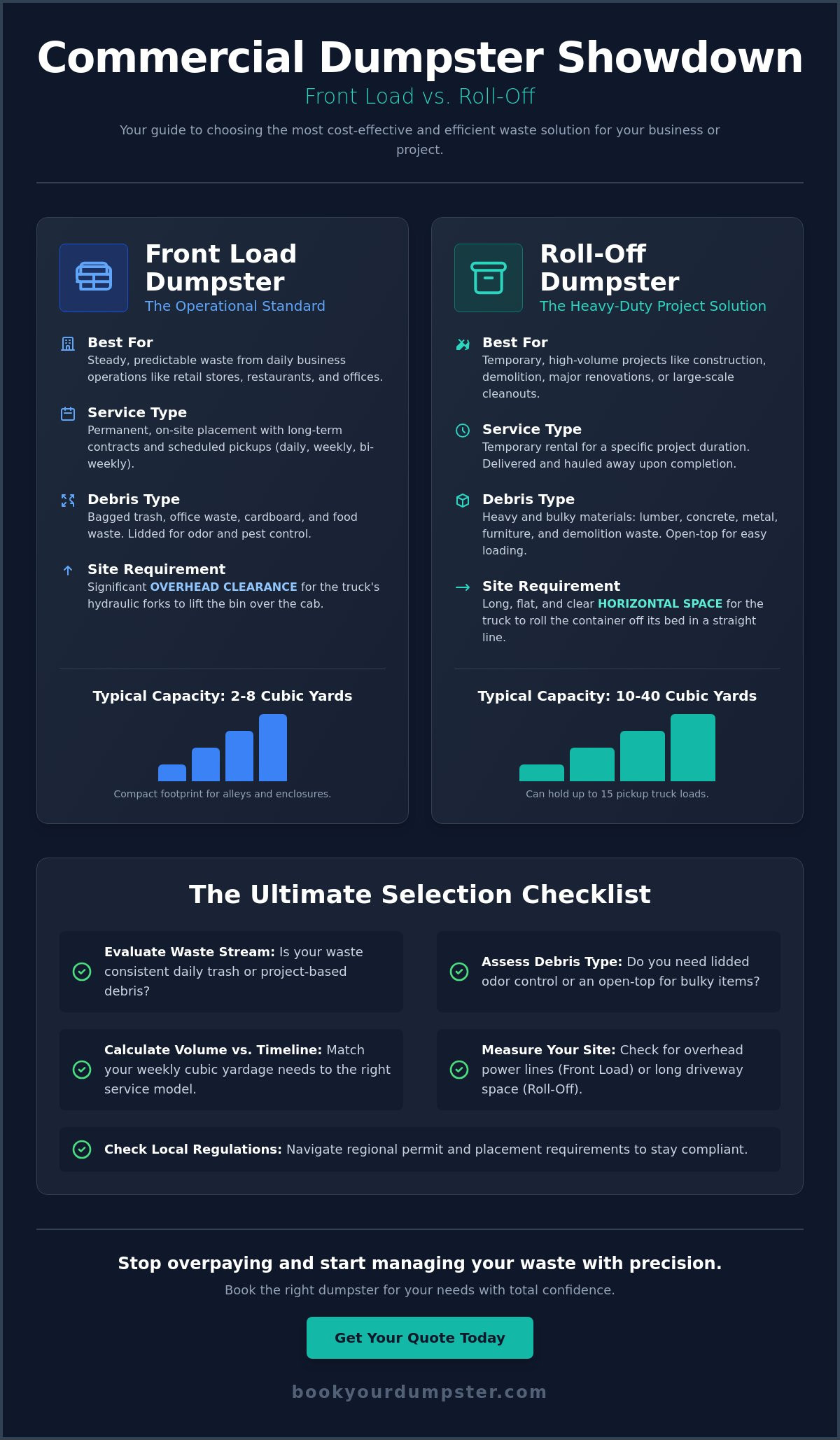
Understanding the technical split between a commercial front load dumpster vs roll off is the first step toward optimizing your waste management. These two systems solve entirely different logistical problems. A front-load bin is a permanent fixture designed for the steady, predictable output of a retail store or office. Conversely, a roll-off container is a high-capacity tool used for finite projects like a roof replacement or a warehouse cleanout. When evaluating a commercial front load dumpster vs roll off, you must choose based on your waste volume and the physical limitations of your property.
Service duration is the primary differentiator. Front-load service operates on a long-term contract with scheduled pickups, often weekly or bi-weekly. It integrates into your daily business operations. Roll-off rentals are temporary. You book them for a specific number of days, use them until the project ends, and then have them hauled away. Both front-load and roll-off dumpsters serve critical roles, but using the wrong one leads to unnecessary expenses and logistical bottlenecks.
Mechanism and Truck Requirements
The way these containers move dictates where you can place them. Front-load trucks use hydraulic forks to engage pockets on the side of the bin. The truck lifts the container over the cab and flips it into the hopper. This process requires significant overhead clearance. Avoid placing these bins under low-hanging power lines or low warehouse ceilings. If the truck can't lift the forks safely, your trash stays on the ground.
The roll-off process is different. These trucks use a cable-hoist or hook-lift system to pull the container onto a tilted bed. The container literally rolls off the back of the truck. This requires a long, flat approach. You need enough horizontal space for both the truck and the container to sit in a straight line during the drop-off. Ensure your site is clear of parked cars and debris before the driver arrives.
Capacity and Sizing Overview
Size matters when you are balancing cost and efficiency. Front-load bins are compact, typically ranging from 2 to 8 cubic yards. A 2-yard bin is roughly the size of a large office desk, while an 8-yard bin is about 6 feet tall. They are designed for bagged trash and light commercial waste. They don't handle heavy construction debris like concrete or dirt well.
Roll-off containers are heavy-duty giants. They range from 10 to 40 cubic yards. A 40-yard container can hold the equivalent of 12 to 15 pickup truck loads. These are built for weight. If you are managing a smaller project, consult this 10 Yard Dumpster Rental Guide to see if a compact roll-off fits your needs. Use roll-offs for bulky items like lumber, furniture, and demolition waste that would break the lids or mechanisms of a standard front-loader.
Front Load Containers: The Operational Standard for Businesses
For businesses with a steady heartbeat of daily trash, the front-load container is the reliable workhorse. Unlike the high-capacity containers used for demolition, these bins handle the consistent output of retail shops and office suites. In the debate of commercial front load dumpster vs roll off, the front-loader wins on permanent placement and operational integration. It becomes a seamless part of your facility management rather than a temporary disruption. These containers stay on-site indefinitely, providing a fixed location for staff to dispose of waste without navigating a construction-style bin.
Lidded designs are essential for urban and suburban businesses. They lock in odors and keep out pests like rodents or birds. They also prevent rainwater from soaking your waste. Wet trash is heavy trash; keeping it dry prevents your disposal costs from spiking during rainy seasons. Because these bins have a compact footprint, they fit easily into standard concrete enclosures or narrow alleys. This space efficiency allows you to maintain a clean exterior without sacrificing valuable parking spots or loading zone access.
You can schedule pickups daily, weekly, or bi-weekly depending on your volume. This flexibility ensures your bin never overflows. Overfilled bins attract unwanted attention from code enforcement and can result in significant local sanitation fines. If your business experiences seasonal surges, adjust your schedule to keep your site compliant and your waste area professional.
Common Sizes for Commercial Front Loads
2-4 yard bins serve small boutiques or low-waste offices perfectly. They take up minimal room but offer much more capacity than standard curbside cans. If you run a high-volume restaurant or a grocery store, 6-8 yard bins are the standard. Choose a size that accommodates your peak waste days. If you find your lids won't close, increase your pickup frequency instead of overstuffing the container. This keeps your waste area tidy and prevents illegal dumping from neighbors.
Operational Prohibited Items
Compliance with federal waste regulations is mandatory for every business owner. Never toss hazardous chemicals, batteries, or electronics into your commercial bin. These items require specialized disposal to prevent environmental contamination. Additionally, keep heavy debris like concrete, dirt, or bricks out of these containers. The hydraulic systems on front-load trucks are not designed to lift the extreme weight of masonry. For cardboard, flatten all boxes to maximize space. If your cardboard volume is high, consider a dedicated recycling bin to lower your primary trash costs. If you're ready to set up a permanent solution, you can view our front load commercial waste pickup options to get started.
Roll-Off Dumpsters: Heavy-Duty Solutions for Projects
When your business transitions from daily operations to a major renovation, the standard front-load bin is no longer sufficient. This is where the commercial front load dumpster vs roll off decision shifts toward high-capacity, temporary containment. Roll-off dumpsters are engineered for volume and weight. They feature an open top and a large swinging door at the rear. This design allows your crew to walk bulky items like broken office furniture, pallets, or wallboard directly into the container. It eliminates the need to lift heavy debris over a high side wall, reducing the risk of job site injuries.
Unlike the permanent contracts associated with front-loaders, roll-offs are project-specific. You rent them for a set duration, typically 7 to 14 days, to execute a specific task. Effective commercial waste management during a construction phase requires a container that can handle tons of debris without mechanical failure. Once your cleanout or demolition is finished, the truck hauls the entire container away, leaving your site clear and ready for the next phase of business.
Standard Roll-Off Sizes for Commercial Use
Selecting the right size prevents project delays. A 10 Yard Dumpster or 20 Yard Dumpster is usually ideal for interior remodels, flooring removals, or roofing projects. These sizes fit more easily into tight parking lots while still providing ample room for heavy materials. For full-scale demolition or large-scale construction sites, you will need a 30 Yard Dumpster or a 40 Yard Dumpster. These massive containers hold the equivalent of 12 to 15 pickup truck loads. For a deeper look at managing these large-scale projects, consult our Construction Debris Removal Guide.
Loading Best Practices and Restrictions
Safety and compliance are your top priorities when loading a roll-off. Follow the 'Level Full' rule strictly. Never fill the container past the top rail. Items sticking out of the top create a road hazard during transport, and drivers may refuse to pick up an overfilled bin. Pay close attention to weight restrictions for heavy materials. If you are disposing of dirt, brick, or concrete, you cannot fill a 30 or 40-yard container to the top; the weight would exceed the truck's lifting capacity. Keep the area around the swinging door clear. You need at least 10 feet of clearance to open the door fully and begin loading safely.
The Ultimate Selection Checklist: Which One Do You Need?
Choosing between a commercial front load dumpster vs roll off shouldn't be a guessing game. Use these five criteria to audit your waste stream and your physical property before you sign a contract. If you generate a constant flow of bagged trash, a front-loader is your operational standard. If you face a one-time surge of heavy materials like pallets or old machinery, the roll-off is the superior tool. Use the following checklist to determine your needs:
- Waste Volume: Do you have a steady stream of bags daily or tons of debris once?
- Site Access: Do you have 15 feet of vertical clearance for forks or 60 feet of linear space for a truck bed?
- Project Duration: Is this for permanent facility management or a 14-day cleanup?
- Debris Type: Are you tossing light office waste or heavy construction materials?
- Permits: Will the container sit in a private enclosure or on a public street?
Site placement is often the deciding factor. A roll-off requires a long, flat approach for the truck to slide the container into place. If your business is tucked into a narrow alley with low-hanging power lines, a front-load bin is likely your only viable option. Conversely, if you are managing a major warehouse cleanout, the labor saved by using a roll-off's walk-in door far outweighs the convenience of a smaller bin.
The Break-Even Analysis
Analyze your current waste costs to find the break-even point. If your permanent front-load bin is consistently overflowing, you likely face "overflow" fees or the cost of frequent on-call pickups. When you have a temporary spike in waste, it's often more cost-effective to supplement your service with a 20 Yard Dumpster for two weeks rather than paying for daily commercial pickups. Factor in staff time as well. Lifting heavy furniture over the side of an 8-yard bin is slow and risks injury. Walking that same furniture into a roll-off is fast and safe.
Site Preparation Checklist
Measure your space before the truck arrives to avoid dry-run fees. A roll-off truck needs approximately 60 feet of straight-line space to drop a container safely. Front-load trucks require 14 to 15 feet of vertical clearance to engage their forks without hitting ceilings or wires. Ensure the drop-off point is a flat, hard surface. Concrete is ideal. If you must place a heavy roll-off on asphalt, use wooden boards under the wheels to prevent the weight from sinking or cracking the surface. Ready to decide? Select the right container size and book your service today to keep your site clear and compliant.
Local Logistics: Navigating Waste in Major Metro Areas
Geography and local law dictate the commercial front load dumpster vs roll off decision just as much as waste volume. In New York City and Queens, narrow streets and limited alley space often make a permanent front-load bin physically impossible. You may need a roll-off for temporary projects, but placing it on a sidewalk requires specific city permits. Verify your local "Right of Way" requirements before the truck arrives to avoid immediate impound fees or citations.
In Chicago and throughout Illinois, winter weather adds a layer of logistical complexity. Keep your front-load lids closed and clear of snow at all times. If a lid freezes shut or is buried under a snowbank, the driver cannot service the bin. In San Francisco and Massachusetts, strict recycling and composting mandates mean you might need multiple containers to separate organic waste from general trash. As of 2026, New York businesses generating at least one ton of organic waste per week must divert it if they are within 25 miles of a recycler. Managing these streams requires precise scheduling to avoid overflows.
Permits and Street Placement
When you can't fit a bin on your own property, you must secure a permit for street placement. This is common for roll-off containers used in urban renovations. Blocking a fire hydrant, bus stop, or bike lane results in heavy municipal fines that eat into your project's budget. Book Your Dumpster USA handles the logistical heavy lifting by coordinating delivery windows that align with your local regulations. We ensure your container sits exactly where it should to keep your project compliant and your neighbors happy.
Streamlining Your Booking Process
Managing waste shouldn't involve endless phone calls and vague quotes. Online booking is the fastest way to secure a container in 2026. It allows you to compare the commercial front load dumpster vs roll off options side-by-side and select the exact capacity you need. Our digital platform provides transparent pricing so you avoid the hidden fee trap common in traditional hauling contracts. Secure your equipment in minutes and get back to running your business. Book Your Dumpster USA now for reliable commercial service and experience a modernized approach to waste management.
Optimize Your Business Waste Strategy Today
Managing waste shouldn't be a source of logistical stress or unexpected costs. You now have the tools to decide between a commercial front load dumpster vs roll off based on your specific operational needs. Use a permanent front-load bin to maintain a clean, pest-free environment for your daily retail or restaurant operations. Reserve a heavy-duty roll-off container for those finite projects like office remodels or warehouse cleanouts where volume and weight capacity are non-negotiable. Success depends on matching the right container to your site's physical constraints and your project's timeline.
Choosing a partner that values pricing integrity and punctuality is the final step. We serve major metropolitan areas including NYC, Chicago, and San Francisco with a streamlined digital platform designed for speed. You get straightforward, transparent pricing with no hidden fees, ensuring your waste management stays within budget. Stop guessing and start executing with a reliable system that respects your time and your bottom line.
Schedule your dumpster rental in seconds with Book Your Dumpster USA and take the first step toward a clutter-free site. Clear the debris today so you can focus on growing your business tomorrow.
Frequently Asked Questions
Can I use a front-load dumpster for construction debris?
No, you should not use a front-load bin for construction debris. These containers and the trucks that service them are designed for light commercial waste and bagged trash. Heavy materials like concrete, bricks, or large lumber can damage the hydraulic forks of the pickup truck. If you are managing a renovation, select a roll-off container to ensure your waste is handled safely without risking mechanical failure.
How much space do I need for a roll-off dumpster delivery?
You need approximately 60 feet of straight-line clearance for a roll-off delivery. The truck requires enough room to back into the spot, tilt its bed, and slide the container onto the ground. Ensure the area is clear of parked cars, low-hanging branches, and overhead wires. Measure your site carefully before scheduling to prevent delivery delays or dry-run fees that can occur when a truck cannot land safely.
What are the most common prohibited items for commercial dumpsters?
Prohibited items include hazardous chemicals, car batteries, tires, and electronics. You must also avoid disposing of paints, oils, and medical waste in these bins. These materials require specialized handling according to federal and local environmental laws. Always check your service agreement for a full list of restricted materials to keep your site compliant and avoid environmental fines or pickup refusals.
Do I need a permit for a dumpster in New York City or San Francisco?
Yes, you generally need a permit if you place a dumpster on a public street or sidewalk in New York City or San Francisco. These "Right of Way" permits ensure the container doesn't block essential traffic or emergency access. If you place the bin on private property, such as a parking lot or internal driveway, you usually don't need a municipal permit. Check local city ordinances before you finalize your booking.
How often are commercial front-load dumpsters typically emptied?
Commercial front-load bins are typically emptied on a scheduled basis, ranging from once a week to daily. The frequency depends on your business's waste volume and local sanitation requirements. For example, restaurants often require more frequent pickups to manage food waste and odors. Adjust your schedule as your business grows to prevent overflowing lids and unsanitary conditions. In the commercial front load dumpster vs roll off comparison, front-loaders provide the benefit of these predictable, recurring schedules.
What is the weight limit for a 20-yard roll-off dumpster?
Weight limits for a 20-yard roll-off vary based on the specific truck's capacity and local road weight laws. Most containers are rated to hold several tons of debris. However, if you are loading heavy materials like dirt, brick, or concrete, you cannot fill the bin to the top rail. Exceeding the weight limit makes the container impossible to lift and may result in safety violations during transport.
Can I switch from a temporary roll-off to a permanent front-load service?
You can easily transition from a temporary roll-off to permanent front-load service once your construction project ends. Many businesses use a roll-off during their initial setup or renovation phase and then switch to a scheduled front-load contract for daily operations. This transition ensures you have the right capacity for every stage of your business growth. When evaluating a commercial front load dumpster vs roll off, remember that you can use both at different times.
What happens if I overfill my dumpster?
Overfilling your dumpster leads to safety hazards and pickup refusals. Drivers cannot legally haul a container if the debris sits above the top rail because it risks falling out during transport. You will likely be required to remove the excess material before the truck returns for a second attempt. Always keep your waste level with the top of the container to ensure a smooth, professional pickup without extra logistical stress.


