

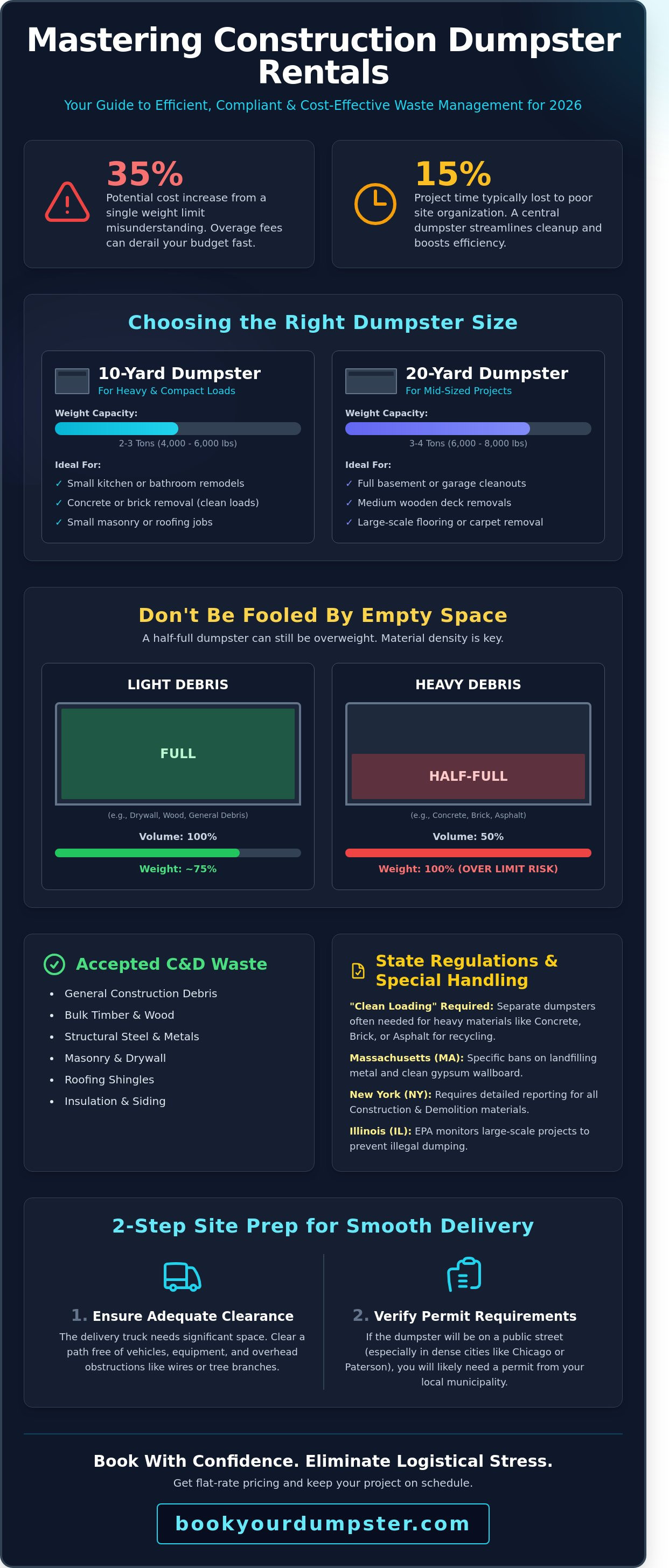
A single weight limit misunderstanding can trigger overage fees that increase your total disposal costs by 35% before the first week of your project is even over. You already know that managing a job site in Illinois, New Jersey, or Michigan is a high-stakes balancing act where a single delivery delay can halt an entire crew. Renting a construction dumpster shouldn't add to that logistical stress. We understand the frustration of navigating complex street permit requirements in dense urban centers like Chicago or Paterson. It's time to take control of your site waste.
Master the logistics of construction waste management with our expert guide to selecting and booking the right container for your 2026 project. Book Your Dumpster USA provides a clear breakdown of cubic yardage versus weight capacity to ensure you stay within legal limits. You'll also learn how to comply with state-specific waste disposal laws and secure a flat-rate pricing model. Book your dumpster with confidence and eliminate the risk of hidden surcharges. This guide ensures your site stays clean, your timeline remains on track, and your budget stays intact. Follow these steps to streamline your next cleanup.
Key Takeaways
- Understand the critical role of heavy-duty roll-off containers in maintaining a safe, efficient job site across New York, Illinois, and Massachusetts.
- Learn how to accurately estimate debris volume and navigate weight capacity limits to select the most cost-effective bin for your project.
- Differentiate between standard construction waste and "clean loading" materials like concrete or brick to ensure compliant disposal.
- Follow our two-step site preparation checklist to guarantee a smooth delivery and avoid common permit or clearance issues.
- Book your construction dumpster through our streamlined online system to eliminate logistical stress and keep your project on schedule.
Essential Role of a Construction Dumpster in Regional Projects
A construction dumpster acts as the backbone of any organized job site. These are heavy-duty, reinforced roll-off containers specifically engineered to handle the weight of masonry, structural steel, and bulk timber. Choosing a professional bin is safer than making dozens of trips to a local landfill in a standard vehicle. It prevents vehicle wear and tear while reducing the likelihood of loose debris causing highway hazards. Most residential trucks cannot handle the 2 to 4 tons of weight that even a small roll-off manages easily.
Maintaining an OSHA-compliant job site in states like New York, Illinois, and Massachusetts requires strict waste control. Under OSHA standard 29 CFR 1926.25, debris must be kept cleared from work areas, passageways, and stairs. A centralized bin makes this compliance automatic. Before you start, understand that volume is measured in cubic yards. This unit of measurement represents a space 3 feet by 3 feet by 3 feet. Getting this number right determines your project's total efficiency and ensures you don't overpay for unused space.
Streamlining Waste Management on Local Job Sites
Centralizing debris reduces labor costs significantly. Instead of workers sorting piles in different corners, they move waste directly to the container. This "fill-as-you-go" advantage prevents site hazards like protruding nails or unstable stacks of drywall. It works as a core component of construction debris removal plans designed to keep project momentum high. By removing the logistical stress of waste, your team stays focused on the build rather than the cleanup. This systematic approach reduces the 15% of project time typically lost to site organization issues.
Regional Regulations for Construction Debris
Waste laws in the Northeast and Midwest are becoming increasingly strict. The Massachusetts Department of Environmental Protection (MassDEP) has specific waste bans on materials like metal and clean gypsum wallboard, requiring them to be diverted from landfills. New York's DEC requires detailed reporting for C&D materials to ensure high recycling rates in urban centers. In Illinois, the EPA monitors large-scale projects to prevent illegal dumping in non-permitted facilities. According to 2026 EPA standards, C&D waste consists of the bulky, heavy materials produced during construction, renovation, and demolition of buildings, roads, and bridges. Following these regional mandates prevents heavy fines and keeps your project on schedule.
Choosing the Right Construction Dumpster Size for Your Volume
Estimating waste volume starts with your project's square footage. A standard 1,000 square foot renovation often produces more debris than a novice contractor expects. You must distinguish between volume and weight capacity. A construction dumpster might have the physical space for your waste, but it could still exceed the legal tonnage limit. Properly managing construction and demolition materials is critical for site safety and environmental compliance. According to 2018 EPA data, the U.S. generated over 600 million tons of C&D waste, proving that volume adds up fast.
Overfilling a container creates two major problems. First, it's a safety hazard. Protruding boards or loose shingles can fall during transport, creating liabilities for you and the driver. Second, it leads to financial penalties. Landfills charge by weight. If your bin is over the limit, you'll pay significant overage fees. Heavy materials like asphalt or concrete require specialized handling. Check out the 10 yard dumpster rental guide for projects involving dense masonry or roofing work.
The 10-Yard and 20-Yard Options for Residential Remodels
Small-scale projects require precision. A 10-yard bin is the standard for heavy, compact loads. Use it for small kitchen gutting, bathroom remodels, or masonry repairs. It typically handles 2 to 3 tons of material. If you're tackling a basement cleanout or removing a medium-sized wooden deck, step up to the 20-yard option. This size usually allows for 3 to 4 tons of waste. While the 20-yard bin has twice the volume, it isn't meant for 20 yards of concrete. Always match the material density to the bin's weight rating. Before you start your demo, pick your dumpster size to keep the job site clear.
Heavy-Duty 30-Yard and 40-Yard Roll-Offs for Major Builds
Large-scale projects demand high-capacity solutions. The 30-yard construction dumpster is the workhorse for full-home window replacements or extensive siding projects. It's roughly 22 feet long and can hold 3.5 to 5 tons of debris. For commercial demolition or new construction framing, the 40-yard container is the only logical choice. It manages massive amounts of wood scraps, drywall, and bulky packaging.
- 30-Yard: Best for large residential renovations and estate cleanouts.
- 40-Yard: Best for industrial sites and major commercial builds.
Be cautious about the physical footprint of these large containers. A 40-yard bin requires significant clearance for the truck to drop and retrieve it. On tight urban lots, these bins can block access or violate local street permits. Measure your staging area twice to ensure the truck has at least 60 feet of straight-line approach space. Don't let a delivery delay stall your project; check your site dimensions today.
Construction Waste Disposal: What Can and Cannot Go in the Bin
Efficiency starts with knowing what you're tossing. Most renovation projects generate a standard mix of lumber, drywall, roofing shingles, and flooring. These materials are generally accepted in a standard construction dumpster. However, the U.S. Environmental Protection Agency provides specific construction and demolition debris guidelines to ensure these materials are recovered or disposed of safely. Stick to these rules to keep your project on schedule and avoid unexpected delays at the landfill.
Managing Mixed Debris vs. Clean Loads
Mixed C&D loads contain a variety of materials from a renovation or demolition. These loads often have specific weight limits because they are harder to sort at the facility. If you're tearing up a driveway or foundation, don't mix that heavy material with wood and trash. Use a dedicated 10-yard bin for "clean loading" materials like concrete, brick, or dirt. This strategy prevents you from exceeding weight limits and lowers your overall disposal costs. Remember this rule: Mixing household trash with construction debris is the fastest way to trigger expensive contamination fees.
Prohibited Items and Environmental Compliance
Safety and law dictate what stays out of the bin. Never toss hazardous materials like asbestos, lead-based paint, or industrial chemicals into a standard roll-off. These require specialized handling to protect the environment and workers. You should also watch out for regional electronics and appliance bans. In Massachusetts and New York, state regulations strictly prohibit mattresses and tires from entering standard waste streams. If you have "borderline" items like paint cans, ensure they are completely empty and dry before disposal. If the paint is still liquid, it's considered hazardous waste.
Follow this checklist for how to handle construction waste disposal at compliant facilities:
- Identify your waste stream: Determine if you have a mixed load or a clean load of heavy materials like concrete.
- Separate hazardous items: Set aside batteries, fluorescent bulbs, and any containers with liquid chemicals.
- Verify regional bans: Check for specific rules regarding mattresses or tires in your local area to avoid fines.
- Schedule your delivery: Pick the right size construction dumpster and get it on-site before the demo starts.
Book your dumpster through a transparent provider to ensure your project stays compliant. We handle the logistics so you can focus on the build. Choose your size and clear the site today.
Site Preparation and Permit Requirements in Your Region
Preparing your site before delivery ensures a seamless experience and prevents unnecessary delays. Follow these four steps to get your property ready for a construction dumpster.
- Identify the delivery location: You must provide at least 60 feet of linear space for the truck to maneuver and drop the bin. Measure this distance twice to ensure the driver has enough room to operate.
- Check for overhead obstructions: Look up for power lines, low-hanging tree branches, or building overhangs. The truck needs roughly 14 feet of vertical clearance to lift the hoist and place the container.
- Protect the surface: Heavy steel bins can damage asphalt or concrete. Lay down large sheets of plywood or 2x4 boards where the dumpster wheels will rest to distribute the weight and prevent driveway cracking.
- Verify local permit needs: If you don't have space on your private driveway or lawn, you'll need to place it on the street. This almost always requires a permit from your local municipality.
Securing Street Permits in New York, Illinois, and Massachusetts
In cities like Chicago or Boston, you must obtain a "Right of Way" or Street Occupancy permit before placing a construction dumpster on public property. These regulations ensure that the container doesn't block emergency vehicles or pedestrian traffic. In Chicago, the Department of Transportation handles these requests, while Boston requires a permit from the Public Works Department. Expect a timeline of 2 to 5 business days for permit approval. While policies vary by city, the responsibility for securing these permits typically falls on the homeowner or contractor. Check your local city hall website early to avoid fines that can exceed the cost of the rental itself.
Optimizing Placement for Safe Loading and Pickup
Position your bin as close to the debris source as possible. This reduces the distance you carry heavy materials, saving labor and time. Ensure the surface is completely level. A roll-off placed on a steep incline can shift during loading, creating a safety hazard. On the scheduled pickup day, keep the path clear. Don't park cars in front of the bin or allow debris to overflow the sides. If the driver cannot access the container, you will likely face a dry run fee. Clear all obstacles by 6:00 AM to ensure a fast, hassle-free removal.
Booking Your Construction Dumpster with Book Your Dumpster USA
Managing a job site requires precision and speed. You don't have time to waste on complicated logistics or endless phone tag. Visit bookyourdumpster.com to access a streamlined booking system designed for busy professionals. Our platform allows you to select your bin and schedule your drop-off in under five minutes. We maintain a full inventory of 10, 20, 30, and 40-yard containers to meet the demands of any project size. Choosing the right construction dumpster is the final step in ensuring your site remains safe and productive.
We take a pragmatic approach to waste management. Our process removes the stress of debris removal so you can focus on the build. We've built our reputation on two core pillars: on-time delivery and total transparency. When we promise a delivery window, we hit it. Your crew shouldn't stand around waiting for a bin to arrive. We provide the tools you need to stay on schedule and under budget. Our service is a high-functioning tool for your business, not a source of frustration.
Transparent Pricing with No Hidden Fees
Integrity is the foundation of our business. We treat every transaction like a verbal handshake. The quote you receive upfront is the final price you pay. Our flat-rate model is comprehensive. It includes the initial delivery, the final pickup, and disposal fees up to your selected weight limit. You won't find the bait-and-switch tactics common in the waste industry. While other companies might add fuel surcharges or environmental fees after the rental ends, we keep our costs fixed. This clarity allows you to bid on projects with confidence, knowing exactly what your waste overhead will be from day one.
Reliable Delivery Across New York, Illinois, and Massachusetts
Regional expertise matters when moving heavy equipment. Our logistics team understands the specific challenges of the Northeast and Midwest. We've mastered the art of navigating narrow residential streets in Massachusetts and the dense urban traffic of Illinois and New York. Our drivers know the local routes that save time. This local knowledge ensures your construction dumpster arrives exactly where you need it, even in tight urban spaces. We currently serve thousands of contractors across these three states, providing a reliable link in their supply chain.
Efficiency is a choice. Don't let piles of debris slow down your team or create safety hazards. Secure your container now through our online portal. Book your dumpster today to keep your project moving forward without delay.
Streamline Your Project Cleanup Today
Managing a job site in New York, Illinois, or Massachusetts requires precise coordination and reliable equipment. You've learned how to select the right 10 to 40-yard roll-off container and navigate the specific permit requirements for your region. Efficient waste management keeps your project on schedule and ensures compliance with local disposal regulations. We handle the logistics so you can focus on the build. Our team provides transparent flat-rate pricing and guarantees on-time delivery across all three states. Whether you're handling a residential renovation or a large-scale commercial build, your construction dumpster should be the most reliable tool on your site. Don't let debris stall your progress or create safety hazards for your crew. Every project in NY, IL, and MA deserves a partner that values punctuality and honesty. You've got the plan; we've got the containers to make it happen. Take the stress out of your waste logistics and move your project toward completion with confidence.
Book your construction dumpster now at BookYourDumpster.com
We're ready to help you finish the job right.
Frequently Asked Questions
How much does a construction dumpster rental cost in New York?
Construction dumpster rental costs in New York typically range from $515 to $985 depending on the borough and container size. Manhattan rates often trend higher due to traffic congestion and strict local permitting fees. These prices usually include a set weight limit of 2 to 4 tons. Book your dumpster online to see live availability and exact rates for your specific zip code.
What size dumpster do I need for a standard roof replacement?
A 10 or 20 cubic yard container is the standard choice for a roof replacement project. A 10-yard dumpster holds approximately 30 squares of asphalt shingles, which equals 3,000 square feet of roofing material. If your roof exceeds 3,000 square feet or includes multiple layers of old shingles, choose a 20-yard model. This prevents overfilling and ensures safe transport for the driver.
Can I put concrete and dirt in the same construction dumpster?
You cannot mix concrete and dirt in the same container because landfills categorize them as different waste streams. Most facilities require clean loads of a single material to allow for proper recycling. Mixing 5 tons of concrete with 2 tons of soil often results in high contamination fees or total rejection at the scale. Always book separate containers for heavy debris to keep your project on budget.
Do I need a permit to put a construction dumpster on my driveway in Illinois?
You don't need a permit to place a construction dumpster on a private driveway in Illinois. Most municipalities, including Chicago, only require a Public Right-of-Way permit if the container sits on a street or sidewalk. If your driveway is shorter than 20 feet, the unit might overhang the sidewalk. In that case, check local city ordinances to avoid a $100 daily fine.
How long can I keep a roll-off dumpster on my construction site?
Standard rental periods for a roll-off dumpster typically last 7 to 14 days. You can often extend this timeframe for a flat daily rate, usually between $10 and $25 per additional day. If you finish your project early, call for a pickup to clear your site. Scheduling your delivery for a Tuesday often ensures better availability during peak construction months when demand increases by 30 percent.
What happens if I exceed the weight limit of my construction dumpster?
Exceeding the weight limit results in an overage fee, which averages $65 to $100 per additional ton. Landfills charge by the exact weight recorded at their certified scales. If the load is dangerously heavy, the driver might refuse to pick it up until you remove the excess material. Keep debris below the max fill line to ensure the truck's hydraulic system can lift the container safely.
Is there a difference between a residential and a construction dumpster?
Construction dumpsters are designed for heavy materials like lumber, drywall, and metal, while residential units handle household junk and furniture. A construction dumpster often features reinforced steel to manage the weight of 4 tons of heavy debris. Residential rentals usually have lower weight capacities suited for attic cleanouts or moving. Choose the container type based on the specific waste your project generates.
How much notice do I need to give for a dumpster delivery in Massachusetts?
Give at least 24 to 48 hours of notice for a dumpster delivery in Massachusetts. Booking three days in advance is safer during the busy spring renovation season when inventory levels drop by 40 percent. If your site is in a dense area like Boston, provide extra time to secure any necessary street permits. Book your dumpster early to lock in your preferred delivery date and time.


