

What if your simple weekend project ends up costing twice as much because of a pile of debris that won't fit in your driveway? Most homeowners fall into the "double-dumpster trap" by underestimating how much space a dismantled deck actually takes up. When you rent a dumpster for deck demolition, the goal is to get every board and concrete footing off your property in one trip. It's a logistical challenge that can quickly become a headache without the right plan.
We understand you want a clean yard and a predictable invoice. This article teaches you how to calculate your specific debris volume and choose between 10-yard and 20-yard units to save money. We'll also cover the 2026 disposal rules for pressure-treated lumber and heavy concrete to help you avoid surprise overweight fees. Use our streamlined booking process to move from a cluttered site to a finished project with total confidence. Follow these steps to handle your demolition like a professional and keep your budget on track.
Key Takeaways
- Calculate the expansion factor of loose-tossed lumber to ensure you select the right container size the first time.
- Implement the "Reverse Build" demolition technique to maintain a safe workspace and a logical flow of debris.
- Utilize the "Flat-Stack" loading strategy in your dumpster for deck demolition to prevent wasted space and avoid the need for a second rental.
- Account for the weight of concrete footings separately to stay within your dumpster's weight limit and bypass hidden disposal charges.
- Use our digital booking platform for instant scheduling in cities like Chicago, San Francisco, or Queens to secure your rental before peak season.
Sizing Your Dumpster for Deck Demolition
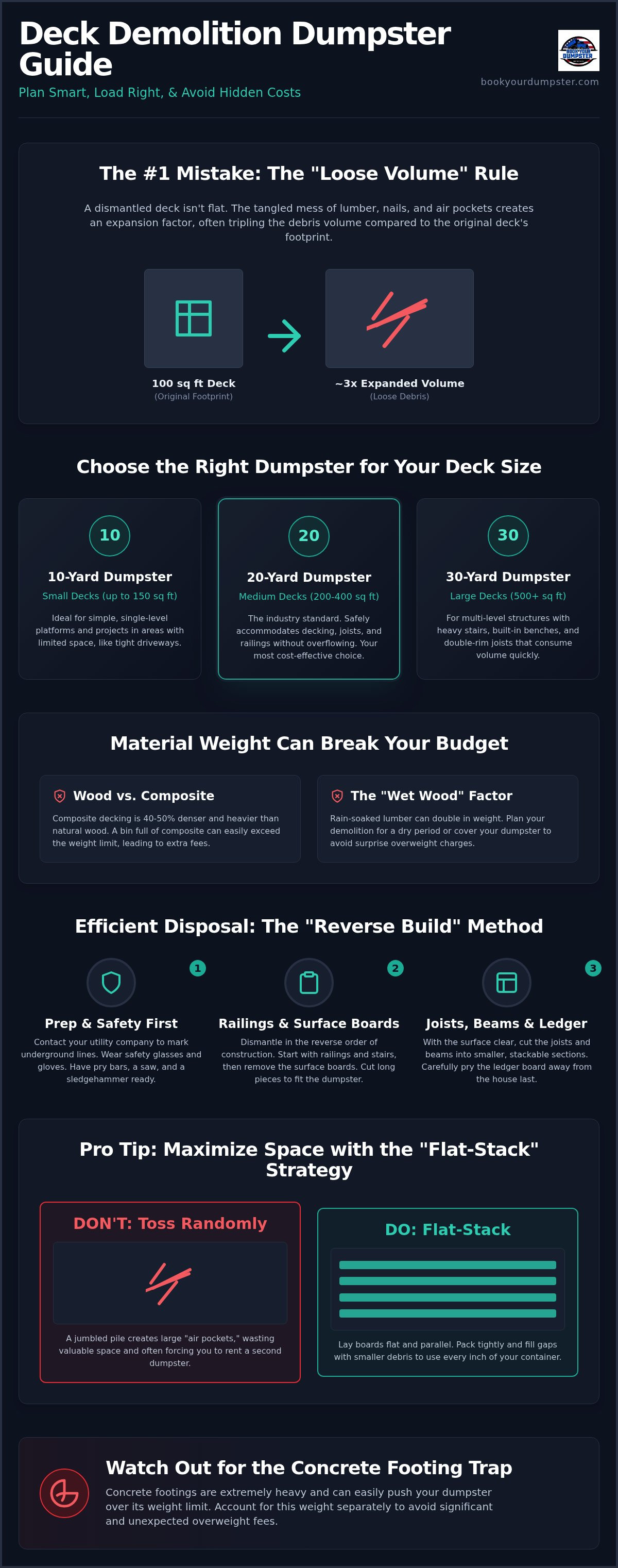
Successful debris management starts with the "Loose Volume" rule. You might assume that a 100 square foot deck requires 100 square feet of disposal space, but demolition debris is never flat. Once you pry up boards and joists, they become a tangled mess of lumber, nails, and air pockets. This creates an expansion factor; your waste volume can easily triple compared to the original footprint. Standard roll-off dumpsters for construction are measured by cubic yards, and filling them efficiently requires a realistic estimate of this "fluff" factor.
The 20-yard dumpster for deck demolition is the industry standard for most residential projects. It provides enough length for long structural beams while offering the depth needed for bulky railings and stairs. Choosing a size too small forces you into a "double-dumpster" situation, which doubles your delivery fees and logistical stress. It's always more cost-effective to have a little extra room than to run out of space with half a deck still sitting on your lawn.
Deck Size to Dumpster Capacity Chart
Select your container based on the total square footage and the complexity of the build. Use these guidelines to stay within capacity:
- Small Decks (up to 150 sq ft): A 10-yard dumpster is usually sufficient for simple, single-level platforms. This size is perfect for tight driveways in cities like Queens or Chicago.
- Medium Decks (200-400 sq ft): This is the sweet spot for a 20-yard roll-off. It safely accommodates the decking, joists, and standard railings without overflowing.
- Large or Multi-level Decks (500+ sq ft): Move into 30-yard territory. Larger structures often include heavy stairs, built-in benches, and double-rim joists that consume volume quickly.
Material Matters: Wood vs. Composite Weight
Weight is just as critical as volume. Pressure-treated pine is the standard for 2026 projects, but if you are removing composite materials like Trex or AZEK, your load will be significantly heavier. Composite decking is 40% to 50% denser than natural wood. A 20-yard bin filled with composite can easily approach the 4-ton weight limit.
Don't ignore the "Wet Wood" factor. If your demolition happens after a heavy rain, rain-soaked lumber can double in weight. Saturated wood stays heavy for days. Plan your project during a dry window or cover your dumpster with a tarp to avoid hitting the weight limit prematurely. You can find more sizing tools at Book Your Dumpster USA to match your specific material type to the right container.
Step-by-Step Deck Demolition for Efficient Disposal
Preparation prevents costly disasters. Before you swing a sledgehammer, identify your utility lines. Gas and electric lines often run beneath or near deck structures. Contact your local utility company to mark these areas before work begins. Once the area is clear, secure your tool kit. You will need a reciprocating saw with demolition blades, heavy-duty pry bars, and a 4-pound sledgehammer. Safety is non-negotiable. Wear eye protection and thick gloves at all times. Manage nails as you go. A single rusted nail can halt your project and lead to an emergency room visit.
The most efficient way to tear down a structure is the "Reverse Build" method. You simply dismantle the deck in the opposite order it was constructed. This keeps the structure stable for as long as possible. It also ensures you fill your dumpster for deck demolition in a logical sequence that maximizes every inch of space. Start from the top and work your way down to the foundation.
Phase 1: Railings and Surface Boards
Start with the railings and stairs. Systematic prying is often slower than using a reciprocating saw, but it allows for cleaner stacking. Cut the railings into sections that fit the width of your container. Remove surface boards next. If you plan on following federal guidelines for managing construction and demolition materials, prying boards helps preserve the wood for potential reuse. Otherwise, cut them into manageable lengths. Stack these boards immediately. Letting them pile up in the yard creates "debris creep" and makes the workspace dangerous. Removing or flattening nails during this phase prevents injuries when you eventually step into the dumpster to pack the load.
Phase 2: Joists, Beams, and Ledger Removal
With the surface gone, you are left with the skeleton. Cut joists into 4-foot sections. These smaller pieces pack much tighter in a dumpster for deck demolition than full-length 12-foot beams. Work from the outside toward the house. Save the ledger board for last. This board is bolted directly to your home's rim joist. Pry it away carefully. Rushing this step can tear your siding or compromise the house's weather barrier.
Organize your demolition zone to prevent structural collapse. Clear the area of small scraps before moving to the next section. If you need a reliable way to dispose of this material, you can schedule your container online to ensure it arrives exactly when your demo begins. This keeps the workflow moving and your yard clear of hazardous wood piles.
Maximizing Your Dumpster Space: Pro Packing Tips
Tossing lumber randomly into your container is the fastest way to waste money. This creates massive air pockets that can consume half your available volume before the project is done. Adopt the "Flat-Stack" strategy to maximize your investment. Start by loading your longest beams and joists along the bottom edges. This creates a level foundation and prevents the load from shifting during transport. Once the base is set, use smaller debris like balusters and railing scraps to fill the "void spaces" between the larger timbers. This "Tetris" approach is the only way to ensure your dumpster for deck demolition holds everything in one trip.
Watch the fill line closely. Most roll-off containers have a "Max Fill" sticker on the side. Never exceed this height. Over-height loads are illegal to transport and create a safety hazard on the road. If your pile is creeping above the rim, stop and compress the load. Walking on the debris (carefully) can help settle the material, but the most effective method is proper organization from the start. Using a dumpster for deck demolition effectively requires discipline, not just muscle. A well-packed bin is the difference between a single rental and a surprise second invoice.
Cutting for Volume Reduction
Implement the 4-foot rule. Use a reciprocating saw to cut long boards into 4-foot sections. This simple step can nearly double your usable space. Long boards often "bridge" across the container, leaving empty space underneath that you cannot reach. Break down complex structures like built-in benches and stairs into individual components before loading. Don't toss a whole stair stringer into the bin. Nest your joist sections by placing them face-to-face. This eliminates the air gaps between the wood and keeps the pile dense enough to stay below the rim.
Weight Distribution for Safe Pickup
Load placement affects the truck's ability to pick up the container safely. Keep your heaviest materials centered and low. If you have composite decking or concrete footings, place them in the middle of the bin. Avoid the "heavy end" trap. If you stack all the heavy material at one end, the truck may tilt dangerously or fail to lift the load entirely. Verify your weight limits before you finish. A 10-yard dumpster typically handles 2 to 3 tons, while a 20-yard unit holds 3 to 4 tons. Exceeding these limits results in overweight fees that can range from $40 to $200 per extra ton, based on 2024 industry averages.
The Concrete Footing Trap and Disposal Compliance
Concrete footings are the most underestimated component of any demolition project. While the wood structure is bulky, the footings are dense. A single 4-foot deep concrete pier can weigh nearly 500 pounds. If your deck has eight of these piers, you are adding two tons of weight to your container before a single board is tossed in. This hidden mass is the primary cause of surprise overage fees. Identifying whether you have simple pre-cast blocks or deep-poured piers is the first step in avoiding a budget disaster. Pre-cast blocks are usually easy to manage, but piers require heavy machinery and a clear plan for weight distribution.
Decide early if you will remove the footings or leave them in the ground. If you choose full removal, you must account for the weight in your dumpster for deck demolition. Most standard roll-off containers allow for mixed loads of wood and concrete, but the total weight limit remains the same. If the concrete volume is significant, you may need to adjust your container size or loading strategy to stay within legal transport limits. You can check local weight allowances for your specific city to ensure your plan is compliant.
Calculating Concrete Weight
Estimate your concrete weight using the standard of 150 pounds per cubic foot. A pier with a 12-inch diameter that extends 48 inches into the ground contains roughly 3.14 cubic feet of concrete. That equals approximately 471 pounds per footing. If your total concrete weight exceeds 2 tons, consider renting a separate "heavy debris" container specifically for masonry. This keeps your primary dumpster for deck demolition available for the lighter, bulkier wood waste. Leaving footings in place is an option if you aren't building in the exact same footprint, but local codes in cities like Chicago or Queens often require full removal for new permits.
Local Environmental Regulations
Disposal rules for treated wood are becoming stricter in 2026. States like Massachusetts, New York, and New Jersey have specific protocols for CCA-treated lumber, which contains arsenic. Some landfills now charge a premium for this material or require it to be separated from standard C&D waste. You must also ensure that no prohibited items enter the bin. This includes liquid stains, unsealed paint cans, or chemical strippers used during previous deck maintenance. For a deeper dive into these requirements, read The Ultimate Guide to Construction Debris Removal in 2026. Following these local rules prevents your load from being rejected at the scale and keeps your project moving forward without legal or financial delays.
Booking Your Deck Dumpster with Book Your Dumpster USA
Eliminate the stress of project coordination by using our direct online booking system. Whether you are working in Queens, NY, San Francisco, or Chicago, you can secure a dumpster for deck demolition in minutes. We have modernized the rental process to remove the typical friction found in the waste industry. Stop waiting for call-backs or deciphering vague quotes. Our digital platform provides immediate scheduling and a clear timeline for your project. You gain total control over your delivery and pickup dates without unnecessary phone tag.
Our approach focuses on pricing integrity. The waste management industry is often plagued by a "hidden fee" culture where delivery charges and fuel surcharges appear only on the final invoice. We provide transparent figures upfront so you can budget with precision. We also offer flexible rental periods. A DIY deck demolition is labor-intensive and often takes longer than a single weekend. Our rental terms give you the breathing room needed to dismantle the structure safely without rushing to meet a pickup deadline. This flexibility ensures you don't leave dangerous wood piles or exposed nails in your yard longer than necessary.
The Book Your Dumpster Advantage
We maintain a full inventory of 10, 20, 30, and 40-yard roll-off containers. This ensures you always have access to the specific capacity required for your site. For smaller residential projects or tight urban spaces, our 10 Yard Dumpster Rental: The Complete Buying Guide for 2026 provides detailed specs for driveways with limited clearance.
Our local expertise in NY, NJ, IL, and MA is a critical asset for your project. We understand the specific residential permit requirements in these regions. If your container needs to sit on a public street in Chicago or a narrow lane in San Francisco, we can guide you through the local compliance process. This specialized knowledge prevents local fines and ensures your project starts on schedule without administrative delays.
Ready to Start? Your Next Steps
Take control of your yard today. Measure your deck footprint and use our volume expansion rules to select your container size. Match your delivery date to your planned "Demo Day" weekend to minimize the time debris sits on your property. Follow these steps to finalize your rental:
- Visit our booking portal and enter your zip code to see local availability.
- Select the 10-yard or 20-yard unit based on your deck square footage and material type.
- Choose your delivery date and provide specific placement instructions for our drivers.
- Confirm your booking and receive instant email verification for your records.
Don't let a pile of old lumber and concrete footings become a safety hazard for your family. Book your deck demolition dumpster now and experience a streamlined, professional waste management service that respects your time and your budget.
Take Control of Your Backyard Renovation
Tearing down a deck is a labor-intensive project that requires a high-functioning waste management strategy. You now have the tools to calculate volume expansion and pack your container like a professional. By addressing the "concrete footing trap" and following local disposal regulations, you'll avoid surprise charges and keep your project on schedule. Successful debris removal depends on matching your demolition technique to your container capacity to ensure every board and pier fits in a single trip.
We are ready to help you finish the job. We serve major metros including Queens, NY and Chicago, IL, providing reliable 10, 20, 30, and 40-yard containers. Our 3-minute online booking process removes the stress of logistics with transparent pricing you can trust. It's the most efficient way to secure a dumpster for deck demolition without the hassle of hidden fees or long wait times. Schedule your deck demolition dumpster rental online today to secure your delivery date.
You've done the hard work of planning; now it's time to clear the debris and enjoy your clean yard.
Frequently Asked Questions
What size dumpster do I need for a 12x16 deck?
A 10-yard dumpster is usually sufficient for a standard 12x16 deck, which covers approximately 192 square feet. However, if your deck includes high railings, multiple stairs, or built-in benches, a 20-yard unit is a safer choice. This larger size accommodates the volume expansion that occurs when you dismantle the structure and toss the boards loosely into the container.
Can I put pressure-treated deck wood in a regular dumpster?
Yes, most roll-off containers accept pressure-treated lumber. You should still verify local regulations in states like Massachusetts or Illinois, where specific landfills may have updated 2026 mandates for handling treated wood. Always ensure the wood is free of liquid stains or unsealed chemical cans before loading it into your dumpster for deck demolition.
How much does a 20-yard dumpster for deck removal cost?
Rental rates depend on your specific city, the weight of your materials, and the length of your rental period. Factors like rising fuel costs and landfill tipping fees influence the final invoice. To get an accurate, transparent price for your specific location, use our online booking tool to receive an immediate quote based on your project requirements.
Should I remove the concrete footings when tearing down my deck?
Remove the footings if you are building a new deck in the same footprint or if your local building department requires a clear site for inspection. If you decide to pull them, place them in the center of the container. Be aware that these footings add significant weight, so calculate the tonnage carefully to stay within your rental's limit.
Can I put composite decking like Trex in a roll-off container?
You can dispose of composite decking in any of our roll-off units. Composite materials are significantly denser than natural cedar or pine, often weighing 40% to 50% more. If you are clearing a large composite deck, monitor the fill height closely and consider a 20-yard or 30-yard unit to handle the increased mass without exceeding weight allowances.
How long can I keep the dumpster on my driveway for a DIY project?
Standard rental periods typically last between 7 and 14 days. We offer flexible scheduling to ensure you have enough time to complete your demolition safely. If your project requires more time, contact us before your scheduled pickup to arrange an extension and avoid logistical delays.
Do I need a permit for a dumpster in New York or Chicago?
You generally need a permit if the container sits on a public street or sidewalk in major metros like Chicago or Queens, NY. If you place the unit entirely on your private driveway, a permit is usually not required. Check your specific city's 2026 right-of-way regulations to ensure you stay compliant and avoid local fines.
What happens if my deck debris is over the weight limit?
If your load exceeds the agreed weight capacity, the landfill will charge an overweight fee for the additional tonnage. These charges are based on current tipping fees, which saw a 10% increase in some regions during 2024. Use the packing strategies mentioned earlier to keep your dumpster for deck demolition within its legal transport weight.


