

Did you know that fiberglass insulation is used in approximately 75% of homes in the United States, yet most homeowners have no idea how to handle it without ending up with a week of skin irritation? It's a messy, itchy, and potentially hazardous job that most people understandably dread. Whether you're worried about asbestos risks in an older home or simply overwhelmed by the logistics of disposing of old insulation material, the process requires a professional approach to avoid health risks and logistical headaches.
We understand that clearing out an attic or crawlspace is a labor-intensive task that demands efficiency. This guide provides a clear roadmap to identify your materials, protect your health, and navigate local waste regulations. You'll learn how to safely remove debris, avoid common safety pitfalls, and select the right disposal method to keep your project on schedule. From managing contaminated materials to choosing a 10-yard dumpster for a seamless attic cleanout, we provide the professional strategies you need for a clean, safe, and compliant home renovation.
Key Takeaways
- Identify your material correctly to distinguish between standard fiberglass and hazardous vermiculite that may contain asbestos.
- Use a complete PPE kit, including N95 respirators and sealed goggles, to prevent painful skin and lung irritation from airborne fibers.
- Implement professional removal techniques like misting and tight rolling to keep dust down and minimize debris volume.
- Simplify the process of disposing of old insulation material by choosing a 10-yard roll-off dumpster instead of struggling with curbside bag limits.
- Avoid the logistical stress of multiple landfill trips by coordinating at-home delivery and pickup of your waste container.
Identifying Your Insulation Material and Safety Risks
Before you begin the process of disposing of old insulation material, you must know exactly what you're handling. Most modern homes contain fiberglass, which accounts for approximately 75% of residential insulation in the United States. However, older properties often hide layers of different types of insulation material that require distinct handling protocols. Identifying the material correctly prevents health risks and ensures you follow local waste regulations in states like New York, New Jersey, and Illinois.
Handling these materials is a physical challenge that shouldn't be underestimated. Fiberglass consists of micro-glass shards that cause immediate skin, eye, and respiratory irritation. OSHA's 2026 priorities emphasize stricter hazard communication and heat illness prevention, especially when working in confined, hot attics. Expect a messy job that requires full physical protection. If you don't prepare for the irritation, the project will become unbearable within minutes.
Fiberglass vs. Cellulose: What's in Your Attic?
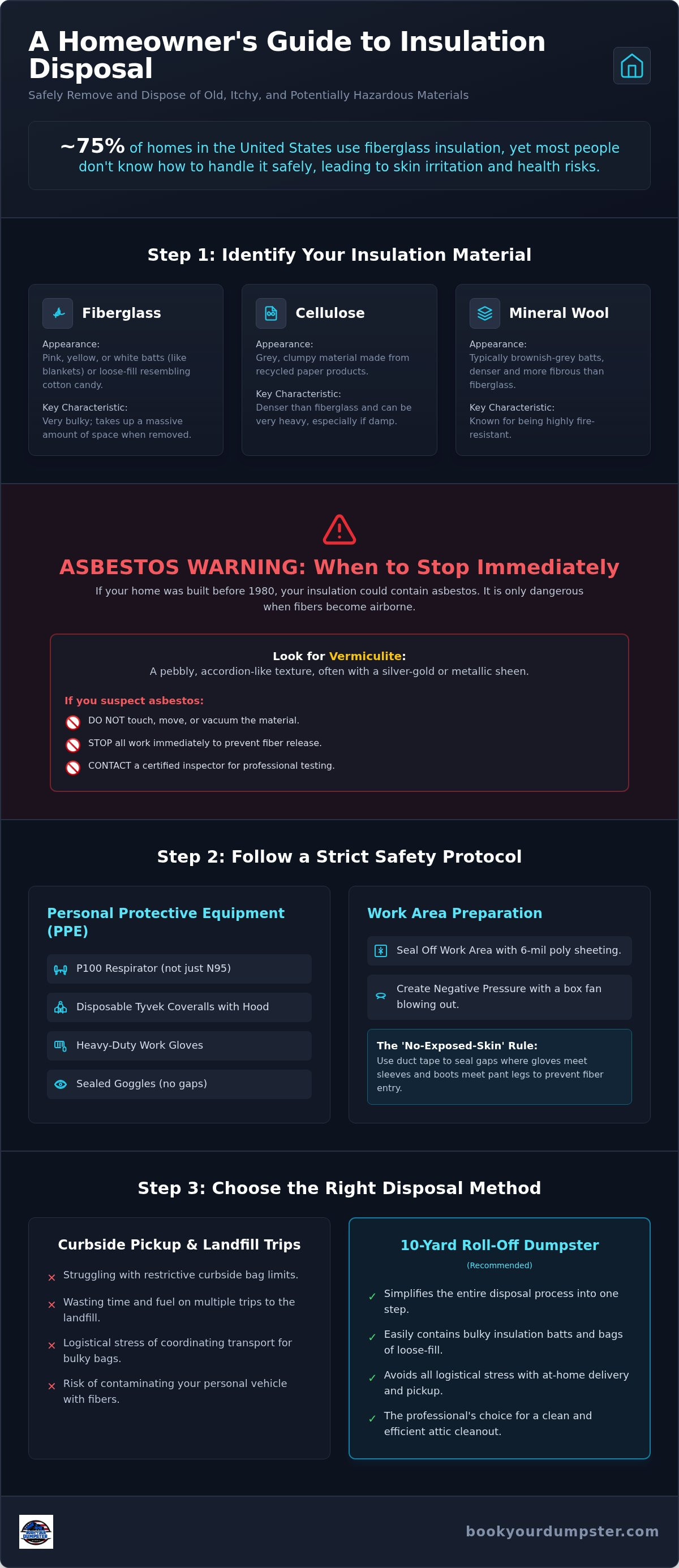
Visual cues are your best tool for identification. Fiberglass usually appears as pink, yellow, or white batts, which look like large blankets. It also comes in a loose-fill version that resembles cotton candy. Cellulose, on the other hand, is a grey, clumpy material made from recycled paper products treated with fire retardants. Mineral wool is another common type; it's typically brownish-grey, denser than fiberglass, and highly fire-resistant.
The material you find significantly impacts your disposal volume. Fiberglass batts are bulky and take up massive amounts of space in a container. Cellulose is denser and often heavier when damp. Understanding these differences helps you determine if a 10-yard dumpster from Book Your Dumpster USA is the right fit for your project or if the debris volume requires a larger size. Accurate identification is the first step in managing the logistics of disposing of old insulation material effectively.
The Asbestos Warning: When to Stop DIY
If your home was built before 1980, treat all insulation as suspect until you have it tested. Vermiculite is the primary red flag for homeowners. It has a pebbly, accordion-like texture and often features a silver-gold or metallic sheen. Because vermiculite was frequently contaminated with asbestos, the EPA's March 2024 ruling has reinforced the need for extreme caution with these materials. Asbestos is a disturbance hazard; it is only dangerous when the fibers become airborne.
Never touch, move, or vacuum suspected asbestos-containing materials (ACM). Disturbing these fibers can lead to severe, long-term health complications. If you see silver-gold pebbles, stop work immediately and contact a certified inspector in Massachusetts or New York to perform professional testing. In many jurisdictions, it is illegal for unlicensed individuals to remove asbestos. Always prioritize safety over project speed when hazardous materials are a possibility.
Essential Safety Gear and Preparation for Removal
Disposing of old insulation material is a hazardous task that demands a strict safety protocol. You can't approach this like a standard cleaning project. If you skip the right gear, you'll pay for it in physical discomfort and potential respiratory risks. High-quality protection is your only defense against the microscopic shards that become airborne the moment you disturb a single batt or handful of loose-fill material.
Your Personal Protective Equipment (PPE) checklist must be non-negotiable. Wear a P100 respirator rather than a basic dust mask; the P100 filters out finer particles that N95s might miss. Use disposable Tyvek coveralls with an integrated hood and heavy-duty work gloves. Sealed goggles are also mandatory. Standard safety glasses leave gaps at the sides where fibers can drift in, leading to painful eye irritation. Protection must be total to be effective.
Environmental control is equally vital for keeping your home habitable. Seal off the work area using 6-mil poly sheeting to prevent dust from migrating into living spaces. If you are dealing with older homes, this containment is especially critical to avoid spreading dust from asbestos-contaminated vermiculite insulation. Set up a box fan in a window blowing outward to create negative pressure. This pulls airborne fibers out of the house rather than letting them settle in your carpets or furniture.
The 'No-Exposed-Skin' Rule
Fibers find every available opening. Use duct tape to seal the gaps where your sleeves meet your gloves and where your pant legs meet your boots. This "taping in" method prevents fibers from sliding under your clothes. When the job is done, take a cold shower first. Hot water opens your pores and traps fibers inside your skin, while cold water flushes them away. Wash your work clothes separately from family laundry to prevent cross-contamination.
Pre-Removal Site Setup
Efficiency starts with a clear plan. Turn off your HVAC system completely before you start. Running the AC or heat will suck fibers into your ductwork and distribute them through every room in the house. Ensure you have adequate lighting and stable flooring; in unfinished attics, only step on the joists or lay down "walking boards" to avoid falling through the ceiling. Establish a direct "debris path" from the attic hatch to your waste container. Setting up a 10-yard dumpster close to the exit point minimizes the time you spend carrying heavy bags through the house, reducing the risk of accidental spills.
Step-by-Step Guide to Removing Old Insulation
Removing old insulation is a systematic process that requires patience and precision. You cannot simply rip out the material and hope for the best. A controlled removal prevents fibers from becoming airborne and keeps the mess contained within your work zone. Follow these steps to ensure you are disposing of old insulation material without contaminating your entire home.
Start by misting the insulation with a garden sprayer filled with water. Do not soak the material; a light dampening is enough to weigh down the dust and fibers. This is the most effective way to keep the air clear while you work. For fiberglass or mineral wool batts, roll or fold them tightly. Treat each piece like a sleeping bag, rolling it from one end to the other to minimize its volume. Use a piece of twine or tape to keep the roll compressed. This simple step can reduce the number of bags you need by nearly 30%.
If you are dealing with loose-fill cellulose or fiberglass, use a high-powered HEPA vacuum. Standard shop vacs will often blow fine particles back out through the exhaust, defeating the purpose of the cleanup. Once you have gathered the material, place it into heavy-duty 3-mil contractor bags. These bags are puncture-resistant and designed to handle the abrasive nature of insulation shards. Always double-bag the waste. This is a common requirement at many transfer stations across Illinois and New Jersey to prevent accidental spills during transport.
Bagging and Sealing Techniques
Proper sealing is just as important as the bag itself. Use the "Goose-Neck" seal for every bag. Twist the top of the bag tightly, fold the twisted section over to create a loop, and wrap duct tape around the fold multiple times. This creates a zero-leakage seal. Watch your bag weight carefully. While 3-mil bags are strong, overfilling them makes them difficult to carry and increases the risk of a tear. Keep bags at a manageable weight, typically under 40 pounds, to ensure they remain intact when you toss them into your 10-yard dumpster.
Cleaning the Subfloor
Once the bulk of the insulation is gone, the job isn't over. Residual dust, rodent droppings, and small scraps will remain on the subfloor. Use a HEPA-rated shop vac to clear the entire area. This is the perfect time to inspect for hidden issues like mold growth or pest infestations that were covered by the old layers. Check Recommended disposal options to see if your local municipality has specific rules for contaminated insulation. A thorough cleaning ensures your new insulation sits on a sterile, safe surface.
Comparing Disposal Methods: Dumpsters vs. Local Pickup
Choosing the right method for disposing of old insulation material depends entirely on your project's scale. Curbside pickup is rarely a viable option for full-scale attic renovations. Municipal waste services in cities like Queens, NY, or Boston typically limit homeowners to two or three bags per week. Leaving 50 bags of fiberglass on the curb often leads to rejected pickups and municipal fines. You need a disposal strategy that matches the high volume of debris generated during removal.
Roll-off dumpsters provide a centralized collection point that keeps your property clean. They are particularly effective for bulky fiberglass batts that don't compress well in standard bags. DIY hauling involves significant hidden costs, including truck rental insurance, mileage, and hourly gate fees at the landfill. You also risk contaminating your personal vehicle with persistent glass fibers. A dedicated waste container removes these risks and allows you to focus on the installation of new materials. Simplify your project logistics today and select a 10-yard dumpster online to manage your waste in one go.
Why Insulation Volume Outpaces Weight
Insulation is deceptively bulky. It is lightweight but consumes massive amounts of space, a phenomenon known in the industry as the "fluff factor." A standard pickup truck bed holds approximately 2.5 cubic yards of debris. If your project generates 10 cubic yards of waste, you face five separate trips to a transfer station. Calculating volume correctly is critical. A typical 1,000-square-foot attic with six inches of insulation can produce over 18 cubic yards of loose material. Over-the-rim loading is a common mistake that leads to safety hazards during transport and extra fees. Plan for more space than you think you need to ensure every bag fits securely.
Navigating Local Regulations
Regulations change based on your zip code. In Illinois and Massachusetts, insulation is generally treated as construction and demolition (C&D) debris. However, if the material shows signs of mold or pest infestation, it may be reclassified as "special waste" requiring different disposal protocols. Landfills in the Chicago or Boston areas have specific intake rules for fiberglass versus cellulose. NYC residents must also account for street permit requirements when placing a container on public property. Verify these details with your local building department or waste carrier to avoid project delays and ensure full compliance with regional environmental laws.
Simplifying Cleanups with Roll-Off Dumpster Rentals
Finalizing your project requires a rapid transition from labor to logistics. Once you've completed the heavy lifting involved in disposing of old insulation material, the focus shifts to efficient removal. A roll-off container acts as your project's command center, preventing bags from piling up and creating secondary hazards on your lawn or driveway. It is the most direct route to a finished job site, ensuring that the fibers you worked so hard to contain stay contained until they reach the landfill.
A 10 Yard Dumpster is the specialized choice for most residential attic projects. It handles the significant volume of insulation without occupying excessive space in a standard driveway. For larger renovations involving multiple layers or full-home wall cavities, a 20 Yard Dumpster provides the necessary breathing room. Partnering with Book Your Dumpster USA means you get a reliable tool designed to handle the specific bulk of insulation waste. Select your dumpster size online to secure your delivery date and maintain your project's momentum without the stress of multiple haul-away trips.
Choosing the Right Dumpster Size
Selecting the correct container size prevents project delays and eliminates the risk of paying for unused capacity. Use a 10-yard container for small to mid-sized attics where the debris is bulky but lightweight. If your project includes removing old batts from every wall in a multi-story home, the 20-yard option is the safer bet to avoid overfilling. We specialize in these sizes because they balance high-volume capacity with a manageable footprint. Consult with our team to ensure your choice accounts for the expansion of loose-fill material once it is removed from compressed spaces. We help you navigate the logistics of disposing of old insulation material so you don't end up with an overflowing bin that cannot be safely transported.
Booking Your Rental in 3 Easy Steps
Our digital-first booking system allows you to schedule your rental in minutes. We provide transparent pricing across NY, NJ, IL, and MA, ensuring you have a clear understanding of your costs before the container arrives. Start by choosing your size and entering your service area on our platform. Next, pick a delivery date that aligns with your removal schedule. Finally, identify a flat, accessible placement spot on your property. Aim for a location that creates the shortest possible path from your attic hatch to the container. This simple planning step reduces physical strain and minimizes the chance of bag tears during transit. Once your project is complete, schedule your pickup through the same portal for a fast, no-nonsense conclusion to your renovation.
Take Control of Your Attic Cleanup
Successfully disposing of old insulation material requires a balance of rigorous safety and smart logistics. You now have the strategies to identify hazardous materials, protect yourself with professional-grade PPE, and manage the high volume of debris that insulation creates. By following a systematic removal process and sealing your waste in heavy-duty contractor bags, you prevent airborne fibers from compromising your home's air quality. The final step is moving that bulk off your property without the stress of multiple landfill trips or rejected curbside pickups.
We provide expert service across NY, NJ, IL, and MA to help you cross the finish line. Our reliable 10-yard dumpsters are the ideal size for residential insulation projects, offering a compact footprint with sufficient volume for your bagged waste. We pride ourselves on no-nonsense, transparent pricing and a streamlined booking process that respects your time. Book your roll-off dumpster online today for fast insulation disposal and clear the way for a more energy-efficient home. You've done the hard work of removal; let us handle the heavy lifting so you can enjoy a cleaner, safer space.
Frequently Asked Questions
Can I put old fiberglass insulation in my regular trash can?
No, you shouldn't put insulation in your regular trash can. Most curbside services have strict limits on the number of bags they'll accept and often reject bulky construction materials. Standard residential bins aren't designed for the volume produced during a renovation. Attempting this often results in missed pickups and local fines. Use a dedicated roll-off container to ensure your waste is handled correctly by professional haulers who follow local disposal regulations.
Is fiberglass insulation considered hazardous waste in New Jersey?
Fiberglass is not classified as hazardous waste in New Jersey. It is treated as construction and demolition debris. However, New Jersey transfer stations require it to be double-bagged in heavy-duty plastic to prevent airborne fibers from escaping during transport. Always check with your local municipality for specific bagging requirements. If the insulation is contaminated with mold or animal waste, it may require disposal as special waste at a designated facility.
How many bags of insulation will fit in a 10-yard dumpster?
A 10-yard dumpster typically holds between 50 and 70 standard 3-mil contractor bags. This number varies based on how tightly you roll the batts and how much air you squeeze out of the bags before sealing them. For a small to mid-sized attic, this size is usually sufficient. If you have loose-fill material that hasn't been compressed, your bag count will increase, potentially requiring a larger 20-yard container to avoid overfilling.
Do I need a special permit to dispose of insulation in Illinois?
You generally don't need a permit for the insulation itself in Illinois, but you might need a permit for the dumpster. If you place a roll-off container on a public street or sidewalk in Chicago, a city permit is mandatory. Always verify local zoning laws before scheduling your delivery. For the material, Illinois landfills classify non-asbestos insulation as general debris, though specific sites may have their own intake restrictions for loose fibers.
What is the safest way to dispose of wet or moldy insulation?
Seal wet or moldy insulation in 6-mil poly bags immediately at the source. Moisture makes insulation heavy and promotes fungal growth, which can spread spores through your home if left uncovered. Don't use a vacuum on moldy material unless it has a HEPA filter. When disposing of old insulation material that is contaminated, notify your waste provider. Some facilities charge a surcharge for contaminated loads because they require immediate burial.
Can old cellulose insulation be recycled or composted?
No, you cannot recycle or compost old cellulose insulation. Although it's made from recycled paper, it's heavily treated with chemical fire retardants and pest-resistant borates. These additives make the material unsuitable for standard recycling streams or organic composting. Once removed, it must be sent to a landfill. Properly disposing of old insulation material means acknowledging that these chemical treatments are necessary for home safety but make the material permanent waste.
How do I know if my old insulation contains asbestos?
You can't confirm asbestos presence by sight alone. If you see pebbly, accordion-like vermiculite insulation, assume it contains asbestos until a professional lab proves otherwise. Homes built before 1980 are at the highest risk. Don't disturb the material to take a sample yourself. Contact a certified asbestos inspector to collect a sample safely. They'll use specialized equipment to ensure no fibers are released into your living space during the testing process.
What should I do if I accidentally touch fiberglass insulation?
Wash the affected area with cold water and mild soap immediately. Cold water keeps your pores closed, allowing the shards to wash off the surface of your skin. Avoid using hot water, as it opens your pores and traps the glass fibers deeper inside, causing more intense itching. Don't rub or scratch the skin, which can push fibers further in. If irritation persists or you develop a rash, seek medical attention to prevent infection.


