Tearing out old insulation is less of a cleaning project and more of a hazardous containment operation. You likely dread the inevitable skin irritation from fiberglass or the nagging worry that your older home hides asbestos behind the drywall. It's a valid concern because handling these materials incorrectly can lead to long-term respiratory issues or hefty fines from local code enforcement. We understand that disposing of old insulation safely requires a balance of personal protection and strict adherence to waste regulations.
You want a clean, safe space without the logistical headache of navigating landfill restrictions on your own. This guide provides the exact steps needed to identify, remove, and manage various types of insulation without compromising your health. We'll walk you through the necessary safety gear, proper bagging techniques, and how to select the right 20 yard or 30 yard dumpster to keep your project moving efficiently. From residential attics to commercial renovations, the goal is a hazard-free environment and a job done right the first time. Follow these steps to clear out the old material and prepare your space for a fresh start.
Key Takeaways
- Identify your material types and recognize the red flags of vermiculite to avoid accidental asbestos exposure during removal.
- Protect your health by using a dual-cartridge P100 respirator and full-body Tyvek suits to prevent fiber inhalation and skin irritation.
- Master the containment process by misting materials with water and using heavy-duty 3-mil bags for disposing of old insulation safely.
- Navigate 2026 waste regulations by classifying insulation as construction debris and verifying local landfill restrictions in your specific state.
- Streamline your project logistics by matching your debris volume to the correct disposal solution, such as a 10 yard dumpster for residential attic cleanouts.
Identifying Your Insulation: Safety Starts with Knowledge
Don't touch a single batt until you know exactly what material you're dealing with. Identification is the first line of defense for your health. Disturbing old insulation releases microscopic particulates into the air, where they stay suspended for hours. If you breathe these in, they can cause permanent lung damage or severe allergic reactions. Disposing of old insulation safely requires you to look for specific visual cues and, in many cases, check the age of your property. If your home was built before 1980, treat all insulation as potentially containing asbestos until a certified lab test proves otherwise.
The danger of disturbing unknown insulation is significantly higher than leaving it alone. When these materials are left undisturbed, the fibers remain trapped. Once you start pulling, shoveling, or bagging, you create a cloud of debris that can migrate through your HVAC system to every room in the house. Always prioritize containment over speed during this initial phase.
Fiberglass vs. Cellulose: What’s in Your Attic?
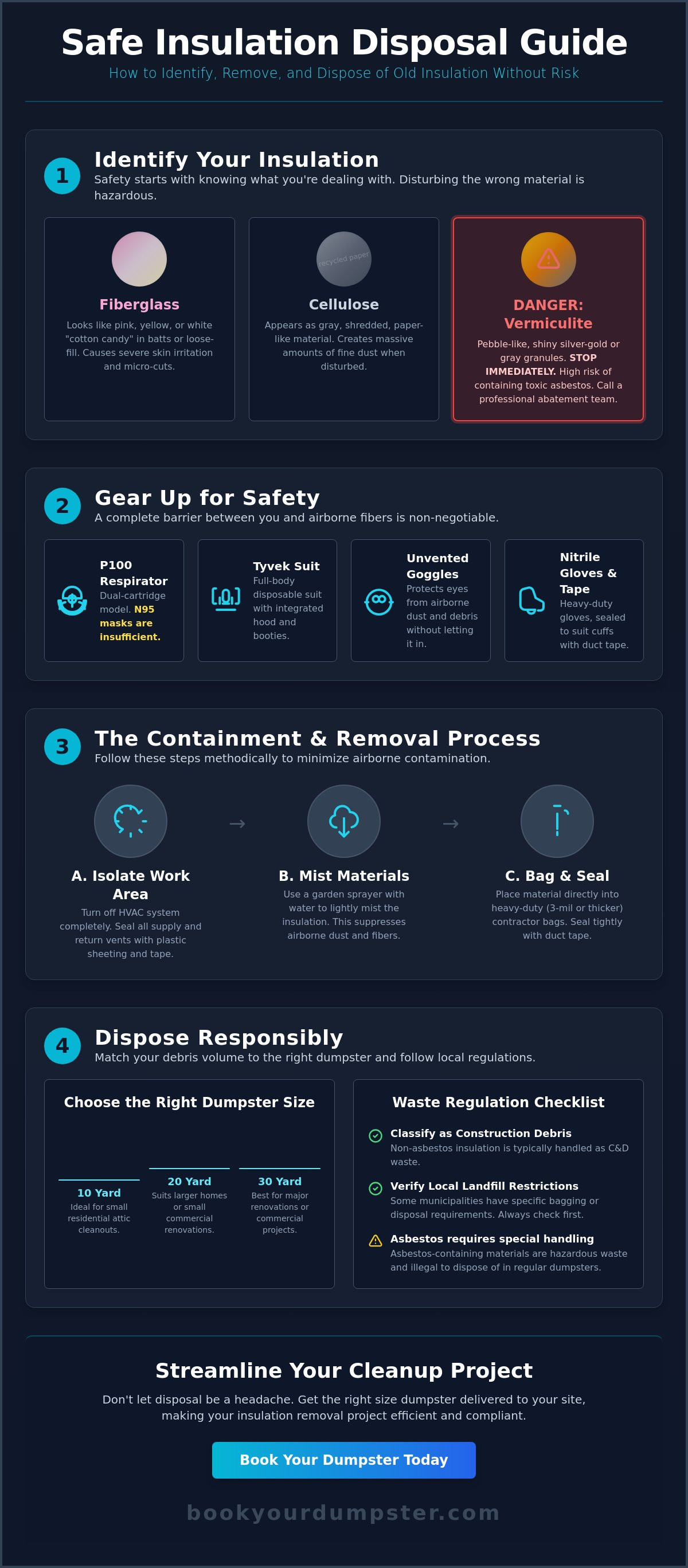
Fiberglass is the most recognizable material. It typically looks like pink, yellow, or white cotton candy. You'll find it in long blankets called batts or as loose-fill material blown into corners. These are made of tiny glass shards. They're incredibly itchy and can cause micro-cuts on your skin. Blown-in cellulose is a different beast. It looks like gray, shredded recycled paper. While it's organic, it's often treated with fire retardants and produces massive amounts of dust when moved. You might also find mineral wool, which is denser and usually a duller gray or brown. Familiarizing yourself with these types of building insulation allows you to prepare the right containment tools before the dust starts flying.
The Asbestos Warning: When to Call a Pro
Vermiculite insulation is the most dangerous material you might encounter. It doesn't look like fiber at all. It looks like small, pebble-like granules that are often shiny, silver-gold, or gray. Some pieces may have a distinct accordion-like shape. If you spot this material, stop your project immediately. Vermiculite often contains tremolite asbestos, which is highly toxic when airborne. Do not attempt to vacuum it or sweep it up. DIY removal of asbestos-containing materials is strictly regulated and often illegal in jurisdictions like New York. Disposing of old insulation safely often means recognizing your limits and calling a professional abatement team. If you're unsure, use a "Stop and Test" protocol. Wear a P100 respirator, lightly mist a small area with water, place a tiny sample into a high-quality sealable bag, and send it to a lab. It's better to wait three days for a test result than to contaminate your entire home.
Essential Safety Gear and Work Zone Preparation
Preparation is the difference between a successful project and a week of respiratory distress. Don't cut corners here. While the Department of Energy's guide to insulation classifies these materials by their thermal properties, you must treat them as physical irritants. Disposing of old insulation safely requires a complete barrier between your body and the debris. Once you begin moving batts or loose-fill, fibers will saturate the air. Without the right gear, these microscopic shards will settle in your lungs and on your skin.
The PPE Checklist for Insulation Removal
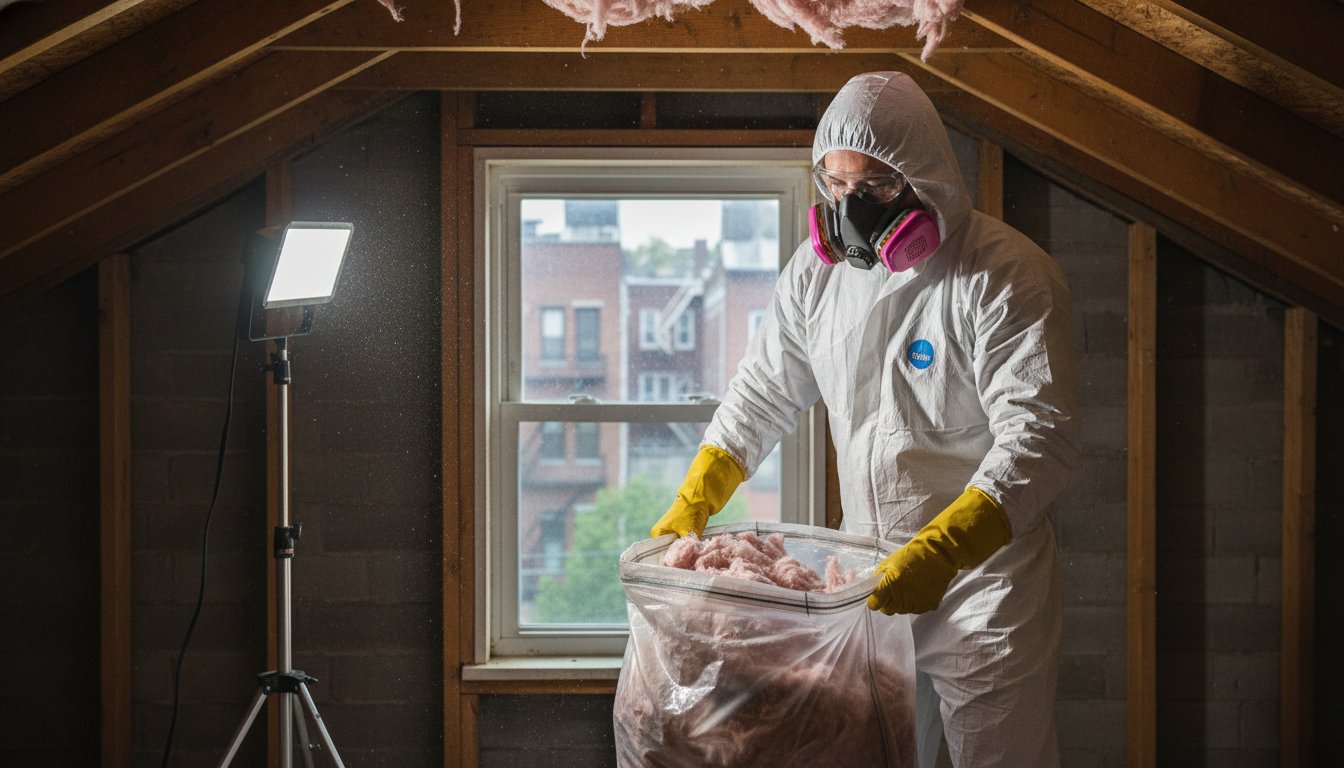
Standard N95 masks are insufficient for this volume of dust. Use a dual-cartridge P100 respirator to filter out 99.97% of airborne particulates. Protect your eyes with unvented goggles. Vented goggles allow dust to swirl inside the lens, causing immediate irritation. Assemble these specific items before starting:
- Disposable Tyvek suit: Choose a version with an integrated hood and booties.
- Nitrile gloves: Use heavy-duty versions that resist tearing.
- Duct tape: Tape your suit cuffs to your gloves and work boots to seal out dust.
- Sturdy work boots: Ensure they have good traction for attic joists.
After you finish the job, take a cold shower to keep your pores closed and wash away any stray fibers before they get trapped in your skin.
Containing the Dust: Setting Up Your Home
Isolate the work area before you pull the first batt. Turn off your HVAC system entirely and tape over the supply and return vents in the work zone. This stops the furnace fan from pulling fibers into the ductwork and spreading them to other floors. Line the floor and walls leading to the exit with 6-mil poly sheeting. This creates a smooth, easy-to-clean path for moving bags. Establish a decontamination zone at the entrance where you can remove your outer suit before entering the rest of the house. Never use a standard shop-vac for this project. Only use a vacuum equipped with a certified HEPA filter to ensure the exhaust doesn't blow fine dust back into the room. Having a dumpster rental staged outside helps you maintain this containment. Move sealed bags directly from the work zone to the container to keep your living space clear. Disposing of old insulation safely depends on this strict containment logic.
The Removal Process: Step-by-Step Containment
Once your PPE is secure and the area is sealed, begin the removal. Start by misting the material lightly with water using a garden sprayer. This prevents dust from becoming airborne the moment you touch it. Don't soak the material; just dampen the surface enough to weigh down the fibers. Wet insulation is heavy and difficult to manage, but a light mist keeps the air clear. This is a critical step for disposing of old insulation safely. Work in small sections to maintain control over the dust levels in your immediate breathing zone.
Double-bagging is mandatory for this project. Use heavy-duty 3-mil contractor bags for the first layer. Place these inside a second bag before moving them out of the work zone. This redundancy prevents punctures from stray nails or splinters during transport. Keep your 20 yard or 30 yard dumpster positioned as close to the exit as possible to minimize the distance you carry the waste.
Handling Fiberglass Batts and Rolls
Start from the furthest corner of the attic or crawlspace and work toward your exit point. This ensures you aren't crawling over disturbed material or loose fibers as you finish the job. Roll the batts tightly like a sleeping bag rather than folding them. Avoid compressing or squashing the material. Crushing fiberglass releases a massive cloud of glass shards that can bypass even high-quality seals. Place each roll immediately into a bag. Industry leaders provide specific guidance on how to safely dispose of fiberglass insulation, emphasizing that immediate containment is the only way to prevent cross-contamination. Secure the bag openings with a "gooseneck" tie. Twist the bag neck, fold it over, and wrap it tightly with duct tape for an airtight seal.
Managing Blown-in Insulation Debris
Blown-in cellulose or mineral wool requires a "bag-as-you-go" strategy. While high-powered DIY vacuums are available for rent, they often clog or leak fine dust back into the air if not maintained perfectly. Manual shoveling into bags is often safer and more controlled for residential projects. Use a wide scoop shovel and fill bags directly in the work zone. Never drag open bags through the house. Move each sealed, double-bagged unit along your plastic-lined path directly to the container. Only after the bulk material is gone should you use your HEPA vacuum. Clean the joists and floorboards thoroughly. Disposing of old insulation safely concludes with a final inspection of the work area to ensure no stray fibers remain before you pull up the poly sheeting.
Waste Regulations and Disposal Methods in 2026
Don't assume your local curbside collector will take your insulation. Most municipal waste programs strictly classify insulation as construction and demolition (C&D) debris rather than standard household trash. This distinction is vital for disposing of old insulation safely because C&D waste requires specialized handling at specific facilities. If you place 50 bags of fiberglass on the curb without a permit or prior arrangement, you'll likely face a "notice of violation" and a fine. Landfills have become increasingly strict about how they accept these materials to prevent airborne fibers from contaminating the surrounding environment.
Plan for significant volume. A standard 1,200-square-foot attic can easily generate between 40 and 60 large contractor bags of material once it's pulled and bagged. This volume is often more than a standard residential trash service can handle in a single week. Understanding your local classification is the only way to avoid logistical delays or legal penalties during your renovation.
Dumpster Rental vs. Local Landfill Hauling
Hauling this volume to a transfer station yourself is exhausting and often inefficient. Many municipal dumps reject loose insulation or bags that aren't in approved, sealed containers. If you choose to haul it yourself, expect to make four to six trips in a standard pickup truck just to clear a medium-sized attic. Renting a container allows you to stage the waste in one place, keeping your driveway and yard clean. For larger residential or commercial projects, read our guide on construction debris removal to understand the full scope of logistics and weight limits. Utilizing a 20 yard or 30 yard dumpster ensures you have enough capacity for the expanded volume of bagged insulation without overfilling the container.
Local Regulations in NY, NJ, and MA
Regulations vary by state and city. New York City has zero tolerance for "dust-generating" materials. You must ensure every bag is airtight and double-bagged before it leaves the work zone. In Illinois, commercial-scale disposal often requires a waste manifest to track the material from the site to the landfill. Massachusetts has specific material bans that may prevent certain types of insulation from entering standard waste streams if they're mixed with recyclable materials. Always check with your local Department of Sanitation before you start the removal process. Disposing of old insulation safely means staying compliant with these regional rules to ensure your project remains on schedule. To manage your waste efficiently and stay within local guidelines, book your dumpster rental online and let the professionals handle the final transport.
Streamlining Cleanup with Book Your Dumpster
The final stage of disposing of old insulation safely is the most visible. After hours of bagging and containment, you're left with a mountain of debris that cannot sit in your garage or on your lawn. Insulation fibers are resilient. If a bag tears while sitting outside, wind and rain can redistribute those irritants across your property. Using a dedicated roll-off container ensures that every bag is contained from the moment it leaves your attic until it reaches the landfill. This approach eliminates the need for multiple trips to a transfer station and keeps your work site professional and organized.
Our team provides professional placement to minimize the physical toll of the project. Tell us exactly where you want the container. We'll position it as close to your exit point as possible. This reduces the distance you carry heavy, double-bagged waste, which is vital for maintaining your energy during a long cleanup day. Once the job is done, schedule your pickup immediately through our digital platform. We'll haul the waste away, ensuring your project concludes without lingering clutter or fiber accumulation.
Choosing the Right Size for Insulation Waste
Insulation is deceptive. It's light, but it's incredibly high-volume. Even when compressed, the trapped air in the fibers and the bulk of the contractor bags require more cubic yardage than you might expect. For a standard residential attic project, a 10 yard dumpster rental is usually sufficient to handle 40 to 50 bags. However, if you're tackling a full home renovation that involves removing wall insulation and attic batts, we recommend a 20 yard dumpster. You can maximize your available space by stacking the bags tightly in rows and layers rather than tossing them in randomly. This organization prevents air pockets and ensures you get the full value out of your rental.
The Book Your Dumpster Advantage
We've modernized the disposal process to match the urgency of your renovation. Our online booking system allows homeowners and contractors in New York, New Jersey, and Illinois to secure a container in minutes. We prioritize transparency and punctuality because we know that a delayed dumpster can stall an entire project. There are no hidden fees or opaque pricing structures; what you see during booking is what you pay. Disposing of old insulation safely is a complex task, but the final removal shouldn't be. Book your roll-off dumpster today and simplify your insulation removal with a partner that respects your schedule and your property.
Clear Your Workspace and Protect Your Health
Disposing of old insulation safely is a serious undertaking that requires strict adherence to containment and personal protection. You've learned how to distinguish between common materials and the red flags of asbestos; which is the most critical step in any pre-1980 renovation. By utilizing P100 respirators and the misting technique, you've successfully managed the physical hazards of fiberglass and cellulose dust. Now it's time to remove the bagged debris from your property and finalize your restoration project.
We provide the specialized roll-off containers you need to handle high-volume insulation waste. Serving New York, New Jersey, Illinois, Massachusetts, and San Francisco, we offer 10, 20, 30, and 40-yard containers to match the scale of your attic or commercial cleanout. Our streamlined online booking system takes the stress out of logistics. Rent a dumpster for your insulation project at Book Your Dumpster USA and get back to a clean, safe environment. You've done the hard work of removal; let us handle the final transport and disposal. Finish your project with confidence and move forward with your home improvements today.
Frequently Asked Questions
Can I put old insulation in a regular dumpster?
Yes, you can use a roll-off dumpster for most insulation types. Standard residential trash cans aren't designed for construction debris. Most municipalities will refuse to pick up loose or bagged insulation left at the curb without a special bulk waste permit. Using a 10 or 20 yard dumpster ensures all material is contained in one place, preventing fiber drift across your neighborhood and keeping your project site clean.
Is fiberglass insulation considered hazardous waste?
Fiberglass is classified as a synthetic mineral fiber and is generally non-hazardous. It doesn't require the same disposal manifests as chemical waste or asbestos. However, disposing of old insulation safely still requires you to follow strict bagging protocols. The physical irritation caused by the glass shards makes it a nuisance material that landfills require you to secure in heavy-duty bags before the container arrives at the facility.
What should I do if I find mold on my old insulation?
Treat moldy insulation as a dual hazard. Mist the affected area with a bleach solution or water to keep both mold spores and insulation fibers from becoming airborne. Bag the material immediately in 3-mil contractor bags. If the mold covers a large area, consult a professional to ensure the underlying structure isn't compromised. Your priority is stopping the spread of spores into your home's air supply.
How many bags of insulation will fit in a 10-yard dumpster?
You can typically fit 40 to 50 large, 42-gallon contractor bags in a 10-yard dumpster. This estimate depends on how much you compress the material before sealing the bags. Stacking bags in organized rows rather than throwing them in haphazardly will help you maximize the space. If your project involves a full attic over 1,500 square feet, consider stepping up to a 20 yard container to avoid overfilling.
Do I need a permit to dispose of insulation in Queens or San Francisco?
You typically don't need a specific waste permit for insulation, but you must follow local placement rules. In Queens and San Francisco, placing a dumpster on a public street requires a right-of-way or encroachment permit. Always check your city's Department of Public Works website before delivery. If the container stays on your private driveway, you won't need a permit for the project.
Can fiberglass insulation be recycled in 2026?
Most fiberglass insulation isn't recyclable through standard residential programs in 2026. While some industrial facilities can process clean off-cuts from new construction, old insulation is often contaminated with dust, pest debris, or mold. This contamination makes it unsuitable for the recycling process. Landfilling in a roll-off container remains the most efficient and legal method for disposing of old insulation safely at the end of its useful lifecycle.
What happens if I accidentally touch fiberglass insulation with bare skin?
Touching fiberglass with bare skin causes tiny glass shards to lodge in your pores, resulting in redness and intense itching. Don't rub the area, as this pushes the fibers deeper. Rinse the skin with cold water first to keep your pores closed and wash away surface fibers. Follow this with a warm shower and plenty of soap. Using a washcloth can help lift the remaining shards from the skin surface.
How do I know if my old insulation contains asbestos?
You can't definitively identify asbestos by sight alone, with the exception of vermiculite. If your insulation looks like small, pebble-like granules with a metallic sheen, assume it contains asbestos immediately. For other materials in homes built before 1980, the only way to be sure is through lab analysis. Collect a small sample while wearing a P100 respirator and send it to a certified testing facility before starting your attic removal.