A 10 yard bin might look large enough for a bathroom gut, but the weight of old plaster and tile can quickly exceed standard capacity. Interior demolition is a game of density rather than just volume. Choosing the wrong dumpster for interior demolition leads to work delays, blocked driveways, and expensive overage fees. You need a disposal plan that matches the actual weight of your debris to keep the project moving.
Managing a renovation is difficult enough without logistical headaches. You want predictable costs and a container that fits your site perfectly. This guide teaches you how to select the ideal dumpster size for your specific materials, from drywall to heavy masonry. We'll walk through placement tips for tight urban areas and explain how to manage heavy loads to avoid extra charges. Read on to learn how to streamline your debris management and keep your job site clear from start to finish.
Key Takeaways
- Match your container size to the room's square footage using our professional sizing guide for 10, 20, 30, and 40 yard options.
- Distinguish between volume and density to avoid unexpected overage fees from heavy debris like plaster or ceramic tile.
- Select the ideal dumpster for interior demolition to ensure your waste management keeps pace with your crew's speed.
- Navigate urban logistics by identifying when you need a street permit for placements in tight city driveways or public roads.
- Use a streamlined booking process to schedule reliable delivery and pickup without the typical logistical back and forth.
Understanding the Unique Demands of Interior Demolition Waste
Interior gutting generates a specific type of Demolition waste that differs significantly from exterior site clearing. While exterior work often involves massive quantities of concrete, brick, and roofing, interior projects produce a diverse mix of lighter, bulkier materials and high-density debris. You can't treat a kitchen remodel like a backyard shed removal. Successful project management starts with recognizing that a dumpster for interior demolition must handle everything from hollow-core doors to heavy cast iron tubs. This subset of construction waste requires careful planning to avoid site clutter, safety hazards, and logistical delays that can stop a crew in its tracks.
Density is your biggest hurdle. In a standard renovation, volume is often secondary to weight. A 20 yard dumpster might look half empty, but if it's filled with old plaster and lath, you might already be at your weight limit. Separating materials at the source isn't just about being green; it's a strategy to keep your costs predictable and your workflow steady. Keeping heavy tile separate from light insulation ensures you don't pay premium prices for mixed loads. Efficient debris management keeps your crew moving, your site safe, and your budget intact throughout the entire gut renovation process.
Common Interior Demolition Materials
Drywall and plaster are the primary staples of wall removal. Drywall is light but bulky, while plaster is deceptively heavy due to the wooden lath and mortar layers. Flooring introduces high-density challenges, especially ceramic tile and concrete backer board, which act as the silent killers of dumpster budgets. Finally, kitchen and bathroom gutting involves odd-shaped fixtures and cabinetry that can create large air pockets if not broken down and stacked strategically.
Why Standard Trash Services Fail Demo Contractors
Don't rely on local curbside pickup for renovation-scale debris. Most municipal services have strict limits on weight that a single afternoon of demolition will easily exceed. In cities like Chicago and New York, local ordinances mandate specific disposal paths for C&D waste. Professional roll-off dumpsters for interior demolition from Book Your Dumpster USA provide a centralized, legal disposal point that keeps your job site clear and compliant.
Sizing Your Dumpster for Interior Demolition Projects
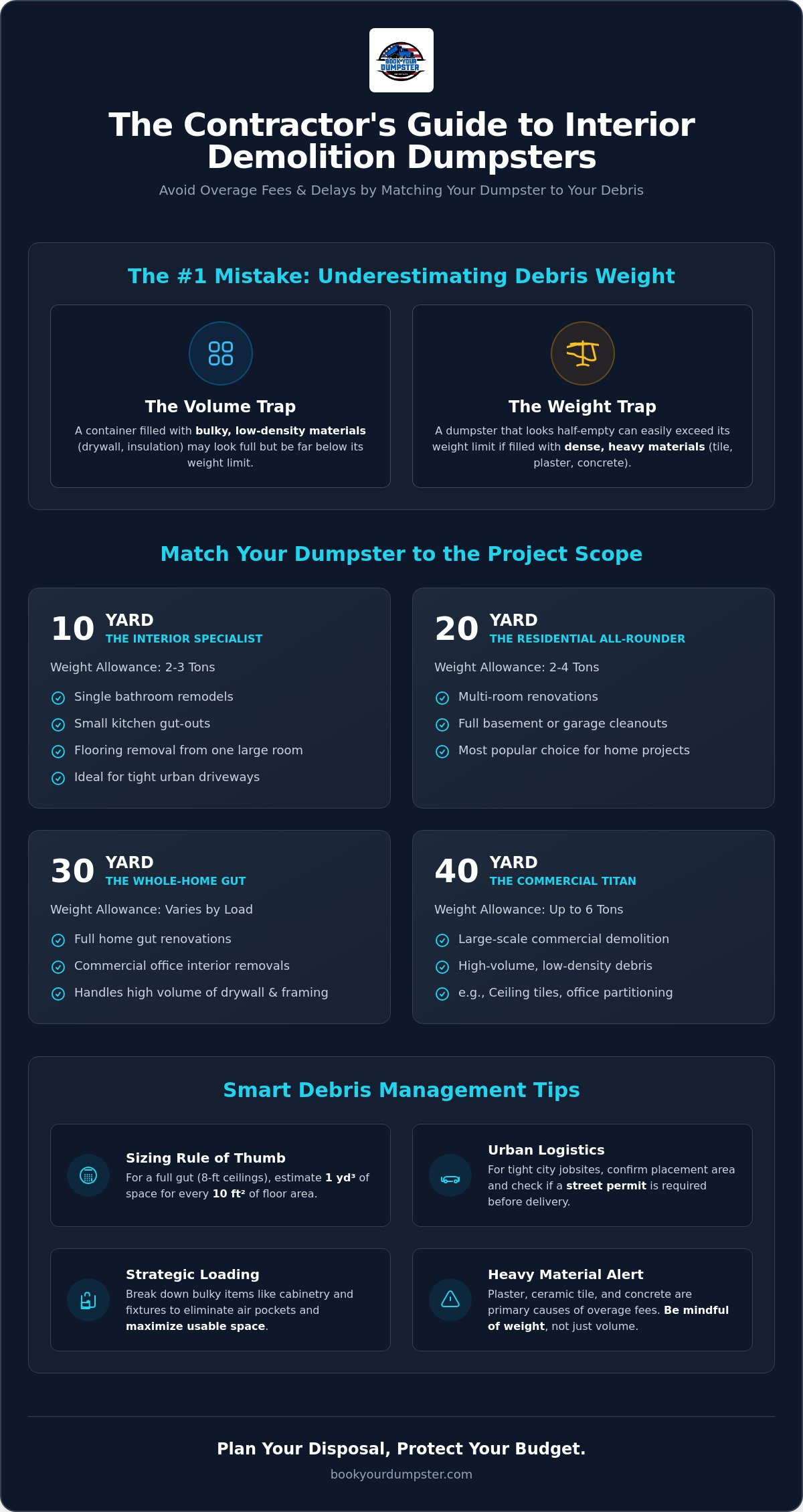
Choose your container size based on the scope of the gut, not just the square footage of the building. Selecting the wrong dumpster for interior demolition often leads to two problems: paying for empty space or facing work stoppages when a bin overflows mid-day. We offer four standard sizes to handle different scales of debris: 10, 20, 30, and 40-yard containers. Each size has a specific weight allowance, which is critical for staying within budget. While a 10-yard bin typically includes 2 to 3 tons of disposal, a 40-yard unit can handle up to 6 tons of debris.
A reliable rule of thumb is to estimate one cubic yard of dumpster space for every 10 square feet of floor space being demolished. This assumes a standard 8-foot ceiling and a full gut to the studs. Following guidelines for the Sustainable Management of Construction and Demolition Materials means planning your waste stream before the first sledgehammer swings. If your site has limited space, consider an "empty-and-return" strategy. This involves using a smaller container that we swap out immediately once filled, keeping your project moving without blocking site access.
The 10 Yard Dumpster: The Interior Specialist
This size is the professional standard for targeted room demos. It's ideal for bathroom remodels, small kitchen guts, or removing flooring from a single large room. Because it has a compact footprint, it fits easily into tight urban driveways in cities like San Francisco or Queens where space is a premium. The 10-yard dumpster is the primary choice for residential interior renovations under 500 square feet. You can view our dumpster sizing chart to confirm the exact dimensions for your driveway.
When to Scale Up: 20 and 30 Yard Containers
Step up to a 20-yard container for multi-room renovations or full basement cleanouts. It's the most popular choice for residential projects because it balances a manageable footprint with a 2 to 4-ton weight capacity. For whole-home gutting or commercial office interior removals, the 30-yard dumpster becomes necessary. It handles the higher volume of drywall and framing without requiring constant swaps. Reserve the 40-yard container for large-scale commercial demolition where you're dealing with high-volume, low-density debris like ceiling tiles and extensive office partitioning.
Managing Weight Limits for Plaster, Tile, and Flooring
Volume is a visible metric, but weight is the hidden cost of any renovation. When you order a dumpster for interior demolition, you're paying for a specific weight allowance, not just the metal box. A 20 yard container may have plenty of physical space left, but if you've loaded it with three tons of old plaster, you've reached your limit. Exceeding these ton limits results in overage fees that typically range from $40 to $100 per extra ton. Don't let a "silent killer" like high-density debris ruin your project budget.
Avoid filling large 30 or 40 yard dumpsters entirely with heavy flooring or masonry. These containers are designed for bulky, light items like cabinets and drywall. If you fill a 40 yard bin with ceramic tile, the truck won't be able to lift it, and it will be illegal to transport on public roads. Use this material weight guide to plan your loads:
- Drywall (1/2 inch): Approximately 1.6 lbs per square foot.
- Plaster and Lath: Approximately 8 to 10 lbs per square foot.
- Ceramic Tile: Approximately 4 to 5 lbs per square foot (excluding the mortar bed).
- Hardwood Flooring: Approximately 3 to 4 lbs per square foot.
The Plaster and Tile Weight Trap
Older homes built before the 1950s often feature lath and plaster walls. This material is significantly denser than modern drywall. A standard 5x8 bathroom gut involving floor-to-ceiling tile and plaster walls can easily generate over 1.5 tons of debris on its own. If your project involves these materials, use a smaller 10 or 20 yard dumpster for interior demolition to prevent accidental overloading. Distribute the heavy debris evenly across the floor of the container rather than piling it in one corner. This ensures the weight is balanced for a safe and successful pickup.
Avoiding Overage Fees and Overload Hazards
Safety is just as important as your budget. Overweight dumpsters create massive strain on hydraulic systems and pose risks during transit. Following OSHA demolition safety standards requires a clear plan for material handling and disposal to prevent job site accidents. Monitor your fill level daily. If the debris consists of heavy flooring or plaster, stop filling once you reach the halfway mark and call for a swap. Proactive management keeps your costs predictable and your job site compliant with local hauling regulations.
Logistics and Staging for Urban Demolition Sites
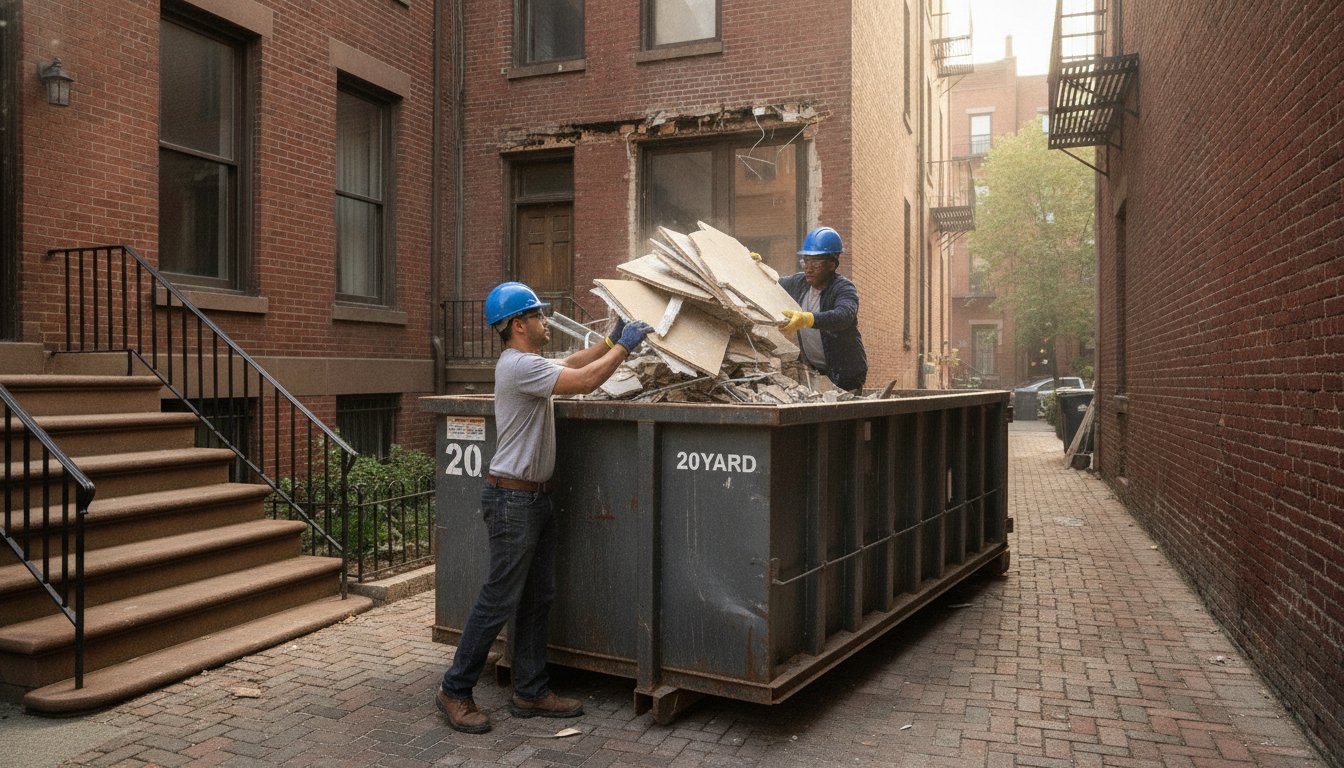
Urban demolition requires precision and foresight. In cities like Chicago, Boston, or New York, you don't have the luxury of a wide-open job site. Street width, low-hanging overhead wires, and tight property lines dictate your logistical strategy. A dumpster for interior demolition must be placed exactly where your crew can reach it without blocking pedestrian traffic or violating municipal codes. Precise placement saves hours of labor and prevents neighbor complaints that can trigger city inspections. Clear the area of vehicles and debris before the truck arrives to ensure a seamless drop-off.
Communication with the driver is your most valuable tool for tight-access sites. Provide specific instructions regarding gate codes, preferred orientation, or hidden underground utilities like septic tanks or sprinkler lines. A professional driver can maneuver a roll-off into narrow alleys or driveways if they have the right information upfront. If the site is too restricted for a standard truck, consider using a smaller 10 yard bin to maintain maneuverability. Don't leave placement to chance; mark the spot with cones or chalk to ensure the driver knows exactly where the container needs to sit.
Navigating Local Regulations and Permits
Check your local ordinances before the dumpster arrives. If you can't fit the bin on a private driveway, you'll likely need a street permit. In states like Massachusetts and New Jersey, these requirements vary by municipality. Costs for these permits often range from $10 to $100 depending on the duration and location. Usually, the contractor handles the permit as part of the job setup, but homeowners should verify this to avoid fines. For a deeper dive into compliance and waste management, see The Ultimate Guide to Construction Debris Removal in 2026.
Staging for Efficiency: From the Inside Out
Efficiency starts inside the building. Use debris chutes for second-story guts to move waste directly into the bin. This minimizes dust and keeps hallways clear for the crew to move safely. Protect your surfaces. Place plywood or specialized boards under the dumpster wheels to prevent driveway cracking or sidewalk damage from heavy interior demo loads. Scheduling "empty-and-return" cycles is vital for high-volume urban jobs. Don't wait until the bin is overflowing to call for a swap. A full dumpster stops your demo crew, and in a tight city space, you can't just pile debris on the curb. Schedule your next delivery online to keep your job site moving without delay.
Book Your Dumpster USA: The Professional Demo Partner
Book Your Dumpster USA understands that interior demolition is a high-velocity trade. You don't have time to haggle over hidden fees. You can't wait for a callback while your crew stands idle. We provide a full range of container sizes to match any project scale. Our inventory includes 10, 20, 30, and 40-yard dumpsters ready for immediate dispatch. We serve the logistical hubs of New York, New Jersey, Illinois, and Massachusetts. This local presence ensures we understand the specific street permit requirements and disposal regulations of your region.
Transparency is our baseline. We prioritize pricing integrity and clear weight limits. This allows you to calculate your project overhead with total confidence. When you rent a dumpster for interior demolition from us, you receive a straightforward breakdown of all terms. We've removed the logistical stress typical of the waste industry. We've replaced it with a digital-first system that respects your time. Our goal is to function as a reliable tool in your renovation process.
Digital Convenience for the Modern Job Site
Secure your next container in seconds. Our mobile-optimized system allows you to book a dumpster for interior demolition directly from your phone. Do it during a site walk-through or while you're in the truck. You select the size, choose your delivery date, and provide placement instructions with a few taps. Real-time scheduling keeps your deliveries and pickups aligned with your demolition phases. This level of control prevents debris from piling up and slowing your crew down. For specific regional insights, see our Dumpster Rental in New York, Illinois, and Massachusetts: The 2026 Complete Guide.
Reliability You Can Build (or Demo) On
Punctuality is non-negotiable for a professional demo partner. An interior demolition crew generates debris at a rapid pace. If the dumpster isn't there when you start, the job site quickly becomes a hazard. We take a no-nonsense approach to logistical support. Our drivers understand the nuances of urban placement and respect your timeline. We act as a high-functioning partner who understands the stakes of a gut renovation. Stop managing the logistics of waste and focus on the work itself. Book Your Dumpster Online Today to secure a container for your next project.
Streamline Your Next Gut Renovation
Successful interior demolition requires more than just muscle. It demands a logistical plan that accounts for the high density of materials like plaster and ceramic tile. By matching your debris volume to the correct container size and securing necessary street permits, you prevent work stoppages and keep your project costs predictable. Don't let waste management become the bottleneck on your job site. Efficient planning ensures your crew stays focused on the demo while the debris stays under control.
Our streamlined online booking system allows you to secure a dumpster for interior demolition in minutes. Whether you need a compact 10 yard bin for a bathroom gut or a 40 yard container for a commercial office strip-out, we have the inventory ready. We proudly serve contractors and homeowners across NY, NJ, IL, MA, and San Francisco with transparent pricing and reliable timing. We take the guesswork out of disposal so you can focus on the next phase of your build.
Rent Your Interior Demolition Dumpster Online and take control of your project logistics today. You have the skills to handle the demo; we have the tools to handle the debris.
Frequently Asked Questions
What size dumpster is best for a standard bathroom demolition?
A 10 yard dumpster is the professional standard for a standard bathroom gut. It provides enough volume for fixtures, cabinetry, and roughly 500 square feet of drywall or tile. This size features a compact footprint that fits into most residential driveways without blocking site access. It's the most efficient choice for managing the high-density waste generated in small, targeted renovations.
Can I put plaster and lath in a standard roll-off dumpster?
Yes, you can dispose of plaster and lath in a standard roll-off dumpster. You must monitor the weight carefully because plaster is significantly denser and heavier than modern drywall. Older homes with thick mortar and wooden lath can quickly reach the ton limit of a smaller container. Load these materials into the bottom of the bin to keep the weight balanced for safe transport.
How much weight can a 10-yard dumpster hold for an interior demo?
A 10-yard dumpster for interior demolition typically holds between 2 and 3 tons of debris. This capacity is ideal for small guts but can be exceeded if you fill the entire bin with heavy ceramic tile or masonry. Always distribute heavy loads evenly across the floor of the bin. If your project involves entire walls of plaster, consider a larger weight allowance to avoid overage fees.
Do I need a permit to place a dumpster on the street for my renovation?
You generally need a permit if the dumpster sits on a public street or right-of-way. Permits aren't usually required for placement on private property like your driveway. Costs for these permits often range from $10 to $100 depending on your local city regulations. Check with your local municipality or ask your contractor to handle the permit application before the delivery date to avoid fines.
What happens if my dumpster is overweight from heavy tile or flooring?
Landfills charge an overweight fee, often between $40 and $100 per extra ton, if you exceed your weight limit. A truck cannot legally or safely haul a container that exceeds its mechanical weight capacity. If the driver determines the load is unsafe, you'll have to remove some debris before they can pick it up. This causes project delays and adds labor costs to your demolition phase.
Can I mix household junk with my demolition debris?
Most providers allow you to mix household junk with construction debris, but you should confirm this during the booking process. Mixing materials can sometimes affect recycling efforts or change the disposal rate at the landfill. Check your specific rental agreement to ensure compliance with local rules. Keeping demolition waste separate from general trash is often the most cost-effective way to manage a large-scale gut renovation.
How quickly can I get a dumpster delivered for an interior gut project?
Delivery times vary, but most projects can be serviced within 24 to 48 hours of booking. Use our online system to check real-time availability for your specific zip code. Scheduling your dumpster for interior demolition at least two days in advance ensures your crew isn't waiting on a container. This prevents work stoppages and keeps your project timeline on track from the first day of the gut.
Are there items I am prohibited from putting in a demolition dumpster?
You cannot dispose of hazardous materials like asbestos, lead paint, chemicals, or batteries in a demolition dumpster. These items require specialized handling and disposal at certified hazardous waste facilities. Putting prohibited items in the bin results in substantial fines and the refusal of pickup. Always inspect your demolition site for hazardous materials before loading the dumpster to ensure a safe and compliant disposal process.