
Most homeowners think sizing a dumpster for old deck removal is just about measuring square footage, but that approach often leads to expensive overage fees. The reality is that deck debris is roughly 40% air unless you stack it with a specific plan. If you don't account for the way bulky, awkward planks fill a container, you'll likely end up with an overflowing bin and a half-finished project. It's a frustrating situation that wastes both your time and your budget.
We know that managing heavy, pressure-treated wood and navigating local disposal rules feels like a logistical minefield. You need a reliable solution that eliminates the stress of weight limits and unexpected costs. This guide teaches you how to accurately estimate your debris volume and choose the perfect container size for your specific project. Learn how to load your old deck like a pro to lower your disposal costs and ensure a smooth, one-and-done rental experience. We'll also cover the essential rules for handling treated lumber so you stay compliant and efficient from start to finish.
Key Takeaways
- Master the deck debris ratio to avoid overpaying for space you don't need or underestimating the volume of bulky planks.
- Select the right dumpster for old deck removal by comparing 10-yard and 20-yard capacities against your deck's specific square footage.
- Use the "Log Cabin" stacking method to eliminate air pockets and maximize every inch of your rental container.
- Navigate local NY and NJ disposal regulations for pressure-treated wood to avoid compliance issues and unexpected fees.
- Streamline your project with a direct online booking process designed for quick delivery and efficient waste management.
Calculating Debris Volume: How Much Dumpster for Your Deck?
Before you tear out the first plank, understand the "Deck Debris Ratio." A common mistake is assuming 500 square feet of deck equals 500 square feet of trash. It doesn't. Once you dismantle a structure, it transforms into construction and demolition debris, which occupies significantly more volume than the original standing deck. You aren't just disposing of surface boards; you're dealing with 2x8 joists, 4x4 support posts, and bulky railings. These components don't lay flat without effort. Railings and stairs are particularly deceptive. They often double your estimated volume because of their irregular shapes and integrated balusters.
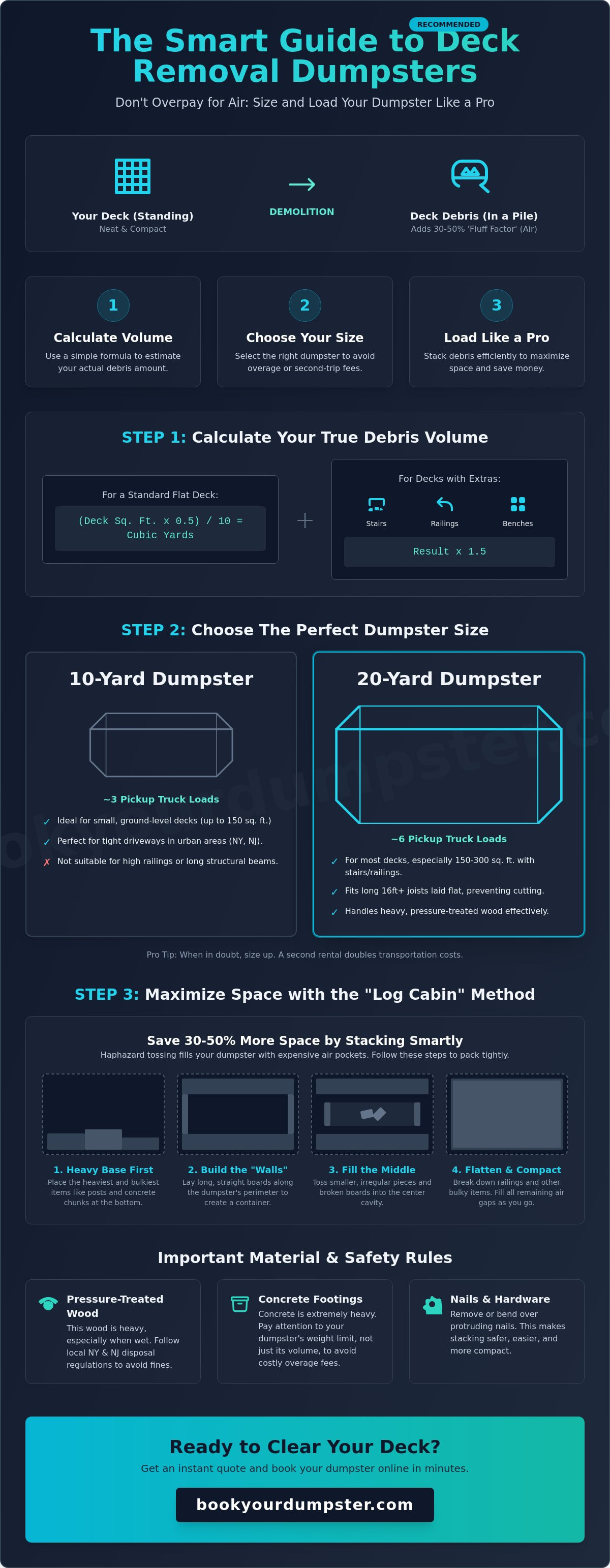
Calculate your needs using this basic formula: (Square Footage x 0.5) / 10. This gives you a rough estimate of cubic yards for a standard flat deck. If you have railings, stairs, or built-in benches, multiply that final number by 1.5. Choosing the right dumpster for old deck removal requires this level of precision to avoid the logistical headache of a second rental. Visit Book Your Dumpster USA to compare container capacities once you have your numbers ready.
The "Fluff Factor" in Wood Waste
Loose-thrown boards take up 30% to 50% more space than stacked ones. This "dead space" is created by warped wood, protruding nails, and irregular cuts. In 2026, disposal rates have become increasingly strict regarding weight and volume. Accurate estimation is now a financial necessity. If you toss debris in haphazardly, you pay for a bin full of air. Account for this fluff factor by sizing up if you don't plan on meticulous stacking. Don't let poor packing double your costs.
Assessing the Footprint and Height
Multi-level decks complicate the math. Each level adds a new set of joists and framing. Don't forget the ground-level components. If you're pulling up concrete footings, your weight limit becomes the primary concern rather than just volume. Concrete is heavy and consumes tonnage quickly. Built-in features like planters or benches also add significant bulk. Treat every built-in as an additional 2 to 3 cubic yards of waste. Measure the height of your deck too. High-elevation decks require longer, heavier support posts that take up more room in the container than short 4x4 stumps.
Choosing the Right Size: 10 Yard vs. 20 Yard Dumpsters
Pick the wrong size and you'll pay for it twice. A 10-yard dumpster typically holds about three pickup truck loads of waste, while a 20-yard container doubles that capacity. For most residential projects, the choice depends on your deck's footprint and the length of your structural lumber. Sizing up is usually the safer bet. It prevents the need for a second rental, which effectively doubles your transportation costs and project timeline. If you're tackling a massive wraparound or commercial structure, skip the smaller bins and order a 30-yard dumpster to ensure you have the necessary volume from day one.
Avoid the "dry run" fee. This happens when a driver arrives to pick up a container that is overfilled or blocked. If boards are poking out of the top, the haulers cannot legally transport the load. Choosing the right dumpster for old deck removal means matching the container's physical dimensions to your longest boards. Before you book, check your local dumpster availability to see which sizes fit your specific driveway constraints.
When the 10-Yard Dumpster is the Best Choice
Select a 10-yard unit if you're dismantling a small 10x10 or 12x12 ground-level platform. These containers are ideal for tight urban driveways in Queens or narrow residential streets in New Jersey where space is a premium. They provide enough room for standard decking boards and a modest amount of framing. However, these bins have shorter sidewalls. If your deck includes high railings or complex stairs, you'll run out of vertical space quickly. Refer to our 10 yard dumpster rental guide for specific dimensions and footprint requirements.
Upgrading to a 20-Yard or 30-Yard Container
Elevated decks with stairs and railings almost always require a 20-yard unit. The primary reason isn't just the square footage; it's the 16-foot joists. These structural beams won't fit in smaller roll-offs without significant cutting. A 20-yard container offers the length needed to lay these pieces flat. Weight is another critical factor. Wet, pressure-treated wood is significantly heavier than dry lumber. Since overage fees can range from $40 to $200 per extra ton, you must stay within your weight limit. Review the federal guidelines for the safe disposal of pressure-treated wood to understand why these materials require specific handling and weight considerations. For multi-level decks or projects involving heavy concrete footings, the 30-yard option provides the safest volume buffer.
Maximizing Space: How to Load Decking Debris Efficiently
Open the swing door on your roll-off before you start loading. This is your most valuable tool for tight packing. Walking your debris into the container allows you to place items precisely rather than throwing them over the side. When you toss boards haphazardly, you create "fluff"—large air pockets that consume up to 40% of your container's capacity. For a successful dumpster for old deck removal project, you must eliminate this dead space to avoid the cost of a second rental.
Start with the heavy joists and support posts. Place these at the bottom to create a stable, flat foundation. Use the "Log Cabin" method: stack long boards flat and parallel to each other. This systematic stacking ensures you maximize every cubic yard of space you've paid for. If you have railings, don't throw them in whole. Break them into flat sections or individual balusters. Irregular shapes are the primary cause of overflowing bins. A dense, flat pack is the only way to ensure you fit a large deck into a standard container.
Cutting and Preparation Strategies
Cut your boards into 4-foot lengths. This simple step can save you roughly 20% in total volume. Shorter pieces fit into gaps that 16-foot planks can't reach. Watch for rusted hardware and nails. Wear heavy-duty gloves and use a pry bar to remove large bolts or metal hangers. If you leave hardware attached, boards won't lie flat. You'll end up paying for trapped air instead of actual waste. Efficiency starts on the ground, not inside the bin.
Safety and Weight Distribution
Keep your load level. Your debris must never extend above the top rim of the dumpster. Over-the-top loads are illegal to transport and lead to immediate fines. States like Illinois and Massachusetts enforce strict height limits; an overfilled bin stays on your property until you remove the excess. Distribute the weight evenly from front to back. A lopsided load makes the truck unstable during pickup and can prevent the driver from safely hauling your waste. Focus on a dense, flat pack to stay within legal limits and avoid extra fees.
Material Matters: Handling Pressure-Treated Wood and Hardware
Don't treat all wood debris the same. Most decks built in the last 30 years use pressure-treated (PT) lumber, which contains chemical preservatives like Chromated Copper Arsenate (CCA). This material requires specific handling compared to standard untreated pine or cedar. Composite decking, such as Trex, presents a different challenge. It is significantly denser and heavier than traditional wood. If you're swapping a wood deck for composite, account for the increased weight in your tonnage limits to avoid overage fees. Choosing the right dumpster for old deck removal means knowing exactly what you're throwing away before the bin arrives.
Regional regulations in 2026 are strict. In New York, you can typically dispose of CCA-treated wood in construction and demolition (C&D) landfills. However, you must never burn or mulch this material. New Jersey regulations are more complex. Non-residential PT wood often requires transport to specific incineration or energy recovery facilities. Local authorities, such as those in Morris County, may even refuse creosote-treated wood unless it's cut into small, rotted sections. Always verify your local county's current stance on treated lumber. You can rent a dumpster online and get immediate clarity on which materials are accepted in your specific zip code.
Keep hazardous materials out of the container. While the wood itself is fine, the liquids you used to maintain it often aren't. Never toss half-full cans of deck stain, sealers, or paint thinners into the roll-off. These are considered household hazardous waste and require separate disposal at a local drop-off site. Mixing these liquids with wood waste can lead to the rejection of your entire load and significant environmental fines.
Hardware and Fasteners
You can mix metal hardware with wood in our construction dumpsters. There's no need to spend hours backing out every rusted screw or prying off every joist hanger. Simply ensure the metal is attached to the wood or tossed in loose. To manage the mess on your lawn, use a magnetic sweep after the dumpster is hauled away. This tool picks up the thousands of hidden screws and nails that inevitably fall during demolition, protecting your tires and family.
Environmental Compliance in 2026
Wood accounts for approximately 6.2% of all C&D waste generated in the United States. With the national C&D recycling rate hitting 76%, major metro areas have introduced new 2026 guidelines to maximize wood recovery. Book Your Dumpster USA stays current with these evolving rules, ensuring your debris reaches the correct processing facility. This commitment keeps your project compliant and supports local sustainability goals. Check our construction debris removal pillar for more on eco-friendly disposal and 2026 recycling mandates.
Booking Your Dumpster Rental in NY, NJ, and Beyond
Secure your container through our streamlined online portal in under five minutes. Start by entering your zip code to see local availability and size options. Our digital-first approach eliminates the back-and-forth of traditional phone orders, letting you schedule delivery on your own terms. In 2026, we maintain a strict policy of transparent pricing. This means you avoid the hidden fuel surcharges or administrative fees that often plague the waste industry. When you book a dumpster for old deck removal, the price you see is the price you pay. This level of honesty allows homeowners and contractors to manage project budgets without fear of invoice shock after the work is done.
Strategic placement is the secret to a faster demolition. Direct our driver to place the roll-off in a spot that creates a straight line of transit from the deck to the bin. Every extra foot you walk with a heavy support post adds hours to your timeline and physical strain to your crew. Once your demo is complete and the bin is packed flat, use our online system to trigger a pickup. We prioritize prompt removal to ensure your driveway is clear for the arrival of new construction materials or landscaping teams.
Local Permits and Placement
Verify your permit requirements if the container won't fit on your private property. In cities like Chicago, placing a dumpster on the public way requires a permit from the Department of Transportation. Similarly, Boston residents must secure a Street Occupancy Permit to avoid municipal fines. If you have a private driveway, prepare the surface before the truck arrives. Place two sheets of 4x8 plywood where the rollers will land to protect your asphalt or pavers from the weight of the steel bin. In congested New York or New Jersey neighborhoods, clear all vehicles from the drop zone. Our trucks require roughly 60 feet of linear clearance and 22 feet of overhead space to maneuver the roll-off into position safely.
The Book Your Dumpster Advantage
Trust is built through punctuality and performance. We function as a dependable partner, offering the verbal handshake reliability that is rare in industrial services. You aren't just renting a box; you're gaining access to a high-functioning tool managed by local experts. We understand the nuances of your city's 2026 disposal rules, ensuring your waste is handled legally and efficiently. Don't let logistical stress stall your renovation project. Book Your Dumpster for your deck project today!
Clear the Way for Your New Outdoor Space
Successful deck demolition depends on precision and strategy. You've learned that sizing is about more than square footage; it's about matching your longest joists to the right container. Use the Log Cabin stacking method to maximize your space and stay compliant with regional pressure-treated wood disposal rules. These steps ensure you don't overpay for air or get hit with unexpected overage fees. Efficiency on the ground translates directly to savings in your pocket.
Stop letting debris stall your progress. We provide a modern online booking experience that takes under two minutes. Our transparent pricing model removes the guesswork, so you never deal with hidden fees. We serve homeowners and contractors across NY, NJ, IL, MA, and San Francisco with reliable, punctual service. Selecting a dumpster for old deck removal has never been more straightforward. Finalize your plans today and move one step closer to the outdoor living space you've envisioned.
Rent a Roll-Off Dumpster for Your Deck Removal Now
Frequently Asked Questions
Can I put a pressure-treated wood deck in a standard dumpster?
Yes, most standard roll-off containers accept pressure-treated lumber. In New York, these materials are typically sent to construction and demolition landfills. However, regulations in New Jersey may require non-residential treated wood to go to specific incineration facilities. Never burn this wood on your property. Always confirm your local county rules before you begin your project to ensure compliance.
How much does a 20-yard dumpster hold in terms of deck square footage?
A 20-yard unit typically accommodates the debris from a 300 to 500 square foot deck. This estimate assumes you are including the surface boards, railings, and structural framing. If your deck is multi-level or has heavy built-in features, you will hit the volume limit sooner. Efficient stacking is the only way to maximize this footprint and avoid needing a second container.
What happens if my deck debris goes over the weight limit?
Exceeding the weight limit results in overage fees charged per additional ton. Industry averages for these fees range from $40 to $200 per ton, though New York City rates can reach $250. Heavy materials like wet wood or composite decking can push you over the limit quickly. Monitor your tonnage and distribute weight evenly to avoid these extra costs during pickup.
Do I need to cut the deck boards before putting them in the dumpster?
You don't have to cut them, but it is the best way to save money. Cutting long 16-foot planks into 4-foot or 8-foot sections allows them to lay flat against the bottom. This eliminates the air pockets that waste space. Using a dumpster for old deck removal effectively requires this level of preparation to ensure all your waste fits in one haul.
Can I include the concrete footings from my old deck in the rental?
You can include concrete footings, but you must account for their extreme weight. Concrete is significantly heavier than wood and will consume your weight allowance rapidly. If you have more than a few footings, consider renting a separate container for heavy debris. This prevents the truck from being unable to lift a dangerously overweight load during your scheduled pickup.
How long can I keep the dumpster for my deck demolition project?
Standard rental periods usually last between 7 and 14 days. This timeframe is typically sufficient for a full DIY deck teardown and site cleanup. If you finish the work early, you can call for a pickup to clear your driveway. If the project stalls, most providers offer daily extensions for a small additional fee to help you finish the job.
Is it cheaper to rent a dumpster or use a junk removal service for a deck?
Renting a dumpster is generally the more economical choice for full deck removals. Junk removal services charge for labor and the volume of space used in their trucks, which becomes expensive for bulky wood planks. By handling the demolition yourself and using a dumpster for old deck removal, you control the timeline and significantly lower your total disposal costs.
Are there specific dumpster rules for Queens or San Francisco deck projects?
Urban areas like Queens and San Francisco have strict permit and recycling mandates. In Queens, you must obtain a permit if the container sits on a public street rather than a private driveway. San Francisco requires specific wood waste diversion to meet local sustainability goals. Check your local municipal website for current street occupancy rules and mandatory recycling protocols before scheduling your delivery.


