
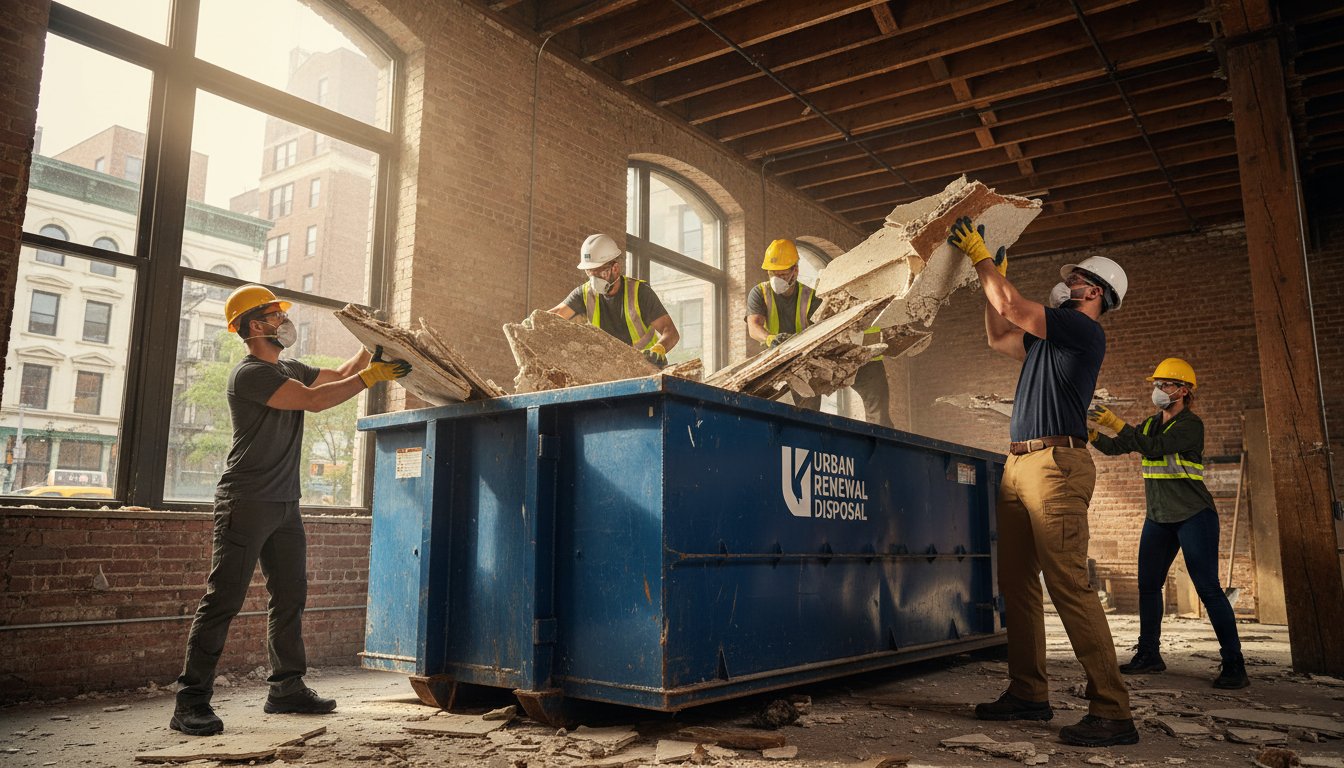
Plaster and lath debris is a weight trap that can quickly turn a professional renovation into a budget nightmare. While a pile of demolished walls might look small, this material is significantly denser and heavier than modern drywall. You probably already know that keeping a job site clear is essential for safety, but the deceptive weight of these materials often leads to expensive overage fees. Renting the wrong dumpster for plaster and lath demolition is a mistake that costs you both time and money. Exceeding your weight limit results in per-ton charges that eat into your project margins.
We'll help you avoid these surprises by teaching you how to select the right container size and dispose of heavy debris safely. You'll learn how to estimate weight totals correctly and manage the dust and logistical stress that comes with old-school demolition. We also address critical safety regulations, including mandatory asbestos testing for buildings constructed before 1980. This guide provides a clear path to a clean job site and legal waste disposal. We cover everything from choosing between a 10 yard or 20 yard dumpster to identifying hazardous materials before you start swinging the sledgehammer.
Key Takeaways
- Understand why plaster’s extreme density requires a specific weight-management strategy to avoid unexpected overage costs.
- Determine the ideal dumpster for plaster and lath demolition by comparing 10-yard and 20-yard sizes based on your specific project scale.
- Learn how to identify hazardous materials like asbestos and lead-based paint to stay compliant with mandatory safety regulations.
- Master the "bottom-heavy" loading technique to maximize container space and prevent dangerous air pockets during disposal.
- Use streamlined online booking to secure reliable service for residential or commercial demolition projects in major metropolitan areas.
Why Plaster and Lath Demolition Requires a Specialized Dumpster Strategy
Demolishing old walls is more than just a labor-intensive task; it's a logistical challenge that centers on weight. Before you start swinging a sledgehammer, you must understand What is Lath and Plaster construction. Unlike modern homes that use lightweight panels, older structures feature layers of dense gypsum or lime plaster applied over thin wood or metal strips. This traditional method creates a solid, durable surface that's incredibly heavy. When you remove it, you aren't just dealing with debris; you're dealing with tons of concentrated weight. Selecting a specialized dumpster for plaster and lath demolition is the only way to avoid project delays and safety hazards.
Avoid the "Weight Trap" by recognizing that plaster's density is deceptive. While a pile of demolished walls might look manageable in terms of volume, its mass is significantly higher than modern alternatives. Drywall is relatively light and easy to snap, but plaster is essentially a thin layer of rock. This volume-to-weight ratio often catches people off guard, leading to overloaded containers and dangerous transport conditions. Use a roll-off dumpster to maintain a clear work area and ensure that your waste is handled by equipment designed for high-density loads. Don't underestimate the physical mass of the material you're moving.
Plaster vs. Drywall: The Disposal Difference
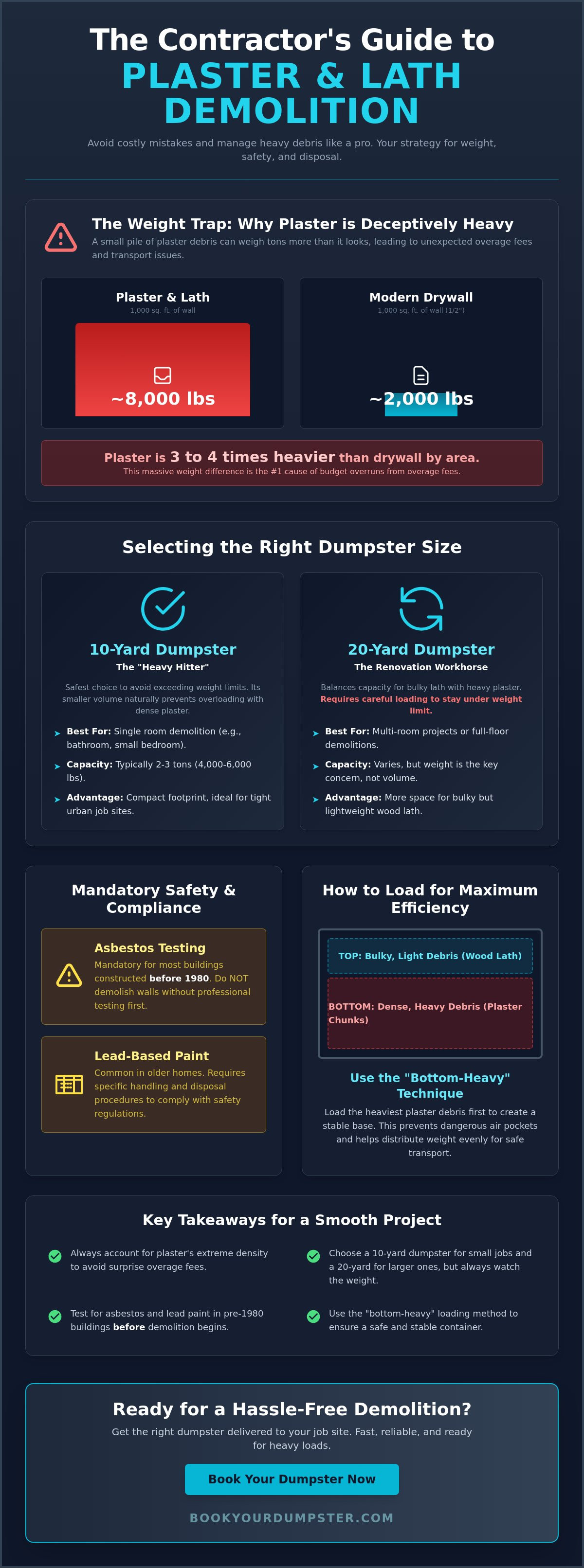
Comparing the two materials reveals why your disposal strategy must change. 1,000 square feet of plaster and lath typically weighs three to four times more than the same area of half-inch drywall. This massive difference stems from the multiple coats of wet plaster used in the original application. When you demolish these walls, the plaster shatters into fine, heavy dust and jagged chunks. While the wood lath adds bulk, it doesn't contribute much to the overall weight. This combination requires a container that can handle both volume and tonnage without failing.
The Logistics of Older Home Renovations
Urban environments like New York or San Francisco present unique challenges. Space is tight, and street parking is a luxury. You cannot rely on contractor bags for this job. These bags will tear under the weight of sharp plaster chunks and lath splinters, creating a secondary mess on your sidewalk or in your hallway. Efficiency is key. Partner with Book Your Dumpster USA to manage your waste logistics. We provide the right equipment for your dumpster for plaster and lath demolition, ensuring your site stays clean and your project remains on schedule.
Selecting the Right Dumpster Size for Plaster Debris
Choosing a container for old wall debris requires a shift in perspective. You aren't just measuring volume; you're managing tonnage. Plaster is one of the few materials that can reach a dumpster's weight limit long before it reaches the top rail. If you overfill a bin with this high-density waste, the truck may be unable to lift it, or you will face steep overage fees. Selecting the correct dumpster for plaster and lath demolition is the most critical decision in your waste management plan. Before you begin, review the demolition safety regulations to ensure your project meets federal standards for site safety and structural integrity.
10-Yard Dumpster: Best for Small Rooms
The 10-yard dumpster is the "Heavy Hitter" for localized projects. Its compact footprint makes it the ideal choice for tight residential areas like Queens or Boston, where street space is limited. These bins typically handle between two and three tons of debris. If you are stripping a single bathroom or a small bedroom, this size provides enough capacity without taking up your entire driveway. The 10-yard is the safest choice for weight compliance because it physically limits how much plaster you can load, preventing you from accidentally exceeding the legal hauling weight of the truck.
20-Yard Dumpster: The Renovation Workhorse
When you move to a multi-room project or a full-floor gut, the 20-yard dumpster becomes the standard. This size is the sweet spot for balancing the bulky wood lath with the heavy plaster chunks. It offers more vertical space, which is helpful when you're dealing with long sections of lath that don't always pack down tightly. For a deeper dive into smaller projects, see our 10 Yard Dumpster Rental: The Complete Buying Guide for 2026. This guide helps you decide if a 10-yard is enough or if you need to step up to the 20-yard workhorse.
Avoid 30 and 40-yard dumpsters for pure plaster demolition. While these larger bins are great for light construction debris, they are a major risk for heavy materials. If you fill a 40-yard bin with plaster, it will likely exceed the maximum weight capacity of the hauling vehicle. This leads to failed pick-up attempts and expensive "dig out" requirements. Calculate your tonnage by estimating that every 100 square feet of wall surface produces roughly 1,500 to 2,000 pounds of waste. Always choose a reliable dumpster rental that specifically accounts for these heavy loads to keep your project moving efficiently.
Safety and Compliance: Lead, Asbestos, and Permits
Renovating a historic property requires more than just a sledgehammer and a pair of gloves. You're dealing with materials that often pre-date modern safety standards. If your project involves a home built before 1980, you must treat the walls with caution. Asbestos was frequently added to plaster for fireproofing and structural reinforcement. If you accidentally place asbestos-contaminated material into a standard dumpster for plaster and lath demolition, you're creating a health hazard and a legal nightmare. Landfills strictly monitor incoming loads, and the discovery of hazardous waste will result in immediate rejection and heavy fines.
Compliance isn't just about what's inside the bin; it's also about where the bin sits. Navigating local ordinances is essential to avoid project delays. Whether you're working in NYC, San Francisco, or Chicago, you can't just drop a container anywhere you like. You must secure the proper "Right of Way" permits if the dumpster occupies a public street or sidewalk. Failure to do so leads to city tickets that eat into your profit margins. Practice "Clean Loading" by keeping hazardous items, electronics, and chemicals out of your construction waste to ensure a smooth disposal process.
Testing for Asbestos and Lead
Hire a certified professional to test your plaster before you start the demo. Don't rely on visual cues like the presence of horsehair. While horsehair was a common binder, it doesn't rule out the presence of asbestos fibers used for fireproofing. Lead-based paint is another major concern in pre-1978 homes. If your debris is coated in lead paint, it may require specialized disposal protocols. Disposing of hazardous waste in a standard roll-off is illegal and carries severe financial penalties. Get the results in writing before you order your container.
City-Specific Placement Rules
Local logistics vary wildly by region. In Massachusetts and Illinois, state-specific waste diversion mandates might require you to separate certain materials. The "Queens" challenge is a perfect example of urban difficulty; narrow streets and limited parking mean you need precise delivery windows. In San Francisco, steep hills and tight corners require specialized equipment. Book Your Dumpster USA manages these local complexities for you. We provide placement advice and help you navigate the permit requirements for your specific neighborhood. Use a partner who understands the local landscape to keep your job site compliant and efficient.
How to Load Your Dumpster for Maximum Efficiency
Strategic loading is the difference between a single trip and a logistics nightmare. When you manage a dumpster for plaster and lath demolition, you must account for the physical properties of the materials. Plaster is heavy and shatters; lath is light but takes up significant space. If you toss everything in randomly, you'll create massive air pockets that waste valuable volume. Worse, you might concentrate the weight in one corner, making the bin impossible to lift or transport safely. Follow the "Bottom-Heavy" rule to ensure your container remains balanced and efficient.
Protect your property before the delivery truck arrives. Plaster is incredibly dense, and a full 10 or 20-yard bin can weigh several tons. This pressure can crack asphalt or leave ruts in soft driveways. Lay down two sheets of 3/4-inch plywood as a buffer where the dumpster's rollers will sit. This simple step prevents property damage and provides a stable base for your loading operations. Don't skip this preparation, especially when dealing with the high-tonnage loads typical of historic renovations.
Step-by-Step Loading Guide
Efficiency starts at the floor of the bin. Place the heaviest plaster chunks at the front of the container, closest to where the truck cab will be. This distribution keeps the weight over the truck's axles during transport. Lay wood lath flat rather than tossing it in bundles. Bundled lath creates "voids" or air pockets that eat up space you need for more debris. Crush the lath as you go to maximize every cubic yard. Distribute all debris evenly across the entire floor to prevent a "mountain peak" effect in the center of the bin.
Keep your load level with the top rail at all times. If debris extends above the sides, the hauler cannot safely tarp the load for transport. Over-topping results in safety fines and requires you to unload the excess by hand before the truck leaves your site. Work in layers to maintain a flat, manageable surface.
Maximizing Tonnage Limits
Track your weight as you go. Plaster is deceptive; what looks like a half-full bin may already be at its tonnage limit. Be especially wary of the weather. If you're working on a dumpster for plaster and lath demolition during a storm, cover the bin with a heavy-duty tarp. Plaster is porous and acts like a sponge. Wet plaster can double in weight, leading to massive overage charges that were completely avoidable. For more professional tips on managing job site waste, read The Ultimate Guide to Construction Debris Removal in 2026.
Ready to start your demo? Order your roll-off dumpster online today to secure the right equipment for your heavy debris.
Book Your Dumpster for Your Next Demolition Project
Secure your project's success by choosing a partner that understands the weight of your work. You've planned the demolition and tested for hazards. Now, you need a reliable container on your site. Renting a dumpster for plaster and lath demolition should be the easiest part of your renovation. We provide the heavy-duty equipment required to handle high-density debris without the logistical headaches often found in the waste industry. Our service is built on transparency and punctuality. We treat our delivery times as a verbal handshake, ensuring your crew isn't standing around waiting for a bin to arrive.
We operate in major metropolitan hubs where space is a premium and regulations are strict. Whether you are working in NYC, New Jersey, Illinois, Massachusetts, or San Francisco, we know the local landscape. We don't just drop a bin; we provide the professional support needed to navigate narrow streets and tight delivery windows. Our pricing is direct and honest. You won't find hidden fees or vague estimates here. We focus on reliability so you can focus on the build.
Why Professionals Choose Book Your Dumpster USA
Contractors and homeowners prioritize efficiency. We remove the logistical stress of waste management by offering a full range of container sizes. For heavy plaster projects, our 10-yard and 20-yard bins are the industry standard. If your project expands to include general construction debris, we also provide 30-yard and 40-yard dumpsters. Having the right tool for the job prevents overage fees and site safety issues. Visit the Book Your Dumpster Homepage to see our full inventory and service area details. We provide the capacity you need for any scale of demolition.
Get a Quote Today
Our 3-step online reservation process is designed for speed. Select your size, choose your dates, and provide your location. It's that simple. We specialize in challenging urban environments. If you need a container in a crowded neighborhood in Queens or on a steep incline in San Francisco, we have the local expertise to handle the placement. Don't let waste pile up and create a safety hazard on your job site. Take immediate action to keep your renovation timeline on track. Book your dumpster for plaster and lath demolition now and experience a modernized approach to construction waste disposal. Our no-nonsense expert advice ensures you get the right bin at the right time.
Clear Your Job Site and Start Your Build
Successful demolition depends on managing weight and logistics with precision. You now have the tools to avoid the weight trap of old plaster and navigate the complex safety regulations of historic renovations. By utilizing specialized 10-yard bins for heavy debris and following a strategic loading plan, you'll protect your project from unnecessary delays and overage fees. Selecting the right dumpster for plaster and lath demolition is the most effective way to ensure your budget stays intact while your site remains clear and safe.
We provide a reliable, no-nonsense service across NY, NJ, IL, MA, and SF. Our transparent pricing and commitment to punctuality act as a verbal handshake you can trust. You've done the hard work of tearing down the old walls; now let us handle the heavy lifting. Rent Your Demolition Dumpster Online Now to secure your container and keep your timeline moving forward. Take the first step toward a clean, professional work environment today. Your renovation is ready for a fresh start.
Frequently Asked Questions
Can I put plaster and lath in a regular dumpster?
Yes, you can dispose of these materials in a standard roll-off container, but you must account for the extreme density of the debris. Plaster is significantly heavier than modern drywall or general household junk. Most projects require a 10-yard or 20-yard dumpster for plaster and lath demolition to ensure the hauling truck can safely lift the load without exceeding legal weight limits. Always specify your material type when booking.
How much does a 10-yard dumpster full of plaster weigh?
A 10-yard dumpster filled with plaster and lath typically weighs between 2 and 5 tons. The exact weight depends on the thickness of the plaster layers and how tightly the lath is compressed. Because plaster is essentially crushed rock, it reaches weight capacities much faster than other construction materials. Check your rental agreement for specific tonnage limits to prevent unexpected costs at the landfill.
Do I need a permit to put a dumpster on the street in NYC or Chicago?
Yes, both NYC and Chicago require official permits for any container placed on a public street or sidewalk. In NYC, the Department of Transportation (DOT) manages these "Right of Way" permits, while Chicago requires a public way use permit. Permit fees across various municipalities typically range from $10 to $150. We provide the logistical guidance needed to ensure your placement is fully compliant with local city ordinances.
How do I know if my old plaster contains asbestos?
The only way to confirm the presence of asbestos is through professional laboratory testing. Visual inspections are impossible because asbestos fibers are microscopic and were often mixed directly into the plaster for fireproofing. If your building was constructed before 1980, federal regulations require testing before any demolition begins. Never place asbestos-containing materials in a standard roll-off bin, as this is illegal and creates a significant health hazard.
What happens if my dumpster is over the weight limit?
If a dumpster exceeds its weight limit, you will be charged overage fees, which usually range from $40 to $200 per extra ton. In extreme cases, the hauler may refuse to pick up the container until you remove the excess material to meet safety standards. These fees are passed on from the landfill and can quickly inflate your project budget. Monitor your load levels carefully and avoid letting the debris get wet.
Can I mix plaster with other construction debris like wood or metal?
You can mix plaster with other non-hazardous construction and demolition waste, such as wood studs, metal piping, or flooring. However, the heavy plaster will dominate the total weight of the load. While mixing in lighter materials like lath helps fill the volume of the container, the plaster remains the primary factor for your tonnage calculations. Ensure all mixed items are permitted under your specific rental agreement.
Is plaster considered "clean fill" or "C&D waste"?
Plaster is classified as Construction and Demolition (C&D) waste and is not considered "clean fill." Clean fill typically refers only to unprocessed soil, concrete, brick, or stone that hasn't been painted or treated. Because plaster contains binders, paint, and often wood lath, it must be disposed of at a licensed C&D landfill facility. This distinction is important for accurate cost estimation and legal disposal at the dump.
How far in advance should I book my dumpster for a demo project?
Book your dumpster at least 24 to 48 hours before your scheduled demolition. In high-demand areas like Queens or downtown Chicago, providing three to five days of lead time is better to ensure your preferred size is available. Early booking is also essential if you need to secure street permits from the city, as these applications can take several business days to process before delivery.