
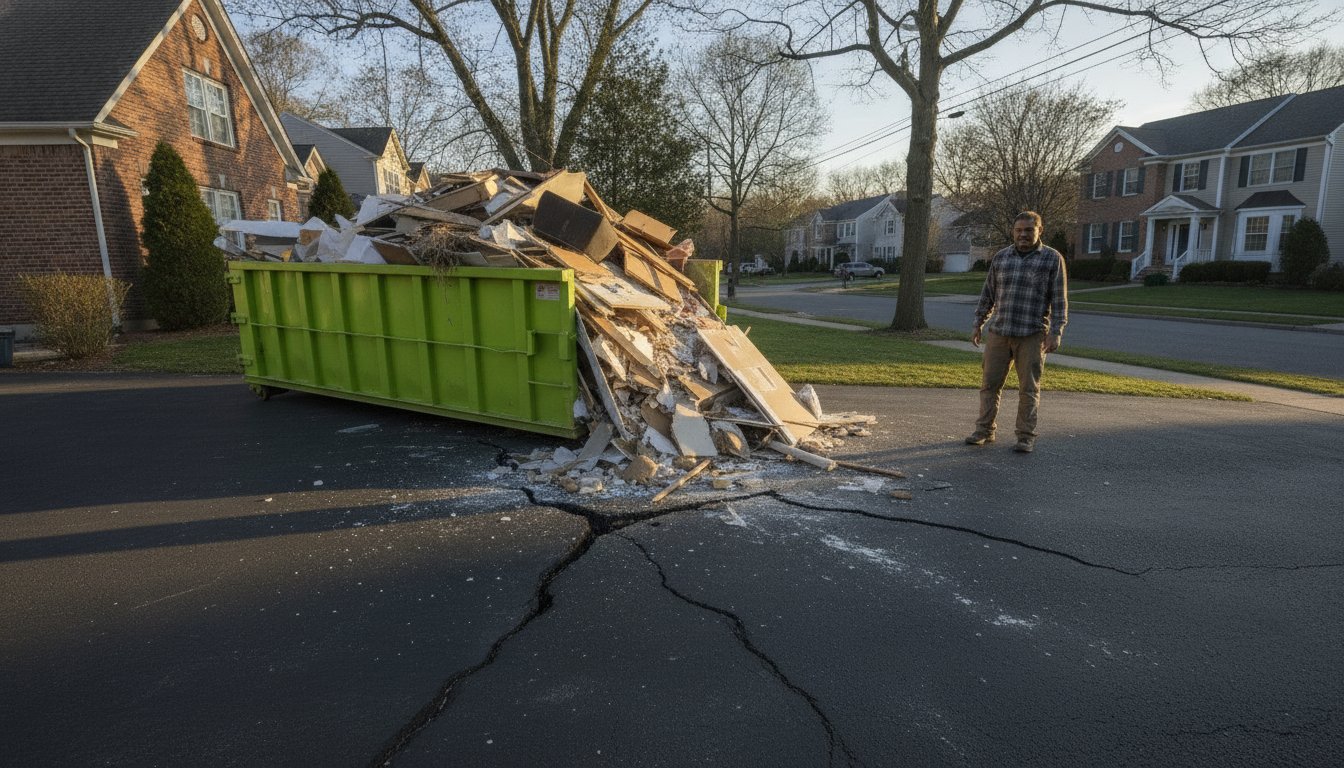
Imagine waking up to find a massive crack splitting your driveway and a bill for double the quoted price because of hidden weight surcharges. These dumpster rental horror stories to avoid are more common than you think in 2026, often turning a simple home cleanup into a financial nightmare. Most people assume that once the bin is dropped off, the hard part is over. However, poor planning or choosing the wrong provider can lead to city fines, property damage, and legal headaches that last long after the debris is gone.
You want a project that stays on schedule and within budget without the stress of surprise charges or logistical failures. We understand that managing waste should be the easiest part of your job, not the most expensive. This guide provides a professional prevention checklist to help you secure a smooth delivery and pickup process. You'll learn how to verify pricing integrity, protect your job site, and navigate local permit requirements. Follow these steps to ensure your next rental is a high-functioning tool for your project's success.
Key Takeaways
- Identify and bypass common dumpster rental horror stories to avoid by vetting providers for pricing integrity and operational transparency.
- Protect your property from structural damage by selecting stable placement sites and clearing overhead obstructions before the delivery truck arrives.
- Master the "Fill Line" rule and volume-to-weight ratios to prevent expensive overage fees and ensure safe, legal transportation on public roads.
- Avoid legal headaches and environmental cleaning surcharges by identifying prohibited items like hazardous chemicals, batteries, and electronics.
- Recognize the red flags of "low-ball" quotes and demand flat-rate pricing to eliminate hidden administrative or fuel surcharges.
Why Dumpster Rental Horror Stories Happen (and How to Stay Safe)
A dumpster rental horror story isn't just a minor delay. We define it as any event resulting in structural property damage, city fines, or cost overruns exceeding 50% of your initial quote. These dumpster rental horror stories to avoid usually stem from a lack of preparation. Most people view a dumpster as a simple metal box. In reality, it's a heavy piece of industrial equipment that requires precise coordination. If you treat it like a standard delivery service, you're already behind.
Success relies on three specific pillars: logistics, weight management, and provider integrity. If any one of these fails, your project budget will follow. Many first-time renters underestimate the complexity of local regulations and disposal requirements. They assume the process is "set it and forget it." Proper waste management involves more than just tossing items into a bin. It requires classifying waste materials to ensure compliance with environmental laws and facility rules. Use a checklist to verify your site is ready. Remember, spending thirty minutes on prevention is always cheaper than spending three days on remediation.
The Financial Impact of Rental Mistakes
Small oversights often trigger massive bills. A "dry run" fee occurs when a driver cannot safely drop or pick up a container due to blocked access, parked cars, or low-hanging wires. This is a pure loss of capital. You also face weight surcharges. If you fill a 20-yard dumpster with concrete instead of household junk, the tonnage will skyrocket. Driveway damage is another hidden cost. Repairing cracked asphalt or crushed pavers costs significantly more than the simple lumber used to protect the surface. Always prioritize site prep to keep your costs predictable.
Who is Most at Risk for a Rental Nightmare?
Certain groups face higher risks. First-time homeowners often lack a formal logistics plan for DIY renovations. They focus on the renovation but forget the disposal path. Contractors in high-density areas, such as Queens or San Francisco, deal with aggressive traffic enforcement and strict street placement rules. One wrong move results in a city fine. Finally, commercial teams often fail to account for "heavy debris" limits. Loading a standard bin with shingles or dirt without a weight-specific agreement is a guaranteed way to double your bill. Use professional tools and clear communication to stay safe.
Placement Pitfalls: Avoiding Property Damage and Delivery Disasters
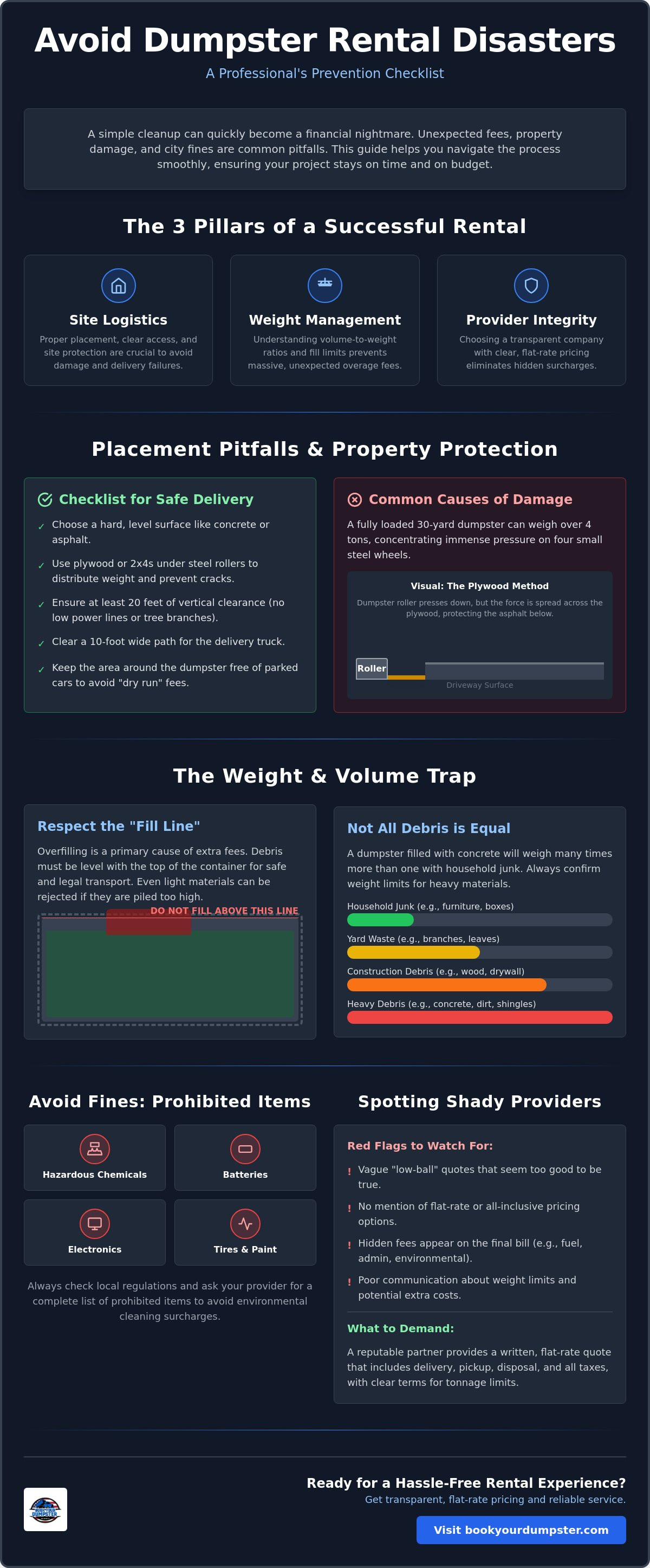
A soft lawn might look stable, but it cannot support 4 tons of steel and waste. When a fully loaded bin sinks, it often requires a heavy-duty tow truck to extract, leading to massive property damage and extra fees. These are the specific dumpster rental horror stories to avoid by choosing a hard, level surface. Check for overhead obstructions before the truck arrives. Roll-off hoists require at least 20 feet of vertical clearance to tip the dumpster into place. Low-hanging power lines or tree branches will stop a delivery immediately. Ensure the path is at least 10 feet wide to accommodate the truck's width.
Avoid the "Blocked In" scenario. If cars are parked near the dumpster on pickup day, the driver cannot access the bin. This results in a "dry run" fee, which is a pure waste of your project budget. Keep the area clear at all times. Also, ensure you aren't loading prohibited hazardous materials, as these can leak during placement and cause permanent environmental damage to your soil or driveway. If you're unsure about your site’s accessibility, consult with a rental expert before scheduling your drop-off.
Protecting Your Driveway from Cracks and Scratches
Use the Plywood Method to save your asphalt. Place 2x4s or thick plywood sheets where the dumpster's steel rollers will land. This simple step distributes the weight across a larger surface area. Without protection, the rollers can "cookie-cut" into soft asphalt, especially on hot days. A fully loaded 30-yard dumpster concentrates its entire weight onto four small steel wheels, creating intense point load pressure that can easily pulverize standard residential asphalt.
Urban Logistics: Queens and San Francisco Challenges
Delivering to tight metro areas requires a different strategy. Narrow one-way streets and tight alleyways in places like Queens or San Francisco leave zero room for error. Provide dispatch with exact street widths and any parking restrictions well in advance. If you're managing a project in a dense urban environment, Book Your Dumpster USA offers the expertise needed to navigate these complex metro deliveries without incident. Professional drivers in these cities must account for tight turn radii and strict municipal idling laws, making clear communication a requirement for a successful drop-off.
The Weight and Volume Trap: How to Avoid Massive Overage Fees
Miscalculating the weight of your debris is the fastest way to turn a budget project into a financial disaster. These dumpster rental horror stories to avoid often start when a customer confuses volume with weight. A dumpster has two distinct limits: the physical space inside and the maximum tonnage the truck can legally carry. If you fill a bin to the brim with heavy materials like shingles or soil, you'll likely exceed the weight limit long before you run out of space. This results in overage fees that can add hundreds of dollars to your final bill. Always ask for the weight allowance included in your flat rate before signing.
Respect the "Fill Line" rule without exception. It's a legal requirement for road safety, not a suggestion from the rental company. When debris sticks out over the top, it's known as a "top-heavy" load. Drivers cannot legally transport these containers because items can fly out on the highway. If your dumpster resembles a "towering inferno" of trash, the driver will refuse the pickup. You'll be hit with a trip fee and forced to level the load yourself before they return. Avoid this by distributing heavy items at the bottom and keeping all materials below the rim.
Sizing Your Project Correctly
Choosing the right size is a balance of cost and capacity. For small bathroom updates or garage cleanouts, consult our 10 Yard Dumpster Buying Guide. If you're tackling a larger renovation, consider jumping from a 20-yard to a 30-yard dumpster. It's a common mistake to rent a smaller bin to save money, only to realize halfway through that you need a second one. If you're between sizes, always go larger. Paying for a slightly bigger container is significantly cheaper than paying for a second trip fee and a whole new rental.
Heavy Debris: Rock, Concrete, and Dirt
Standard residential rentals usually have weight limits between 2 and 4 tons. However, materials like rock, concrete, and dirt are incredibly dense. One cubic yard of concrete weighs roughly 4,000 pounds. If you fill a standard 20-yard bin with concrete, you'll create an "immovable dumpster" that exceeds the truck’s lift capacity. This is why "clean load" dumpsters exist specifically for heavy materials. When reviewing your waste management contract, treat it with the same level of detail you use when avoiding contractor scams. Ensure the weight limits for heavy debris are clearly defined in writing to prevent logistical failures and massive surcharges.
Prohibited Items and Permit Problems: The Legal Side of Waste
Loading the wrong material can trigger an immediate financial penalty. One of the most common dumpster rental horror stories to avoid involves the "Hazardous Surprise." If a landfill inspector discovers even a single gallon of wet paint or a leaking car battery, they'll reject the entire load. This doesn't just mean a delay. You'll be hit with an environmental cleaning fee, often starting at $500, plus the cost of transporting the container back to your site for manual sorting. Landfills use advanced scanning and manual inspections to ensure compliance with strict environmental laws. Don't risk it.
Commonly banned items include tires, batteries, and electronics. In many jurisdictions, mattresses and appliances containing Freon also require special handling. If these items end up in your bin, the rental provider must pull them out and dispose of them separately at your expense. To prevent these issues, check our service specifications before you start tossing debris. Clear communication with your team or family is the only way to ensure the bin stays clean and compliant.
Navigating Local Regulations and Permits
If your dumpster touches a public sidewalk or street, you likely need a permit. For specific regional rules, see our guide on Dumpster Rental in New York, Illinois, and Massachusetts. Right-of-Way permits are required for any dumpster touching a public sidewalk or street. While some providers assist with the paperwork, the homeowner is usually the legally responsible party for securing the permit. Failing to display a valid permit can lead to daily city fines that exceed the cost of the rental itself.
Securing Your Dumpster
The "Neighbor’s Trash" nightmare is a real threat in high-traffic residential areas. People often see an open bin as an invitation to dump their own illegal items overnight. Use a heavy-duty tarp to cover the dumpster when it's not in use. This simple deterrent discourages "midnight dumpers" from using your bin as a free disposal site. Check your dumpster every morning before your crew arrives to ensure no prohibited items were added while you were asleep. If you find something that isn't yours, document it immediately and contact your provider to discuss disposal options before the pickup truck arrives.
Choosing Your Partner: Red Flags of Shady Dumpster Rental Companies
A "low-ball" quote is the most common bait for dumpster rental horror stories to avoid. When a price seems significantly lower than the market average, the provider often plans to recover that margin through aggressive back-end fees. These shady operators rely on variable rate quotes. This strategy allows them to tack on administrative fees, fuel surcharges, and environmental levies after you've already committed your credit card. Demand a flat-rate quote instead. A transparent price includes the delivery, pickup, and a specified weight limit in one clear figure. If a company won't commit to a final number in writing, walk away immediately.
Communication failures create a different kind of logistical nightmare. The "ghost pickup" occurs when a company drops off a bin but ignores your request for retrieval. This leaves a massive steel container blocking your driveway, killing your grass, or attracting illegal dumping for weeks. It’s a sign of a disorganized operation that lacks a proper fleet management system. Reliable companies use modern tracking and streamlined online booking systems. These digital tools ensure your schedule is respected and your project remains on track. A company that relies solely on vague phone promises is a liability you don't need on your job site. Professionalism in this industry is measured by punctuality and pricing integrity.
Questions to Ask Before Giving Your Credit Card
Protect your project budget by vetting every provider with these direct questions. If the representative hesitates or gives vague answers, find a different partner. Use this list to ensure you're getting a professional service:
- What is the exact weight limit included in this price? Never accept a quote without a defined tonnage limit.
- Are there any fuel, environmental, or administrative surcharges not listed here? Force them to disclose "hidden" line items.
- What is your policy if the truck can’t access the drop-off spot? Clarify the cost of a "dry run" before it happens.
The Book Your Dumpster USA Advantage
Choose a partner that prioritizes reliability and transparency for every project. At Book Your Dumpster USA, we provide a professional, direct pricing model that eliminates the stress of surprise charges. Whether you need a 10 Yard Dumpster for a small garage cleanout or a 40 Yard Dumpster for a major construction site, we offer 10, 20, 30, and 40-yard options to fit your specific needs. Our system is designed for speed and clarity, giving you total control over your waste management logistics. Book your roll-off dumpster online today and avoid the rental nightmares that derail so many home and commercial projects.
Secure a Stress-Free Project Outcome
Successful waste management depends on preparation and provider transparency. By prioritizing site stability, verifying your weight limits, and securing the necessary municipal permits, you eliminate the variables that cause project delays. Most dumpster rental horror stories to avoid aren't the result of bad luck; they're the product of poor planning or hidden fee structures that catch users off guard. Focus on the three pillars of logistics, weight management, and provider integrity to ensure your home or commercial site remains safe and profitable. Prevention is always more cost-effective than remediation.
We provide specialized 10, 20, 30, and 40-yard roll-off containers for any project size. Our team services major metros including NY, NJ, IL, and MA with a commitment to transparent flat-rate pricing. You deserve a partner who respects your timeline and your budget without the "ghost pickups" or surprise surcharges common in the industry. Take the next step toward a clean and organized job site today.
Check availability and get a transparent quote at Book Your Dumpster USA. Secure your rental today and experience the efficiency of a modernized, professional waste management service. Your project's success starts with a reliable bin and a straightforward contract.
Frequently Asked Questions
What is a "trip charge" or "dry run" fee in dumpster rental?
A trip charge is a penalty fee assessed when a driver cannot complete a delivery or pickup due to site obstructions. Common obstacles include parked cars, low-hanging wires, or locked gates that block the truck's path. This fee covers the operational costs of fuel and labor for the wasted journey. Ensure your drop-off site is completely clear and accessible before the truck arrives to keep your project on budget.
Can a dumpster damage my driveway, and how do I prevent it?
Heavy steel containers can crack asphalt or scratch pavers, but you can prevent this by using the "Plywood Method." Place thick plywood sheets or 2x4 lumber where the dumpster's steel rollers will land to distribute the weight. This simple step protects your property from the intense point load pressure of a fully loaded bin. Driveway protection is a critical part of the dumpster rental horror stories to avoid.
What happens if I put prohibited items like paint or tires in the dumpster?
Loading prohibited items like wet paint, tires, or batteries leads to immediate fines and rejected loads at the landfill. Disposal facilities scan for hazardous materials and will force the driver to return the container to your site for manual sorting. You'll be responsible for the return trip fee and environmental cleaning charges. Always check the restricted items list before loading any debris to avoid legal and financial headaches.
How high can I fill my dumpster before it is considered "overfilled"?
You must never fill a dumpster above the top rail or rim of the container. This "level full" rule is a legal requirement for road safety to prevent debris from flying out during transport. If items stick out over the top, the driver will refuse the pickup for safety reasons. You'll then face a trip charge and have to level the load yourself before the company returns for a second attempt.
Do I need a permit to put a dumpster on the street in Queens or Chicago?
Yes, placing a dumpster on a public street or sidewalk in Queens or Chicago requires a "Right-of-Way" or street permit. Municipalities in NY and IL have strict enforcement and will issue daily fines for unpermitted containers. While some providers help with the application, the homeowner or contractor is typically the legally responsible party. Verify permit requirements with your local building department before scheduling any delivery that isn't on private property.
What is the most common reason for a dumpster rental price to increase after booking?
Exceeding the weight limit is the most common reason for a price increase after your initial booking. Most rentals include a specific tonnage allowance, such as 2 tons for a small bin. If you load dense materials like dirt, rock, or shingles, you'll likely go over that limit. These weight overages are the primary cause of the dumpster rental horror stories to avoid that involve surprise charges on your final bill.
How do I know if I need a 10-yard or a 20-yard dumpster for my project?
Choose a 10-yard dumpster for small bathroom updates or garage cleanouts. If you're tackling a full kitchen renovation or a large deck removal, step up to a 20-yard container. A 10-yard bin holds roughly four pickup truck loads, while a 20-yard bin holds eight. If you're between sizes, always go with the larger size to avoid the cost of a second rental and additional trip fees when the first bin overflows.
Can the dumpster rental company refuse to pick up my dumpster?
Yes, a company can refuse to pick up a dumpster if the load is unsafe or inaccessible. Common reasons include "top-heavy" overfilled loads, blocked access from parked vehicles, or the presence of prohibited hazardous waste. If the driver deems the load a safety risk for highway transport, they'll leave the bin on-site. You'll be charged a dry run fee and must resolve the safety issue before rescheduling the pickup.


