There are an estimated 35 billion pieces of litter on the ground in the United States. This equates to about 96 pieces of trash for every person in your community. Most residents want to clean up their streets, but the logistical hurdles often cause projects to stall. Learning how to coordinate a community cleanup project requires more than just gathering volunteers. It demands a professional approach to waste management and local compliance.
You likely worry about where all that collected trash will go or how to handle hazardous debris safely. It's a common concern. A successful event depends on a reliable disposal plan and clear communication with local authorities. This guide removes the stress of planning. It provides a direct, step-by-step strategy to ensure your neighborhood project is efficient, safe, and finishes on time.
We'll walk you through the essential logistics for 2026. This includes securing municipal permits, managing professional waste removal, and following the latest safety standards like the Connecticut Release-Based Cleanup Regulations. Use this roadmap to build community pride and achieve a cleaner, safer neighborhood without the typical logistical headaches.
Key Takeaways
- Identify high-litter "hot spots" in your neighborhood to focus your team's efforts where they'll have the most impact.
- Learn how to coordinate a community cleanup project by securing municipal permits at least 30 days before your scheduled start date.
- Match your equipment to the project size by selecting a 20 or 30-yard dumpster to handle bulk debris efficiently.
- Use digital tools to track volunteer signups and emergency contacts to keep your event organized and safe.
- Appoint a "Dumpster Captain" to manage the workflow on-site and ensure waste is distributed evenly for safe transport.
Defining Your Project Scope and Selecting a Target Area
A community cleanup project is a grassroots effort to remove litter and debris from public spaces. Success depends on a narrow focus. Don't attempt to tackle an entire city in one afternoon. Understanding how to coordinate a community cleanup project begins with a realistic assessment of the workload. Start by identifying "hot spots" in your neighborhood where illegal dumping or litter accumulation is highest. These areas often include vacant lots, underpasses, or neglected park borders where trash naturally collects.
Assess the type of waste present at your chosen site. Lightweight litter like plastic bottles and wrappers requires different handling than heavy debris. If the area contains tires, broken furniture, or construction materials, your labor and disposal needs will increase significantly. These community cleanup efforts are most effective when you match your resources to the specific mess on the ground. Set a realistic date and time for the event. A Saturday morning, starting around 8:00 AM or 9:00 AM, is usually best. This maximizes volunteer availability and ensures you finish before the heat of the afternoon.
Identifying High-Impact Zones in Your City
Focus your energy on parks, vacant lots, and alleyways in high-traffic areas like Queens or downtown Chicago. These locations offer high visibility, which helps build immediate community pride. Walk the site exactly 48 hours before the event. Trash levels change quickly due to weather or recent illegal dumping. Use this final walkthrough to adjust your supply list. Document the "before" state with clear photos. These images provide proof of the project's scale, which is often required for future permit applications or city grants.
Setting Measurable Goals for Your Team
Decide if your project is a simple litter pick-up or a full neighborhood "clean sweep." Define your boundaries by total acreage or a specific number of city blocks. This prevents volunteers from wandering too far or getting overwhelmed by the scope. Establish a target for the total volume of waste you intend to remove. For instance, set a goal of filling two 20-yard dumpsters. Having a tangible target keeps the team motivated and ensures your waste removal plan is appropriately scaled. If you're managing a large-scale project, visit Book Your Dumpster USA to evaluate which container size fits your estimated debris volume. Clear goals lead to a smooth, well-organized event that finishes on time.
Navigating Permits and Local Government Coordination
Organizing a successful event requires more than just good intentions. You must handle the legal groundwork first. Identify which department owns the target area before you start recruiting. Public property usually falls under Parks and Recreation or Public Works. If the land is private, you need written consent from the owner. This step is critical for anyone learning how to coordinate a community cleanup project without facing legal pushback. Submit your permit applications at least 30 days in advance. Cities like Chicago or New York often have long processing times. Waiting until the last minute can lead to immediate cancellations or fines.
Check if your municipality offers "Cleanup Day" grants or fee waivers for disposal. Some cities provide these incentives to reduce the burden on local sanitation crews. If your project area spans busy intersections or requires working near traffic, contact the local police department. You'll need their support for temporary street closures or traffic control. Managing safety on the ground is your responsibility, and professional coordination with local law enforcement ensures your volunteers stay protected.
Securing Necessary Municipal Permits
Search for "Special Event Permits" on your city's official portal. Most major cities like NYC.gov or SF.gov provide digital application forms for these requests. You often need liability insurance to operate on public property. This protects your organization if a volunteer is injured during the project. Pay close attention to rules regarding waste container placement. Placing a large container on a city street usually requires a specific right-of-way or encroachment permit. You can find detailed advice on how to organize a cleanup through municipal resources to ensure you don't miss these technical details. Missing a single permit can result in the city shutting down your event before it begins.
Partnering with Local Waste Authorities
Contact your local sanitation department early. Tell them your specific goals and the volume of waste you expect. Ask about "tipping fee" waivers. These waivers allow you to drop off collected litter at municipal facilities for free. Clarify exactly what the city will pick up. Often, local crews only handle bagged litter. They might refuse tires, electronics, or hazardous materials like paint and batteries. These items often require specialized collection events. For larger projects, scheduling a professional dumpster rental ensures you have a dedicated space for all collected materials. This keeps your site clean and prevents waste from piling up on the curb while you wait for city pickup.
Waste Management Logistics: Selecting the Right Equipment
Most organizers focus on recruiting volunteers but neglect the actual physics of waste removal. If you don't have a plan for where the trash goes once it's bagged, your event will fail. Start by estimating your total waste volume. This calculation helps you determine if you need a roll off dumpster rental or if city curbside pickup is sufficient. For most large-scale neighborhood projects, a 20 or 30-yard dumpster provides the best balance of capacity and physical footprint. It holds the debris without blocking entire streets or sidewalks.
Schedule your equipment delivery for the morning of the event. Don't let a container sit overnight. Unattended dumpsters often attract "midnight dumpers" who fill your rented space with their own household trash before your project even starts. Arrange for the haul-away to occur immediately after your cleanup ends. This keeps the neighborhood looking professional and ensures the site is clear by sunset. Establishing a central "waste station" is essential when learning how to coordinate a community cleanup project effectively. Direct all volunteers to bring their bags and bulk items to this single, supervised location to prevent scattered piles across the target area.
Choosing the Correct Dumpster Size
Select your container based on the debris type. Use a 10 yard dumpster for small park cleanups or events focused strictly on lightweight litter. If your project involves clearing out vacant lots with old furniture, mattresses, or heavy building materials, opt for a 30 or 40-yard container. These larger sizes are better suited for construction debris removal and bulkier items. Ensure the delivery site is level and clear of low-hanging branches or power lines. A large roll-off truck needs significant vertical and horizontal clearance to drop the box safely.
Essential Supplies and Safety Gear
Cheap trash bags will tear and double your workload. Source heavy-duty 3-mil contractor bags instead. These resist punctures from sticks, metal shards, and broken glass. Safety is a primary pillar of any successful cleanup guide. Provide high-visibility vests and puncture-resistant gloves for every participant. Reacher-grabbers prevent back strain and keep hands away from unknown hazards. Set up a dedicated "sharps" container at your central waste station. Never throw needles or broken glass directly into trash bags; use the rigid container to protect your volunteers and the sanitation workers who handle the waste later.
Volunteer Recruitment and Community Engagement
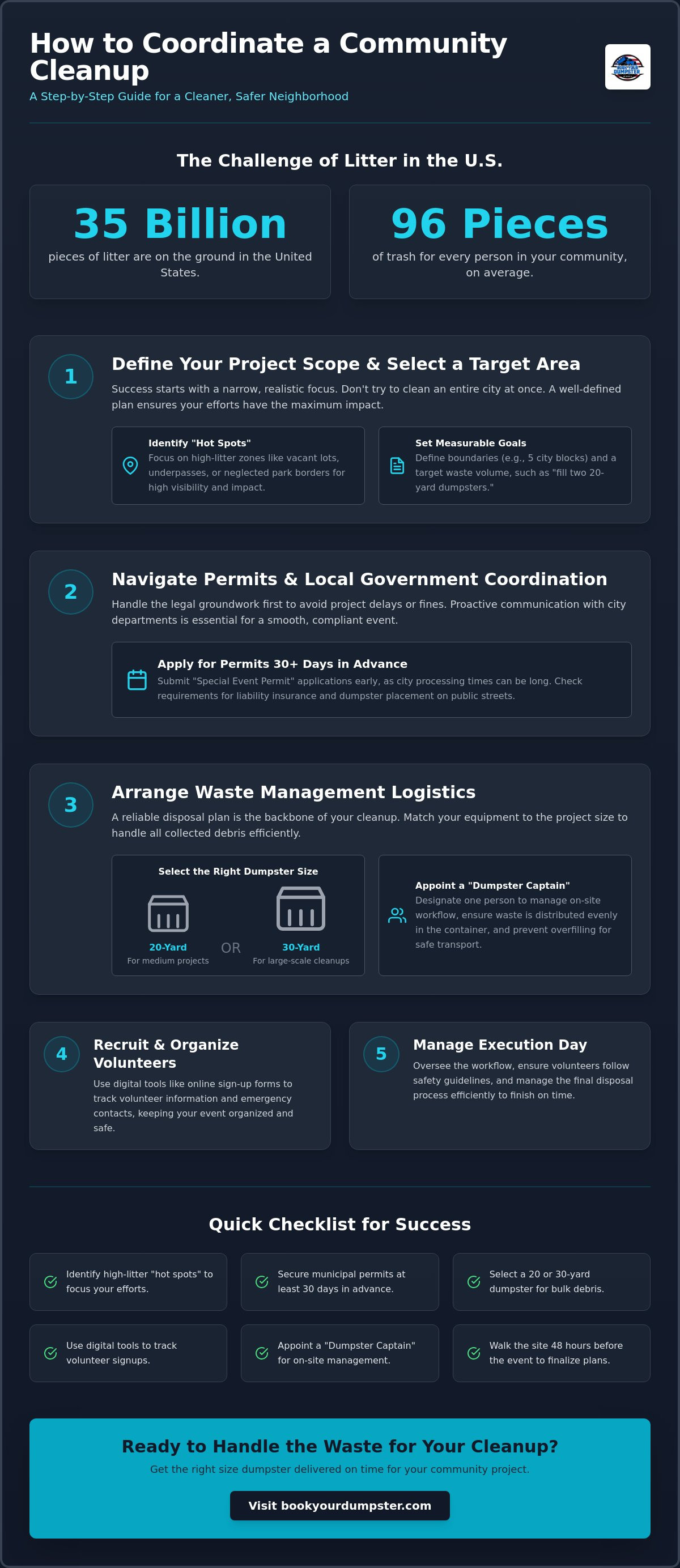
Recruiting volunteers is a logistics task, not just a social one. You need a firm head count to order supplies and size your waste containers correctly. Create a digital signup sheet to track volunteer numbers and collect emergency contact information. This data allows you to send text alerts regarding weather changes or parking instructions. Learning how to coordinate a community cleanup project effectively means managing your human resources as strictly as your waste removal. If you don't know how many people are showing up, you can't assign tasks efficiently.
Reach out to local businesses for sponsorships early in the planning phase. Most hardware stores or grocery outlets will donate water, snacks, or work gloves in exchange for a mention in your promotional materials. This reduces your out-of-pocket costs and builds local investment in the project's success. Use a "Neighborhood Captain" model to maintain order on the day of the event. Assign specific blocks or park sections to small groups led by a designated captain. This prevents volunteers from doubling back over cleaned areas and ensures every square foot of your target zone receives attention.
Promote the event where your neighbors already spend their time. Post regularly in local Facebook groups and on Nextdoor. Don't rely solely on digital reach. Hang physical flyers in high-traffic areas like public libraries and community centers. If you need a reliable 20 or 30-yard container to handle the debris your team collects, Book Your Dumpster USA allows you to reserve equipment at least two weeks in advance to secure your preferred delivery time.
Marketing Your Cleanup Project
Highlight the "before" photos to show the community why their help is urgently needed. Visual evidence drives engagement. Tag local influencers and city council members in your social media posts to increase visibility. For projects in high-density areas like Queens or Paterson, distribute flyers in local coffee shops and laundromats. These locations serve as central hubs for neighborhood information and help you reach residents who may not be active on social media. Consistent messaging across these channels ensures a professional image and a higher turnout.
Managing the Volunteer Experience
Start with a mandatory 10-minute safety briefing at the central command station. Provide clear instructions on what NOT to pick up. This includes hazardous waste, heavy chemicals, or unidentified liquids. If a volunteer finds an item that looks dangerous, instruct them to mark the location and notify a captain. Plan a "post-cleanup" celebration to thank volunteers and build long-term momentum. A simple gathering with snacks allows you to celebrate the transformation and turn one-time helpers into dedicated partners. Recognizing their labor publicly encourages future participation in neighborhood improvements.
Execution Day: Managing the Workflow and Final Disposal
Execution day is the most critical phase of your project. It requires a high-functioning command center and strict oversight of the waste flow. Establish a clear check-in and check-out process for all participants at your central station. This ensures every volunteer is accounted for and has signed the necessary liability waivers. Knowing how to coordinate a community cleanup project means maintaining control from the first bag to the final haul. Assign a "Dumpster Captain" to manage the loading process. This role is essential for logistical efficiency. They ensure the container is filled evenly and prevent volunteers from creating dangerous "trash mountains" that make the unit impossible to transport.
Schedule your dumpster rental pickup for immediately after the event ends. Leaving a full container on the street overnight invites illegal dumping from non-participants. Conduct a final sweep of the entire project area before the team departs. Ensure no bags, tools, or water bottles are left behind. A professional cleanup leaves the site in pristine condition; anything less undermines your project's credibility with the city and future donors.
Operating the Central Command Station
Keep a first-aid kit, extra water, and a copy of all approved permits at the main table. Use a physical or digital map to track which zones have been completed in real-time. This prevents groups from overlapping and keeps the workflow moving. Provide a designated area for "bulk items" like tires, appliances, or electronics. These materials often require separate handling or specialized recycling. Marking this area clearly prevents these items from accidentally entering the standard waste stream and causing issues during the final disposal phase.
Final Waste Removal and Reporting
Check the container volume before the truck arrives. Waste must be level with the top rail for safe transport. Don't overfill the box; drivers will refuse any load that poses a hazard on the road. Once the site is clear, report the total number of bags or estimated tons removed to city officials and your sponsors. This data proves the measurable value of your efforts. Send thank-you notes to every volunteer within 48 hours. Include "after" photos to celebrate the transformation and build long-term momentum for your next neighborhood initiative. Clear results turn one-time helpers into dedicated community partners.
Launch Your Community Transformation
Successful events rely on logistical precision rather than just good intentions. Secure your municipal permits 30 days in advance and assign clear roles to your volunteers to keep the workflow moving. By focusing on site assessment and equipment selection, you ensure that every piece of litter is removed safely and efficiently. Understanding how to coordinate a community cleanup project allows you to focus on the results while we handle the disposal logistics. It's about moving from a state of clutter to a state of resolution with minimal friction.
We support local organizers across New York, New Jersey, and Illinois with reliable service and transparent pricing. Choose from 10 to 40-yard containers to match your project's specific debris volume. Use our straightforward digital platform to schedule your delivery and pickup with confidence. Book Your Dumpster USA for your next community cleanup today and clear the way for a better neighborhood. Our no-nonsense approach to waste management removes the stress of disposal so you can focus on building community pride.
Take the first step toward a cleaner street. With a solid plan and professional equipment, your community's vision for a safer, more beautiful environment is within reach. Start organizing today.
Community Cleanup Logistics FAQ
Do I need a permit for a community cleanup in a public park?
Yes, most municipalities require a Special Event Permit or a Park Use Permit for organized group activities on public land. Contact your local Parks and Recreation Department at least 30 days before your event to verify specific requirements. Public land use is strictly regulated to manage liability and scheduling. Failure to secure a permit can lead to your event being shut down by local law enforcement.
How do I choose the right dumpster size for a neighborhood project?
Select your container size based on the specific type and volume of debris you expect to collect. Use a 10 Yard Dumpster for small park litter or a 20 Yard Dumpster for a standard neighborhood block. If your project involves clearing vacant lots with bulky furniture or construction waste, opt for a 30 or 40 Yard Dumpster to ensure you have enough capacity for heavy items.
What should volunteers do if they find hazardous materials?
Instruct volunteers to leave hazardous materials in place and notify a supervisor immediately. Never place items like car batteries, motor oil, or wet paint into a standard roll-off container. Mark the location of the hazard and contact your local environmental protection agency or a specialized hazardous waste disposal service. Safety is the priority; don't risk exposure to unknown chemicals or biohazards.
Can I get the city to pay for my dumpster rental?
Some municipalities offer Cleanup Day grants or vouchers that cover the cost of waste disposal for registered community groups. Contact your local Department of Public Works or Sanitation to ask about available funding for environmental initiatives. If city funding isn't available, seek sponsorships from local businesses to offset the cost. This is a key step when learning how to coordinate a community cleanup project on a budget.
How many volunteers do I need for a three-block cleanup?
Plan for approximately 15 to 20 volunteers to cover three city blocks thoroughly in a single morning. This allows you to assign five to six people per block, ensuring a deep clean of sidewalks, curbs, and alleyways. Adjust your recruitment goals based on the density of litter in your target area. High-traffic commercial zones often require more labor than quiet residential streets.
What items are prohibited from being put in a roll-off dumpster?
Prohibited items typically include tires, electronics, appliances with Freon, asbestos, and flammable liquids. Placing these materials in a rented container results in additional fees or the driver refusing the haul. Check your rental agreement for a full list of restricted items before loading. For community projects, set up a separate area for these prohibited goods and arrange specialized recycling or disposal through the city.
Is it better to have one large cleanup or several small ones?
Start with several small, localized projects to build organizational experience and volunteer momentum. Smaller events are easier to manage logistically and require less initial funding for permits and equipment. Once you master how to coordinate a community cleanup project on a small scale, you can expand to larger, neighborhood-wide "clean sweep" events with more confidence and established community support.
How do I handle illegal dumping found during the project?
Report illegal dumping sites to your city's non-emergency line or local code enforcement office immediately. Don't attempt to move large-scale industrial waste or massive piles of tires without professional assistance. Document the site with photos and precise location data before the cleanup starts. Most cities have specific protocols for handling illegal dump sites that exceed the capacity of a standard community event.


