

The biggest mistake in a home renovation isn't picking the wrong paint color; it's assuming your interior demolition dumpster only needs to be big enough to fit the pile. Most people focus on volume, but interior demolition is actually a game of weight. You've likely worried about hidden fees or heavy plaster cracking your driveway during a gut renovation. It's a valid concern because dense materials like drywall and tile add up much faster than you would expect.
This 2026 guide ensures you get a hassle-free rental process with transparent pricing from start to finish. You'll learn how to choose the right size for your specific debris and how to manage safe deliveries in tight urban spaces like Queens or San Francisco. We'll break down the weight limits for construction waste and explain why a 10 yard dumpster is often the most efficient tool for heavy interior work. By the end of this article, you'll have a clear plan for a clean, professional site setup that protects your property and your budget.
Key Takeaways
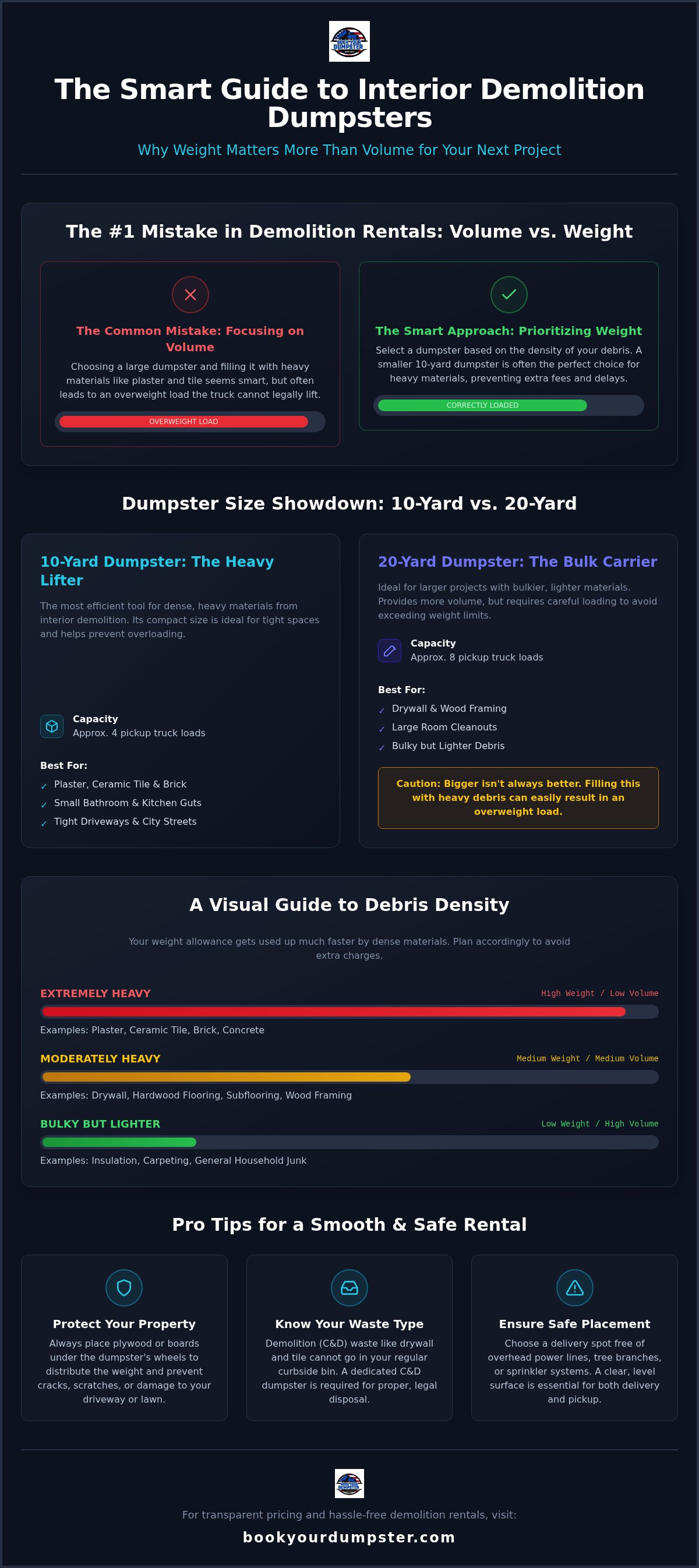
- Select your container based on material density rather than just volume. Use a 10 yard dumpster for heavy debris like plaster and tile to stay within weight limits.
- Understand that an interior demolition dumpster is specifically rated for Construction and Demolition (C&D) waste, which standard curbside services will not accept.
- Prioritize weight calculations over fill levels. Estimating the weight of drywall and flooring before you start prevents unexpected overweight fees at the end of your project.
- Protect your driveway or job site from damage during placement. Use plywood or street plates to distribute the load, especially when navigating tight urban spaces.
- Ensure pricing transparency by choosing a provider with upfront rates. A streamlined online booking system helps you manage logistics without the stress of hidden costs.
What is an Interior Demolition Dumpster and Why Use One?
An interior demolition dumpster is a heavy-duty roll-off container specifically engineered for Construction and Demolition (C&D) waste. Don't confuse this with a standard residential trash bin or a general cleanout rental. Your local curbside service will not haul away heavy chunks of drywall, broken tile, or rusted plumbing fixtures. Using a dedicated interior demolition dumpster keeps your job site organized and ensures compliance with OSHA safety standards by removing trip hazards and airborne dust sources immediately. It acts as the central hub for all debris, allowing your crew to focus on the gutting process rather than waste management.
Choosing the right container separates a professional project from a logistical disaster. General cleanout dumpsters are designed for bulky but light items like furniture and household junk. Demolition rentals are built for density. Plaster, brick, and flooring are heavy materials that can easily exceed the weight limits of standard containers. Renting a unit specifically for demo work protects you from the stress of an overweight load that a truck cannot legally or safely lift. It ensures your project stays on schedule and within budget from day one.
Debris Types Handled in Interior Demolition
Manage your waste by understanding the density of your materials before you start swinging a sledgehammer. Drywall and sheetrock take up significant volume but are relatively moderate in weight. Lath and plaster are different. These materials are extremely heavy and can quickly turn a large dumpster into an immobile anchor if you aren't careful. Flooring materials like ceramic tile, hardwood, and thick subflooring also require specific weight considerations. Always prioritize the weight capacity over the physical size of the container when gutting a bathroom or kitchen. Dense materials fill up weight limits long before they reach the top of the container walls.
The Logistical Advantage of Roll-Off Containers
Maintain your project timeline by centralizing all waste collection in one spot. Instead of losing hours to multiple trips to a local dump, throw everything into a single roll-off container. This efficiency is critical in high-traffic urban areas like Queens or Boston where street space is limited and parking is a premium. Professional placement ensures the dumpster is accessible for your crew without blocking neighbors or violating local municipal codes. Visit Book Your Dumpster USA to select a unit that fits your specific metropolitan requirements. Using a professional service eliminates the guesswork of waste disposal and keeps your site clean, safe, and productive.
Choosing the Right Size: 10 Yard Dumpster vs. 20 Yard Options
Selecting the correct interior demolition dumpster requires a shift in perspective. You aren't just renting volume; you're renting weight capacity. Most contractors and homeowners make the mistake of choosing the largest container available to avoid multiple trips. This strategy often backfires. In the waste industry, bigger isn't always better. A larger container like a 30 or 40 yard model may have a physical volume that exceeds the legal weight limit of the truck when filled with dense materials. If you fill a large bin with heavy plaster or tile, the hauler won't be able to lift it safely. This results in "dry run" fees and the labor-intensive task of unloading debris to meet weight requirements.
Visualizing capacity helps prevent these logistical bottlenecks. A 10 yard dumpster holds approximately four pickup truck loads of waste. It's compact and manageable. A 20 yard dumpster doubles that capacity, holding about eight pickup truck loads. When you plan your gut renovation, look at your pile and calculate the density. Drywall is relatively light, but a stack of 100 square feet of plaster can weigh over 300 pounds. Use this metric to decide if you need more space or more weight allowance.
When to Choose a 10 Yard Dumpster
Heavy materials dictate the need for a smaller footprint. If you're tackling a small bathroom remodel or removing several hundred square feet of ceramic tile, the 10 yard model is the most efficient tool. It fits easily in tight driveways and is much easier to place on narrow city streets where permits are strictly enforced. Its lower walls also make it easier to toss heavy buckets of debris over the side without straining your crew. For a deeper dive into these specifics, read our 10 Yard Dumpster Rental: The Complete Buying Guide for 2026.
When a 20 or 30 Yard Dumpster is Necessary
Bulkier projects require more vertical space. Kitchen renovations often involve large cabinets, countertops, and appliances that take up significant volume without necessarily maxing out weight limits immediately. Multi-room demolitions that include insulation, ceiling tiles, and wooden studs also benefit from the extra height of a 20 or 30 yard container. Commercial interior fit-outs usually generate a mix of metal studs, carpet tiles, and partition walls that are light but take up massive amounts of room. Choosing the right size ensures you don't pay for empty space. You can view our full range of dumpster sizes to match your specific project dimensions and weight requirements.
Calculating Interior Demolition Waste: Weight and Volume
Success in renovation logistics depends on accurate math. You must distinguish between the "fill level" and the "weight limit" of your interior demolition dumpster. The fill level is a visual boundary; you cannot load debris higher than the top rail of the container for safety during transport. The weight limit, however, is a structural and legal cap. Exceeding this limit creates significant safety hazards for the driver and can lead to expensive dry-run fees if the truck's hydraulic system cannot lift the load. Always prioritize the weight of your materials over the physical space they occupy.
Estimating debris weight requires knowing your materials. Modern drywall is relatively light. 100 square feet of half-inch drywall weighs approximately 160 pounds. Old-school lath and plaster are far denser. That same 100 square feet of plaster can easily exceed 300 or 400 pounds once you account for the wood lath and multiple layers of masonry. Mixed loads add another layer of complexity. If you are combining heavy masonry with light timber or metal studs, distribute the weight evenly. Place the heaviest items at the bottom to maintain a low center of gravity for the roll-off truck.
Material Density Guide for Renovators
Density in construction and demolition waste is the measurement of mass per unit of volume, determining how quickly a container will reach its legal weight capacity before it is physically full. Plaster and lath weigh significantly more than modern sheetrock because they consist of thick layers of gypsum or lime mixed with sand. Tile and concrete backer board are essentially stone. When gutting a bathroom, assume every square foot of tiled wall weighs at least five pounds. These dense materials fill a container's weight allowance much faster than bulky items like cabinets or insulation.
Avoiding Hidden Fees Through Proper Estimation
Eliminate surprises by communicating your project scope clearly to a roll-off dumpster rental specialist. Tell them exactly what you are tearing out. If you're removing three layers of shingles or a thick plaster ceiling, they can recommend a 10 yard dumpster specifically designed for heavy debris. Maximize your space by flattening cardboard and breaking down wooden studs. This prevents air pockets that waste volume. For more detailed strategies on managing high-volume projects, see The Ultimate Guide to Construction Debris Removal in 2026. Efficient packing keeps your site clean and your costs predictable.
Property Protection and Placement Logistics
An interior demolition dumpster is a heavy-duty tool that requires careful placement to prevent property damage. You're placing several tons of steel on your driveway, which can lead to permanent scarring or structural cracks if you don't prepare the surface. Use 4x8 sheets of plywood under the wheels and the front feet of the container. This simple step distributes the load and creates a buffer between the metal and your asphalt. In regions like Massachusetts or New Jersey, where seasonal freeze-thaw cycles weaken pavement, this protection is mandatory to avoid costly repairs after the project ends.
Efficiency starts with strategic positioning. Aim to place the container as close to your primary exit point as possible. This "demo door" strategy minimizes the distance your crew travels with heavy loads, which directly impacts your project's bottom line. If your site has limited space and requires street placement, verify your local permit requirements. Most urban municipalities require a temporary occupancy permit to place a container on a public curbside. Failing to secure this can result in heavy fines or the immediate removal of your dumpster.
Safe Placement Strategies
Identify overhead hazards before the delivery truck arrives. The roll-off mechanism requires substantial vertical clearance to tilt the container into place. Power lines, telephone wires, and low tree branches are common obstructions that can halt a delivery. You also need a level surface to ensure the container remains stable during the loading process. A shifting dumpster is a major safety hazard, especially when you're tossing heavy materials like masonry or timber over the side. Ensure the delivery path is clear of parked cars and debris to allow the truck enough room to maneuver.
Protecting Interior Surfaces
Demolition is inherently messy, but the damage shouldn't extend beyond the work zone. Establish a dedicated path of travel from the interior demo site to the exterior container. Protect finished flooring with heavy-duty surface protectors or reinforced cardboard to prevent wheelbarrow tracks and impact damage. Managing dust is equally important. Create a staging area at the exit point to shake off debris and contain dust before it tracks across the property. For a professional service that prioritizes property integrity, book your interior demolition dumpster online and get straight to work.
Rent Your Interior Demolition Dumpster with Book Your Dumpster USA
Managing a renovation project is messy enough without fighting your waste provider over hidden costs. Book Your Dumpster USA simplifies the entire process by offering an interior demolition dumpster rental service built on reliability and transparency. You won't find hidden "weight surprises" or vague fee structures in our agreements. We provide upfront pricing that reflects the true cost of disposal for your specific project. Whether you're gutting a commercial retail space or a residential bathroom, our team offers the professional guidance needed to select a container that handles your debris density without exceeding legal limits.
Our digital-first approach removes the traditional friction found in the waste industry. You need a service that acts as a reliable tool, not a logistical burden. By prioritizing pricing integrity and clear communication, we act as a dependable partner for every phase of your demolition. We've modernized the rental experience to match the urgency of modern construction schedules. Stop worrying about the logistics of your waste and focus on the quality of your renovation. We handle the heavy lifting so your crew can stay productive from the first sledgehammer swing to the final sweep.
The Book Your Dumpster USA Difference
We provide a pragmatic, professional service tailored to the needs of both high-volume contractors and dedicated DIYers. Our team understands the specific regional disposal regulations and permit requirements in key metros, including New York, New Jersey, Illinois, Massachusetts, and San Francisco. This local expertise ensures your project stays compliant and avoids unnecessary municipal fines. We maintain a strict commitment to punctuality. A delayed dumpster means a stalled crew and wasted labor costs. We respect your timeline by ensuring every delivery and pickup happens as scheduled. It's a no-nonsense approach that builds immediate trust through consistent performance.
Start Your Renovation Today
Take control of your project site in minutes. Our streamlined online booking system allows you to select your city and choose the ideal container size for your debris. If you're tackling heavy materials like plaster or tile, remember our previous advice and consider the 10 yard model for its superior weight-to-volume ratio. Schedule your delivery to align perfectly with your demolition start date to keep your site clear and safe. Don't let waste management become a bottleneck in your project. Book Your Interior Demolition Dumpster Online Now and secure a partner that values your time as much as you do.
Streamline Your Renovation Logistics
Managing a renovation requires precision from the first wall removal to the final waste haul. You now understand that weight density is more critical than volume when choosing your rental equipment. Prioritizing the correct container size prevents costly overweight fees and ensures your project stays on schedule. By protecting your driveway with plywood and calculating the density of heavy plaster or tile, you eliminate the logistical stress that often derails a gut renovation.
Book Your Dumpster USA provides professional roll-off delivery with transparent C&D waste pricing across NY, NJ, IL, MA, and San Francisco. Our streamlined system removes the guesswork from your disposal needs. Don't let debris slow you down. Use our no-nonsense expertise to keep your site clean and your property safe. Rent Your Interior Demolition Dumpster with Book Your Dumpster USA to start your next project with confidence. You have the knowledge and the plan; now take the next step toward a successful renovation. It's time to get started.
Frequently Asked Questions
What size dumpster do I need for a bathroom demolition?
A 10 yard dumpster is usually the right choice for a bathroom gut. It handles heavy materials like tile, porcelain fixtures, and plaster without exceeding weight limits. Larger bins often take up too much space for small residential sites and are harder to place in tight driveways. Choose this size to keep your project site organized and manageable during the demolition phase.
Can I put old appliances in my interior demolition dumpster?
You can generally include appliances like stoves or dishwashers in a standard roll-off container. However, some local regulations require refrigerators or air conditioners to be handled separately due to freon content. Check with your specialist to ensure you follow regional environmental rules for major appliances. Proper sorting prevents delays and ensures compliance with local waste management policies at the disposal site.
How much weight can a 10 yard dumpster hold for plaster debris?
A 10 yard interior demolition dumpster typically holds between 2 to 3 tons of heavy debris. Plaster is extremely dense; you'll reach this weight limit long before the container is physically full. Stop loading once you reach the specified tonnage to avoid safety issues during pickup. This ensures the truck can legally transport the load to the disposal facility without delay.
Do I need a permit for a dumpster in New York City or Chicago?
Secure a permit if you plan to place the container on a public street or sidewalk. Private property placements usually don't require one, but city-specific rules in NYC and Chicago are strict about public right-of-way. Apply for these permits through the local Department of Transportation before scheduling your delivery. This step prevents fines and keeps your project moving without legal interruptions from city inspectors.
What items are prohibited in an interior demolition dumpster?
Prohibited items include hazardous materials like asbestos, lead-based paint, tires, and wet chemicals. Don't put flammable liquids or batteries in your interior demolition dumpster. These items require specialized disposal facilities and can't be mixed with standard construction waste. Always separate hazardous materials to avoid environmental fines and ensure a smooth pickup process for your crew at the end of the project.
How do I protect my driveway from a roll-off dumpster?
Place 4x8 sheets of plywood or heavy-duty street plates where the dumpster's wheels and feet will rest. This distributes the pressure of the steel box and prevents the weight from cracking your asphalt or concrete. It's a simple, low-cost method to ensure the heavy equipment doesn't leave permanent marks on your property. Always prepare the site before the delivery truck arrives to protect your driveway surface.
Is same-day delivery available for renovation dumpsters?
Check local availability as same-day service depends on current inventory and driver schedules in your specific metro area. Most professional services recommend booking at least 24 to 48 hours in advance to guarantee your preferred delivery window. Use the online booking system to see the earliest available dates for your zip code. Planning ahead ensures you have the container ready when your demolition crew starts their work.
What happens if I exceed the weight limit on my rental?
Exceeding the weight limit results in additional overage fees based on the extra tonnage. If the load is too heavy for the truck's hydraulic system to lift, you'll also face a dry-run fee. You'll be required to remove debris until the container meets legal requirements before the hauler can safely transport it. Monitor your fill level and material density to avoid these logistical setbacks and extra costs.


