
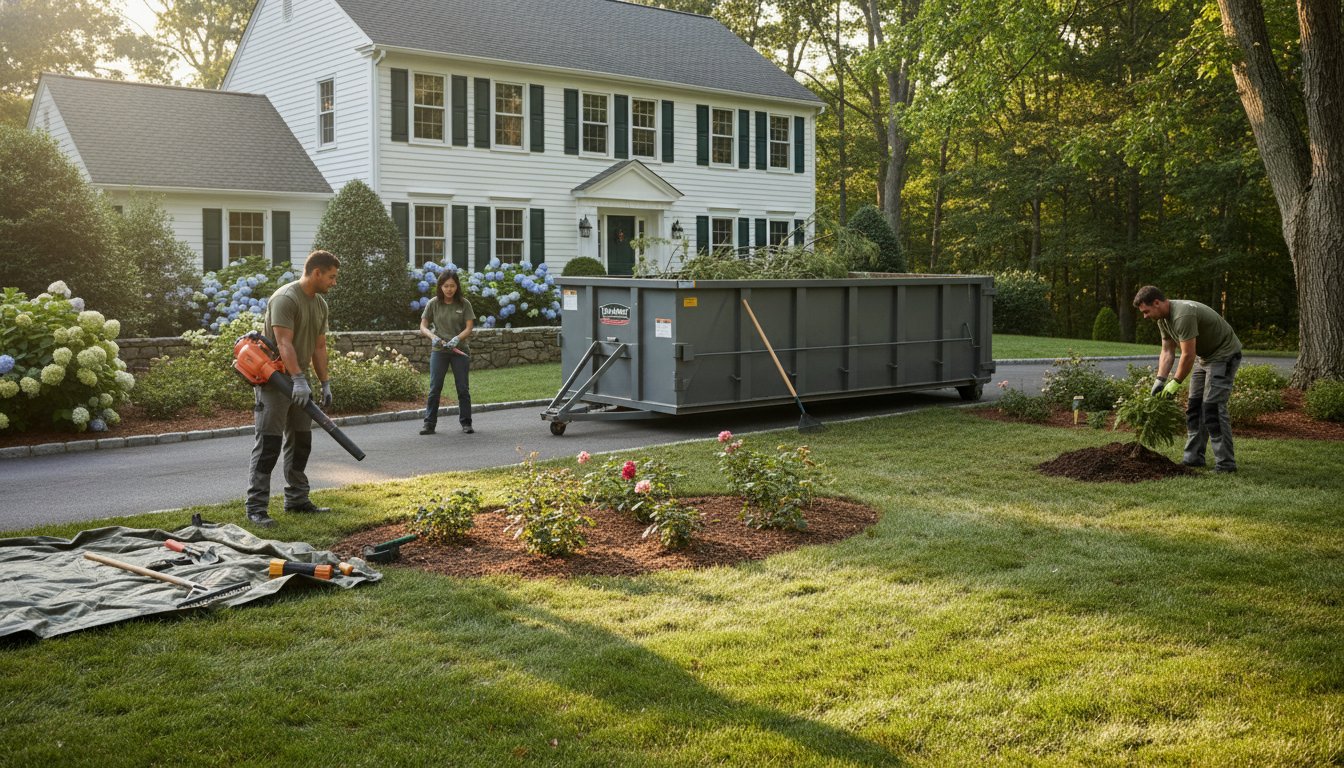
Most landscaping projects stall not because of poor design, but because of a total lack of debris logistics. You already know that clearing out old sod, branches, and soil is the most labor-intensive part of any yard renovation. It's a messy process that usually generates more waste than you originally anticipated. Securing a reliable dumpster rental for landscaping debris is the only way to keep your site clear and your project on schedule.
This 2026 project checklist gives you a clear plan for debris removal. We will show you how to select the right container size and avoid the common pitfalls of heavy material overages. You'll learn which organic materials are allowed, how to comply with strict HOA placement rules, and when you need a city permit for street placement. Follow these steps to move from a cluttered yard to a finished landscape with minimal logistical friction.
Key Takeaways
- Categorize your waste correctly to distinguish between light organic matter and heavy debris like dirt or stumps.
- Select the optimal container size for your scope, whether you need a 10-yard dumpster for a yard refresh or a 40-yard unit for major clearing.
- Avoid local fines by verifying HOA bylaws and municipal placement rules before your scheduled delivery date.
- Simplify your project by booking a dumpster rental for landscaping debris online for a more efficient cleanup.
- Follow the "fill to the rim" loading standard to maintain safety and avoid transport hazards during the removal process.
What Qualifies as Landscaping Debris?
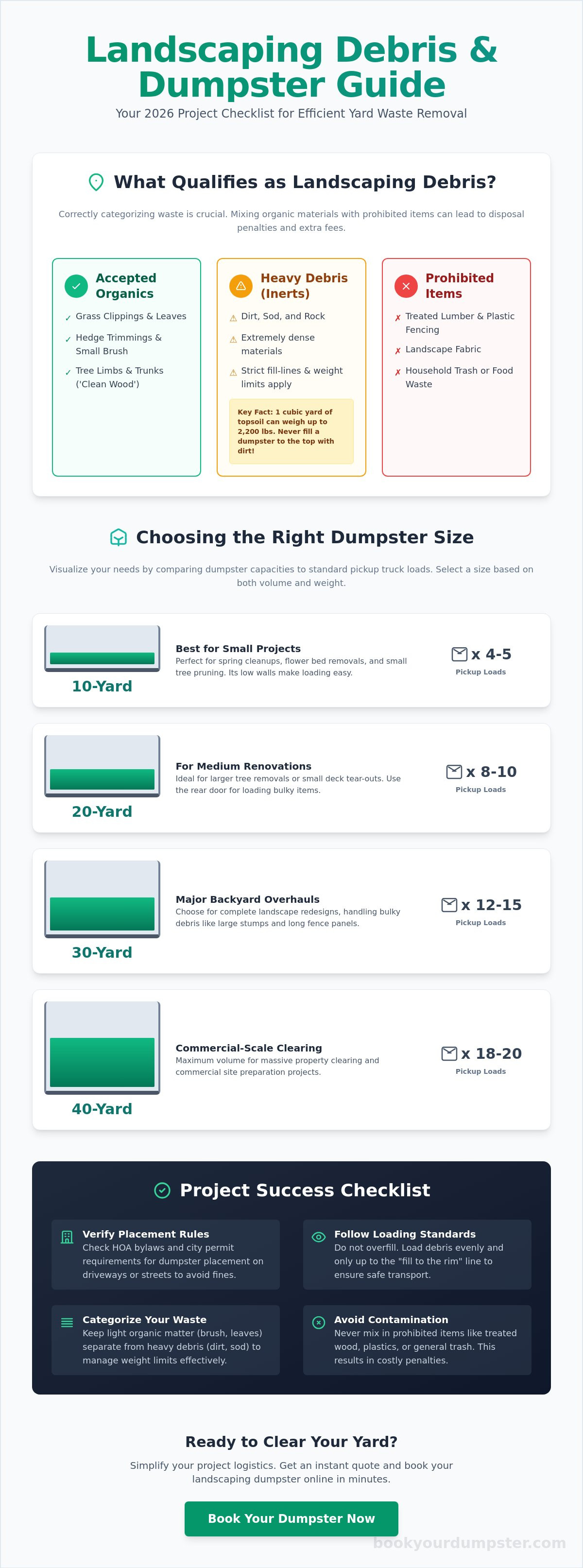
Landscaping debris is organic matter produced during yard renovations or land clearing. Understanding What is Green Waste? is the first step in planning your cleanup. When you secure a dumpster rental for landscaping debris, you're committing to a specific waste stream. Don't mix this organic material with standard household trash, food waste, or construction materials like drywall. Doing so often results in heavy local disposal penalties because mixed loads require manual sorting at the facility. Prohibited items include treated lumber, plastic fencing, and landscape fabric. These synthetic materials don't decompose and will ruin a clean batch of compost, leading to rejected loads and extra hauling costs.
Accepted Organic Materials
Load your container with grass clippings, leaves, hedge trimmings, and small brush. These items are easily processed and frequently diverted to municipal composting sites rather than landfills. Tree limbs and larger trunks are generally categorized as 'clean wood.' This means the wood is free of paint, stains, and chemical treatments like pressure-treating agents. Processing facilities grind this wood into mulch or biofuel. If you have large tree trunks, check the diameter limits before you start loading. Some facilities won't accept logs over a certain size because they jam industrial grinders. Keeping these materials pure ensures the lowest possible environmental impact and keeps your disposal costs predictable.
Heavy Debris: Dirt, Sod, and Rock
Inert materials like dirt, sod, and rock follow different rules. These are extremely dense and heavy compared to light brush. For example, a single cubic yard of topsoil can weigh up to 2,200 pounds. This is why a dumpster rental for landscaping debris involving soil often has strict fill-line requirements and weight limits. Never fill a container to the top with dirt; it will exceed the truck's lifting capacity and create a safety hazard on the road. In certain areas like NJ or MA, local regulations may mandate that you use a separate container specifically for soil or rock. This prevents contamination of the standard organic waste stream. Always separate sod from light brush. Sod contains soil and roots, making it much heavier than dry branches, so plan your container size accordingly.
Choosing the Right Dumpster Size for Yard Projects
Selecting a dumpster rental for landscaping debris requires a realistic look at your project's footprint. Size matters for two reasons: physical volume and total weight. If you're clearing a small garden, a 10-yard container is usually sufficient. For massive property clearing or commercial site preparation, you'll need the capacity of a 30 or 40-yard unit. Use these pickup truck equivalents to visualize your needs:
- 10-Yard Dumpster: 4 to 5 pickup truck loads.
- 20-Yard Dumpster: 8 to 10 pickup truck loads.
- 30-Yard Dumpster: 12 to 15 pickup truck loads.
- 40-Yard Dumpster: 18 to 20 pickup truck loads.
The 10-Yard Dumpster: A Landscaper’s Favorite
The 10-yard bin is the industry standard for residential yard work. Its small footprint fits easily into tight driveways in dense urban areas like Queens or Boston. This size is perfect for spring cleanups, flower bed removals, and small tree pruning. One major advantage is its low profile. The walls are typically only 3 to 4 feet high. This makes it much easier to toss heavy materials over the side without straining your back. For a deeper dive into residential applications, read our 10 yard dumpster rental guide to see if it fits your specific driveway dimensions.
Weight limits change drastically when you deal with inert materials. While branches are light, 10 yards of wet sod or topsoil can weigh over 10 tons. Most standard trucks cannot legally or physically haul that much weight in a single trip. If your project involves heavy dirt, rock, or concrete, you must use a smaller container or fill a larger one only partially to remain compliant. Review the EPA guidelines on composting to identify which materials can be diverted from the dumpster entirely to save on weight and space.
Sizing Up for Major Backyard Overhauls
Choose a 20-yard or 30-yard bin when your project involves large tree removals, deck tear-outs, or complete landscape redesigns. These containers handle the bulky, awkward debris that won't break down easily, such as large stumps or long fence panels. Be aware that these larger bins have higher walls, often reaching 6 to 8 feet. You won't be able to lift heavy debris over the side easily. Instead, use the rear swinging door to walk items directly into the container. For commercial-scale land clearing, the 40-yard dumpster provides the maximum volume allowed on residential streets. You can view container dimensions online to ensure you have enough clearance for delivery.
Dumpster Placement Rules in Residential Communities
Securing a dumpster rental for landscaping debris is only half the battle. You must identify a drop-off location that's both accessible for the driver and compliant with local rules. In dense residential areas, placement is often the most significant bottleneck. Failing to plan for this leads to dry-run fees if the truck can't safely drop the container. Check your HOA bylaws immediately. Some associations restrict dumpster placement to specific hours or require containers to be screened from public view. Communicate with your neighbors before the delivery date. Ensuring they don't park in the access path saves time and prevents site tension. A clear path is a requirement, not a suggestion. If the driver arrives and can't drop the bin due to a parked car, you'll still be charged for the trip.
The Townhouse Placement Checklist
Townhouse communities present unique spatial constraints. Measure your designated spot carefully. A 10 or 20-yard bin requires a flat, stable surface. Never block fire lanes or common access points. You must also verify vertical clearance. Roll-off trucks need significant room to hoist the container. Watch for low-hanging branches or overhead power lines that might snag the equipment. Many HOAs require "protective boarding," such as thick plywood, placed under the dumpster. This prevents the heavy steel from cracking or staining the asphalt or pavers. Check if your community requires a specific color or type of tarp to cover the debris when not in use.
City-Specific Permit Requirements
Street placement rules vary by municipality. If you can't fit the container on your private driveway, you'll likely need a "Right of Way" permit. Cities like Chicago, San Francisco, and New York have strict enforcement for dumpsters placed on public property. In Illinois and New York, these permits often require a fee and a specific timeframe for the rental. Private driveway placement usually bypasses these requirements, but always verify with your local building department first. Fines for unpermitted containers on city streets can be several hundred dollars per day. Book Your Dumpster USA can often provide guidance on local permit standards to help you stay compliant. Always ask about the duration of the permit, as some cities require renewals if your project exceeds seven days.
The Landscaping Debris Loading Checklist
Efficient loading turns a chaotic pile of yard waste into a manageable disposal task. When you secure a dumpster rental for landscaping debris, you pay for the volume of the container and a specific weight allowance. Wasting space with air pockets or poorly placed branches leads to needing a second bin, which doubles your costs. Follow a systematic approach to ensure you get every cubic yard of value out of your rental.
Maximizing Your Dumpster Volume
Start by breaking down large branches and brush. Long, crooked limbs create "spider-webbing" inside the bin, leaving large gaps that you can't fill. Use a chainsaw or loppers to cut wood into manageable four-foot sections. Place heavy logs or stumps at the bottom of the container first. This lowers the center of gravity and makes the load more stable for the truck. Once the heavy base is set, layer smaller debris like leaves and grass on top to fill the gaps between the logs. Most roll-off containers feature a "walk-in" door at the rear. Open this door to carry heavy stumps directly into the unit instead of lifting them over the side walls. This prevents injury and allows you to pack the front of the bin more tightly.
Safety and Compliance Tips
Adhere strictly to the "fill to the rim" rule. Debris must never extend above the top edge of the dumpster. Drivers are legally required to tarp every load before transport. If branches or boards stick out, the tarp won't fit, and the driver will refuse the pickup. This results in a missed trip fee and requires you to level the load yourself. Distribute the weight evenly across the floor of the bin. An off-balance load can cause the truck to tip or the container to slide dangerously during the hoisting process.
Monitor the amount of wet soil or sod you add to the mix. As established in previous sections, these materials are significantly heavier than dry brush. If you expect a heavy load, schedule your dumpster pickup early to avoid project delays. On the day of removal, ensure the path to the bin is completely clear. Move all vehicles, equipment, and low-hanging gate latches. The truck needs a straight, unobstructed line to back up to the container and pull it onto the bed safely.
Booking Your Dumpster Rental with Book Your Dumpster USA
Securing a dumpster rental for landscaping debris shouldn't be a logistical hurdle. Our streamlined online system at Book Your Dumpster USA removes the friction from waste management. You can select your container, schedule delivery, and manage your account through a digital-first interface. This approach respects your time and ensures your project remains the priority. Don't waste hours on the phone negotiating with brokers. Use our platform to get immediate clarity on availability and logistics.
We maintain a fleet of 10, 20, 30, and 40-yard dumpsters to accommodate any project scope. Whether you're refreshing a residential garden or clearing a commercial development, we have the hardware to handle the load. We operate with a strict commitment to pricing integrity and punctuality across New York, New Jersey, Illinois, Massachusetts, and San Francisco. If your project involves more than just organic yard waste, consult our construction debris removal pillar for guidance on mixed-waste disposal. This ensures you avoid the penalties associated with contaminated loads.
Why Choose Us for Your Landscaping Project?
Experience matters when dealing with urban logistics. We understand the specific regulations in Queens, Chicago, and Boston. Our team navigates the permit requirements and street access challenges that often stall projects in these high-density areas. We provide a pragmatic, professional service tailored to both homeowners and contractors. You get a reliable partner who understands that a late delivery or a missed pickup isn't just an inconvenience; it's a cost. Our schedules are fixed and our communication is direct. We treat your project timeline with the same urgency you do.
Ready to Clear the Debris?
Start your project with a clear plan and a reliable tool. Visit our homepage to check local availability and view our current inventory for your dumpster rental for landscaping debris. Before you finalize your order, have your placement instructions ready for the driver. Clear the path, check for overhead obstructions, and ensure your site is ready for the roll-off truck. Book Your Dumpster Now to secure your delivery date and move your project toward completion. We also provide front load commercial waste pickup and private curbside trash pickup for businesses and residential communities requiring ongoing service.
Streamline Your Property Transformation
Managing a yard renovation requires more than just a vision; it demands a solid logistical framework. You now have the checklist needed to handle organic waste, navigate placement permits, and load your container safely. By selecting the correct 10, 20, 30, or 40-yard unit and following the "fill to the rim" standard, you avoid the common delays and hidden costs that stall many residential projects. Securing a reliable dumpster rental for landscaping debris is the final step in moving from a cluttered site to a finished landscape.
We provide straightforward waste solutions across NY, NJ, IL, MA, and SF. Our digital platform allows for easy online booking in under 5 minutes, giving you immediate control over your project schedule. We stand by our promise of transparent pricing with no hidden fees, so you can budget with confidence. Don't let brush and soil piles dictate your progress. Rent your landscaping dumpster online today! and take the first step toward a cleaner, more organized job site. Your project deserves a partner that values punctuality and efficiency as much as you do.
Frequently Asked Questions
Can I put tree stumps in a landscaping dumpster?
Yes, tree stumps are accepted in a dumpster rental for landscaping debris, but they require careful loading. Stumps are significantly heavier than branches and can quickly exceed weight limits. Ensure the stumps are free of excessive soil and rocks to keep the load manageable. Check if your local facility has diameter restrictions before loading large stumps into the container.
Do I need a permit for a dumpster in my driveway in New Jersey?
You generally don't need a permit if the dumpster is placed on private property like a driveway. However, New Jersey municipalities have varying local ordinances. Always verify with your specific town hall or building department. If any part of the container touches a public sidewalk or street, you'll almost certainly need a Right of Way permit to avoid fines.
What happens if my landscaping dumpster is over the weight limit?
Exceeding the weight limit results in additional overage fees charged per ton. If the container is too heavy for the truck to lift safely, the driver will refuse the pickup. You'll then have to remove enough material to meet the limit and schedule a second trip. Monitor your intake of dense materials like wet sod or soil to prevent these logistical delays.
Can I mix yard waste with old patio furniture in the same dumpster?
No, you shouldn't mix organic yard waste with furniture or household trash. Landscaping debris is often diverted to composting facilities that only accept clean green waste. Adding plastic, metal, or treated wood furniture contaminates the load. This results in the entire container being classified as mixed municipal waste, which typically carries higher disposal costs and potential penalties.
How long can I keep the dumpster on my property for a landscaping project?
Standard rental periods typically last between seven and ten days. You can often extend this duration for a daily fee if your project takes longer than expected. Always confirm the pickup date during the booking process to ensure the truck returns exactly when you need it. Scheduling your collection as soon as the work is finished keeps your driveway clear and avoids extra charges.
Is there a specific dumpster for dirt and sod removal?
Yes, dirt and sod removal often requires a specific inert dumpster protocol due to the extreme weight of these materials. We typically recommend a 10-yard or 20-yard container for these projects. Never fill a larger 30 or 40-yard bin to the top with soil. The truck won't be able to lift it, and it will exceed legal road weight limits for transport.
Are there items I absolutely cannot put in a landscaping dumpster?
You cannot put hazardous materials, chemicals, paints, or tires in any dumpster. For landscaping projects, specifically avoid treated lumber, railroad ties, and plastic fencing. These items contain chemicals or synthetic materials that cannot be composted. Mixing them into a dumpster rental for landscaping debris will lead to rejected loads at the processing facility and significant decontamination fees.
How much space does the delivery truck need to drop off the dumpster?
The delivery truck needs approximately 60 feet of straight-line space to drop the container safely. You also need about 23 feet of vertical clearance to allow the hoist to lift and roll the bin off the bed. Ensure the area is free of low-hanging wires, tree limbs, and parked vehicles. If the site is too tight, the driver cannot complete the delivery.


