
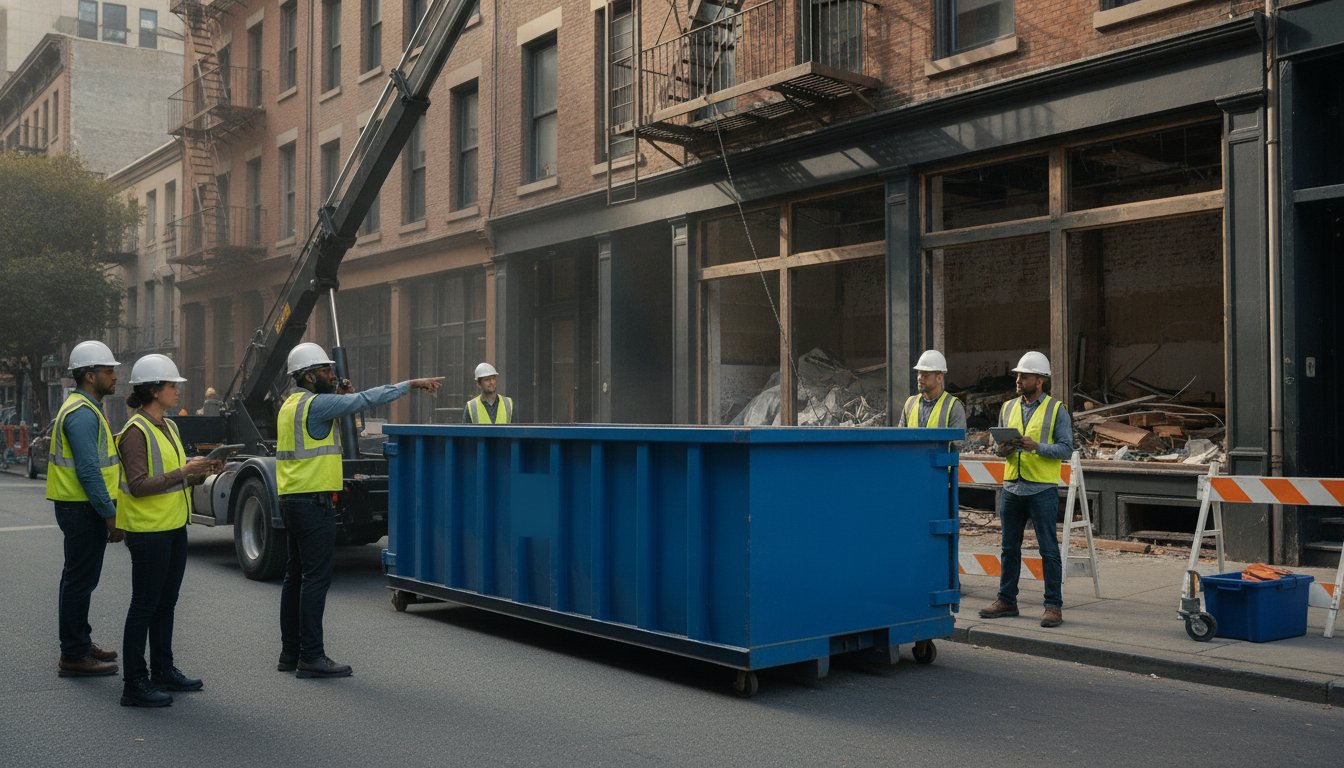
Did you know that placing a roll-off in a public right-of-way without the correct permit can trigger fines exceeding $500 per day in some major cities? For a busy owner or contractor, these hidden costs and delays are unacceptable. You're already managing a complex construction timeline and tight margins. The last thing you need is a city inspector halting your project because of a waste management oversight. Securing a reliable restaurant renovation dumpster rental is about more than just finding a bin; it's about precision timing and absolute regulatory compliance.
We understand that renovation waste is a high-velocity logistics puzzle. This guide provides the professional framework you need to master the logistics of restaurant demolition and renovation waste. You'll learn how to select the right roll-off size for each phase, from the initial gut-out to the final fit-out. We'll show you how to navigate strict urban permit requirements and schedule pickups that respect your construction schedule. Use this 2026 buying guide to streamline your waste disposal, avoid costly penalties, and keep your renovation on track.
Key Takeaways
- Identify the specific materials involved in a commercial kitchen gut-out to separate standard trash from construction and demolition debris.
- Select the optimal roll-off size for your project, ranging from 10-yard bins for small updates to 40-yard containers for full-scale demolition.
- Master the permit process for dense urban districts to ensure your restaurant renovation dumpster rental complies with city regulations and avoids costly daily fines.
- Sync your dumpster delivery and swap schedule with project milestones to prevent construction delays and maintain a clean job site.
- Utilize a streamlined online booking process to secure the right equipment quickly and manage renovation costs with transparent pricing structures.
Planning Your Restaurant Renovation: Why Specialized Waste Management Matters
Your daily trash service is built for food scraps and packaging. A renovation is a different beast entirely. It generates construction and demolition (C&D) waste that is heavy, bulky, and often sharp. Standard front-load commercial waste pickup bins lack the structural integrity to handle the weight of concrete or the volume of a full kitchen strip-out. Overloading your regular bins leads to equipment damage and service denials. You need a dedicated restaurant renovation dumpster rental to manage the flow of materials effectively. Following established waste management principles ensures your site remains organized and your project stays on schedule.
A restaurant gut-out involves specific materials that require heavy-duty containment. You'll be clearing out ceramic floor tiles, water-damaged drywall, industrial metal venting, and old cabinetry. These items don't just take up space; they create a chaotic environment that can slow down your crew. Using a roll-off dumpster allows you to consolidate these materials in one place, keeping the interior of your building clear for active construction. This isn't just about convenience. It's about maintaining a safe, OSHA-compliant job site where workers can move freely without tripping over debris.
The Demolition Phase vs. The Build-Out
The first 48 hours of a renovation usually generate the highest volume of waste. During this phase, you are ripping out the old to make room for the new. Heavy debris like concrete, brick, and thick kitchen floor tiling must be handled with care. Don't mix these heavy loads with lighter materials like insulation or cardboard. If you're removing high-value items, separate your stainless steel prep tables and copper piping. These metals are often recyclable and managing them separately can help optimize your overall disposal costs. Be precise with your loading to maximize the space in your container.
Health and Safety Standards During Renovation
Site cleanliness is a non-negotiable requirement for any commercial project. You must ensure clear egress for workers by managing debris piles immediately. Don't let old fixtures or piles of drywall block emergency exits or fire suppression systems. This is especially critical in restaurants where pest control is a major concern. Keep renovation waste completely separate from any remaining food waste to prevent attracting rodents or insects to your job site. Maintaining a clean exterior and interior helps you meet local fire department and health code requirements, preventing costly inspections or work stoppages.
Choosing the Right Dumpster Size for Your Commercial Kitchen Gut-Out
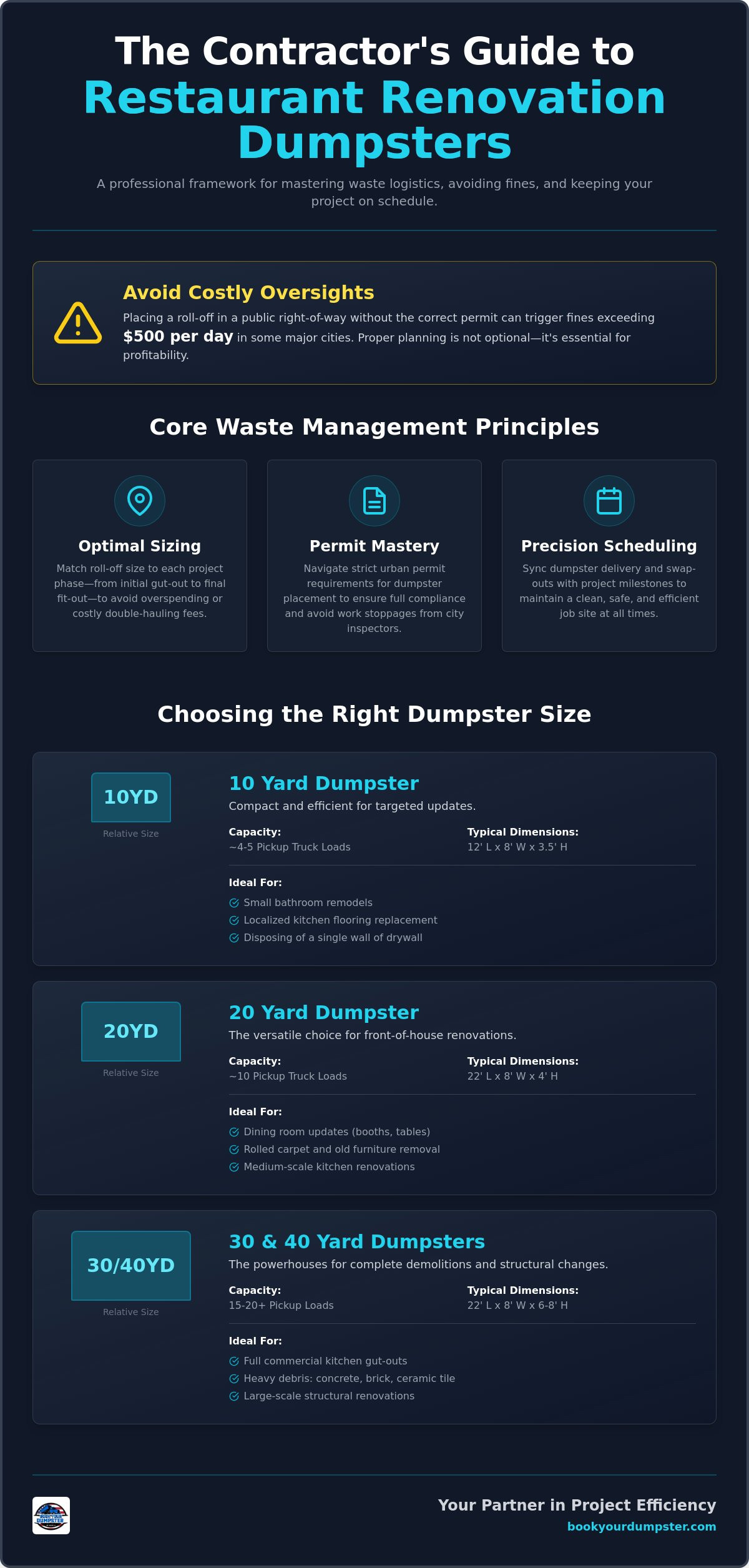
Size selection is the most critical decision in your waste logistics plan. Choosing a container that's too small leads to expensive "double-hauling" fees, while a container that's too large wastes budget and takes up valuable urban real estate. For a successful restaurant renovation dumpster rental, you must match the volume of your debris to the specific capacity of the roll-off. Each size has a distinct footprint and weight limit designed for different stages of demolition and construction.
Understanding the physical dimensions of these units is vital for placement in tight city environments. A 10-yard bin typically measures 12 feet long, while a 40-yard unit extends to 22 feet. In dense urban districts, that 10-foot difference determines whether you can place the unit in a private lot or if you must block a street. Always account for the 23 feet of vertical clearance needed for the delivery truck to drop the bin. If your site has low-hanging wires or narrow entrance gates, confirm these clearances before booking.
The 10 and 20 Yard Options: Small Refreshes and Front-of-House Updates
A 10-yard dumpster is the standard choice for localized kitchen repairs, such as replacing a single line of flooring or updating a small bathroom. It's compact enough to fit in narrow alleys where space is at a premium. If you're tackling a dining room update, the 20-yard dumpster is more appropriate. It holds approximately 10 pickup truck loads of material, making it ideal for disposing of old booths, tables, and rolled carpet. These mid-sized units handle the bulk of front-of-house furniture without requiring a massive footprint on your property.
The 30 and 40 Yard Powerhouses: Full Gut-Outs and Structural Changes
Total kitchen overhauls require the volume of a 30-yard dumpster. This size accommodates bulky industrial fryers, walk-in cooler panels, and extensive stainless steel prep tables. When your project moves into structural changes, such as moving walls or changing the floor plan, the 40-yard dumpster becomes necessary. It manages the high volume of drywall, metal framing studs, and ceiling grids generated during a complete layout change. These larger units are essential when the demolition phase involves clearing out multiple rooms or multi-story layouts.
Heavy materials require extra attention during the loading process. Commercial-grade floor tiling and stone countertops add weight quickly, which can lead to overage fees if you exceed the container's limit. Following EPA guidelines for construction debris helps you manage these materials sustainably while keeping your site organized. If you're unsure which size fits your specific project scope, you can compare dumpster dimensions online to ensure the unit fits your alley or parking lot.
Navigating Permits and Placement in Urban Restaurant Districts
Urban restaurant renovations face a unique hurdle: the lack of private space. If your business sits on a busy city block, you won't have a driveway or a parking lot for your restaurant renovation dumpster rental. This means you must place the container on the street or sidewalk. Doing so triggers "Right of Way" regulations that vary significantly by municipality. Failure to secure the proper documentation can lead to fines ranging from $50 to over $500 per day. Plan for a 7 to 10-day lead time to ensure all paperwork is approved before your demolition crew arrives.
Protecting the infrastructure is your responsibility. A loaded 30-yard roll-off can weigh several tons, enough to crack aged city sidewalks or asphalt. Always place heavy-duty plywood or specialized street plates beneath the dumpster's wheels. This simple step prevents structural damage and avoids additional city repair fees. You must also adhere to federal waste disposal regulations when handling materials in high-density areas. These rules ensure that hazardous substances don't enter the municipal waste stream during your build-out.
City-Specific Permit Requirements
In New York City, the Department of Transportation (DOT) manages all street placements. You must obtain a permit for any container placed in a public roadway, especially in high-traffic boroughs like Manhattan or Brooklyn. Chicago requires a Public Way Permit for any dumpster occupying a street or alley. These permits often cost between $50 and $100 for street placement. In San Francisco, strict ordinances may require you to prove that a specific percentage of your renovation waste is being diverted from landfills. Always verify regional differences in Massachusetts and Illinois, where local hauling laws can impact how you schedule your swaps.
Logistics of High-Traffic Placement
Timing is everything in a restaurant district. Schedule your dumpster delivery for the early morning hours, typically before 7:00 AM. This avoids the gridlock caused by peak restaurant delivery trucks and commuter traffic. Ensure the driver has at least 23 feet of vertical clearance to drop the bin safely. In narrow urban corridors, overhead wires and low-hanging signs are constant hazards. Once the bin is on-site, use a heavy-duty cover or a locking mechanism. This prevents passersby from using your rental for illegal dumping, which can push you over your weight limit and lead to unexpected overage charges.
Managing Costs and Scheduling for High-Speed Renovation Timelines
Time is your most valuable asset in the food service industry. Every day your doors remain closed for construction, you lose revenue. To maintain a high-velocity timeline, you must sync your dumpster "swaps" with specific demolition milestones. Don't wait until the bin is overflowing to call for a haul. Instead, use an "Empty and Return" strategy. Schedule a fresh container to arrive just as your crew finishes the primary kitchen gut-out. This ensures the next phase, such as electrical or plumbing rough-ins, starts on a clean site without debris piles slowing down subcontractors.
Understand the difference between all-inclusive pricing and weight-based fees before you book your restaurant renovation dumpster rental. All-inclusive rates often cover a set weight limit, which is helpful for predictable debris like drywall or cabinetry. However, restaurant renovations often involve heavy materials like floor mortar, stone counters, and commercial appliances. If you're disposing of dense materials, weight-based fees might apply if you exceed the limit. Monitor your load levels to stay within the tonnage allowed and avoid unexpected overage charges at the landfill.
Avoid "dry run" fees by keeping the drop-off zone clear. If a driver arrives and finds a contractor's truck or a delivery van blocking the spot, they'll leave without picking up the bin. You'll still be charged for the trip. Communicate clearly with your team. Ensure the area is accessible at least 30 minutes before the scheduled pickup window. Professional logistics management prevents these small errors from ballooning into project delays.
The Economics of Renovation Waste
Overfilling a dumpster is a costly mistake. If debris rises above the rim, the driver cannot safely tarp the load. They'll refuse the pickup, resulting in extra hauling costs and potential safety fines. Evaluate whether one 30-yard dumpster or two 20-yard swaps makes more sense for your budget. While a larger bin has a higher base price, multiple swaps incur multiple delivery fees. For detailed regional data, review our Dumpster Rental Prices in New York, Illinois, and Massachusetts: 2026 Guide to compare costs effectively.
Streamlining the Booking Process
Follow these steps to keep your project moving:
- Step 1: Estimate your debris volume. Use your square footage and the count of heavy fixtures, like ranges and walk-ins, as a baseline.
- Step 2: Check local permit lead times. Most cities require 3 to 5 business days for approval.
- Step 3: Book your delivery at least 48 hours before the sledgehammers start swinging.
Having the bin on-site before work begins prevents debris from piling up inside the building. Ready to start? You can schedule your roll-off delivery online in minutes to keep your renovation on schedule.
Secure Your Restaurant Renovation Dumpster with Book Your Dumpster USA
Your construction project demands a waste partner who respects your timeline and your budget. Managing a restaurant renovation dumpster rental should be a seamless part of your workflow, not a source of logistical frustration. Book Your Dumpster USA provides a digital-first booking system designed specifically for the urgency of the food service industry. Choose from our inventory of 10, 20, 30, and 40-yard roll-off dumpsters to handle everything from dining room furniture refreshes to heavy kitchen demolition. We maintain a strict focus on pricing integrity and punctuality, ensuring your container arrives exactly when your crew is ready to load.
Reliability is the foundation of our service. In the messy and labor-intensive world of commercial renovation, you need a high-functioning tool that removes stress. We eliminate the guesswork by providing transparent terms and direct communication. Our roll-off units are maintained to the highest standards, ensuring they can handle the weight of commercial-grade tiling and industrial kitchen equipment without failure. When you book with us, you are securing a dependable partner committed to keeping your job site moving at full speed.
Professional Service for Commercial Contractors
General contractors require waste partners who understand the complexities of a commercial build-out. We partner with GCs to ensure every site remains clean and compliant with local safety standards. Our expertise spans major urban markets, from the high-traffic boroughs of Queens to the restrictive corridors of San Francisco. We understand the nuances of local hauling laws and permit requirements, allowing your team to focus on the build rather than the trash. For a deeper look at managing project waste streams, review The Ultimate Guide to Construction Debris Removal in 2026.
Ready to Start Your Renovation?
Efficiency defines a successful restaurant opening. Choosing Book Your Dumpster USA is a pragmatic decision that removes logistical bottlenecks from your construction schedule. We provide the right equipment for any scale, whether you're performing a minor cosmetic update or a full-scale structural gut-out. Remember that urban street placements require significant lead time for city permits, so secure your equipment as early as possible. Don't let waste management become a delay in your 2026 project timeline. Take control of your site logistics with a partner who values precision and punctuality. Book Your Dumpster Now to lock in your delivery date and keep your renovation on track.
Streamline Your Restaurant Build-Out Today
Managing a commercial gut-out requires a waste partner who understands the high-velocity demands of the food service industry. You now have the framework to select the correct container size and navigate the specific permit requirements of dense urban districts. Successful projects rely on precise timing. Coordinating your dumpster swaps with demolition milestones ensures your subcontractors have a clear, safe site to begin the build-out. By following these logistical best practices, you avoid the hidden costs of city fines and construction delays. It's clear that securing your restaurant renovation dumpster rental early is the most effective way to protect your project timeline.
Book Your Dumpster USA offers the reliability you need for a successful 2026 opening. We provide a full range of 10-40 yard roll-off containers with a streamlined online booking system designed for busy owners and contractors. We serve NYC, Chicago, San Francisco, and beyond, prioritizing pricing integrity and punctuality for every drop-off. Rent Your Restaurant Renovation Dumpster Today to lock in your schedule and remove the stress of site cleanup. Your new space is ready to take shape; let's get the debris out of the way.
Frequently Asked Questions
What size dumpster do I need for a small restaurant kitchen renovation?
Start with a 10-yard or 20-yard dumpster for minor updates. A 10-yard bin fits localized repairs like replacing a single line of flooring or a small bathroom. If you're doing a dining room refresh that includes removing booths and tables, the 20-yard option is better. This size handles approximately 10 pickup truck loads of material. Always choose the larger size if you're unsure. A second haul is more expensive than an initial upgrade.
Can I put old restaurant equipment like fryers or ovens in the dumpster?
You can dispose of most commercial kitchen equipment in a roll-off container. This includes fryers, ovens, and stainless steel prep tables. However, you must drain all grease, oils, and liquids before disposal to comply with safety regulations. These items are bulky and add weight quickly. If you have a high volume of stainless steel, consider separating it. Some contractors recycle high-value metals to help offset their total project costs.
How much does a restaurant renovation dumpster rental cost in 2026?
National average costs for a weekly rental range from $294 to $480. Your specific restaurant renovation dumpster rental price depends on the container size, your location, and the weight of the debris. Heavy materials like concrete or tile often incur higher disposal fees at the landfill. Always check the weight limit in your rental agreement. This prevents unexpected overage charges that can range from $40 to $200 per extra ton.
Do I need a permit to place a dumpster on the street in NYC or Chicago?
You almost always need a permit for street placement in these major cities. NYC requires a DOT permit, while Chicago requires a Public Way permit for any dumpster occupying a street or alley. These fees typically range from $50 to $150 depending on the duration. If you place a bin on a public street without one, you face daily fines. Check with your local public works department at least 10 days before your project starts.
How long can I keep the dumpster at my restaurant site?
Most standard rental periods last between 7 and 10 days. This timeline works well for high-speed demolition phases. If your project runs long, you can usually extend the rental for a daily fee. These extension fees typically range from $10 to $30 per day. Communicate with your provider at least 24 hours before your scheduled pickup to request more time. This keeps your site organized without triggering unexpected service interruptions.
What happens if the dumpster gets too heavy with floor tiles and concrete?
Exceeding the weight limit triggers overage fees from the landfill. If the bin is physically overfilled above the rim, the driver cannot safely tarp the load for transport. They'll refuse the pickup, resulting in a "dry run" fee. Monitor your loading levels throughout the day. Distribute heavy materials like floor tiles or stone countertops evenly across the bottom of the container. This ensures a safe haul and keeps your costs predictable.
Can I mix kitchen demolition debris with daily food trash?
You must keep demolition debris and daily food waste separate. Mixing them creates health code violations and attracts pests to your job site. Food waste requires different processing and is the single largest component in U.S. landfills. Use your restaurant renovation dumpster rental strictly for construction materials like drywall, wood, and metal. Continue using your standard front-load service for any remaining kitchen scraps, packaging, or organic waste generated during the build.
How quickly can I get a dumpster delivered for an emergency renovation?
You should book your delivery at least 48 hours in advance for most projects. In dense urban areas, you'll need 7 to 10 days to secure the necessary street permits from the city. While some providers offer faster turnarounds, availability for specific sizes like 30 or 40-yard bins can be limited during peak construction seasons. Plan your schedule early. This ensures the bin is on-site before your demolition crew arrives and prevents labor delays.


