

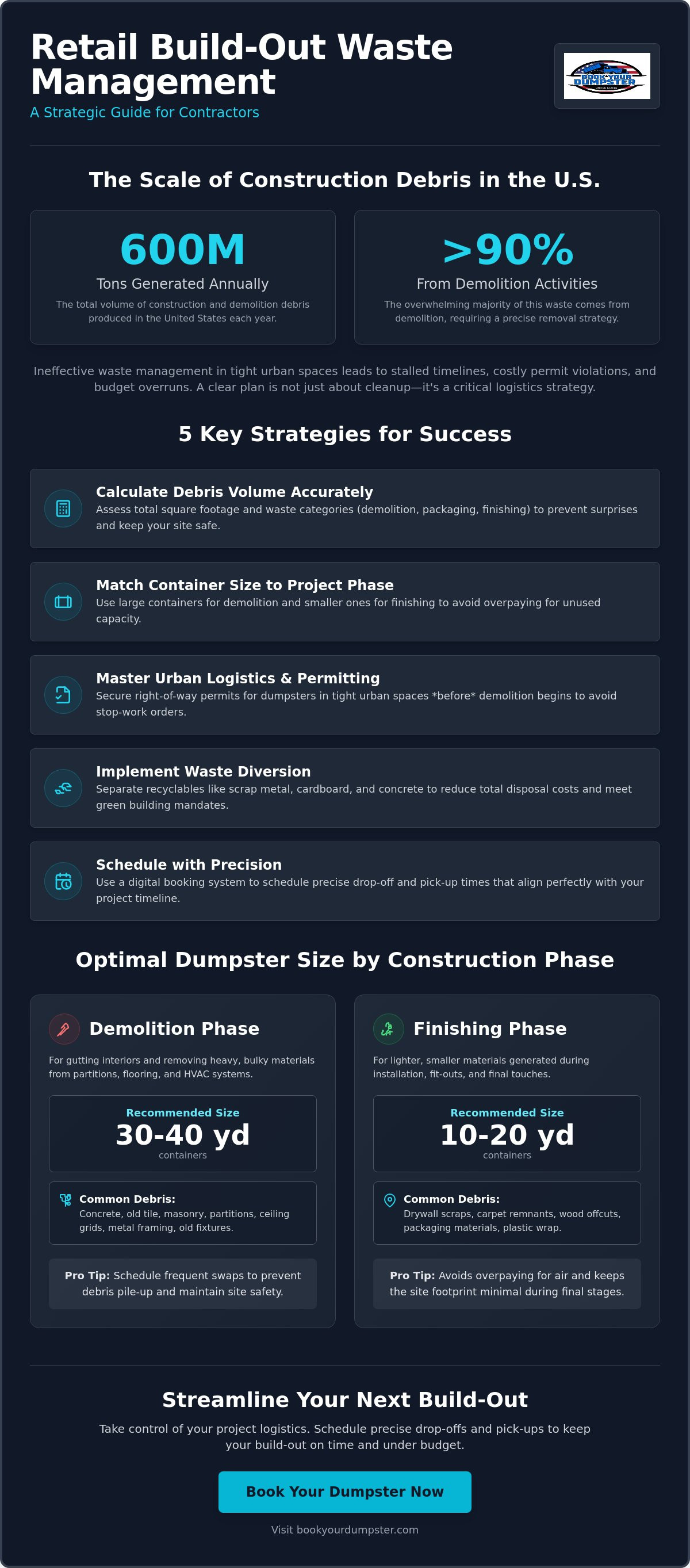
You have a crew ready to work in a tight New York City storefront, but the demolition phase just generated double the expected debris. If your dumpster isn't there or it's the wrong size, your entire timeline stalls before the first fixture is even installed. Effective retail store build-out waste management is more than just a cleanup task; it's a critical logistics strategy. Demolition activities account for over 90% of the 600 million tons of construction debris generated in the U.S. annually. Managing that volume in a busy urban environment requires precision and a clear plan to avoid costly permit delays or space violations.
We understand that you're balancing tight delivery windows with the pressure of a grand opening date. This guide provides the tools you need to streamline debris removal and maintain a safe, organized job site. You'll learn how to select the right 10 to 40 yard containers to avoid overpaying for air and how to coordinate reliable drop-offs that respect local regulations. From initial demo to the final sweep, we'll show you how to manage the mess without the logistical stress. Follow these steps to ensure your next build-out stays on schedule and under budget.
Key Takeaways
- Calculate debris volume based on total square footage and specific waste categories to keep your site clear and safe.
- Match your container size to specific construction phases to avoid overpaying for capacity you don't need.
- Master retail store build-out waste management by securing right-of-way permits for tight urban spaces before demolition begins.
- Implement a five-step process to separate recyclables like scrap metal and cardboard to reduce your total disposal costs.
- Use a digital booking system to schedule precise drop-off and pick-up times that align with your project timeline.
Assessing Your Retail Build-Out Waste Requirements
Successful retail store build-out waste management starts with a tape measure and a floor plan. Measure your total square footage immediately to establish a baseline for your debris volume. A 5,000 square foot gut renovation generates vastly different waste requirements than a simple cosmetic refresh. Categorize your debris into three primary streams: Demolition waste, packaging from new inventory or fixtures, and finishing scraps like drywall and carpet remnants. Identifying these categories early allows you to plan for specific container types and disposal methods.
Map out your project timeline before you book a single container. You need to align drop-offs and swaps with your crew's pace to prevent piles from blocking progress. Evaluate your site access constraints now. High-traffic retail corridors often have narrow alleys or restricted street parking that limits truck movement. If you're working in a dense urban center, check the curb height and overhead clearance for delivery trucks. Knowing these physical limits prevents delivery failures and keeps your retail store build-out waste management plan on track.
Calculating Debris Volume by Project Scope
Estimate your cubic yardage based on the intensity of the work. Full gut renovations often require multiple 30 or 40 yard dumpsters to handle the sheer volume of structural debris. Factor in the density of your materials. Heavy items like concrete, old tile flooring, and masonry will hit weight limits long before they fill the container's physical space. Account for bulk items separately. Old retail fixtures, metal display cases, and heavy shelving units take up significant room and don't compress easily. Plan for extra capacity if you aren't dismantling these items before disposal.
Setting Waste Diversion and Safety Goals
Establish a designated area for your dumpster that keeps the storefront clear and accessible for tradespeople. Safety is a priority in busy retail zones. Ensure your placement complies with local municipal codes for sidewalk or right-of-way usage to avoid expensive stop-work orders. Waste diversion is the process of redirecting materials from landfills to recycling facilities. Focusing on diversion helps you meet local green building mandates and potentially lower your tipping fees. Use Book Your Dumpster USA to coordinate your logistics and select the right container for your specific site layout.
Selecting the Optimal Dumpster Size for Construction Phases
Retail store build-out waste management is not a static process. Your disposal needs during the first week of demolition will look nothing like the final week of finishing. Matching the dumpster size to the specific phase of your project prevents site congestion and keeps your budget in check. Don't waste money on a 40-yard container when you are only disposing of light drywall offcuts and packaging. Conversely, a 10-yard container will overflow within hours during a full gut renovation. Efficiency relies on selecting a size that fits the volume and density of your current debris stream.
Consider the physical layout of your materials. Loading bulky items like wooden pallets or metal display racks creates significant dead space. These voids fill up your container's volume without maximizing its weight capacity. To avoid overage fees, check the ultimate guide to construction debris removal for detailed material weight limits. Proper loading techniques and phase-specific sizing ensure you follow the principles of Sustainable C&D Materials Management while keeping your project moving.
The Demolition Phase: 30 to 40 Yard Containers
Gutting an existing interior generates massive volume. You need 30 or 40-yard dumpsters to handle the removal of old partitions, ceiling grids, and flooring. These larger containers are essential for managing heavy HVAC components and long metal framing. Because demolition happens fast, schedule frequent swaps. Don't let a full dumpster sit on a busy job site for three days. Keeping a fresh container available prevents your crew from piling debris on the floor, which creates a safety hazard and slows down the work. For most full-scale retail renovations, a 30-yard container offers the best balance of capacity and site footprint.
The Construction and Finishing Phase: 10 to 20 Yard Containers
As you transition to installation, your waste profile shifts to lighter, smaller materials. Use a 10-yard dumpster for drywall scraps, flooring offcuts, and the mountain of cardboard packaging that arrives with new fixtures. The 20-yard dumpster acts as a reliable all-rounder for mid-sized retail projects where space is at a premium but volume is still steady. Smaller containers have a much smaller physical footprint. This is a critical advantage for final cleanups in tight urban corridors before your grand opening. If you are unsure which size fits your current phase, select a 20-yard dumpster to maintain flexibility without sacrificing space.
Navigating Permits and Site Logistics in Urban Retail Zones
Selecting the right container is only half the battle. In major metropolitan areas, the placement of that container becomes a legal and logistical puzzle. Successful retail store build-out waste management in cities like New York, San Francisco, or Chicago requires early research into municipal permit requirements. If your project demands that a dumpster sit on a public sidewalk or street, you must secure a right-of-way permit from the local Department of Transportation or Public Works. Failing to do so leads to immediate fines and project shutdowns that blow your budget before the first wall is framed.
Communication is your most valuable tool for avoiding site friction. Talk to neighboring businesses before the truck arrives. A surprise dumpster delivery that blocks a neighbor's loading zone or obscures their storefront creates unnecessary conflict. You also need to account for localized costs. Budget for city-specific surcharges by reviewing dumpster rental prices in New York, Illinois, and Massachusetts. These guides help you anticipate the true cost of operating in high-demand urban corridors where disposal fees and permit costs are often higher than the national average.
Urban Placement Challenges and Solutions
Space is a premium commodity in retail districts. Use street-legal containers for tight alleyways or busy curbsides where a standard roll-off might not fit. Security is another concern in high-foot-traffic areas. Manage overnight risks by using lockable lids or scheduling swaps to ensure full containers don't sit unattended for long periods. Protect the infrastructure at your site. Use plywood or heavy-duty protective padding to prevent the heavy steel feet of the dumpster from cracking the sidewalk or damaging expensive pavers. This simple step prevents thousands of dollars in property damage claims from your landlord.
Scheduling Deliveries for Minimal Disruption
Timing is everything in retail store build-out waste management. Schedule your drop-offs and pickups for early morning hours. You want the truck in and out before retail traffic and pedestrian volume peak at 10:00 AM. Punctuality is non-negotiable. A delay of thirty minutes can turn a simple delivery into a traffic jam that attracts the attention of city inspectors. If you are working in a shopping center, coordinate closely with mall management. Shared loading docks require precise scheduling to ensure the area is clear when your hauler arrives. Clear communication ensures your project moves forward without logistical bottlenecks.
Managing Debris Streams: From Demolition to Grand Opening
Effective retail store build-out waste management requires a daily commitment to site organization. A cluttered job site isn't just an eyesore; it's a safety hazard that slows down your subcontractors and invites accidents. As your project moves from the heavy demolition phase into the finer finishing work, your waste management strategy must evolve. Maintaining a professional appearance is especially critical if your storefront is located within an active shopping center or a high-end street front where brand image is everything.
Start by separating your recyclables. Clean cardboard and scrap metal are the most common materials in retail construction. Cardboard from new fixtures and shelving can quickly fill a dumpster with air if it isn't flat-packed. Scrap metal from old framing or ductwork should also be set aside. Diverting these materials reduces your total volume and helps you avoid overage fees at the landfill. It's a pragmatic way to lower costs while keeping your site clean.
Handle hazardous materials with extreme caution. Retail build-outs often involve old paints, industrial adhesives, and chemical solvents that cannot go into a standard roll-off container. If you mix these prohibited items with your general construction debris, you risk heavy contamination fees and potential legal issues. Keep a separate, clearly marked area for these materials and ensure your crew knows exactly what stays out of the dumpster.
Step-by-Step Debris Management
- Step 1: Designate a sorting station inside the store. Pick a low-traffic area near the exit to stage different materials before they go to the dumpster.
- Step 2: Break down all cardboard boxes. Flat-packing packaging from new fixtures saves massive amounts of space and prevents the container from overflowing prematurely.
- Step 3: Segregate hazardous waste immediately. Keep paints, solvents, and adhesives in a dedicated bin away from general construction debris.
- Step 4: Load the dumpster evenly. Place heavy demolition materials at the bottom and distribute the weight across the entire floor of the container to ensure safe transport.
- Step 5: Perform a final sweep. Clear the curb and sidewalk of any stray debris to maintain safety and professional standards for your neighbors.
Compliance with Local Disposal Regulations
Understand your local "prohibited items" list before the project starts. Landfills are strict about what they accept, and your provider must use licensed disposal sites to stay compliant with state laws. For instance, in Morris County, New Jersey, the 2026 fee for construction debris at transfer stations is $113 per ton. If you are working on a LEED-certified retail project, you'll need precise documentation of your waste diversion rates to prove materials were redirected from landfills. Ready to schedule your next swap? Book Your Dumpster USA online and keep your site moving toward the grand opening.
Streamlining Your Build-Out with Book Your Dumpster USA
Managing a retail construction project requires a partner that values your time as much as you do. Our streamlined online booking system removes the friction of traditional waste hauling by providing instant project scheduling. You don't have time for endless phone calls or waiting for quotes. Select your container from our full range of 10, 20, 30, and 40-yard roll-off containers directly through our digital platform. This modern approach ensures your retail store build-out waste management stays organized from the initial demolition to the final grand opening sweep.
Operating in high-demand markets like New York, New Jersey, Illinois, and Massachusetts presents unique hurdles. Book Your Dumpster USA offers expert knowledge of local regulations in these specific regions to help you avoid compliance issues. Experience transparent pricing with no hidden fees for your commercial project. Our flat-rate model means you know exactly what you're paying upfront, allowing for accurate project budgeting without the worry of unexpected surcharges or opaque billing practices. We act as a high-functioning tool in your project management arsenal.
Why Contractors Choose Book Your Dumpster USA
Reliability is the foundation of our service. We provide on-time delivery and punctual pickups to keep your build-out on a strict schedule. If your demolition phase runs long or your fixture delivery is delayed, we offer flexible rental periods to accommodate the reality of construction. You aren't just getting a bin; you're getting direct access to professional support for complex urban logistics. Whether you are dealing with a narrow alleyway in Chicago or a busy sidewalk in Boston, our team understands how to navigate these constraints without stalling your progress.
Book Your Next Retail Dumpster Today
Our booking process is designed for speed and simplicity. Follow our three-step online process: select your dumpster size, enter your job site location, and schedule your delivery date. Book Your Dumpster USA provides the most efficient waste solutions for retail contractors in major US metros. We handle the heavy lifting of waste logistics so you can focus on meeting your construction milestones. Don't let debris pile up and create a bottleneck on your site. Ready to start? Book Your Dumpster USA now and clear your site for a successful grand opening.
Master Your Retail Logistics
Effective retail store build-out waste management requires a proactive approach to container sizing and urban logistics. You now have the framework to match 10 to 40-yard containers to your project's specific phases while navigating the complex permit requirements of major metropolitan areas. By keeping your site organized and separating recyclables, you maintain a safe environment and a professional image for your brand before the doors even open.
We simplify this process for commercial contractors with transparent pricing and a digital-first booking system. Our service areas include NY, NJ, IL, MA, and San Francisco, ensuring you have a reliable partner in the most challenging urban markets. Eliminate the logistical stress of construction debris and keep your crew focused on the finish line. Our commitment to punctuality means your project stays on schedule without unexpected delays or hidden fees.
Ready to clear your job site and prepare for the grand opening? Book Your Dumpster for Your Retail Project today. Our no-nonsense approach to waste management ensures your retail project moves from demolition to completion with total efficiency.
Frequently Asked Questions
What is the best dumpster size for a small mall retail build-out?
A 20-yard dumpster is typically the most efficient choice for a small mall build-out. This size balances significant capacity with a footprint that fits most standard loading docks or designated mall service areas. If your project involves heavy demolition like removing concrete floors, consider a 10-yard container to stay within legal weight limits for transport. Always verify the overhead clearance of the mall's service entrance before scheduling your delivery.
Do I need a permit for a dumpster in a retail parking lot?
You usually don't need a municipal permit if the dumpster sits entirely on private property like a mall parking lot. However, you must obtain written permission from the property manager or landlord before the truck arrives. If the container encroaches on a public sidewalk or street, city-specific right-of-way permits become mandatory. Check your local city ordinances to avoid expensive project delays or fines for unauthorized placement.
Can I throw old retail display fixtures in a roll-off dumpster?
Yes, you can dispose of most metal, wood, and plastic retail fixtures in a roll-off container. To maximize space in your retail store build-out waste management plan, dismantle large display cases and shelving units before loading. This prevents "dead space" and ensures you get the full value out of your rental capacity. Avoid loading heavy glass panels without first checking with your provider for specific safety guidelines.
How much notice do you need for a dumpster swap in a busy city area?
Provide at least 24 to 48 hours of notice for a dumpster swap in high-traffic urban zones. Busy areas require precise timing to navigate narrow streets and avoid peak pedestrian hours. Scheduling in advance ensures our haulers can secure the necessary access and maintain your construction timeline without disruption. For projects in dense metros like New York or Chicago, early morning swaps are generally the most reliable option.
What materials are prohibited in a retail construction dumpster?
Prohibited items include hazardous waste, electronics, batteries, and liquids like wet paint or industrial adhesives. Retail build-outs often generate old fluorescent tubes or ballasts which require specialized disposal due to mercury content. If you mix these prohibited items with general debris, you will face heavy contamination fees and potential landfill rejections. Contact us before loading any material if you are unsure of its classification.
How do I estimate the weight of my retail demolition debris?
Estimate weight by calculating the volume of specific materials like drywall, wood, and masonry. Drywall typically weighs about 50 pounds per cubic yard, while heavy debris like concrete or old tile can exceed 2,000 pounds per cubic yard. Refer to a material weight guide to choose a container that accommodates your debris without exceeding the legal hauling limit. Overloading a container can lead to safety risks and additional transport fees.
Does Book Your Dumpster provide waste diversion reporting for LEED projects?
We can help you track your disposal data to support your LEED-certified retail store build-out waste management goals. Request specific tonnage reports at the time of booking to ensure you have the necessary documentation for your project certification. This data is essential for verifying that you have met mandatory recycling rates in strictly regulated regions. Using licensed disposal sites ensures your project remains compliant with local environmental standards.
What happens if my retail build-out project goes over the rental time?
If your project experiences delays, contact us immediately to extend your rental period. We offer flexible rental terms to accommodate the unpredictable nature of retail construction. Extension fees are applied on a daily or weekly basis depending on your specific agreement. Communicating your needs early ensures the container remains on-site until your final sweep is complete, preventing any interruption in your cleanup schedule.


