
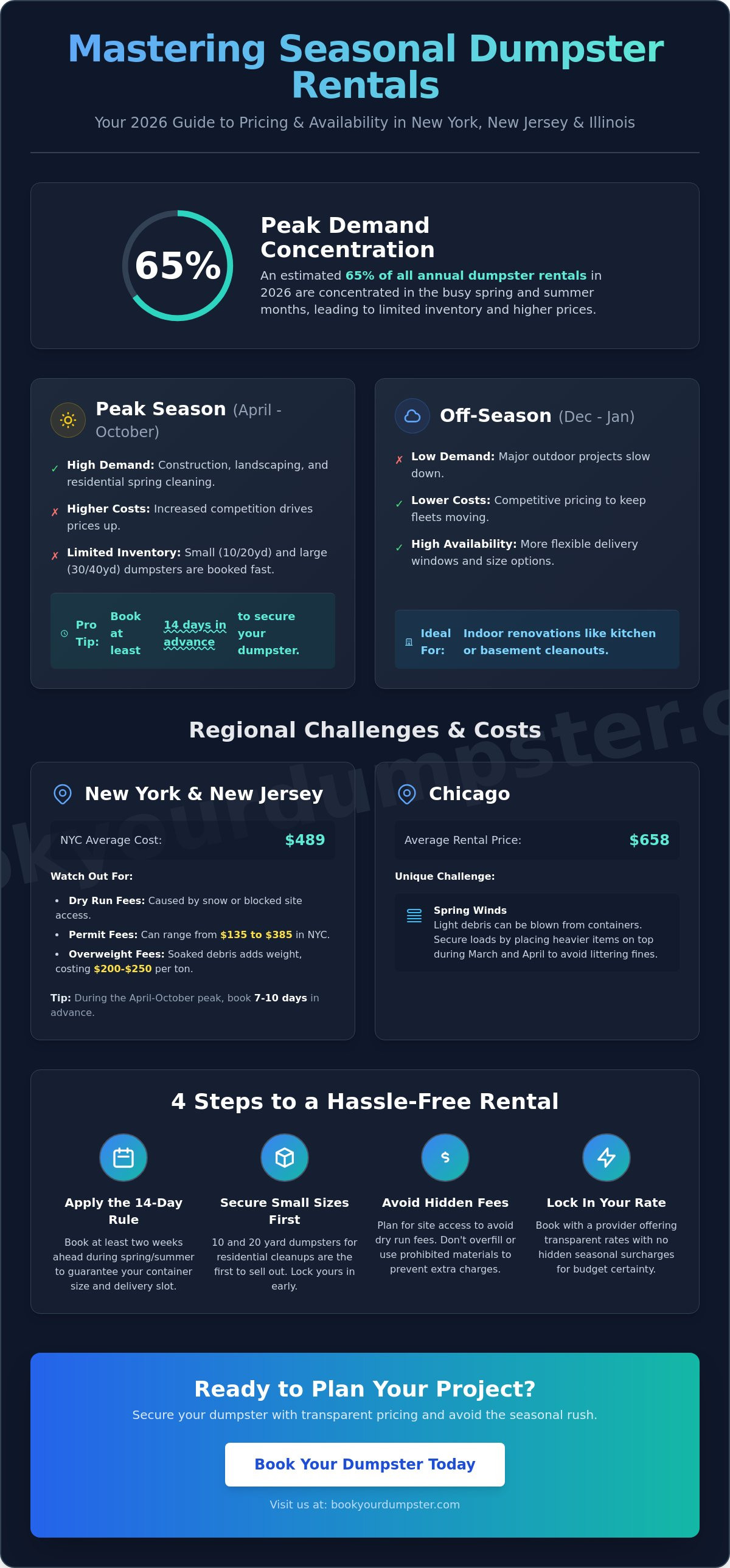
Did you know that 65% of all annual dumpster rentals in 2026 occur during the spring and summer months? If you've managed a project in New York or Chicago, you know that peak demand often leads to limited inventory and higher costs. You need a reliable roll-off without the stress of seasonal price hikes or delivery delays. We understand that managing seasonal demand and dumpster rental pricing is the key to keeping your project on budget and your site clear of debris.
Learn how the time of year impacts dumpster availability and costs in major US metros so you can schedule your project at the most cost-effective moment. This guide breaks down the 2026 pricing cycles across New York, New Jersey, and Illinois. We provide strategies to lock in lower rates for your 10, 20, 30, or 40 yard dumpster and ensure on-time delivery. From navigating the $489 average cost in New York City to preparing for the June 1, 2026, containerization rules, you will gain a clear plan for your waste management needs. Book your dumpster with confidence by mastering the seasonal calendar today.
Key Takeaways
- Understand how weather patterns in the Northeast and Midwest drive inventory shortages and learn the logic behind hauler price adjustments.
- Avoid dry run fees by planning for New York snow and Chicago spring winds that impact site access and container placement.
- Secure 10 or 20 yard dumpsters early for residential cleanups, as these sizes disappear first during the spring peak.
- Apply the 14 day booking rule and use flexible scheduling to navigate seasonal demand and dumpster rental pricing effectively.
- Lock in transparent rates with no hidden seasonal surcharges, so you don't have to worry about unexpected costs at checkout.
The Connection Between the Calendar and Your Dumpster Rental Quote
Understanding how the calendar dictates your project budget is the first step toward a successful cleanup. Seasonal demand represents the fluctuation of waste management needs based on predictable weather patterns and economic cycles. This seasonal variation means the cost to move a cubic yard of debris in July differs from January. Mastering the relationship between seasonal demand and dumpster rental pricing allows you to time your project for maximum savings. Most haulers face a fixed cost reality. Trucks, insurance, and labor remain constant even when demand drops. When equipment sits idle, pricing often becomes more competitive to keep the fleet moving. During the summer, the opportunity cost for haulers is significant. Every container on a residential driveway is one that isn't on a high-revenue commercial site. This tension directly impacts your final quote.
Real estate cycles and municipal clean-up events also drive these shifts. Most home sales and move-outs happen between May and August. This creates a massive need for immediate waste removal across New York, New Jersey, and Illinois. When everyone needs a container at the same time, availability drops and rates climb.
Why Demand Spikes in Spring and Summer
Spring cleaning isn't just a phrase; it's a logistical reality for waste management. Homeowners typically rush for the 10 yard dumpster and 20 yard dumpster sizes to clear out garages and basements. In 2026, approximately 65% of all rentals occur during this peak window. Contractors also dominate the inventory of 30 yard dumpster and 40 yard dumpster units for large-scale urban development. In the Northeast and Midwest, landscaping debris adds another layer of demand as residents clear winter storm damage. Schedule your delivery at least 14 days in advance during these months to ensure you get the size you need.
The Winter Slowdown and Pricing Softening
Availability peaks in December and January. If you're planning an indoor renovation, this is the most cost-effective time to book your dumpster. You'll find more flexible delivery windows and competitive rates because the massive construction projects of the summer have slowed down. The trade-off involves weather logistics. In cities like Chicago or New York, snow can complicate placement and lead to potential delivery delays. However, for a kitchen gut job or a basement cleanout, the indoor nature of the work makes the winter price break a smart financial move. Choose your size during the off-season to capitalize on this inventory surplus.
Regional Seasonal Patterns: From NYC Winters to San Francisco Springs
Regional geography dictates your logistical strategy. In the Northeast, snow and ice aren't just inconveniences; they trigger "dry run" fees if a truck can't safely access your site. In high-density areas like Queens, street space is a premium commodity. During peak months, New York City permit fees range from $135 to $385. If you haven't cleared your permitted space of snow or parked cars, the driver cannot drop the container. This is why understanding seasonal demand and dumpster rental pricing is essential for urban contractors. The EPA reports that Construction and Demolition Debris makes up a significant portion of the national waste stream. While San Francisco manages year-round construction, the rainy season from November to March requires careful tarping. Soaked debris adds weight, which can lead to NYC overweight fees of $200 to $250 per ton.
Chicago presents its own hurdles. Spring winds in the "Windy City" require specific safety protocols. Light debris can easily catch a gust if a container isn't properly loaded. We recommend keeping heavier items on top during March and April to prevent littering fines. With an average Chicago rental price of $658, managing these small details prevents your budget from ballooning.
Navigating the New York and New Jersey Peak
Between April and October, demand in New York and New Jersey hits its ceiling. You must book your delivery at least 7 to 10 days in advance to guarantee a container. NYC moving days, especially around the first of the month, tie up local traffic and slow down turnaround times. Check out this guide on dumpster rental prices in New York to see how these factors shift by borough. Plan your project around these peak cycles to avoid inventory shortages.
The Illinois and Massachusetts Winter Reality
Sub-zero temperatures in Illinois and Massachusetts change how you load your bin. Wet debris can freeze to the bottom of the container, making it impossible to empty at the landfill. This results in return trip charges and wasted time. To avoid this, book in the "shoulder seasons" of November or March. These months offer mid-range pricing and better availability. In Chicago, the 20 yard dumpster is the most contested size during the fall as homeowners rush to finish projects before the first deep freeze. Choose your size early to stay ahead of the autumn rush.
How Project Type Dictates Seasonal Availability
Your specific project type determines which inventory is available and what you will eventually pay. Residential DIYers and commercial contractors compete for different equipment at different times of the year. According to seasonal employment data for the waste industry, labor capacity and service availability shift significantly during peak months. This labor pressure, combined with high demand, directly influences seasonal demand and dumpster rental pricing. In college-dense metros like Boston or parts of Chicago, move-out weeks in May and August create sudden local shortages as thousands of units are cleared simultaneously. Similarly, storm seasons in the Northeast can trigger emergency disaster recovery needs. These events cause unpredictable spikes in demand for all container sizes and potentially delay non-emergency deliveries for weeks.
Anticipating these spikes is the only way to keep your project moving. If you are planning a renovation in a high-density area, remember that street permits and container availability tighten simultaneously. In New York City, the new containerization rules effective June 1, 2026, will already be straining local waste logistics. Adding a roll-off dumpster to the mix during a peak season requires precise timing and a reliable partner who understands these regional pressures.
Homeowner Projects and the 10-Yard Demand
Homeowners typically target the 10 yard dumpster and 20 yard dumpster for spring cleanouts and minor renovations. Because 65% of annual rentals occur in the spring and summer, these smaller units become scarce by mid-April. Don't wait until Saturday to start your project. Schedule your delivery for a Tuesday or Wednesday. This strategy helps you avoid weekend surcharges and ensures the driver has a clear window for placement without competing with heavy weekend traffic. Check our 10 Yard Dumpster Buying Guide to verify that this size matches your debris volume before the spring rush begins.
Contractor Logistics and Large-Scale Debris
Commercial sites require a different logistical approach. The 30 yard dumpster and 40 yard dumpster are the workhorses of urban development in cities like New York and Chicago. While residential demand cools in late Q4, commercial construction often pushes through to meet year-end deadlines. Contractors should negotiate long-term rates in November or December when residential activity is at its lowest point of the year. This secures your equipment for upcoming 2026 projects at a more stable price point. For professional-grade waste management strategies, consult our Construction Debris Removal Guide. Book your dumpster now to protect your project timeline from seasonal inventory gaps.
Strategy Guide: How to Secure the Best Rates Regardless of the Season
Securing a container shouldn't be a gamble. To beat the 2026 market trends, follow the 14-day rule. During the peak summer window, booking your roll-off at least two weeks in advance ensures your preferred size is in stock. If you wait until the week of your project, you might be forced into a larger, more expensive unit because the 10 yard or 20 yard sizes are sold out. We also recommend offering a 2-day flexible delivery window. This allows dispatchers to optimize truck routes, which reduces logistical strain and helps you avoid premium delivery fees. Transparency is your best defense against seasonal demand and dumpster rental pricing shifts. Opt for flat-rate models that include delivery, pickup, and a set weight limit. This prevents the sticker shock common with companies that add fuel surcharges or seasonal demand fees at the last minute.
In cities like Chicago or New York, a dry run fee occurs when a driver arrives but cannot drop the container. This usually happens because of unplowed snow or a neighbor’s car blocking the permitted street space. In NYC, where permits cost between $135 and $385, a failed delivery is an expensive mistake. Clear the area 24 hours before your scheduled drop-off to ensure a hassle-free experience.
Smart Booking Tactics for Peak Season
Skip the hold music. Use our online system to see real-time inventory in NJ, NY, and IL. This ensures your booking is logged instantly without the risk of communication delays. Verify your debris type and weight limits before confirming. In New York City, exceeding your weight limit costs an additional $200 to $250 per ton. Schedule your drop-offs for Tuesday or Wednesday to avoid the chaotic Monday morning and Friday afternoon rushes when truck availability is at its lowest.
Off-Season Savings Opportunities
The winter lull from November to February is the best time for interior projects. Since outdoor construction slows in Illinois and New Jersey, 10 yard dumpsters are plentiful and cost-effective. Ask about extended rental periods during this time. Haulers are often willing to let a container sit on-site for longer durations because the equipment would otherwise sit idle in the yard. This is ideal for a slow-paced basement gut job or kitchen remodel. Schedule your delivery now to lock in these off-season advantages and keep your project on budget.
Hassle-Free Booking with Book Your Dumpster USA
Managing seasonal demand and dumpster rental pricing shouldn't feel like a full-time job. Our online booking system integrates directly with our fleet inventory. This means you see real-time availability across New Jersey, New York, and Illinois without waiting on hold during peak hours. When supply is tight in July, our digital platform gives you an instant answer. This technology removes the guesswork from your project planning. We provide a transparent model with no hidden fees. While other companies might add seasonal surcharges when demand peaks, we maintain integrity through flat-rate pricing. You get a clear quote that covers delivery, pickup, and weight limits from the start. This approach ensures your 2026 budget stays intact regardless of market fluctuations.
Our team understands the logistical hurdles of high-density areas. Whether you're navigating the new NYC containerization rules effective June 1, 2026, or managing a site in downtown Chicago, we have the regional expertise to ensure a smooth drop-off. We know which neighborhoods in Queens require specific permits and which Chicago streets have weight restrictions during the spring thaw. This local knowledge prevents "dry run" fees and delivery delays. Book your dumpster now to lock in your 2026 project dates before the peak season begins.
Our Multi-City Coverage and Reliability
We serve major metros beyond the Tri-State area, including Massachusetts and San Francisco. Our professional, blue-collar experts handle the messy details so you can focus on the job at hand. We don't just drop a container; we act as a reliable partner for your residential or commercial project. Our fleet of 10, 20, 30, and 40 yard dumpsters is maintained for year-round reliability. Whether it's a winter basement cleanout in Boston or a summer construction boom in San Francisco, we have the right roll-off container for your debris. We also offer front load commercial waste pickup and private curbside trash pickup for businesses that need consistent, year-round service without seasonal interruptions.
The Book Your Dumpster USA Difference
We offer a pragmatic, direct service that removes logistical stress. We guarantee on-time delivery because we know that a late dumpster means a stalled crew and wasted labor costs. Our system is built for speed and simplicity. Choose your container size, enter your location, and receive an instant quote. Don't let seasonal shortages or opaque pricing structures derail your timeline. We have the equipment, the technology, and the regional expertise to keep your site clear. Choose your size and schedule your delivery today.
Secure Your Project Timeline and Budget
Success in 2026 requires more than just a project plan; it requires a waste management strategy. You now understand how to navigate regional hurdles, from the $385 NYC permit requirements to the high demand for 20 yard containers in Chicago. By using the 14 day booking rule and choosing mid week delivery windows, you avoid the most common logistical delays. Mastering seasonal demand and dumpster rental pricing ensures that your site stays clear without unexpected surcharges or inventory gaps. We offer a full range of 10, 20, 30, and 40 yard roll-off containers to fit any residential or commercial debris requirement.
Our real-time online booking system serves New York, New Jersey, Illinois, Massachusetts, and San Francisco with total transparency. You receive a firm quote backed by our no hidden fees guarantee, even during peak summer construction booms. Don't let seasonal shifts complicate your renovation or construction site. Book your dumpster and lock in your 2026 pricing today. We have your logistical stress under control so you can focus on finishing the job.
Frequently Asked Questions
Is it cheaper to rent a dumpster in the winter?
Yes, rental rates generally soften during the winter months because residential demand drops significantly. Between December and February, you will find higher availability and more competitive pricing for indoor renovation projects. While outdoor construction slows in New Jersey and Illinois, haulers often provide better terms to keep their fleets moving. This makes the off-season an ideal time to schedule basement or kitchen cleanouts at a lower cost.
How far in advance should I book a dumpster during the summer peak in NYC?
Book your delivery at least 14 days in advance to guarantee your preferred size during the summer rush. Since 65% of annual rentals occur in the spring and summer, inventory for 10 and 20 yard containers disappears quickly. Waiting until the last minute often results in higher costs or the need to rent a larger, more expensive unit. Advance booking ensures you secure the best seasonal demand and dumpster rental pricing for your project.
Do dumpster rental prices change based on the city, like Chicago vs. Queens?
Yes, local market conditions and municipal regulations cause prices to vary between major metros. The average dumpster rental in New York City is $489, while the average in Chicago is $658. You must also account for city-specific costs, such as NYC street permits that range from $135 to $385. High-density areas like Queens often have tighter logistics and higher demand, which directly influences the final quote compared to suburban locations.
Does weather like snow or heavy rain affect dumpster rental pricing?
Weather affects your total cost indirectly through weight surcharges and failed delivery fees. Rain and snow soak into debris, significantly increasing the weight of your load. In New York City, overweight fees range from $200 to $250 per ton. Additionally, if snow prevents a driver from safely dropping or picking up a container, you may face a dry run fee. Always tarp your dumpster during storms to avoid these preventable expenses.
Can I get a discount for renting multiple dumpsters during the off-season?
Negotiating multi-unit rates is most successful in late Q4 when residential demand is at its lowest. Haulers prefer to keep their trucks active during the winter lull in November and January. If you are a contractor managing a large-scale project in Illinois or New Jersey, ask about volume discounts or extended rental periods during these months. This strategy helps you lock in lower rates before the spring construction surge begins.
What happens if a snowstorm delays my dumpster pickup in Massachusetts?
Safety is the priority during severe weather, and pickups are typically rescheduled for the next clear day. You must ensure the area around the container is plowed and salted so the truck can gain traction. If the debris freezes to the bottom of the bin or the container is buried in a snowbank, the driver cannot complete the service. Clear communication with your provider prevents return trip charges and keeps your site on schedule.
Are 10-yard dumpsters easier to find than 40-yard dumpsters in the spring?
No, 10 yard dumpsters are actually the most contested size during the spring cleaning season. While 40 yard containers are often tied up in long-term commercial contracts, the 10 and 20 yard units are flooded with residential requests. Homeowners starting DIY projects in April and May should book early. If you wait too long, you may find that only the larger, professional-grade sizes remain in stock at a higher price point.
Does Book Your Dumpster USA offer flat-rate pricing during peak demand?
Yes, we provide transparent flat-rate pricing that protects you from unexpected seasonal surcharges. Our real-time online booking system reflects current availability in NY, NJ, IL, MA, and SF without hidden fees. This model ensures that the price you see when you schedule your delivery is the price you pay at checkout. We focus on pragmatic, direct service to remove the logistical stress of seasonal demand and dumpster rental pricing shifts.


