
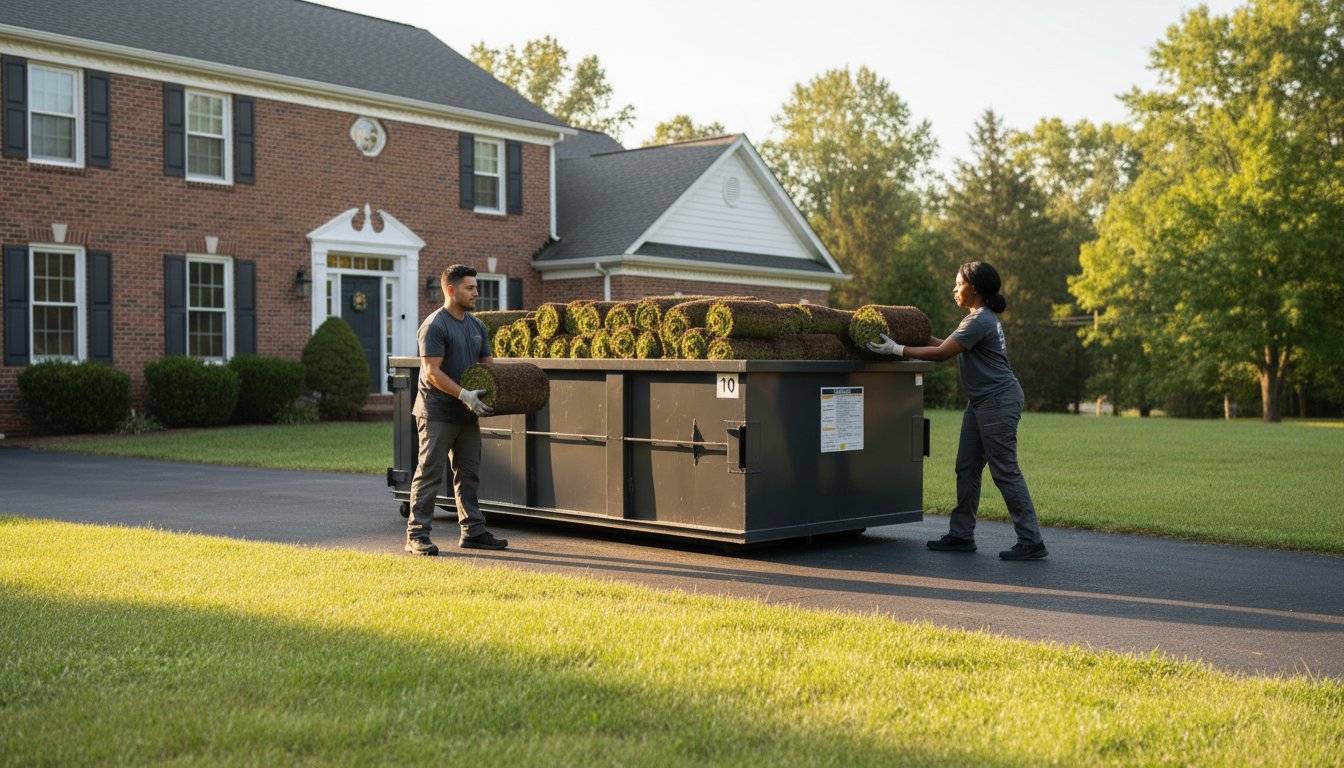
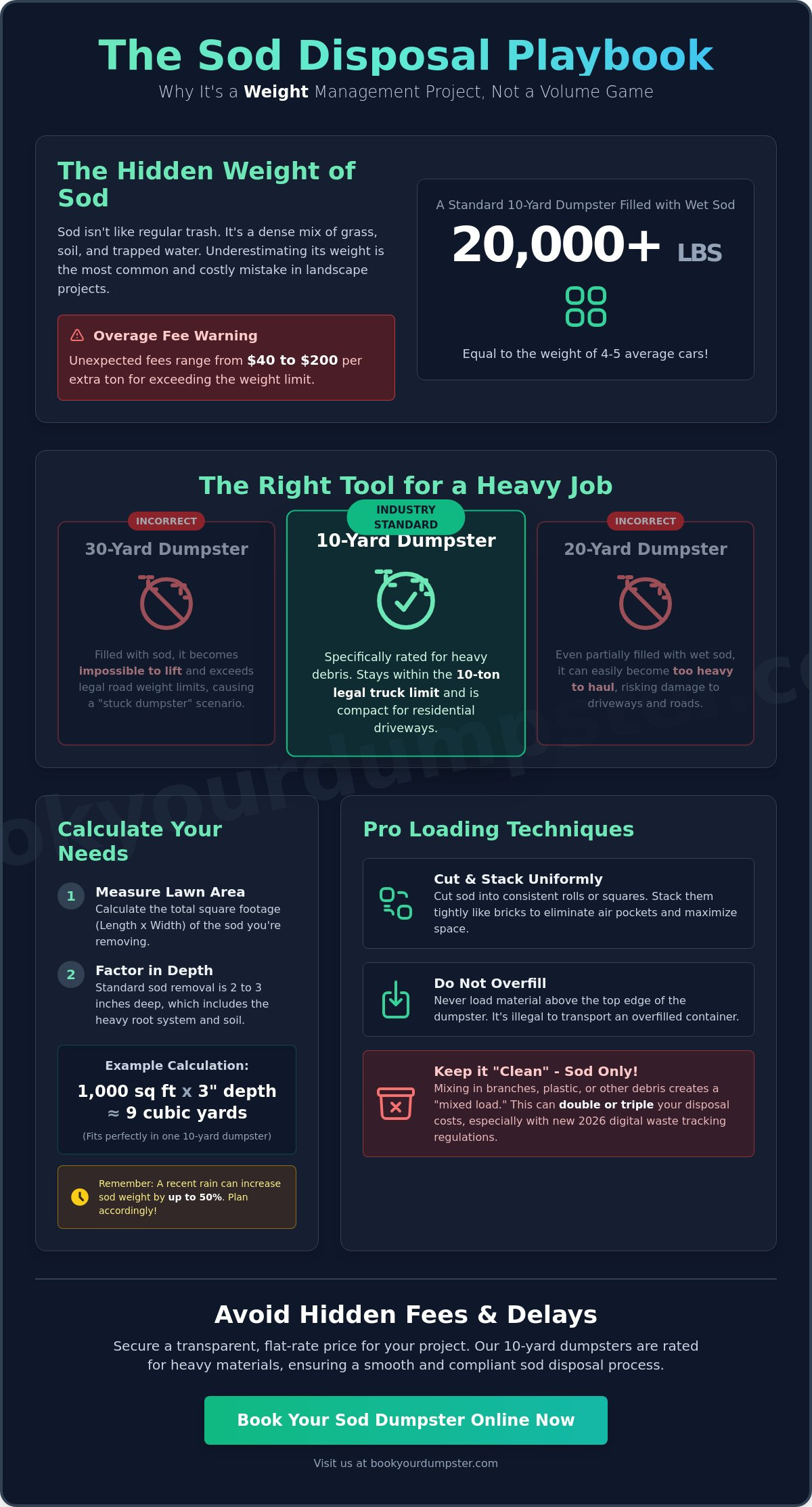
Did you know that a standard 10 yard dumpster filled with wet sod can weigh over 20,000 pounds, triggering overage fees that range from $40 to $200 per extra ton? Most homeowners underestimate the density of organic waste, leading to unexpected costs and logistical delays. If you're planning a landscape overhaul, securing a reliable sod disposal dumpster rental is the difference between a finished lawn and a budget disaster. You already know that managing heavy debris is a physical grind. It's even more taxing when you're dealing with local permit confusion in cities like New York or complying with the 2026 digital waste tracking regulations.
You deserve a transparent process without hidden broker fees or delivery delays. We promise to help you master the logistics of sod disposal by teaching you why this is a weight-management project rather than a volume-management project. This guide provides a step-by-step breakdown of how to Book Your Dumpster, manage weight limits, and stay compliant with state laws like Minnesota’s yard waste ban. Learn how to secure a flat-rate price and keep your project on schedule without the stress.
Key Takeaways
- Identify why specialized roll-off containers are required for high-density organic materials to ensure safe transport and compliance.
- Calculate your required capacity by measuring total lawn square footage and factoring in the standard two to three inches of soil depth.
- Optimize your sod disposal dumpster rental by cutting grass into uniform rolls or squares to eliminate air pockets and maximize bin space.
- Compare flat-rate pricing against tonnage-based fees to protect your budget from local landfill taxes and delivery surcharges.
- Book your delivery online to secure a 10-yard dumpster specifically rated for the extreme weight of landscaping debris.
What is a Sod Disposal Dumpster Rental?
A sod disposal dumpster rental is a specialized roll-off container engineered to handle high-density organic debris. Standard household dumpsters focus on volume, but landscaping projects require a focus on weight. When you strip a lawn for a renovation or prepare a site for new construction, you aren't just moving grass. You're moving heavy, moisture-laden earth that can quickly exceed the mechanical limits of standard waste equipment. These containers are essential for grading projects and site preparation. Because sod is significantly heavier than household trash, these rentals are almost exclusively limited to 10-yard bins. This restriction ensures that the transport truck remains within legal weight limits and prevents damage to your driveway or local roads.
Sod vs. Clean Dirt: Why the Distinction Matters
Understanding What is Sod is the first step in avoiding unexpected fees. Unlike clean dirt, which consists only of soil, sod includes live grass and complex root structures. These roots act like a sponge, trapping significant amounts of water. This moisture adds hundreds of pounds to your load, especially after a rainstorm. Disposal sites treat these materials differently. Many facilities offer lower rates for "clean fill" soil but charge premium prices for organic sod because it requires different processing. If you mix your sod with branches, plastic, or construction debris, you create a "mixed load." In 2026, waste facilities are using more precise digital tracking to identify these mixed loads, which can double or triple your disposal costs instantly. Keep your bin "clean" to keep your price flat.
Why a 10-Yard Dumpster is the Standard for Sod
The 10-yard dumpster is the industry standard for heavy debris for one reason: physics. A 10-yard bin filled with wet sod often reaches the 10-ton legal limit for most roll-off trucks. If you were to fill a 20-yard or 30-yard dumpster with the same material, the truck would be unable to lift the bin safely, or it would cause structural damage to the pavement during transport. Weight capacity is more critical than cubic yardage because sod density makes volume a secondary concern. When you book your dumpster, we provide the specific bin size that keeps your project compliant with local road regulations and prevents overweight penalties. Smaller bins ensure you stay within the 20,000-pound threshold that most residential streets can support without cracking. This pragmatic approach eliminates the risk of being stuck with a container that is too heavy to haul away.
Choosing the Right Dumpster Size for Landscaping Debris
Success starts with accurate math. Before you book a sod disposal dumpster rental, measure the total square footage of your lawn. A standard removal project doesn't just skim the surface; it typically involves excavating 2 to 3 inches of soil along with the root system. This depth adds up quickly. For example, stripping 1,000 square feet of lawn at a 3-inch depth generates approximately 9 cubic yards of debris. While this fits inside a 10-yard container, you must account for moisture content. Wet sod can weigh 50% more than dry sod. If your project follows a heavy rain, those 9 cubic yards could weigh over 25,000 pounds, exceeding many residential road limits.
Adhering to federal waste disposal regulations is mandatory for managing solid waste safely. These rules influence how local landfills accept heavy organic materials. To stay compliant and avoid overage penalties, consult with Book Your Dumpster USA to match your project with your city's specific weight restrictions. We help you navigate the logistics so your driveway remains intact and your schedule stays on track.
The 10-Yard Dumpster: Best for Small to Mid-Sized Lawns
The 10-yard bin is the most reliable choice for residential tear-outs. It's perfectly sized for yards up to 1,500 or 2,000 square feet. Because the side walls are lower than larger models, you can easily lift heavy sod rolls over the edge without straining your back. Its compact footprint is a major advantage in tight urban environments. Whether you're working in a narrow driveway in Queens or a historic street in Boston, this size provides the capacity you need without blocking traffic or violating local ordinances. It's the pragmatic tool for a messy job.
When to Consider Multiple 10-Yard Loads
Large-scale commercial grading often requires more than one container. You might be tempted to rent a 30-yard or 40-yard bin to save time, but this is a mistake for sod. A 40-yard dumpster filled with wet earth is impossible to haul. It creates a "stuck dumpster" scenario where the truck's hydraulic system cannot lift the load, leading to costly delays and potential equipment damage. Instead, schedule multiple 10-yard loads. This strategy keeps the weight manageable for the truck and allows you to organize different debris types, such as separating clean soil from mixed organics, which can lower your total disposal costs. If you need a high-capacity solution, schedule your delivery for a series of smaller, safer bins.
How to Load Your Dumpster for Sod Disposal
Properly loading your container is a safety requirement. Before your bin arrives, prepare the drop-off site by ensuring the surface is flat and hard. Placing a heavy container on soft soil or a slope can lead to the bin sinking or tipping as you add weight. Use 4-by-8 sheets of plywood to protect your driveway from the high-pressure contact points of the roll-off rails. When you begin the work, cut your sod into manageable rolls or 12-inch squares. This technique reduces air pockets and allows you to fit more material into a smaller footprint. Distribute the weight evenly across the entire floor of the container rather than piling it in the center. This balance is critical for the truck's hydraulic system during the pickup process.
Adhering to federal solid waste regulations ensures that your landscaping waste is processed correctly at local facilities. Many national competitors suggest filling a bin to the top rim, but this is dangerous advice for heavy materials. For a sod disposal dumpster rental, you must monitor the specific "heavy debris" fill line. This line is typically much lower than the top of the bin. If your sod is saturated from recent rain, it's safer to stop filling once you reach the halfway point. Overloading the bin makes it impossible for our drivers to haul the load safely, which leads to "dry run" fees and project delays. Book your dumpster today and follow these loading protocols to keep your site efficient.
Step-by-Step Loading Protocol
Start by placing the heaviest, wettest sod at the front of the bin, which is the end closest to the truck cab. This placement puts the most weight over the truck's rear axles for better traction. Stack your sod rolls tightly together. Loose piles create shifting loads that are hazardous during transport. If you are working during a wet season, remember that water weight counts toward your tonnage. Stop filling early if the material is waterlogged. A bin that looks half empty may already be at its 10-ton legal limit. Choose your size wisely and monitor the weight as you go.
What NOT to Put in Your Sod Dumpster
Keep your load "clean" to avoid expensive contamination penalties. Processing centers in 2026 use advanced sensors to detect prohibited items. Do not mix large rocks, concrete chunks, or asphalt into your sod bin unless you've cleared a "mixed heavy" load in advance. Keep household trash, plastic landscape fabric, and chemical containers out of the debris. Mixing these waste types results in a "contaminated load" designation, which often triggers a higher price tier. Schedule your delivery with the intent to keep organic waste separate from construction materials. This pragmatic approach protects your budget and ensures your waste is accepted at the facility without issue.
Managing Costs and Local Regulations in 2026
Controlling your budget requires a firm grasp of pricing structures. Most waste haulers offer two options: flat-rate or tonnage-based pricing. For a sod disposal dumpster rental, flat-rate pricing is usually the safer choice. It bundles delivery, pickup, and a specific weight limit into one upfront cost. Tonnage-based pricing may look cheaper initially, but local landfill taxes and disposal fees can fluctuate. As of May 2026, national overage fees range from $40 to $200 per extra ton. If you underestimate the moisture in your soil, these costs will escalate quickly. Factor in every variable before you sign a rental agreement.
Permit requirements are another critical cost factor. In cities like New York or Boston, placing a container on a public street requires a permit that can cost between $10 and $100. Local authorities in Massachusetts often require specific signage or reflective tape on the bin. Failure to secure these documents results in heavy fines and immediate removal of the container. Check your local municipal website for "Right of Way" or "Encroachment" permits at least 72 hours before your scheduled delivery. Book your sod dumpster now to ensure your logistics are handled by experts who understand these regional hurdles.
City-Specific Considerations: NY, NJ, and IL
Location dictates your project's workflow. In Queens and other parts of New York City, tight street regulations mean you must coordinate specific drop-off windows to avoid blocking traffic. Chicago and Illinois contractors face a different challenge. During the winter, wet sod can freeze into a single, heavy block inside the bin. This makes it impossible for the processing center to dump the load, leading to significant delays and extra handling fees. In New Jersey, strict recycling mandates often require you to separate sod from other yard waste like branches or stumps. Check our Dumpster Rental Prices guide for a transparent look at regional cost variations.
How to Avoid Hidden Fees
Protect your project from unexpected line items. Ask your provider about "dry run" fees. If a driver arrives and cannot access the drop-off point due to parked cars or low-hanging branches, you will be charged for the failed attempt. Verify the included tonnage limit immediately. A standard 10-yard bin often includes 2 to 3 tons of debris. Since sod is exceptionally dense, you may hit that limit before the bin is even half full. Always choose a provider that offers clear, no-nonsense terms. Transparent communication is the best way to keep your landscaping project on schedule and under budget.
Book Your Sod Dumpster with Book Your Dumpster USA
Stop managing the mess and start managing the resolution. Our streamlined, no-nonsense online booking system removes the friction from your landscaping project. You don't need to spend hours on the phone with national brokers who don't understand local weight limits. Instead, use our digital platform to secure a 10-yard bin specifically reserved for heavy organic loads. This specialized inventory is the foundation of a successful sod disposal dumpster rental. We provide transparent, up-front pricing so you can finalize your budget without fear of hidden surcharges or administrative fees. Our on-time delivery promise ensures your landscaping crew stays on schedule, preventing costly idle time on the job site. In an industry where 40% of project delays are caused by poor logistics, we prioritize punctuality above all else.
Why Contractors and Homeowners Trust Us
Reliability is our primary product. We understand that heavy debris removal is a high-stakes logistical challenge. Our local expertise in New Jersey, New York, Massachusetts, and Illinois ensures that your project remains in full compliance with regional waste mandates. Whether you're navigating the 2026 digital waste tracking requirements in a major metro area or simply need a bin that won't crack your suburban driveway, we have the specialized equipment ready. You get direct access to customer support for size and weight consultations. We don't just drop off a box; we act as a pragmatic partner to ensure your load is legal and your costs are contained. We've modernized a traditional industry to provide the speed you expect in 2026. We have this under control.
Ready to Clear Your Site?
Efficiency is just a few clicks away. Select your city, choose your 10-yard bin, and schedule your drop-off through our secure portal. If your project involves more than just lawn removal, read our related guide on Construction Debris Removal to coordinate a multi-phase cleanup. Don't let a pile of old grass stall your progress. Our system is designed to reduce cognitive load and move you from clutter to resolution instantly. Book your dumpster now and start your project today. We handle the heavy lifting so you can focus on the new landscape. Experience the difference of a waste management service built for the modern era. Your project schedule is our priority.
Secure Your Landscape Project’s Success Today
You now have the technical blueprint to handle heavy landscaping debris without the typical logistical headaches. Remember that successful sod disposal is defined by weight management, not volume. By sticking to a 10-yard bin and monitoring the moisture content of your soil, you avoid the 20,000-pound overage traps that stall most residential renovations. You also understand how to navigate the 2026 digital waste tracking requirements and city-specific permit hurdles that often lead to unexpected fines. These steps ensure your project remains efficient and compliant from start to finish.
It's time to move from planning to action. We provide specialized heavy-load containers designed specifically for high-density materials. Our no hidden fees guarantee and on-time delivery promise ensure your sod disposal dumpster rental experience is professional and predictable. Don't let a pile of old sod hold up your progress. Use our streamlined online system to coordinate your logistics with a partner who understands the grit of the job. Book your sod disposal dumpster online now and clear your site today. Your new lawn is waiting.
Frequently Asked Questions
Can I put dirt and sod in the same dumpster?
You can mix dirt and sod as long as the load remains free of trash and plastic landscape fabric. Most processing facilities treat these materials as a single organic stream for recycling. If you introduce non-organic debris, 2026 digital sensors at the facility will flag the load as contaminated. This results in an immediate price tier increase. Keep your load pure to maintain your flat-rate pricing.
How much sod can I fit in a 10-yard dumpster?
A 10-yard bin accommodates about 1,000 square feet of sod cut at a 3-inch depth. This volume represents roughly 9 cubic yards of material. Always leave at least 12 inches of space at the top of the bin to account for the extreme weight of the soil. Filling to the rim with dense sod will likely exceed the 10-ton legal hauling limit for residential trucks.
What happens if my sod dumpster is too heavy for the truck to lift?
If the container exceeds the truck's lifting capacity, the driver will issue a "dry run" fee and leave the bin on-site. You must manually remove material until the load meets the legal weight threshold. This causes project delays and adds labor costs to your renovation. Monitor your fill line constantly to avoid this logistical bottleneck and ensure a successful pickup.
Do I need a permit to put a sod dumpster on the street in Queens?
Yes, the New York City Department of Transportation requires a permit for any sod disposal dumpster rental placed on a public roadway in Queens. You must apply for this permit at least 72 hours before your scheduled delivery date. Failure to display a valid permit will lead to NYPD fines and the immediate removal of your container at your expense.
Is it cheaper to rent a dumpster for sod or hire a junk removal service?
Renting a dumpster is generally 30% more cost-effective than junk removal for heavy landscaping debris. Junk removal companies charge based on the space used in their trucks and the labor required to load it. For a 10-ton sod project, the labor surcharges alone can double your total cost. A roll-off bin gives you full control over the timeline and the budget.
How do I prevent my sod from getting too heavy in the rain?
Use a waterproof tarp to cover your container during rainstorms. Since saturated soil weighs 50% more than dry earth, an uncovered bin can quickly gain thousands of pounds in water weight. Secure the tarp with heavy-duty bungee cords to the exterior hooks of the bin. This simple step protects you from expensive overage fees that range from $40 to $200 per extra ton.
Can I put tree stumps or large branches in with my sod?
Do not mix tree stumps or large branches with your sod without prior approval. Most disposal sites require "clean" dirt and sod to be separated from "woody" yard waste for different processing streams. Mixing these materials creates a "mixed heavy" load. This classification often carries a higher disposal rate per ton compared to pure organic sod loads. Keep your materials separated to save money.
What is the standard rental period for a landscaping dumpster?
The standard rental period for a landscaping container is seven to ten days. This window provides enough time for site preparation, excavation, and loading. If you need more time, schedule an extension 24 hours before your pickup date. Most homeowners complete a standard 1,500 square foot lawn tear-out within a single weekend. Book your dumpster today to secure your preferred delivery date.


