

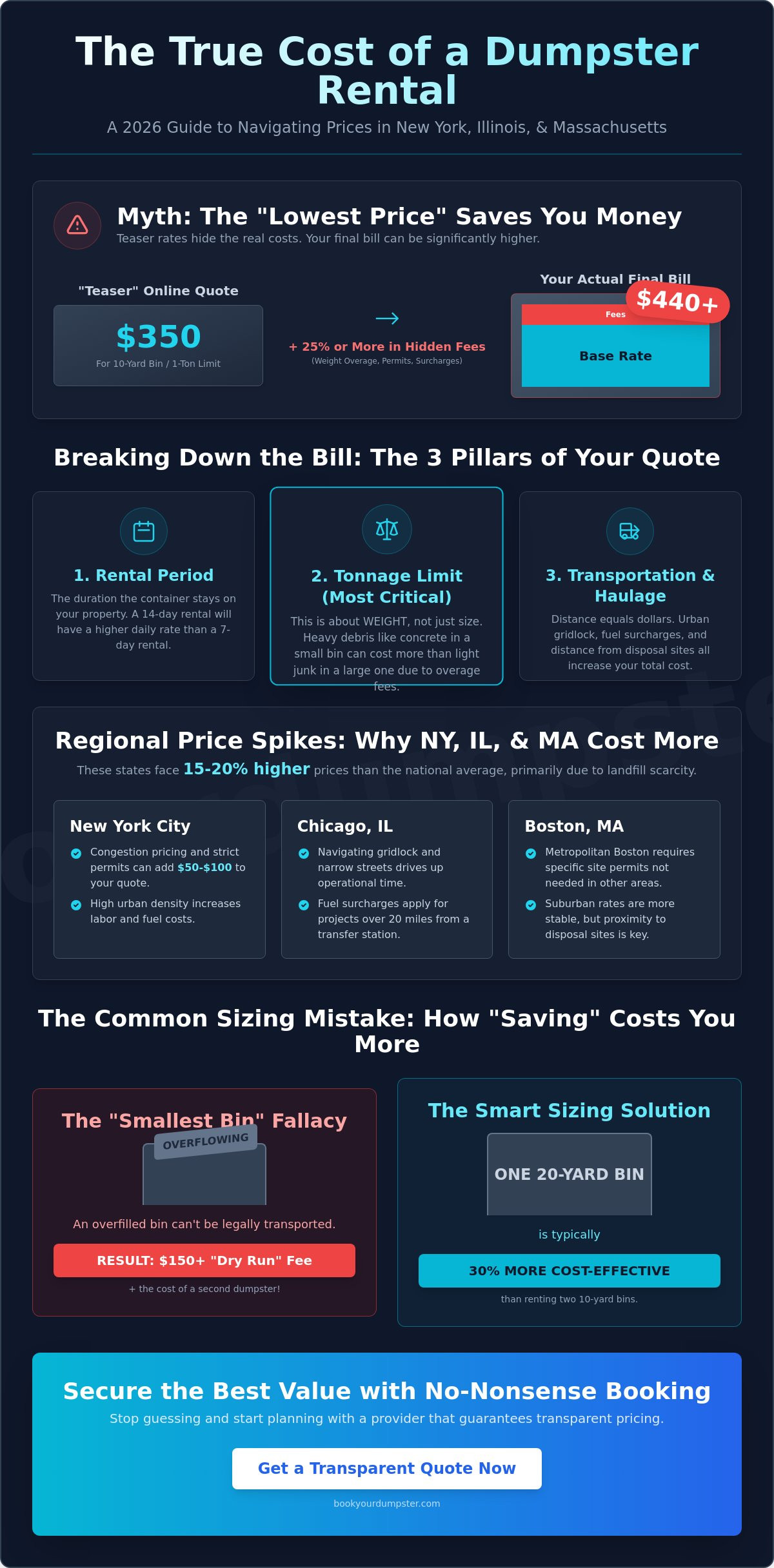
The low-cost quote you just received for a roll-off in Chicago or New York City is likely a tactical omission. According to 2024 industry pricing reports, the initial dumpster cost most homeowners see online often increases by 25% or more once hidden weight overages and city permit fees are added to the final bill. It's frustrating to plan a renovation budget only to have it wrecked by fine print. You need a straightforward price and a container that arrives when promised. We believe logistics should be the easiest part of your project.
This 2026 guide exposes the pricing myths currently circulating in the New York, Illinois, and Massachusetts markets. You'll learn how to select the most cost-effective size for your specific debris and how to navigate strict permit regulations in cities like Boston or Chicago without incurring local fines. We provide a transparent look at the waste management industry so you can book your dumpster with total confidence. Stop guessing and start planning with facts.
Key Takeaways
- Identify the regional factors driving higher rates in NY, IL, and MA to ensure your project budget remains accurate.
- Learn how to calculate the true dumpster cost by looking past "teaser rates" and understanding weight capacity limits.
- Uncover the hidden fees associated with debris types and seasonal demand that often inflate standard rental quotes.
- Match your project scope to the ideal container size using our efficiency framework to maximize value and minimize waste.
- Secure a reliable rental with a transparent, no-nonsense booking process designed to eliminate logistical stress and hidden charges.
The Reality of Dumpster Costs in New York, Illinois, and Massachusetts
Understanding your total dumpster cost requires looking beyond the metal box on your driveway. In New York, Illinois, and Massachusetts, this figure represents a composite of three distinct variables: equipment rental, haulage logistics, and disposal fees. These states currently face a 15% to 20% higher price point than the national average. This premium stems largely from regional landfill scarcity. As local disposal sites reach capacity, waste must travel further to reach processing centers that adhere to modern waste management principles. You aren't just paying for a container; you're paying for the complex infrastructure required to move debris out of high-density corridors.
Don't confuse a base rate with the total cost of disposal. A base rate typically covers the drop-off and pickup. The total cost includes the actual weight of your materials. If your project is renovation-heavy in 2026, weight becomes your biggest variable. Local logistics in these three states are unforgiving. Tight streets and strict municipal codes mean every minute a truck spends idling adds to the operational burden. Efficiency is the only way to keep these numbers manageable.
Regional Pricing Tiers: NYC vs. Chicago vs. Boston
Urban density dictates the price. In NYC and Chicago, delivery trucks navigate gridlock and narrow alleys, which increases fuel consumption and labor hours. New York City's congestion pricing and specific permit requirements can add $50 to $100 to a standard quote compared to rural areas. In Massachusetts, suburban rates remain more stable, but metropolitan Boston requires specific site permits that don't apply in the Berkshires. Illinois presents a different challenge. If your project sits more than 20 miles from a primary transfer station, expect fuel surcharges to scale with the mileage. Distance equals dollars.
The Three Pillars of a Dumpster Quote
Every quote rests on three factors that determine your final invoice:
- Rental Period: How long the bin sits on your site. Keeping a bin for 14 days instead of 7 increases the daily rate.
- Tonnage Limit: This is the critical difference between volume (cubic yards) and weight (tons). Overfilling a 10-yard bin with heavy concrete will cost more than a 20-yard bin filled with household junk.
- Transportation: Proximity matters. When you Book Your Dumpster, you reduce the "deadhead" miles a truck travels. This keeps your dumpster cost predictable and prevents hidden fuel fees from appearing on your bill.
Choose your size based on the heaviest material you plan to toss. Heavy debris like brick or dirt requires specialized containers to avoid exceeding legal road weight limits. Staying within your weight allowance is the fastest way to avoid overage charges and keep your project on budget.
Myth vs. Reality: Why the "Lowest Price" Often Costs More
The lowest price on a search results page is rarely the final price you pay. National brokers often use a "teaser rate" strategy to secure your booking, only to add surcharges later. They quote a base price for a 10-yard container but set a weight limit of just one ton. If you are cleaning out a garage in Chicago or a basement in Queens, you will likely exceed that limit. Your actual dumpster cost then doubles once the haulage company adds overage fees and environmental surcharges. Check the weight allowance before you provide a credit card number. A pro-rated quote that includes three tons is often cheaper than a low-tonnage "deal" that hits you with penalties at the landfill.
Transparency is the only way to avoid budget creep. Many companies omit fuel surcharges and administrative fees from their initial quotes. These costs are mandatory, not optional. Strict New York State waste regulations require specific handling and reporting for solid waste, which increases operational overhead. If a quote seems too low, the company is likely hiding these regulatory fees until the final invoice arrives. Choose a provider that bundles these costs into a single, upfront price.
Myth: "I only need the smallest size to save money"
Choosing a 10-yard bin for a 20-yard project is a common mistake that backfires. If debris protrudes above the rim, the driver cannot legally transport the load. This results in a "dry run" fee, which often costs $150 or more, and requires you to rent a second container. A single 20-yard dumpster is typically 30% more cost-effective than booking two 10-yard hauls. Projects like a 150-square-foot kitchen remodel or a full deck demolition almost always outgrow small containers. Save time and money by sizing up from the start. You can view available sizes to match your specific project needs.
Reality: The True Cost of "Unlimited Weight" Offers
In the waste industry, "unlimited weight" is a marketing myth. Landfills charge haulers by the ton. In Massachusetts, landfill tipping fees have climbed significantly, often exceeding $95 per ton. No business can stay solvent while paying these fees for "unlimited" customers. These offers usually contain fine print that excludes heavy materials like dirt, concrete, or roofing shingles. They also frequently include high "trip fees" if the container isn't ready for pickup on the first attempt. Stick to honest, tonnage-based pricing to keep your project on budget.
Breaking Down the Bill: Hidden Factors and Local Fees
Your total dumpster cost depends on more than just the size of the container. The type of debris you load dictates the final price. Clean fill, which includes heavy materials like concrete, brick, or dirt, often carries a flat rate because facilities recycle these items easily. Construction and Demolition (C&D) waste is different. It requires manual sorting at transfer stations, which adds labor costs to your bill. In 2026, Northeast disposal facilities have implemented a 4% "processing surcharge" on mixed loads to offset rising labor shortages.
Timing also impacts your bottom line. Local seasonal demand peaks between April and June. During these months, inventory levels drop by 30%, which can lead to premium pricing for last-minute bookings. Secure your rental at least 10 days in advance to avoid these spikes. For a detailed breakdown of current rates, consult the 2026 pricing guide. Industry trends for 2026 show a shift toward carbon-adjusted hauling fees in New York and Massachusetts, where transporters now pay a premium for non-electric fleet operations.
Permit Costs: Navigating NY, IL, and MA Regulations
Placement matters. If you can't fit the bin on your private driveway, you need a permit. The NYC DOT requires a "Right of Way" permit for any container placed on a public street. These require specific reflective markings and safety barriers. In Chicago, permit fees aren't standardized; they vary by ward and the duration of the project. Massachusetts municipalities often enforce strict rules regarding sidewalk clearance. Expect to pay between $50 and $150 for these authorizations. Always verify permit requirements before you schedule your delivery to avoid city fines that often exceed $500 per day.
Prohibited Items and Surcharge Traps
Don't let "contamination" fees ruin your budget. Mixing tires, batteries, or electronics into a general waste bin triggers immediate penalties. Massachusetts has some of the strictest rules in the country. Since late 2022, the state has banned mattresses from landfills. If you toss a mattress into a standard roll-off, you'll face a separate recycling fee ranging from $50 to $115 per piece. Both New York and Massachusetts have expanded organic waste bans for 2026. This means large quantities of food waste or untreated wood cannot enter the standard C&D stream. Keep your materials separated. Follow the load guidelines to ensure a hassle-free pickup.
Project-Specific Cost Estimates and Size Matching
Choosing the wrong container size is the fastest way to inflate your total dumpster cost. You don't want to pay for empty space, but you also can't afford the penalties associated with overfilling a bin. Calculate your waste volume before you book. A 10 yard dumpster rental serves as the residential ROI baseline because it fits in standard driveways and holds approximately 50 to 60 large trash bags. It's the most efficient choice for attic cleanouts or small bathroom refreshes.
Analyze the cost-to-benefit ratio across different sizes to maximize your budget. While a 10-yard bin is cheaper upfront, the cost per cubic yard often drops as the container gets larger. For example, a 40-yard dumpster typically offers a 15% to 20% lower price per cubic yard than a 10-yard model. If you're managing a full home renovation, jumping to a 20 or 30-yard option prevents the need for multiple hauls, saving you the expense of a second delivery fee.
- 10-Yard: Best for 1 to 2 room cleanouts or small debris.
- 20-Yard: Standard for deck removals or bedroom remodels.
- 30-Yard: Ideal for estate cleanouts and larger home additions.
- 40-Yard: Reserved for major construction or commercial projects.
Residential Cleanouts vs. Construction Debris
Weight is the primary factor that fluctuates your dumpster cost. Household junk like furniture and clothes is bulky but light. Construction debris, specifically roofing shingles and concrete, is extremely heavy. One square of asphalt shingles weighs roughly 250 pounds. A 20-yard bin filled with shingles can easily hit a 5-ton limit. In 2026, source-separating heavy materials like clean concrete or brick into dedicated bins can reduce your disposal fees by up to 25% compared to mixed-load rates. Don't mix heavy masonry with light trash unless you want to pay premium tonnage surcharges.
Commercial and Large-Scale Project Budgeting
Commercial managers in Illinois and Massachusetts must prioritize swap-out frequency. On active job sites, a 40-yard container can fill up in three to five days. If your project timeline spans several months, your budget should account for recurring haul fees rather than just the initial rental. Look for transparent flat-rate models that include a set weight limit and a fixed daily rate. This predictability is vital for maintaining margins on large-scale builds. Avoid providers that hide fuel surcharges or environmental fees in the fine print. You need a partner who delivers on time so your crew isn't standing around waiting for an empty bin.
Ready to clear the clutter without the guesswork? Book your dumpster through our streamlined platform and get the right size delivered to your site on schedule.
How to Secure the Best Value with Book Your Dumpster
Managing waste disposal in New York, Illinois, and Massachusetts shouldn't be a guessing game. Book Your Dumpster USA operates on a fundamental principle: what you see is what you pay. We've eliminated the hidden fee culture that often plagues the waste management industry. Our quotes are comprehensive and direct. They include delivery, pickup, and specific weight limits upfront. This transparency protects your budget from the unexpected surcharges and environmental fees often tucked into the fine print of traditional contracts. We focus on reliability so you can focus on your project.
Transparent Pricing as a Competitive Edge
Our pricing model accounts for the variables that competitors often omit. This includes local disposal taxes and state-specific environmental mandates. In high-traffic areas like Chicago or Boston, on-time delivery is critical for your bottom line. A delay of just two hours can cost a construction crew $500 in lost labor productivity. Our local presence in NY, IL, and MA allows us to bypass common logistical bottlenecks. We know the specific routes and regional regulations, ensuring your dumpster cost remains predictable and your project stays on schedule. We don't just drop off a box; we provide a logistical advantage.
Your Step-by-Step Booking Checklist
Our digital platform streamlines the rental process into three actionable steps. We've removed the friction to get you from a state of clutter to a state of resolution faster. Follow this checklist to secure your rental:
- Step 1: Choose your size. Use our debris-weight guide to select the right roll-off container. Matching your waste volume to the correct cubic yardage prevents overage charges and ensures your dumpster cost stays within the initial quote.
- Step 2: Check local permit requirements. Access our online portal to see if your specific municipality requires a street permit. Regulations in Chicago differ significantly from those in Manhattan; our system identifies these requirements instantly to keep your project compliant and avoid city fines.
- Step 3: Schedule your delivery. Pick your date and clear the drop-off zone. Ensure there are no low-hanging wires, overhanging branches, or parked cars blocking the path for our drivers.
Managing waste in the Northeast and Midwest requires localized knowledge. Permit laws in Massachusetts have different lead times than those in Illinois. We handle the heavy lifting of compliance and logistics so you don't have to. This regional expertise prevents costly fines and unnecessary project delays. Lock in your rate and experience a service built on professional reliability and honesty. Book your dumpster today to lock in transparent pricing and clear your site with confidence.
Take Control of Your 2026 Project Logistics
Navigating waste management in 2026 requires looking past the initial sticker price. You've learned that the true dumpster cost in New York, Illinois, and Massachusetts depends on transparent pricing models rather than low-ball estimates that lead to hidden fees. Selecting the right container size is the most effective way to control your budget. Whether you need a 10, 20, 30, or 40-yard roll-off container, matching the bin to your specific debris volume prevents costly overages. Our team applies expert local knowledge of state-specific waste regulations to ensure your project stays compliant and on schedule. We handle the logistics so you can focus on the work at hand. Experience a modern, digital-first approach to debris removal that prioritizes your time and budget. Stop guessing about disposal fees and start your project with a reliable partner. It's time to clear the clutter without the typical headaches of traditional waste services. We're ready to help you finish the job efficiently.
Check local dumpster rates and book your rental online to secure a flat-rate container today. Your project deserves a straightforward solution.
Frequently Asked Questions
How much does it typically cost to rent a 10-yard dumpster in New York?
A 10-yard dumpster in New York typically costs between $350 and $600 depending on your specific county and debris type. This price range reflects high tipping fees at regional transfer stations. Book your dumpster early to lock in current rates. Always confirm if your quote includes the standard tonnage limit to avoid surprises on your final invoice.
Are there extra fees for keeping a dumpster longer than a week in Illinois?
Yes, most Illinois rental agreements include a daily extension fee ranging from $10 to $40 per additional day. Standard rental periods in the Chicago metro area usually last 7 to 10 days. If you exceed this window, the provider charges for the extra time the equipment sits on your site. Call 24 hours before your scheduled pickup to request an extension.
What happens if I go over the weight limit in my Massachusetts rental?
You'll pay a pro-rated tonnage fee for every pound over your agreed limit. Massachusetts disposal facilities charge by the ton, with overage rates often starting at $100 per additional ton. Your final dumpster cost reflects these weight tickets provided by the landfill. Avoid overages by keeping heavy materials like concrete or dirt separate from lighter household junk.
Do I need a permit to put a dumpster on my driveway in Chicago?
No, you don't need a permit to place a dumpster on private property like your driveway in Chicago. Permits are only required by the Chicago Department of Transportation (CDOT) if the container sits on a public street, alley, or sidewalk. Street permits currently cost approximately $50 to $100 for a 30-day period. Check your local ward requirements before scheduling a street delivery.
Why are dumpster rental prices so much higher in NYC than in rural areas?
NYC prices are higher due to extreme traffic congestion, limited transfer station capacity, and high state-mandated disposal taxes. The New York Department of Sanitation reports that processing waste in dense urban environments requires more labor and fuel than in rural counties. Logistics companies must navigate narrow streets, which increases the time required for every drop-off. This complexity drives up the total dumpster cost for urban projects.
Can I save money by sharing a dumpster with a neighbor?
Yes, sharing a dumpster is an effective way to split the flat rental fee and disposal costs. You can reduce your individual expense by 50% if you split a 20-yard container instead of renting two 10-yard units. Ensure both parties understand the weight limits and prohibited items list. One person must remain the primary contact responsible for the final payment and site access.
What is a "dry run" fee and how do I avoid it?
A dry run fee is a penalty charged when a driver can't drop off or pick up a dumpster due to an obstruction. These fees typically cost between $75 and $150 per occurrence. Avoid this by clearing cars, low-hanging branches, and debris from the delivery path. Ensure the gates are unlocked and the drop-off zone is completely accessible before the truck arrives.
Is it cheaper to rent a dumpster or hire a junk removal service for a small basement cleanout?
Renting a dumpster is usually cheaper if you have more than three cubic yards of waste. Junk removal services charge for labor and volume, often starting at $150 for a single item. A 10-yard dumpster offers more capacity for a fixed price, allowing you to work at your own pace. Choose the dumpster option for multi-day projects to keep your costs predictable and manageable.


