
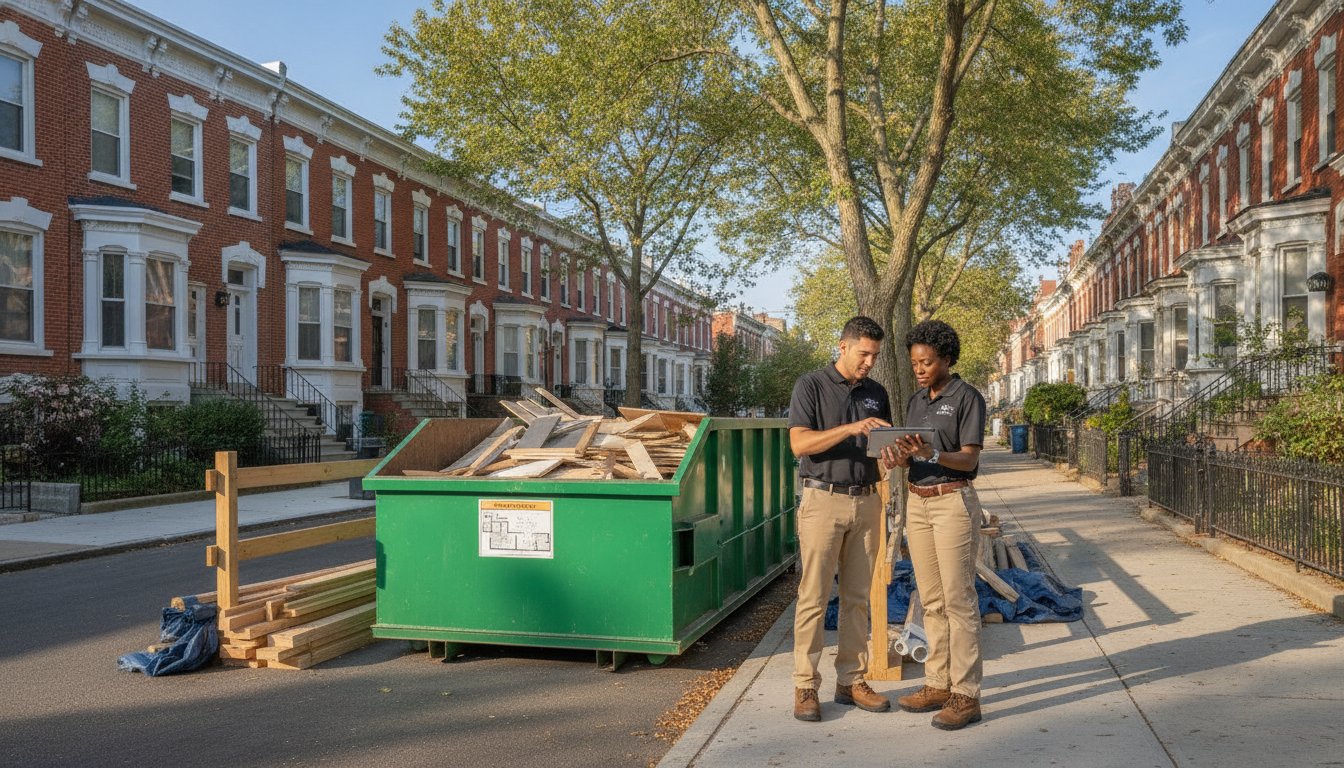
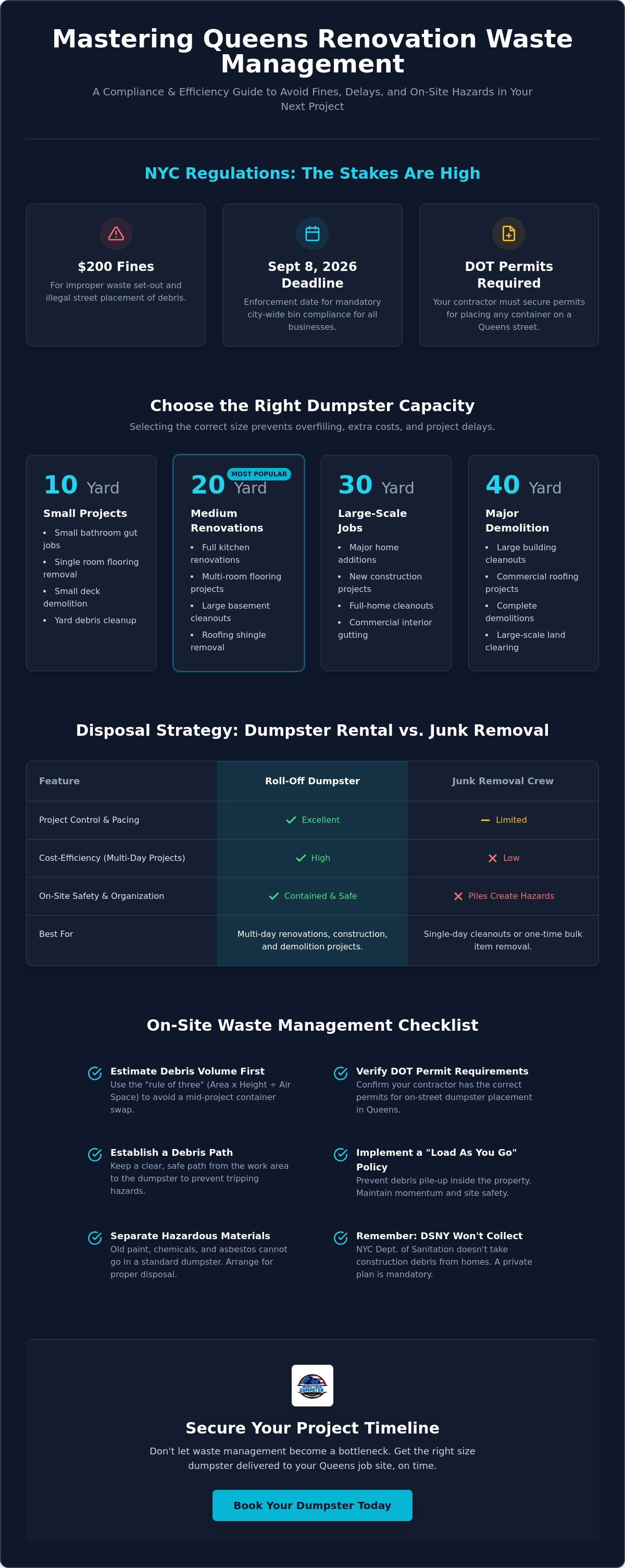
A single missed DOT permit or an overflowing sidewalk can shut down your Queens renovation faster than a failed building inspection. You've likely felt the stress of debris piling up while worrying about the September 8, 2026, enforcement date for mandatory NYC Bin compliance. Effective Queens home renovation waste management is no longer just about cleaning up. It's a logistical necessity to avoid the $200 fines that now come with improper waste set-out and illegal street placement.
We understand that a cluttered site leads to safety hazards and immediate project paralysis. You need a clean work area without the hidden costs of regulatory slip-ups. This guide provides a clear roadmap to master your project timeline and site safety. We'll walk through the 2026 containerization rules, mandatory composting requirements, and the specific DOT permit steps your contractor must follow. Use this checklist to keep your budget predictable and your job site fully compliant with new NYC regulations.
Key Takeaways
- Calculate your debris volume using the "rule of three" to select the correct container size and avoid mid-project overflow.
- Evaluate the cost-efficiency of a dedicated dumpster rental versus multiple junk removal trips for extended renovation timelines.
- Navigate the complexities of Queens home renovation waste management by verifying DOT permit requirements for on-street container placement.
- Establish a dedicated debris path and a "load as you go" policy to eliminate site hazards and maintain project momentum.
- Identify the specific 10, 20, 30, or 40-yard dumpster size that fits your project scope and Queens site limitations.
The Pre-Renovation Waste Audit: Estimating Your Debris Volume
Effective Queens home renovation waste management starts long before the first wall comes down. You can't manage what you haven't measured. Begin your project by walking through the space to identify the specific materials you'll be removing. A typical Queens townhouse renovation produces a diverse mix of Demolition waste, ranging from heavy plaster and lath to modern drywall and laminate flooring. Identifying these materials early prevents surprises when it's time to load the container.
Use the "rule of three" to estimate your total debris volume accurately. Multiply the floor area of the renovation zone by the ceiling height to calculate the total cubic footage of the space. Then, divide that total by the estimated air space between items once they're broken down and piled. Remember that materials like insulation or drywall expand significantly when removed. Don't make the mistake of measuring only the footprint of the room; think in three dimensions to avoid mid-project container swaps and unnecessary delays.
Separate your "keep" items from your "discard" items before the demolition crew arrives. Clearly label any vintage moldings, cabinets, or fixtures you intend to salvage or donate. This physical separation prevents expensive accidents during the fast-paced demo phase. Identify and flag hazardous materials now. Old paint cans, cleaning chemicals, and materials containing asbestos require specialized handling. You cannot place these in a standard roll-off container. Identifying them early allows you to arrange for legal disposal and keeps your site compliant with NYC safety standards.
Categorizing Your Renovation Debris Types
Organize your waste into three distinct streams to maintain a safe job site. Heavy debris includes masonry, bricks, concrete, and soil. These materials are exceptionally heavy and require containers with specific weight ratings to ensure safe transport. Construction and demolition (C&D) waste consists of structural wood, metal studs, and drywall. Household bulk includes larger items like old appliances, water heaters, and built-in furniture that don't break down easily. Categorizing early helps you decide which size container from Book Your Dumpster best fits your specific project needs.
Choosing the Right Dumpster Capacity
Picking the correct capacity is critical for maintaining your project timeline and keeping your budget predictable. Avoid the temptation to "make it fit" in a smaller bin, which often leads to dangerous overfilling.
- 10 Yard Dumpster: Ideal for small bathroom gut jobs or pulling up a single room of carpeting.
- 20 Yard Dumpster: The most versatile choice for kitchen renovations and multi-room flooring projects.
- 30-40 Yard Dumpsters: Essential for major structural additions, full-home cleanouts, or commercial-scale gutting.
Selecting Your Disposal Strategy: Dumpster Rental vs. Junk Removal
Choosing the right disposal method determines whether your project stays on schedule or grinds to a halt. For major Queens home renovation waste management, you generally face two choices: renting a roll-off dumpster or hiring a junk removal crew. While junk removal works for a single afternoon cleanout, it often fails during the multi-week demolition and construction phases. You don't want to pay for a crew to sit idle while your team finishes tearing out a bathroom, nor do you want debris sitting in your hallway for days waiting for a pickup window.
Site safety is a non-negotiable factor in NYC. Letting debris pile up on the curb or inside the house creates immediate fire and tripping hazards. According to NYC construction debris rules, the Department of Sanitation won't collect construction waste from residential properties. This means you must have a private disposal plan in place. A dumpster provides a central, contained location for every scrap of drywall and wood, keeping the site organized and reducing the risk of DSNY or DOT violations.
Why Roll-Off Dumpsters Offer Superior Project Control
Eliminate the debris bottleneck by having a container ready the moment the first sledgehammer swings. A dumpster stays on your site, providing constant access for your crew to load as they go. This keeps the workspace clear and maintains a professional appearance for neighbors and city inspectors who frequent Queens residential blocks. You control the pace. There's no need to coordinate with a third-party schedule or wait for a truck to arrive before you can clear your workspace. If you're ready to take charge of your site, you can view available container sizes to match your project's footprint.
Cost Considerations for Queens Homeowners
Budgeting for waste is simpler with flat-rate pricing. Junk removal services typically charge by the volume of the truck filled, which can lead to escalating costs if your debris estimate was low. With a dumpster rental, you pay for the container size and a specific weight limit upfront. This transparency helps you maintain a predictable budget. Just be sure to monitor your weight limits, especially when disposing of heavy materials like plaster or tile, to avoid overage charges. To better understand how to budget for your project, learn more about dumpster rental prices and how they apply to your specific needs.
Queens Logistics: Navigating NYC DOT Permits and Street Placement
Identify your placement zone before the first truck arrives. If you have a private driveway with sufficient clearance, you can bypass most city permit requirements. Most homeowners in neighborhoods like Astoria or Ridgewood don't have this luxury. Placing a container on a public roadway requires a permit from the NYC Department of Transportation (DOT). Do not attempt to skip this step. Illegal street placement leads to immediate stop-work orders and heavy fines that can derail your entire Queens home renovation waste management plan.
Logistical success depends on site organization. While you focus on the physical placement, remember that Sustainable C&D materials management involves more than just throwing items away. Proper placement ensures your waste streams stay separated and manageable. Work with your provider to ensure the container doesn't block fire hydrants, bus stops, or neighbor's driveways. A well-placed dumpster keeps the project moving and maintains positive relationships with the surrounding community.
Understanding NYC DOT Street Permits
An On-Street Container Permit is mandatory for any dumpster placed on a public street or sidewalk in Queens. Your carting company or general contractor must secure this permit; the city does not allow homeowners to apply directly. Verify which permit fits your project scope. A Commercial Refuse Container permit covers short-term cleanouts for up to 5 consecutive days. For renovations involving a Department of Buildings permit, you'll need a Construction Debris Container permit, which is valid for up to 90 days. Ensure your container features the required reflective tape and safety markings. These visibility markers are essential for night safety on busy Queens thoroughfares.
Navigating Queens Neighborhood Restrictions
Account for specific neighborhood challenges during the planning phase. Narrow Astoria side-streets require precision delivery and may limit you to a smaller container size to maintain traffic flow. In high-traffic areas like Flushing or Jamaica, schedule your delivery and pickup during off-peak hours to avoid gridlock. Protect your property and the city's infrastructure. Use heavy-duty plywood or specialized mats to shield the sidewalk and curb from the weight of roll-off equipment. This simple step prevents expensive damage claims later. For a broader look at regional requirements and how they impact your project, consult this Complete Guide to Dumpster Rental in New York.
On-Site Waste Management Checklist for Maximum Efficiency
A successful project depends on a disciplined approach to the physical workspace. Once your container is placed according to the DOT guidelines discussed previously, your focus must shift to site flow. Establish a dedicated debris path from the renovation zone directly to the dumpster. Clear this path of all tools, cords, and obstacles to ensure your crew can move heavy loads without injury. A clear route reduces transit time and keeps the interior of your home from becoming a secondary dump site. This level of organization is the backbone of efficient Queens home renovation waste management.
Implement a strict "load as you go" policy. It is tempting to pile scrap in a corner to deal with later, but this leads to site paralysis and increased safety risks. Piles of debris hide sharp objects and create tripping hazards that slow down your skilled tradespeople. By loading the dumpster throughout the day, you maintain a clean work environment and keep the project on its projected timeline. This habit also helps you monitor your remaining capacity in real time, preventing the last-minute realization that you need an additional haul.
Maximize every cubic yard of your rental by breaking down large items before they enter the bin. Smash old cabinets, cut down long pieces of timber, and disassemble large furniture. Flat-packing your waste prevents "air pockets" that waste valuable space. When loading, distribute the weight evenly across the floor of the container. If you concentrate all the heavy masonry or plaster on one side, the truck may tilt or become unstable during the pickup process. A balanced load ensures a safe, hassle-of-free removal when the job is done.
Safe Loading Protocols for Construction Debris
Stability is your priority. Always place heavy materials like concrete, brick, or tile at the bottom of the dumpster. This creates a low center of gravity for the roll-off truck. Never fill the container above the "waterline," which is the top rim of the dumpster. NYC safety regulations prohibit the transport of overfilled bins, and our drivers cannot legally pick up a container with debris hanging over the sides. If you are disposing of lightweight items like insulation or plastic sheeting, secure them under heavier debris or use a mesh tarp to prevent them from blowing into the street.
Managing Prohibited and Restricted Materials
Certain materials are strictly prohibited from standard roll-off containers due to environmental regulations. Never place batteries, industrial chemicals, tires, or oil-based paints in your dumpster. In Queens, electronics and "e-waste," such as computers and televisions, must be handled through specialized NYC collection programs rather than construction waste streams. Mixing these items into your bin can result in rejected loads and additional disposal fees. To ensure you have the right equipment for your specific project, browse our roll-off dumpster rental options and select the capacity that fits your needs.
Securing Your Project Timeline with Book Your Dumpster
Execution is the final step in mastering Queens home renovation waste management. You have audited your debris and mapped out your site flow. Now, you need a partner that respects your schedule and your budget. Our streamlined online booking system allows you to secure a container in minutes. There is no need for lengthy phone calls or waiting for a callback. Select your delivery date, choose your size, and finalize your order with total confidence. We handle the logistical heavy lifting so you can focus on the renovation itself.
Reliability in the waste industry is often promised but rarely delivered. We differentiate ourselves through pricing integrity and absolute punctuality. You won't find hidden "Queens congestion" fees or surprise surcharges on your final invoice. Our team understands the specific challenges of local neighborhoods, from the one-way streets of Sunnyside to the commercial hubs of Long Island City. We provide the control you need to keep your project moving without the stress of debris buildup or regulatory fines. Trust our local expertise to keep your site clean and your timeline secure.
The Benefits of a Digital-First Waste Partner
Modern renovation projects demand modern tools. Our digital platform offers instant scheduling that aligns with your specific construction phases. You can manage your rental from any device, ensuring your waste removal keeps pace with your crew's progress. This digital-first approach eliminates the friction typical of traditional carting services. You get direct communication with logistics experts who know exactly how to navigate the permitting and placement requirements discussed earlier in this guide. We act as a high-functioning tool in your renovation kit, providing immediate resolution to your waste challenges.
Why Local Reliability is Non-Negotiable
A delay in dumpster delivery can stop a project in its tracks. We support both DIY homeowners and professional Queens contractors by ensuring your 10, 20, 30, or 40-yard dumpster arrives exactly when promised. In the high-stakes environment of NYC construction, there is no room for opaque communication or missed windows. We pride ourselves on being the dependable partner you can trust for every stage of your project. For a deeper look at managing large-scale debris beyond the initial renovation phase, read our Ultimate Guide to Construction Debris Removal. Secure your project timeline today by choosing a partner that understands the pulse of Queens.
Take Control of Your Queens Job Site Today
Mastering your project timeline requires more than just skilled labor; it demands a disciplined approach to debris. You now have the professional tools to estimate your volume accurately and navigate the mandatory 2026 NYC bin rules without stress. Successful Queens home renovation waste management is about preventing site paralysis by keeping your workspace clear and your budget predictable. By managing DOT street permits and establishing a debris path early, you eliminate the logistical bottlenecks that often lead to expensive delays.
We've been serving New York since 2018 with a focus on reliability and project control. Our streamlined online booking system and transparent flat-rate pricing remove the friction from your disposal strategy. Don't let debris buildup or unexpected DOT fines derail your renovation progress. Use our local expertise to secure a container that fits your specific project footprint and sidewalk limitations. Take the final step in your project planning and Book Your Dumpster in Queens Now to ensure a safe, compliant, and efficient renovation. Your clean job site is just a few clicks away.
Frequently Asked Questions
Do I need a permit for a dumpster in Queens if it is on my driveway?
No, you don't need an NYC DOT permit if the container stays entirely on your private driveway. Permits are only mandatory when placing a dumpster on public roadways or sidewalks. Ensure your driveway has the structural integrity and clearance to support the weight of the delivery truck and the loaded bin without damaging the surface.
What size dumpster is best for a standard Queens kitchen renovation?
A 20 Yard Dumpster is the industry standard for a typical kitchen tear-out. It provides enough volume for cabinets, countertops, and flooring while fitting comfortably on most Queens residential blocks. For smaller bathroom updates or minor flooring removals, a 10 Yard Dumpster is often sufficient to manage the debris without taking up excess space.
Can I throw old appliances like refrigerators in my renovation dumpster?
No, you cannot put refrigerators or air conditioners in a standard dumpster. NYC regulations require the removal of CFCs and Freon by a licensed professional. You must schedule a specific appointment with the DSNY for Freon-containing appliances before they can be legally recycled or discarded. Other non-Freon appliances like stoves or dishwashers are generally permitted.
How much weight can a 10-yard dumpster hold?
A 10 Yard Dumpster generally holds between 2 and 3 tons of waste. If you load heavy materials like masonry, brick, or plaster, you'll reach this weight limit before the bin is physically full. Monitoring weight is a key part of effective Queens home renovation waste management to avoid overage fees and ensure safe transport.
What happens if I fill the dumpster past the top rim?
Our drivers cannot legally transport a container filled past the top rim. If your load isn't level, you'll be required to remove the excess material before we can perform the pickup. This safety rule prevents debris from falling onto public roads during transport through busy city traffic and keeps your project in compliance with NYC safety laws.
How long can I keep a roll-off dumpster on my property in New York?
For street placement, a Construction Debris Container permit allows you to keep the bin for up to 90 days. If the dumpster is on your private property, the duration depends on your specific rental agreement and project needs. Always check your permit expiration date to avoid heavy fines from the NYC Department of Transportation.
Are there specific items that NYC prohibits from construction dumpsters?
Yes, NYC prohibits hazardous waste including lead-acid batteries, tires, asbestos, and liquid chemicals. Electronic waste like computers and televisions also requires separate handling through city-mandated programs. Mixing these items into a construction bin can lead to rejected loads at the transfer station and significant environmental penalties for the property owner.
Is same-day dumpster delivery available in Queens?
Availability for immediate delivery fluctuates based on current inventory and seasonal demand. Use our online booking system to check real-time scheduling for your specific Queens zip code. We recommend booking at least 24 to 48 hours in advance to guarantee your preferred delivery window and avoid any potential project delays.


