

In New York City, a street placement permit alone can cost you up to $385 before you toss a single piece of debris. Most people expect a flat rate, but the reality involves a complex mix of weight limits, local regulations, and disposal fees that vary wildly by state. Truly understanding the total cost of renting a dumpster is the only way to protect your budget from the hidden surcharges that often plague residential and commercial projects.
You deserve a pricing model that is as direct and reliable as the service itself. It's frustrating to face an unexpected $250 per ton overage fee in New York or a $60 daily permit charge in Chicago when you're just trying to clear out a job site. This guide provides the transparency you need to master the variables of dumpster pricing. We will break down exactly what you can expect to pay for permits, weight limits, and specific waste bans across New York, Illinois, and Massachusetts. You'll gain the confidence to choose the right container size and avoid the logistical stress of opaque billing. Let's get your project moving without the financial surprises.
Key Takeaways
- Learn the difference between flat-rate and tonnage-based pricing to select the model that fits your specific project's waste profile.
- Discover how regional drivers, such as Massachusetts waste bans and Chicago street permits, directly impact your final invoice.
- Master weight limit calculations for dense materials like concrete because understanding the total cost of renting a dumpster depends on debris density.
- Use a pre-delivery checklist to clear access paths and avoid expensive trip fees or dry run surcharges.
- Compare the cost-efficiency of larger roll-off containers against multiple smaller rentals to maximize your project's ROI.
The Anatomy of a Dumpster Quote: Base Price vs. Total Cost
A dumpster quote usually begins with a base rental fee. This number covers the physical container and the logistics of delivery. It is the starting point for your budget, but it rarely represents the final invoice. To master understanding the total cost of renting a dumpster, you must look past the initial sticker price. Many providers offer a low upfront number to win your business, but they omit variables like tonnage overages or city-specific surcharges. A standard quote should explicitly list the delivery, pickup, rental duration, and an initial weight limit. If these components are not clear, you are at risk for unexpected fees.
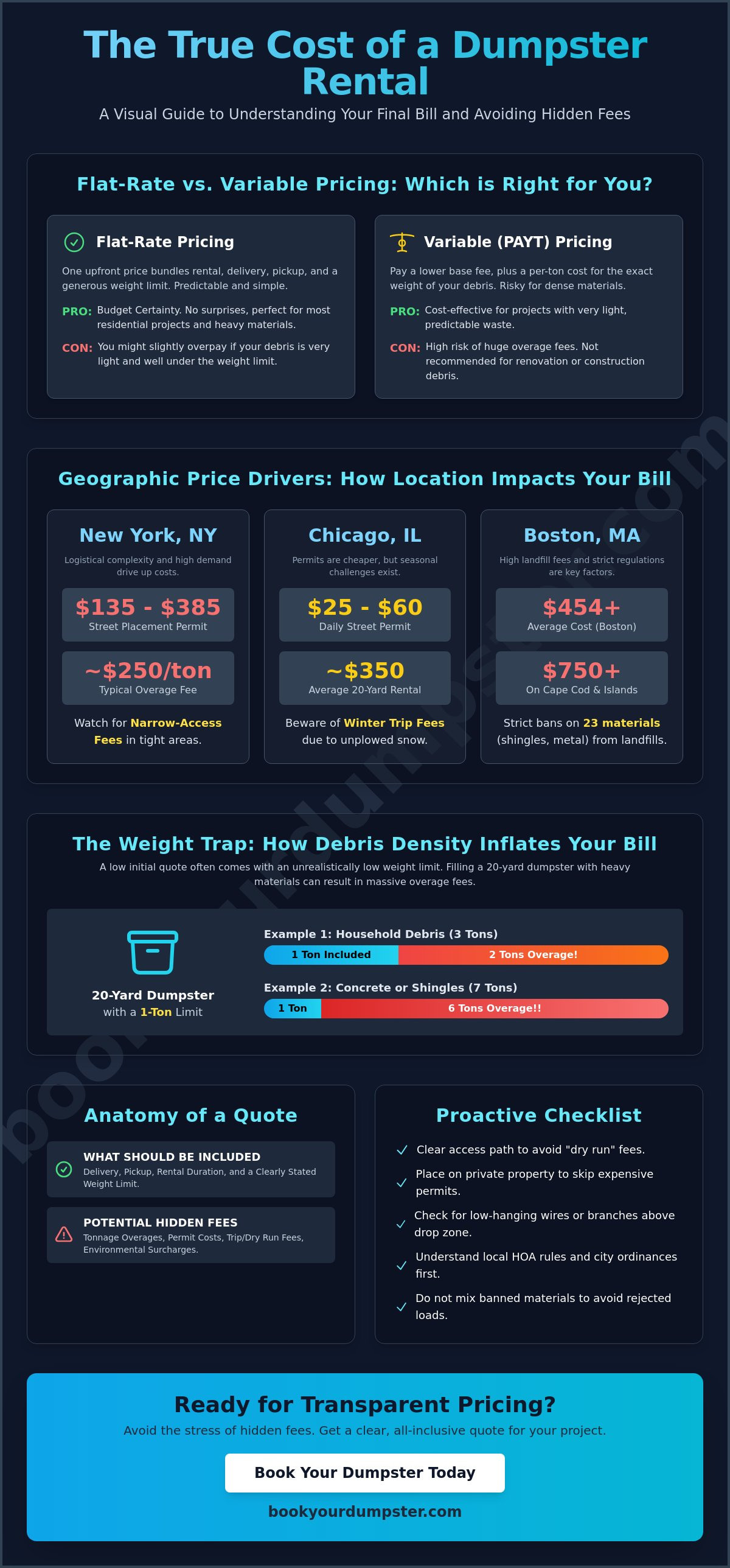
The lowest initial quote often leads to the highest final bill. This happens when the weight limit is set artificially low. For example, a provider might offer a 20-yard dumpster with only a 1-ton limit. If you fill it with 3 tons of household debris, you will face overage charges for the extra 2 tons. In high-cost areas like New York, these overages can reach $200 per ton. Always verify the tonnage included in the quote before you book your dumpster.
Flat-Rate vs. Variable Pricing Models
Choose your pricing model based on the predictability of your waste. Flat-rate models bundle the rental, delivery, and a set weight limit into one transparent price. This provides budget certainty for residential cleanouts where debris is light. In contrast, variable pricing mirrors the Pay-As-You-Throw (PAYT) pricing model. You pay a lower base fee, but the final cost scales with the exact weight of your debris. Variable models are risky for heavy renovation materials like roofing shingles or concrete. If your project involves dense materials, a flat-rate plan with a generous weight limit usually wins.
What is Included in a Standard Rental?
Standard rental periods typically range from 7 to 14 days. If you keep the container longer, expect daily extension fees. For contractors managing large-scale projects, use a "drop and swap" service. This involves the hauler picking up a full container and immediately dropping an empty one to keep your workflow moving. Clear the drop zone before the truck arrives. If the driver cannot access the site due to locked gates or blocked alleys, you will be charged a "dry run" fee. This fee covers the fuel and labor costs of the failed delivery attempt. Schedule your delivery for a time when the site is fully accessible to protect your ROI.
Geographic Price Drivers in NY, IL, and MA
Your zip code is often the biggest factor in your final bill. In Massachusetts, landfill capacity is at a premium, which pushes the average cost in Boston to $454. If you are on Cape Cod or the Islands, those weekly rates can jump to $750 for a standard 20-yard unit. New York City presents a different set of challenges. Between the narrow streets of Manhattan and strict Department of Transportation rules, logistics are expensive. You may encounter narrow-access fees if your site requires a smaller, specialized truck to navigate tight alleys. Understanding the total cost of renting a dumpster requires accounting for these regional quirks before you start your project.
Illinois presents its own set of geographic variables. While Chicago dumpster rentals average $350, winter weather can quickly inflate that price. Heavy snow and ice often lead to obstructed delivery paths. If a driver cannot safely drop or pick up your container because of unplowed snow, you will likely face a trip fee. Understanding the total cost of renting a dumpster in the Midwest means planning for these seasonal delays. Fuel surcharges also fluctuate between these hubs. High-traffic corridors in NYC and Chicago require more fuel for idling and navigation; these costs are typically passed down to the customer.
Navigating Local Permit Requirements
You must secure a permit if the dumpster sits on a public street or right-of-way. In Chicago, these daily fees range from $25 to $60. New York City is significantly more expensive; a permit there costs between $135 and $385. Avoid these costs by placing the unit in a private driveway whenever possible. Before you schedule your delivery, verify your local HOA rules and city ordinances to ensure you are compliant. Use a simple checklist: measure your driveway width, check for low-hanging wires, and confirm permit turnaround times with your local building department.
Regional Landfill and Environmental Fees
Environmental surcharges are a standard part of the invoice in the Northeast. Massachusetts has 23 banned materials, including asphalt shingles and certain metals, that cannot enter landfills. If you mix these items into your debris, the landfill will reject the load or apply a massive fine. These state-level waste taxes are mandatory and non-negotiable. Regional costs vary within the state as well. For example, a 20-yard dumpster in Worcester costs between $450 and $600, while Springfield ranges from $400 to $550. For a deeper look at specific price points, consult our Dumpster Rental Prices in New York, Illinois, and Massachusetts guide.
The Weight Trap: How Debris Type Affects Your Bill
Every quote includes a specific tonnage limit. This is the maximum weight of debris allowed before you trigger extra charges. In understanding the total cost of renting a dumpster, you must recognize that volume and weight are not the same. A 10-yard dumpster filled with concrete is significantly more expensive than a 20-yard dumpster filled with household furniture because of the extreme density of masonry materials. High-density materials like brick or dirt require smaller containers to prevent the total load from exceeding the legal hauling capacity of the truck. If you miscalculate the weight of your debris, the final invoice will quickly outpace your initial budget.
Respect the overfill line painted on the side of the container. Filling debris past this rim creates a major safety hazard for the driver and other motorists during transport. If your load is too high, the driver will likely refuse the pickup. This results in a trip fee and requires you to manually remove the excess waste. You pay for the time, the labor, and the delay. Load your dumpster evenly and keep the debris low to ensure a smooth, one-time pickup.
Estimating Tonnage by Project Type
Estimate your weight based on the specific materials you are tossing. Three bundles of roofing shingles generally equal one "square," which weighs approximately 250 pounds. A standard 20-square roof replacement adds 2.5 tons to your load instantly. Drywall and household junk are lighter but consume volume quickly. Never mix hazardous waste like paints, batteries, or tires into the bin. These prohibited items trigger massive environmental fines that can triple your project costs. For smaller residential cleanouts, consult our 10 Yard Dumpster Rental: The Complete Buying Guide to match your project scale to the right weight capacity.
Overage Fees: The Silent Budget Killer
Overage fees are the most common surprise on a final bill. In the Chicago area, landfill overage fees average $60 to $90 per additional ton. Boston rates are higher, typically ranging from $75 to $120 per ton. New York City is the most aggressive, with materials exceeding the limit costing an extra $200 to $250 per ton. Protect your budget by requesting a "tonnage cap" or a flat-rate plan if you know your debris is heavy. Practical tip: keep your dumpster covered with a tarp during rainstorms in Illinois or Massachusetts. Saturated debris absorbs "water weight," and you don't want to pay landfill fees for a thousand pounds of rainwater. Book your dumpster with a weight limit that actually reflects your project's reality.
Proactive Strategies to Avoid Surcharges
Logistical friction is the primary cause of unexpected billing. When a driver arrives and cannot drop or pick up a container, you incur a "Dry Run" fee. This charge covers the fuel and labor spent on a failed attempt. Similarly, "Trip Fees" apply if a dumpster is blocked by a parked vehicle or a locked gate. To protect your budget, ensure the path is entirely clear before the truck arrives. Understanding the total cost of renting a dumpster involves managing these small details to keep the service efficient and on schedule. It is your responsibility to ensure the site is ready for action.
Sort your waste to reduce disposal costs. Landfills charge different rates based on the material type. A load of "clean" concrete or brick is often cheaper to process than mixed construction and demolition (C&D) debris. If you are doing a driveway tear-out, don't mix household trash with the rubble. Keep the materials separate to take advantage of lower recycling rates. Also, plan your exit strategy early. Schedule your pickup 24 to 48 hours before your rental period expires. This ensures the truck is on the manifest and helps you avoid daily "Extended Rental" rates that accumulate after your initial window closes.
Site Preparation and Accessibility
Check for overhead obstructions before the delivery truck arrives. Roll-off trucks require significant vertical clearance, usually around 22 feet, to hoist and drop the container. Low-hanging tree limbs or power lines will prevent a safe delivery. Protect your property by placing plywood buffers where the dumpster's steel wheels will rest. This simple step prevents driveway cracks and saves you from expensive repair bills. Provide specific placement instructions through the Book Your Dumpster USA portal to ensure the driver knows exactly where to position the bin for your crew's convenience.
Loading Techniques for Maximum Value
Maximize every cubic yard by using the "Tetris Method." Break down large items like furniture or cabinetry to eliminate air pockets. This allows you to fit more debris into a smaller, cheaper container. However, you must maintain a "Level Load." Debris must not protrude above the rim of the dumpster. It is a legal requirement for transport safety; drivers cannot haul loads that risk spilling onto the highway. In the humid Northeast and Midwest, use a tarp to prevent "Rain Weight" surcharges. Saturated materials like carpet or drywall can double in weight after a storm, pushing you over your tonnage limit. Take control of your project and book your dumpster with a clear plan for site prep and loading.
Choosing the Right Size for ROI
Efficiency in waste management starts with selecting the correct container volume. If you underestimate your debris, you will pay twice for logistics. A second rental means a second delivery fee, a second pickup fee, and a new rental period charge. When understanding the total cost of renting a dumpster, you must evaluate the cost per cubic yard. Larger containers offer better value because the fixed costs of the truck roll, fuel, and driver labor are spread across more volume. A 40-yard dumpster does not cost four times as much as a 10-yard unit; the price scales efficiently as size increases.
For residential driveway projects, the 10 Yard Dumpster remains the primary solution. It occupies a small footprint and typically handles up to 3 tons of waste, making it ideal for garage cleanouts or small deck removals. However, if your project involves gutting multiple rooms, a 20-yard unit is usually the more pragmatic choice. It provides double the capacity for a fractional price increase, protecting you from the logistical nightmare of an overfilled bin.
When to Upsize: The Math of the Second Rental
Analyze your volume before you commit. One 30-yard dumpster is almost always cheaper than two 15-yard rentals. By choosing the larger bin upfront, you eliminate the redundancy of paying for two separate trips. The "sweet spot" for most home renovations is the 20-yard container. It balances high capacity with manageable weight limits. For professional contractors managing large-scale demolitions or multi-unit builds, refer to our Construction Debris Removal Guide to determine if a 30 or 40-yard option is the only logical choice for your site's ROI.
Commercial vs. Residential Pricing Nuances
Residential users typically require a one-time drop and pickup for a specific project window. Commercial entities often benefit from long-term rental agreements that include scheduled hauls and permanent on-site containers. If your commercial site has limited space or strict time constraints, consider a "Load & Go" service. This rapid cleanup alternative involves a truck staying on-site while you load it, bypassing the need for a long-term permit. Understanding the total cost of renting a dumpster means choosing the service model that fits your workflow, not just the container size. Stop guessing and start cleaning. Book your dumpster online today with transparent, no-nonsense pricing that respects your budget and your time.
Take Control of Your Project Budget Today
Managing a cleanup or construction site is difficult enough without the stress of unpredictable billing. By mastering the variables of tonnage, local permits, and site accessibility, you move from guessing to knowing. Understanding the total cost of renting a dumpster is about more than just finding the lowest base rate; it's about choosing a partner that values transparency and efficiency. You now have the tools to avoid the weight trap and the knowledge that sizing up often saves more than it costs in the long run.
Ensure your site is prepped, your materials are sorted, and your container size matches your actual debris volume. These proactive steps eliminate the logistical friction that leads to trip fees and overage surcharges. We provide a digital-first booking experience designed for speed and reliability. You get a no hidden fees guarantee and the promise of on-time delivery across New York, Illinois, and Massachusetts. Our system respects your time and your bottom line.
Stop letting waste management logistics slow your progress. Get an instant, transparent quote from Book Your Dumpster USA and clear your site with total confidence. It's time to get to work and finish your project on your terms.
Frequently Asked Questions
How much does it typically cost to rent a dumpster for a week?
Weekly rental rates vary significantly by city and container size. In New York, the average cost for a one-week rental is $489, while Chicago averages $350 and Boston is $454. These prices typically include delivery, pickup, and a specific weight limit. Larger roll-off units in high-demand areas like Manhattan can reach $1,080 per week. Always check if the quote includes local taxes and disposal fees to ensure you have a complete budget.
What are the most common hidden fees in dumpster rentals?
The most frequent surcharges are overage fees, trip fees, and prohibited item fines. Understanding the total cost of renting a dumpster means accounting for New York's $250 per ton overage rate or Chicago's $90 per ton landfill fee. You might also face a "dry run" fee if the driver cannot access your drop-off site. Disposing of banned materials like tires, mattresses, or hazardous waste will trigger immediate environmental fines on your final invoice.
Do I need a permit for a dumpster in New York or Chicago?
You must secure a permit if the dumpster is placed on a public street or right-of-way. In New York City, these permits range from $135 to $385 depending on the duration and location. Chicago requires a city permit for street placement with daily fees between $25 and $60. You can typically avoid these extra costs by placing the container entirely on private property, such as a driveway or a construction site interior.
How much weight can a 10-yard dumpster hold before overage fees apply?
A 10-yard dumpster typically includes a weight limit of 1 to 2 tons for residential debris. This is roughly equivalent to the weight of 50 to 100 bags of household trash or a small bathroom demolition. If you fill it with heavy materials like dirt or concrete, you will exceed this limit almost immediately. Always match your debris density to the tonnage limit provided in your initial quote to keep your costs predictable.
Does the type of debris I throw away change the rental price?
Yes, material density and local disposal regulations directly impact your total price. Understanding the total cost of renting a dumpster requires knowing that heavy loads like brick, sod, or concrete often require specialized "clean load" pricing. Massachusetts has 23 specific waste bans on materials like asphalt shingles and metal. Mixing these into a standard load will result in higher sorting fees or a rejected load at the landfill.
What happens if the dumpster is too heavy for the truck to pick up?
If a container exceeds the truck's hydraulic lifting capacity or legal road weight limits, the driver will leave it on-site. You will be charged a trip fee for the failed pickup attempt. You must then manually unload enough material to bring the dumpster back to a safe, haulable weight. This process adds significant labor costs and project delays. Never fill a dumpster past the "Maximum Load" line to avoid these safety hazards.
Are there extra charges for delivery on weekends or holidays?
Most providers apply surcharges for weekend or holiday service due to limited landfill hours and higher labor rates. Many transfer stations in the Northeast and Midwest close at noon on Saturdays and remain shut on Sundays. This restricts the hauler's ability to empty and return containers. Schedule your delivery for mid-week to ensure the best availability and avoid the premium rates associated with peak-demand weekend windows.
How can I get an accurate total cost estimate before I book?
Use a digital-first booking portal to enter your specific zip code and debris type for an instant quote. Provide clear details about your placement site to avoid narrow-access fees or trip charges. An accurate estimate should explicitly list the base rental, the included tonnage, and the duration of the rental period. This transparency allows you to compare different sizes and service models to find the best ROI for your specific renovation or cleanup project.


