
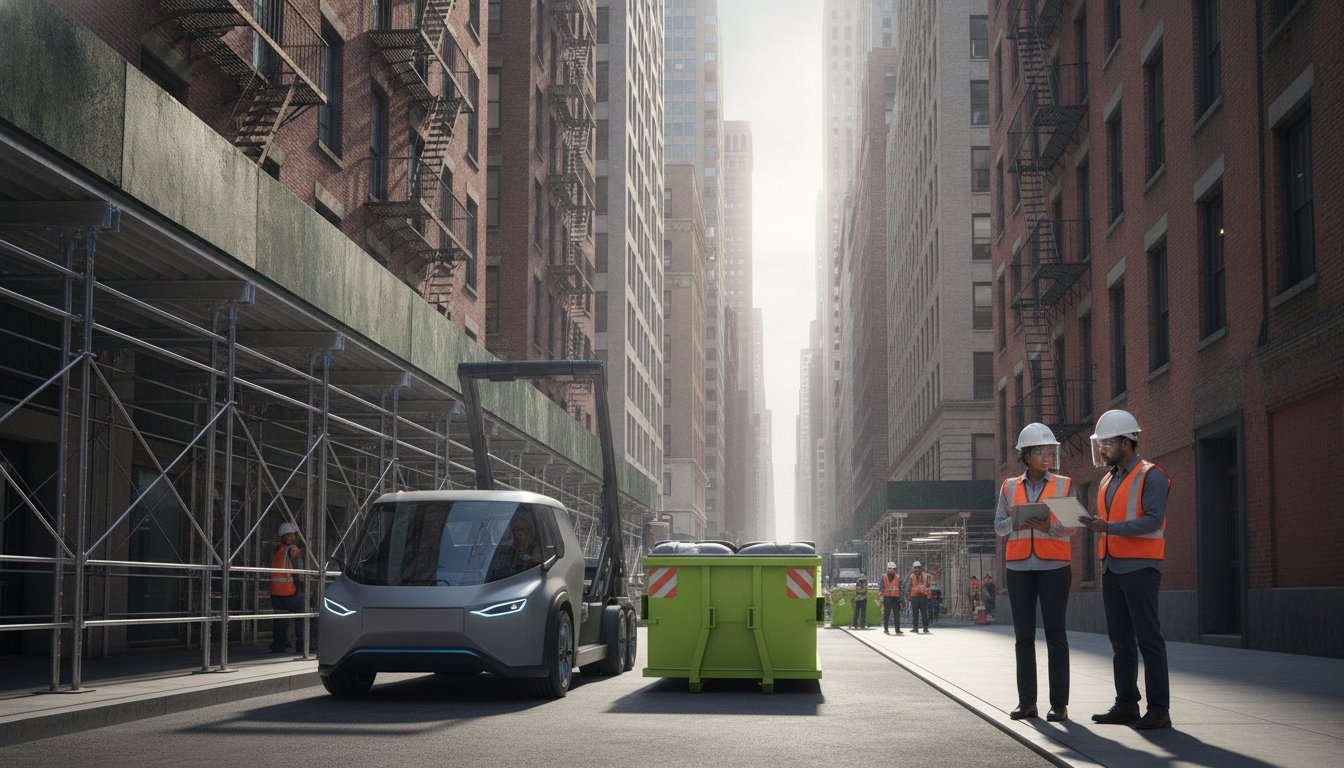
In the high-stakes environment of 2026 urban development, your biggest project bottleneck isn't labor or materials; it's the 150 square feet of sidewalk you don't have for a dumpster. Space is a luxury in dense city centers, and managing a job site with zero staging room often feels like a losing game. You're likely tired of juggling tight footprints with the constant threat of municipal fines for improper debris storage. Finding effective waste management solutions for urban construction requires shifting your focus from total volume to precise timing and logistics.
We understand that a single delayed dumpster swap can derail an entire crew's productivity for the day. This guide provides the blueprint to master high-density debris removal through strategic planning and permit navigation. You'll learn how to select the right container sizes to maximize limited space, optimize swap frequencies to prevent delays, and maintain zero-fine compliance with the latest local regulations. We'll show you how to turn a messy logistics puzzle into a streamlined, predictable waste flow that keeps your project on schedule and your site clear.
Key Takeaways
- Master "Just-in-Time" hauling techniques to prevent site congestion and maintain a productive workspace in tight urban corridors.
- Implement strategic waste management solutions for urban construction by mapping a dedicated waste flow plan before your crew breaks ground.
- Match container sizes, ranging from 10 to 30 yards, to your specific material weight and available street footprint to avoid logistical delays.
- Navigate complex Right-of-Way (ROW) permits and local regulations to ensure zero-fine compliance in major metropolitan areas.
- Secure reliable dumpster logistics through streamlined booking to eliminate downtime and keep high-density projects on schedule.
The Complexity of Waste Management in High-Density Urban Areas
Building in a dense city center is a 3D logistics puzzle. In cities like New York and Chicago, vertical construction creates immediate debris bottlenecks because there is nowhere for the trash to go. Unlike suburban sites with sprawling yards, urban projects often occupy every square inch of the property. This reality makes construction waste management a high-stakes game. When debris piles up on a high floor, it requires hoist time and elevator coordination just to reach the ground. If the waste isn't moving out of the building, your entire project stops moving forward. You need a plan that accounts for every cubic yard before the first hammer swings.
The "Small-Lot" dilemma is a constant frustration for modern contractors. When you're managing demolition debris with zero yard space, the sidewalk or street becomes your only staging area. This requires precise waste management solutions for urban construction to keep the site functional, particularly for specialized firms like Progressive Contracting of NY that handle historic masonry restoration in dense neighborhoods. Logistical delays are expensive. A dumpster swap that takes three hours instead of thirty minutes stalls your entire crew. You're paying for labor that's standing around waiting for a place to put debris. Municipal fines for blocked lanes or overfilled containers add even more weight to your overhead. Efficient waste flow is the only way to protect your bottom line.
Spatial Constraints and Staging Challenges
Evaluate your job site footprint against the container size. In "Zero-Lot Line" projects, the building reaches the very edge of the property. There is no buffer zone. This forces a shift from on-site storage to a model of constant hauling. You can't let debris pile up for a week. You need a high-velocity approach. Selecting the right bin size isn't just about volume; it's about the physical space required for the truck to maneuver safely without blocking traffic.
Noise, Dust, and Community Impact
Managing community relations is essential for project longevity. Urban zones have strict noise ordinances that can shut you down if you aren't careful. Schedule your deliveries and pickups to avoid early morning or late night violations. Dust mitigation is also critical in crowded pedestrian areas. Use mesh covers and water suppression when loading dry debris to prevent complaints. Timely waste removal keeps the site clean and projects an image of professional competence to neighbors and city inspectors.
Strategic Selection: Matching Dumpster Sizes to Urban Constraints
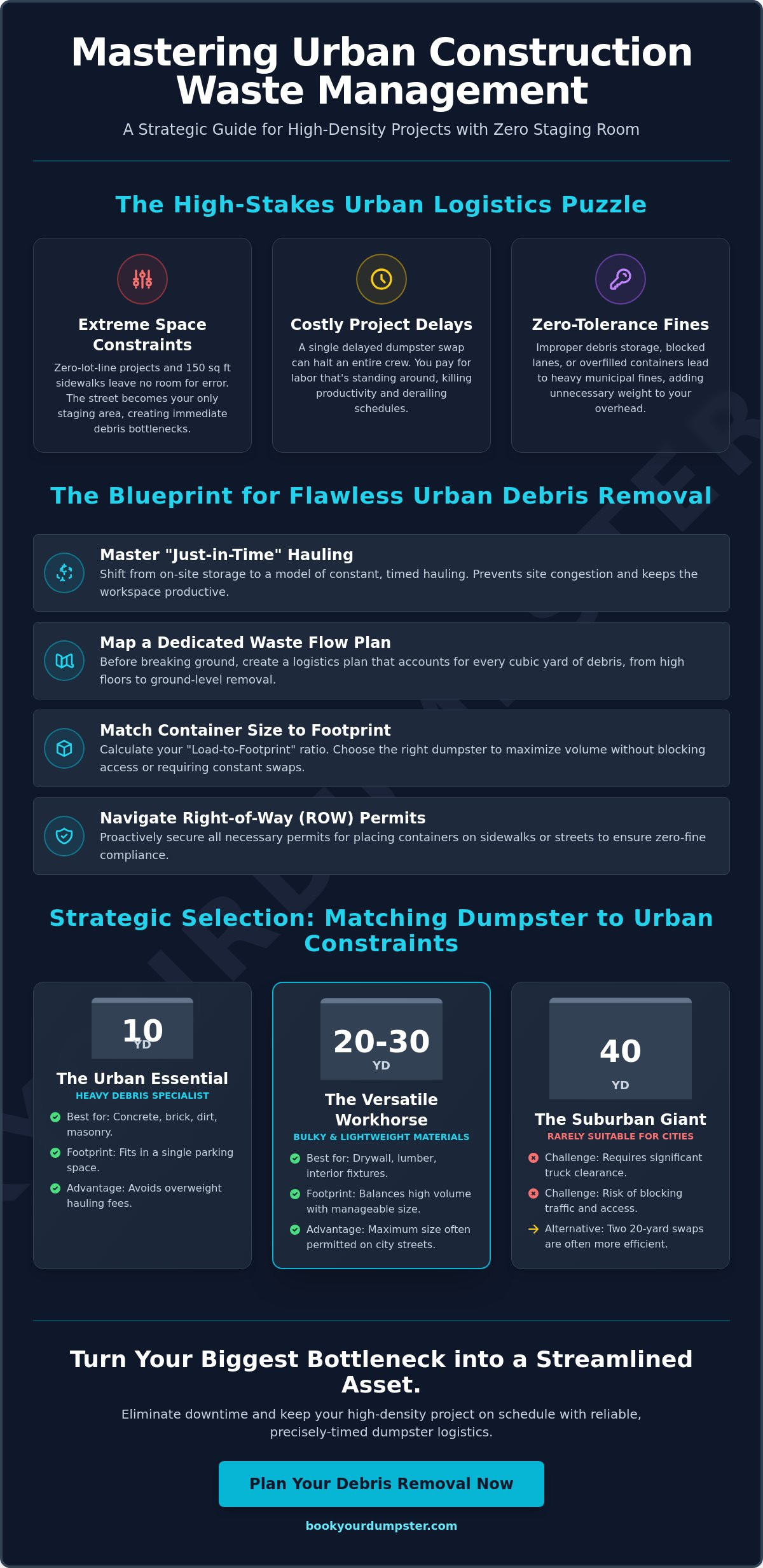
Selecting the wrong container size on an urban job site is a recipe for logistical failure. You must calculate your "Load-to-Footprint" ratio before placing an order. This ratio balances the volume of debris against the physical square footage available on the street or sidewalk. Effective waste management solutions for urban construction prioritize this balance to prevent site congestion. Choosing a bin that is too large risks blocking emergency access, while a bin that is too small leads to constant, expensive swaps that stall your crew's progress.
The 10-Yard Advantage for Heavy Debris
The 10-yard dumpster is the "urban essential" for a reason. It handles the heaviest materials, including concrete, brick, and dirt, without exceeding the weight limits of the hauling truck. If you attempt to fill a larger container with masonry, the truck will likely be unable to lift it, resulting in a failed pickup fee and a project delay. These compact units fit into a single-car parking space or a narrow alleyway, making them ideal for foundation work or masonry repairs. Utilizing smaller bins also supports the Sustainable Management of C&D Materials by allowing for easier on-site sorting of heavy recyclables.
Scaling Up: 20 to 40 Yard Solutions
Transition to 20 or 30-yard containers when your project moves into interior renovations or demolition involving bulky, lightweight materials. These sizes offer a higher volume capacity for drywall, lumber, and fixtures while maintaining a manageable street footprint. A 30-yard bin is often the maximum size permitted on residential streets in major metros. Always verify your local clearance requirements before scheduling a delivery.
The 40-yard giant is rarely seen in dense city centers because of the significant clearance required for the roll-off truck to maneuver. In most high-density projects, two 20-yard swaps are more efficient than one 40-yard placement. This strategy keeps the staging area clear and reduces the risk of municipal fines for obstructing traffic flow. You can view our dumpster dimensions to determine which size fits your specific site constraints without compromising on debris capacity.
Consider the logistical trade-offs of your selection. One 30-yard bin might seem cheaper than three 10-yard swaps, but if the 30-yarder blocks your only access point for material deliveries, the hidden costs of labor downtime will quickly erase those savings. Match the container to the phase of construction. Start small for heavy structural work and scale up for the lighter, bulkier finishing stages. This tactical approach ensures your waste flow never dictates your project's speed.
Navigating Permits and Regulations in Major Metro Areas
City projects require more than just a dumpster; they require legal clearance. If your site lacks a private driveway or staging lot, you must secure a Right-of-Way (ROW) permit to occupy street space. In major hubs like New York, Chicago, or Boston, the permit process is the foundation of effective waste management solutions for urban construction. Don't assume your suburban experience applies here. Urban regulations are designed to keep traffic moving and pedestrians safe. A single misstep in placement can trigger a stop-work order that halts your entire project and drains your budget.
Local Permit Requirements for Street Placement
In 2026, metropolitan DOT requirements are strictly enforced through digital monitoring and frequent field inspections. In New York City, a permit to place a dumpster on public property typically costs between $135 and $385. Secure your temporary occupancy permits at least 10 business days before your scheduled delivery to avoid scheduling conflicts. You are responsible for bagging meters and posting "No Parking" signage 24 to 48 hours in advance. If the space isn't clear when the truck arrives, the driver cannot drop the container, and you'll be charged for a failed delivery.
Environmental and Recycling Mandates
Regulatory pressure on debris disposal is at an all-time high. New York State legislation, such as Bill S5202, now requires contractors in cities with over one million residents to recycle at least 50% of the waste generated on-site. Follow the Sustainable Management of Construction and Demolition Materials guidelines to ensure your project remains compliant with federal and local standards. This documentation is essential for maintaining "Green Building" certifications and avoiding municipal penalties.
Watch out for prohibited items that can lead to immediate fines. Urban roll-offs are closely monitored for hazardous materials, including chemicals and specific building products containing PFAS. In April 2026, the EPA released updated guidance regarding the disposal of materials containing these substances. Mixing prohibited waste into a standard bin leads to heavy contamination fees. Keep your waste streams separated and maintain accurate logs of where your debris is hauled. This level of oversight is a requirement for modern waste management solutions for urban construction. Plan your disposal routes and sorting stations before the first load of debris is generated.
Optimizing On-Site Logistics for High-Density Projects
Efficiency on a high-density site isn't accidental. It's engineered. In a skyscraper or a tight city renovation, debris shouldn't sit. Every pile of trash on your floor is a safety hazard and a physical barrier to your subcontractors. Effective waste management solutions for urban construction rely on moving debris as quickly as it is generated. You need to treat your waste stream with the same level of detail as your material deliveries. If you don't have a plan for how the trash leaves the building, your project's pace will suffer.
Developing a Waste Flow Plan
Start by identifying your site's physical choke points. These are usually elevators, narrow gates, or shared alleyways. Map the exact path from the debris source to the dumpster. If your crew has to navigate three corners and a narrow hallway to reach the bin, you're losing money on labor every hour. Coordinate your dumpster swaps with other material deliveries to avoid traffic gridlock in the street. A concrete pour and a dumpster swap should never happen at the same time. Adopt this single sentence as your project mantra: Define your debris exit route before the first hammer swings.
Strategic bin placement reduces manual hauling time significantly. Position your container as close to the primary exit or debris chute as possible. If you're working on upper floors, use specialized equipment like external trash chutes to bypass internal elevators. This keeps your vertical transport free for moving crews and high-value materials. Small loaders can also bridge the gap between the building and the bin, speeding up the loading process in tight quarters.
Just-in-Time Hauling Strategies
Standard swaps aren't always the best choice for premium urban real estate. Consider "Live Loads" for sites with zero staging room. In a live load, the driver waits while your crew fills the container immediately. This eliminates the need for a long-term street permit and keeps the lane clear for the rest of the day. It's a high-velocity solution that requires a disciplined crew but removes the logistical stress of overnight container storage.
Use digital tools to manage your pickups in real time. Waiting until a bin is overflowing to call for a swap is a rookie mistake that leads to site congestion. Schedule your next haul when the container is 75% full. This window accounts for transit time and ensures your crew never stops working because the bin is at capacity. Reducing the idle time of empty containers on-site maximizes your available square footage. Schedule your next dumpster swap online to keep your urban project moving at full speed without the typical logistical delays.
Partnering with Book Your Dumpster USA for Seamless Urban Execution
Executing the logistics discussed in this guide requires a partner who understands that every minute on a city job site is a line item on your budget. Book Your Dumpster USA provides the infrastructure to turn complex waste management solutions for urban construction into a streamlined, digital process. We don't just drop off containers; we integrate into your project's workflow to ensure debris never becomes a bottleneck. Our system is built for the professional contractor who values speed, clarity, and reliability over empty promises. We remove the logistical stress so you can focus on the build.
Securing a container shouldn't involve hours of phone tag or waiting for callbacks. Our online booking system allows you to select your dumpster and schedule delivery in minutes. We offer a full range of sizes, including 10, 20, 30, and 40-yard dumpsters, tailored for the unique constraints of New York, New Jersey, and other major metropolitan hubs. Pricing integrity is the core of our business model. You receive transparent quotes that help you keep your project on budget without the stress of hidden fees or unexpected surcharges after the haul. This transparency acts as our verbal handshake with every client.
Technology-Driven Waste Management
Managing multiple urban sites simultaneously is difficult without the right tools. The Book Your Dumpster USA online portal simplifies multi-site management by allowing you to track waste volumes and schedule swaps across all your projects from a single dashboard. This digital-first approach provides the real-time visibility needed for modern contractors to maintain a high-velocity site. You can request a pickup the moment a bin reaches capacity, ensuring your "Just-in-Time" hauling strategy stays on track without manual follow-up. It's a high-functioning tool designed to reduce friction and cognitive load.
Local Expertise in Major Markets
Success in cities like Queens, Chicago, and Boston depends on navigating local regulatory landscapes with precision. We leverage years of experience in these markets to ensure your dumpster placement complies with all municipal standards. Punctuality is our signature promise. We deliver on time so your crew stays on task and your staging area remains clear. A delayed delivery isn't just an inconvenience; it's a disruption that ripples through your entire schedule. We eliminate that risk through disciplined logistics and a commitment to professional service. Our team understands the urgency of your project and respects your time.
Ready to clear your site? Book Your Dumpster USA now and get your project moving.
Streamline Your Debris Removal Strategy
Success on a high-density job site depends on your ability to move material and waste without friction. You've seen how matching the right container size to your specific footprint prevents site congestion and costly delays. Navigating local permits and establishing a clear waste flow plan are not just administrative tasks; they're essential components of profitable waste management solutions for urban construction. When you control the debris, you control the project's pace. A clean site is a safe site, and a safe site is a productive one.
Don't let logistical bottlenecks stall your progress. We provide specialized 10 to 40 yard inventory designed for tight urban sites with direct service across NY, NJ, IL, MA, and SF. Our streamlined online booking system lets you schedule swaps in minutes. This keeps your crew focused on the build rather than the trash. Secure your urban construction dumpster today and maintain total control over your site logistics. We handle the mess and the permits so you can focus on the construction. Your next project deserves a partner that values punctuality and pricing integrity as much as you do. Let's get to work.
Frequently Asked Questions
What is the best dumpster size for a small urban construction site?
The 10-yard dumpster is the most effective choice for heavy debris like concrete or dirt on tight sites. It fits within a standard parking space, making it ideal for projects with zero staging room. If you're handling lighter, bulkier materials like drywall or lumber, the 20-yard container provides more volume while maintaining a manageable footprint for narrow city streets.
Do I need a permit to put a dumpster on a city street in New York or Chicago?
Yes, you must secure a Right-of-Way (ROW) permit for any street placement on public property. These permits require a lead time of at least 10 business days in major metros. You're also responsible for bagging meters and posting "No Parking" signs 24 to 48 hours before delivery. Failure to have a valid permit on-site can result in immediate work-stoppage orders.
How much space does a roll-off dumpster delivery truck actually need?
A standard roll-off truck requires approximately 60 feet of straight-line clearance to drop or pick up a container safely. You also need 22 feet of vertical clearance to avoid overhead wires, low-hanging branches, or building overhangs. In dense urban corridors, you must ensure the entire approach path is clear, not just the final drop spot, to avoid failed delivery fees.
Can I mix different types of construction waste in one container?
You can mix general construction and demolition (C&D) materials, but you must keep hazardous waste and PFAS-containing materials separate. Effective waste management solutions for urban construction rely on clean waste streams to avoid heavy contamination penalties at transfer stations. Always verify the latest 2026 EPA guidelines for prohibited items before loading your container to ensure compliance.
What happens if my dumpster is blocked by parked cars on delivery day?
If the driver can't access the drop site due to parked vehicles, you'll be charged a failed delivery fee. Proactive signage is your best defense against this logistical headache. Post your "No Parking" notices at least 48 hours in advance and contact local parking enforcement if a vehicle is illegally occupying your permitted space. Drivers cannot wait on-site for cars to be towed.
How quickly can I get a dumpster swapped in a high-traffic area?
We typically coordinate swaps within 24 hours when you use our digital booking system. To avoid traffic gridlock, we recommend scheduling your haul for mid-morning after the initial rush hour has subsided. For sites with absolutely no staging room, a "Live Load" is an excellent alternative where the driver waits while your crew fills the bin immediately.
Are there weight limits for 10-yard dumpsters filled with concrete?
Yes, masonry materials have strict tonnage caps because of the lifting capacity of the roll-off truck. Never fill a container past the "Max Fill" line when loading heavy debris like brick, dirt, or concrete. If the bin is overweight, the driver won't be able to lift it, leading to project delays and potential per-ton overage fees at the scale.
How does Book Your Dumpster USA handle recycling requirements for LEED projects?
Book Your Dumpster USA provides digital weight tickets and diversion reports through our online portal to support your certification goals. This documentation is a critical part of waste management solutions for urban construction, allowing you to track exactly how much debris was recycled versus landfilled. Mention your LEED reporting requirements during booking to ensure all data is captured for your final audit.


