
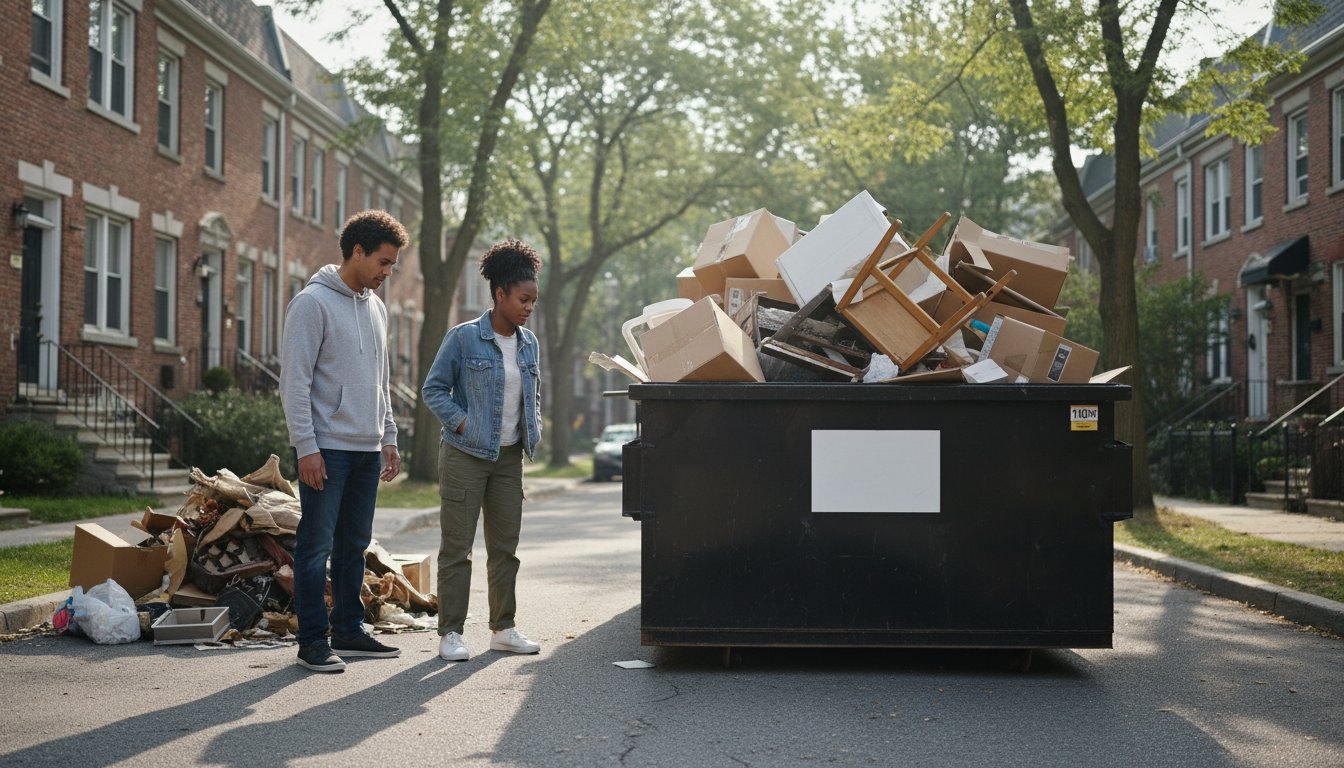
You are halfway through your home cleanout when you realize your 10 yard dumpster is already at the fill line with half the junk still sitting on your driveway. It is a common mistake; in fact, choosing the wrong container is one of the most frequent logistical pivots we see in waste management. You are likely wondering what happens if I order the wrong size dumpster and how much the oversight will cost you. Don't panic. While the national average cost to rent a dumpster is $385, an incorrectly sized bin doesn't have to double your expenses if you act before the driver arrives for collection.
We understand the stress of unexpected project downtime and the fear of hidden fees. This guide provides a clear plan to swap your bin and manage the specific costs involved. Fix the error now by learning about trip fees that typically range from $75 to $125. Understand how to avoid overage charges that can reach $100 per ton and see why the 20 yard dumpster, which averages $350 to $500, is often the safer bet. Follow these steps to get your project back on schedule, then Book Your Dumpster USA to resolve the clutter immediately.
Key Takeaways
- Understand the logistical chain reaction and safety hazards that occur when a bin is too small or too large for your project site.
- Learn exactly what happens if I order the wrong size dumpster, including how to navigate overage fees and trip charges without blowing your budget.
- Discover the "Call Early" rule and how to initiate a professional swap-out service before your project hits a complete standstill.
- Identify how sizing errors can void local street permits and create physical space hazards in dense urban areas like NYC, Chicago, and Boston.
- Master the "round up" strategy to accurately estimate debris volume and choose the right roll-off container for your specific cleanup needs.
The Immediate Fallout: What Happens When Your Dumpster Size Is Wrong
Ordering a dumpster seems straightforward until the container arrives and you realize the scale of your debris. Most homeowners and contractors fall into two categories: they underestimate the sheer volume of their waste, or they overestimate their available physical space. Both errors create immediate friction. If the bin is too small, your project stops because there is nowhere to put the junk. If it is too large, you waste money on unused cubic yardage and might block essential access points. Gaining a baseline for understanding dumpster sizes is the first step in avoiding these logistical traps. When you ask what happens if I order the wrong size dumpster, the answer starts with immediate physical limitations and potential safety violations.
The Undersized Dumpster: The "Overfill" Trap
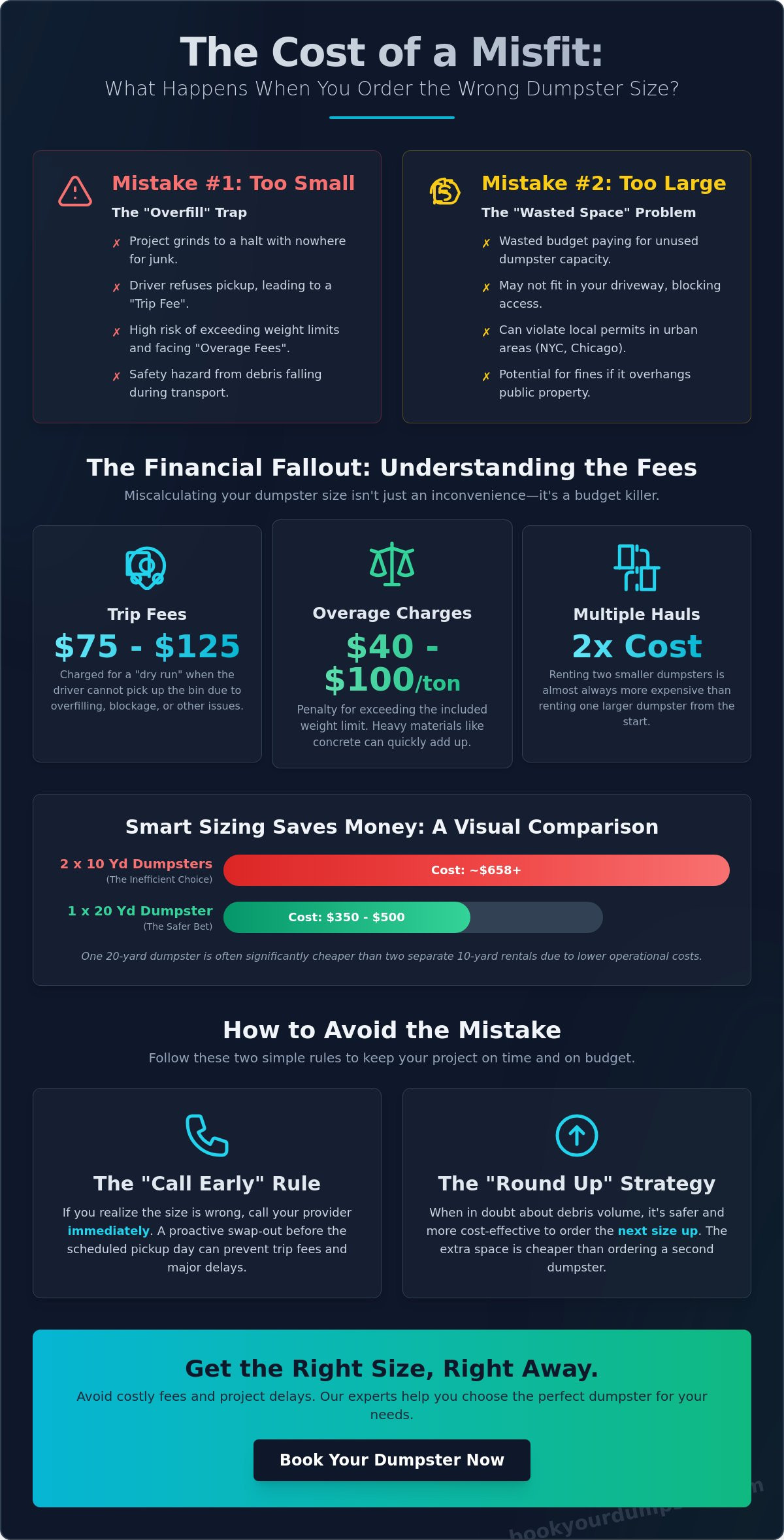
The top-off rule is non-negotiable in the waste industry. Your debris must remain level with the rim of the bin. Drivers cannot legally or safely transport a roll-off container if items stick out over the top or hang off the sides. Loose debris becomes a projectile on public roads, creating a massive liability for the hauling company. If a driver arrives and sees an overfilled bin, they will refuse the pickup. This results in a "dry run" or trip fee, which creates an immediate budget leak. You'll then have to remove the excess material yourself or order a second bin, doubling your labor and your costs. Since undersized bins are frequently associated with overweight risks, exceeding the weight limit can result in substantial overage fees once the bin finally hits the landfill scale.
The Oversized Dumpster: Wasted Budget and Space
Paying for a 40 yard dumpster when a 20 yard dumpster would suffice is a direct hit to your project budget. You are paying for air and capacity you won't use. While it's often safer to "size up," going too large creates a different set of headaches. Large containers have a significantly larger physical footprint. A 30 or 40-yard bin might not fit in a standard residential driveway or could block essential access for other service vehicles. In dense urban areas, a bin that is larger than the one specified on your permit can lead to immediate fines from the city. You also face the risk of the bin overhanging onto a neighbor's property or the public sidewalk, which can lead to project delays and legal disputes. To avoid these issues, consult with Book Your Dumpster USA with a clear understanding of your site's dimensions. Choose your size based on both the volume of waste and the physical constraints of your delivery location to keep your project moving efficiently.
The Financial Impact: Fees, Fines, and Overage Charges
Miscalculating your waste volume isn't just a minor inconvenience; it's a budget killer. When homeowners and contractors ask what happens if I order the wrong size dumpster, they're usually looking at three distinct types of financial penalties: weight overages, trip fees, and the high cost of multiple hauls. Understanding these charges before you book ensures you don't pay double for a single cleanup project. Most rental agreements are legally binding regarding these fees, so transparency from the start is your best defense against unexpected costs.
Tonnage Penalties and Weight Limits
Every roll-off container comes with a specific weight allowance. Landfills charge haulers based on weight, not volume. This means a 10 yard dumpster filled with heavy concrete will cost significantly more to process than a 30 yard dumpster filled with light cardboard. If you exceed your limit, you will face overage charges that typically range from $40 to $100 per additional ton. In some extreme cases, these fees can reach $250 per ton depending on the local disposal facility. A tonnage limit is the maximum weight allowed in your bin before extra fees apply. Always match your bin size to the density of your debris to avoid these weight-based penalties by consulting local disposal regulations.
The Cost of Multiple Pickups
Efficiency is the key to project ROI. Renting two 10 yard dumpsters is significantly more expensive than renting one 20 yard dumpster. For example, a 10 yard bin might cost between $329 and $1,307, while a 20 yard bin typically stays between $350 and $500. Every time a truck visits your site, you pay for fuel, labor, and environmental surcharges. If you realize your bin is too small mid-project, you'll need a "Haul and Return" service. This involves the driver taking the full bin away and bringing an empty one back, effectively doubling your base rental costs and trip-related fees. To keep your budget intact, choose the right dumpster size with Book Your Dumpster USA before you finalize your order.
Trip Charges and Dry Run Fees
Precision in your scheduling and loading saves money. If a driver arrives to pick up your bin but finds it overfilled or blocked by a vehicle, they cannot haul it. This triggers a "trip fee" or "dry run fee." These charges generally cost between $75 and $125 per occurrence. You pay for the driver's time and the truck's fuel even if no waste is removed from your site. Avoid these costs by ensuring your debris is level with the rim and the access path is completely clear at least 24 hours before your scheduled pickup. These small checks prevent your project from incurring hundreds of dollars in avoidable fees.
How to Fix the Mistake: The Dumpster Swap-out Process
Discovering that your roll-off container is full before the job is done is a common hurdle. You don't have to let it derail your timeline or your budget. If you find yourself wondering what happens if I order the wrong size dumpster, the answer is to initiate a professional swap-out service. This process, often called a "switch-out" or "haul and return," allows you to keep working without a permanent stop. The key is speed. Book Your Dumpster logistics as soon as you see the fill line approaching. Proactive communication is the only way to avoid the project-ending disaster of a stalled cleanup.
The "Call Early" rule is your most effective tool for cost control. Notify your service provider at least 24 to 48 hours before you need the swap. This window gives the dispatch team enough time to adjust driver routes. If you wait until the driver is already on their way for a scheduled pickup, you will likely pay a trip fee. These fees add $75 to $125 to your total bill without removing a single pound of trash. By calling ahead, you ensure the truck arrives with the correct replacement bin, whether you need another 10 yard dumpster or an upgrade to a 20 yard dumpster.
Step-by-Step: Requesting a Dumpster Swap
Follow this sequence to minimize project downtime. First, assess the remaining debris. If you have five cubic yards left, a 10 yard dumpster is sufficient. If you are only halfway done, you may need to upgrade to a 30 yard dumpster. Call dispatch to schedule a "Haul and Return" service. This ensures the driver arrives with an empty bin to replace the full one in a single trip. Clear the path for the truck. Any blockage will trigger a trip charge, which industry data from May 2026 places between $75 and $125. Finally, confirm the weight limit for the new container. Remember that larger bins often have higher tonnage limits, which helps you avoid overage fees. Fixing the error is straightforward once you understand what happens if I order the wrong size dumpster and how to navigate the swap process.
Managing Debris During the Transition
A full bin shouldn't stop your progress. Stage your remaining waste in a designated area. Use a heavy-duty tarp on your driveway or lawn to prevent property damage and make reloading easier. Keep the pile at least ten feet away from where the truck will drop the new container. This safety margin prevents accidents during the delivery process. Prioritize your loading strategy for the replacement bin. Place heavy materials like concrete or shingles at the bottom. Save lighter, bulkier items for the top. This lowers the center of gravity and keeps the load stable. By organizing your waste now, you can refill the new container in minutes once it arrives.
Local Logistics: Permits and Space in NYC, Chicago, and Boston
Urban logistics are unforgiving. If you are working in a dense neighborhood, knowing exactly what happens if I order the wrong size dumpster is critical for legal compliance. In cities like New York, Chicago, or Boston, your dumpster size is tied directly to your street permit. If you apply for a permit for a 10 yard dumpster but a 20 yard dumpster arrives, your permit is void. This mistake leaves you vulnerable to immediate municipal fines and potential container removal by the city. For a deeper dive into regional specifics, consult our Dumpster Rental in New York, Illinois, and Massachusetts guide.
Street Permit Violations and Sizing
Permits are size-specific because they manage the public right-of-way. In NYC, a DOT permit typically costs between $50 and $150. Chicago requires a $70 permit for a three-day placement, and that fee doubles in the Central Business District. These permits specify the footprint allowed on the street. If your container extends too far into the road, you face encroachment fines. Boston regulations often require specific weekly permits costing $30 to $50. Using a larger bin than authorized doesn't just block traffic; it invites legal action from the city. Don't risk a project shutdown over a permit technicality.
Access Issues for Roll-Off Trucks
Physical space is the ultimate constraint in places like Queens or Brooklyn. A 30 yard dumpster is physically longer and requires a significantly larger swing area for the delivery truck to maneuver. Contractors often underestimate what happens if I order the wrong size dumpster when working in tight alleyways or narrow streets. In older neighborhoods, overhead obstructions like power lines or low-hanging tree branches can prevent the truck from lifting the rails. Urban delivery requires spotting the bin with precision to avoid blocking fire hydrants or neighbor access. If the driver cannot safely place the bin due to your size error, you will pay a trip charge of $75 to $125. Avoid these urban headaches by choosing the right container from the start. Book your city-compliant dumpster today to ensure a hassle-free delivery.
Prevention Strategy: Choosing the Right Size with Book Your Dumpster
Stop guessing your waste volume and start measuring your project needs. The most effective way to avoid the stress of what happens if I order the wrong size dumpster is to apply a rigorous selection strategy before the roll-off container arrives at your curb. While we have detailed the recovery steps for a sizing error, prevention remains the most cost-effective path. Follow our industry-standard guidelines to ensure your container matches both your debris type and your physical space.
If your project involves heavy debris like concrete, asphalt, dirt, or brick, the selection process changes immediately. You are generally restricted to a 10 yard dumpster for these materials. Filling a 20 yard dumpster or larger with dense masonry will exceed legal weight limits and prevent the truck from safely lifting the bin. Review our 10 Yard Dumpster Rental: The Complete Buying Guide to understand weight capacities for heavy loads. Attempting to use a larger bin for concrete often leads to mechanical failure and massive overage fees.
Apply the "round up" rule for household junk. If you think you need exactly 15 cubic yards, book a 20 yard dumpster. The difference in base price is negligible compared to the $75 to $125 trip fee you'll pay if you need a mid-project swap. Statistics from May 2026 show the national average for a 20-yard bin is between $350 and $500. This is a small price for the peace of mind that your project won't stall. Choosing the larger size upfront is almost always cheaper than paying for two smaller rentals.
The Quick Size Matcher
- 10-Yard Dumpster: Best for small bathroom remodels or removing a 250 sq. ft. deck.
- 20-Yard Dumpster: Ideal for basement cleanouts, kitchen renovations, or flooring removal in mid-sized homes.
- 30-Yard or 40-Yard Dumpster: Reserved for major construction debris removal, full roof replacements, or estate cleanouts.
Consulting the Experts
Our online booking system provides instant transparency. Describe your project clearly to our agents if you have doubts about volume. Many customers ask what happens if I order the wrong size dumpster when they have bulky furniture or mixed materials. List specific items like three-seater sofas or standard kitchen cabinets to get a professional estimate. This removes the guesswork and ensures you get the right tool for the job. Choose your size and book your dumpster today to secure your delivery and keep your cleanup on track.
Take Control of Your Project Logistics
Miscalculating your waste volume is a common hurdle, but it is not a project-ender. Act at least 24 to 48 hours before your scheduled pickup to avoid trip fees that range from $75 to $125. Remember that tonnage limits are just as critical as cubic yardage to prevent overage charges that can reach $100 per ton. Now that you understand what happens if I order the wrong size dumpster, you have the knowledge to pivot quickly and keep your site safe. Don't let a sizing error stall your progress when a simple swap-out can fix the issue. We provide reliable on-time delivery across the USA with sizes ranging from 10 to 40 yards to fit any scope. Our team prioritizes transparent pricing with no hidden fees so you can focus on the work, not the bill. Move your project from a state of clutter to a state of resolution with our straightforward booking process.
Ready to get started? Book your dumpster online now! Choose your size and schedule your delivery with confidence. You have this project under control, and we are here to handle the heavy lifting.
Frequently Asked Questions
Can I change my dumpster size after it has been delivered?
You cannot physically resize a bin once it is on your property, but you can request a swap-out. This involves a driver hauling away the incorrect bin and delivering the size you actually need. You should call at least 24 hours before your scheduled pickup to arrange this. This is a primary solution for what happens if I order the wrong size dumpster, though you will likely pay a trip fee between $75 and $125 for the extra service.
What is the most common dumpster size for a home cleanout?
The 20 yard dumpster is the most frequent choice for residential projects. It balances a large capacity with a footprint that fits most standard driveways. According to May 2026 market data, this size typically costs between $350 and $500. It is often the safest bet to avoid the logistical headache of an undersized container.
How much extra does it cost if my dumpster is overweight?
Expect to pay overage fees ranging from $40 to $100 per ton if you exceed your weight limit. Some disposal facilities charge up to $250 per ton for heavy debris. These costs are calculated at the landfill scale and are billed separately from your initial rental price. Always check your tonnage limit before loading heavy materials like dirt or concrete.
What happens if the dumpster is too big for my driveway?
The driver will refuse the delivery if the container cannot safely fit, resulting in a trip fee. These fees generally cost between $75 and $125. Most 30 or 40 yard bins require a clear, flat space at least 10 feet wide and 22 feet long. Measure your space and check for low-hanging wires before you schedule your delivery.
Will the driver pick up a dumpster that is overflowing?
No, drivers are legally prohibited from hauling containers with debris sticking out above the rim. Overfilled bins are road hazards that can lead to heavy fines for the hauling company. If your bin is overflowing, you must remove the excess waste yourself. You will also be charged a dry run fee of $75 to $125 for the failed pickup attempt.
How do I estimate how many cubic yards of waste I have?
Use the standard pickup truck bed as your unit of measurement. One cubic yard is roughly the size of a standard washing machine. A 10 yard dumpster holds approximately four pickup truck loads of debris. If you have more than eight truckloads of junk, you should skip the 10 yard bin and move straight to a 20 yard dumpster to avoid what happens if I order the wrong size dumpster mid-project.
Is it cheaper to rent two small dumpsters or one large one?
It is significantly cheaper to rent one large dumpster. A single 20 yard dumpster rental averages $350 to $500, while two 10 yard rentals can cost between $658 and $2,614 depending on your location. By choosing the larger bin upfront, you eliminate the second set of delivery fees, fuel surcharges, and environmental taxes.
Can I keep the dumpster longer if I ordered the wrong size?
You can extend your rental period, but it will cost between $5 and $15 per day. This is a helpful option if you realize your bin is too small and you need extra time to organize a swap. You must call to request an extension at least 24 hours before your original pickup date to prevent the driver from arriving and charging a dry run fee.


