
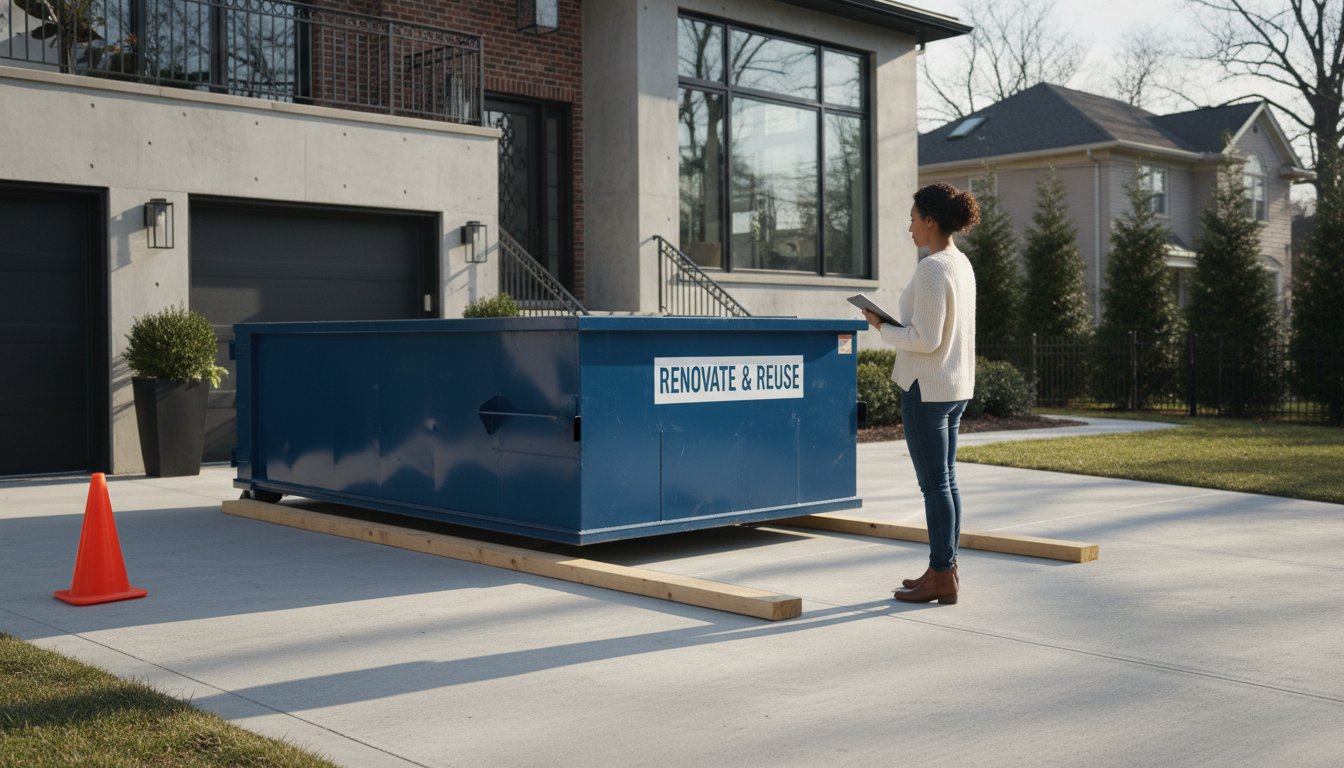
What if a curious neighbor or a delivery driver gets injured near your rental unit? Understanding exactly what liability do I have for a dumpster on my property is the difference between a successful cleanup and an expensive legal battle. You've likely spent hours planning your project, yet the fear of a cracked driveway or a pedestrian lawsuit can stall your progress. It's a common anxiety for homeowners and contractors alike. You want the debris gone, but you don't want to lose your peace of mind in the process.
You're right to be cautious. Once a dumpster is delivered, the legal concept of premises liability usually means you are responsible for the safety of the surrounding area and how the equipment is used. This guide clarifies your specific legal duties and provides actionable steps to protect yourself from property damage or injury claims. We will break down site preparation strategies, explain what your homeowners insurance actually covers, and show you how to secure the area effectively. Follow these steps to manage your risk and complete your project without unnecessary stress. Get the facts today so you can focus on the job at hand with total confidence.
Key Takeaways
- Understand the legal concept of premises liability and how it defines your duty of care to anyone entering your property.
- Identify specific risks, such as driveway cracks and personal injury claims, to answer the question: what liability do I have for a dumpster on my property?
- Verify your existing homeowners insurance or contractor's general liability policy to ensure you have adequate coverage for on-site accidents.
- Implement practical site preparation steps, like using plywood or street pads, to distribute weight and prevent structural damage.
- Learn how choosing a provider with professional placement expertise acts as your primary defense against logistical stress and avoidable claims.
Understanding Premises Liability and Your Duty of Care
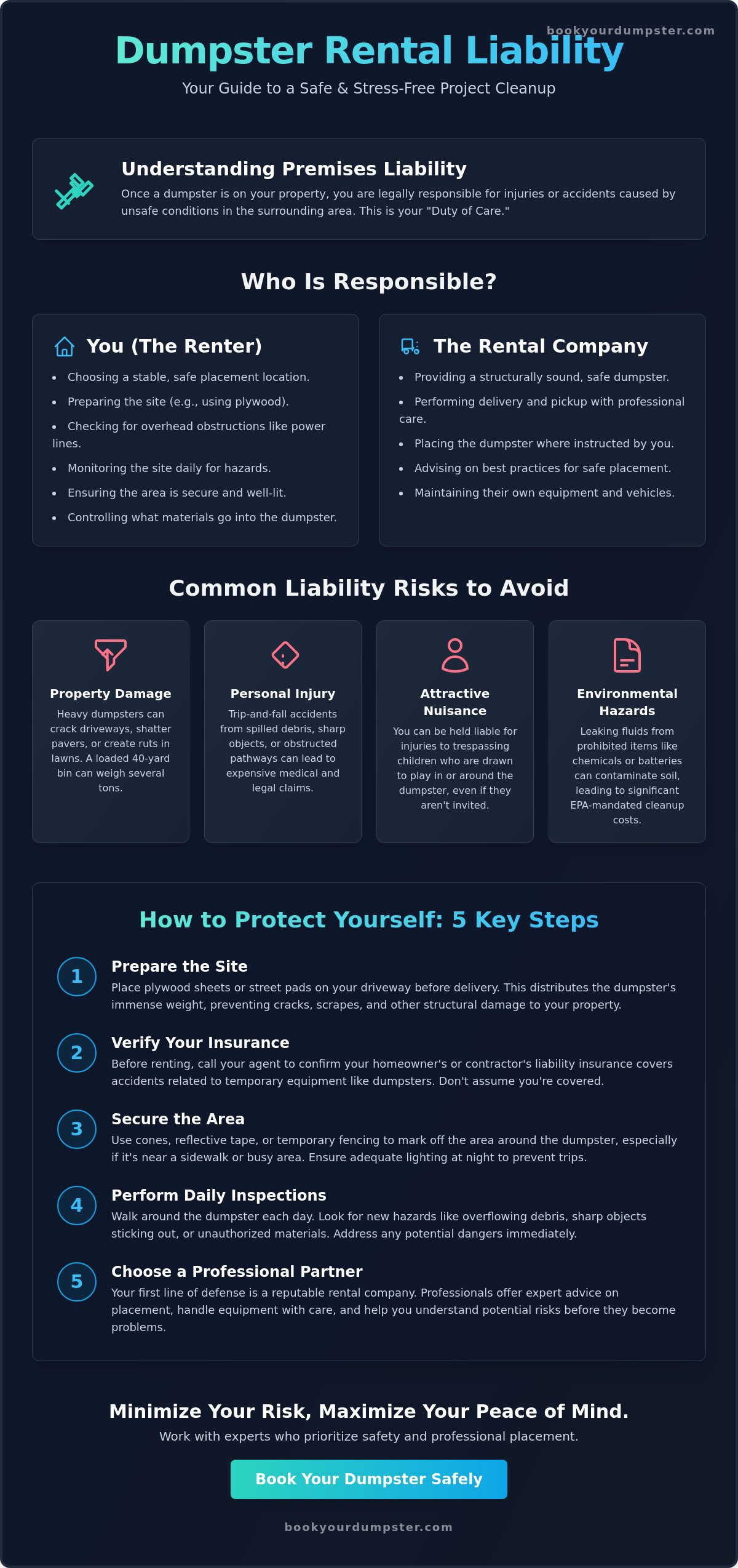
Renting a dumpster doesn't mean you've offloaded all legal risk. When that heavy steel container lands on your driveway, it becomes a temporary part of your property's environment. Many homeowners ask, "what liability do I have for a dumpster on my property?" The answer starts with Understanding Premises Liability. This legal principle holds you responsible for injuries or accidents caused by unsafe conditions on your land.
You owe a "duty of care" to anyone who enters your property. This duty varies based on why the person is there. Invitees, such as contractors or delivery drivers, are owed the highest level of protection. You must ensure the area around the dumpster is clear of tripping hazards. Trespassers are owed less care, but you still can't ignore obvious dangers. In states like New Jersey or Illinois, local courts often look at whether an accident was "foreseeable." If a bin is overflowing with sharp metal and a neighbor's child climbs on it, a court might find you liable for the injury because the risk was predictable.
The Legal Concept of Duty of Care
Maintain a safe environment throughout the rental period. A dumpster is viewed as a temporary hazard by legal standards. Foreseeability is the key factor in most claims. If you know a sidewalk is busy and you place a 10-yard dumpster where it obstructs the path, you've created a foreseeable risk. Don't let debris pile up around the base of the unit. Secure the area. If you see a potential danger, fix it immediately to fulfill your legal obligation. It's your job to monitor the site daily.
Property Owner vs. Rental Company Responsibility
Lines of responsibility are usually clear but strict. The rental company is responsible for the equipment itself. They must provide a bin that is structurally sound and handle the delivery safely. However, you are responsible for the site. This includes choosing a stable surface and checking for overhead obstructions like power lines. If the weight of a 30-yard dumpster cracks your asphalt, the rental company is rarely at fault if they placed it exactly where you instructed. Prepare the site properly to avoid these disputes. Visit BookYourDumpster.com to see how professional placement helps mitigate these risks.
Common Liability Risks: From Driveway Damage to Injuries
Identifying physical risks is the next step in answering the question: what liability do I have for a dumpster on my property? Risks generally fall into four categories: structural damage, personal injury, attractive nuisances, and environmental hazards. Personal injury claims often stem from trip-and-fall accidents. If debris spills out of the bin and onto a walkway, you're responsible for the resulting medical bills. Environmental hazards are equally serious. Leaking fluids from prohibited materials like old lithium batteries or chemicals can lead to soil contamination. Under EPA regulations, you may be liable for the cleanup costs if these materials leach into the ground on your watch.
Manage these risks through constant vigilance. Inspect the area around the unit daily. Ensure no sharp objects or heavy debris have fallen near the base. If you notice unauthorized items in your bin, remove them or contact your provider immediately. Taking these small steps reduces the likelihood of a costly claim. Select Book Your Dumpster USA as your rental partner to work with experts who understand these placement risks and offer guidance on site safety.
Property Damage: Protecting Your Driveway
Weight is the primary enemy of your driveway. A fully loaded 40-yard dumpster can weigh several tons, putting immense pressure on residential surfaces. This pressure often causes cracks in asphalt or shatters delicate pavers. In humid climates like Massachusetts, soft ground increases the risk of the heavy steel feet sinking, which creates permanent ruts. You also face the risk of surface scarring. This occurs when the metal rails scrape the ground during the drop-off or pick-up process. Use protective barriers to prevent these structural issues.
The Attractive Nuisance Doctrine
Your liability extends beyond invited guests, adding another layer to the question: what liability do I have for a dumpster on my property? A dumpster can be classified under the attractive nuisance doctrine, which is a legal concept that holds property owners liable for injuries to trespassing children. Kids often see a large bin as a fort or a playground. If a child climbs inside and gets hurt, you could be held responsible because the nuisance was foreseeable. Protruding items, like jagged wood or metal pipes, heighten this danger. You also remain liable for unauthorized dumping. If a neighbor tosses hazardous waste into your bin, you are the one responsible for the resulting fines or environmental damage.
Insurance Coverage: Are You Already Protected?
Financial protection is your final layer of defense against claims. While you now understand the physical risks, you must verify who pays if an accident occurs. Most homeowners assume their standard policy covers everything. This is a dangerous assumption. Knowing exactly what liability do I have for a dumpster on my property requires a deep dive into your insurance documents before the delivery truck arrives. You need to coordinate coverage between your personal policy, the rental provider, and any contractors on site.
Professional dumpster rental companies carry significant insurance. They typically maintain General Liability (GL) and Commercial Auto policies. This coverage protects you if the driver damages your house or a neighbor's vehicle during the drop-off. It does not, however, cover your personal negligence. If you leave the bin in a dark area without reflectors and someone gets hurt, that claim falls on you. Verify that your provider has active coverage by asking for a certificate of insurance (COI) during the booking process. This transparency is a hallmark of a reliable waste management partner.
Homeowners Insurance vs. Rental Liability
Most standard homeowners policies include personal liability coverage for on-premises accidents. If a guest trips over the container, your policy usually handles the medical bills and legal fees. Watch for "business use" exclusions. If you're running a commercial operation from the home or a massive renovation is reclassified as professional construction, your insurer might deny the claim. Document the site condition with timestamped photos before the bin arrives. This evidence is vital if you need to prove the dumpster caused specific driveway damage later. It provides a clear baseline for any future claims.
Verifying Your Contractor’s Insurance
Never allow a contractor to manage a rental without proof of their own General Liability insurance. If they are the ones loading the bin and an accident occurs, their policy should be the primary responder. For large projects, ask to be named as an "Additional Insured" on their policy. This provides you with direct protection under their coverage. Use a written contract to establish a clear risk transfer. This ensures that the party responsible for the work remains responsible for the liability. For projects exceeding $50,000, consider adding a personal umbrella policy to provide an extra layer of protection beyond your standard homeowners limits.
Practical Steps to Mitigate Liability on Your Property
Prevention is the most effective way to address the question: what liability do I have for a dumpster on my property? You can't control every variable, but you can control the environment where the container sits. Strategic planning reduces the risk of accidents and property damage before the truck even arrives. Focus on three main areas: placement, preparation, and ongoing management. By taking charge of the site, you move from a state of worry to a state of resolution.
Start by identifying high-traffic areas. Avoid placing the unit near blind corners, sidewalk entrances, or narrow alleys where pedestrians or vehicles might collide with it. Clear the path of any debris or loose gravel. If you are working in tight urban environments like San Francisco or Queens, look up. Check for low-hanging power lines or tree branches that could catch on the delivery truck's hoist system. Misjudging overhead clearance is a common cause of property damage and utility interruptions. Always communicate these obstacles to your driver before they arrive.
Safe Placement and Site Prep
Choose a level, solid surface for the bin. Uneven ground causes the load to shift, which can lead to the dumpster tipping or sliding. Use the "Plywood Method" to protect your driveway. Lay down two large sheets of 3/4-inch plywood where the dumpster's rails will rest. This simple step distributes the weight of a 20-yard or 30-yard dumpster more evenly. It prevents the steel feet from digging into asphalt or cracking pavers. This proactive measure is your best defense against structural damage claims. If you're ready to start your project, schedule your rental now with a provider that prioritizes safe placement.
Active Site Management
Manage the site daily to maintain safety. If your dumpster is near a public sidewalk or street, install battery-powered safety lights or reflective tape. This makes the bin visible at night and reduces the risk of trip-and-fall accidents. Use heavy-duty tarps to cover the bin when it's not in use. This prevents rainwater from increasing the weight of the load and deters curious children or unauthorized dumpers from accessing the container. Finally, follow the "Waterline Rule." Never load debris above the top rim of the dumpster. Overfilled bins are dangerous to transport and increase your liability if items fall out during transit. Keep the load level and secure at all times.
Choosing a Professional Partner to Reduce Your Risk
Selecting a reliable waste management partner is your final step in resolving the question: what liability do I have for a dumpster on my property? A professional company doesn't just deliver a steel container; they act as a risk-management partner for your job site. By choosing a provider that prioritizes safety and transparency, you eliminate the logistical stress that often leads to property damage or legal disputes. You need a partner who understands the specific challenges of your local area and provides the right tools for the job. This decision transforms a messy project into a controlled, efficient operation.
Expertise matters during the drop-off and pick-up process. A seasoned driver knows how to evaluate a site's stability in real-time. They can spot risks that a DIYer might overlook, such as soft soil or hidden utility covers. This professional oversight is your primary defense against the structural damage and personal injury claims discussed in previous sections. When you work with experts, you aren't just renting equipment; you are investing in a safer environment for your family, neighbors, and contractors.
The Importance of Expert Delivery
Experienced drivers are essential when navigating the tight residential streets and narrow driveways common in New York and New Jersey. Our team follows strict safety standards to ensure the placement of your 10-yard dumpster or 40-yard dumpster is precise and secure. We don't guess. We communicate directly with you to identify potential site hazards like underground septic lines or weak driveway edges before the truck arrives. This commitment to local regulation compliance protects you from municipal fines and ensures a smooth project from start to finish. Our drivers are trained to handle heavy equipment in high-density urban environments with surgical precision.
Simplified Booking and Clear Terms
Transparency is the foundation of a safe rental experience. We provide clear rental agreements that outline exactly what you are responsible for, removing the confusion that often leads to liability issues. Our digital-first approach allows for easy online scheduling so you can select the perfect size for your project. Research from April 2026 indicates that over 70% of homeowners who believe they need a 20-yard dumpster could actually use a smaller 10-yard dumpster. Choosing the smaller, lighter option is often the safest residential choice because it reduces the total weight on your driveway.
Avoid the risks of overfilling and hidden fees by choosing a partner that values pricing integrity. If you have a larger project, consider our 30-yard dumpster or 40-yard dumpster options, but always ensure you have the space to accommodate them safely. For professional service you can trust, Book Your Dumpster USA today and secure your site with confidence. We provide the reliability you need to finish your cleanup without the legal headaches.
Secure Your Site and Start Your Project
Managing a cleanup project requires more than just filling a bin. It demands a clear understanding of your legal duties and physical environment. You now know how premises liability affects your duty of care. Simple steps like using plywood or safety lighting prevent costly claims and protect your driveway. Understanding what liability do I have for a dumpster on my property empowers you to take control of your job site. By documenting the area and choosing the right container size, you move from logistical confusion to total project resolution. It's time to focus on the work instead of the risks.
Don't let the fear of property damage stall your progress. Partner with fully insured delivery experts who understand the local regulations in NY, NJ, IL, MA, and San Francisco. Whether you need a 10, 20, 30, or 40-yard dumpster, we have the right tool for your specific needs. Take the final step toward a clutter-free space with a team that prioritizes your safety and property integrity. Rent a Professional Roll-Off Dumpster Today and focus on your project with total peace of mind. Your successful project starts with a secure foundation and a reliable partner.
Frequently Asked Questions
Am I liable if a neighbor puts hazardous waste in my dumpster?
Yes, you are generally responsible for all contents within the bin while it sits on your land. Landfills and waste processors charge the account holder for hazardous waste fines or sorting fees regardless of who threw the items inside. Use heavy-duty tarps to secure the unit at night and deter unauthorized dumping. Monitor the load daily to ensure prohibited materials like chemicals or batteries don't end up in your 20-yard dumpster.
What happens if the dumpster truck cracks my driveway during delivery?
Liability typically rests with the property owner if the driver followed your specific placement instructions. Most rental agreements include clauses that exempt the company from damage to driveways or lawns caused by the weight of the equipment. Use the plywood method to distribute the load and protect your surfaces. If a driver acts negligently and strikes a permanent structure like a garage, their commercial insurance should handle the claim.
Do I need a permit if the dumpster is on my private property in New York?
You usually don't need a permit for placement on private property in New York. Permits are generally reserved for containers placed on public streets or sidewalks. Check with your local building department or HOA for specific rules regarding setbacks or how long a bin can stay on your driveway. If your project requires street placement, expect permit fees to range from $10 to $200 depending on the municipality.
Can I be sued if a trespasser gets hurt in my rented dumpster?
Yes, you can face a lawsuit under premises liability laws even if the person was not invited onto your land. Property owners have a legal duty to maintain a safe environment and mitigate foreseeable hazards. If a trespasser is injured by jagged debris or an unstable bin, a court may find you negligent. Secure the site with proper lighting and covers to show you took reasonable steps to prevent accidents.
Does my homeowners insurance cover damage caused by a dumpster?
Standard homeowners insurance typically covers personal liability for injuries but often excludes structural damage to your own driveway or lawn. If a visitor trips on the container, your policy likely handles the medical costs. However, cracks in asphalt or ruts in the grass are usually viewed as maintenance issues or "wear and tear." Verify your coverage limits and any "business use" exclusions before starting a major renovation project.
What is the "attractive nuisance" doctrine and how does it apply here?
The attractive nuisance doctrine holds property owners liable for injuries to children who are drawn to dangerous objects on the property. A large dumpster is often seen as a playground by neighborhood children. If a child climbs into your 30-yard dumpster and gets hurt, you could be held responsible because the risk was predictable. Always use a tarp and keep the area clear of protruding debris to answer the question: what liability do I have for a dumpster on my property?
Who is responsible if the dumpster blocks a public sidewalk?
You are the primary party responsible for any sidewalk obstructions caused by your rental. Blocking a public right-of-way without a permit is a violation of local safety codes and creates a significant liability risk for pedestrian accidents. Ensure your placement allows for a clear path. If you must occupy public space, obtain the necessary permits and display them clearly to avoid municipal fines and potential legal claims from injured pedestrians.
Should I sign a liability waiver from the dumpster rental company?
You should expect to sign a standard rental agreement that includes a waiver for property damage. These terms protect the provider from claims regarding cracked pavement or lawn damage when they follow your delivery directions. Read the contract carefully so you understand what liability do I have for a dumpster on my property before the truck arrives. Signing these terms is a standard professional practice that ensures the company can deliver and pick up equipment efficiently.


