

What if the most dangerous part of your renovation happens after the new glass is already in the frame? You know that old, solid core doors and shattered window panes are more than just an eyesore. They're heavy, sharp, and a logistical nightmare that can lead to steep municipal fines in cities like New York or Boston if handled incorrectly. Effective window and door replacement debris disposal requires more than just a pair of work gloves. It requires a professional plan that accounts for 2026 regulations and strict weight limits.
You need to clear the mess without overpaying for hauling or risking a citation. This guide helps you master the logistics of bulky debris disposal safely and cost-effectively. We'll show you how to select the right tool for the job, whether that's a 10 Yard Dumpster for a single room or a 30 Yard Dumpster for a full house renovation. Expect a clear path to avoiding hidden fees, managing glass hazards, and staying compliant with local waste laws. We'll break down the specific containment strategies you need to move from a cluttered site to a finished project with minimal stress.
Key Takeaways
- Identify how bulky materials like tempered glass, vinyl, and solid wood frames impact your total waste volume and disposal costs.
- Compare the cost-per-cubic-yard of on-site containment versus one-time removal to find the most budget-friendly logistics plan.
- Implement a safe loading strategy for window and door replacement debris disposal to prevent glass hazards and maximize container space.
- Navigate complex municipal regulations and permit requirements in major cities like New York, Boston, and Chicago to avoid local fines.
- Select the optimal bin size by determining when a 10-yard dumpster is sufficient and when a 20-yard unit is required for whole-home projects.
The Unique Challenges of Window and Door Debris Disposal
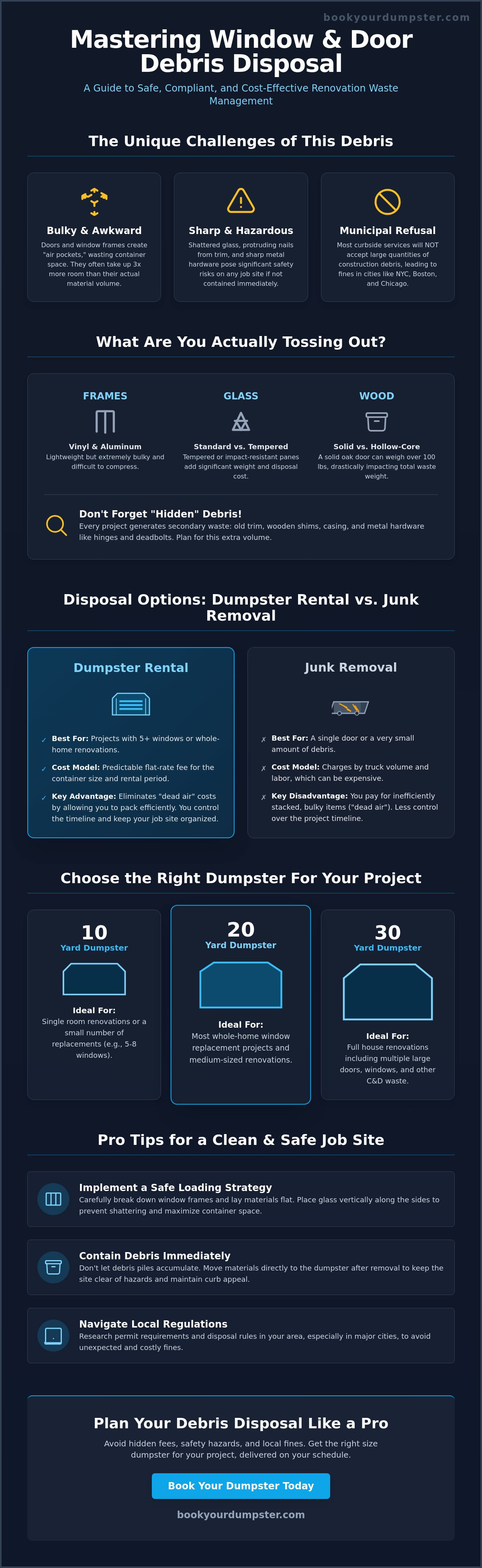
Removing a single window seems simple. Removing twenty is a logistics operation. The primary challenge of window and door replacement debris disposal is the sheer volume and diversity of the materials. Unlike standard household trash, these items are awkward, heavy, and potentially dangerous. Most municipal curbside services will refuse large quantities of this waste because it doesn't fit in standard bins and requires specialized processing.
The "bulk factor" is the most common planning error. A door doesn't sit flat in a pile; it creates air pockets that waste space. Old windows with intact frames are even worse. They take up three times more room than their actual material volume suggests. If you don't break them down, you'll need a larger container than you think. Shattered glass doesn't just cut; it migrates across a job site, hiding in grass or driveway cracks. Managing this risk means containing the debris immediately after removal rather than letting it sit in unsecured piles. Proper disposal starts with understanding that you aren't just moving trash; you're managing a high-volume industrial byproduct.
Material Breakdown: What Are You Actually Throwing Away?
Windows aren't just glass. They're a mix of various structural components that complicate the disposal process:
- Vinyl and Aluminum: Lightweight but bulky frames that are difficult to compress.
- Glass Types: Standard glass is fragile, while tempered or impact-resistant panes add significant weight and cost.
- Solid vs. Hollow Wood: A solid oak exterior door can weigh over 100 pounds, whereas interior hollow-core doors are mostly air.
This variety makes recycling difficult. Mixed-material debris, such as wood frames with embedded glass shards, often cannot go to standard recycling centers. They require a dedicated container to ensure they reach the right facility. Visit BookYourDumpster.com to find the right size for your specific project load.
The "Hidden" Debris: Trim, Shims, and Hardware
Don't just count the windows and doors. Every replacement project generates a mountain of secondary waste. You'll deal with miles of interior casing, exterior moulding, and wooden shims used for leveling. Metal components like rusted hinges, heavy handles, and deadbolts add to the complexity. These sharp objects create significant safety risks on a job site. Protruding nails in trim and shattered glass from old frames can cause serious injury if left in loose piles. Construction and demolition waste (C&D) is the industry standard term for these materials, and they must be managed with professional-grade containment to keep your site clear and safe. Effective window and door replacement debris disposal requires a plan for these smaller, sharper components before the first frame is pried loose.
Disposal Options: Comparing Dumpster Rental vs. Junk Removal
Choose your disposal method based on the scale of your tear-out. For a single door, a junk removal service might work. For five or more windows, the math shifts significantly. Junk removal companies charge based on truck volume and labor. Because windows and doors are bulky and don't stack efficiently, you end up paying for "dead air" in the hauling truck. A dumpster rental provides a flat-rate solution where you control the packing and the timeline. This is a core part of Sustainable C&D materials management because it allows for better sorting on-site. It keeps your project costs predictable and your job site organized.
Donation is a viable path only if your old units are in excellent condition. Organizations like Habitat for Humanity ReStore generally refuse units with broken seals, rot, or non-standard sizes. If your materials aren't re-sellable, they are debris. Professional window and door replacement debris disposal ensures that even the non-donatable items are handled legally and safely. Before you start prying, check our sizing guide to ensure you have enough capacity for the materials that charities won't take.
Site cleanliness is about more than just aesthetics. A messy job site is a safety hazard and a magnet for neighbor complaints. When you have a dedicated bin, you maintain high curb appeal throughout the project. You don't have piles of old frames and glass sitting on your lawn for days. This professional appearance is vital if you're a contractor or a homeowner in a strict HOA. It signals that the project is under control and follows a clear logistics plan.
When a Roll-Off Dumpster Makes the Most Sense
A roll off dumpster rental is the standard for multi-day installations. It serves as a centralized staging area, keeping your driveway clear and your walkways safe. You don't have to wait for a pickup crew to arrive; you simply toss the debris as it's generated. This eliminates the stress of coordinating schedules with a third-party hauler while your yard is full of glass shards. If you are replacing multiple exterior doors or a whole floor of windows, a dedicated bin is the most efficient tool for the job.
The Limitations of Residential Recycling Centers
Don't assume your local center will accept these materials. Most residential drop-off sites refuse glass that remains in the frame. They see it as contaminated waste. Even if they do accept it, the logistics are a nightmare. Loading an 80lb solid-core door into a personal SUV often results in torn upholstery or cracked tailgates. Personal vehicles aren't designed for the weight or the sharp edges of construction debris. You risk exceeding your vehicle's payload capacity or sustaining hundreds of dollars in damage just to save on a rental fee. Professional containment removes these risks entirely and simplifies window and door replacement debris disposal from start to finish.
Step-by-Step: How to Safely Manage Replacement Debris
Safety on a renovation site is a matter of sequence. Before the first frame is pried loose, clear a 10-foot perimeter around your workspace. Remove furniture, rugs, and potted plants that could trip a worker carrying a heavy exterior door. If your home was built before 1978, you must follow lead-safe work practices. Lead paint dust is a significant health hazard during window swaps. Use 6-mil plastic sheeting to contain dust and wet down surfaces before cutting. This proactive approach is essential for effective window and door replacement debris disposal without contaminating your living space.
Loading the waste requires a specific strategy to maximize safety and container volume. Remove all protruding hardware, including hinges, strike plates, and handles. Use a hammer to flatten any remaining nails in the trim. This prevents punctures to the dumpster liner and protects anyone handling the waste later. According to the EPA guidelines for C&D materials, proper sorting and containment are key to reducing the environmental impact of renovation projects. By managing these materials as they come out of the wall, you prevent a massive, disorganized pile from forming on your lawn.
Loading Your Dumpster for Maximum Space
Efficiency in window and door replacement debris disposal comes down to how you stack. Use the "pancake" method for doors by laying them perfectly flat on the floor of the bin. This eliminates the air pockets that occur when bulky items are tossed in haphazardly. Never stand windows upright against the side of a roll-off container. They are prone to shifting during transport, which can lead to glass breakage and uneven weight distribution. Once your flat base of doors and frames is established, use smaller debris like wood shims and trim to fill the gaps. This dense packing ensures you get the full value of your rental capacity.
Safety Gear and Site Protection
Standard gardening gloves won't protect you from a shattered pane of tempered glass. Wear puncture-resistant work gloves and wrap-around eye protection at all times. Use heavy-duty drop cloths to catch small glass shards before they embed themselves in your lawn or driveway. A construction dumpster is the safest collection point for these hazards because it provides a single, reinforced area for all sharp and heavy materials. Keep a shop vac nearby to clear the staging area after each unit is loaded. Maintaining a clean floor is the best way to prevent slips and falls during a high-intensity installation.
Local Regulations in NY, NJ, IL, and MA
Local laws dictate your window and door replacement debris disposal strategy. In high-density cities like New York or San Francisco, you can't simply leave a stack of old frames on the curb. New York City and Queens have rigid municipal restrictions regarding construction waste. If you aren't using a professional bin, you're likely violating local sanitation codes that require specific bundling or heavy-duty containment. Effective June 1, 2026, NYC enforcement for residential waste management has tightened significantly; while this focuses on branded bins for daily trash, it signals a broader crackdown on all sidewalk debris. Don't risk a citation by assuming the city will haul away your renovation mess.
New Jersey and Massachusetts present different logistical hurdles. New Jersey maintains strict mandates on mixed construction and demolition (C&D) waste. You must ensure your debris reaches a facility equipped to handle mixed loads of wood, glass, and metal. Massachusetts goes even further with comprehensive waste bans that prohibit wood and glass from entering landfills. These materials must be separated for recycling at specialized processing centers. In Chicago, the focus shifts to placement. If your project lacks a private driveway, you'll navigate a complex permit system to use the public way. Ignoring these regional nuances leads to project delays and unexpected legal fees.
Permits and Street Placement
If you plan to place a bin on a public street in Boston or Chicago, you need a "Right of Way" permit. This document authorizes you to occupy street space for a set duration. Most cities also require specific safety measures, such as reflective markings or local signage, to ensure the container is visible at night. Failure to meet these visibility standards can result in immediate fines or the removal of your bin. Check our guide to dumpster rental in NY and MA for specific city links and permit offices. Securing your permit before the windows are pulled ensures a seamless transition from demolition to disposal.
Disposal Taxes and Surcharges
The Northeast corridor is known for high "Tipping Fees," which are the costs charged by landfills and transfer stations to accept waste. Because windows are glass-heavy and doors are dense, your load might attract weight-based surcharges. Some regions also apply environmental taxes to C&D materials to encourage recycling. Book Your Dumpster USA simplifies these logistics by offering flat-rate pricing that accounts for these regional variables. This transparency prevents the "sticker shock" often found in the junk removal industry. Order your bin today to lock in a predictable rate for your window and door replacement debris disposal and avoid the complexity of local tax calculations.
Choosing the Right Dumpster for Your Replacement Project
Selecting the correct container size is the final step in your logistics plan. Don't guess on volume. If you choose a bin that's too small, you'll face the cost of an additional haul. If it's too large, you'll pay for empty space you don't need. For most residential window and door replacement debris disposal projects, the 10 or 20-yard options provide the best balance of capacity and footprint. Effective planning prevents site congestion and keeps your budget on track.
A standard 10 yard dumpster rental typically accommodates 50 to 60 standard double-hung windows if they're stacked flat. If you leave the frames bulky and unstacked, that capacity drops to roughly 30 units. Once you add solid-core exterior doors or sliding glass sets, the volume requirements shift. A 20-yard dumpster is the safer choice for whole-home renovations or projects involving heavy patio doors. Remember that glass is deceptively heavy; a single square foot of standard window glass weighs about 1.5 to 2 pounds. When you factor in the weight of solid oak or mahogany doors, you can quickly approach weight limits. Check your rental agreement for these specifics to avoid overage charges. You can book your bin online in under five minutes to keep your project moving.
The 10-Yard Dumpster: Compact and Efficient
The 10-yard bin is the "Goldilocks" size for many homeowners. It's compact enough to fit in tight driveways in Queens or narrow Boston neighborhoods without blocking sidewalk access. You get the capacity of about three to four pickup truck loads without the logistical hassle of multiple trips to a facility. It's the most cost-effective way to handle a single-floor window swap or a kitchen remodel. This size keeps your window and door replacement debris disposal contained and professional without overwhelming your property.
Professional Support for Large Renovations
Commercial-scale projects, such as apartment window replacements, require a higher level of support. When one bin isn't enough for the entire building, we coordinate "Swap-outs" to ensure your crew never stops working. We drop a fresh 30 or 40-yard dumpster and haul the full one away in a single, seamless motion. This prevents debris from piling up in common areas or parking lots. Ready to clear the view? Book Your Dumpster today and secure the reliable containment your project demands.
Streamline Your Job Site Today
Successful renovation ends with a clean driveway and a safe property. You've learned how to pancake doors to maximize space and how to navigate the strict 2026 waste regulations in cities like Boston and New York. Managing window and door replacement debris disposal doesn't have to be the most stressful part of your project. By choosing the right container size and following a clear loading plan, you protect your budget and your timeline.
We take the guesswork out of the logistics. Our digital platform allows for online booking in under 60 seconds. You get transparent flat-rate pricing with no hidden surcharges. Whether you are working in NY, NJ, MA, IL, or SF, we provide the dependable tool you need to finish the job. Stop worrying about municipal fines or glass hazards on your lawn.
Order your 10-yard dumpster for window disposal now. Your project is almost complete; let's get the debris out of your way so you can enjoy the results.
Frequently Asked Questions
Can I put glass windows in a regular dumpster?
Yes, you can place glass windows in a roll-off dumpster. You should stack them carefully to prevent excessive breakage that could lead to safety hazards during transit. Most professional rental services accept glass as standard construction debris. Always check if your local municipality has specific diversion requirements for glass before you start loading the container.
How much does it cost to dispose of old windows and doors?
Disposal costs depend on the volume of material and the local tipping fees at the transfer station. Because windows are heavy and bulky, they often reach weight limits faster than lighter debris. Renting a 10 Yard Dumpster offers a flat-rate solution that is usually more predictable than other removal methods. You should also factor in potential permit fees if the container sits on a public street.
Do I need a permit to put a dumpster on the street for a window project?
You generally need a "Right of Way" permit if the dumpster occupies any public space, such as a street or sidewalk. Cities like Boston, Chicago, and New York have strict enforcement and specific safety marking requirements for street placement. If the container stays on your private driveway, you typically don't need a permit. Verify local requirements with your city's public works department before scheduling your delivery.
Can I recycle vinyl window frames?
Vinyl frames are recyclable, but most standard curbside programs won't accept them. You must take them to a specialized construction and demolition recycling center. Because window and door replacement debris disposal often involves mixed materials, many people find it more efficient to use a dumpster. The processing facility then handles the separation of vinyl from glass and wood to meet local diversion mandates.
What is the best way to dispose of old sliding glass doors?
The most efficient method is loading them flat into a 20 Yard Dumpster. Sliding doors are exceptionally heavy and take up significant floor space. Remove the door from the track and take off all handles and rollers first. Stacking them flat at the bottom of the container prevents them from shifting and ensures you maximize the available volume for other project waste.
Is it cheaper to rent a dumpster or hire a junk removal service for windows?
For projects involving more than five windows, a dumpster is almost always the more cost-effective choice. Junk removal services charge by the truckload and include labor costs, which escalate quickly with heavy items like solid-core doors. A roll-off container provides a flat-rate price and allows your crew to load the debris as it's generated. This eliminates the need for multiple service calls.
What happens if glass breaks inside the dumpster?
Glass breakage is common during the hauling process and is generally not an issue for the disposal facility. However, you should avoid shattering glass intentionally during the loading phase to prevent dangerous silica dust and sharp shards from escaping the container. Use heavy-duty tarps if you're working in a high-traffic area. Professional containers are designed to hold broken glass safely until it reaches the transfer station.
How do I handle windows with lead-based paint?
If your home was built before 1978, you must treat old windows as potential lead hazards. Follow EPA lead-safe work practices, including wet-scraping and HEPA vacuuming, to contain dust. Wrap the debris in 6-mil plastic sheeting before placing it in the dumpster to prevent environmental contamination. Proper window and door replacement debris disposal for older homes requires strict adherence to these safety protocols to protect your site.


