
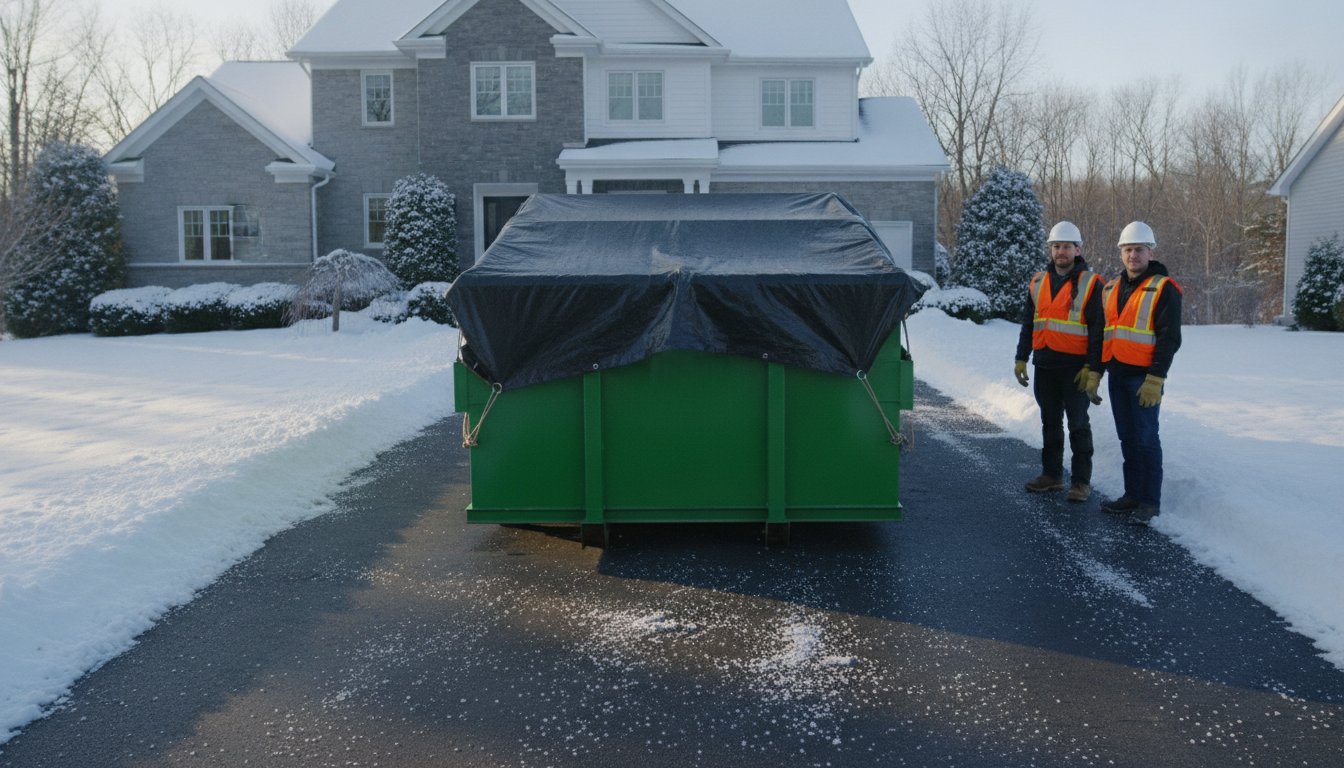
The off-season is actually the smartest time to tackle an indoor renovation, but only if you treat snow as a financial liability. Every inch of slush that accumulates in an open container adds unnecessary pounds to your final bill. Mastering winter dumpster rental considerations is the only way to avoid paying for water weight while keeping your job site safe. You likely already worry about delivery trucks slipping on your driveway or your project debris freezing into a solid block before the hauler arrives.
We understand the logistical stress of managing waste in sub-zero temperatures. This guide provides a professional plan to protect your rental and manage weight limits during wet weather. You will learn how to prep your site for heavy machinery and ensure a successful pickup regardless of the 2026 forecast. We cover everything from tarping strategies to proper salt application. Follow these specific steps to remove the friction from cold-weather waste management and keep your project moving forward on schedule.
Key Takeaways
- Capitalize on lower seasonal demand to secure more flexible delivery and pickup windows for your interior renovation projects.
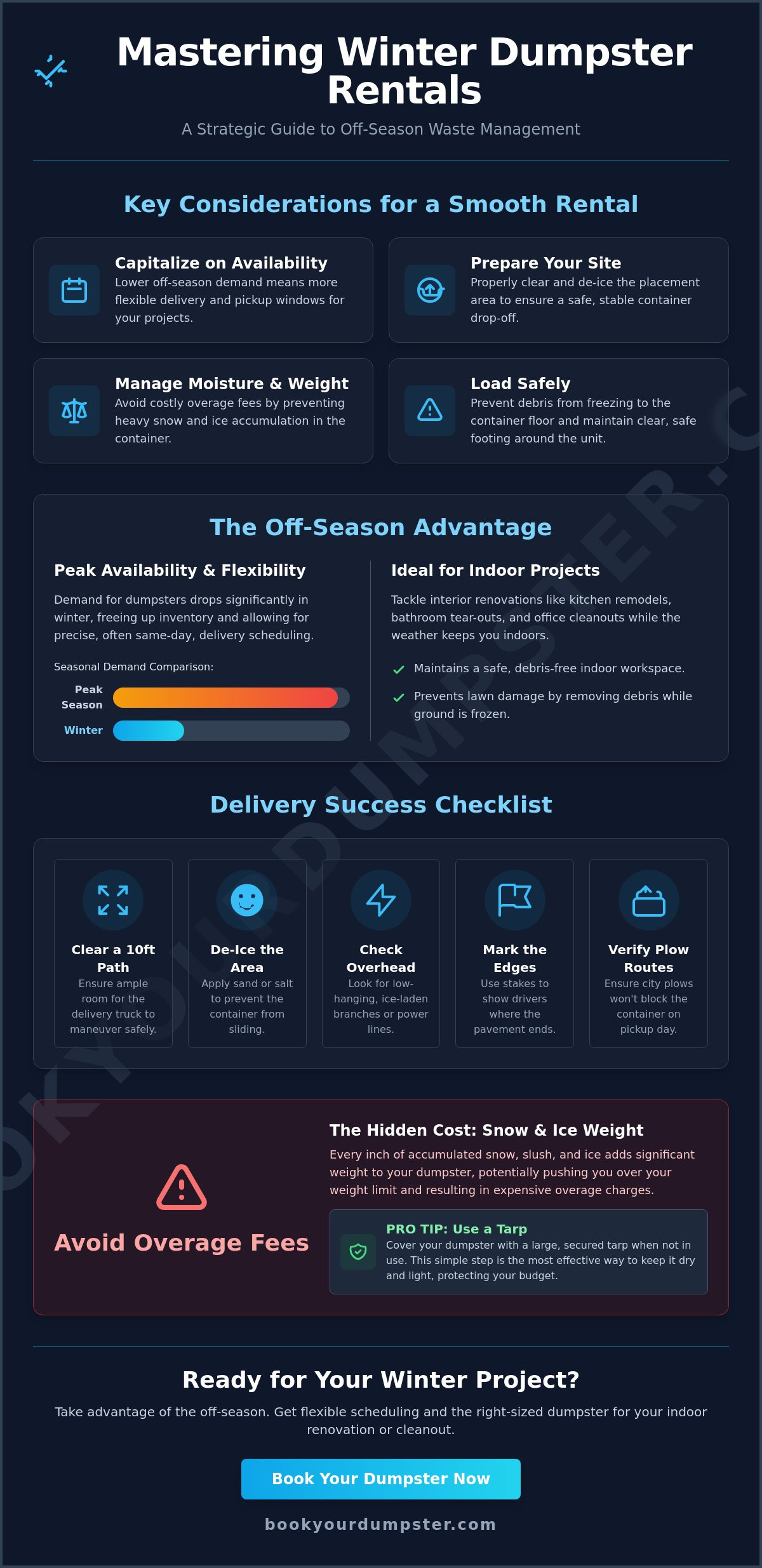
- Prepare your site by clearing a 10-foot wide path and de-icing the placement area with sand or salt to ensure a stable container drop.
- Protect your budget by mastering winter dumpster rental considerations like moisture management to avoid paying for heavy snow and ice accumulation.
- Implement safe loading practices to prevent debris from freezing to the container floor and maintain clear footing around the loading door.
- Select the optimal 10, 20, 30, or 40-yard dumpster size to streamline your winter waste logistics and keep your job site organized.
Strategic Benefits of Renting a Dumpster in the Winter
Winter is often overlooked for waste disposal, but it offers a distinct competitive edge. While others wait for the ground to thaw, proactive homeowners and contractors use the cold months to clear project backlogs. One of the primary winter dumpster rental considerations is availability. Because demand drops significantly between December and March, you aren't competing with every landscaping crew in the county. This translates to precise delivery times and a higher likelihood of getting the exact container size you need without a waitlist. Use this seasonal lull to your advantage by scheduling projects when fleet utilization is at its lowest.
Contractors find winter rentals especially useful for clearing sites before the messy spring thaws. Removing heavy debris while the ground is frozen prevents the deep ruts and lawn damage that often occur in the mud of April. For residential users, the winter months provide a focused window to handle indoor clutter. You can move at your own pace without the pressure of the "spring rush" that typically clogs delivery schedules. This off-season flexibility often allows for more precise pickup windows, giving you total control over your project timeline.
Maximizing Off-Season Availability
Secure the right equipment without the usual delays. Winter is the best time to book specific sizes like a 10 yard dumpster rental, which is frequently sold out during peak renovation months. In major hubs like Chicago or Boston, lower seasonal demand makes same-day delivery much more feasible. Don't wait for the April surge. Book your container in January or February to ensure your waste management logistics are handled before the market tightens. This proactive approach eliminates the stress of "making do" with a larger, more expensive container just because the smaller ones are out of stock.
Indoor Project Efficiency
Focus on interior demolition when the weather keeps you inside. Kitchen and bathroom remodels generate heavy, awkward debris that shouldn't sit in your hallway. Using a dumpster helps you maintain a safe, debris-free indoor workspace, which is critical when you're working in confined areas. Refining your waste management process during the off-season also benefits commercial clients. Office cleanouts and retail updates are easier to execute when foot traffic is lower. By addressing these winter dumpster rental considerations now, you ensure a cleaner, safer site for your crew and your family. Choose from 10, 20, 30, or 40-yard options to match the specific scale of your indoor cleanup.
The Winter Site Preparation Checklist
Successful winter delivery starts long before the truck arrives. You must treat your property like a professional job site to avoid failed delivery attempts and unnecessary trip fees. The most critical of all winter dumpster rental considerations is ensuring a clear, safe path for a vehicle that weighs significantly more than a standard passenger car. When the ground is slick, every inch of clearance matters for the driver's safety and your property's integrity.
Follow these specific site preparation steps to guarantee a smooth drop-off:
- Clear a 10-foot wide path: The roll-off truck needs ample room to maneuver. Shovel back snowbanks to ensure the driver doesn't have to force the vehicle through heavy drifts.
- De-ice the placement area: Apply sand or salt to the entire footprint where the container will sit. This prevents the heavy steel box from sliding during the loading process.
- Check overhead clearance: Look up for ice-laden tree branches or low-hanging power lines. Heavy ice can cause wires to sag, creating a hazard for the truck's lift hoist.
- Mark the edges: If snow is deep, use tall orange stakes to show the driver exactly where the driveway ends and the lawn begins.
- Verify plow routes: Check your local municipal snow-plow schedule. Ensure your container won't be blocked in by a city-wide plowing operation on your pickup day.
Understanding the water equivalent of snow is vital because moisture content dictates how much pressure you're putting on your site's surface. Wet, heavy snow is much denser than powder, which increases the risk of surface damage if the area isn't properly cleared.
Driveway and Surface Protection
Extreme cold makes concrete and asphalt more brittle and prone to pressure cracks. To protect your investment, always use plywood "sleepers" or 2x4 boards under the dumpster's rollers. These boards distribute the weight and prevent the steel from freezing directly to the asphalt, which can lead to surface tearing during pickup. If you have decorative pavers, avoid chemical de-icers that cause pitting; use sand for traction instead. These simple steps prevent permanent damage to your driveway.
Ensuring Truck Accessibility
Accessibility is about more than just your driveway. You must clear the transition area where the street meets your property. Large piles of snow left by street plows can prevent a truck from making the necessary swing into your drive. This is a frequent challenge in dense areas like Queens, where tight turns and heavy snow accumulation make maneuvering difficult. Communicate clearly with your driver about any hidden black ice hazards on the property. If you're ready to start, you can schedule your rental online to lock in your preferred delivery date.
Moisture and Weight Management: Avoiding Overage Fees
Managing the weight of your debris is the most effective way to control your final project costs. In the winter, moisture is your biggest financial enemy. When snow or rain falls into an open container, it doesn't just sit on top; it saturates your materials. Porous items like old drywall, carpeting, and wood scrap act as sponges. Once these materials absorb water, their weight can double or triple, pushing you well beyond your initial weight allowance. These winter dumpster rental considerations are vital because overage fees typically range from $40 to $200 per extra ton, depending on your location and the specific disposal facility.
Monitor your local forecast for "heavy" wet snow versus light powder. Wet snow has a much higher density and will add significantly more weight to your load. Light powder might look imposing, but it's the slush and freezing rain that cause the most damage to your budget. If you anticipate a major storm, plan your loading schedule to ensure the container isn't sitting open and vulnerable during the peak of the precipitation. Your goal is to keep the contents as dry as possible from the moment of delivery until the truck arrives for pickup.
The Tarping Strategy
Cover your dumpster with a heavy-duty tarp every night. This is not a suggestion; it's a financial necessity for cold-weather projects. Use a tarp that is larger than the container's opening to allow for a secure overhang. Fasten the edges with bungee cords or heavy-duty straps to prevent winter wind gusts from tearing the cover away. Always create a slight slope when securing the tarp. This prevents "puddling" in the center, which can lead to ice dams that are nearly impossible to remove without damaging the cover. A properly sloped cover ensures that moisture runs off the sides rather than soaking into your debris.
Calculating Snow Weight
Don't underestimate the impact of a single storm. Industry data indicates that just one inch of rain falling into a 20-yard dumpster can add approximately 1,000 pounds of water weight. If that water freezes into compacted ice, it becomes even harder to manage. Clearing snow out of the dumpster is just as important as clearing the area around it. If you allow several inches of snow to accumulate inside the container, you are essentially paying to dispose of frozen water. Use a broom or a snow rake to clear out the interior before adding more debris. This simple habit keeps your load within the weight limits of your 10, 20, 30, or 40-yard dumpster.
Safe Loading Practices in Freezing Temperatures
Loading a dumpster in sub-zero temperatures requires more than just muscle. It requires a tactical approach to safety and debris management. One of the most overlooked winter dumpster rental considerations is how cold temperatures change the physical properties of the materials you're handling. Whether you're a homeowner clearing a basement or a contractor on a job site, your focus must remain on preventing injury and ensuring the container can be emptied without issue. Cold air makes everything more difficult, from the way your body moves to how the steel container reacts to heavy loads.
Maintain a five-foot "clear zone" around the loading door at all times. Salt this area repeatedly to ensure your footing is secure while carrying heavy loads. Remember that bulky winter gear restricts your range of motion and can throw off your balance. Use proper lifting techniques by bending at your knees and keeping the load close to your center of gravity. Cold muscles are more prone to strain, so move deliberately rather than rushing to beat the cold. If you're handling plastics or certain composites, be aware that they become brittle in the cold and may shatter unexpectedly when tossed into the container.
The "Anti-Freeze" Loading Method
When wet materials sit on a cold steel floor, they bond almost instantly. This can lead to extra labor charges if the hauler has to manually scrape out frozen contents at the landfill. To prevent this, place a sacrificial layer of cardboard or thin plywood at the bottom of the container before you start loading. This creates a thermal barrier between your debris and the metal. Never dispose of liquids like leftover paint or cleaning solutions; these will expand as they freeze and can rupture, bonding your entire load into a solid block. Handle wet drywall or pressure-treated wood with care, ensuring they aren't the first things to touch the steel floor.
Operator Safety and Visibility
Check the swing door hinges for ice accumulation before attempting to open them. Forcing a frozen latch can lead to equipment damage or sudden, uncontrolled door movement. Visibility is another major concern during the short days of January and February. With sunsets occurring as early as 4:30 PM in many northern regions, ensure your work area is well-lit. Snow squalls can also reduce visibility to near zero in seconds. If conditions deteriorate, stop work immediately. Never climb on the sides of a snow-covered dumpster. The steel becomes incredibly slick when frosted, and a fall from that height can be catastrophic. To ensure you have the right equipment for your project, book your dumpster now and secure your winter delivery date.
Efficient Winter Waste Logistics with Book Your Dumpster USA
Book Your Dumpster USA provides the reliable logistics you need to keep your project moving in sub-zero temperatures. We understand that winter projects have a higher stakes environment where delays cost more than just time. Our streamlined online booking platform allows you to secure a container in minutes, removing the friction of traditional phone-based scheduling. We prioritize transparency, offering flat-rate pricing that includes your weight allowance and rental period. You won't face hidden winter surcharges or opaque fee structures. This focus on pricing integrity acts as a verbal handshake, ensuring you can budget for your cleanup with total confidence.
Our team brings specialized local expertise to every delivery. We are well-versed in the specific winter dumpster rental considerations required in New York, New Jersey, and Illinois. From navigating narrow, snow-cleared streets in Chicago to managing municipal parking restrictions in New Jersey boroughs, we know the local landscape. We don't just deliver a box; we act as a high-functioning tool in your renovation or cleanup process. Our drivers are trained to assess site safety upon arrival, ensuring your container is placed exactly where you need it without compromising your property or the safety of the crew.
Choosing the Right Container Size
Selecting the correct volume is a critical step in managing your winter project. A 10 yard dumpster is often the most pragmatic choice for interior residential cleanouts or basement decluttering. Its compact footprint makes it easier to place on small, cleared sections of a driveway. For professional contractors, scaling up to a 30 or 40-yard container is the standard for high-volume construction debris removal. Always ensure you have enough capacity so your debris never sits above the "fill line." This is especially important in the winter, as snow accumulation can make an overfilled container impossible to tarp or transport safely. We also offer 20-yard options for mid-sized renovations that require a balance of capacity and space efficiency.
Reliable Local Delivery and Support
Punctuality is our promise, regardless of the forecast. We maintain a technologically savvy fleet designed to stay moving when harsh weather stalls other services. Our drivers are experts at handling difficult placements in Massachusetts and New Jersey, where icy inclines and tight turns are common. We work with you to identify the safest drop-off point, ensuring the heavy roll-off vehicle has the traction it needs to operate. If you are ready to remove the logistical stress from your winter project, we are ready to help. Book your winter dumpster rental online today and experience a faster, more professional way to manage your waste.
Take Control of Your Winter Project Logistics
Successful cold-weather waste management requires proactive site preparation and strict moisture control. By clearing a 10-foot path for the truck and using heavy-duty tarps to block snow, you eliminate the risk of water weight overages and frustrating delivery delays. These winter dumpster rental considerations turn a potentially messy seasonal project into a streamlined, professional success. You now have a clear plan to protect your property and your budget from the elements while others wait for the spring thaw to begin their cleanups.
We've provided reliable waste solutions across NY, NJ, IL, and MA since 2018. Our A+ rated service is built on transparency and punctuality, ensuring your 10, 20, 30, or 40-yard container arrives exactly when you need it. Direct online booking removes the guesswork from your scheduling, allowing you to focus on the indoor work that matters. Don't let the weather dictate your project timeline or inflate your disposal costs with unnecessary water weight. Secure your winter dumpster rental with our easy online booking system today. You have the expertise and the right partner to finish your cleanup efficiently and safely.
Frequently Asked Questions
Can I rent a dumpster if there is already snow on the ground?
Yes, you can rent a dumpster with snow on the ground as long as you prepare the site first. You must shovel the placement area and a 10-foot wide path for the truck. Salting the ground prevents the container from sliding during the loading process. If the driver arrives and the area isn't cleared, they may charge a trip fee for the failed delivery attempt.
How much weight does snow add to a dumpster rental?
Snow adds substantial weight that directly impacts your final bill. A single inch of rain or melted snow in a 20-yard container can add approximately 1,000 pounds of water weight. This is a primary factor in winter dumpster rental considerations because it can quickly push you over your weight limit. Always use a tarp to keep the interior dry and light.
What happens if the dumpster freezes to my driveway?
If a dumpster freezes to your driveway, it can cause surface damage during the pickup attempt. Prevent this by placing plywood boards under the rollers before delivery. These sleepers act as a barrier between the cold steel and the asphalt. If the container is already frozen, you may need to apply heavy amounts of salt or wait for a thaw before it can be safely moved.
Do I need a permit for a dumpster in the winter if it is on the street?
Street placement always requires a permit from your local municipality. During the winter, these permits often include specific clauses about snow-plow access. You must ensure the container doesn't block city plows or emergency vehicles. Failure to follow these seasonal regulations can result in fines or the immediate removal of the dumpster at your expense.
Will the dumpster truck be able to deliver during a snowstorm?
Delivery during an active snowstorm is usually rescheduled for safety reasons. Trucks require clear visibility and plowed roads to maneuver heavy roll-off containers safely. If your driveway is not cleared of snow and ice by the time the driver arrives, the delivery will be cancelled. Stay in contact with your provider to coordinate delivery around major weather events.
Should I keep the dumpster door closed or open in the winter?
Keep the loading door closed and latched whenever you aren't actively filling the container. An open door allows snow to accumulate inside, which adds weight and makes the door hinges more likely to freeze shut. Keeping it closed also prevents wind from scattering lighter debris across your property or your neighbor's yard during winter gusts.
How do I stop my trash from freezing inside the dumpster?
Stop debris from freezing by creating a thermal barrier at the bottom of the container. Use old cardboard or plywood sheets as a base layer before adding your waste. Avoid disposing of liquids or wet materials like saturated drywall; these act as an adhesive when they freeze, bonding your trash into a solid mass that is difficult to empty at the landfill.
Are dumpster rental prices lower in the winter?
Lower demand in the winter often results in better availability for specific sizes like 10 or 20-yard containers. While prices vary by region, the off-season provides more flexibility with delivery and pickup windows. Use this to your advantage by scheduling interior projects during January and February when the spring rush hasn't yet started.


