
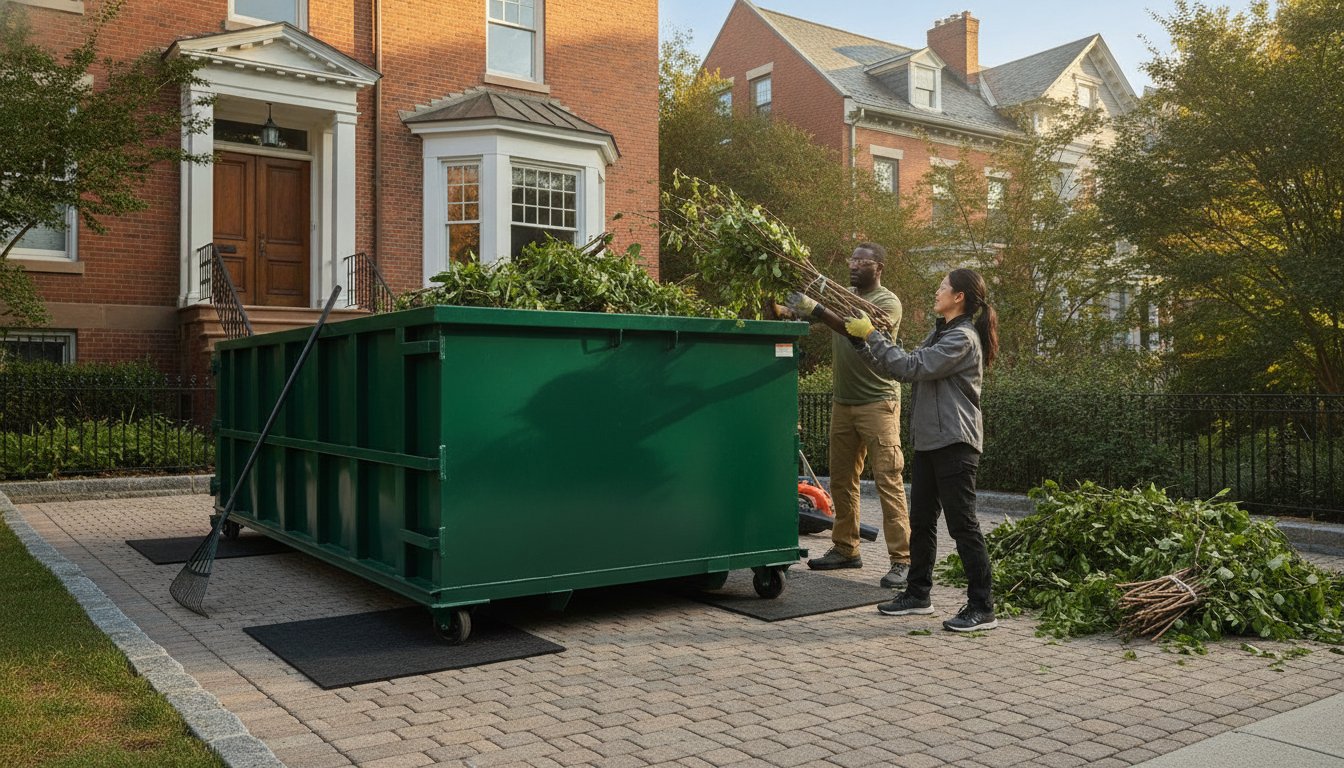
Filling a container with nothing but soil and sod is the fastest way to trigger an expensive overweight fee. While these materials are organic, their density often catches homeowners and contractors off guard during a yard waste dumpster rental. You want a straightforward cleanup, but local weight limits and disposal regulations can turn a simple project into a logistical headache. It's frustrating to face surprise penalties just because you didn't know the specific rules for your city.
This guide provides the technical details you need to manage your debris efficiently and avoid hidden costs. You'll learn how to match your waste volume to our 10, 20, 30, or 40 yard dumpsters while staying compliant with municipal green waste rules. We'll also break down specific permit requirements, such as the $75 to $150 street fees in NYC or the 3-day public way permits in Chicago. We'll even cover strategies for placing containers in tight urban driveways where space is at a premium. Read on to master the logistics of urban waste removal and ensure your project stays on schedule and within budget.
Key Takeaways
- Identify the correct container size between 10 and 40 yards to handle your debris volume without exceeding weight limits.
- Confirm which organic materials are accepted to ensure your yard waste dumpster rental meets local green waste and composting regulations.
- Determine the specific permit requirements for street placement in NYC, Chicago, and Boston to avoid municipal fines and delays.
- Prepare your site with driveway protection to prevent heavy roll-off bins from damaging asphalt or stone pavers during delivery.
- Use a transparent online booking system to coordinate efficient debris removal for both residential and commercial landscaping projects.
Understanding Yard Waste Dumpster Rental Essentials
A yard waste dumpster rental isn't just a standard trash bin. It's a specialized roll-off container built specifically for organic debris. When you're clearing a massive suburban lot or a small urban garden, you'll produce more waste than a standard curb-side pickup can handle. Instead of filling dozens of paper bags that might sit on the curb for weeks, use a single-haul solution to clear your site in one afternoon. This method saves hours of back-breaking labor and keeps your property looking professional throughout the project. It's a high-functioning tool for anyone who values their time and wants a tidy workspace.
Professional landscapers and property managers rely on these containers to keep job sites clean and safe. Homeowners use them for major property overhauls. Using a dedicated bin ensures that organic material doesn't end up in a landfill, where it produces methane. Instead, it moves toward a processing facility that creates valuable topsoil and mulch. For residents in NYC, Chicago, or Boston, checking availability at BookYourDumpster.com is the first step toward a clean property. This digital-first approach removes the traditional stress of coordinating waste removal. You get a reliable partner who understands the unique logistical challenges of urban projects.
When to Rent a Dedicated Yard Waste Bin
Timing is everything. Rent a bin during peak leaf-fall seasons or after a major storm hits. These events generate a volume of branches and foliage that can't wait for slow municipal schedules. Large-scale landscaping, such as removing old sod or re-grading a backyard, also requires high-capacity containers. In cities like San Francisco, creating "defensible space" by clearing dry brush is a critical fire safety measure. A dedicated dumpster makes this labor-intensive task manageable and ensures your property remains compliant with local safety codes. It's about maintaining control over your project timeline.
Green Waste vs. Standard Trash
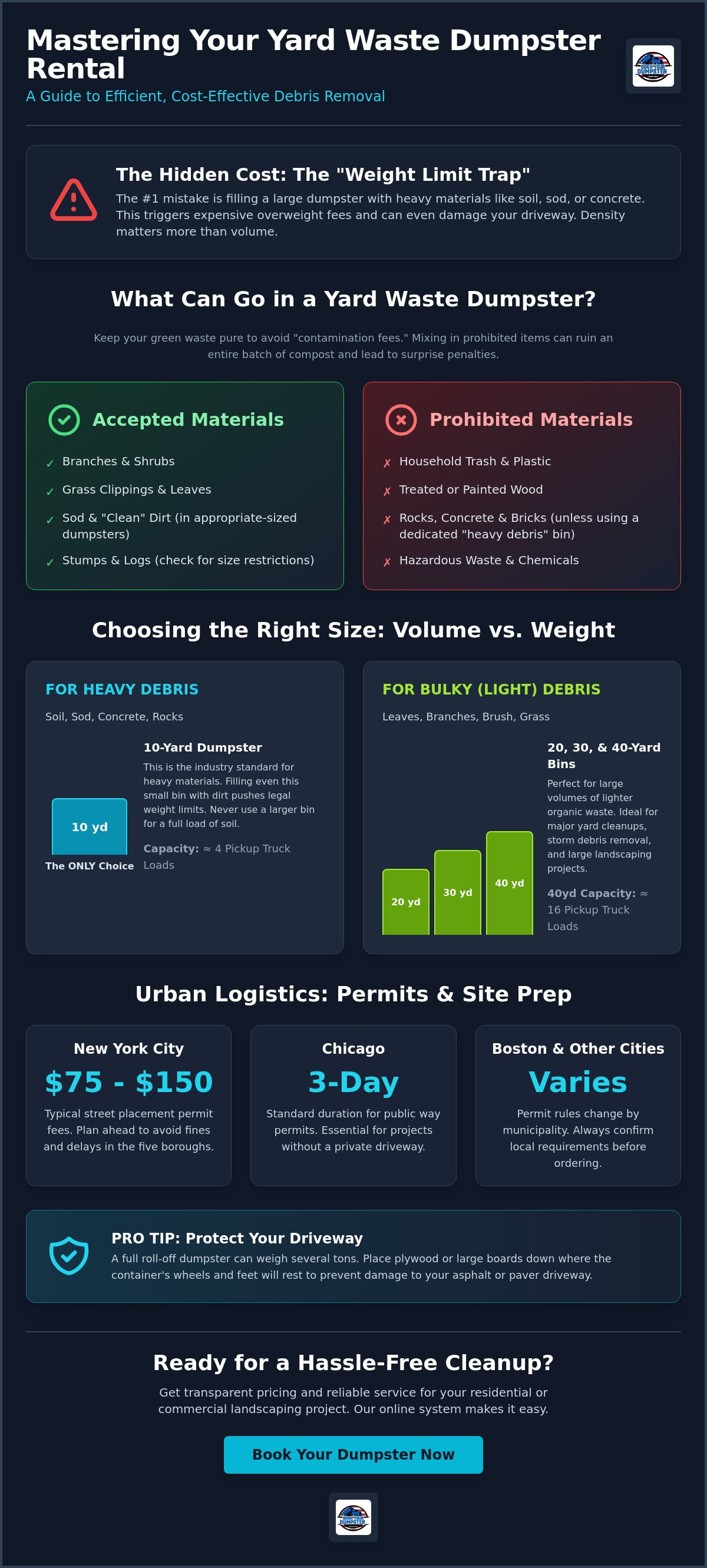
Efficiency depends on understanding What is Green Waste? and keeping it separate from general refuse. Most cities require you to isolate organic matter because it's processed differently than household garbage. Specialized facilities turn this material into high-quality compost. Don't mix plastic, treated wood, or household trash into your yard waste dumpster. If you do, you'll likely face "contamination" fees. These penalties exist because a single piece of non-organic debris can ruin an entire batch of compost. Keep your bin clean to maintain transparent pricing and avoid logistical delays. It's a simple rule that ensures a smooth, cost-effective disposal process.
Selecting the Right Size for Landscaping Debris
Selecting the correct container size is a balance between volume and weight. While it's tempting to rent the largest bin possible to ensure everything fits in one haul, doing so with heavy materials like soil or sod is a mistake. This is known as the "Weight Limit Trap." A 40-yard container filled with wet dirt will exceed the legal hauling capacity of the delivery truck and likely damage your driveway. For your yard waste dumpster rental, you must match the container's structural limits to the physical density of your organic matter. It's a logistical decision that directly impacts your bottom line.
To visualize capacity, consider that a standard pickup truck bed holds roughly 2.5 cubic yards of loose debris. A 10-yard dumpster replaces about four pickup truck loads, while a 40-yard dumpster replaces sixteen. If you're clearing a few flower beds, the smaller option is sufficient. For major land clearing, you'll need the volume of a larger bin. Always consult the EPA Home Composting Guide to see if smaller amounts of waste can be managed on-site before ordering a container. This helps reduce your total disposal volume and keeps your project efficient.
The 10-Yard Dumpster: Best for Heavy Organic Loads
This size is the industry standard for small renovations and heavy debris removal. Use a 10 yard dumpster rental when disposing of "clean dirt," sod, rocks, or concrete from old patio removals. These materials are incredibly dense. Filling a 10-yard bin to the top rim with soil already pushes the weight limits of most residential roll-off trucks. Don't overfill these containers. If the debris sits above the side walls, the driver cannot safely tarp the load for transport. This leads to safety violations and extra fees that are easily avoided with proper loading.
20 To 40-Yard Bins: Best for Bulky Green Waste
Larger bins are designed for high-volume, low-density items. If your project involves removing overgrown shrubs, downed tree branches, or massive amounts of brush, the 20, 30, or 40-yard options provide the necessary space. Commercial land clearing or multi-property cleanups typically require these larger capacities to avoid the downtime of multiple trips. If your project includes non-organic materials, see our guide on Construction Debris Removal to ensure you're following the right disposal protocol. For a seamless experience, schedule your delivery online to secure the specific size your project demands and keep your timeline on track.
Accepted Materials: What Can Go in a Landscaping Dumpster?
Your yard waste dumpster rental is a precision tool for organic recycling. Using it correctly keeps your costs low and ensures compliance with local composting programs. Most facilities accept a standard list of green debris, including grass clippings, leaves, flowers, and shrubs. Small branches, typically under four inches in diameter, are also standard. When you stick to these materials, your waste is easily converted into high-quality mulch or topsoil. This process is efficient and environmentally responsible.
Prohibited items are non-negotiable. Never place treated lumber, railroad ties, or pressure-treated decking into a yard waste bin. These materials contain chemicals that poison the soil. Similarly, keep out all pesticides, herbicides, and automotive fluids. Tackling Urban Composting Challenges requires strict adherence to these rules to ensure municipal programs remain viable. If you're unsure about a specific item, check with BookYourDumpster.com before tossing it in. It's better to ask than to pay a penalty later.
Organic Debris vs. Landscaping Hardware
Yard waste specifically excludes hardscaping materials like bricks, pavers, and stones. While these come from your yard, they require different disposal methods. Clean green waste consists solely of biodegradable organic matter intended for nutrient recycling. If your soil is heavily mixed with gravel or large rocks, it may no longer qualify as "clean" green waste. Separate these materials at the source to maintain your project's efficiency and keep your disposal costs predictable.
The Problem with Bagged Waste
Stop using plastic bags for your yard waste. Most roll-off services require loose material because plastic does not break down in composting windrows. Plastic bags also trap air, which increases the volume of your debris and reduces the effective capacity of your dumpster. You end up paying for empty space. Some jurisdictions allow biodegradable paper bags, but loose loading is always the preferred method for maximum efficiency. Dump your debris directly into the bin to ensure the fastest possible processing at the facility.
Logistics and Prep: Urban Challenges in NY, NJ, and SF
Urban environments demand precise planning. When you arrange a yard waste dumpster rental in high-density areas like New York, Chicago, or Boston, you're dealing with limited space and strict municipal oversight. In NYC, permit fees for placing a container on a public street typically range from $75 to $150. Chicago requires a "Public Way" permit, costing between $50 and $100 for 3 to 30 days. These costs aren't optional. Failure to secure the right paperwork before delivery results in immediate fines and the potential removal of your bin. It's a logistical hurdle that requires your attention before the truck arrives.
If you're operating in San Francisco, prepare for a steeper fee structure. As of the August 1, 2025 schedule, a dumpster permit costs $90 for the first day and $180 for the second and third days. These cities also enforce mandatory composting ordinances. In Massachusetts, yard waste is collected curbside from April to December, but larger projects require professional containers to stay compliant with state-wide organic waste bans. Review our Local Dumpster Rental Guides to understand the specific regulations in your borough or neighborhood. This knowledge prevents delays and keeps your cleanup on schedule.
Permits and Street Placement
Determine your placement strategy early. If you can fit a 10 or 20-yard bin entirely on your private driveway, you generally avoid permit fees. However, if any part of the container touches a sidewalk or public street, you need a "Right of Way" or "Street Opening" permit. In Boston, these permits range from $30 to $50 per week. Some providers charge an additional administrative fee of $25 to $75 to handle the application for you. Choose off-street placement whenever possible to eliminate these logistical hurdles and protect your project budget. It's the most efficient way to manage a city-based project.
Site Preparation Checklist
Don't let delivery day become a disaster. Follow this checklist to ensure a smooth drop-off:
- Clear all vehicles from the driveway and street approach. The driver needs at least 60 feet of straight-line space to maneuver the roll-off truck safely.
- Check for overhead obstructions. Ensure there are no low-hanging power lines, tree branches, or building eaves that could interfere with the truck's hydraulic lift.
- Protect your surfaces. Place 4x8 sheets of plywood as "pads" where the dumpster's wheels and rails will rest. This distributes the weight and prevents the heavy bin from cracking your asphalt or pavers.
Once your site is ready, book your dumpster online to lock in your delivery window and avoid urban scheduling delays. Proper preparation ensures your yard waste is removed without damaging your property or incurring city fines.
Book Your Dumpster: Direct Solutions for Yard Cleanup
Managing a major cleanup is a labor-intensive project. You don't need the added stress of opaque pricing or unreliable delivery windows. Book Your Dumpster USA removes these friction points with a streamlined digital platform. We provide a direct yard waste dumpster rental solution that prioritizes your project timeline. Whether you're navigating the seasonal leaf-fall peaks in New York and New Jersey or coordinating a massive spring clearing in Illinois, our system ensures your container arrives exactly when you need it. We maintain control over the logistics so you can focus on the physical work. Our commitment to punctuality acts as a verbal handshake, distinguishing us from the often-vague communication found elsewhere in the industry.
Reliability is our primary value proposition. We understand that a late delivery doesn't just delay your project; it wastes your crew's time and increases your labor costs. Our pricing model is grounded in utility and transparency. You see the costs upfront without hidden weight penalties or surprise surcharges. This no-nonsense expert approach builds immediate trust. We've modernized a traditional industrial sector through digital convenience and straightforward honesty. It's a high-functioning tool designed to move you from a state of clutter to a state of resolution with minimal cognitive load.
Commercial Solutions for Landscaping Pros
Professional landscapers and contractors require more than just a bin. You need a partner that understands high-volume demands and multi-site coordination. We offer streamlined invoicing and dedicated support for professional accounts managing properties across Queens, San Francisco, and Massachusetts. Property managers often face recurring debris challenges that require a dependable, long-term partner. We solve this through flexible scheduling and logistical reliability that keeps your job sites compliant with local green waste laws. Our 10, 20, 30, and 40-yard dumpsters are ready for deployment to any commercial project, ensuring your crew stays productive and your projects stay on budget.
Get Started with Your Rental Today
Ready to clear your property? Our digital reservation system is built for speed and clarity. Follow these steps to secure your container:
- Select your container size based on your specific debris type. Choose the 10-yard for heavy sod or the 30 to 40-yard options for bulky branches.
- Input your project location to confirm local regulations and transparent pricing for your specific zone.
- Schedule your delivery and pickup dates to align with your project timeline.
Before the truck arrives, verify your final checklist. Clear the delivery path of all vehicles. Lay down plywood pads to protect your driveway surfaces. Check for low-hanging branches or power lines that might obstruct the hydraulic lift. Taking these steps ensures a seamless delivery and allows you to start your cleanup immediately. Don't let organic waste pile up and create a safety hazard or a municipal eyesore. Take action now to restore order to your property.
Rent your yard waste dumpster now at Book Your Dumpster USA.
Streamline Your Outdoor Cleanup Today
Efficient organic disposal requires more than just a large container. It demands a strategic match between your debris weight and the right bin size. By selecting specialized 10-yard bins for heavy materials like sod and soil, you avoid the common weight traps that stall projects and inflate costs. You've also seen how managing urban permits in New York or Boston keeps your project compliant and free from municipal fines. Proper site preparation and a clear understanding of accepted materials ensure a smooth haul without logistical friction.
Book Your Dumpster USA provides the control you need to finish your project on time. We offer direct service across NY, NJ, IL, MA, and SF, ensuring you have a local partner who understands your city's specific requirements. Our digital platform allows you to complete your online booking in under 5 minutes, moving you quickly from planning to execution. Don't let debris pile up or risk surprise fees from improper disposal. Take the guesswork out of your yard waste dumpster rental and rely on our transparent pricing and punctual delivery.
Book your roll-off dumpster today for a stress-free yard cleanup. You have the expert knowledge; now get the right tools to clear your property with confidence.
Frequently Asked Questions
Can I put dirt and rocks in a yard waste dumpster?
Yes, but you must use a 10-yard dumpster to manage the extreme density of these materials. Dirt, sod, and rocks are significantly heavier than branches or leaves. Filling a larger 30 or 40-yard bin with soil will exceed the legal weight limit and the truck's lifting capacity. Always specify if you're hauling "clean fill" during the booking process to ensure your load is routed to the correct recycling facility.
How much does it cost to rent a yard waste dumpster in 2026?
Pricing depends on your specific location, the container size you select, and the type of organic debris you're hauling. Local disposal fees and fuel surcharges fluctuate, making standardized pricing difficult. For an accurate, transparent rate, use our online booking system to enter your zip code. This provides an immediate quote that includes delivery, pickup, and the specified weight allowance for your project without hidden penalties.
Do I need to be home for the dumpster delivery and pickup?
You don't need to be present for the delivery or the final haul. Simply ensure the placement area is completely clear of vehicles, equipment, and low-hanging obstructions. Provide specific placement instructions in the "delivery notes" section when you book your container. Our drivers use these digital coordinates to drop the bin exactly where you need it, allowing your project to continue without interruption or required supervision.
What happens if I overfill my dumpster or exceed the weight limit?
Overfilling results in safety violations and additional fees. Drivers cannot legally transport a container if the debris sits above the top rim, as the load cannot be safely secured with a tarp. If the bin exceeds the specified weight limit, you'll face overage charges based on the extra tonnage. If a load is too heavy to lift, you must remove the excess material before we can attempt a second pickup.
Can I put a wooden fence or deck boards in an organic waste bin?
No, treated wood and fencing are considered contaminants in a yard waste dumpster rental. These items contain chemicals, stains, or pressure treatments that prevent them from being processed at composting facilities. Mixing construction materials with green waste reclassifies the entire load, leading to much higher disposal rates. Use a standard roll-off for projects involving hardware, treated lumber, or old decking to maintain compliance.
Are there specific items that are strictly prohibited in yard waste rentals?
How long is the typical rental period for a landscaping project?
Standard rental periods usually last between 7 and 14 days, providing ample time for major property overhauls. If you finish your project ahead of schedule, use our digital platform to request an early pickup. If you encounter weather delays or the project expands, contact us before your scheduled pickup date to arrange an extension. This flexibility ensures you have the container for exactly as long as the job requires.
Is a permit required if I place the dumpster in my own driveway?
Most cities don't require a permit if the container sits entirely on private property. However, if any part of the bin encroaches on a public sidewalk or street, you must secure the appropriate municipal paperwork. Always verify your property lines before delivery. If you're unsure about local right-of-way rules in high-density areas, consult our city-specific guides to avoid unexpected fines from local building departments.


