

Why does a 20-yard bin filled with drywall cost significantly less than the same container filled with concrete? Most contractors realize too late that construction dumpster rental cost is driven by debris density rather than just the physical size of the box. You've likely felt the frustration of an unexpected overage fee or the stress of a permit violation on a public right-of-way. It's a logistical headache that stalls your progress and eats your profit margins.
Stop guessing at your disposal budget and take control of your project logistics. This guide provides a no-nonsense breakdown of how to calculate weight limits accurately and avoid hidden fees in 2026. We'll examine the impact of new regulations, such as the NYC containerization rules taking effect on September 8, 2026. You'll learn how to navigate permit costs that can reach $150 and how to choose between 10, 20, 30, or 40-yard options based on your specific material. Follow these steps to ensure punctual delivery and predictable, flat-rate pricing for every haul.
Key Takeaways
- Learn how debris density and local landfill regulations in cities like New York and San Francisco directly impact your construction dumpster rental cost.
- Match your debris type to the correct size, choosing 10-yard bins for heavy materials like dirt or shingles and 20 to 40-yard containers for structural renovations.
- Calculate weight limits accurately to avoid unpredictable overage fees and stay ahead of strict municipal permit enforcement.
- Identify prohibited items like tires and hazardous waste to prevent immediate fines and landfill rejection.
- Streamline your project management by using professional-grade digital tools for 24/7 scheduling and punctual delivery.
Understanding Construction Dumpster Rental Costs in 2026
Construction dumpster rental is a specialized logistics service designed for Construction and Demolition (C&D) waste. This isn't a standard trash pickup. It involves the transport and disposal of heavy, dense materials like concrete, steel, and lumber. When you evaluate your construction dumpster rental cost, you're paying for a high-capacity system that manages materials municipal haulers won't touch. Understanding waste management protocols is essential for any project manager because 2026 regulations now mandate stricter sorting and recycling for C&D debris.
Pricing in 2026 reflects new economic realities. Landfill tip fees have climbed in major metros like New York and Chicago, and regional fuel surcharges are now a standard part of most quotes. These factors create a significant price gap between residential cleanout rates and construction debris rates. Residential junk is light and airy; construction waste is heavy and requires more fuel and higher disposal fees to move. Don't expect residential pricing for a renovation project. The logistics are entirely different.
Flat-Rate vs. Variable Pricing Models
Most providers offer two primary ways to pay. A flat-rate quote includes delivery, pickup, and a pre-set weight limit in one upfront price. This is the gold standard for budget integrity. Variable pricing, on the other hand, starts with a lower base fee but bills you per ton after the dumpster is weighed at the landfill. While variable pricing might look attractive on a quote sheet, it's a gamble for heavy projects. If you're hauling masonry or roofing, choose a flat-rate model to secure your profit margins. Review your options at Book Your Dumpster USA to find a predictable rate that fits your specific debris type.
Why Construction Debris Costs More Than Household Junk
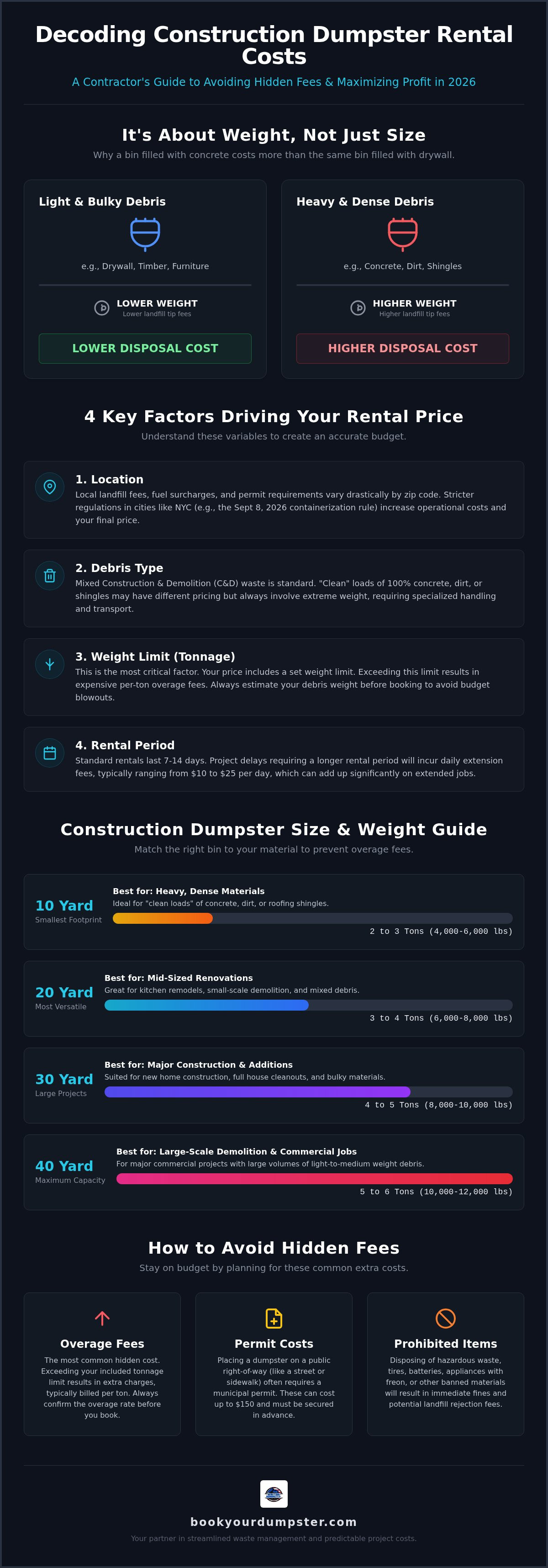
Weight is the primary driver of any construction dumpster rental cost. A 10-yard bin filled with concrete weighs far more than a 40-yard bin filled with old furniture. Landfills charge by the ton, so density equals dollars. Beyond weight, construction materials require specialized disposal facilities. These sites must sort wood, metal, and masonry to meet environmental compliance standards. These facilities charge higher tip fees than standard municipal dumps. Logistics also demand more from the hauler. Moving several tons of shingles requires specialized trucks and increases wear on equipment. You aren't just renting a box; you're hiring a heavy-duty disposal infrastructure.
The 4 Main Factors That Determine Your Rental Price
Your construction dumpster rental cost isn't a random number. It's a calculation based on four specific variables. If you ignore these, you'll end up with a bill that exceeds your initial quote. Location is the first hurdle. Landfill regulations in cities like New York or San Francisco are notoriously strict. For instance, New York City's containerization rules, fully enforced as of September 8, 2026, add layers of compliance that haulers must price into their services. Local tip fees and permit requirements vary by zip code, making your project's address a major price driver.
Debris type also dictates the final price. Mixed C&D waste is standard, but "clean" loads of concrete, dirt, or shingles often have unique pricing structures. These materials are frequently recyclable, yet their extreme weight requires specialized hauling equipment. Following EPA guidelines on construction debris helps you understand which materials can be diverted from landfills, which directly impacts disposal logistics and your final invoice.
The Density Factor: Weight Limits Explained
The tonnage limit is the most critical cost factor in any rental agreement. It represents the maximum weight included in your flat-rate price before overage fees apply. This is where many contractors fall into the "density trap." A 10-yard bin filled with concrete can easily exceed 10 tons, costing significantly more than a 40-yard bin filled with light timber or drywall. Always estimate your weight before you book.
Typical weight limits for construction bins include:
- 10 Yard: 2 to 3 tons (often capped lower for heavy debris like dirt).
- 20 Yard: 3 to 4 tons.
- 30 Yard: 4 to 5 tons.
- 40 Yard: 5 to 6 tons.
Rental Duration and Extension Fees
Standard rental periods typically range from 7 to 14 days. If your project timeline shifts, you'll face pro-rated extension fees. These daily charges generally run between $10 and $25 per day depending on the market. It's a small daily cost, but it adds up quickly over a month. Punctuality saves money. Schedule your pickup as soon as the bin is full to avoid "street blocking" fines. In Massachusetts, unauthorized bins on public ways can trigger fines of up to $200 per day. If you need a reliable timeline, check available delivery dates to keep your site clear and compliant. Efficient scheduling prevents the logistical bottlenecks that lead to these extra expenses.
Construction Dumpster Size Comparison & Estimated Pricing
Selecting the correct container volume is a tactical decision that balances debris weight against physical space. A miscalculation here directly inflates your construction dumpster rental cost through either wasted capacity or multiple haul fees. You must match the container to the specific phase of your build to maintain budget integrity.
- 10 Yard Dumpster: Use this for your heaviest materials. It's the industry's "Heavy Hitter" for concrete, dirt, and shingles. The low-profile walls allow for easier loading of dense materials that would otherwise exceed weight limits in larger containers.
- 20 Yard Dumpster: This is the go-to choice for kitchen and bathroom renovations. It offers enough room for cabinetry, flooring, and wall studs without a massive footprint on your job site.
- 30 Yard Dumpster: Reserve this size for whole-home exterior projects. It's ideal for siding replacements and large-scale window installations where volume is the primary concern.
- 40 Yard Dumpster: Best for commercial demolition and new builds. It handles the massive volume generated by structural tear-downs or large-scale framing projects.
Matching Project Scale to Container Size
Professional contractors often view the 10 Yard Dumpster as a specialized tool for heavy debris management. It prevents the density issues that plague larger bins. When you're calculating roofing debris, remember that a 20-yard bin typically accommodates 20 to 30 squares of shingles. A 30-yard bin can hold up to 50 squares. Avoid the temptation to over-fill. If debris protrudes above the rim, safety regulations prevent the driver from hauling the load. This leads to dry run fees and project delays that eat your profit.
Regional Pricing Nuances: NY, IL, and MA
Market location is a non-negotiable price factor. Renting in New York or San Francisco carries a heavy premium due to urban density and complex state and local permit costs. In New York City, specifically, DOT permits can range from $75 to $150 depending on the placement. Meanwhile, states like Massachusetts impose local disposal taxes and strict sorting requirements that affect the total invoice. Refer to our Dumpster Rental Prices in New York, Illinois, and Massachusetts guide for a localized cost analysis. These regional factors ensure your budget remains realistic for your specific zip code.
How to Avoid Hidden Fees and Permit Costs
Your initial quote is the baseline for your project budget, but it's not always the final invoice. Unexpected charges often stem from a lack of site preparation or a misunderstanding of tonnage limits. To maintain a predictable construction dumpster rental cost, you must account for the logistical variables that haulers face during delivery and disposal. Transparency starts with knowing exactly what you're putting in the bin and where that bin will sit.
Overage charges are the most frequent addition to a final bill. If your debris exceeds the pre-negotiated tonnage limit, you'll be billed for the excess weight at the landfill's current rate. These fees typically range from $50 to $100 per additional ton, though some high-density markets see rates as high as $200. Prohibited items also trigger immediate fines. Tires, batteries, and hazardous materials like asbestos or wet paint require specialized handling. If these items are found in your load, the landfill will reject the entire container, forcing a costly return trip and manual sorting fees.
Trip fees, or "dry run" charges, occur when a driver cannot complete a delivery or pickup. If a parked car blocks the drop-off point in Queens or a low-hanging wire prevents the hoist from operating in Chicago, you'll pay for the driver's time and fuel. Clear the path before the truck arrives. Move vehicles, unlock gates, and ensure the surface is level and stable to avoid these avoidable expenses.
Navigating City Permits and Local Regulations
If you plan to place your dumpster on a public street or sidewalk, you'll likely need a "Right of Way" permit. In cities like San Francisco or New York, these permits are mandatory and strictly enforced. While some rental companies include permit filing in their service, the legal responsibility often falls on the contractor or homeowner. Always verify who is pulling the paperwork. In high-density areas, failing to display a valid permit can lead to daily fines that far exceed the construction dumpster rental cost itself.
The 'Clean Load' Discount
You can often lower your disposal expenses by opting for a "clean load." This involves filling the dumpster with a single type of recyclable material, such as 100% concrete, brick, or scrap metal. Landfills and recycling centers prioritize these loads because they don't require manual sorting. This is particularly beneficial for LEED-certified projects that require detailed waste diversion reporting. For more complex sites, professional Construction Debris Removal strategies can help you maximize these recycling rates. Always ask your provider if they offer discounted rates for source-separated materials before you start loading.
Eliminate the guesswork and secure a transparent quote for your next project. Book your construction dumpster online to see clear pricing and available sizes in your area immediately.
Rent Your Construction Dumpster with Book Your Dumpster USA
Managing a job site is complex. Your waste removal shouldn't be. Book Your Dumpster USA acts as a high-functioning tool for your project, removing the logistical friction that often leads to budget overruns. Determining your construction dumpster rental cost is straightforward when you work with a partner who prioritizes pricing integrity and punctuality. We specialize in the heavy, messy debris of construction and renovation, providing the reliable infrastructure you need to keep your site moving.
Our inventory includes the full range of roll-off containers to meet any project scale. We offer 10, 20, 30, and 40-yard dumpsters, ensuring you have the exact capacity required for everything from a masonry tear-out to a commercial new build. We serve major metros including New York, New Jersey, Illinois, Massachusetts, and San Francisco. Our local knowledge of these markets means we understand the specific landfill trends and municipal regulations that impact your bottom line. You get a transparent, flat-rate price with no hidden surprises or vague fees added after the haul.
Streamlined Online Booking for Busy Professionals
Time is your most valuable asset on a construction site. Don't waste it on phone tag or waiting for manual quotes. You can secure a bin in under 5 minutes through bookyourdumpster.com. Our digital-first system provides real-time availability, which is critical for tight construction schedules where a delayed pickup can stall an entire crew. We've modernized a traditional industrial sector through digital convenience and straightforward honesty. Every interaction reflects our no-nonsense brand voice. We act as a dependable partner who understands your urgency and respects your timeline.
Ready to Clear the Site?
Secure your bin now to maintain your project's momentum. Choose your size and get an instant quote tailored to your specific location and debris type. Our construction dumpster rental cost structure is designed for clarity, allowing you to budget with confidence. Check your local service area for 2026 rates and experience the professional-grade reliability that contractors across the country trust. Schedule your delivery today. Clear the site. Stay on schedule. Let us handle the logistics while you focus on the build.
Secure Your Project Profitability Today
Managing a construction site requires precision. You've seen how debris density and regional regulations in cities like New York and San Francisco dictate your final invoice. Don't let a simple oversight in weight calculation or a missing street permit stall your progress. By selecting the right bin size and scheduling pickups promptly, you maintain control over your construction dumpster rental cost and keep your site compliant. Efficiency is a choice that starts with your disposal strategy.
Rely on a partner that values your time and budget integrity. We provide 10, 20, 30, and 40-yard bins with transparent, upfront pricing across NY, NJ, IL, MA, and SF. Our streamlined system removes the guesswork, allowing you to focus on the build instead of the waste. Book Your Construction Dumpster Online Today to lock in your 2026 rates. Your next project deserves a reliable, no-nonsense disposal solution. We're ready when you are. Let's get to work.
Frequently Asked Questions
How much does a 20-yard construction dumpster cost on average?
The national average cost for a 20-yard dumpster is approximately $475, with typical prices ranging between $350 and $650. Your final construction dumpster rental cost depends heavily on your region. For example, rentals in the Midwest average $418, while Western states see higher averages around $552. Always request an all-in price to cover delivery, disposal, and taxes.
What is a tonnage limit, and how does it affect my final price?
A tonnage limit is the specific weight capacity included in your flat-rate quote. If your debris exceeds this limit, you will face overage fees ranging from $50 to $100 per extra ton. Some high-density markets charge up to $200 per ton. Calculate the weight of dense materials like masonry or shingles before booking to avoid these expensive adjustments on your final invoice.
Do I need a permit to put a dumpster on the street in New York City?
Yes, you must obtain a DOT permit for any dumpster placed on a public street or right-of-way in New York City. These permits generally cost between $75 and $150. Be aware that full enforcement of new containerization rules begins on September 8, 2026. Fines for violations start at $50 for the first offense, so ensure your permit is visible and valid.
Can I throw roofing shingles and concrete in the same dumpster?
You can mix these materials, but it is rarely the most cost-effective choice. Mixing heavy concrete with shingles creates a high-density load that quickly exceeds standard tonnage limits. Ask about "clean load" rates for separated materials instead. Separating concrete often allows for lower recycling rates and prevents the massive overage charges associated with mixed construction dumpster rental cost structures.
What are the most common hidden fees in dumpster rentals?
The most frequent extra charges are overage fees, trip fees, and rental extension fees. A trip fee occurs if a driver cannot drop off or pick up the bin due to blocked access, costing you for the "dry run." Extension fees typically run $10 to $25 per additional day. Avoid these by clearing the delivery path and scheduling your pickup as soon as the bin is full.
How long can I keep a construction dumpster on my job site?
Standard rental periods in the industry typically last between 7 and 14 days. If your project timeline shifts, you can usually extend the rental for a daily fee. Always confirm the duration upfront to avoid automatic extension charges. Punctual scheduling ensures your site remains clear and helps you stay within your original disposal budget without incurring daily penalties.
Is it cheaper to rent a dumpster or hire a junk removal service for construction debris?
Renting a dumpster is almost always more cost-effective for large-scale construction and demolition projects. Junk removal services charge for labor and volume, which becomes expensive for heavy debris. A roll-off rental allows your crew to load waste at their own pace. Use a dumpster for structural debris and save junk removal for small, light-volume residential cleanouts.
What happens if I overfill my dumpster past the top rail?
Drivers cannot legally or safely haul a dumpster that is filled past the top rail. If your load is overflowing, the driver will leave the bin at your site and charge a trip fee. You will have to remove the excess debris before they return for a second pickup attempt. Keep your materials level with the rim to ensure a successful, single-trip haul.


