
A successful community event is defined by what remains after the volunteers go home. If you're left with overflowing bags and no way to move them, the cleanup wasn't a total success. Managing waste disposal for public park and recreation cleanups requires more than just good intentions; it requires a precise logistical plan. You already understand the pressure of coordinating large groups while respecting local regulations and park boundaries. It's frustrating to see a well-meaning project stall because of logistical bottlenecks or unexpected debris volume.
Don't let a lack of preparation lead to illegal dumping fines or blocked pedestrian paths. This guide helps you master the logistics of park waste management, from estimating debris volume to scheduling drop-offs on public property. We'll show you how to choose the right container size based on your specific project needs. You'll learn how to secure the necessary permits and coordinate equipment delivery without disrupting visitors. Follow these steps to ensure a cost-effective, seamless cleanup that leaves the land better than you found it.
Key Takeaways
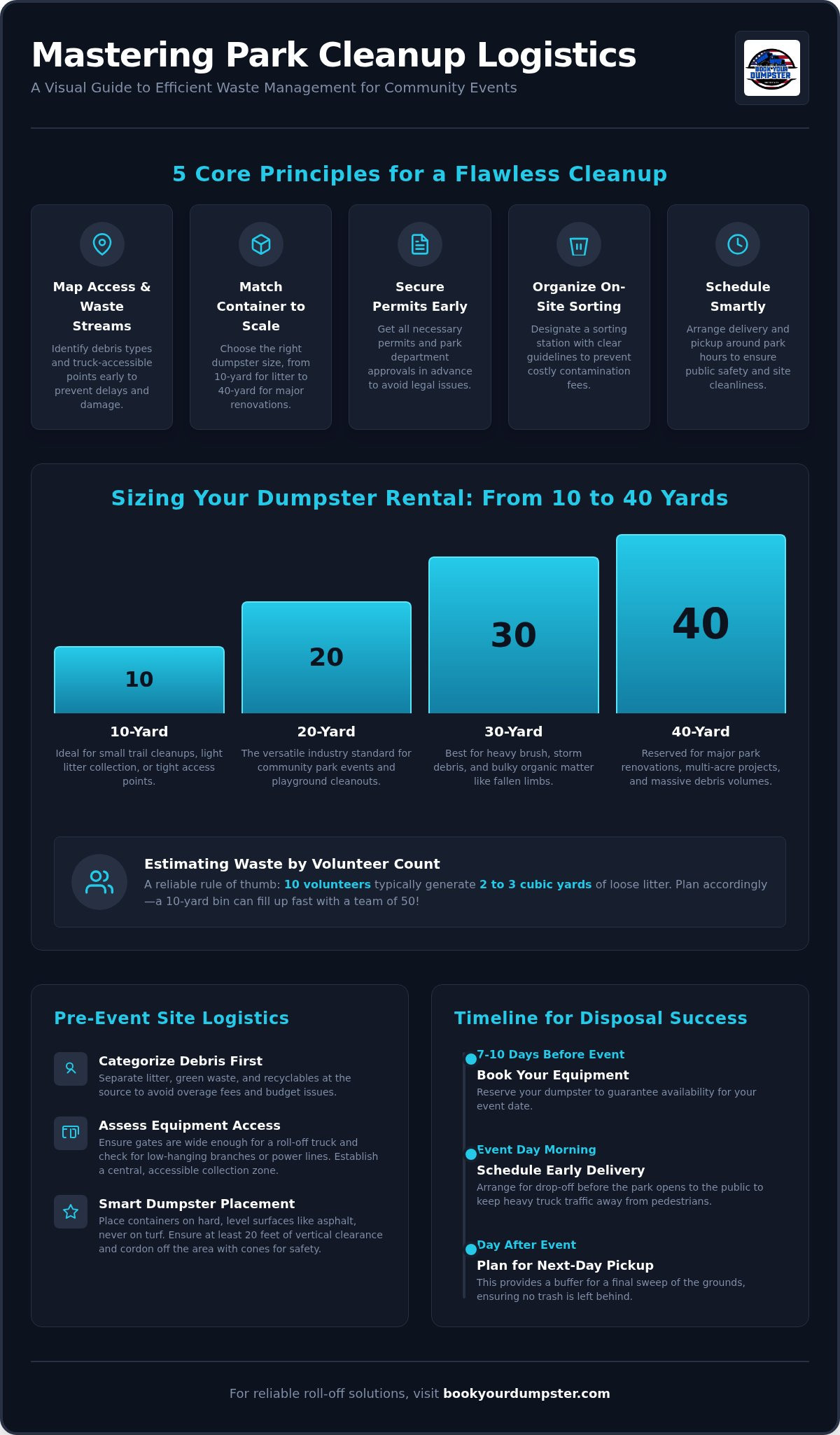
- Map out park access points and identify waste streams early to prevent equipment delays and path damage.
- Match your container size to the project scale, using 10-yard bins for light litter or 40-yard roll-offs for major renovations.
- Streamline waste disposal for public park and recreation cleanups by securing required permits and park department approvals in advance.
- Designate a sorting station with volunteer gatekeepers to manage debris flow and avoid costly contamination fees.
- Schedule dumpster delivery and pickup around park operating hours to maintain visitor safety and site cleanliness.
Planning Waste Logistics for Large-Scale Park Cleanups
Effective waste disposal for public park and recreation cleanups starts long before the first volunteer arrives. You must categorize your debris immediately to avoid logistical bottlenecks. Litter and municipal solid waste require different handling than heavy green waste like fallen limbs or construction debris from trail repairs. Applying standard waste management principles allows you to separate materials at the source. This prevents landfill overage fees and ensures your project stays within budget. Identify whether you are dealing with organic matter, recyclables, or general trash before you select your equipment.
Assess the park layout with a critical eye for heavy equipment access. A standard roll-off truck needs significant room to maneuver and cannot navigate tight, winding walking paths. Identify entrance gates that are wide enough for a large vehicle and check for low-hanging branches or power lines. Establish a centralized collection zone that is accessible to both your volunteers and the delivery driver. This reduces the distance volunteers must carry heavy bags, which prevents fatigue and keeps the site organized. If the park is massive, consider multiple smaller drop zones rather than one distant location.
Determine the exact duration of your cleanup to avoid daily extension fees. Most park events are single-day affairs, but larger restoration projects may span a full weekend. Your schedule must account for the time it takes to fill the containers and the time needed for a final site inspection. Clear communication regarding your timeline ensures that your waste disposal for public park and recreation cleanups remains invisible to the general public. You want the trash gone before the Monday morning rush of park visitors.
Mapping Your Disposal Zones
Place your containers on hard, level surfaces like asphalt or concrete parking lots. Never drop a heavy 20 or 30-yard dumpster directly on park turf. The weight of the steel and the collected debris will compact the soil and kill the grass, leaving permanent scars on the landscape. Verify that your chosen spot has at least 20 feet of vertical clearance. Overhanging trees or park structures can block the hoist mechanism during delivery or pickup. Use traffic cones to cordone off the area and keep visitor vehicles away from the drop zone.
Timeline for Disposal Success
Execution requires strict timing. Book your equipment at Book Your Dumpster USA at least 7 to 10 days before the event to guarantee availability. Request an early morning delivery window, ideally before the park opens to the general public. This keeps heavy truck traffic away from pedestrians and children. Plan for a next-day pickup rather than a same-day haul. This gives your team a buffer to perform a final sweep of the grounds and ensure no stray bags are left behind after the main event concludes.
Sizing Your Dumpster Rental: From 10 to 40 Yards
Selecting the right container size prevents overflowing bins and wasted budget. For waste disposal for public park and recreation cleanups, your choice depends on the specific debris type and the scope of the area. Don't guess. It's better to have a slightly larger bin than to leave piles of trash on the curb because you ran out of space. Matching the container to the job ensures you don't face logistical delays on the day of the event.
- 10-Yard Dumpster: Use this as your entry-level option for small trail cleanups or light litter collection. It's compact enough for tight access points and won't overwhelm a small parking lot.
- 20-Yard Dumpster: This is the industry standard for community park events. It handles playground cleanouts and large-scale litter collection with ease. It's the most versatile choice for general municipal waste.
- 30-Yard Dumpster: Choose this for heavy brush, fallen limbs, and storm debris. The higher walls accommodate bulky organic matter that doesn't pack down tightly.
- 40-Yard Dumpster: Reserve this for major park renovations or multi-acre cleanup projects. It's the only option for massive volumes of debris, such as clearing out overgrown wooded areas or replacing long stretches of fencing.
Estimating Waste Volume by Volunteer Count
Base your estimate on your team size. A reliable rule of thumb is that 10 volunteers usually generate 2 to 3 cubic yards of loose litter during a standard shift. If you have 50 volunteers, a 10-yard bin will reach capacity quickly. For 100 volunteers, a 20-yard dumpster is your baseline. Always account for bulky items. Discarded tires, broken park benches, or rusted fencing consume space quickly and don't compress. If you're focusing on a smaller path, check out this 10 Yard Dumpster Rental: The Complete Buying Guide for 2026 for specific dimensions and capacity tips.
Weight Limits for Organic vs. Synthetic Debris
Weight is as critical as volume. Organic green waste like branches and logs is significantly heavier than plastic litter or aluminum cans. A full load of wet logs can easily exceed standard weight limits. This can lead to overage fees, which in 2026 typically range from $50 to $150 per additional ton. Avoid overfilling to the rim. Doing so makes the load unsafe for transport and can lead to the driver rejecting the haul. Consult with your provider about specific weight allowances for your project. If you're ready to secure your equipment, you can view available sizes and book online to lock in your schedule for your next waste disposal for public park and recreation cleanups.
Navigating Permits and Public Land Regulations in 2026
Securing the right permissions is the most critical step in managing waste disposal for public park and recreation cleanups. You cannot simply drop a container on municipal property without explicit approval. Start by contacting your local Department of Parks and Recreation to obtain placement approval. They will designate specific areas where the ground can support the weight of a 20 or 30-yard dumpster. This prevents you from accidentally blocking emergency access routes or damaging sensitive underground utilities. If your cleanup is in New Jersey, keep in mind that the deadline for Green Acres development applications is February 27, 2026. Align your cleanup logistics with these state timelines if you're part of a larger grant-funded project.
You may also need a Right-of-Way (ROW) permit if the park's interior paths are too narrow for delivery trucks. This permit allows you to place the container on a public street or sidewalk adjacent to the park. ROW permits often require a fee and have strict expiration dates, so time your application carefully. Additionally, most municipalities require a Certificate of Insurance (COI) before they allow heavy equipment on their land. This document must usually name the city or county as an additionally insured party. It protects your organization from liability if the equipment causes property damage or a site accident occurs.
City-Specific Considerations (NY, NJ, IL, MA)
Regulations vary significantly by metro area. In Queens, NY, the Department of Transportation enforces strict rules about container placement near park entrances to maintain traffic sightlines. Chicago, IL, requires all containers on public streets to feature reflective tape and be surrounded by safety cones. If you're operating in San Francisco, you must follow aggressive sorting mandates. Mixing recyclables with landfill waste is a violation of local law and will result in heavy fines. For those in Massachusetts, stay informed on evolving rules; MassDEP is scheduled to hold virtual waste ban training for third-party inspectors on September 8, 2026. This indicates a heightened focus on enforcement that could affect your project.
Protecting Park Infrastructure
Don't leave a permanent mark on the park. Roll-off containers feature steel rollers that can easily gouge asphalt or crack decorative pavers. Always request "street-shield" protection or place heavy wood planking under the rollers before the driver drops the load. Verify the truck's entry route to ensure it avoids low-hanging branches or historic gates that could be damaged by the hoist mechanism. Take high-resolution photos of the site condition before delivery. This documentation is your best defense against unfair damage claims after the event. If you're handling specific materials in Florida, be aware that a new rule regarding Aqueous Film-Forming Foam takes effect July 1, 2026. Always check for hazardous material restrictions before loading your bin to ensure a compliant waste disposal for public park and recreation cleanups.
Best Practices for On-Site Waste Sorting and Disposal
Efficient waste disposal for public park and recreation cleanups requires a disciplined on-site workflow. You cannot allow volunteers to toss unsorted bags into the container. This leads to contamination and potential fines from the landfill. National average landfill tipping fees reached $62.28 per ton in 2024, a 10% increase from the previous year. Costs are only rising. Set up a dedicated "Sorting Station" immediately adjacent to the roll-off dumpster. This acts as a final checkpoint before any material enters the bin. It keeps the process organized and ensures your project stays within budget.
Assign specific volunteers as "Gatekeepers" to manage the waste stream. These individuals are responsible for inspecting every bag that arrives at the station. Use a simple color-coding system to prevent confusion. Clear bags should be reserved for recyclables like plastic bottles and aluminum cans. Use heavy-duty black bags for general landfill waste. This visual cue allows Gatekeepers to verify contents at a glance. It also helps you comply with regulations like the California law requiring a 75% reduction in organic materials disposal by 2025.
Managing Prohibited Items
Identify common park "no-go" items before the cleanup begins. Standard roll-off dumpsters cannot accept hazardous materials. Create a separate holding area for items like:
- Lead-acid batteries and electronics
- Wet paint cans and chemical solvents
- Discarded tires and automotive fluids
These materials require specialized handling according to U.S. EPA guidelines. If you're dealing with heavier materials or renovated park structures, consult The Ultimate Guide to Construction Debris Removal in 2026 for detailed hazardous waste tips. Proper sorting protects you from overage fees, which in 2026 often range from $50 to $150 per additional ton. Keep this area well-marked and away from the primary foot traffic zones.
Volunteer Safety at the Dumpster
Safety is your top priority during active loading. Prohibit volunteers from climbing inside the dumpster to "stomp" or compress the trash. This is a common cause of injury and is strictly forbidden. Provide all volunteers with heavy-duty gloves to protect against sharp debris, rusted metal, or broken glass. Maintain a 10-foot "clear zone" around the container whenever it's being loaded or shifted. This prevents accidents and ensures your team stays productive without compromising their well-being. Once your plan for waste disposal for public park and recreation cleanups is finalized, schedule your roll-off rental online to lock in your delivery date.
Reliable Roll-Off Solutions for Community Cleanups
Execution is the final step in your logistics plan. For waste disposal for public park and recreation cleanups, you need a partner that respects your timeline and your budget. Book Your Dumpster USA offers transparent, upfront pricing specifically designed for non-profits and community groups. We remove the guesswork from your event planning. Our online system allows you to schedule delivery and pickup in minutes. This ensures your logistics are settled long before the first volunteer arrives. You don't have to spend hours on the phone with dispatchers or wait for returned calls.
Leverage our expert advice when choosing between a 10-yard and a 40-yard container. As discussed in previous sections, small trail projects thrive with a 10-yard bin. Major renovations require the volume of a 40-yard roll-off. We provide flexible delivery schedules tailored to park operating hours. This ensures the truck arrives when the park is empty. It maintains safety for all visitors and prevents traffic congestion at park entrances. Our service areas include major hubs like New York, New Jersey, Illinois, Massachusetts, and San Francisco.
Why Professional Disposal Outperforms Curbside Pickup
Relying on municipal curbside pickup often results in trash pile eyesores. These piles attract pests and create safety hazards for days after your event concludes. It's a liability you don't need. A professional roll-off solution provides a one-and-done removal. The park remains pristine the moment the container is hauled away. Professional hauling also guarantees compliance with local environmental laws. This includes strict sorting mandates in San Francisco or the evolving waste ban regulations in Massachusetts. You won't face improper disposal fines when you work with experts. National average landfill tipping fees reached $62.28 per ton in 2024, a 10% increase from the previous year. Professional logistics help you manage these rising costs by ensuring every load is optimized for weight and material type.
Ready to Clean Your Local Park?
Don't let logistical stress stall your community project. Visit BookYourDumpster.com to check availability in your area today. We offer 10, 20, 30, and 40-yard containers to fit any project scale. For more logistics tips, review our Roll Off Dumpster Rental Guide. Select your city and size to secure your cleanup date now. Take control of your site's cleanliness. Ensure your next waste disposal for public park and recreation cleanups is a total success.
Execute Your Park Cleanup with Precision
A pristine park is the result of meticulous planning and professional execution. You now have the logistical framework to handle waste disposal for public park and recreation cleanups with total confidence. Map your access points early to avoid site damage. Choose a container size that matches your volunteer output. Whether you need a compact 10-yard bin for trail maintenance or a massive 40-yard roll-off for storm debris, the right equipment keeps your project on track. Navigating permits in cities like Chicago or Queens is simple when you follow local regulations and prioritize site protection.
Book Your Dumpster USA provides transparent pricing for community projects across NY, NJ, IL, MA, and San Francisco. We offer 10, 20, 30, and 40-yard options to suit any project scale. Our streamlined online system lets you secure your equipment in minutes. Book Your Cleanup Dumpster Online Now to lock in your preferred delivery date today. Take the lead in restoring your local green spaces. Your community is counting on a clean, safe environment. We're ready to help you deliver it.
Frequently Asked Questions
Do I need a permit to put a dumpster in a public park?
Yes, you almost always need a permit for dumpster placement on public land. Contact your local Department of Parks and Recreation to obtain specific placement approval. If the container sits on a street adjacent to the park, you will likely need a Right-of-Way permit from the Department of Transportation to avoid fines.
What size dumpster is best for a community park cleanup?
A 20-yard dumpster is the most common choice for waste disposal for public park and recreation cleanups. It offers enough capacity for general litter and small debris without taking up excessive space in a parking lot. For smaller trail maintenance or light litter collection, a 10-yard bin is more maneuverable and cost-effective.
Can I put tree branches and brush in a standard roll-off dumpster?
You can put organic waste in a roll-off, but you must monitor the total weight. Branches and logs are significantly heavier than plastic litter and don't compress easily. Exceeding weight limits can result in overage fees of $50 to $150 per ton; don't fill the bin with heavy logs to the rim.
What items are prohibited from being put in a park cleanup dumpster?
Never load hazardous materials like lead-acid batteries, wet paint, or tires into a standard dumpster. These items require separate disposal at a designated facility according to EPA guidelines. Effective July 1, 2026, new rules regarding specific foams and chemicals also impact how certain materials are handled in states like Florida.
How much does it cost to rent a dumpster for a one-day park event?
Rental costs vary based on your location and the container size you select. While we don't quote flat rates here, remember to account for potential add-ons like daily extension fees or weight overages. Check your local city website for annual rate adjustments that are often based on the Consumer Price Index.
Will the dumpster truck damage the park’s grass or pavement?
Heavy trucks can gouge asphalt or compact soil if you don't take precautions. Always place wood planks or street-shields under the dumpster rollers before the driver drops the load. Ensure the truck has at least 20 feet of vertical clearance to avoid damaging low-hanging branches or historic park structures.
How far in advance should I book a dumpster for a scheduled cleanup?
Book your equipment at least 7 to 10 days before your event. This ensures you secure the specific size you need and allows enough time to process municipal permits. Early booking is especially important during peak spring and fall cleanup seasons when demand for roll-off containers is highest.
Can we share a dumpster with another local community group?
You can share a dumpster, but one organization must remain the primary point of contact for the rental agreement. That group is responsible for the permit, insurance waivers, and ensuring no prohibited items enter the waste stream. Coordinate with your partner group to split the costs internally while maintaining a single line of communication.


