
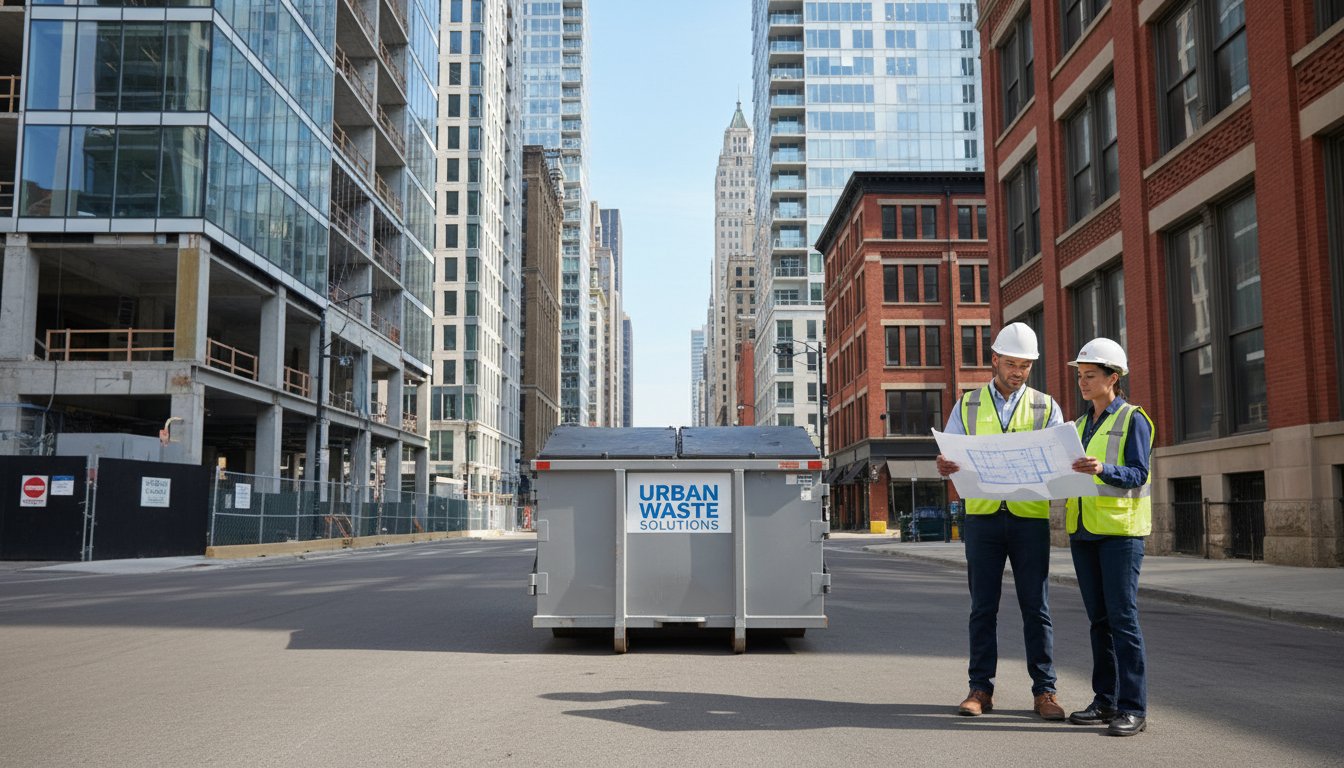
Choosing a 30-yard dumpster is the most efficient way to clear a construction site in one haul, yet the wrong permit choice in Boston or Chicago can cost you more than the rental itself. You need a transparent 30 yard dumpster cost without the stress of surprise weight overages or city fines. It's frustrating when a $600 quote turns into a $1,200 bill because of local regulations you didn't see coming. We understand that your project depends on reliable logistics and honest math.
This 2026 guide provides the exact price ranges and permit requirements for New York, Illinois, and Massachusetts so you can book with total confidence. You'll see how to handle NYC's $150 street permits, Chicago's daily fees, and Boston's multi-layered licensing requirements. We break down regional tonnage limits and the specific steps required to avoid hidden overage fees. Stop guessing at your disposal budget and get the facts you need to book your dumpster today.
Key Takeaways
- Determine the exact price ranges for NYC, Chicago, and Boston to set a realistic budget for your 2026 project.
- Understand how the 30 yard dumpster cost compares to smaller sizes and why it's often the most economical choice for large cleanups.
- Identify the specific street permit rules for your city to prevent costly delays or unexpected municipal fines.
- Learn the difference between flat-rate and variable billing to ensure you don't get hit with hidden weight overage fees.
- Master the "one haul" strategy to save time and money by sizing your container correctly from the start.
Understanding 30 Yard Dumpster Pricing in NY, IL, and MA
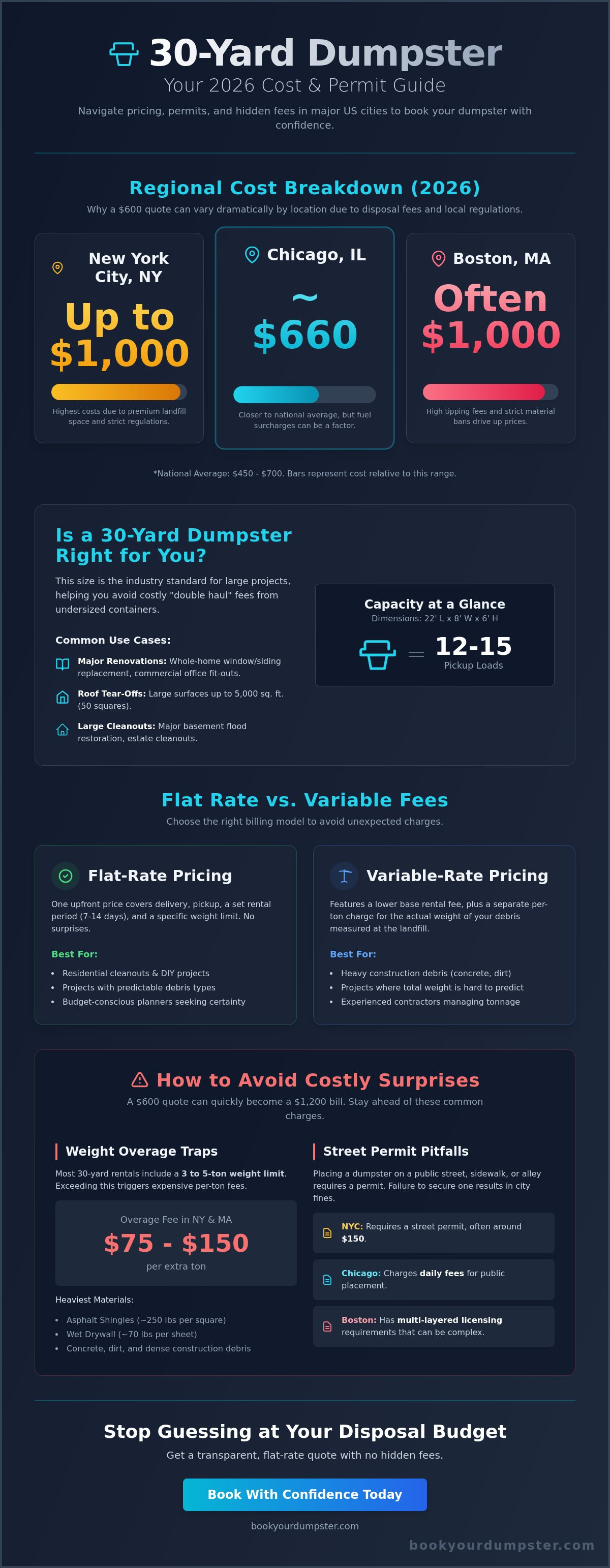
A 30-yard dumpster is a heavy-duty tool built for serious waste management. It typically measures 22 feet long, 8 feet wide, and 6 feet high. This container holds exactly 30 cubic yards of debris, providing ample space for bulky items that don't fit in smaller bins. For 2026, the national average for a 30 yard dumpster cost ranges between $450 and $700, but regional factors in New York, Illinois, and Massachusetts cause significant fluctuations. In New York City, you might pay up to $1,000, while Chicago averages closer to $660. This size is the industry standard for commercial renovations and large-scale home cleanouts because it balances high volume with a manageable footprint on your job site.
Why Prices Vary Across New York, Illinois, and Massachusetts
High disposal fees in New York City and Boston are the primary drivers of cost. Landfill space is at a premium in the Northeast, forcing prices higher than the national average. In Boston, a weekly rental often hits $1,000 because of these tipping fees. When Understanding 30 Yard Dumpster Pricing, you must also account for local mandates. For example, Massachusetts has strict waste bans on certain materials, which increases sorting costs for the hauler. In New York, exceeding your weight limit can trigger overage fees between $40 and $200 per extra ton. In sprawling regions like suburban Illinois, fuel surcharges play a larger role. If your site is 40 miles from the transfer station, expect that distance to reflect in your final quote. Always check if your price includes the standard 5-ton weight limit common in Long Island and Boston.
The 30-Yard Dumpster: Is It the Right Size for You?
Think of this container as having the capacity of 12 to 15 standard pickup truck loads. It's designed for projects that produce significant volume but don't require massive industrial bins. Choosing this size prevents the "double haul" risk, where you fill a 20-yarder too quickly and pay for a costly second swap. Use our online system to book your dumpster and ensure you have the right capacity from day one.
Ideal projects for this size include:
- Whole-home window or siding replacement.
- Roof tear-offs for surfaces up to 50 squares (5,000 square feet).
- Major basement flood restoration involving drywall and flooring removal.
- Commercial office fit-outs and retail renovations.
The 30-yard dumpster is the industry standard for mid-to-large scale debris management.
Breakdown of Cost Factors: Flat Rates vs. Variable Fees
Understanding the structure of your bill is just as important as the initial quote. Most providers offer two distinct pricing models: flat rate and variable. A flat rate includes delivery, pickup, a specific weight limit, and a set rental period. This period usually spans 7 to 14 days. This is the preferred choice for residential cleanouts because it offers budget certainty. You pay one price upfront and avoid the stress of fluctuating landfill costs. Book Your Dumpster USA prioritizes this level of transparency to eliminate billing surprises and ensure you stay on budget. Calculate your debris volume carefully to choose the model that fits your project best.
Conversely, the variable or "plus-weight" model features a lower base price but adds a per-ton charge based on the actual weight recorded at the landfill. This model is common for heavy construction debris where total weight is difficult to predict. To understand the regulatory framework that influences a Breakdown of Cost Factors, look at federal guidelines that dictate how waste must be handled and disposed of across state lines. These regulations often dictate the tipping fees that haulers must pass on to the customer.
Tonnage Limits and Overage Charges
Most 30-yard rentals include a weight limit of 3 to 5 tons. If you exceed this limit, you'll face overage fees that can quickly inflate your 30 yard dumpster cost. In New York and Massachusetts, these charges typically range from $75 to $150 per extra ton. For context, a standard 30-yarder filled with household junk rarely hits the limit, but one filled with wet drywall or roofing shingles will exceed it quickly. Follow these weight estimation tips:
- One square of asphalt shingles weighs approximately 230 to 250 pounds.
- A single sheet of 5/8-inch drywall weighs about 70 pounds.
- Standard household furniture is bulky but relatively light compared to construction materials.
Delivery and Logistics Costs
Logistics also play a major role in your final bill. If a driver arrives and cannot place the container due to low-hanging wires, narrow alleys, or parked cars, you'll pay a "dry run" fee. These fees cover the driver's time and fuel. In high-traffic cities like Chicago or New York City, requesting same-day or emergency delivery can significantly increase the price. This is due to the logistical strain of navigating dense urban corridors on short notice. Plan your delivery at least 48 hours in advance to secure the best rate. Learn more about our roll off dumpster rental services to see how we manage these logistics for you. If you're ready to start your project, you can book your dumpster online right now.
Is a 30 Yard Dumpster More Cost-Effective Than Other Sizes?
Evaluating the 30 yard dumpster cost requires looking beyond the initial quote. You must consider the price per cubic yard of debris removed. In most markets across New York and Massachusetts, renting a single 30-yard container is roughly 35% cheaper than ordering two 15-yard units. This is because you avoid paying a second delivery fee, fuel surcharge, and administrative cost. When managing Construction and Demolition materials, the 30-yarder often emerges as the most economical choice for mid-to-large projects. It provides the volume needed for major debris without the massive footprint of industrial-scale bins.
The "double haul" risk is the most common way budgets spiral out of control. If you underestimate your waste and fill a 20-yarder before the job is done, you'll pay for a swap. A swap involves the hauler picking up the full bin and dropping off an empty one, essentially doubling your transportation costs. Choosing the 30-yard size from the start acts as an insurance policy against these extra fees. At 22 feet long, this container fits in most standard driveways in Long Island or suburban Boston, though you should measure your space to ensure you have 10 feet of width for the truck's stabilizers.
30-Yard vs. 20-Yard: The Mid-Size Dilemma
A standard kitchen remodel involving flooring, cabinets, and drywall often exceeds the weight and volume limits of a 20-yard container. Contractors in Illinois frequently default to 30-yarders for these jobs to ensure reliability. They don't want their crew standing around waiting for a dumpster swap in the middle of a workday. If your project is strictly limited to a small bathroom or a single-room cleanout, see our 10 yard dumpster guide to find a more compact and affordable option.
When to Jump to a 40-Yard Container
There are times when even a 30-yarder isn't enough. If your debris includes large, non-crushable items like industrial machinery, full-sized sofas, or commercial roofing materials, you need the extra height of a 40-yard bin. The price jump to a 40-yarder is usually incremental, often costing only $100 to $150 more. This is a small price to pay compared to the risk of an overfill fine, which can reach $150 if the driver deems the load unsafe to transport. For massive projects like full building demolitions, read our guide to construction debris removal to plan your strategy. Pick the size that handles your total volume in one trip to keep your 30 yard dumpster cost as low as possible.
How to Avoid Hidden Fees and Permit Costs in Your Region
Ignoring local permit laws is the fastest way to double your 30 yard dumpster cost. In dense urban centers like New York City, Chicago, and Boston, you can't just drop a 22-foot container on the curb without paperwork. Each city has a unique enforcement style. You must navigate these rules to avoid municipal fines that often exceed $500 per day. We handle the logistical heavy lifting, but knowing the rules helps you plan your site placement effectively. If you place the unit on private property like a driveway, you generally won't need a permit, but street placement is a different story.
Local Permit Rules for NYC, Chicago, and Boston
In New York City, the Department of Transportation (DOT) requires a permit for any dumpster placed on a public street or sidewalk. The law mandates that the carting company must secure this permit for you. Expect to pay between $50 and $150 for a Street Opening Permit. Chicago takes a different approach. You'll need a "public way" permit if the bin sits on a street or alley. These fees range from $25 to $60 per day. You're also responsible for safety equipment like barricades and lights to alert traffic. Boston has the most complex requirements. You must obtain a Street Occupancy Permit from Public Works, which costs between $50 and $150. Additionally, the city requires a $50 annual Site Cleanliness License and a separate Dumpster Placement Permit from the Fire Department. Secure these documents before your delivery date to prevent a dry run fee.
Prohibited Items and Disposal Surcharges
Landfills in the Northeast and Midwest have strict "waste bans" that trigger automatic surcharges. In Massachusetts, disposing of mattresses, tires, or appliances in a standard roll-off will result in extra fees. These items require special handling and can cost up to $185 per ton in overage charges. Hazardous materials are strictly prohibited. Loading asbestos, oils, or chemicals into your bin can result in thousands of dollars in environmental fines. Check our full guide on dumpster rental prices for a complete list of restricted items in your specific state.
Always respect the "Fill Line" marked on the side of the container. Drivers will refuse to haul "top-heavy" loads where debris hangs over the top rail. This is a safety hazard for other drivers on the highway. If a driver refuses to pick up an overfilled bin, you'll pay a dry run fee and have to remove the excess debris yourself. Keep your load level and your permits updated to maintain a predictable budget. When you're ready to start, schedule your delivery through our online portal for a transparent, all-in quote.
Booking Your 30 Yard Dumpster with Book Your Dumpster USA
Scheduling waste removal shouldn't be the hardest part of your project. We've modernized the process to ensure your 30 yard dumpster cost stays exactly where we quoted it. Our team manages the complex logistics of the Northeast and Midwest every day. Whether you're coordinating a multi-unit renovation in Chicago or a residential cleanout on Long Island, we ensure the container arrives when you need it. We know that a late delivery doesn't just stall your cleanup; it costs you money in labor and city permit extensions. Our on-time delivery promise is a core part of our service, protecting your timeline from unnecessary friction.
Straightforward Online Booking
Our digital-first approach removes the guesswork from waste management. You don't have to spend hours on the phone waiting for a quote that might change by the time you're ready to pay. Use our platform to move quickly through the decision-making process. Follow these steps to secure your bin:
- Select the 30-yard size from our inventory.
- Enter your specific job site location in NY, IL, or MA.
- Choose your delivery and pickup dates.
- Review your transparent, all-in price and secure your rental.
Our system is built to handle the unique logistical headaches of each region. It accounts for local disposal rules and transport distances automatically. This ensures that the 30 yard dumpster cost you see online is the price you actually pay. There are no hidden surcharges added after the fact. Book your dumpster now to lock in your 2026 rate and get your project moving.
Reliable Support for Homeowners and Contractors
We serve as a dependable partner for both large-scale commercial contractors and residential DIYers. Contractors rely on our high-velocity scheduling for commercial waste pickup to keep job sites clear and safe. Homeowners value our direct, no-nonsense advice on placement and weight limits. We understand that debris removal is a messy business, but the logistics behind it should be clean. We've modernized a traditional industry through digital convenience and straightforward honesty.
Our regional expertise means we know the difference between a Boston "Right of Way" permit and a Chicago "Public Way" requirement. We don't just drop a bin; we provide the infrastructure for a successful project. Book Your Dumpster USA is the most dependable choice for debris management in the Northeast and Midwest.
Secure Your Project Timeline Today
Managing a renovation or construction site requires precise logistics and a predictable budget. You now understand that your 30 yard dumpster cost depends on regional tonnage limits and strict municipal permit compliance in cities like Chicago and Boston. Choosing the 30-yard size from the start prevents the high cost of a second haul and keeps your crew working without interruption. Since 2018, we've helped thousands of customers across New York, Illinois, and Massachusetts navigate these regional complexities with total transparency.
Don't let opaque pricing or surprise weight fees derail your progress. Our streamlined 24/7 online booking system gives you an instant quote so you can focus on the job at hand. We guarantee on-time delivery and a "no hidden fees" promise that builds immediate trust. It's time to clear the debris and move your project forward. Book your 30-yard dumpster online today for transparent, local pricing. Your clean job site is just a few clicks away.
Frequently Asked Questions
How much does a 30 yard dumpster cost in New York vs. Illinois?
A 30 yard dumpster cost in New York averages between $634 and $814, while Illinois rates in the Chicago area range from $439 to $660. New York prices are consistently higher due to steep landfill tipping fees and the $150 DOT permit required for city street placement. Chicago remains more affordable but requires daily public way fees between $25 and $60 if you don't have private property space.
How many tons can I put in a 30 yard dumpster before paying extra?
Most 30-yard rentals include a weight limit of 4 to 5 tons of debris. If you exceed this limit, you'll pay overage fees ranging from $40 to $200 per extra ton depending on your specific county regulations. Always verify your tonnage limit before booking to avoid surprise charges when the truck hits the landfill scale at the end of your project.
Do I need a permit for a 30 yard dumpster in Chicago or Boston?
You need a permit if the dumpster sits on a public street, sidewalk, or alley in either city. Chicago charges between $25 and $60 per day for a public way permit and requires safety barricades. Boston requires a Street Occupancy Permit costing $50 to $150, plus a $50 annual Site Cleanliness License. No permit is needed if the container stays entirely on your private driveway.
What are the dimensions of a 30 yard dumpster and will it fit in my driveway?
A 30-yard dumpster typically measures 22 feet long, 8 feet wide, and 6 feet high. It fits in most standard residential driveways, but you must ensure there's enough vertical clearance for the truck to tilt the bin during delivery. Clear a space at least 10 feet wide to accommodate the truck's stabilizers and prevent damage to your property or vehicles.
What happens if I overfill my 30 yard dumpster?
Drivers will refuse to haul an overfilled bin because debris hanging over the rail is a safety hazard on the road. You'll be charged a dry run fee to cover the driver's fuel and time, and you must remove the excess debris yourself before they return. Keep all waste level with the top rail to ensure a successful, on-time pickup without extra costs.
Can I put old appliances or mattresses in my 30 yard dumpster in Massachusetts?
Massachusetts state law bans mattresses and major appliances from standard landfill disposal. If you place these items in your roll-off, you'll face surcharges that can reach $185 per ton due to specialized handling requirements. Always notify your provider if you have bulk items so they can arrange for separate, compliant recycling or disposal services.
How long is the typical rental period for a 30 yard dumpster?
The standard rental period is 7 days, which provides enough time for most residential cleanouts or roof replacements. If your project runs long, you can usually extend the rental for $5 to $15 per additional day. Schedule your pickup at least 24 hours in advance to ensure the truck arrives exactly when you're finished with the container.
Is a 30 yard dumpster big enough for a full roof replacement?
Yes, a 30-yard container is the industry standard for replacing a roof up to 50 squares or 5,000 square feet. It easily handles the weight and volume of asphalt shingles, underlayment, and flashing in a single haul. For larger commercial roofs or heavier materials like slate tiles, you may need a 40-yard bin to avoid exceeding the 5-ton weight limit.


