
Filling a 30-yard dumpster to the brim doesn't automatically mean you've stayed within your legal weight limit. Exceeding your 30 yard dumpster weight allowance can quickly turn a simple cleanup into a financial headache, with overage fees potentially reaching $185 per ton in April 2026. While you might expect a large container to handle anything you throw in it, remember that weight and volume are distinct metrics. It's easy to feel frustrated when your project is moving fast, only to be hit with unexpected costs for heavy debris like plaster or wet wood.
At Book Your Dumpster USA, we'll help you eliminate that stress. You'll learn the exact tonnage limits for your region and how to accurately estimate your debris weight before the truck arrives. This guide provides a clear breakdown of state-specific regulations, with a particular focus on Illinois, New Jersey, and Michigan, including current 2026 rates relevant to cities like Chicago, Paterson, and Ann Arbor. Use this information to choose the right capacity, avoid the costly $70 to $185 per ton penalties, and ensure your cleanup stays on track. Book with confidence, armed with the facts, and keep your project moving smoothly.
Key Takeaways
- Distinguish between the 30-cubic-yard volume and the actual tonnage capacity to avoid surprise costs at the scale.
- Learn how the 30 yard dumpster weight allowance varies across New York, Illinois, and Massachusetts to stay within local road safety limits.
- Identify "heavy fill" materials like concrete and brick that are often restricted in large bins and require specialized disposal strategies.
- Use our pickup truck load conversion method to estimate your total debris weight before your rental is hauled away.
- Discover how transparent pricing models eliminate hidden overage fees by clearly defining your tonnage limits during the booking process.
What is a 30 Yard Dumpster Weight Allowance?
A 30 yard dumpster weight allowance is the specific amount of debris, measured in tons, that's included in your flat-rate rental price. Think of it as a pre-paid disposal credit. While the container size tells you how much space you have (30 cubic yards), the weight allowance tells you how much that debris can actually weigh before extra costs apply. This size remains the industry standard for estate cleanouts, commercial roof replacements, and large-scale home renovations because it balances high capacity with a manageable site footprint. You get the volume you need without the massive footprint of a 40-yard bin.
By April 2026, safety standards for roll-off dumpsters have become stricter across the United States. These regulations ensure that trucks can safely lift, transport, and dump heavy loads without risking mechanical failure or road accidents. When you book your dumpster, you're agreeing to these safety-driven tonnage caps. Understanding the 30 yard dumpster weight allowance for your specific project is the best way to avoid logistical delays and keep your budget on track.
Tons vs. Yards: Clearing the Confusion
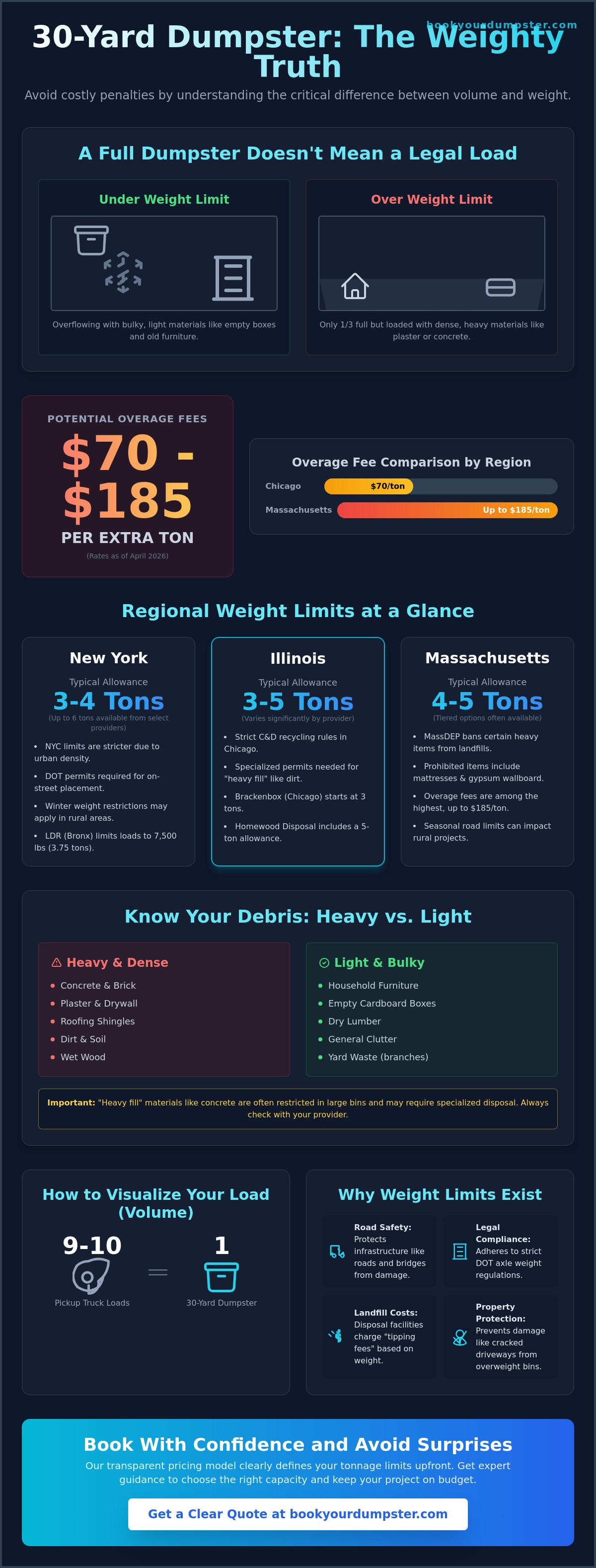
Visualizing 30 cubic yards is often the hardest part for homeowners and new contractors. Imagine nine to ten standard pickup truck loads. That's the physical volume. However, the weight is measured in "short tons," which equal 2,000 pounds each. A dumpster might be physically overflowing with lightweight items like empty cardboard boxes or furniture but still be well under its weight limit. Conversely, a bin only one-third full of old plaster or roofing shingles could easily exceed its limit. Always prioritize the mass of your materials over the visual space they occupy in the bin. If it's dense, it's heavy.
Why Weight Limits Exist in NY, IL, and MA
State Departments of Transportation (DOT) in New York, Illinois, and Massachusetts enforce strict axle weight limits to protect infrastructure. If a truck carries a container that is too heavy, it risks damaging local bridges and failing safety inspections. Beyond the law, landfills charge "tipping fees" based on weight. These facilities weigh the truck upon entry and exit to calculate the exact tonnage disposed of. These fees directly influence your rental price. Sticking to your limit also protects your own property. An overweight 30-yard bin can crack residential driveways or sink into soft asphalt, causing thousands in property damage. Follow the limits to keep the project safe and professional.
Regional Weight Limits: New York, Illinois, and Massachusetts
Standard limits for a 30 yard dumpster weight allowance typically range from 3 to 6 tons across these three states. In New York City, most providers cap loads at 3 to 4 tons to ensure trucks remain legal on narrow residential streets. However, as of April 2026, J B General Contracting in NY offers a higher 6-ton limit for larger projects. Illinois shows similar variability; Brackenbox in Chicago starts with a 3-ton allowance for $495, whereas Homewood Disposal includes 5 tons. Massachusetts follows suit with Deloury Dumpster Rental providing 4-ton and 5-ton tiers. Choosing the wrong tier can be costly. Overage fees in Massachusetts can reach $185 per ton, while Chicago averages closer to $70 per ton. Check your contract before you start loading.
Regional regulations also dictate what you can toss. Chicago enforces strict construction and demolition (C&D) recycling rules that require specific sorting of debris. In Massachusetts, MassDEP waste bans prohibit certain heavy items like mattresses and gypsum wallboard from entering landfills, which can shift the weight profile of your container. To avoid these logistical headaches, book your dumpster with a provider that understands these local nuances and lists their tonnage limits clearly upfront.
New York and Massachusetts: Coastal Logistics
Urban density in NYC and Boston significantly impacts weight logistics. In the Bronx, LDR Site Services limits capacity to 7,500 pounds to manage truck maneuverability. If you're placing a bin on a public street in NYC, you'll need a DOT permit. Overnight placement often requires specific reflective markings or lighting. Upstate NY and Western MA often face winter weight restrictions on rural roads. During these months, local authorities may lower the maximum allowed tonnage to prevent road damage from heavy roll-off trucks. Always confirm if seasonal weight limits apply to your job site.
Illinois: Midwest Waste Standards
In Cook County, handling "heavy fill" like dirt or concrete requires specialized permits. Most Chicago providers, including Capri Carting, explicitly ban these materials in 30-yarders. The weight would exceed legal truck limits before the bin is even half full. Illinois EPA regulations also monitor mixed waste density to ensure landfills don't reach capacity prematurely. Downstate IL often has more flexible weight limits than the Chicago metro area, but tipping fees remain a primary driver of the final price. Always estimate your tonnage based on the densest material in your pile.
Material Density: What Weighs the Most in a 30-Yard Bin?
Density determines whether you stay within your 30 yard dumpster weight allowance or face a steep overage bill. A container full of empty plastic bins weighs almost nothing, but the same volume of old plaster or tile can easily exceed 10 tons. Most standard roll-off trucks have a maximum lift capacity of roughly 20,000 pounds. If you fill a 30-yard bin with heavy fill like concrete, dirt, or brick, the truck physically cannot lift it. This results in a "dry run" fee and forces you to manually unload the debris until the weight is manageable. Avoid this by matching your material type to the right container size from the start.
External factors like weather also play a role. Water is heavy. As of April 2026, industry data shows that a single inch of rain can add hundreds of pounds to a load of absorbent materials like drywall or wood. If you're working during a wet week in Massachusetts or a snowy month in Illinois, keep your dumpster covered with a tarp. This simple step prevents water weight from pushing you past your tonnage limit. Also, be aware of environmental surcharges for prohibited items. Tires, batteries, and electronics often carry flat-rate penalties ranging from $25 to $100 per item because they require specialized handling at the landfill.
The "Heavy Fill" Trap for Contractors
Roofing projects are particularly deceptive. One square of three-tab shingles (100 square feet) weighs approximately 250 pounds. A large roof tear-off can quickly reach 12,000 to 15,000 pounds, which already pushes the limits of a standard 6-ton allowance. For masonry, dirt, or asphalt, we recommend using smaller dumpsters like a 10-yard or 20-yard bin. These are specifically designed for heavy materials. If you must use a 30-yarder for mixed construction debris, follow the "half-full" rule for the dense stuff. Place heavy items at the bottom and fill the remaining space with lighter materials to keep the load balanced and liftable.
Household and General Debris Weight
Household junk is generally less dense than construction waste. An average three-bedroom estate cleanout usually results in 2 to 4 tons of debris. Furniture, appliances, and clothing take up significant volume but don't hit your 30 yard dumpster weight allowance as quickly as stone or wood. To optimize your space, break down large items like tables or bed frames. Layer flat items like mattresses or plywood at the bottom, then stack boxes and smaller items on top. Be careful with wet carpeting. A soaked rug can weigh 3 times more than a dry one, adding unexpected mass to your final scale reading at the transfer station.
How to Estimate and Manage Your Weight Allowance
Stop guessing about your load weight and start measuring by volume to avoid overage fees. The most reliable way to track your 30 yard dumpster weight allowance is the pickup truck method. A standard pickup truck bed holds roughly 2 cubic yards of debris. For mixed waste, one full pickup load weighs between 1,500 and 2,000 pounds. Since a 30-yard container holds the equivalent of 9 to 15 pickup truck loads, you can estimate your total tonnage by tracking how many "loads" you put in. If you've filled the bin with 10 pickup-sized piles of heavy wood or roofing, you're likely approaching a 5-ton limit.
Load your container with a strategy in mind. Open the rear swinging door and walk your heaviest items to the front of the bin first. This ensures the weight is distributed evenly across the truck's axles during transport. An uneven load is a safety hazard and may result in the driver refusing the pickup. Once the heavy items are flat on the floor, layer lighter debris on top. This method keeps the center of gravity low and prevents the bin from becoming top-heavy. To get started on your next project without the guesswork, book your dumpster through our transparent online system today.
Visual Cues for Weight Management
Use the "waterline" concept to manage your capacity. Treat the halfway point of the container's height as your limit for dense materials like plaster, tile, or wet lumber. If you cross this line with heavy debris, you risk exceeding your 30 yard dumpster weight allowance before the bin is physically full. Watch out for "red flag" items like drywall. While a single sheet feels light, a stack of 20 sheets weighs 1,000 pounds. The average weight of a 30-yard load of mixed construction debris is 3.5 to 4 tons. Monitor your fill line closely as you reach this range.
Managing Environmental Factors
Weather in New York, Illinois, and Massachusetts can change your final bill in hours. Drywall and wood act like sponges during a rainstorm. Use a heavy-duty tarp to cover the opening if rain is in the forecast. This prevents hundreds of pounds of water weight from being added to your total. During winter months, clear all snow and ice out of the bin before the truck arrives. Landfills weigh the entire container, and they don't give discounts for frozen water. Utilize the back door for as long as possible to keep your loading efficient and your weight distribution balanced.
Transparent Pricing with Book Your Dumpster USA
Choose a partner that prioritizes honesty over hidden surcharges. We provide clear, upfront pricing for every project in New York, Illinois, and Massachusetts. Our digital platform removes the guesswork from your 30 yard dumpster weight allowance by displaying exactly how many tons are included before you enter your credit card information. You won't find vague service fees or fuel surcharges added at the last minute. We understand that project budgets are tight, and our goal is to move you from a state of clutter to a state of resolution without financial surprises.
Life happens, and sometimes a load ends up heavier than expected. If you exceed your purchased tonnage, we utilize a transparent, prorated overage fee system. You only pay for the specific weight over your limit, calculated down to the pound based on the certified scale ticket from the landfill. Our local expertise across the Tri-State area, the Chicago metro, and the Bay State allows us to manage these logistics with precision. We know the local transfer stations and their specific tipping requirements, ensuring your waste is handled legally and efficiently.
The Book Your Dumpster USA Advantage
Direct communication is the backbone of our service. If you're unsure about the density of your debris, call our dispatchers for a professional weight consultation. We'll help you determine if a 30-yard bin is the right tool for your specific material. We provide reliable, on-time delivery and pickup that respects your project schedule. For a broader look at how to optimize your waste strategy, read our Pillar Guide on Roll Off Dumpster Rental. This resource offers deep insights into efficient waste management for both residential and commercial sites.
Booking Your 30-Yard Rental Today
Secure your container in minutes through our 3-step online booking process at bookyourdumpster.com. First, enter your zip code to see local availability. Second, select the 30-yard size and choose the weight tier that matches your debris type. Third, schedule your delivery date and provide placement instructions. Before you finalize your order, use this checklist to ensure a smooth drop-off:
- Clear the path: Ensure there are no parked cars or low-hanging branches blocking the delivery site.
- Check the surface: Confirm the drop-off area is flat and stable enough to support the truck and the loaded bin.
- Verify the tier: Review your 30 yard dumpster weight allowance one last time to ensure it covers your estimated tonnage.
Schedule your delivery now and take control of your project waste with a professional team you can trust.
Take Control of Your Project Waste Today
Mastering your 30 yard dumpster weight allowance is the most effective way to keep your project on budget and on schedule. You now understand how material density and regional DOT regulations in New York, Illinois, and Massachusetts dictate your final costs. By using the pickup truck estimation method and protecting your bin from water weight, you eliminate the risk of surprise fees at the scale. Our 2026 DOT safety compliant equipment and expert local support teams ensure your debris is hauled away without logistical friction.
We stand by our no hidden overage fees policy to provide you with a transparent, stress-free rental experience. Don't let your cleanup stall due to confusing pricing or capacity limits. Book your 30-yard dumpster now with transparent weight allowances and experience a modernized waste management service. You have the facts and the right tools to finish your job successfully. Let's get that site cleared today.
Frequently Asked Questions
Is 5 tons a lot for a 30-yard dumpster?
Five tons is a standard and sufficient allowance for most residential cleanouts or light construction projects. It equals 10,000 pounds of debris. You'll find that household furniture, appliances, and general junk rarely exceed this limit even when the bin is full. However, if you're loading dense materials like roofing shingles or old deck lumber, you'll reach this 30 yard dumpster weight allowance quickly. Always prioritize weight over volume when loading heavy materials.
What happens if the dumpster is too heavy for the truck to pick up?
The driver will refuse the service if the load exceeds the truck's mechanical lift capacity, which is roughly 20,000 pounds. This results in a "dry run" fee for the attempted trip. You'll have to manually remove debris until the weight is safe for transport. This process delays your project and adds unexpected labor costs. Avoid this by monitoring your fill line and staying within your agreed tonnage.
Can I put concrete in a 30-yard dumpster in New York?
No, most New York City providers like Capri Carting prohibit concrete in 30-yard containers to comply with strict road safety laws. Concrete is extremely dense and would make the bin too heavy for a standard roll-off truck to lift safely. A full 30-yard bin of concrete would weigh over 30 tons, far exceeding any legal 30 yard dumpster weight allowance. Use a smaller 10-yard bin specifically designed for "heavy fill" instead.
How much is the overage fee if I exceed my weight allowance?
Overage fees in April 2026 typically range from $70 to $185 per ton depending on your location. Brackenbox in Chicago charges $70 for each additional ton, while Deloury in Massachusetts charges a higher rate of $185 per ton. These fees are prorated based on the exact weight recorded at the landfill's certified scale. Check your specific contract to see the rate assigned to your zip code.
Does rain increase the weight of my dumpster rental?
Yes, rain can add significant weight if you're disposing of absorbent materials like drywall, wood, or carpeting. These items soak up water like a sponge, and a single storm can add hundreds of pounds to your total. Landfills weigh the entire load, including any water weight. Cover your bin with a heavy-duty tarp during wet weather in Massachusetts or New York to prevent these avoidable costs.
How many tons of roofing shingles fit in a 30-yard dumpster?
A 30-yard dumpster can hold roughly 30 squares of asphalt shingles, but the weight would total about 7,500 pounds. Since one square of three-tab shingles weighs approximately 250 pounds, a large roof tear-off can easily push you past a 3-ton limit. Calculate your roof's total square footage before you start. This helps you choose a weight tier that covers your specific debris without triggering expensive penalties.
Are weight limits different for commercial vs. residential rentals in Illinois?
Weight limits are generally the same because they're based on truck lift capacity and Illinois DOT road regulations. However, commercial contracts for large construction sites may offer different pricing tiers for high-volume waste. In the Chicago area, companies like Homewood Disposal include a 5-ton allowance for standard 30-yard rentals. Always disclose your material type during booking to ensure the truck can safely handle your specific load.
Can I weigh my dumpster myself before it is picked up?
You cannot accurately weigh the container yourself without access to an industrial truck scale. Use the pickup truck load method to estimate your weight instead. One full pickup truck bed of mixed waste weighs between 1,500 and 2,000 pounds. If you've loaded the equivalent of five pickup trucks, you're at approximately 4 to 5 tons. This practical comparison keeps your project on track and within your budget.


