
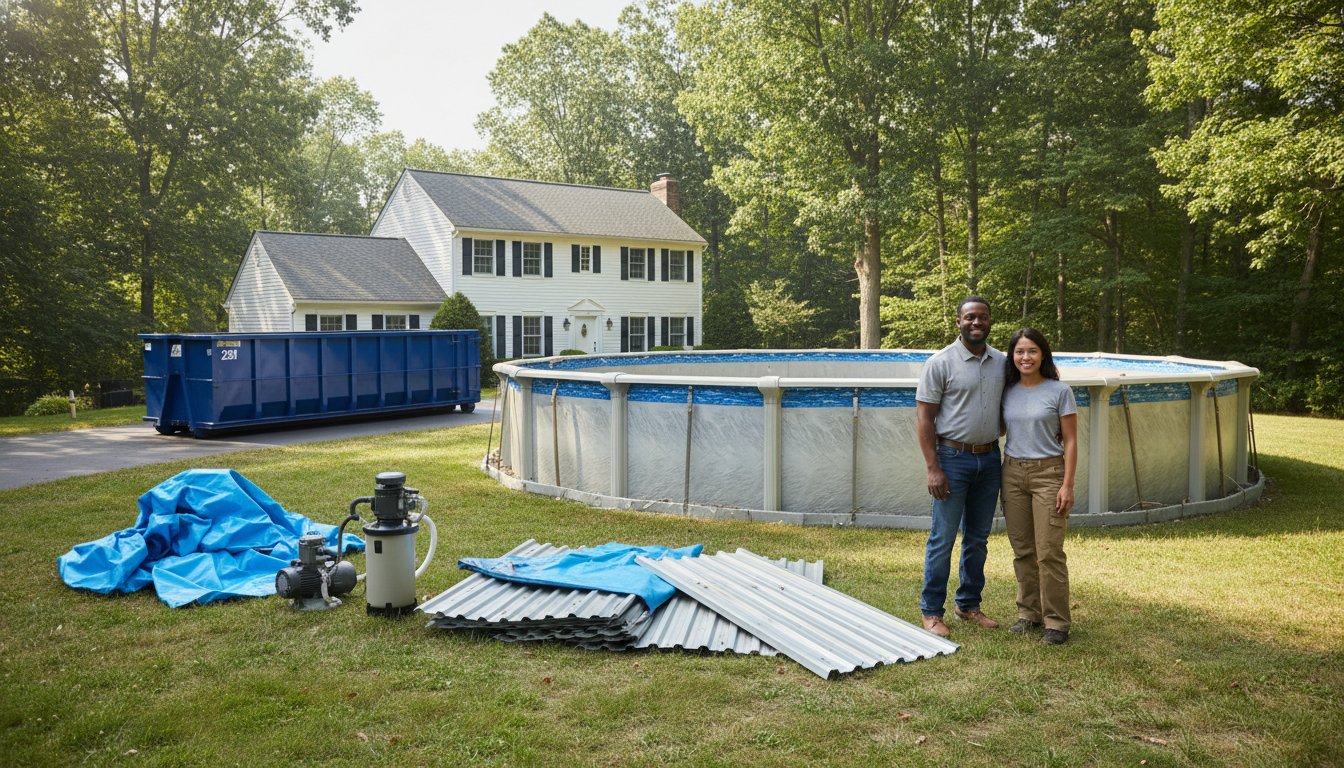
Did you know that a single backyard pool can generate between one and three tons of debris once it's dismantled? Managing above ground pool demolition waste isn't just about throwing things in a pile. It's a complex logistics project involving heavy steel walls, bulky liners, and thousands of pounds of wet sand. If you don't have a specific plan for the weight, you'll likely face hidden fees and a backyard that remains a messy construction zone for weeks.
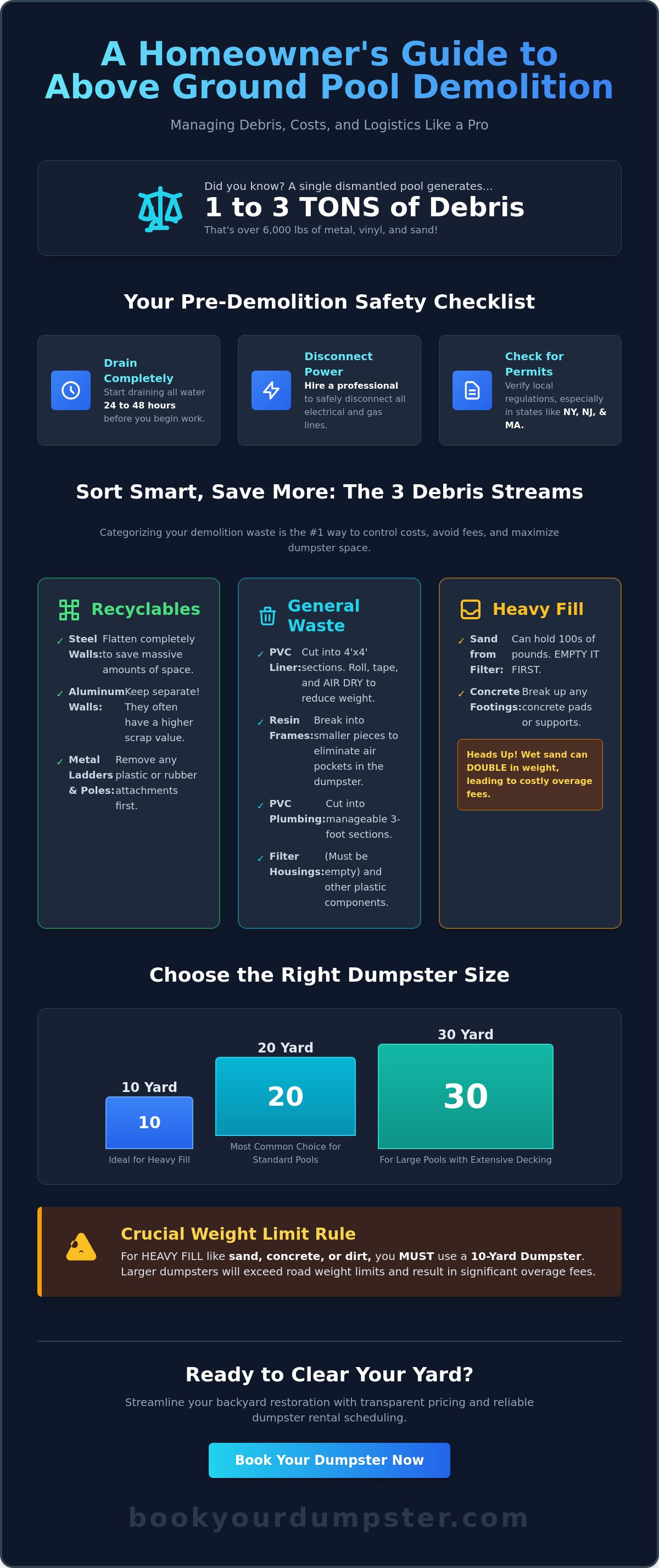
You probably want that space back for new landscaping but feel overwhelmed by the sheer volume of material. We understand the stress of dealing with awkward metal frames and the uncertainty of local disposal regulations. This guide helps you master the logistics of above ground pool removal by providing a pragmatic roadmap for dismantling, sorting, and disposing of debris efficiently. We'll cover specific permit requirements for states like New Jersey and New York, explain how to sort scrap metal to your advantage, and help you select the correct 10, 20, or 30 yard dumpster to ensure your project stays on budget and on schedule.
Key Takeaways
- Categorize your debris into three distinct streams—recyclables, general waste, and heavy fill—to maximize space and lower your total disposal expenses.
- Begin the project by draining the water 24 to 48 hours in advance and cutting the PVC liner into manageable 4x4 squares for easier lifting.
- Select the correct container size for above ground pool demolition waste, opting for a 10-yard dumpster for heavy sand or concrete to avoid exceeding weight limits.
- Verify municipal permit requirements in New York, New Jersey, or Massachusetts to ensure compliance with local street placement and debris sorting regulations.
- Streamline your backyard restoration by using a professional online booking system that offers transparent pricing and reliable scheduling.
Identifying Above Ground Pool Demolition Waste Components
Efficiently managing above ground pool demolition waste starts with a clear sorting strategy. You cannot simply throw everything into a single pile if you want to control costs and logistics. Divide your debris into three primary streams: recyclables, general waste, and heavy fill. Sorting at the source prevents your dumpster from reaching weight capacity too early and ensures you aren't paying premium disposal rates for materials that could be salvaged.
Most pool liners are made of reinforced PVC. While some specialized programs are emerging, the majority of these liners must go directly to a landfill. Don't let a wet, heavy liner sit in your yard; cut it into sections immediately to let it dry. Beyond the liner, you'll deal with peripheral waste like PVC plumbing lines and equipment housings. Understanding the various types of swimming pools and their specific construction materials helps you predict exactly what will end up in your waste stream before you even pick up a wrench.
The Pool Shell: Metal vs. Resin
Metal walls are the most common component of these structures. If your pool has galvanized steel walls, flatten them completely. Flattened steel takes up significantly less space than rolled sections. This allows you to fit more material into a 10 or 20 yard dumpster from Book Your Dumpster USA. If you have aluminum walls, keep them separate. Aluminum often has a higher scrap value than steel. Regardless of the metal type, strip away all plastic top rails and resin trim. Mixed loads often incur higher fees at disposal sites because they require manual sorting.
Resin-framed pools present a different challenge. While these components are lighter and won't rust, they are rigid and bulky. They don't flatten like steel. You'll need to break resin pieces into smaller chunks to avoid creating large air pockets in your container. These pockets waste valuable volume and might force you into a larger, more expensive dumpster size.
Mechanical Systems and Accessories
Mechanical components require careful handling. Sand filters are deceptively heavy. A standard filter can hold hundreds of pounds of sand. When that sand is wet, the weight doubles. Empty the sand into a separate pile or a dedicated heavy-fill container before trying to move the plastic filter housing. If your system includes a pool heater, check the fuel source. Always hire a professional to disconnect gas lines before you begin the demolition process. This isn't a DIY step.
Don't forget the smaller accessories. Ladders, solar covers, and old wooden decks add up quickly. Solar covers are particularly difficult to manage once they're wet and tangled. Fold them tightly and secure them with twine to keep your workspace clear and your disposal process moving fast. Organize these items near your project site so they're ready for immediate loading once your dumpster arrives.
How to Dismantle and Sort Pool Debris for Efficient Disposal
Dismantling a pool is a high-velocity project that requires strict sequencing. Start by draining the water completely 24 to 48 hours before you plan to touch the structure. This delay allows the ground to firm up and the liner to lose its suction against the walls. Before you cut a single wire or pipe, hire a professional to verify that all electrical components and heaters are disconnected. Safety is the priority. Once the power is dead, you can begin processing the above ground pool demolition waste into manageable loads.
Step 1: The Liner and Plumbing
Cut the vinyl liner into 4x4 sections using a utility knife. Use the 'roll and tape' method: roll each section tightly and secure it with duct tape. This prevents the heavy PVC from unfolding and creates more room in your container. Process PVC plumbing lines by cutting them into 3-foot sections. Long, irregular pipes create massive air pockets that waste space. Keep wet liners away from your dumpster until they've air-dried for at least a day. Every gallon of water trapped in the folds adds weight to your load. Proper drying ensures you stay within the weight limits of your 10 or 20 yard dumpster.
Step 2: Wall and Frame Disassembly
Use a reciprocating saw equipped with a fresh metal-cutting blade for the wall sections. Start by unscrewing the vertical supports one by one. Don't remove all supports at once; the structure may collapse inward unexpectedly. Secure the wall with a heavy-duty bungee cord before making your final vertical cut. This prevents the metal from uncoiling dangerously like a giant spring. Once the wall is down, pull the bottom track out of the dirt completely.
Adhering to New Jersey solid waste regulations regarding construction and demolition debris is essential for efficient disposal. Keeping your metal panels clean and free of excessive soil or resin trim simplifies the recycling process. Stack these panels perfectly flat at the bottom of your dumpster. This creates a solid foundation for bulkier items like ladders or pump housings. If you want to avoid a cluttered yard, schedule your container through Book Your Dumpster USA before the first panel hits the ground. This keeps your workspace clear and your project on schedule.
Choosing the Right Dumpster Size for Pool Demolition Projects
Selecting a container for above ground pool demolition waste requires balancing physical volume against weight capacity. Don't make the mistake of renting based on visual size alone. A massive container might look right for a large pool, but if you're disposing of thousands of pounds of wet sand or concrete footings, you'll hit weight limits long before the bin is full. A roll off dumpster rental is almost always more efficient than making ten or fifteen trips to the dump in a standard pickup truck. You save on fuel, individual dump fees, and hours of manual labor.
The goal is to move all debris in a single trip. To achieve this, you must eliminate "air space" within the dumpster. As we established in the dismantling section, flattening metal walls is critical. If you leave metal rolled or loosely piled, you're essentially paying to haul away air. This inefficiency often leads to a second rental, doubling your costs. Plan your loading strategy to keep the project moving without interruptions.
The 10-Yard Dumpster: Best for Small Pools and Decks
This size is ideal for 12 to 18 foot round pools without extensive extra structures. A 10 yard dumpster rental fits easily in most residential driveways and handles the specific weight of pool sand bases better than larger bins. Be careful with the sand. Wet sand is extremely heavy, and a 10-yard bin has the structural integrity to hold this dense material while staying within legal road weight limits. It's the most pragmatic choice for standard backyard cleanups where space is limited.
The 20-Yard and 30-Yard Options for Large Demolitions
Scale up to a 20 or 30 yard dumpster if your pool is 24 to 33 feet in diameter or includes a large wooden deck. Managing construction debris removal for integrated pool and deck structures involves high volumes of bulky lumber. Load your heavy items, like concrete blocks or flattened metal panels, first. This creates a stable foundation at the bottom. Place lighter materials like PVC pipes and resin trim on top to fill the remaining gaps. If your project involves a 30 foot pool and a wrap-around deck, the 30-yard option ensures you have zero leftover debris when the job is done.
Navigating Local Disposal Regulations in NY, NJ, and MA
Managing above ground pool demolition waste requires more than just physical labor; it demands strict adherence to local municipal codes. In New Jersey, most municipalities require a permit for pool removal, especially if the structure held more than 24 inches of water. These permit fees typically range from $100 to $500, but failing to obtain one can result in fines as high as $8,000 in certain jurisdictions. New Jersey also enforces specific rules regarding 'mixed loads.' If you combine your pool's sand base with the metal shell and vinyl liner, the entire load is categorized as mixed construction and demolition (C&D) waste. This classification usually results in higher disposal costs compared to a load of clean metal.
In New York, a demolition permit is typically required for any pool capable of holding more than 24 inches of water. Local building departments handle these regulations, so check your town's specific code before dismantling anything. In Massachusetts, state landfill bans prohibit the disposal of metal and certain rigid plastics in traditional waste streams. You must ensure your metal pool walls are processed for recycling. Additionally, many Massachusetts towns require a demolition permit from the local health agent. Metropolitan areas often have 'heavy fill' restrictions as well. If your project involves a significant amount of sand or concrete footings, you may be restricted from placing these materials in a standard bin without a weight-specific agreement.
Permits and Street Placement
If you live in a high-density area like Queens or NYC, you must secure a Department of Transportation (DOT) permit for any dumpster placed on the street. In San Francisco, the rules are similarly rigid regarding the public right-of-way. Don't wait until the delivery truck is on your block to find a spot. Block the space 24 hours in advance using your own vehicle or safety cones. Ensure the container doesn't block sidewalk access or fire hydrants. Most cities require safety flagging or reflective tape on the bin to prevent nighttime accidents.
Prohibited Materials and Surcharges
Hazardous materials are strictly forbidden in all roll-off containers. This includes leftover pool chlorine, algaecides, and pH balancers. These chemicals can react dangerously and must be taken to a local hazmat disposal site. Additionally, watch your load height. In Illinois and Massachusetts, 'over-the-top' loading is a safety violation that prevents the driver from tarping the load. If your debris exceeds the rim of the bin, you'll face immediate surcharges and a refused pickup. To ensure you stay compliant and avoid unnecessary fees, book your dumpster rental with a provider that offers transparent guidance on local weight and material restrictions.
Streamlining Your Backyard Project with Book Your Dumpster USA
Managing above ground pool demolition waste requires a high-functioning logistics partner capable of handling both residential cleanups and large-scale commercial operations. Our online booking system eliminates the friction found in traditional waste management by providing instant quotes and transparent pricing. Whether you're a homeowner clearing a single lot or a commercial developer managing a multi-unit renovation, we provide the specific tools needed for efficient debris removal. We offer a full range of roll-off containers, including 10, 20, 30, and 40 yard dumpsters, ensuring that even the most massive demolition projects stay on schedule without leftover clutter.
For businesses requiring ongoing support beyond a one-time pool removal, we also provide front load commercial waste pickup and private curbside trash pickup. This ensures a comprehensive waste strategy that covers the full spectrum of the industry. Our digital-first approach means you can manage your project's logistics across New York, New Jersey, Massachusetts, and Illinois from a single, reliable portal. We treat every job with the same level of professional urgency, focusing on the removal of logistical stress so you can focus on the next phase of your construction or landscaping project.
Reliability You Can Count On
Punctuality is our recurring promise. We recognize that leaving a site as a construction zone longer than necessary impacts your bottom line and your property's safety. Our drivers use professional placement techniques to protect driveways and commercial surfaces during drop-off. We maintain direct communication with local dispatch for same-day or next-day swaps, providing the high-velocity service required for high-stakes commercial renovations. This level of competence and control builds immediate trust, transforming a messy, labor-intensive task into a managed, predictable process.
Book Your Next Container Online
Take immediate action by using the Book Your Dumpster portal for instant quotes. Our platform serves the diverse needs of homeowners and professional contractors alike, offering a no-nonsense approach to waste management. If your project involves complex commercial site clearance or simple backyard restoration, our 40 yard dumpster provides the maximum volume necessary for integrated pool and deck structures. Select your service, confirm your schedule, and rely on Book Your Dumpster USA to deliver a state of resolution with minimal cognitive load.
Clear Your Space and Start Your Next Project
Removing a pool is a heavy lift, but it doesn't have to be a logistical nightmare. You've learned how to sort your metal, vinyl, and sand to maximize space and comply with local regulations. By selecting the correct container size and flattening your materials, you ensure that all above ground pool demolition waste leaves your property in a single, efficient trip. This pragmatic approach saves you from the frustration of hidden fees and lingering debris. Our system is built for homeowners who value their time and demand reliability. We eliminate the stress of navigating complex municipal codes and weight restrictions.
Take advantage of our streamlined online booking and transparent upfront pricing to finalize your plans. We bring local expertise to every project in New York, New Jersey, Massachusetts, and Illinois, ensuring your dumpster placement is professional and legal. Stop looking at that old structure and start visualizing your new lawn or patio. Book Your Pool Debris Dumpster Online Now and get your backyard back. You've done the hard work of demolition; let us handle the heavy lifting of disposal. You're just a few clicks away from a clean, open yard ready for its next chapter.
Frequently Asked Questions
Can I put pool sand in a dumpster?
Yes, you can dispose of pool sand in a roll-off container, but you must monitor the weight carefully. Sand is extremely dense; a few cubic yards can quickly exceed the weight limit of a large bin. Use a 10-yard dumpster specifically for sand and heavy fill to ensure the truck can safely lift the above ground pool demolition waste without incurring overage fees.
How much does it cost to dispose of an above ground pool?
Professional removal services typically cost around $900, though prices range from $300 to $5,000 depending on the pool's complexity. If you're handling the labor yourself, factor in the cost of your dumpster rental and specific disposal fees for non-recyclables. For example, disposing of a vinyl liner separately often costs between $75 and $200 at specialized facilities.
Do I need a permit to rent a dumpster for pool demolition?
Permit requirements depend on the dumpster's placement and your local municipal code. If you place the container on a public street in NYC or Chicago, you generally need a right-of-way permit. Additionally, states like New Jersey require structural demolition permits for pools holding more than 24 inches of water. Fees for these permits typically range from $100 to $500.
Can I recycle the metal walls of my pool?
Yes, metal pool walls are highly valuable at scrap yards. As of June 2026, steel scrap prices are approximately $450 per ton, while aluminum is valued at roughly $0.55 per pound. To get the best rate, remove all plastic top rails, resin trim, and screws before taking the metal to a local facility. This keeps your load clean and maximizes your return.
What size dumpster do I need for a 24-foot round pool?
A 24-foot round pool usually requires a 20-yard or 30-yard dumpster. These sizes provide enough volume for the bulky metal walls and the vinyl liner. If your project includes an attached wooden deck, opt for the 30-yard or 40-yard container. Always flatten the metal panels to eliminate air pockets and ensure all debris fits in a single trip.
Can I put the pool pump and filter in the dumpster?
You can put the pump housing, plastic filter tank, and PVC plumbing in your dumpster. However, you must empty the filter media first. A sand filter can hold hundreds of pounds of wet sand that'll drastically increase your total weight. Drain the water and shovel the sand out before loading the equipment. Ensure all electrical lines are professionally disconnected before removal.
What happens if I overfill the dumpster with pool debris?
If your above ground pool demolition waste exceeds the top rim of the container, the driver will refuse pickup. Overfilled loads are a safety hazard on the road because they can't be properly tarped. You'll be responsible for removing the excess material and paying a dry run fee for the attempted pickup. Always keep the load level with the rim.
How do I dispose of leftover pool chemicals?
Never put pool chemicals like chlorine, bromine, or algaecides in a dumpster. These are considered hazardous waste and can cause chemical reactions or fires in the truck or landfill. Contact your local municipal waste department to find a household hazardous waste collection site. Most towns offer specific drop-off days for these materials to ensure they're processed safely.


