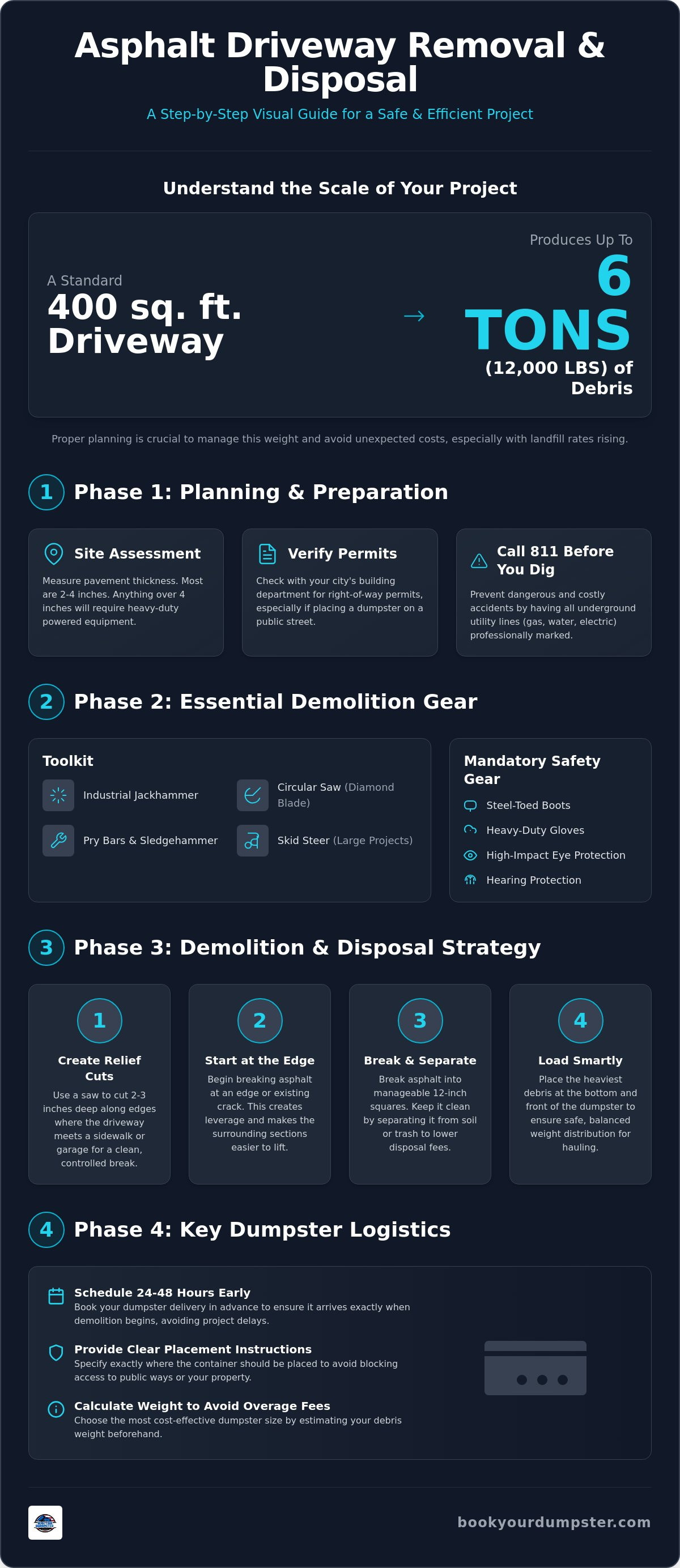
Did you know that a standard 400-square-foot driveway produces up to 6 tons of debris? That is 12,000 pounds of heavy material you must manage during your asphalt driveway removal disposal project. Most homeowners realize too late that breaking the surface is the easy part. The real challenge lies in the logistics of moving that weight without incurring massive overage fees or damaging underground utility lines.
We understand that a successful renovation requires more than just brute force. You want a clean site ready for new paving without the stress of hidden fees at the landfill. With landfill rates rising significantly as of July 2026, finding a smarter way to handle waste is essential for your project budget. This guide provides a clear, step-by-step path to clearing your property safely and efficiently.
Master the techniques for breaking up old pavement and learn how to identify clean, recyclable asphalt to keep your costs low. We will cover everything from permit requirements to choosing the right tools for the job. Follow these instructions to ensure your demolition stays on schedule and your disposal remains professional and injury-free.
Key Takeaways
- Survey driveway thickness to select the correct tools and verify permit requirements for your specific city before demolition begins.
- Use relief cuts and leverage points at the edges to break the asphalt into smaller, manageable pieces for more efficient loading.
- Simplify your asphalt driveway removal disposal by calculating the total weight beforehand to choose the most cost-effective disposal option.
- Establish a clear loading path and place the heaviest debris at the bottom and front of the dumpster to ensure balanced weight distribution.
- Schedule your dumpster delivery 24 to 48 hours early and provide precise placement instructions to avoid blocking public access.
Planning Your Asphalt Driveway Removal: Tools and Site Prep
Successful asphalt driveway removal disposal starts with a thorough site assessment. Before you pick up a tool, measure the thickness of the pavement. Most residential driveways consist of two to four inches of Asphalt concrete over a gravel base. If your pavement exceeds four inches, manual labor will likely fail. You will need powered equipment to break through the density. Survey the entire surface for drainage issues or soft spots in the sub-base that might complicate the removal process.
Secure your documentation early. In densely populated areas like Queens or San Francisco, placing a debris container on a public street requires a specific right-of-way permit. Local precincts often have strict rules about blocking sidewalks or parking lanes. Check with your municipal building department to avoid heavy fines that can stall your project before it begins. Coordinate your disposal timeline at least 48 hours before the first strike of the jackhammer. You can book a dumpster online to ensure the container arrives exactly when the demolition starts.
Safety is not optional for this type of labor-intensive work. Put on steel-toed boots to protect against falling chunks of heavy debris. Wear heavy-duty leather gloves to prevent blisters and cuts from sharp edges. High-impact eye protection is mandatory because asphalt can splinter into small, fast-moving shards during the breaking process. Organize your site so that tools and safety gear are accessible but out of the immediate path of falling material.
Essential Tool Kit for Asphalt Demolition
- Industrial Jackhammer: Rent a pneumatic or electric jackhammer for the bulk of the breaking work.
- Circular Saw: Use a saw with a diamond-tipped blade to create clean, straight edges where the driveway meets the garage or street.
- Pry Bars and Sledgehammer: Use a 10-pound sledgehammer and heavy pry bars to break the tension in the sub-base and lift stubborn slabs.
- Skid Steer: For larger residential projects in suburban NJ or IL, rent a Bobcat or skid steer to move tons of material quickly.
Safety and Utility Precautions
Call 811 to have all underground gas, water, and electric lines marked before you start digging. Hitting a utility line is dangerous and expensive. Clear a 10-foot debris zone around the entire driveway perimeter. Move vehicles, patio furniture, and potted plants to protect them from flying debris. Always wear hearing protection when operating high-decibel cutting equipment or jackhammers to prevent long-term ear damage.
Demolition Techniques: How to Break Up Old Asphalt Efficiently
Efficiency in asphalt demolition is about physics, not just force. Don't waste energy hitting the center of a solid, supported slab. Start at the furthest edge or find a pre-existing crack to establish a point of leverage. Once you create an opening, the structural integrity of the pavement fails, making the surrounding sections much easier to lift. This controlled approach prevents exhaustion and keeps the project moving quickly.
Keep your debris clean from the start. Successful asphalt driveway removal disposal relies on separating the top pavement layer from the gravel sub-base. Mixing soil, trash, or vegetation into your load can double your tipping fees at the disposal facility. The Federal Highway Administration guidelines on RAP emphasize that high-quality recycled asphalt is a valuable resource, but its utility depends on it remaining uncontaminated. Aim to break the material into 12-inch squares. These chunks are small enough for manual lifting yet large enough to fill a container without creating excessive dust.
The Cutting Method for Clean Transitions
Mark a straight line where the driveway meets the garage floor or the public sidewalk. Use your circular saw to cut two to three inches deep. This depth ensures a clean break without crumbling the remaining surface when you begin heavy prying. Use a steady stream of water to cool the diamond blade and suppress silica dust. This protects your equipment and keeps your workspace clear for precise work. To keep your site organized during this messy phase, rent a heavy-debris container before you start breaking ground.
Prying and Lifting Strategy
Insert a heavy-duty pry bar into your relief cuts or along the edges. Apply steady downward pressure to lift the slab. Once you create a gap, slide a sledgehammer head underneath the lifted section to act as a fulcrum. This keeps the asphalt suspended and creates tension. Strike the center of the suspended piece from above with a second hammer. Gravity will help the material snap along the stress lines you've created. This method is far safer than the dangerous DIY advice found on some forums, like using a truck to pull up slabs, which can damage your vehicle and cause unpredictable injuries. Proper asphalt driveway removal disposal ensures your site is ready for new paving without unnecessary risk or labor.
Asphalt Disposal Comparison: Dumpster Rentals vs. Hauling
Calculate your load requirements before you start the heavy work. Asphalt is deceptive because of its extreme density. On average, asphalt concrete weighs approximately 150 pounds per cubic foot. For a standard 400-square-foot driveway with a three-inch thickness, you are managing roughly 15,000 pounds of debris. Many DIY guides suggest using a personal pickup truck, but they ignore the logistics of weight. A standard half-ton truck safely carries about 1,500 pounds. You would need at least 10 trips to the landfill to complete the job. When you compare the cost of fuel, vehicle wear, and individual landfill tipping fees against a flat-rate dumpster rental, the container is the clear winner.
Efficiency is the primary benefit of having a container steps away from your demolition site. Loading a dumpster once eliminates the back-breaking labor of double-handling material. You save hours by tossing debris directly into a bin rather than stacking it, loading it into a truck bed, and then unloading it again at a dump site. To keep your project moving, book your dumpster to arrive the day before you plan to start breaking ground.
Why the 10-Yard Dumpster is the Asphalt King
For heavy-debris projects, the 10-yard dumpster is the industry standard. Do not make the mistake of ordering a 30 or 40-yard bin for asphalt. While those larger containers offer more volume, they are designed for bulky, light materials like wood or furniture. If you fill a 40-yard bin with asphalt, the weight will exceed the legal limit for transport, and the truck will not be able to lift it. In tight urban spaces like Queens or Boston, the 10-yard footprint fits easily in a driveway or on a narrow street, making it the most pragmatic choice for asphalt driveway removal disposal.
Understanding 'Clean' vs. 'Mixed' Debris
Keep your disposal costs low by maintaining a "clean" load. Clean asphalt means the container contains only broken pavement. It must be free of soil, trash, or vegetation. Many regions have specific municipal asphalt disposal regulations that offer lower rates for recyclable materials. If you mix in dirt or other construction waste, the facility will reclassify the load as "mixed C&D" or "Municipal Solid Waste." This reclassification often triggers much higher tipping fees. Consult with your roll off dumpster rental provider about their specific requirements for heavy debris to avoid surprise surcharges on your final bill.
The Step-by-Step Guide to Removing and Loading Asphalt Debris
Site organization determines the speed of your project. Establish a clear loading path between the demolition area and the container before you begin moving material. Minimizing footsteps reduces physical fatigue and keeps the workspace safe. Managing your asphalt driveway removal disposal project requires a disciplined approach to loading to prevent site clutter and ensure the safety of everyone involved. Sweep the gravel sub-base thoroughly as you progress. Small, sharp asphalt shards can easily puncture the tires of wheelbarrows or the vehicles of arriving contractors.
Weight management is your primary concern during the loading phase. Load the heaviest, largest chunks at the bottom and toward the front of the container. This distribution ensures the weight remains centered over the truck's axles during transport. Keep the debris level below the top rail of the bin. Overfilling creates a hazard for other drivers on the highway and can result in the driver refusing to pick up the load. To stay on schedule, order your 10-yard dumpster today and have it ready for your first load of debris.
Step 1: Sectioning the Driveway
Divide the driveway into a manageable grid using chalk lines. This systematic approach allows you to focus on one area at a time, preventing the site from becoming an impassable field of rubble. Complete one grid square entirely by breaking and loading it before moving to the next section. A relief cut is a pre-planned incision made into the pavement to provide space for material expansion and prevent your saw or jackhammer from binding. By working in sections, you maintain a clear path for your equipment and keep the project under control.
Step 2: Efficient Loading Techniques
Don't attempt to lift heavy asphalt chunks over the high sides of a container. Utilize the swing-out door on the rear of the roll-off dumpster to walk your debris directly inside. Use a heavy-duty wheelbarrow with a pneumatic tire to navigate the uneven sub-base without getting stuck. Distribute the weight evenly from side-to-side as you fill the bin. An unbalanced load can cause the truck to tip or sway dangerously during the pickup process. Focus on steady, consistent loading rather than rushing, which often leads to injuries or disorganized piles that are harder to move later.
Securing a Roll-Off Dumpster for Asphalt Projects in 2026
Schedule your delivery 24 to 48 hours before you plan to start demolition. This lead time ensures your container is on-site when the first slab is pried up. Waiting until you have a pile of rubble creates unnecessary logistical stress and blocks your work area. For a successful asphalt driveway removal disposal project, the dumpster must be positioned to allow easy access for your wheelbarrow while staying clear of public rights-of-way. Punctuality is the foundation of a clean job site, so don't leave your waste management to the last minute.
Provide clear instructions for placement. In urban areas or tight suburban lots, every inch matters. Verify the local weight limits for residential streets in NJ, MA, or Illinois before the truck arrives. Some municipalities enforce strict "no-parking" zones or require specific permits for containers placed on the street. If your project is in a region with soft soil or aging infrastructure, the weight of 6 tons of asphalt can cause ruts if the container isn't placed on a solid surface. Confirm the pickup window to ensure the driveway is clear for the new paving crew. Most paving contractors require a completely empty site to begin their grading and base preparation. A lingering dumpster can push your entire timeline back by days.
Protecting Your Property During Delivery
Heavy debris containers can exert significant pressure on your property. Place 2x4 plywood boards or thick planks under the dumpster's rollers. This simple step prevents the steel wheels from scarring your remaining asphalt or cracking a concrete apron. Ensure your chosen spot has at least 22 feet of vertical clearance. The roll-off truck's hoist reaches its maximum height during the drop-off and pickup process. Check for low-hanging branches, power lines, or garage overhangs that could obstruct the driver. A clear path ensures a fast, safe delivery without property damage.
Ready to Start Your Project?
Managing heavy asphalt debris doesn't have to be a logistical nightmare. Professional waste management allows you to focus on the demolition while we handle the heavy lifting and disposal. By choosing a reliable partner, you avoid the risks of overloaded personal vehicles and the high costs of multiple landfill trips. We provide the tools you need to keep your site clean and your project on track. Our service in New York, New Jersey, and the surrounding regions is built on punctuality and pricing integrity. Book Your Dumpster USA online today to secure your container and start your renovation with confidence.
Clear Your Site for New Paving
Your driveway renovation is now within reach. By following a systematic demolition plan and using the right leverage techniques, you've turned a massive physical challenge into a series of manageable tasks. Success depends on keeping your debris clean and calculating the total weight of your load before you strike the first crack. Managing your asphalt driveway removal disposal project with precision ensures you avoid unexpected overage fees and keeps your property safe for the next phase of construction.
Don't let waste logistics slow your progress. We provide specialized heavy-load containers designed specifically for the extreme density of asphalt. Our service reaches across NY, NJ, IL, MA, and SF with direct online booking and a commitment to pricing integrity. Book Your 10-Yard Asphalt Dumpster Now to secure your delivery and maintain total control over your project timeline. You have the plan and the tools to get the job done right. We're ready to handle the heavy lifting so you can focus on your new driveway.
Frequently Asked Questions
How much does a square foot of asphalt driveway weigh?
A square foot of asphalt that is 3 inches thick weighs approximately 37.5 pounds. This calculation is based on the industry standard density of 150 pounds per cubic foot. For a standard 400-square-foot driveway, the total weight reaches roughly 15,000 pounds. Always measure the thickness at multiple points across your driveway to ensure your weight estimates are accurate before you begin demolition.
Can I put asphalt in a standard residential dumpster?
Yes, you can put asphalt in a dumpster, but you must use a specialized 10-yard container designed for heavy debris. Standard 20 or 30-yard bins are intended for lighter household waste and cannot handle the extreme weight of pavement. If you fill a large bin with asphalt, the truck will be unable to lift it safely. Always specify that you are starting an asphalt driveway removal disposal project when booking your container.
Is asphalt recyclable after I remove it from my driveway?
Asphalt is 100% recyclable and is one of the most reused construction materials in the United States. Facilities process old pavement into Reclaimed Asphalt Pavement (RAP) for use in new road projects. To ensure your material is accepted for recycling, keep the load "clean" by preventing soil, trash, or wood from mixing with the broken chunks. Contaminated loads are often diverted to landfills at a much higher cost.
Do I need a permit to park a dumpster on the street in Queens or San Francisco?
You almost always need a right-of-way permit to park a dumpster on a public street in Queens or San Francisco. These cities have strict regulations regarding sidewalk access and traffic flow. Check with the New York City Department of Transportation or the San Francisco Public Works department at least one week before your project begins. Fines for unpermitted containers on public property are significant and will stall your progress.
What happens if I overfill the dumpster with heavy asphalt?
Overfilling a dumpster with asphalt creates a dangerous safety hazard and usually results in a refused pickup. Drivers cannot legally transport a container if the material is above the "fill line" or exceeds the truck's weight rating. You will be responsible for removing the excess material yourself before the truck returns. This delay results in dry-run fees and keeps your project site cluttered longer than planned.
Can I mix concrete retaining wall blocks with asphalt in the same dumpster?
You can mix concrete and asphalt in the same container, but the facility will classify it as a "mixed heavy" load rather than "clean asphalt." Many recycling centers offer lower rates for loads containing only a single type of material. If you have a large volume of both, consider separating them to maximize your savings. Always notify your provider about mixed materials to ensure the load meets the facility's acceptance criteria.
How long does it take to remove an average 2-car driveway?
Removing an average 2-car driveway typically takes one to two full days of labor with the correct equipment. Using a jackhammer and a circular saw allows for faster sectioning, while manual prying with a sledgehammer will extend the timeline. If you rent a skid steer, you can often complete the demolition and loading in a single afternoon. Factor in extra time for final site cleanup and sweeping the sub-base.
Should I remove the gravel base along with the asphalt?
You should only remove the gravel base if it is contaminated with soil or if you need to change the grade of your new driveway. In most cases, the existing gravel serves as a stable foundation for your new pavement. Removing it unnecessarily increases your disposal volume and adds the cost of buying new base material. Consult with your paving contractor to determine if the current sub-base meets modern structural requirements.