A 20-yard dumpster might look half empty, but it could still be legally overweight and ready to cost you a fortune. When it comes to roofing debris, the best dumpster size for 30 squares of shingles is determined by tonnage rather than physical volume. Most people focus on the height of the pile, but the real danger lies in the weight limits that trigger expensive overage fees or prevent the truck from lifting the load.
You want the old roof off your property and the new one installed without logistical headaches or surprise bills. It's frustrating to manage a complex tear-off only to find out your container is too heavy to haul away safely. This guide identifies exactly which size handles 30 squares without triggering overflow penalties. We'll break down the weight differences between 3-tab and architectural shingles, review 2026 disposal regulations in states like New York and Massachusetts, and provide the clarity you need to choose the right capacity and keep your project on budget.
Key Takeaways
- Prioritize weight capacity over physical volume to avoid common tonnage traps and surprise fees.
- Identify the best dumpster size for 30 squares of shingles based on the specific weight of architectural versus 3-tab materials.
- Calculate exact tonnage requirements for single and double layers to ensure your load stays within legal hauling limits.
- Navigate state-specific disposal mandates in NY, NJ, and MA to ensure your roofing debris is handled legally.
- Protect your property from damage using professional placement techniques and surface guards for heavy-duty loads.
The 30-Square Challenge: Why Volume is Secondary to Weight
Selecting the best dumpster size for 30 squares of shingles requires shifting your focus from the size of the container to the weight of the material. In the roofing industry, a "square" is a unit of measurement equal to 100 square feet of roof surface. While homeowners often think in total square footage, contractors calculate waste based on these squares. For a 3,000 square foot roof, you're dealing with 30 squares of debris. This volume is the exact tipping point where standard residential disposal plans often fail because the density of the material exceeds the lifting capacity of smaller trucks.
Don't assume that a bin is safe to haul just because it isn't overflowing. This is a dangerous misconception that leads to failed pickups and heavy fines. Asphalt shingles are incredibly dense. If you fill a small container to the brim, you'll likely exceed the legal road weight limit before the bin is even full. Most haulers prefer "clean loads" for roofing projects. This means the dumpster should only contain shingles, underlayment, and nails. Mixing in heavy construction debris like concrete or large amounts of wet wood complicates the weight math and might lead to rejection at the disposal site.
Understanding the Math: Bundles vs. Squares
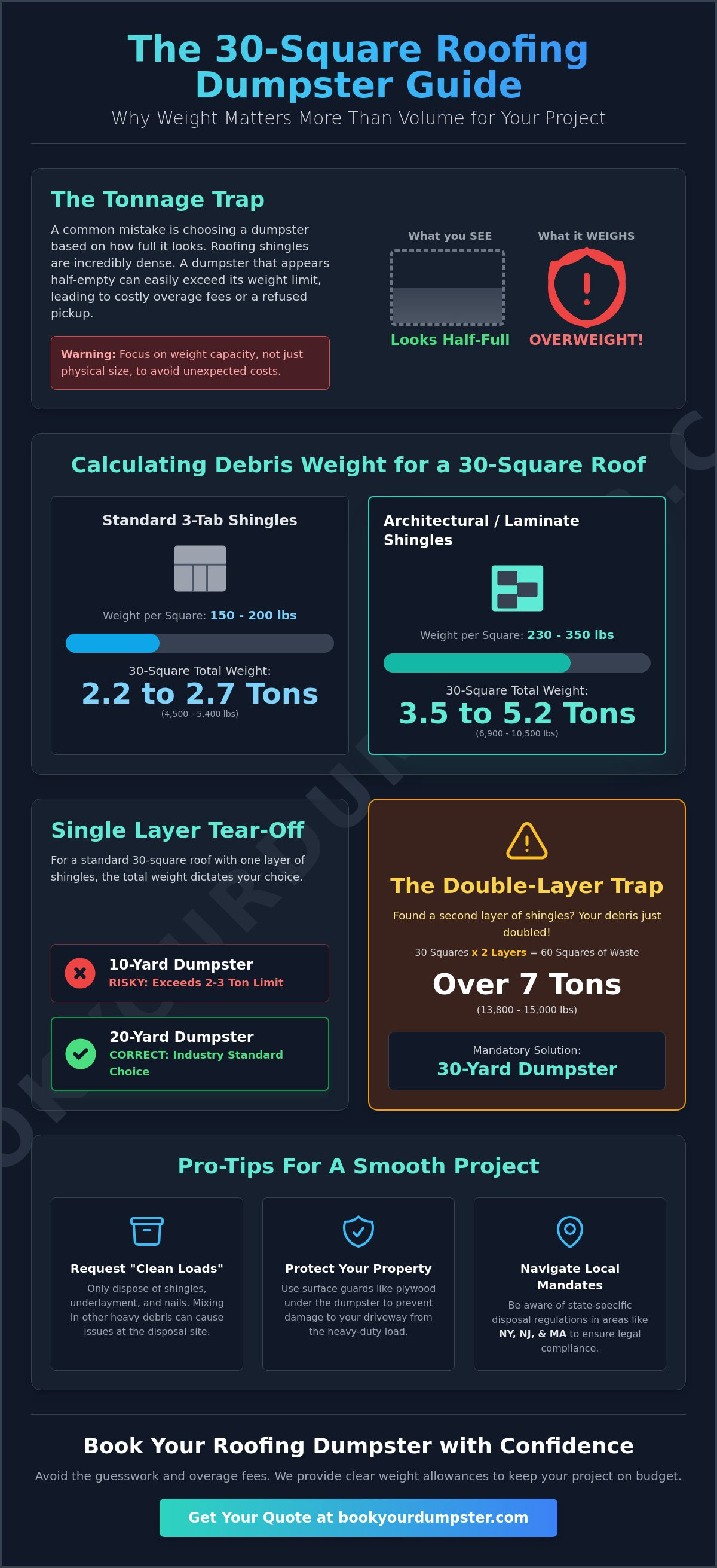
Standard asphalt shingle products are sold in bundles. It typically takes three bundles to cover one square. When you tear off a 30-square roof, you're handling 90 heavy bundles of waste. The weight varies significantly by product type. Basic 3-tab shingles usually weigh between 150 and 200 pounds per square. However, modern architectural shingles are much denser. They often weigh between 230 and 350 pounds per square. For a 30-square project, that architectural shingle waste totals between 6,900 and 10,500 pounds. This concentrated load requires a container built for heavy-duty hauling.
The Tipping Point: 10-Yard vs. 20-Yard Limits
A 10-yard dumpster typically comes with a weight allowance of 2 to 3 tons. Since 30 squares of architectural shingles can easily exceed 5 tons, a 10-yard bin is almost always too small for this job. You'll run into "tonnage traps" where the initial rental price looks low, but the overage fees for those extra tons double your final cost. A 20-yard dumpster is the industry standard for this project size. It provides the physical space to spread the load evenly and usually includes a higher weight allowance. Book Your Dumpster USA provides specific weight allowances for roofing projects to help you avoid these surprises and keep your project moving forward.
Calculating the Weight of 30 Squares: Single vs. Double Layers
Precision is your best defense against unexpected costs. For a single layer of shingles, the math is straightforward but heavy. According to verified 2026 data, a single square of architectural asphalt shingles typically weighs between 230 and 250 pounds. When you scale that up for a 30-square project, you're looking at a total weight of approximately 6,900 to 7,500 pounds. This doesn't include the weight of the underlayment, thousands of nails, or metal flashing that must also go into the bin. To find the best dumpster size for 30 squares of shingles, you must account for these variables before the first shingle is pulled.
Beware the "Double Layer Trap." In regions like the Northeast, it's common to find a second layer of shingles hiding beneath the surface. If your 30-square roof has two layers, you aren't disposing of 30 squares. You're disposing of 60. This effectively doubles your waste to roughly 13,800 to 15,000 pounds. That is over 7 tons of debris sitting on your property. Attempting to fit a double-layer tear-off into a standard residential container will lead to a rejected haul or massive overage penalties. Always verify the number of layers before you estimate your dumpster needs.
Weight Breakdown by Shingle Type
- Standard 3-Tab: These are the lightest asphalt shingles, weighing approximately 150 to 180 pounds per square. Expect 30 squares of this material to weigh between 2.25 and 2.7 tons.
- Architectural/Laminate: These have a higher density and thicker profile. A 30-square tear-off will likely land between 3.45 and 3.75 tons.
In the context of a 30-square asphalt tear-off, tonnage represents the total gravitational force of the debris that your rental's hauling system must legally and mechanically support.
The Impact of a Second Layer
A 30-yard dumpster becomes mandatory for double-layer tear-offs. The sheer volume of 60 squares of waste requires the extra wall height and weight capacity that a 20-yard unit cannot provide. Don't forget about the roof deck. If you discover rotted plywood or OSB during the project, that wood adds significant bulk and weight to the load. Additionally, monitor the weather. Wet shingles hold hundreds of pounds of water weight. If it rains during your project, your 4-ton load can quickly become a 5-ton load, pushing you over your weight limit. Plan for a 30-yard dumpster if your roof has multiple layers or if the forecast looks wet.
Comparison: Which Size Wins for 30 Squares of Shingles?
Compare your options carefully before booking your container. For a 30-square roofing project, you generally choose between a 10, 20, or 30-yard roll-off. Renting a 10-yard unit is a high-stakes gamble. While it might physically hold 30 squares of lightweight 3-tab shingles if packed perfectly, it almost always fails the weight test for modern architectural shingles. You risk a rejected haul or an immediate surcharge because the density exceeds the truck's legal lifting capacity. Don't waste time with a container that can't handle the tonnage of a full tear-off.
For most residential contractors and homeowners, the 20-yard dumpster is the best dumpster size for 30 squares of shingles. It provides the "Goldilocks" balance of volume and weight allowance. It's large enough to contain the shingles, underlayment, and flashing without overflowing, yet compact enough to fit comfortably in a standard driveway. Large-scale commercial projects or multi-layer residential tear-offs require the 30-yard option. If you're stripping two layers of architectural shingles, you're dealing with nearly 15,000 pounds of debris. A 30-yard unit is the only safe way to manage that much weight in a single trip.
The 20-Yard Advantage
Lower side walls are a major benefit of the 20-yard model. These units typically stand about 3.5 to 4 feet high, allowing you to toss heavy bundles over the side without excessive lifting. This efficiency saves your crew's energy and speeds up the cleanup process. From a budget perspective, ordering one 20-yard bin is significantly more cost-effective than paying for two 10-yard swaps. If your project is much smaller, such as a minor garage repair or porch patch, consult our 10 Yard Dumpster Rental Guide for advice on low-volume debris management.
Avoiding Overfill and Overage Fees
Respect the fill line marked on the side of the container. This isn't just a helpful suggestion; it's a strict safety requirement for heavy debris. Asphalt shingles are extremely dense, and stacking them above the rim makes the load unstable during transport. Drivers will refuse to pick up an overfilled or overweight bin to avoid road hazards and fines. This results in a "dry run" fee, and you'll be forced to manually remove shingles until the load is safe. Overage fees are usually calculated per ton over your specified limit. Since 30 squares can easily hit the 5-ton mark, verify your weight allowance before the bin arrives to ensure your pricing remains transparent and predictable.
Loading and Placement: Local Logistics in NY, NJ, and MA
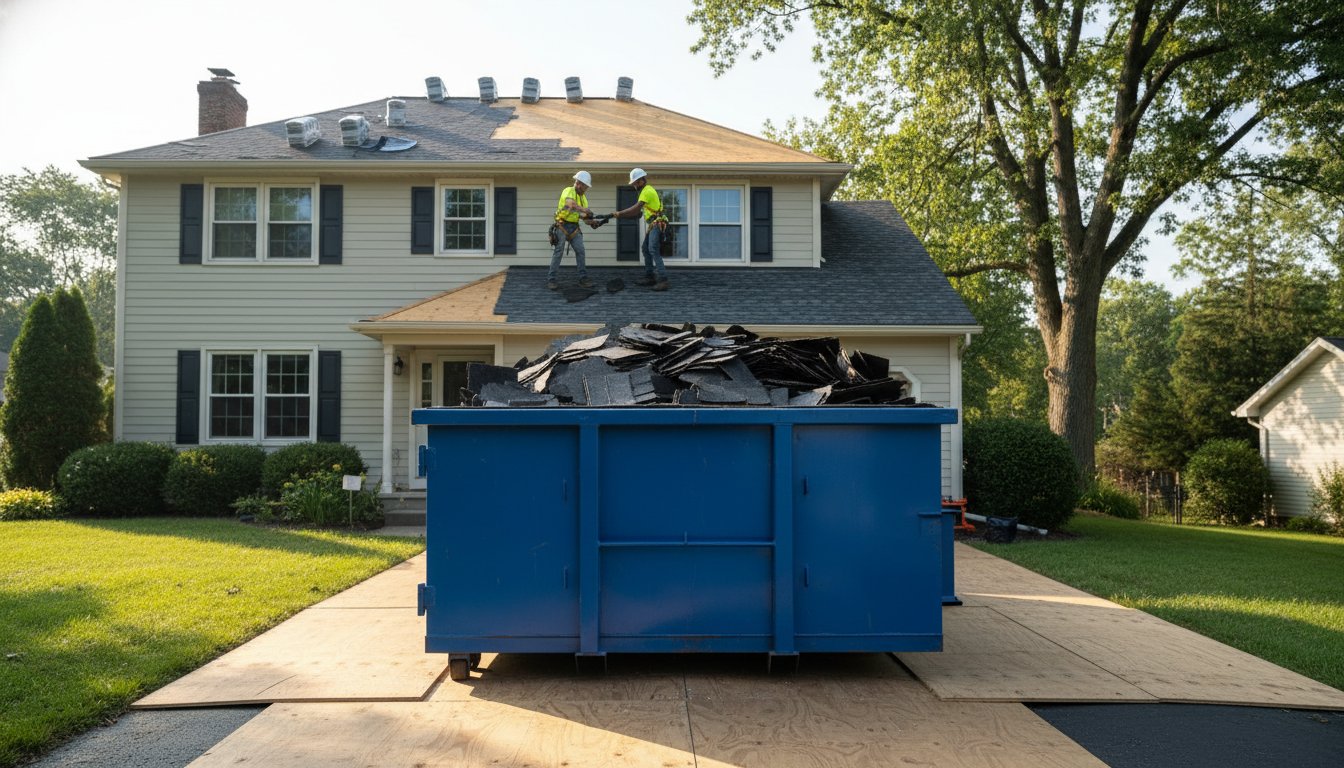
Once you determine the best dumpster size for 30 squares of shingles, focus on the logistics of arrival and placement. This project requires a flat, hard surface. Driveways are the standard choice, but asphalt and concrete can fail under the pressure of 4 to 5 tons of shingles. Always place three-quarter-inch plywood sheets where the dumpster's rollers will land. This simple step distributes the weight and prevents the steel wheels from gouging your property during the drop-off or pickup process.
Loading technique is critical for a safe haul. Start at the front of the bin and work your way back, keeping the shingles level as you go. An uneven load creates a safety hazard. If the weight is concentrated at the very back, the bin could tip or slide dangerously when the truck attempts to hoist it. Keep your load "clean" by separating shingles from prohibited items like tires or electronics. Maintaining a clean load ensures you get the best disposal rates and avoids contamination fees at the recycling facility.
Local Permit Rules for Urban Areas
Urban environments like Queens, New York, or the tight streets of San Francisco present unique challenges. If your driveway is too small, you must place the bin on the street. This requires a right-of-way permit from the local Department of Transportation. In Queens, you'll need a Highway Occupancy Permit. Chicago residents must navigate "Public Right of Way" rules that vary by ward, while Boston often requires specific reflective tape for nighttime safety. New Jersey and Massachusetts residents should check township codes, as some local governments restrict roll-offs to 48 hours without a permit. Consult our guide on Dumpster Rental in NY, IL, and MA for detailed regional requirements.
Safety and Pavement Protection
Shingle dumpsters are notorious for cracking driveways because of their extreme density. A 20-yard bin filled with 30 squares of shingles exerts more pressure per square inch than a 40-yard bin filled with household clutter. Use heavy-duty blocking for the wheels if your driveway has any incline. This prevents the bin from shifting as the weight increases during the tear-off. A standard residential driveway is typically designed to support up to 10,000 pounds, which is the exact range of a 30-square architectural shingle project once you include the weight of the steel container.
Don't risk property damage or city fines by guessing your placement needs. Book your roofing dumpster now and let our team ensure a professional, damage-free delivery.
Book Your 30-Square Roofing Dumpster with Confidence
Eliminate the guesswork and logistical stress of your next roofing project. You now understand the math behind the weight and why the best dumpster size for 30 squares of shingles is typically the 20-yard or 30-yard unit. Book Your Dumpster USA provides the specialized equipment and transparent terms needed to handle these heavy-duty loads. We prioritize reliability so your crew never stands around waiting for a container while a roof sits exposed to the elements. Our system ensures your bin arrives on time and is placed exactly where you need it.
Avoid the "tonnage traps" that plague the waste management industry. Many providers offer low initial rates but hide massive overage fees in the fine print. We believe in pricing integrity and straightforward honesty. When you book with us, you receive clear weight allowances tailored to roofing materials. This transparency acts as a verbal handshake, ensuring you can budget for your 30-square project with total accuracy. Our goal is to move you from a state of clutter to a state of resolution with minimal cognitive load and zero financial surprises.
Why Contractors Choose Book Your Dumpster USA
Professional roofing crews require high-velocity service to maintain their schedules. Our digital-first booking system allows you to secure a 20-yard or 30-yard dumpster in minutes, not hours. We understand that 30 squares of architectural shingles represent a concentrated weight of nearly 5 tons. This is why we maintain a fleet of well-maintained trucks capable of hauling heavy shingle loads safely. Our team brings deep Construction Debris Removal expertise to every job site, ensuring your waste management plan is as professional as your craftsmanship.
- Select the 20-yard dumpster for single-layer architectural shingle tear-offs.
- Choose the 30-yard dumpster for double-layer projects or mixed debris.
- Utilize our online portal for instant scheduling and receipt management.
- Expect punctual delivery and pickup that respects your project timeline.
Ready to Start Your Roofing Project?
Secure the best dumpster size for 30 squares of shingles today. Don't let a torn-off roof sit in your driveway because of a logistical oversight or an undersized bin. Take control of your project waste by choosing a partner that understands the specific demands of the roofing industry. Our pragmatic approach removes the friction from the rental process, allowing you to focus on the installation rather than the trash. Rent your roofing dumpster now at bookyourdumpster.com and experience the difference of a service built on utility and honesty.
Start Your Roofing Project Without the Logistical Stress
Selecting the best dumpster size for 30 squares of shingles depends entirely on the specific weight of your tear-off. You now know that architectural shingles can weigh up to 350 pounds per square, making a 20-yard dumpster the standard choice for single-layer projects. If you're tackling a double-layer roof or working in dense urban environments with strict permit rules, the 30-yard unit provides the essential capacity to avoid expensive overage fees. We provide professional-grade roll-off containers with transparent tonnage limits to keep your project costs predictable and your job site clean.
Our team serves homeowners and contractors across NY, NJ, IL, and MA with a focus on punctuality and pricing integrity. Don't let waste management become the bottleneck of your renovation or construction project. Secure Your 20-Yard Roofing Dumpster Today and maintain total control over your project timeline. Our straightforward booking process is designed to remove the clutter from your driveway and move you toward a successful completion with confidence.
Frequently Asked Questions
Will 30 squares of shingles fit in a 10-yard dumpster?
No, a 10-yard dumpster is not a safe choice for this project. While the shingles might physically fit if stacked perfectly, the weight of 30 squares far exceeds the 2 to 3 ton limit common for 10-yard containers. You'll likely trigger expensive overweight penalties or face a rejected pickup. Select a larger container to ensure your load stays within legal hauling limits.
How much does 30 squares of asphalt shingles weigh?
Weight ranges from 4,500 to 10,500 pounds depending on the shingle type. Standard 3-tab shingles are the lightest, while modern architectural shingles add significant density and tonnage. Because architectural shingles are the most common choice in 2026, the 20-yard unit is the best dumpster size for 30 squares of shingles due to its higher weight allowance and physical capacity.
What happens if my roofing dumpster is overweight?
You'll face immediate surcharges and potential project delays. Overweight loads are dangerous to transport and violate road safety laws in states like New Jersey and Massachusetts. If the truck cannot safely lift the bin, you must remove shingles by hand until the weight meets legal limits. This adds unnecessary labor costs and stops your project's momentum until the issue is resolved.
Do I need a permit to put a dumpster on the street in Queens?
Yes, you must secure a Highway Occupancy Permit from the NYC Department of Transportation for street placement. Queens has strict regulations regarding sidewalk and road access for roll-off containers. Check current 2026 local codes for requirements on reflective markings or barricades. Secure this permit before your delivery date to avoid heavy municipal fines and ensure a smooth drop-off process.
Can I put old gutters and flashing in the same dumpster as shingles?
Yes, you can include these materials, but maintain a clean load whenever possible. Many facilities offer better rates for "clean" shingle loads intended for recycling into road asphalt. Mixing in large amounts of metal flashing or plastic gutters might disqualify the load from these rates. Place metal items on top of the shingles to make sorting easier for the disposal facility.
How many bundles of shingles make up 30 squares?
You'll handle exactly 90 bundles for a 30-square roof. Manufacturers package standard asphalt shingles at a ratio of three bundles per square. This means a 30-square project involves moving 90 heavy packages from the roof into your dumpster. Plan your labor and loading strategy around this volume to ensure the debris is spread evenly and stays below the container's fill line.
Is a 20-yard dumpster big enough for a double-layer 30-square roof?
No, a 20-yard unit cannot handle a double-layer tear-off of this size. Two layers of shingles effectively create 60 squares of waste. This volume will overflow the rim of a 20-yard bin and easily exceed its weight capacity. Upgrade to a 30-yard dumpster to accommodate the extra tonnage and prevent the logistical nightmare of a second container swap mid-project.
How do I protect my driveway from a heavy roofing dumpster?
Use three-quarter-inch plywood sheets to shield your pavement. Shingle loads are exceptionally dense and exert extreme pressure on residential asphalt or concrete. Lay the plywood where the dumpster's steel rollers will land to distribute the weight across a larger surface. This professional precaution prevents the container from gouging your driveway or causing structural cracks during the drop-off and pickup.