
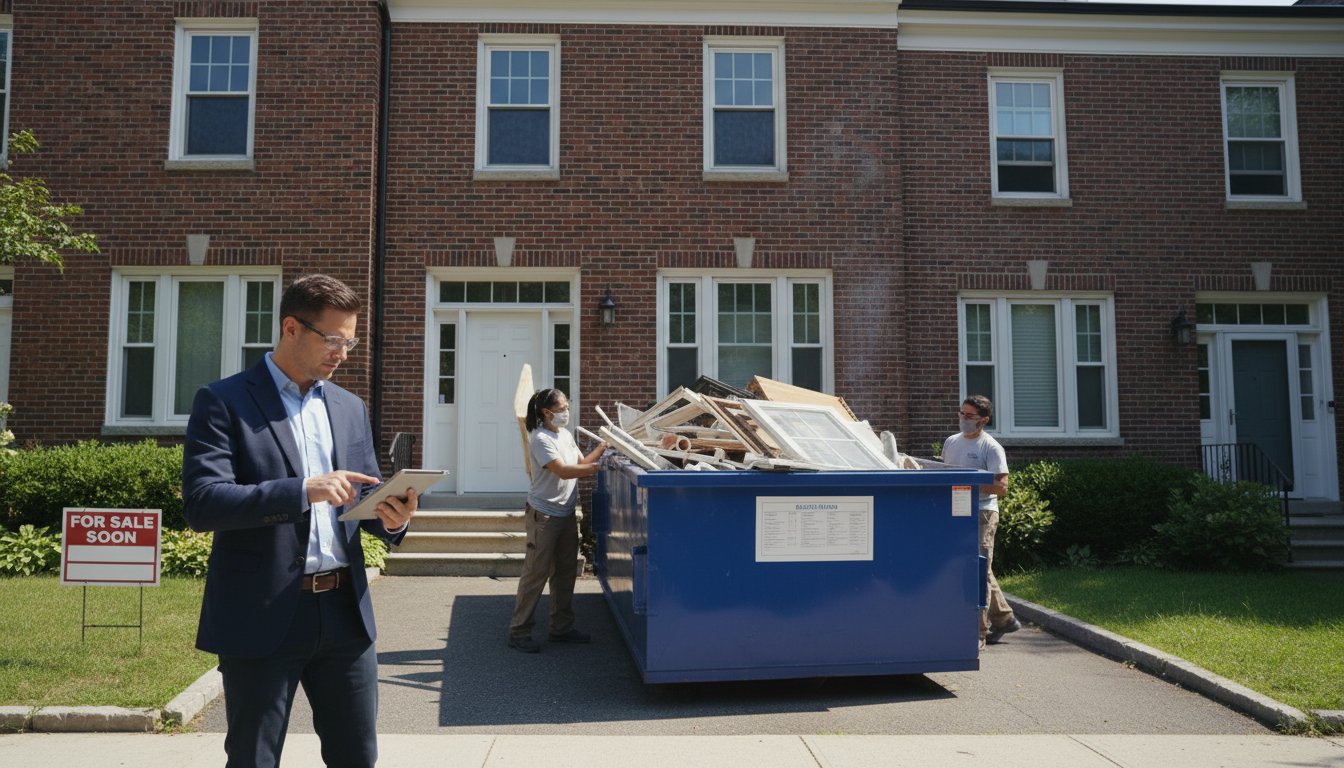
A dumpster sitting full on your job site for three days isn't just an eyesore; it's a direct leak in your profit margin. Most investors focus heavily on materials and labor costs, but failing to prioritize budgeting for waste disposal in a house flip can trigger unexpected overage fees and project delays that stall your progress. You need a clean site and a predictable schedule, not a logistical headache involving complex permit requirements in cities like New York or Boston.
Stop letting hidden costs like landfill tipping fees or weight surcharges surprise you halfway through a renovation. Use this guide to accurately estimate your debris volume, categorize materials, and control every dollar spent on removal to protect your profit margins. Follow these steps to determine exactly which dumpster size to order for each phase of the project. Whether you need a 10 yard container for a small bathroom tear-out or a 40 yard unit for a total gut renovation, these strategies ensure your waste management stays efficient and under budget.
Key Takeaways
- Calculate debris volume by project phase to prevent structural demo and cosmetic tear-outs from exceeding your initial estimates.
- Optimize your budgeting for waste disposal in a house flip by analyzing the cost-per-cubic-yard of roll-off rentals versus labor-intensive removal.
- Select the right capacity—ranging from 10 to 40 yards—to avoid paying double delivery fees for an undersized container.
- Identify local permit requirements and state-specific tipping fees early to keep your regulatory costs predictable.
- Coordinate your project timeline by scheduling your dumpster delivery 24 hours before demolition begins to keep the site clear.
Estimating Debris Volume by Project Phase
Effective budgeting for waste disposal in a house flip starts with a precise inventory of what's coming out of the property. You can't guess volume; you have to measure it. Break your project into two distinct streams: demolition and construction. Before you swing a sledgehammer, calculate the square footage of every surface scheduled for removal. This includes flooring, drywall, and roofing. Understanding what is construction waste versus demolition debris helps you categorize your disposal needs correctly from day one.
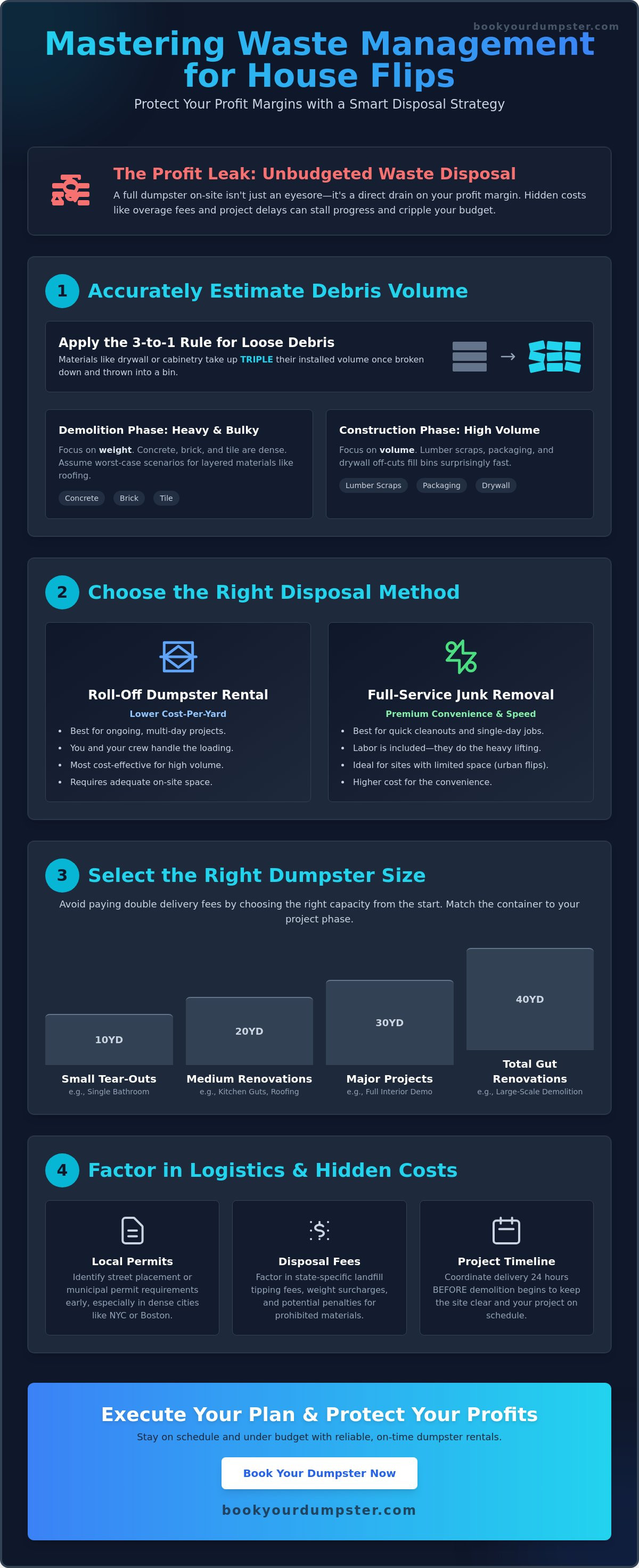
Apply the 3-to-1 rule for loose debris. Materials like drywall or cabinetry take up triple their installed volume once broken down. A stack of floorboards might look small, but it becomes a massive pile of jagged wood in a bin. Don't forget hidden bulk items. Old refrigerators, water heaters, and heavy cast-iron tubs often hide behind walls or in basements. These items consume significant space and can quickly max out a 20 yard dumpster if you don't account for them early. Use this estimation list to stay organized:
- Structural Demo: Concrete, brick, and heavy framing.
- Cosmetic Tear-outs: Carpeting, cabinets, and light fixtures.
- Construction Off-cuts: Lumber scraps, drywall edges, and packaging.
The Demolition Phase: Heavy and Bulky Waste
Demo work is where you hit your highest weight limits. Kitchen and bathroom guts are significantly more dense than bedroom refreshes. You're dealing with tile, mortar beds, and plumbing fixtures that add up fast. If you're ripping out concrete or brick, weight becomes the primary constraint rather than volume. Check for surprise layers during your initial walkthrough. Finding three layers of asphalt shingles instead of one can triple your roofing waste overnight. Budget for these contingencies by assuming the worst-case scenario for layered materials.
The Construction Phase: Off-cuts and Packaging
Once demo ends, the waste stream changes from heavy rubble to high-volume off-cuts. Expect a constant flow of lumber scraps, drywall mud buckets, and massive amounts of cardboard packaging from new appliances or cabinetry. Finish work usually generates less weight, but the sheer volume of light debris can fill a bin surprisingly fast. Save space for the final clean phase. Before you bring in a stager or photographer, you'll need one last haul to clear out protective floor coverings, tape, and remaining installation scrap.
Comparing Disposal Methods: Dumpster Rentals vs. Junk Removal
Choosing the right removal method is a critical part of budgeting for waste disposal in a house flip. You have two primary options: roll-off dumpster rentals or full-service junk removal. The decision depends on your project's volume, timeline, and available labor. Generally, dumpsters offer a lower cost-per-cubic-yard because you or your crew handle the loading. Junk removal is a premium service where you pay for the convenience of an outside team doing the heavy lifting.
Evaluate the value of your contractor's time before deciding. If you're paying a skilled carpenter to haul debris into a bin, you're losing money. However, if you have a dedicated demo crew, renting a roll-off container is usually the most cost-effective path. Following EPA guidelines on C&D materials will help you identify which items require special handling, which can impact your choice of disposal method and your overall budget.
Site constraints often dictate your strategy. A 30 yard dumpster requires a significant footprint on the property. If your flip is in a dense urban area like Queens or San Francisco, you might not have a driveway or street space for a large bin. In these cases, a one-day junk removal strike solves the logistical problem without requiring long-term street permits. Consider these factors when making your choice:
- Dumpster Rental: Lower unit cost, best for ongoing demo, requires site space.
- Junk Removal: Higher cost, includes labor, best for quick trash-outs in tight areas.
Consider the speed of removal as well. A dumpster stays on-site for the duration of your rental period, allowing for a steady cleanup process. Junk removal is a one-day event. If you need the yard clear for a specific milestone, like external painting or landscaping, the "strike" method is superior. However, for most flips, having a bin ready to catch debris as it's created keeps the job site safer and more organized.
When to Choose Roll-Off Dumpster Rentals
Roll-off bins are the backbone of high-volume demolition. They are best for long-term projects where debris is generated daily over several weeks. Because dumpsters stay on-site, you can maintain a clean workspace throughout the project. This prevents municipal fines and keeps neighbors from complaining about piles of trash in the yard. If you're managing a total gut renovation, the generous weight limits of a 20 or 30 yard bin provide the best ROI.
When Full-Service Junk Removal Makes Sense
Junk removal is ideal for the "trash-out" phase. If you've purchased a property full of a previous tenant's furniture and household waste, a quick strike team can clear the house in hours. It's a tactical choice for tight urban flips where site space is non-existent. Using an outside crew also reduces your liability. You don't have to worry about your own workers getting injured while moving heavy, awkward items like old sofas or appliances.
Choosing the Right Dumpster Size to Protect Your Margins
Selecting the correct container size is a tactical decision that directly impacts your bottom line. When budgeting for waste disposal in a house flip, choosing a bin that is too small is a costly mistake. It forces a mid-project haul and a second delivery fee, effectively doubling your logistical costs. Conversely, renting a massive unit for a minor refresh means you're paying for empty air. You must match the container to the specific volume and weight of your materials to maintain your margins.
Weight is just as important as volume. Heavy debris like concrete, brick, or multiple layers of roofing shingles can quickly exceed the weight limit of larger bins. To stay compliant and avoid surcharges, review the EPA guidelines on construction debris which detail how different materials impact disposal logistics. Always prioritize the right fit over the biggest box to keep your site moving efficiently.
The 10 and 20 Yard Dumpsters: Small to Mid-Size Flips
The 10-yard dumpster is the "Goldilocks" choice for targeted renovations. It fits easily in most driveways and handles bathroom guts or small kitchen tear-outs without issue. If your project involves a whole-home flooring replacement or a medium-sized deck removal, step up to a 20-yard bin. These mid-sized options are ideal for residential neighborhoods where space is tight. Be mindful of weight limits for these smaller bins. Dense materials like plaster or tile can trigger heavy-load surcharges if you aren't careful during the loading process.
The 30 and 40 Yard Dumpsters: Major Renovations
For full-gut residential flips or commercial-to-residential conversions, you need the capacity of a 30 or 40-yard dumpster. A 30-yard beast is the standard for major structural changes and massive cleanouts. If you're handling a large-scale project in states like Illinois or Massachusetts, ensure your site can accommodate a 22-foot long container. These large bins are efficient for light, bulky waste but require a clear, flat placement area. Plan your site layout early to ensure the delivery truck has enough room to maneuver without damaging existing landscape or structures.
Factoring in Local Permits and Hidden Disposal Fees
Budgeting for waste disposal in a house flip requires looking beyond the base rental price. You must account for local regulatory costs and operational fees that can derail your profit margins. If your property lacks a driveway or a large enough staging area, you'll likely need a street placement permit. Cities like New York, San Francisco, and Boston have strict requirements for containers placed on public right-of-ways. These permit fees typically range from $20 to $150 depending on the municipality and the duration of your project. Secure these documents before the truck arrives to avoid immediate fines or a refused delivery.
Tipping fees represent another critical variable in your budget. These are the charges landfills levy for processing your waste, and they fluctuate significantly by state. You might pay $50 per ton in one region and $100 per ton in another. Additionally, prepare for "dry run" fees. If a driver arrives for a scheduled pickup but cannot access the bin due to parked cars, low-hanging branches, or locked gates, you'll be charged for the wasted trip. Keep the access path clear at all times to maintain your schedule and your budget.
Navigating Urban Constraints in NYC and Queens
Flipping properties in high-density areas like Queens requires advanced planning. The New York City Department of Transportation (DOT) mandates specific permits for any dumpster placed on the street. If you're working on a property with zero lot lines and no driveway, you have no choice but to use public space. Timing is everything. Coordinate your deliveries to avoid peak traffic hours and street cleaning schedules. A missed window in NYC doesn't just cost money; it can stall your entire demolition crew for a full day.
Understanding Overage and Prohibited Item Surcharges
Weight limits are the most common source of surprise costs. A dumpster might look half-empty but already be over its weight capacity if it's filled with heavy materials like plaster, tile, or brick. Landfills charge overage fees that can range from $40 to $200 per ton. Check dumpster rental prices and weight limits across different regions to understand how these costs scale. Avoid placing prohibited items like tires, paint, or asbestos in the bin. Contamination penalties are severe, often reaching $250 to $500 per ton for hazardous materials.
Protect your investment by getting an accurate quote that includes all potential surcharges. For transparent, no-nonsense pricing on your next project, view local dumpster availability and secure your bin today.
Executing Your Waste Management Plan with Book Your Dumpster USA
Executing your plan is the final piece of budgeting for waste disposal in a house flip. You've calculated the math and identified your volume needs; now you must lock in your schedule. Timing is critical to keep your crew productive. Schedule your first dumpster drop-off at least 24 hours before your demolition team arrives on site. This ensures no one stands around waiting for a bin while your labor clock is ticking. Use the Book Your Dumpster USA online booking system to lock in transparent pricing. This removes the guesswork and eliminates the hidden fees that often plague traditional waste hauling services.
Successful budgeting for waste disposal in a house flip relies on punctuality and site maintenance. Coordinate closely with your project manager. Establish a strict rule to call for a swap or pickup once the bin is 75% full. Waiting until it's overflowing leads to site hazards and potential fines from the city. Document every haul meticulously. Keep your receipts and weight tickets for year-end tax purposes or if you're pursuing specific green-building certifications. These records prove your compliance with local disposal laws and help track your actual costs against your initial budget.
The Step-by-Step Booking Process
Start by selecting your location. Whether you're working in NY, NJ, IL, MA, or SF, the process is streamlined for speed. Choose your project type to ensure you get the right equipment for construction debris. Pick your size based on our construction debris removal guide to avoid the pitfalls of under-sizing discussed earlier. Set your delivery date and specify the exact placement location for the driver. Clear instructions prevent dry run fees and ensure the dumpster is exactly where your crew needs it.
Managing Multiple Flips and Commercial Accounts
Logistics get complicated fast when you manage three or more active projects simultaneously. Streamline your operations by using a single platform for all your sites. Book Your Dumpster USA provides dedicated support for commercial-scale waste needs and high-volume investors who require frequent swaps across multiple zip codes. This centralized approach keeps your overhead predictable and your sites clean. Book your dumpster online today to keep your flip on schedule and protect your profit margins.
Master Your Site Cleanup and Protect Your Profits
Effective budgeting for waste disposal in a house flip transforms a messy logistical hurdle into a predictable line item. By accurately estimating your debris volume and selecting the correct container size from the start, you avoid the trap of paying for multiple delivery fees. Remember to secure local street permits in urban hubs early to prevent project delays. This proactive approach keeps your contractors working and your job site clear of safety hazards.
Reliability is the foundation of a successful renovation. Book Your Dumpster USA provides transparent pricing with no hidden surcharges and expert sizing advice for both residential and commercial flips. Whether you need a 10 yard bin for a bathroom gut or a 40 yard unit for a major conversion, we offer local service across NY, NJ, IL, MA, and SF. Don't let a full dumpster stall your progress or eat your margins.
Start your project right—Book Your Dumpster USA now! Take control of your site logistics today and keep your next flip on the fast track to completion.
Frequently Asked Questions
How much does a 10-yard dumpster usually cost for a house flip?
Rental costs for a 10-yard dumpster depend on your specific location and the type of debris you generate. Local tipping fees and the duration of your project are the primary factors that influence the final price. To get an accurate quote, check current rates for your zip code through our online booking system. This ensures you have a firm number for your project budget before demo begins.
Can I put old appliances and furniture in a construction dumpster?
You can typically dispose of furniture in a construction dumpster, but appliances often require special handling. Items containing Freon, such as refrigerators or air conditioners, are generally prohibited from standard roll-off containers due to environmental regulations. Always verify local rules for electronic waste or heavy appliances. Loading restricted items can result in significant handling surcharges or the driver refusing to pick up the bin.
Do I need a permit to put a dumpster in my driveway in New Jersey?
Driveway placement usually does not require a permit in most New Jersey municipalities. Permits are typically mandatory only when the container occupies a public street, sidewalk, or right-of-way. Rules can vary by town, so contact your local building department or code enforcement office to confirm their specific requirements. Ensuring the bin stays on private property is the easiest way to avoid extra paperwork and fees.
What happens if my dumpster exceeds the weight limit during a flip?
Exceeding the weight limit triggers overage fees that landfills charge on a per-ton basis. If the container is too heavy for the truck to lift safely, the driver will leave it on-site. You will then incur a dry run fee and must remove enough material to meet safety standards. Monitor your intake of heavy materials like concrete and plaster to prevent these avoidable expenses from hitting your bottom line.
How long can I keep a rental dumpster on my renovation site?
Most standard rental agreements provide a window of 7 to 14 days for your project. If your flip requires more time, you can usually extend the rental for a flat daily fee. Schedule your delivery to coincide exactly with your demolition start date to maximize the utility of your initial rental period. This keeps your site clean and ensures you don't pay for a bin that sits empty for several days.
Is it cheaper to rent two small dumpsters or one large one?
Renting one large dumpster is almost always more cost-effective than ordering two smaller units. A single large bin involves only one delivery and one pickup fee, which reduces your overall transportation costs. When budgeting for waste disposal in a house flip, consolidate your debris into the largest container your site can fit. This strategy protects your margins by minimizing the logistical overhead of multiple hauls.
Which items are strictly prohibited in a roll-off container?
Strictly prohibited items include hazardous waste, flammable liquids, and toxic chemicals. You cannot put wet paint, motor oil, pesticides, tires, or lead-acid batteries into a standard roll-off container. These materials require specialized disposal at authorized facilities to prevent environmental contamination. Placing banned items in your bin will lead to severe penalties and may require you to unload the entire dumpster at your own expense.
How do I estimate the weight of drywall and flooring debris?
Estimate weight by calculating the square footage of the material and multiplying it by its average weight per unit. For instance, standard half-inch drywall weighs roughly 1.6 pounds per square foot. Hardwood flooring and ceramic tile are much heavier and will reach weight limits faster. Use these specific calculations when budgeting for waste disposal in a house flip to choose a dumpster size that handles your debris without triggering overage fees.