

Successful commercial demolition isn't about the volume of the container; it's about the management of its weight capacity. When you're coordinating a commercial demolition dumpster rental, the difference between a profitable job and a logistical nightmare often comes down to a few tons of concrete or a delayed swap-out. You likely deal with hidden overweight fees and permit hurdles in cities like New York or Chicago that stall your crew for days. Stop letting waste logistics control your job site.
Master the logistics of demolition waste with our expert guide to selecting, sizing, and booking the right commercial roll-off dumpster. Review the evolving 2026 regulatory landscape, including stricter diversion requirements in major metros and updated street placement permits in high-density areas like Queens and San Francisco. Use this breakdown to understand exact weight capacities for heavy debris and ensure on-time delivery with predictable pricing for every project phase.
Key Takeaways
- Learn why high-density demolition waste requires specialized handling and why standard residential disposal protocols often fail on professional job sites.
- Select the optimal container for your project by applying the 'Golden Rule' of commercial demolition dumpster rental: smaller bins for heavy debris and larger containers for light, bulky materials.
- Understand the critical difference between volume and tonnage limits to avoid costly overweight fees and ensure compliance with Gross Vehicle Weight Ratings.
- Navigate the specific permit landscapes and street placement regulations in major metropolitan areas like New York, Chicago, and San Francisco.
- Streamline your project logistics with digital booking tools that offer transparent flat-rate pricing and reliable on-time delivery.
The Logistics of Commercial Demolition Waste Management
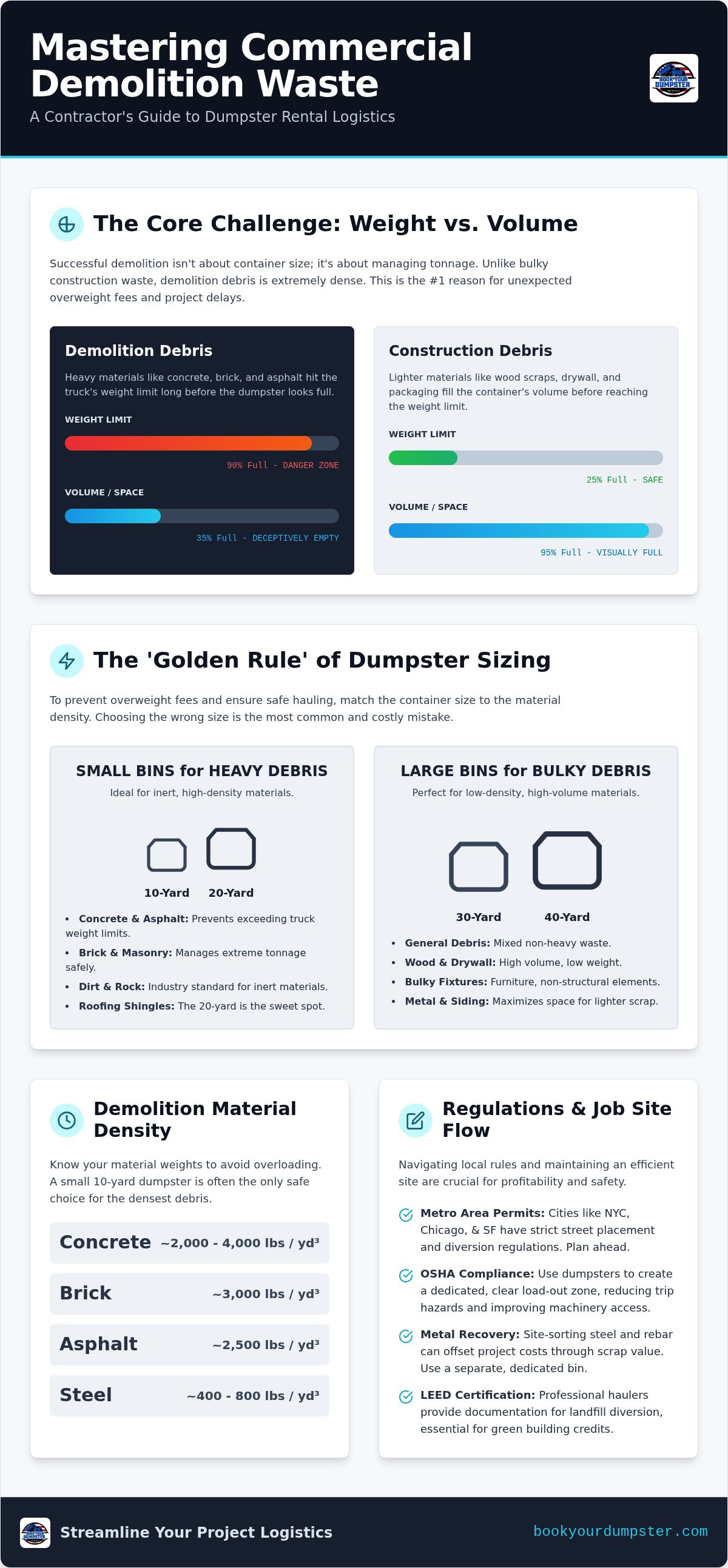
Commercial demolition waste is a high-density waste stream that demands specialized handling. It isn't just bulk trash; it's a collection of heavy, structural materials like reinforced concrete, asphalt, structural steel, rebar, and solid brick. Standard residential waste protocols fail on these sites because they are designed for volume rather than extreme tonnage. A demolition project can quickly exceed the structural limits of standard equipment, leading to equipment failure or safety violations. You must treat every load as a weight-management challenge rather than a space-management one.
Maintaining an OSHA-compliant worksite requires immediate and organized debris removal. Scattered piles of masonry or twisted rebar increase the risk of site accidents and stall the movement of heavy machinery. Integrating a professional commercial demolition dumpster rental into your site plan ensures that waste is contained and the perimeter remains clear for your crew. Use these containers to establish a dedicated load-out zone that keeps your demolition path unobstructed. This prevents the double-handling of waste, which is a major drain on labor hours and project budgets.
Demolition vs. Construction Debris: Key Differences
Weight density is the primary differentiator between these two project types. In construction, containers usually fill up with wood scraps and drywall before they hit weight limits. In demolition, the opposite is true. Masonry and concrete will hit the weight capacity of a 20-yard bin long before the debris reaches the top rail. Understanding your Demolition Waste Composition is the key to avoiding surprises at the scale. Consider the following material factors:
- Concrete and Brick: These are the heaviest materials and should often be placed in smaller 10 or 20-yard containers to prevent overloading the haul truck.
- Mixed Loads: Combining metal, wood, and masonry often results in higher disposal costs because facilities charge for the additional sorting labor.
- Metal Recovery: Steel and rebar are highly recyclable. Site-sorting these can sometimes offset your total project costs through recovered scrap value.
The Environmental Impact of Professional Disposal
Professional hauling ensures your waste reaches licensed processing facilities equipped to handle complex C&D materials. This is vital for projects seeking LEED certification, where documented landfill diversion is mandatory. Proper hauling turns raw debris into recycled aggregate or industrial scrap metal. For a broader look at managing site waste across all project phases, see our Ultimate Guide to Construction Debris Removal. By prioritizing professional disposal, you protect your company from the legal and financial risks associated with improper waste categorization or illegal dumping.
Selecting the Right Dumpster Size for Demolition Projects
Don't choose a dumpster based on physical dimensions alone. The most common mistake in demolition is underestimating the weight of structural debris. Apply the 'Golden Rule' of demolition: use smaller containers for high-density materials and larger ones for light, bulky waste. This strategy prevents expensive overweight penalties and ensures the roll-off truck can safely hoist the load. For a successful commercial demolition dumpster rental, your size selection dictates the safety and speed of the entire project.
Following EPA C&D Waste Management guidelines often requires source-separating materials like concrete and wood to maximize recycling credits. This means you might need a fleet of different sizes on a single site. Placing a 10-yard bin for brick next to a 40-yard bin for general debris keeps your site organized and your disposal costs predictable. It also simplifies the logistics of managing multiple waste streams simultaneously.
The 10 and 20-Yard Options: Best for Heavy Debris
The 10-yard dumpster is the industry standard for inert materials like concrete, asphalt, and dirt. Because these materials weigh approximately 2,000 to 4,000 pounds per cubic yard, a larger bin would quickly become too heavy for a truck to lift. Review our 10-yard dumpster rental guide to understand specific masonry weight limits and loading techniques. The 20-yard unit serves as the 'sweet spot' for roofing tear-offs and flooring removal. It offers enough volume for shingles and tile without the risk of exceeding the truck’s hauling capacity. Be strict with your crew; never fill these bins past the top rail with dense materials.
The 30 and 40-Yard Giants: Best for Structural Demo
Reserve 30 and 40-yard containers for high-volume, low-density materials. These units are essential for wood framing, drywall, insulation, and general commercial gut-outs. These "giants" allow your crew to clear large areas without the downtime of frequent swap-outs. However, site logistics are paramount. A 40-yard container requires at least 60 feet of straight-line approach and 23 feet of vertical clearance. Before booking, verify that your site can accommodate the footprint of a 22-foot long bin. To estimate your needs, calculate your total square footage and assume a debris depth based on the wall height. One 40-yard bin typically holds the equivalent of 12 to 15 standard pickup truck loads. Check availability for your specific site dimensions when you view our roll-off inventory online.
Managing Weight Limits and Debris Restrictions
Weight is the most critical variable in any commercial demolition dumpster rental. While residential projects focus on volume, demolition is a game of tonnage. You must understand the physics of the roll-off truck, specifically the Gross Vehicle Weight Rating (GVWR). If a container exceeds the truck's legal hauling capacity, the driver will refuse the pick-up. This results in costly dry-run fees and forces your crew to manually offload heavy debris, stalling your project timeline and increasing labor costs.
Distinguish between volume limits and tonnage limits before you start loading. A 40-yard container offers massive space, but it can reach its weight limit with just a few inches of stone or wet dirt. For heavy materials like brick or asphalt, follow the 'waterline' rule. Never fill the dumpster more than halfway up the side walls. This ensures the load remains within the legal 10-ton hauling average common for most commercial roll-off services. If you aren't sure about your material density, always opt for a smaller bin to stay within safe weight parameters.
Prohibited Items in Commercial Demolition
Follow OSHA Demolition Safety standards to identify and isolate hazardous materials before they reach the bin. Asbestos-containing materials, lead-based paint, and chemical drums are strictly prohibited. Contamination is expensive. A single car battery or a forgotten bucket of industrial solvent can ruin a 40-yard load. This forces the entire container to be treated as hazardous waste at your expense. Separate electronics and industrial appliances for specialized disposal to maintain site compliance and avoid landfill rejections.
How to Avoid Overweight Charges
Accurate estimation prevents budget overruns. One cubic yard of concrete weighs approximately 4,000 lbs. If you're clearing a 10-yard slab, you're looking at 20 tons of material, which requires multiple hauls in smaller containers. Load strategically by placing the heaviest masonry at the bottom and center of the bin. This keeps the weight distributed over the truck's axles for a safe hoist. Finally, always tarp your dumpsters during rain. Saturated debris can gain thousands of pounds in water weight, pushing an otherwise legal load into expensive overweight territory. To keep your project moving, schedule your swap-outs online before the rain starts.
Logistics and Regulations in Major Metro Areas
Urban environments present unique challenges for a commercial demolition dumpster rental. In cities like New York, Chicago, and San Francisco, space is a premium. You cannot drop a 40-yard bin without a plan. You must account for narrow streets, overhead power lines, and tight property lines. The "Queens Challenge" is a real logistical hurdle. Managing deliveries in high-density corridors requires precision timing. Many zones in these cities have restricted delivery windows to minimize traffic disruption or comply with local noise ordinances. Plan your drop-offs for early morning or specific midday slots. This avoids site delays and city fines.
Decide early if the container will sit on private property or the public right-of-way. If it's on the street, you need a Department of Transportation (DOT) permit. Each city has different lead times. Chicago might take a few business days. San Francisco requires longer notice. Don't risk a stop-work order by skipping this step. Fines for unpermitted bins can exceed the cost of the rental itself. If you have a parking lot or driveway, use it. Private property placement usually bypasses these permit fees and street-cleaning restrictions.
Permit Requirements for NY, NJ, and IL
Navigating the paperwork is often the most frustrating part of site setup. Review the dumpster rental process in New York and Illinois for a state-specific breakdown. In Massachusetts, you'll specifically need to secure "Right of Way" permits for any bin placed on a sidewalk or public street. These permits often require proof of insurance and a detailed site map. Generally, the contractor is responsible for obtaining these permits. However, the property owner is often liable for any fines. Confirm who is pulling the permit before the truck arrives. Clear communication prevents the "finger-pointing" that happens when an inspector shows up on-site.
Site Preparation and Safety
Protect the pavement. Heavy demolition loads can easily crack asphalt or sink into soft soil. Use street pads or thick plywood to distribute the weight of the roll-off rails. Beyond the footprint, check your vertical clearance. You need at least 23 feet of overhead space to clear the hoist. Power lines and low-hanging trees are common hazards in residential-commercial zones. Finally, clear a 50-foot straight-line approach for the delivery vehicle. If the driver cannot back in safely, they will leave. You will pay a dry-run fee for the failed attempt. To ensure a smooth drop-off in a tight urban zone, book your metro delivery online and provide specific site access instructions.
Streamlining Your Project with Book Your Dumpster USA
Efficiency is the only way to maintain a profitable demolition site. You've seen the complexities of weight management and metro permits; now you need a partner who simplifies the final step. Book Your Dumpster USA removes the friction from waste logistics. Our service focuses on 10, 20, 30, and 40-yard roll-off containers designed specifically for high-impact commercial use. We don't just drop bins; we integrate into your project timeline to ensure your crew never stands idle. A successful commercial demolition dumpster rental depends on this level of logistical synchronization.
Transparent pricing is our standard. You'll receive a flat-rate quote that includes delivery, pickup, and a clear tonnage allowance. This eliminates the hidden fee anxiety that often plagues industrial waste contracts. In the world of commercial demolition, punctuality is the foundation of trust. We prioritize on-time delivery and rapid swap-outs. For large-scale demo sites, scaling your service is seamless. We coordinate multi-container swap-outs to handle continuous debris flow. Whether you're clearing a single-story retail space or a multi-floor office gut-out, our logistics team manages the rotation so your heavy machinery stays productive.
Why Contractors Choose Our Online System
Stop playing phone tag with dispatchers. Our streamlined online booking system allows you to secure equipment in under 60 seconds. You get instant access to real-time availability for our full inventory, from the 10-yard masonry bins to the 40-yard structural giants. This digital-first approach provides immediate receipts and tracking data. Your accounting team will have the documentation they need for project audits without chasing down paper tickets from the job site. It is a modern solution for a traditionally messy industry.
Ready to Start Your Demolition Project?
Managing a demolition budget requires a firm grasp of disposal costs. Several variables influence your final investment, including material density, local landfill fees, and permit requirements. You can find a detailed breakdown of these dumpster rental prices and the specific factors that impact metro-area projects in our 2026 guide. Don't let waste management become the bottleneck of your operation. Select your size, verify your weight needs, and secure your delivery date today. Visit BookYourDumpster.com to lock in your equipment and keep your commercial demolition dumpster rental on schedule.
Secure Your Project Timeline Today
Successful demolition requires more than just heavy machinery. It demands a precise waste strategy that prioritizes weight limits and urban permit compliance. You now have the tools to select the right container size and avoid the hidden costs of overfilled bins or delayed swap-outs. Whether you're navigating the strict recycling mandates in Massachusetts or the tight street logistics of San Francisco, your disposal plan is the backbone of a clear and safe worksite. Maintaining a high-velocity project means eliminating every possible point of friction before the first wall comes down.
Don't let logistical bottlenecks stall your crew. Our fleet of 10, 20, 30, and 40-yard containers is ready to support your next commercial demolition dumpster rental across NY, NJ, IL, MA, and San Francisco. Use our streamlined system to Book Your Commercial Demolition Dumpster Online Now in under 60 seconds. Get the reliable placement and transparent pricing your project deserves. Put your waste management on autopilot and focus on the structural work ahead. Your project is too important for logistical guesswork.
Frequently Asked Questions
What is the best dumpster size for a commercial demolition project?
Choose the dumpster size based on the density of your debris rather than its volume. Use a 10 or 20-yard container for heavy materials like concrete, brick, and asphalt to stay within the truck's structural lifting capacity. Reserve 30 and 40-yard units for bulky, low-density materials like wood framing, insulation, and drywall. Selecting the wrong size for your commercial demolition dumpster rental can lead to equipment failure or dangerous site conditions, especially in tight urban zones like Queens.
Do I need a permit for a demolition dumpster in New York City or Chicago?
You must obtain a permit from the local Department of Transportation (DOT) if the container sits on a public street or sidewalk. In New York City and Chicago, these permits are mandatory for right-of-way placement and require specific insurance certifications. Lead times vary by city; apply for your permit at least five to seven business days before your scheduled delivery to avoid site delays or expensive municipal fines.
What happens if my demolition dumpster exceeds the weight limit?
Exceeding the weight limit prevents the roll-off truck from safely hoisting the container. The driver will leave the bin on-site and charge a dry-run fee for the failed attempt. You'll then be responsible for manually offloading the excess material until the bin reaches a legal hauling weight. Industry data shows that exceeding limits can also trigger overweight fees ranging from $40 to $200 per extra ton depending on the local disposal facility.
Can I put concrete and rebar in the same roll-off dumpster?
You can combine concrete and rebar in the same roll-off container as part of a mixed demolition load. Most facilities accept reinforced concrete, but some recycling centers prefer source-separated materials to streamline their processing. If your project involves a high volume of structural steel, separating the rebar into a dedicated bin can often offset your total project costs through recovered scrap value. Always check local facility restrictions for 'clean fill' versus 'mixed' loads.
How much space does a 40-yard dumpster need for delivery?
A 40-yard dumpster requires at least 60 feet of straight-line approach for the delivery vehicle to back in and drop the load. You also need a minimum of 23 feet of vertical clearance to accommodate the roll-off hoist without hitting power lines, low-hanging trees, or building overhangs. Ensure the drop zone is level and clear of all crew vehicles or equipment before the truck arrives. If the driver cannot safely access the site, they won't drop the bin.
How long can I keep a commercial demolition dumpster on-site?
Most commercial rental agreements include a standard period of 7 to 14 days, though this varies by market. For long-term demolition projects, you can arrange for daily extensions or schedule regular swap-outs to keep your site clear. Coordinate your schedule through our online portal to ensure a fresh container arrives exactly when the full one is hauled away. This prevents debris accumulation and ensures your demolition path remains unobstructed.
Are there items I cannot put in a demolition dumpster?
Never put hazardous materials like asbestos, lead-based paint, or chemical solvents in a standard demolition container. Prohibited items also include tires, car batteries, industrial electronics, and any liquid waste. Contaminating a load with these materials can result in the entire container being rejected at the landfill. This forces you to pay for specialized hazardous waste remediation, which is significantly more expensive than proper initial disposal. Follow OSHA guidelines to isolate these materials early.
How do I schedule a swap-out when my dumpster is full?
Schedule a swap-out through our streamlined online booking system at least 24 to 48 hours before the current bin is full. Provide the exact site location and any updated access instructions for the driver. Our system tracks your project history, making it easy to rotate 10, 20, 30, or 40-yard containers as your project phases change. Prompt scheduling ensures your site stays OSHA-compliant and your crew doesn't lose time waiting for an empty bin.


