Did you know that EPA fines for waste violations can now reach $87,249 per day, per violation? That is a massive financial risk for any business to carry. You already know that managing trash is one of the most frustrating parts of running a facility. Between the foul odors of overflowing bins and the constant worry about city fines, it often feels like a problem that never stays solved. Securing a reliable commercial front load dumpster service is the first step in taking back control of your site sanitation.
This guide provides the logistics needed to turn waste management into a predictable, low-maintenance utility. You'll learn how to master recurring removal to reduce overhead and keep your customer areas pristine. We will break down how to choose the correct bin size for your specific volume, the impact of 2026 organics diversion laws in states like New York and California, and how to use smart technology to ensure your billing stays transparent and your pickups stay on schedule.
Key Takeaways
- Learn how a recurring commercial front load dumpster service functions as a permanent utility to stabilize your daily facility operations.
- Determine your ideal capacity using our guide to standard 2-yard through 8-yard bins, translated into relatable trash bag equivalents.
- Calculate the most efficient pickup frequency for your specific industry to eliminate odors and prevent costly bin overflows.
- Audit your site logistics, including enclosure dimensions and truck clearance, to avoid service interruptions and safety hazards.
- Access a no-nonsense approach to waste logistics in NY, NJ, IL, and MA that emphasizes pricing integrity and operational control.
What is Commercial Front Load Dumpster Service?
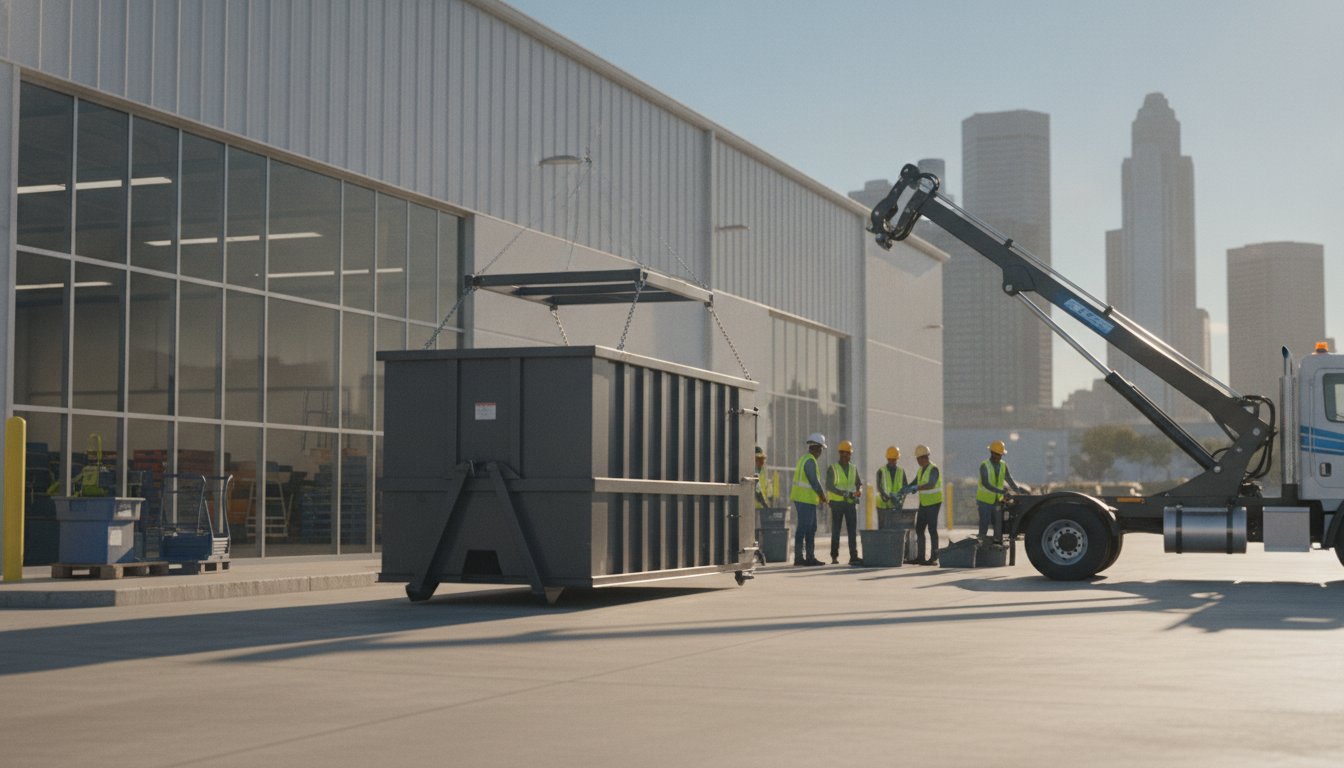
Commercial front load dumpster service is the operational backbone for businesses that generate steady, daily waste. Unlike temporary solutions, this is a permanent utility designed for recurring pickups. The system is built for efficiency; a specialized truck equipped with hydraulic front-mounted forks approaches the bin, slides the forks into side pockets, and lifts the unit over the cab to empty it into the hopper. This process happens entirely on-site, allowing for a seamless transition from full to empty without removing the container from your property. Understanding the History of the Dumpster helps illustrate why this front-loading mechanism became the gold standard for urban and suburban commercial environments.
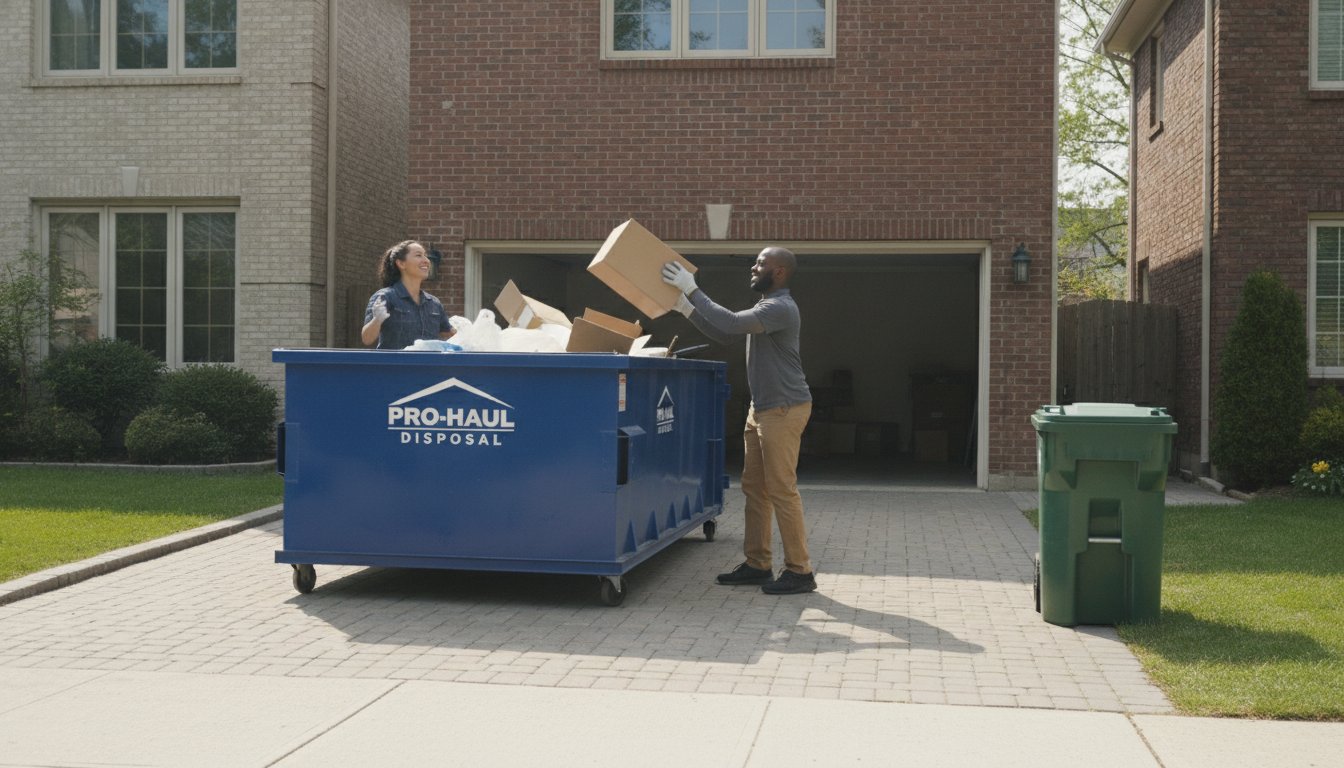
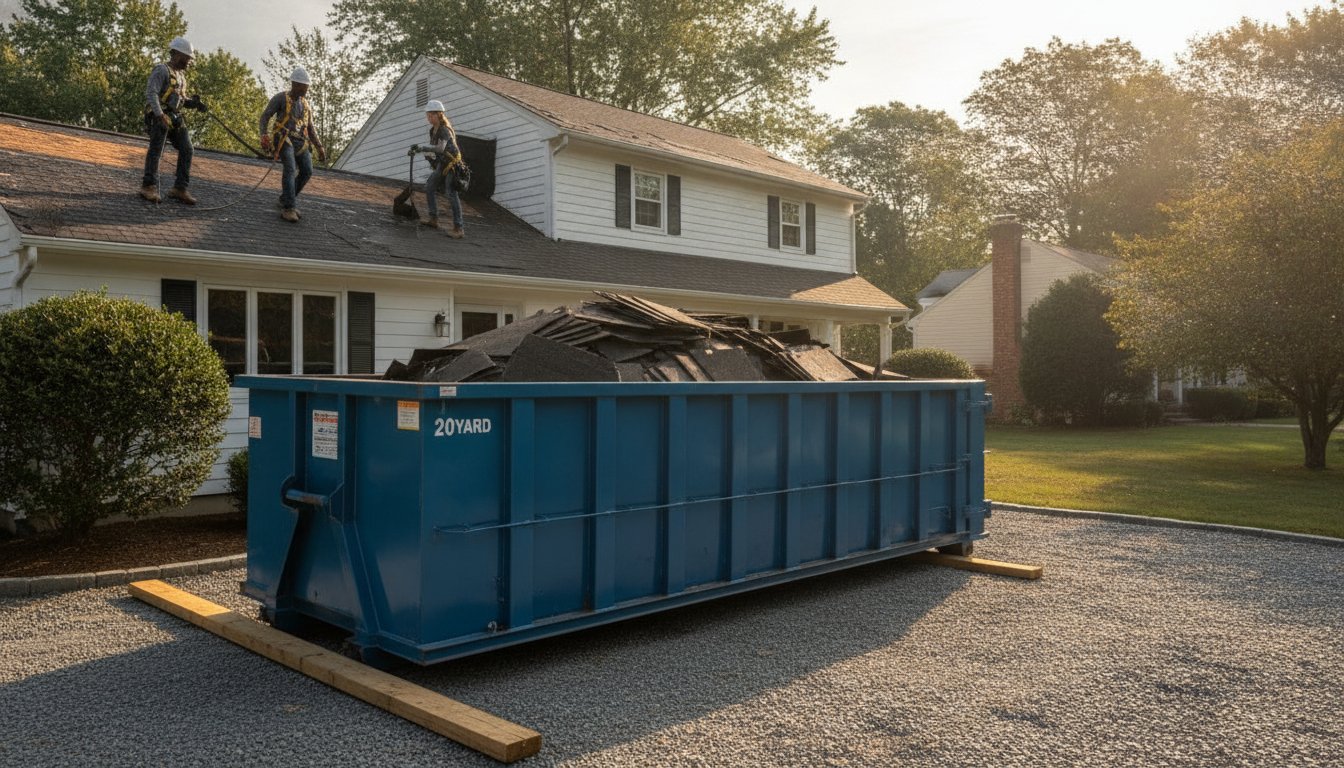
It's vital to distinguish this service from a roll-off dumpster rental. While roll-off bins are massive open-top containers intended for one-time cleanouts or construction debris, front-load bins are compact and fully enclosed. They feature heavy-duty, leak-proof lids that keep pests out and trap odors inside. This makes them ideal for high-traffic areas where aesthetics and sanitation are priorities. Because these bins stay on your site permanently, you benefit from scheduled reliability that keeps your facility running without interruption or logistical stress.
The Business "Waste Heartbeat"
Retail stores, restaurants, and office complexes typically rely on bins ranging from 2 to 8 cubic yards. Selecting the right size is not just about volume; it's about maintaining your site's "waste heartbeat." If your bin is too small, you face overflowing trash and potential health code violations. If it's too large, you're paying for empty space. Waste velocity is the rate at which a business fills its allocated volume. Monitoring this velocity ensures you aren't caught off guard by seasonal spikes or increased foot traffic that could lead to unsightly overflows.
Front-Load vs. Rear-Load Systems
Front-load systems are the preferred industry standard for commercial parking lots for several reasons. The driver remains safely inside the cab during the entire dump cycle, which reduces the risk of accidents in busy areas. The containers are built with steel-reinforced pockets to handle the stress of daily mechanical lifting. While rear-load systems exist, they often require more manual labor and larger clearance areas. Modern commercial front load dumpster service focuses on speed and simplicity, ensuring your waste is cleared with a minimal footprint and maximum safety for your employees and customers.
Choosing the Right Bin Size: 2 to 8 Yard Guide
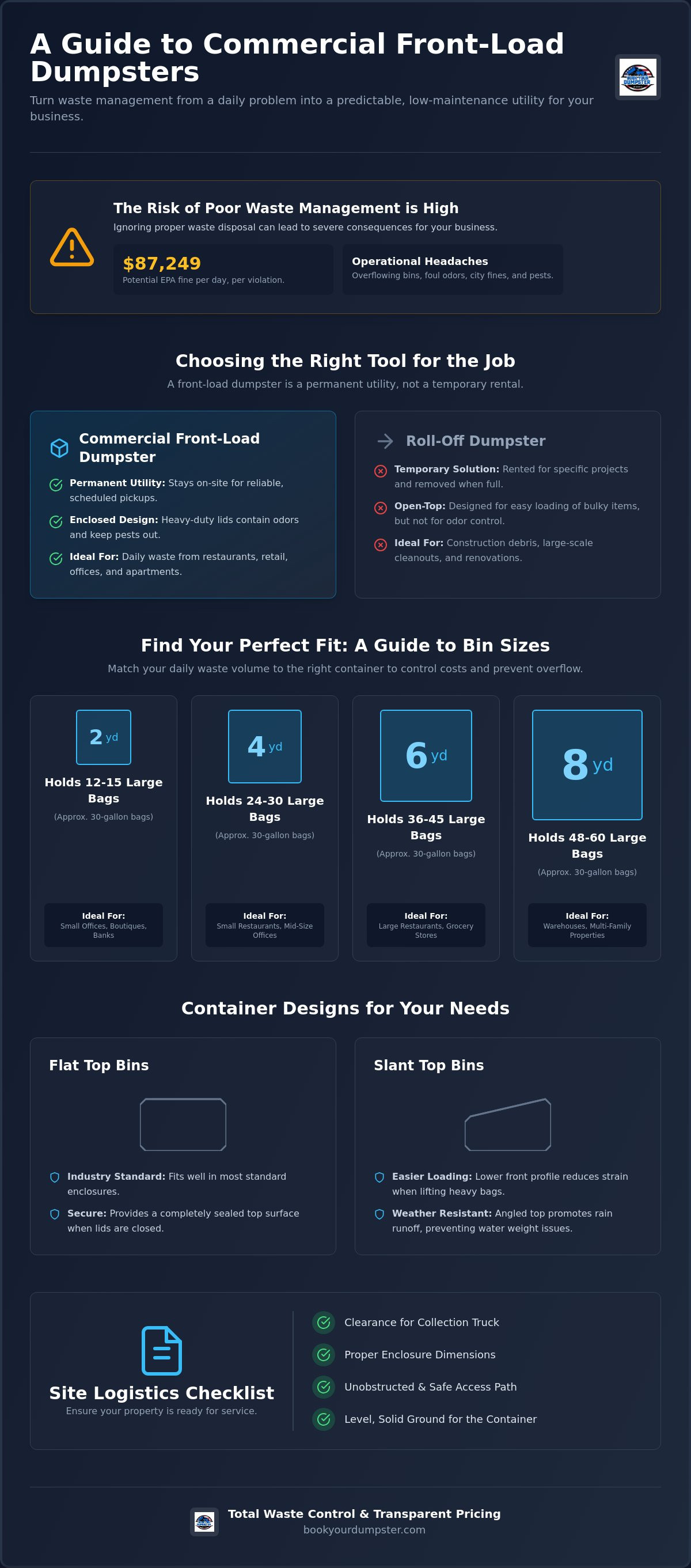
Selecting the correct container size is the most direct way to control your monthly overhead. A commercial front load dumpster service relies on four standard dimensions to create a predictable waste flow. If you overestimate your needs, you pay for hauling air; if you underestimate, you pay for costly overage fees and face the risk of overflowing bins. Use these capacity benchmarks based on standard 30-gallon trash bags to gauge your facility's requirements:
- 2-Yard Bin: Holds approximately 12-15 large bags.
- 4-Yard Bin: Holds approximately 24-30 large bags.
- 6-Yard Bin: Holds approximately 36-45 large bags.
- 8-Yard Bin: Holds approximately 48-60 large bags.
Beyond capacity, consider the physical design of the bin. Flat top bins are the industry standard and fit well in most standard enclosures. Slant top bins are engineered with a lower front profile. This design makes it significantly easier for staff to lift heavy bags over the side without physical strain. Slant tops also facilitate better rain runoff, which is crucial for preventing the bin from collecting water weight and exceeding load limits. Before committing to a container, compare available bin sizes to ensure your choice aligns with your site's physical constraints.
Small Scale: 2 and 4 Yard Dumpsters
Small professional offices, banks, and boutiques thrive with these compact options. They offer a minimal footprint, which is a necessity for businesses operating in tight urban corridors like San Francisco or Queens where alley space is a luxury. These sizes are best for low-volume, non-compactable waste such as office paper and light retail packaging. Adhering to commercial waste management guidelines allows these smaller entities to track their output accurately and avoid paying for more capacity than they truly need.
Large Scale: 6 and 8 Yard Dumpsters
Warehouses, large restaurants, and multi-family property managers require the heavy-duty capacity of 6 or 8-yard containers. These bins manage high-volume waste streams but require careful monitoring of load weight limits. This is especially true for businesses generating heavy organic waste or dense cardboard. Use a slant top design for these larger units to improve employee safety and accessibility. It allows workers to toss waste in from the front rather than struggling with a high side wall. Monitor your bin levels closely; packing dense material into an 8-yard bin can quickly lead to weight-based surcharges during the dump cycle.
Strategic Frequency: Optimizing Your Pickup Schedule
Efficiency isn't just about bin size; it's about the cadence of your commercial front load dumpster service. Many managers assume a larger bin with fewer pickups saves money. The math often proves otherwise. Three weekly pickups of a 2-yard bin provide the same six-yard capacity as a single weekly pickup of a 6-yard bin. The smaller bin with more frequent service prevents the "odor threshold" from being breached. This is critical for restaurants in New Jersey or Illinois during the humid summer months. Frequent hauls ensure that organic waste doesn't sit long enough to rot and attract pests. It keeps your customer areas clean and your employee zones breathable.
Conduct a monthly waste audit to ensure your current schedule matches your actual output. Use these three steps to identify waste in your waste management budget:
- Check the lid: Inspect the bin 24 hours before your scheduled pickup. If the lid won't close, your frequency is too low or your bin is too small.
- Monitor "empty air": Observe the bin just before the truck arrives. If the container is consistently less than 75% full, you are paying to haul air.
- Track seasonal velocity: Document when your volume spikes. Retailers in Massachusetts often require a temporary frequency increase during the holiday rush to prevent unsightly overflows.
Reducing Overage Fees and Fines
Hidden fees can quietly erode your operating budget. Haulers often charge for blocked access if a vehicle or snow pile prevents the truck from reaching the bin pockets. Overfilled-bin penalties apply the moment trash rises above the rim. Consistent scheduling keeps your site compliant with OSHA safety guidelines regarding clear access and stable placement. If you anticipate a major seasonal surge or a short-term cleanup project, consider adding a temporary 10-yard dumpster. This handles the overflow without disrupting your permanent service agreement or triggering overage charges.
The Logistics of Multi-Site Management
Managing locations across state lines, such as New York and Massachusetts, requires centralized oversight. Using a single point of contact for all service adjustments reduces administrative friction. It allows you to synchronize billing cycles and ensure uniform service standards across your entire portfolio. Punctuality is non-negotiable in high-traffic commercial zones. A truck arriving late can block customer traffic or interfere with critical morning deliveries. Demand a partner who respects your operational window and maintains a strict schedule.
Site Logistics: Enclosures, Access, and Safety
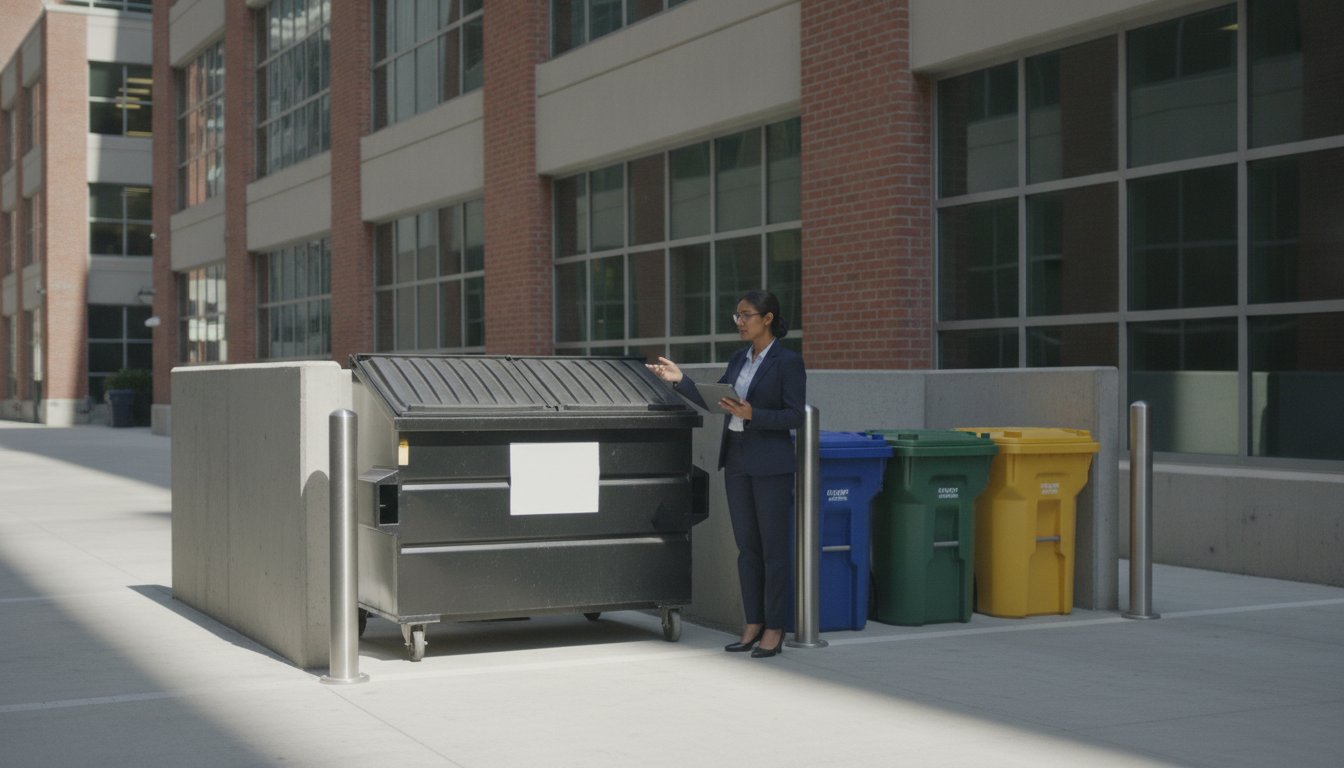
The most common failure in a commercial front load dumpster service isn't the pickup itself; it's the lack of space for the truck to maneuver. A standard front-loading truck requires a significant turning radius and a straight approach to the bin. If your parking lot is congested or the enclosure is tucked into a tight corner, you risk missed pickups and "blocked access" fees. Measure your site before installation. A standard dumpster corral should be at least 12 feet wide to allow the truck forks to slide into the side pockets without hitting the walls. Ensure the approach path is clear of parked cars, delivery vehicles, and low-hanging wires.
Overhead clearance is the most overlooked logistical factor. While a bin may only be four feet tall, the truck needs approximately 25 feet of vertical clearance to lift and empty the container safely. Check for tree branches, roof overhangs, and utility lines directly above the enclosure. If you ignore this height requirement, the driver cannot complete the dump cycle. Additionally, simplify your gate mechanics. Use heavy-duty cane bolts to secure gates in the open position. If a driver has to struggle with a complex locking system or a gate that won't stay open, it slows down the entire route and compromises service punctuality. To ensure your site is ready for a seamless transition, schedule a service consultation to verify your dimensions.
Navigating Urban Constraints in Queens and San Francisco
Operating in dense urban centers like Queens or San Francisco presents unique challenges. If your building lacks a private parking lot, you must secure sidewalk permits for on-street bin placement. Many city businesses utilize "push-out" service. This involves your staff or the hauler manually moving the bin from a basement or interior room to the curb just before the truck arrives. Be mindful of local noise ordinances. Early-morning pickups are standard, but residential-adjacent zones often have strict time windows. Coordinate your schedule to stay compliant with local municipal codes while maintaining your facility's cleanliness.
Safety and Hygiene Standards
Prevent "bridging" by loading your bin strategically. Bridging occurs when large, flat items like cardboard or wooden pallets get stuck at the bottom, preventing the rest of the waste from falling out during the dump cycle. Place heavy items at the bottom and break down all boxes. Maintain a three-foot clear zone around the bin. Loose debris, dry leaves, and discarded pallets are significant fire hazards. Finally, use locking lids. Unauthorized third-party dumping can quickly lead to weight overages and overflowing lids. Keep your container secure to ensure you only pay for the waste your business actually generates.
Partnering with Book Your Dumpster USA for Total Waste Control
Book Your Dumpster USA removes the logistical friction of managing business waste. Transitioning to a professional commercial front load dumpster service shouldn't involve endless phone tag or opaque contracts. We provide a direct, no-nonsense approach across New York, New Jersey, Illinois, and Massachusetts. Our goal is to turn your waste area into a high-functioning tool that requires zero daily mental energy from your management team. We understand the specific regulatory environments of the Northeast and Midwest. This ensures your site remains compliant with local health codes and sanitation standards from day one without the stress of constant oversight.
Businesses often face a gap when standard bins aren't enough. If your facility is undergoing a remodel, a tenant fit-out, or a major seasonal cleanout, you need more than just your weekly pickup. We offer a seamless synergy by combining your recurring service with professional construction debris removal. This integrated approach ensures that temporary project waste never overflows into your primary containers. It prevents safety hazards and keeps your site looking professional for customers and employees alike. By coordinating all waste streams through a single partner, you eliminate the confusion of multiple vendors and conflicting schedules.
The Digital-First Logistics Advantage
Modern facility management requires speed and data. Our platform offers streamlined online booking and account management. This allows you to adjust schedules or add services with a few clicks. We maintain strict pricing integrity. You won't find hidden fuel surcharges that fluctuate based on market whims. Instead, you get a transparent partnership built on punctuality and predictable monthly billing. For complex multi-site operations, we provide a single point of contact to ensure uniform service standards across all your locations. This centralized support removes the headache of managing disparate invoices and ensures that your waste velocity is tracked accurately at every site.
Ready to Clean Up Your Operations?
A well-managed commercial front load dumpster service provides a clear ROI through the elimination of city fines and overage fees. It transforms your back-of-house from a source of odors and pests into a clean, orderly site. Don't let waste logistics distract you from your core business goals. Move your operations from a state of clutter to a state of resolution. Take the first step toward streamlined facility management today. Contact Book Your Dumpster USA for a Commercial Service Assessment to receive a tailored logistics plan and a direct quote for your business.
Secure Your Facility’s Operational Efficiency
Efficient waste management is a competitive advantage that reduces overhead and protects your site from health code violations. By right-sizing your bin and auditing your waste velocity, you eliminate the cost of hauling empty air and the risk of overflowing lids. Proper site logistics, including 25 feet of overhead clearance and clear access paths, ensure your service is never interrupted by blocked access fees.
Establishing a reliable commercial front load dumpster service is about more than just trash; it's about creating a predictable environment for your staff and customers. Book Your Dumpster USA serves major metros across New York, New Jersey, Illinois, and Massachusetts with a pragmatic, direct approach. If your facility requires supplemental support for renovations, we also provide a full range of 10 to 40 yard roll-off containers to handle project-specific debris.
Get a custom commercial waste quote from Book Your Dumpster USA to start optimizing your facility today. Take the stress out of your logistics and get back to growing your business.
Frequently Asked Questions
How much space does a front-load truck need to empty a dumpster?
A front-load truck requires a minimum clearance of 12 feet in width and 25 feet in height to safely lift and empty the container. The driver needs a straight approach of approximately 40 to 50 feet to align the forks with the bin pockets. Ensure no low-hanging utility lines or tree branches obstruct the vertical space directly above the enclosure area.
Can I change my pickup frequency if my business grows?
Yes, you can scale your pickup schedule to match your business's waste velocity. Most commercial front load dumpster service agreements allow for adjustments if your volume increases or decreases significantly. Contact your provider to transition from a weekly schedule to multiple pickups per week to prevent overflows and potential health code violations.
What is the difference between a slant-top and a flat-top dumpster?
The primary difference is the ease of access and water drainage. Slant-top dumpsters have a lower front wall, making it easier for employees to toss bags inside without lifting them over their heads. Flat-top dumpsters are the standard rectangular shape and are often used in enclosures with tight height constraints where every inch of vertical space matters.
Are there items I am not allowed to put in a commercial front-load bin?
You cannot dispose of hazardous materials, electronics, tires, or large appliances in a standard front-load bin. These items require specialized disposal under EPA regulations and can lead to heavy fines if found in the general waste stream. Keep your bin limited to general office waste, retail packaging, and food scraps to avoid service interruptions and penalties.
Do I need a permit for a commercial dumpster on my own property?
You generally don't need a permit if the dumpster is placed on private property, such as your business's parking lot or a designated enclosure. Permits are typically only required if the bin sits on a public sidewalk, alley, or street. Check with your local municipal planning office in cities like Queens or Chicago for specific regional zoning requirements.
What happens if a car is blocking my dumpster on pickup day?
If a vehicle prevents the truck from accessing the bin, the driver will likely skip the pickup and document the blocked access. This often results in a "dry run" fee and an overflowing bin until the next scheduled service date. Use clear signage and painted "No Parking" zones to ensure the approach remains clear for the hauling truck.
How do I prevent people from dumping their trash in my business bin?
Install a heavy-duty lid lock or a bar-lock system to prevent unauthorized third-party dumping. This protects you from paying overage fees for waste you didn't generate. Many facility managers also place bins in gated enclosures or under security cameras to discourage illegal dumping in high-traffic urban areas where bins are easily accessible.
Is front-load service cheaper than roll-off for long-term use?
Front-load service is significantly more cost-effective for permanent, recurring waste management. Roll-off containers are designed for massive, one-time bulk debris and carry higher hauling fees per trip. A commercial front load dumpster service offers a lower monthly cost for the consistent, smaller-volume waste generated by daily retail, office, or restaurant operations.